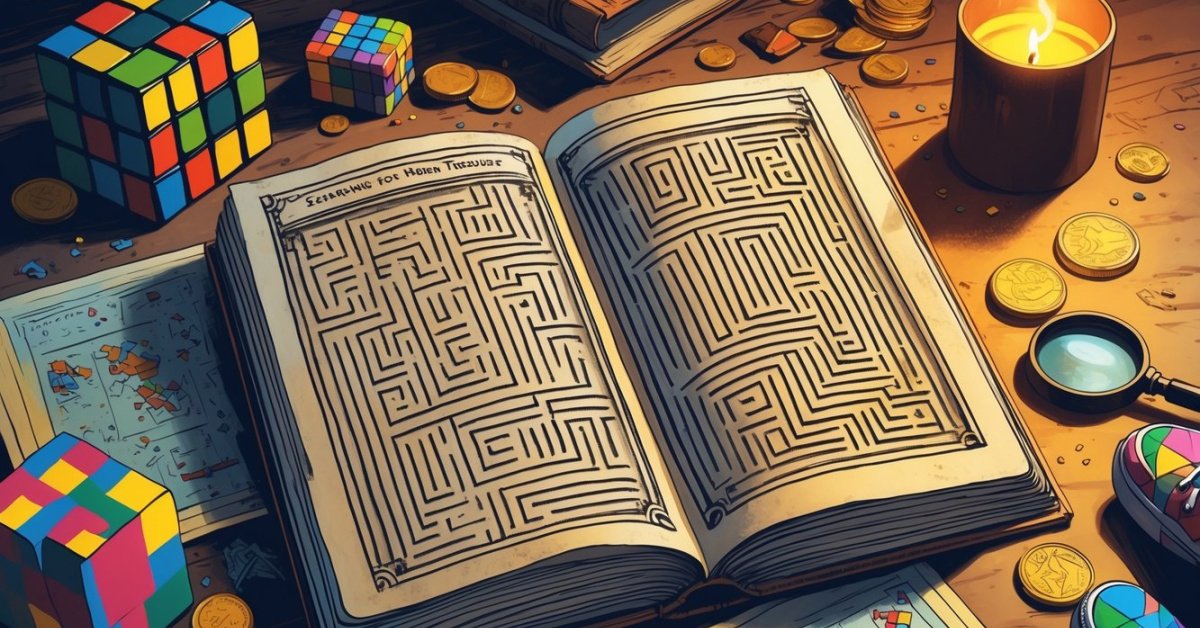
In 1982, author and publisher Byron Preiss released a puzzle book called The Secret. He challenged people to hunt for twelve buried treasures across North America.
Each treasure, called a casque, held a key that could be exchanged for a gemstone. Only a few of these casques have been found. Most remain hidden beneath soil and stone.
The hunt blends art, poetry, and geography into one challenge. Each puzzle pairs a detailed painting with a cryptic verse.
Solving them reveals the exact spot where a casque is buried. The clues connect to real-world landmarks, history, and immigration stories.
The search becomes both a riddle and a journey of discovery.
Decades later, the mystery still attracts puzzle solvers and dedicated searchers. Some people travel to solved sites to study past successes.
Others focus on the nine unsolved locations that may still hold treasures. The mix of history, problem-solving, and the chance of a real find keeps the hunt alive.
Origins of The Secret: Searching for Hidden Treasures
In 1982, The Secret blended fantasy with real-world treasure hunting. Byron Preiss challenged readers to solve puzzles that led to actual buried prizes in North America.
The project drew on earlier works, creative partnerships, and artistic talent.
Inspiration from Masquerade
Kit Williams’s 1979 puzzle book Masquerade partly inspired The Secret. That book hid clues to a buried golden hare and sparked a worldwide treasure hunt.
Byron Preiss saw how Masquerade engaged readers with riddles and illustrations. He wanted to create something similar with a North American focus.
Instead of one treasure, Preiss created twelve casques in different cities. Each casque contained a key that could be exchanged for a gemstone.
This expanded the hunt and gave more people a chance to participate. Preiss’s approach combined visual art, cryptic verse, and historical references.
He encouraged readers to explore local landmarks and learn about cultural history while searching for the prizes.
Byron Preiss and the Creation of the Puzzle Book
Byron Preiss, a writer and publisher, developed The Secret through his company, Byron Preiss Visual Publications. He partnered with Bantam to publish the book in 1982.
Preiss traveled to bury the casques in the winter of 1981–82. He chose locations for their symbolic ties to North American history, as described in historical references within the puzzles.
The book paired paintings with verses. Each pair, when solved, pointed to a specific city and a precise spot.
Preiss designed the puzzles so anyone, with enough patience and observation, could find a casque without special equipment.
Collaborators and Contributors
Preiss worked with several artists and writers to bring The Secret to life. Writers Sean Kelly and Ted Mann shaped the text and style of the verses.
Illustrators like John Jude Palencar, John Pierard, and Overton Loyd created the detailed paintings. Each image contained hidden visual clues—landmarks, shapes, and symbols—that tied into the verses.
JoEllen Trilling crafted sculptures of fantastical creatures, which were photographed for the book. These sculptures added a layer of mystery and helped set the imaginative tone.
This team effort made The Secret a blend of art, storytelling, and adventure.
How the Treasure Hunt Works
The Secret is a real-world treasure hunt that combines visual art, poetry, and history. Each puzzle hides clues in both text and illustrations.
These clues guide searchers to buried casques in North America. Success depends on careful observation and logical thinking.
Structure of the Puzzles
Byron Preiss created twelve puzzles for The Secret. Each puzzle connects to a specific location.
Every puzzle pairs a painted illustration with a cryptic verse. The paintings include visual hints such as landmarks, symbols, and hidden shapes.
The verses provide word clues, historical references, and descriptions of the area. Each casque contains a key.
In the original rules, the key could be mailed to the publisher and exchanged for a gemstone. The locations often connect to immigration history or cultural heritage.
Players usually break the puzzles into smaller steps:
- Identify city-level clues
- Narrow down to a neighborhood or park
- Pinpoint an exact dig site
This step-by-step approach helps manage the hunt’s complexity.
Matching Paintings and Verses
The first challenge is to match each painting with its verse. The book does not label them, so searchers look for shared details.
A painting might show a building’s outline, while the verse describes a nearby river or street. Some clues are subtle, like a hidden number or a color scheme.
Many believe each puzzle also links to a month, a gemstone, and a flower. Resources like the PBworks guide to The Secret track community consensus on these pairings.
Once matched, the combined clues can guide the hunt from a broad area to the exact spot.
Rules and Guidelines
The treasure hunt follows clear guidelines. All casques are buried in public places, never on private property or in dangerous areas.
Digging should be minimal, usually no more than a few feet deep. Searchers must respect the land and avoid damaging the environment.
Preiss wanted the puzzles solved without trespassing or breaking laws. Locations are accessible without special equipment, and clues can be solved using public information.
Searchers have found only three casques so far—in Chicago, Cleveland, and Boston. The rest remain hidden, waiting for careful puzzle-solving and fieldwork.
The Buried Casques and Their Mystique
Each treasure casque was crafted and buried with specific dimensions and materials. They were designed to last underground for years and protect the key items inside.
Their construction and purpose continue to intrigue puzzle hunters.
Design and Construction of the Casques
Preiss used small, sealed containers to protect the treasures from soil and moisture. Most were plexiglass boxes measuring about 4 7/8″ x 5 5/8″ x 6 7/8″ (treasure hunt records).
He stamped each box in a unique way to confirm authenticity when found. Inside, the casque held a ceramic box containing the prize.
The burial depth varied by location. For example, the Chicago casque was less than 12 inches deep, while the Cleveland casque was about 18–20 inches deep.
This depth protected the casques but kept them accessible to diggers with the right clues. The casques’ durability helps explain why some remain intact after decades.
The Role of Jewels and Keys
Each casque held a key, which acted as a claim token. When found, the key could be exchanged for a jewel chosen by Byron Preiss.
The jewels were real and matched the gemstone linked to each puzzle’s theme. For example, one casque might have an emerald, another a sapphire.
Preiss chose jewels to honor the immigrant culture tied to each location. This gave the hunt both a real reward and a cultural connection.
He kept the jewels safe until claimed, so prizes could still be awarded even after many years.
Ceramic Boxes and Treasure Boxes
Inside the plexiglass casque, Preiss placed a ceramic box. This inner container protected the key from damage.
The ceramic also made digging more challenging, as it was fragile and could break if handled roughly.
The ceramic boxes were often artistic, adding to the find’s value. The outer plexiglass and inner ceramic worked together like a two-part safe.
This design helped the treasure boxes survive underground for decades.
Notable Solved Locations
Searchers have recovered several casques from The Secret through careful study of the book’s paintings and verses. These finds relied on matching visual clues to real-world landmarks and using historical or cultural references to find exact spots.
Chicago and Grant Park
In 1984, three teenagers uncovered a casque in Grant Park in Chicago. The puzzle paired Image 5 with Verse 12, which referenced the city’s lakefront and nearby landmarks.
Clues in the verse hinted at the Chicago Water Tower and the park’s location near Lake Michigan. The final dig spot was close to a fence and a statue.
The casque was buried about a foot underground in a small patch of soil bordered by stone. This find showed that Preiss’s clues often led searchers to public spaces with strong cultural ties.
Cleveland and the Greek Cultural Garden
Searchers found the Cleveland casque in 2004 at the Greek Cultural Garden. This location is part of the city’s Cultural Gardens along Martin Luther King Jr. Drive.
The paired painting and verse included Greek imagery, columns, and references to mythology. These details pointed searchers to the garden dedicated to Greek heritage.
Digging took place near a wall and a distinctive planter. Preiss often used symbolic art to guide hunters to culturally themed sites, such as the Greek Cultural Garden in Cleveland.
Boston and Langone Park
In 2019, searchers uncovered a casque in Langone Park in Boston’s North End. This area sits near the waterfront and has a long history tied to Italian-American culture.
The puzzle’s clues referenced the city’s colonial history and its harbor. Visual hints in the artwork matched the park’s surroundings, including its brickwork and nearby structures.
The casque was buried close to a baseball field, in a spot that matched both the verse and the painting’s imagery.
Unsolved Mysteries: Remaining Hidden Treasures
Nine of the original twelve casques from Byron Preiss’s The Secret remain undiscovered. Each is believed to be buried in a public space in North America, tied to historical events or cultural heritage. Clues point to specific cities, but no confirmed finds have been made since 2019.
Suspected Cities and Clues
Treasure hunters have linked certain verses and paintings in the 1982 book to locations like Roanoke Island, San Francisco, and St. Augustine. They make these connections by matching visual details in the artwork with landmarks, symbols, or local history.
For example, some hunters believe an image of a ship and colonial motifs points to St. Augustine, the oldest city in the United States. Others notice Asian-inspired architecture and Golden Gate imagery as hints toward San Francisco.
The Expedition Unknown series on the Discovery Channel has featured hunts in these cities. The episodes brought renewed attention and fresh interpretations of the clues, even though no casque turned up during filming.
Challenges of Finding the Remaining Casques
Many hunters struggle to match the right verse to the right image. This pairing is the first step before narrowing down a dig site.
Misinterpretation can send searchers to the wrong area for years. Public parks and landmarks have changed since 1982, making it harder to match the clues with the real locations.
Trees have been removed, statues moved, and new buildings constructed. These changes make it harder to find the exact spot described in the clues.
Some locations are now private property or protected areas. Digging can be restricted or prohibited, creating legal and logistical barriers even when the casque’s location seems certain.
Impact of Time and Urban Change
Urban growth has altered many suspected sites over four decades. Sometimes, a possible burial spot now sits under a road, sidewalk, or building.
Erosion, landscaping projects, and natural disasters have also changed the land. A once-visible marker in a clue could be gone, making navigation nearly impossible.
Researchers often rely on historical maps, old photographs, and eyewitness accounts to reconstruct what the area looked like in 1982.
Decoding the Puzzles: Techniques and Strategies
Many treasure hunters match visual and written clues to real-world locations. They combine careful observation with research to narrow down possible sites and confirm details before digging.
Analyzing Paintings and Verses
Each puzzle in The Secret pairs a painting with a short verse. John Jude Palencar created the paintings, often hiding small but important details like a building shape, a plant, or a landmark outline.
Hunters study these illustrations closely, looking for both obvious and subtle markers. A building in the background might match a city skyline, while a costume color could hint at a state flag.
The verses work with the images. They may reference local history, geographic features, or cultural symbols. Some lines use double meanings, so hunters must think both literally and figuratively.
Hunters often list all identifiable objects in the painting, then match them to possible verse references. This step-by-step method helps connect art to location and reduces guesswork.
Latitude, Longitude, and Wordplay
Some puzzles hide coordinates in the text or art. Numbers might appear in clock faces, object counts, or letter positions. Hunters extract these to estimate latitude or longitude ranges.
Wordplay is common. Phrases may hide anagrams, homophones, or acrostics. For example, the first letters of each line could spell a street name.
Breaking down the verse into small chunks helps hunters find hidden patterns. If a number or name repeats, it might point to a specific neighborhood or landmark.
Hunters compare these findings with city maps to see if the clues match real coordinates. This helps avoid false leads.
Online Communities and Resources
Many searchers share ideas in online forums like Quest4Treasure. Members post theories, photos, and solved sections. These discussions can reveal overlooked details or confirm interpretations.
Websites such as The Secret Explained collect known solutions, historical references, and research tips. Interactive tools like Boxentriq help decode ciphers and analyze word patterns.
Some hunters use collaborative maps to mark suspected dig sites. This visual approach helps track progress and avoid repeating work.
By combining personal observation with shared knowledge, searchers improve their chances of finding a casque.
The Legacy of Byron Preiss and The Secret
Byron Preiss created a unique blend of literature, art, and real-world exploration. His work on The Secret: A Treasure Hunt inspired a community that still searches for the remaining treasures decades later.
Byron Preiss’s Vision and Influence
Byron Preiss was a New York–based author and publisher who founded Byron Preiss Visual Publications. In 1982, he released The Secret: A Treasure Hunt — a book combining illustrated paintings and cryptic verses.
He traveled to multiple U.S. and Canadian cities to bury 12 ceramic casques. Each casque contained a key that could be exchanged for a gemstone.
Preiss wanted to create an interactive story that pushed readers beyond the page. He encouraged problem-solving, teamwork, and exploration of public spaces. Kit Williams’s 1979 book Masquerade inspired the concept, but Preiss made the puzzles more grounded in real locations.
Impact on Treasure Hunt Culture
The Secret helped popularize the “armchair treasure hunt” genre in North America. Unlike traditional scavenger hunts, these puzzles could be solved at home before searching in the field.
The book’s mix of art and poetry encouraged collaboration between readers, artists, and puzzle solvers. Online forums and dedicated websites, such as 12treasures.com, formed to share theories, decode verses, and match landmarks to illustrations.
Only three casques have been found since 1982, with the first discovery in 1984. The remaining nine continue to challenge hunters and inspire new puzzle creators.
Continuation After Preiss’s Passing
Byron Preiss died in 2005 in a car accident, leaving the hunt unfinished. Some details of the casque locations may have been lost with him.
The Secret community still searches for the treasures. Groups use satellite imagery, city archives, and historical photos to match clues to possible burial sites.
Media outlets, including Ideastream Public Media, have covered new discoveries and ongoing efforts. The hunt remains active, showing how Preiss’s idea still motivates treasure seekers.
Influence on Popular Culture
The treasure hunt from Byron Preiss’s The Secret has reached audiences far beyond the original readers. Television programs and online communities have kept the search active and introduced it to new generations of puzzle fans.
Television Features and Documentaries
Television has played a big role in keeping the hunt alive. The Discovery Channel series Expedition Unknown featured host Josh Gates investigating some unsolved puzzles, bringing national attention to the search.
These episodes showed digging attempts and interviews with long-time hunters, making the story more accessible. They also explained the history of the book and the clues hidden in its illustrations and verses.
Independent documentaries have explored the hunt as well. Journalist and author James Renner has appeared in several programs, sharing his research and theories.
TV coverage has made The Secret part of a wider conversation about real-world treasure hunts.
The Role of Online Forums and Social Media
Online communities have become gathering spots for sharing research and ideas. Websites like Quest4Treasure host discussions, maps, and photo evidence from search sites.
Social media platforms let hunters post updates in real time. This makes it easier for people in different locations to work together without meeting in person.
These spaces organize information into threads for each of the 12 puzzles. Members share interpretations of clues, historical photos, and city records.
The ease of sharing speeds up the exchange of ideas but also leads to debates over interpretations. This mix of cooperation and competition keeps the community active.
The Community of Treasure Hunters
The hunt for Byron Preiss’s hidden casques has attracted puzzle solvers, artists, and writers for decades. Many share their findings and theories, building a network of people who trade clues, maps, and research.
Notable Figures and Contributors
Several people helped create The Secret. Sean Kelly and Ted Mann wrote the book’s verses, which pair with the paintings to form each puzzle.
Artists such as John Jude Palencar, John Pierard, and Overton Loyd created the illustrations that hide visual hints. Each painting contains small details—shapes, colors, and landmarks—that point to a specific location.
Modern searchers have also contributed. James Renner, a journalist and treasure hunter, has documented the search in articles and videos to help newcomers understand the puzzle’s history.
Some contributors focus on solving verses, while others work on decoding the paintings. This mix of skills has kept the hunt going for over 40 years.
Collaborative Efforts and Friendships
Many hunters believe teamwork is the best way to solve the puzzles. Online forums and sites like 12 Treasures collect maps, photos, and research for others to review and build on.
Groups often meet in person to explore possible dig sites. They compare notes, check landmarks, and rule out false leads. These trips sometimes lead to new friendships.
The community shares updates on finds. When someone recovers a casque, the story spreads quickly and inspires others to keep searching. Shared knowledge—whether it’s a solved clue or a failed attempt—helps everyone get closer to finding the remaining treasures.
Ethics, Safety, and Preservation
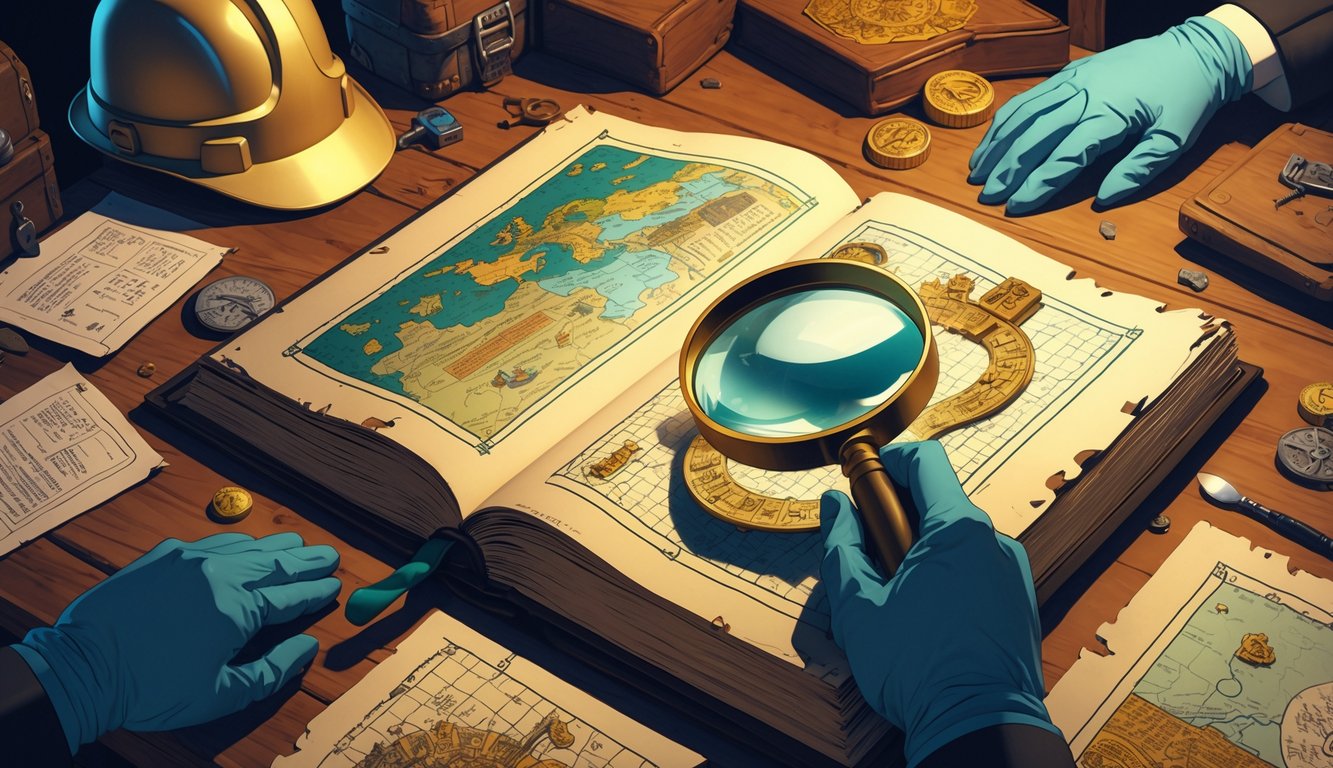
Treasure hunters sometimes face situations where their actions could damage the land, harm historical sites, or break the law. By using careful digging methods and respecting property boundaries, they protect both the environment and themselves.
Responsible Digging Practices
When searching for a buried casque, hunters use small, precise tools instead of large shovels. This helps protect tree roots, underground pipes, and the treasure itself.
They also fill in any holes after searching. Leaving open pits can cause injuries to people or animals.
A simple checklist for safe digging:
| Step | Action |
|---|---|
| 1 | Use hand trowels or small shovels |
| 2 | Dig only in soft soil to reduce damage |
| 3 | Replace soil and restore the surface |
Hunters wear gloves to prevent cuts and stay alert for hazards like glass, insects, or sharp rocks. They avoid digging in areas with signs of utility lines or irrigation systems.
Respecting Public and Private Property
Many people believe that casque locations are in parks, gardens, or other public spaces. Hunters should check local rules before digging.
Some parks ban any form of excavation without permission.
If a suspected site is on private land, hunters must get written consent from the owner. Entering without permission can lead to trespassing charges and harm relationships with the community.
Hunters should avoid disturbing historical landmarks. Digging in these places can destroy protected artifacts and cause legal trouble.
Focus on areas where digging is clearly allowed and safe.
For more about the hunt’s history and locations, visit the overview of The Secret treasure hunt.