During World War II, thousands of American service members vanished in the vast Pacific. Fierce battles and accidents far from the front lines claimed many lives.
America’s Lost WWII Hero refers to one of these missing service members whose fate remains unknown despite decades of searching.
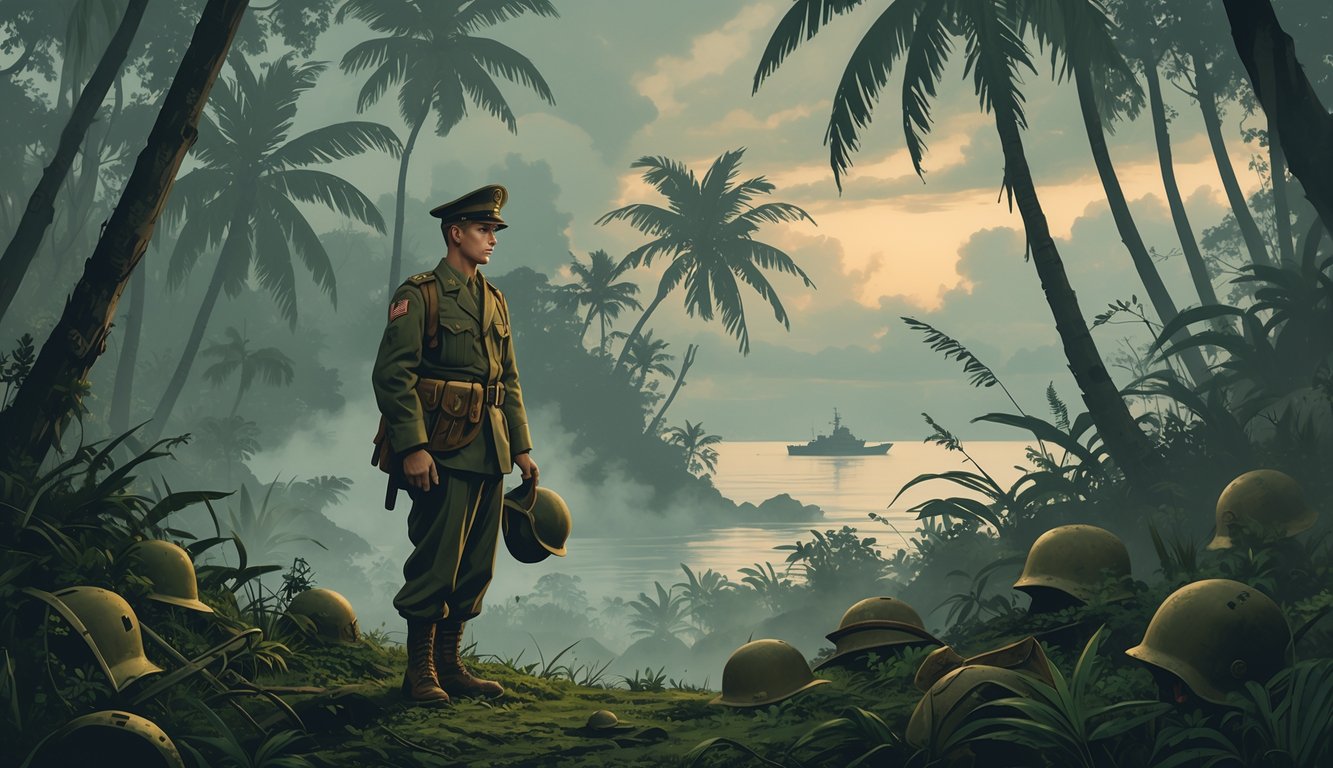
This story follows the mystery of a soldier who disappeared during the Pacific campaign. Historians, investigators, and volunteers continue to search for answers.
Early military teams began the search, and modern missions like Project Recover continue the effort. Each new clue brings hope.
Wartime records, eyewitness accounts, and TV investigations such as Expedition Unknown help piece together the story. The search remains important because it honors those lost in the Pacific.
The Mystery of America’s Lost WWII Hero

Gertrude “Tommy” Tompkins was the only member of the Women Airforce Service Pilots (WASP) still missing from World War II. She vanished while ferrying a P-51 Mustang fighter plane from California to New Jersey in October 1944.
Her disappearance has puzzled historians, military researchers, and aviation enthusiasts for decades.
Overview of the Disappearance
Tompkins took off from Mines Field, now Los Angeles International Airport, on a clear afternoon. She planned to fly to Palm Springs before heading east.
She never arrived.
Witnesses last saw her aircraft heading toward the San Gabriel Mountains. Some believe she faced mechanical trouble shortly after takeoff.
As part of the WASP program, she delivered aircraft from factories to military bases. The P-51 Mustang was a high-performance fighter widely used in the war.
Search teams have focused on possible crash sites in the San Jacinto Mountains and nearby waters. The rugged terrain and deep canyons make recovery difficult.
Significance of the Case
Tompkins’ case holds a unique place in U.S. military history. She is the only WASP pilot still unaccounted for from World War II.
The WASPs were civilian women who flew military aircraft to free male pilots for combat duty. Their work was vital but often overlooked.
Finding her aircraft could provide closure for her family and preserve the legacy of the WASP program. It would also add to the historical record of wartime aviation losses in the United States.
Television programs like Expedition Unknown have brought renewed attention to her story. Modern search methods and public interest fuel ongoing investigations.
Initial Search Efforts
When Tompkins failed to arrive in Palm Springs, the Army Air Forces began an aerial search. Pilots scanned desert valleys, mountain passes, and coastal waters.
The search lasted several days but found no trace of her or the P-51 Mustang.
At the time, search technology was limited. Crews relied on visual spotting from the air, which was difficult in the mountainous and desert terrain of Southern California.
Over the years, volunteer teams and aviation archaeologists have revisited the case. They have used sonar, ground-penetrating radar, and dive surveys in lakes and offshore waters.
Gertrude Tompkins Silver: The Missing WASP Pilot
Gertrude Tompkins Silver was the only member of the Women Airforce Service Pilots (WASP) to go missing during World War II. She vanished in 1944 while ferrying a P-51D Mustang, and neither she nor the aircraft has ever been found.
Early Life and Background
Gertrude Vreeland Tompkins was born on October 16, 1911, in New Jersey. She grew up in a well-off family, with her father working in the textile industry.
She faced personal challenges in her youth, including a stutter that made social situations difficult. Aviation became a source of confidence for her.
Friends described her as quiet but determined. She later married Henry Silver but often used her maiden name.
Her interest in flying grew during the early 1940s. By the time the United States entered World War II, she had already begun flying lessons.
Role in the Women Airforce Service Pilots
Gertrude joined the WASP program in 1943 as part of class 43-W-7. The WASP was a civilian women’s pilot organization that worked with the U.S. Army Air Forces to ferry aircraft, test planes, and train other pilots.
She trained at Avenger Field in Sweetwater, Texas, and was assigned to ferry aircraft between military bases. Her postings included Love Field in Dallas and Pecos Army Air Base.
She flew several aircraft types, including the AT-6 Texan, AT-17 Bobcat, and UC-78. Her work freed male pilots for combat roles overseas.
Before the WASP program ended in late 1944, Gertrude had completed many missions. She was respected for her skill and reliability as a ferry pilot.
Final Mission Details
On October 26, 1944, Gertrude took off from Mines Field, now Los Angeles International Airport, in a new P-51D Mustang. She was scheduled to deliver the fighter to Newark, New Jersey, with her first stop in Palm Springs.
Witnesses reported that she departed in the late afternoon. She never arrived at Palm Springs.
Search efforts began after a delay of several days. The Civil Air Patrol reported possible wreckage near Toro Peak in the Santa Rosa Mountains, but no confirmed evidence was found.
Neither Gertrude nor her aircraft has been located, despite modern search efforts, including underwater investigations off the coast of Los Angeles.
Timeline of the Disappearance
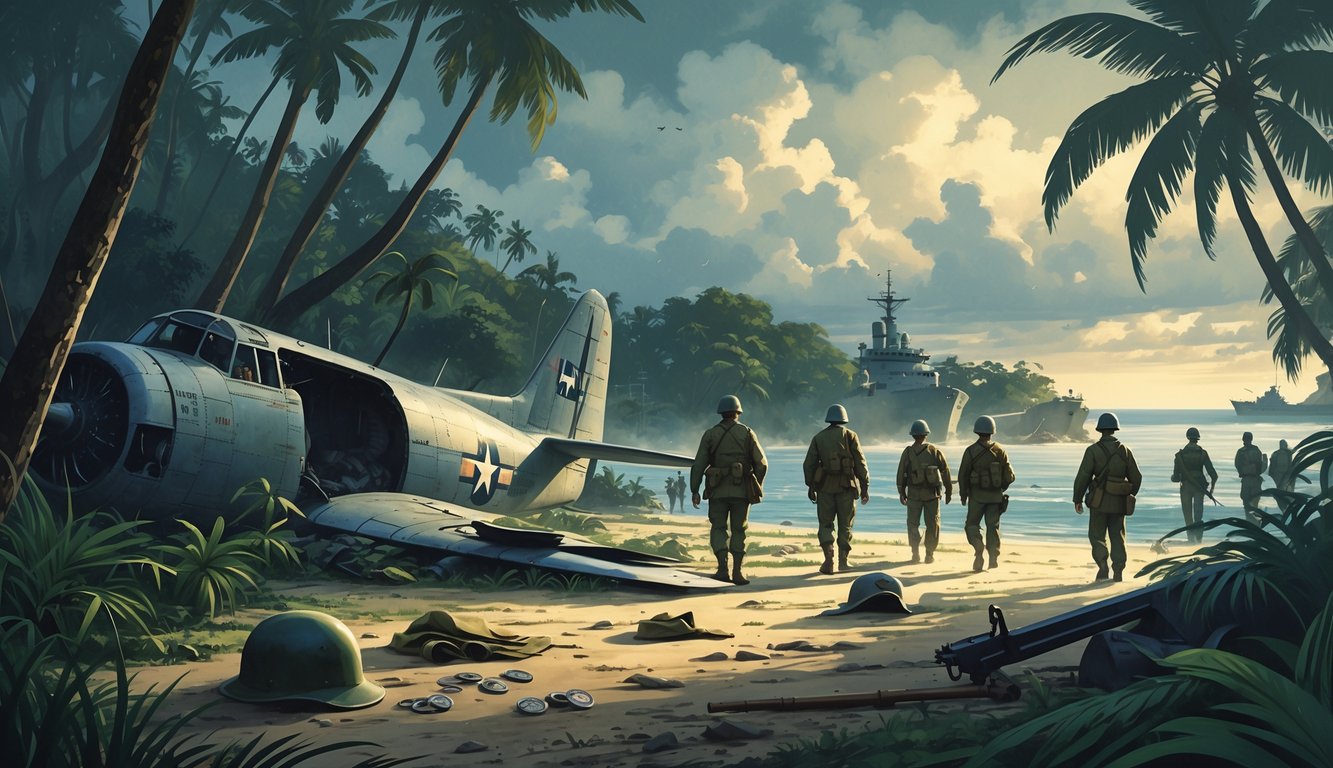
Gertrude “Tommy” Tompkins Silver was the only member of the Women Airforce Service Pilots (WASP) still missing from World War II. She vanished in October 1944 while ferrying a P-51 Mustang fighter from California to Texas.
Pre-Flight Events
On October 26, 1944, Tompkins was assigned to deliver a new P-51 Mustang from Mines Field, now Los Angeles International Airport, to Newark, New Jersey.
She had joined the WASP program in 1943 and trained to fly high-performance aircraft. She was considered a skilled pilot.
That morning, weather conditions along the California coast included low clouds and fog. Tompkins departed late in the day, reportedly after waiting for the fog to lift.
She planned to make her first stop at Palm Springs Army Airfield. Witnesses later recalled seeing her in good spirits before takeoff.
Her P-51, a fast and powerful fighter, was designed for long-range escort missions. The aircraft was new and had no known mechanical issues before departure.
Flight Path and Last Known Location
Tompkins took off from Mines Field in the late afternoon, heading east. Her route would have taken her over Santa Monica Bay before turning inland toward Palm Springs.
She was last seen flying low over the bay, possibly to avoid thick cloud cover. This was the last confirmed sighting of her and the P-51.
No distress call was recorded, and radar tracking was not available for her flight. She may have experienced engine trouble or spatial disorientation in poor visibility.
Searchers have long focused on the waters of Santa Monica Bay as the most likely crash site. Modern expeditions, including one featured in America’s Lost WWII Hero, have used sonar and diving teams to scan the seabed for the missing plane.
Delayed Search Response
The search for Tompkins did not begin immediately. Her absence was not reported until three days after her departure due to confusion about her flight plan and destination.
By the time the Army Air Forces began looking, weather conditions had changed. Possible debris had likely sunk or drifted away.
Initial efforts focused on land routes, assuming she may have crashed inland. This delayed a concentrated search of Santa Monica Bay.
Multiple organized searches—including a 2010 dive in the bay—failed to locate the aircraft. The lack of physical evidence has kept the case open for more than 80 years.
Search Operations and Investigations
Teams use a mix of land, air, and underwater methods to locate missing World War II service members. These efforts often combine historical research with modern technology to pinpoint likely sites.
Ground and Aerial Searches
Investigators study wartime maps, combat reports, and eyewitness accounts to narrow search zones. They work in remote jungles, mountains, or islands where battles once took place.
Search crews use metal detectors, ground-penetrating radar, and GPS mapping to locate wreckage or remains. In some cases, they partner with local residents who know the terrain.
Aerial surveys help cover large areas quickly. Drones and small aircraft can spot overgrown crash sites or disturbed soil patterns from above.
This method reduces time spent searching inaccessible ground locations.
Underwater Search Technology
Many Pacific theater losses occurred at sea, making underwater searches essential. Organizations like Project Recover use sonar, remotely operated vehicles (ROVs), and autonomous underwater vehicles (AUVs) to scan the ocean floor.
These tools detect aircraft wreckage and ship debris even in deep or murky waters. High-resolution imaging allows teams to confirm if a site matches a known wartime loss.
Divers conduct visual inspections, often working in challenging conditions such as strong currents or low visibility. Teams document and recover any artifacts or remains according to military protocols.
Recent Search Expeditions
Recent missions have combined historical research with field operations to locate long-missing aircraft and personnel. The television series Expedition Unknown followed a search for pilot Gertrude “Tommy” Tompkins, who disappeared in a P-51 Mustang over the Pacific.
In Papua New Guinea, U.S. recovery teams have investigated dense jungle crash sites linked to missing aircrews. These expeditions require weeks of travel, equipment transport, and coordination with local authorities.
Some projects involve international partnerships, such as working with Japanese recovery groups on islands like Saipan. These collaborations help locate and identify both American and Japanese service members lost in the same battles.
Expedition Unknown: Revisiting the Case
In 2019, the TV-PG series Expedition Unknown aired an investigation into the disappearance of World War II pilot Gertrude “Tommy” Tompkins. The episode followed a modern search effort that used advanced technology to explore possible crash sites in the Pacific and nearby waters.
Josh Gates’ Involvement
Josh Gates led the on-location investigation. He combined historical research with hands-on exploration.
He worked with aviation historians, oceanographers, and volunteer search teams. Together, they retraced Tompkins’ final flight path.
The team used sonar scans and dive surveys. They also checked archival records to narrow down likely locations of the missing P-51 Mustang.
Gates balanced fieldwork with interviews from experts and people connected to the original case. By joining the search directly, he highlighted the challenges of finding wartime wrecks after decades.
His presence brought a human connection to the technical and historical parts of the mission.
Discovery Channel Coverage
The Discovery Channel aired the episode as part of Expedition Unknown Season 6, Episode 8, titled “America’s Lost WWII Hero”. The episode included closed captioning and a TV-PG rating to reach a broad audience.
The network showed the investigation with historical context and underwater exploration footage. They included interviews, archival photos, and animated maps to guide viewers through the search process.
Discovery Channel focused on modern search technology. The episode demonstrated how side-scan sonar and GPS mapping help recover history.
Impact of the 2019 Episode
The 2019 episode sparked new public interest in Tompkins’ story and the Women Airforce Service Pilots (WASP) program. Many viewers learned about her disappearance and the limited recognition female pilots received during the war.
The episode inspired more volunteer-led searches in the following years. Some groups used the broadcast’s findings as a reference for their own research.
Project Recover and Modern Search Efforts

Project Recover works to locate and bring home American service members missing since World War II. The team focuses on sites in the South Pacific, where many aircraft and ships were lost during battles.
Their work combines historical research, advanced technology, and partnerships with local and national groups.
Mission and Methods
Project Recover aims to find and repatriate Americans missing in action, especially from World War II. They hope to give closure to families and recognition to those who served.
They follow a clear process:
- Research – Study historical records, maps, and eyewitness accounts.
- Field Search – Conduct on-site surveys in targeted areas.
- Documentation – Record findings with photos, videos, and GPS data.
- Recovery – Assist with the recovery and return of remains when possible.
Many searches happen in the South Pacific, including places like Palau and Chuuk Lagoon. These locations saw heavy fighting and still hold many wrecks beneath the ocean.
Collaborative Partnerships
Project Recover brings together nonprofit teams, scientists, historians, and military agencies. They work with the U.S. Defense POW/MIA Accounting Agency (DPAA) to identify and return recovered remains.
Local governments and communities in the South Pacific help by sharing knowledge of crash sites and providing access to remote areas.
They also partner with universities and marine research groups. These partnerships bring skilled divers, archaeologists, and technical experts for underwater and land-based searches.
Use of Advanced Technology
The team uses modern tools to find wrecks hidden for decades. Side-scan sonar maps the seafloor, and submersible drones capture detailed images of underwater sites.
Geographic Information Systems (GIS) combine old maps with modern satellite data to find likely search zones. In deep or murky waters, remotely operated vehicles (ROVs) explore places divers cannot reach.
For example, the team used sonar and ROVs to locate three WWII aircraft in Chuuk Lagoon. They confirmed the positions before sending divers for documentation.
Operation Hailstone and the Pacific Theater
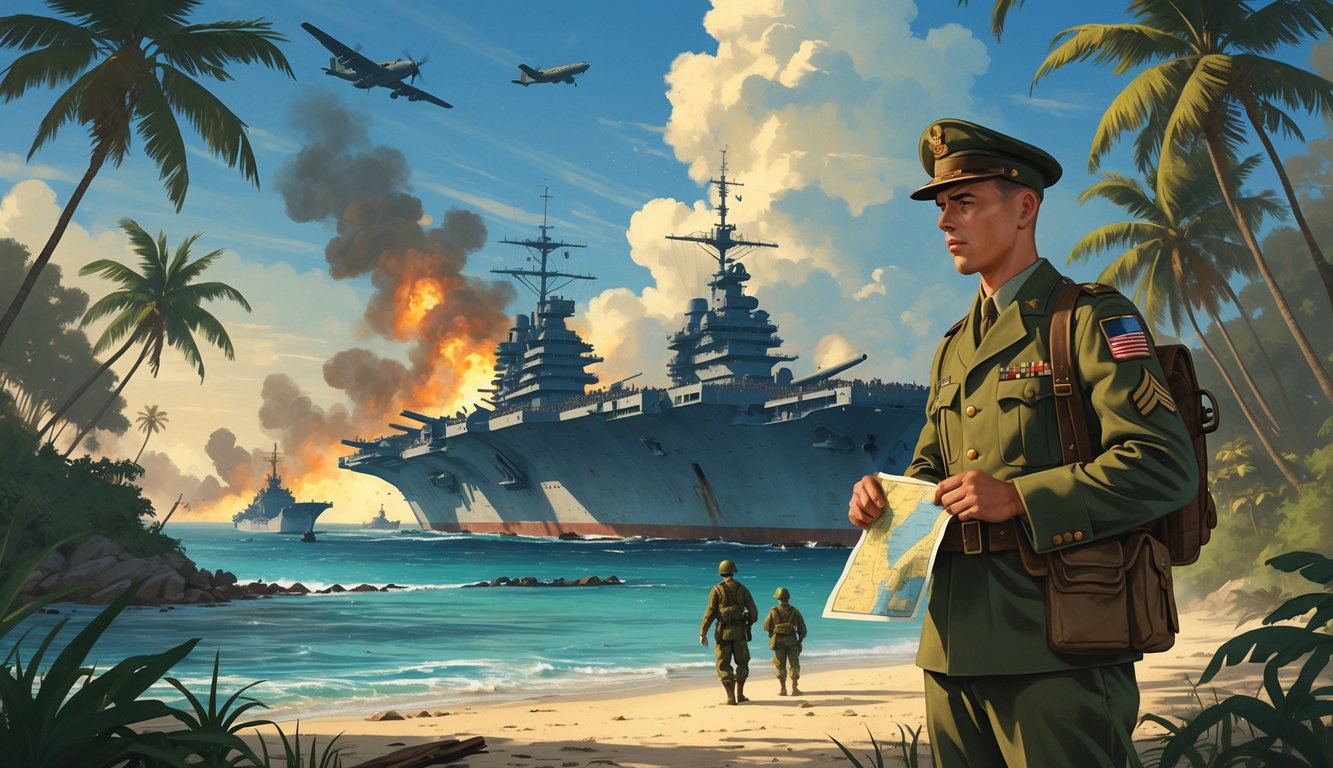
In February 1944, U.S. Navy forces launched a large-scale strike against the Japanese base at Truk Lagoon in the South Pacific. The attack crippled Japanese operations and left behind wrecks and missing service members.
Historical Background
Operation Hailstone happened on February 17–18, 1944. It was part of the American push across the Pacific after Pearl Harbor.
The operation targeted Truk Lagoon, a key base for the Imperial Japanese Navy. The U.S. sent Task Force 58, which included carriers like the USS Enterprise and USS Intrepid.
Aircraft bombed ships, airfields, and supply depots in waves. By the end of two days, Japanese losses were heavy:
- Over 50 ships sunk
- More than 250 aircraft destroyed
- Thousands of personnel killed
This strike removed Truk as a threat to Allied movements in the Pacific. It marked a turning point in the island-hopping strategy toward Japan.
Connection to Missing Soldiers
Many U.S. aircraft were lost during Operation Hailstone. Some crashed into the lagoon or nearby waters, leaving crews missing.
Groups like Project Recover have found wrecks of planes such as Dauntless dive bombers and Avenger torpedo bombers. These discoveries help identify missing service members.
The search is difficult because saltwater corrosion, shifting sands, and deep water hide wrecks. Each find adds to the historical record and honors those who did not return.
Some remains have been matched to specific crews through careful documentation and wartime records. Local communities in Chuuk often help with these efforts.
Legacy in the South Pacific
Wrecks from Operation Hailstone still rest on the seafloor in Chuuk State, Federated States of Micronesia. Many have become popular dive sites.
For the people of the South Pacific, the battle is part of a larger WWII legacy. It shows both the destruction of war and the ties between the region and the United States.
Underwater surveys have mapped dozens of wrecks, from cargo ships to fighter planes. These sites are both historical artifacts and war graves, so they require respectful treatment.
The events at Truk Lagoon show the strategic importance of the South Pacific in the Allied campaign. Control of these waters after 1944 allowed the U.S. to move toward the Philippines and Japan.
Challenges in Locating Missing WWII Heroes
Finding missing World War II service members often requires navigating tough terrain and piecing together incomplete records. Teams combine fieldwork, research, and compassion.
Geographical and Environmental Obstacles
Many World War II aircraft and ships were lost in remote parts of the Pacific. Search teams work in areas with dense jungles, rugged mountains, or deep ocean waters.
Thick vegetation can hide crash sites for decades. Saltwater corrosion and shifting sands can bury wreckage underwater, making it hard to find even with sonar.
Weather adds to the challenge. Heavy storms, strong currents, and typhoons can scatter debris. Sometimes, volcanic activity changes landscapes and erases traces of wartime events.
Modern technology such as side-scan sonar, magnetometers, and underwater drones has improved the odds of finding wrecks. Teams like Project Recover use these tools to search places once unreachable.
Archival and Eyewitness Limitations
Records from the 1940s are often incomplete or inaccurate. Combat reports, flight logs, and mission maps may have been lost or damaged.
Eyewitness accounts can help but may conflict. Memories fade over decades, and wartime chaos made it hard to recall exact locations.
Researchers cross-check military archives, diaries, and foreign records to create the most accurate picture possible. Even then, gaps remain.
In the case of Gertrude “Tommy” Tompkins, the only Women Airforce Service Pilot still missing from WWII, search teams have combined fragmentary reports with modern mapping to narrow down possible crash sites.
Emotional Impact on Families
Many families have waited a lifetime for answers. Some relatives were children when their loved one went missing and are now elderly.
The uncertainty is emotionally exhausting. Families often balance hope for recovery with the reality that remains may never be found.
When a search team locates a wreck or remains, it can bring closure. Repatriation ceremonies allow relatives to honor the service member’s sacrifice and lay them to rest.
Organizations often stay in close contact with families, offering updates and involving them in memorial efforts. This human connection is as important as the technical search.
The Role of Media in Uncovering History
Television and documentaries have brought attention to forgotten military stories. They present history in an accessible way, often mixing research with modern technology.
Public Awareness Through Television
Television has introduced lesser-known World War II stories to the public. Programs use interviews, archival footage, and on-location filming to make events easier to understand.
These shows reach millions in a single broadcast. By airing on popular networks, they make history part of everyday conversation.
Many productions use a TV-PG rating to keep content suitable for a wide audience. Closed captioning (CC) makes programs accessible to people with hearing difficulties.
Influence of Discovery Channel
The Discovery Channel has produced several programs focused on military history and heroism. One example is Expedition Unknown: America’s Lost WWII Hero, which follows the search for a missing soldier in the Pacific.
The production team used aerial mapping and underwater scanning to find evidence. These methods let them explore areas that were once impossible to search.
By airing the investigation, the channel gave viewers a look at both the history and the modern search process. This showed how technology and eyewitness accounts work together to uncover events from over 70 years ago.
Educational Value of Documentaries
Documentaries bridge the gap between research and public understanding. They condense complex military operations into clear timelines and highlight personal stories.
Many include maps, photos, and expert commentary for context. This helps viewers see not just what happened, but why it mattered.
When combined with interviews from veterans, family members, or historians, these films create a fuller picture of the past. They also encourage viewers to explore resources like the National Archives’ World War II records to learn more.
Ongoing Legacy and Future Searches

Decades after World War II, teams still recover fallen service members from remote islands, dense jungles, and the ocean floor. These missions use historical research, advanced technology, and cooperation between governments, non-profits, and families to bring long-missing heroes home.
Continuing Efforts to Find America’s Lost WWII Heroes
The Defense POW/MIA Accounting Agency (DPAA) leads many recovery missions. This agency often works with non-profits like Project Recover.
They use tools such as:
- Archival research to locate crash and battle sites
- Underwater archaeology to find sunken aircraft and ships
- DNA testing to confirm identities
Many cases in the Pacific remain unresolved. Dense vegetation, shifting terrain, and deep waters slow recovery.
Each time teams identify a soldier or sailor, a waiting family receives closure. Teams often return to the same sites over the years.
They gradually uncover evidence during each visit. Their persistence has led to the recovery of remains from battles like Tarawa and Guadalcanal.
Inspiration for Future Generations
The search for America’s lost WWII heroes is more than a historical mission. It teaches younger generations the value of patience, research, and teamwork.
Students, volunteers, and researchers often join expeditions. Some learn field skills like mapping and artifact preservation.
Others work in labs to help catalog and analyze recovered items. These efforts show how technology changes history work.
For example, sonar mapping and aerial drones now reveal wreck sites that stayed hidden for decades. Organizations share these discoveries through museums, documentaries, and online archives.
This openness helps keep the stories alive and ensures the sacrifices of the past remain part of public memory.
Honoring the Memory of the Missing
Recovery is only part of the mission. Honoring those still missing is equally important.
The military gives full honors to many identified service members when they return home. Families often attend ceremonies where officials present folded flags and medals.
Memorials, such as the Walls of the Missing, list the names of those not yet found. These sites and digital archives like the WWII Honor List of Dead and Missing offer the public a place to reflect.
Annual remembrance events and educational programs help keep the missing in the nation’s memory. The search for them continues.