Libya is a country with a long and fascinating past. Its history is full of mysteries that still puzzle historians and travelers.
From hidden underground cities in the desert to traces of ancient Amazigh, Greek, Phoenician, and Roman societies, Libya’s heritage offers many secrets. Many of the biggest historical mysteries in Libya come from its unexcavated ruins and vanished civilizations.
Adventurers and scholars have long wondered about the purpose of tunnels beneath the desert. The fate of cities that once stood at coastal trading posts remains unknown.
Ancient artifacts and ruins give us a glimpse of the complex cultures that shaped Libya’s history. Much is still unknown about daily life and lost traditions.
Sites across the country invite people to learn about the past. They help preserve Libya’s rich heritage for the future.
Ancient Civilizations and Lost Cities
Libya has been home to several key ancient civilizations. Settlements by Phoenicians, Berbers, Carthaginians, Greeks, and Romans left behind ruins and lost cities that still puzzle historians.
Phoenician and Berber Settlements
The Phoenicians reached Libya’s coast around the first millennium BCE. They set up trading posts along the Mediterranean and interacted with the Berber peoples already living there.
Berbers, also known as Amazigh, formed farming communities. Sometimes they built fortified villages or underground cities in the desert.
These hidden sites, such as those recently found in the Sahara, show the ingenuity of the local people. Archaeologists remain interested in these underground cities, which highlight how ancient societies adapted to harsh desert life.
Phoenician trade helped spread technology and ideas. Some Berber settlements merged with Phoenician outposts, creating unique cultures that influenced later civilizations.
Carthage’s Influence in Libya
Carthage, a powerful city-state founded by Phoenicians in present-day Tunisia, extended its reach across the North African coast. Carthaginians controlled key ports in Libya and influenced daily life, trade, and religion.
Carthaginian rule linked Libyan cities to a wider commercial network. Ruins of ancient cities and castle-like farms in the desert show Carthage’s strong presence, especially in western Libya.
Religious and cultural traditions from Carthage mixed with local customs. This fusion helped build the foundation for later civilizations in Libya.
Legacy of the Greeks and Romans
The ancient Greeks founded cities along Libya’s eastern coast, most famously Cyrene. This city became a leading cultural and trade center, known for its scholars, theaters, and temples.
Later, the Romans absorbed Greek colonies into their empire. Libya became part of Roman provinces like Tripolitania and Cyrenaica.
The Romans built large cities such as Leptis Magna and Sabratha. These cities featured grand forums, baths, and amphitheaters, and many ruins still stand today.
Greek and Roman architecture, government, and art shaped Libya’s history. This shared legacy left behind some of the best-preserved archaeological sites in North Africa.
Unexplained Ruins and Legendary Sites
Libya holds many ancient ruins that are still full of unanswered questions. These sites show advanced building skills and unique styles that highlight the history of the Mediterranean and Sahara regions.
Secrets of Leptis Magna
Leptis Magna, once a major Roman city, stands out for its large size and impressive ruins. Its huge marketplace, detailed archways, and massive amphitheater spark curiosity among archaeologists.
No one knows exactly how the city became so wealthy and powerful so far from the Roman heartland. The city’s sudden rise and later decline remain hard to explain.
Some mystery surrounds the purpose of certain buildings, like the large basilica, which contains carvings not found elsewhere in Roman architecture. Excavations reveal advanced engineering skills, especially in water management systems.
Many artifacts discovered at Leptis Magna do not match what is usually found in other Roman sites. Experts wonder if outside influences shaped the city more than once thought.
The Mysteries of Sabratha
Sabratha, another important site along the Mediterranean coast, is known for its well-preserved Roman theater. The city’s layout hints at a blend of cultures, including Phoenician, Berber, and Roman.
Some parts of Sabratha still baffle historians, like strange underground rooms with no clear purpose. The origins of certain statues and mosaics, which use styles not common in the Roman world, raise questions about who lived there and who built the city’s most beautiful monuments.
Reliefs on public buildings show symbols that do not match typical Roman patterns. This suggests that Sabratha might have been a meeting point for secretive groups or religious cults that left little record behind.
Cyrene and the Temple of Zeus
Cyrene was once called “the Athens of Africa” for its schools of philosophy and art. Its most stunning feature is the Temple of Zeus, one of the largest religious sites in North Africa.
Archaeologists still debate why the temple was abandoned and rebuilt several times over the centuries. Inside the temple, unusual carvings and giant columns show skills that seem ahead of their time.
Some of the symbols used on the temple walls do not match Greek traditions, suggesting a mix of local beliefs. Cyrene’s ruins reveal buildings that don’t fit common Greek layouts.
Historians wonder if early Cyrene had native groups whose stories have been lost. The nearby necropolis, which holds hundreds of rock-cut tombs, adds to the mystery because many tombs are empty, with no record of who was buried there.
Ghadames: The Desert Pearl
Ghadames lies at the edge of the vast Sahara desert. Unlike the other ruins, Ghadames is a living city with a maze-like old quarter.
Its white mud-brick homes are famous for keeping cool in the extreme heat. The origins of its unique street plan remain unknown.
Locals claim the city has existed for thousands of years. However, little written evidence from ancient times survives.
Some legends say that traders from far-off lands helped design the remarkable layout of the city. Ghadames’s covered walkways, palm gardens, and connected rooftops show ingenious planning.
Nobody knows who first settled this desert oasis or how they built such an organized city in such harsh conditions. The city shows how people in the Sahara created beauty and comfort against all odds.
The Enigma of Tadrart Acacus
Tadrart Acacus is an ancient mountain range in southwestern Libya. It is famous for remarkable prehistoric rock art and clues about early cultures living in the Sahara desert.
Ancient Rock Art
Tadrart Acacus is filled with thousands of ancient rock paintings and engravings. Many of these artworks date as far back as 12,000 years ago and continue up to about 2,000 years ago.
The images show animals like giraffes, elephants, camels, and cattle. These pictures tell us the Sahara was once much wetter and greener than it is today.
Some artworks also show people hunting, making music, and performing daily activities. The styles and subjects change over time, giving clues about how life and the environment changed in this part of the Sahara.
This rich collection helped the site earn a spot as a UNESCO World Heritage Site. Wind, sand, and sometimes human activities now threaten the survival of these irreplaceable records of African ancient history.
Unknown Cultures of the Sahara
The people who made the Tadrart Acacus rock art are still a mystery. No one knows for sure what their names were, what languages they spoke, or where they eventually went.
The art suggests different groups lived in the area across many centuries, each with their own traditions. Artifacts like tools, pottery, and traces of ancient campsites have been found near the art.
This hints at a lively network of cultures and trade routes crossing the Sahara when it was less harsh. Despite decades of research, there are still many unanswered questions about these unknown peoples and how their way of life adapted as the desert grew.
Preserving the rock art and archaeological sites may help future generations learn more about this important part of Libya’s cultural heritage.
Changing Empires and Forgotten Rulers
Libya has been shaped by many different powers. Each group left behind influences and mysteries.
This land’s history is marked by moments of conquest, occupation, and resistance. These events changed its people and culture.
Byzantines and Arab Conquests
After the fall of the Roman Empire, the Byzantines controlled Libya’s coastline and cities. Their rule brought Greek influences to daily life, including language and religion.
Churches and forts from this period still stand in cities like Cyrene and Leptis Magna. Many details about daily life under the Byzantines are unknown.
Written records are scarce, and much has been lost or buried over time. Historians rely on ruins, artwork, and rare documents to piece together what life was like.
In the 7th century, Arab armies entered Libya, bringing Islam and a new system of government. These changes slowly replaced the old Byzantine ways.
Many cities changed hands quickly. Local Berber tribes often chose to support or resist the new rulers.
This period marked the start of Arabic influence, which can still be seen today in language and customs.
Ottoman and Italian Rule
The Ottoman Empire ruled Libya from the 1500s until World War I. Their control was often weak outside coastal cities.
Local rulers, known as beys and pashas, sometimes governed almost independently. This era saw the building of mosques, schools, and trading posts, but also periods of unrest.
The Ottomans lost Libya to Italian forces in 1911. The Italian occupation brought new roads, buildings, and attempts at full control.
Under the fascist regime, policies were harsh. The authorities aimed to suppress local customs and control the people.
Forced labor, concentration camps, and land seizures were common. Many details about daily life under both Ottoman and Italian rule remain unclear.
Personal stories and records are scattered or missing. This makes the era a puzzle to those interested in Libya’s past.
Berber Tribes and Resistance
Berber tribes have lived in Libya for thousands of years. They often thrived in remote mountain areas, keeping their language, music, and customs alive.
Each tribe had its own leaders and unique ways of life. When foreign empires took over, the Berbers did not always accept new rulers easily.
They used their knowledge of the land to resist and sometimes avoid control altogether. Some uprisings were well-documented, but others remain mysteries, passed down mainly as oral stories.
Leaders like Omar Mukhtar became symbols of their fight against Italian rule. Their role in resisting both Ottoman and Italian rule highlights a key part of Libya’s hidden history.
More on these struggles can be found in this historical background of Libya.
The Puzzle of Libya’s Path to Independence
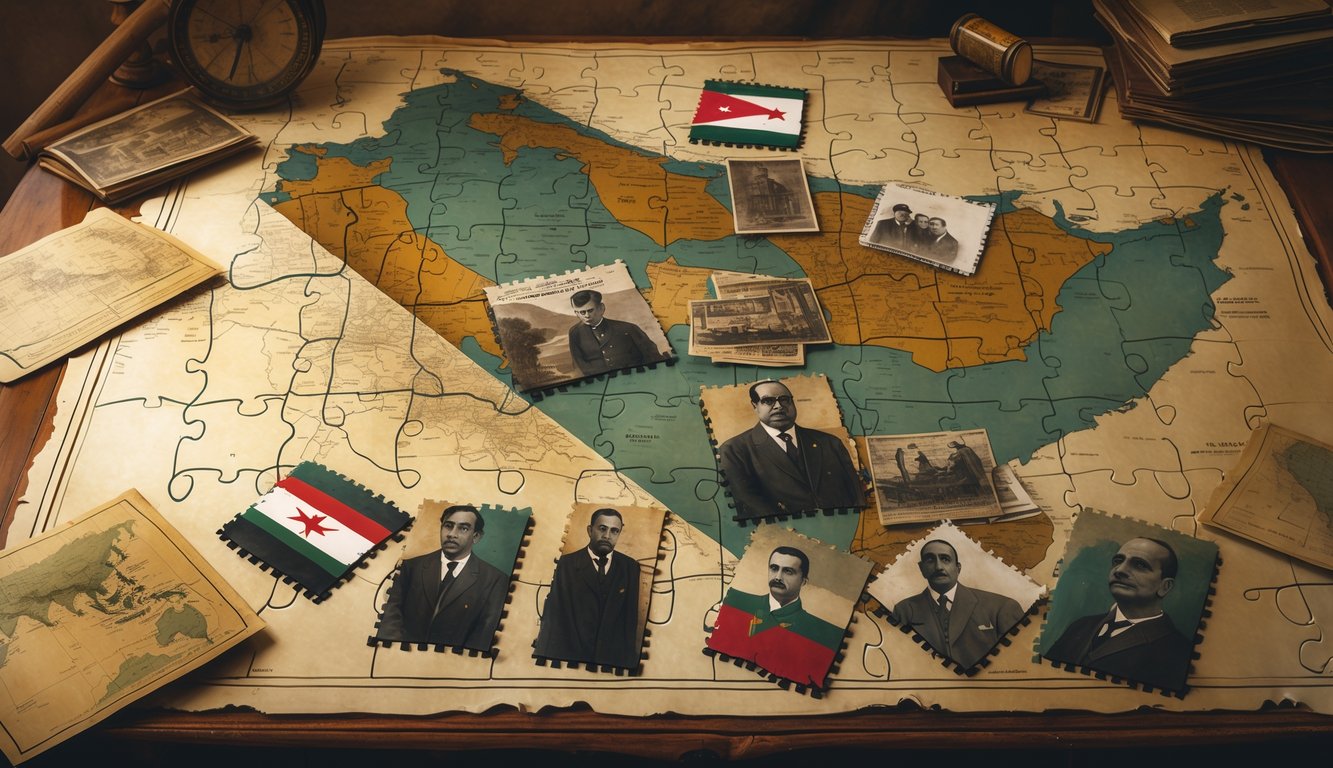
Libya went through decades of colonization, foreign rule, and conflict before it became an independent nation. The events leading up to its independence involved local leaders, global powers, and years of uncertain transition.
King Idris and the Road to Nationhood
King Idris, leader of the Senussi Order, played a major role in bringing Libya together as a new nation. After World War II, he became the figure many Libyans looked to for leadership and unity.
He worked with tribal leaders and international diplomats to form a government that represented the whole country. A constituent assembly from Libya’s three regions met and drafted a constitution.
This step was key for building the new state. On December 24, 1951, King Idris declared the country’s independence from Al-Manar Palace in Benghazi.
Libya became the first nation to gain independence through the United Nations after World War II. Learn more about Libya’s path to independence and King Idris.
British and Italian Occupation
Libya’s modern history was shaped by long periods of foreign control. Italy invaded Libya in 1911 and ruled harshly for decades, turning the land into an Italian colony.
Many Libyans suffered under Italian rule, with forced labor, loss of land, and strict policies that harmed local communities. During World War II, British forces pushed out the Italians in major battles.
From 1943 to 1951, the British and French administered different regions in Libya. Each region had its own struggles and different outside influences, making unity hard to achieve.
The effects of both Italian and British occupation still echo in Libya’s colonial era and struggle for independence.
Second World War Turmoil
World War II turned Libya into a battlefield. Its deserts saw fierce fighting between Axis (German and Italian) and Allied (British and others) forces.
The war damaged towns and displaced many Libyans. After the war, Libya was left poor and divided.
World powers like Britain, France, and the United States debated the country’s future. The United Nations sent a commission in 1948 to assess if Libya was ready for independence.
These post-war years were uneasy for Libyans, but they also set the stage for the UN-brokered independence under King Idris.
Revolution, Coups, and Modern Upheaval
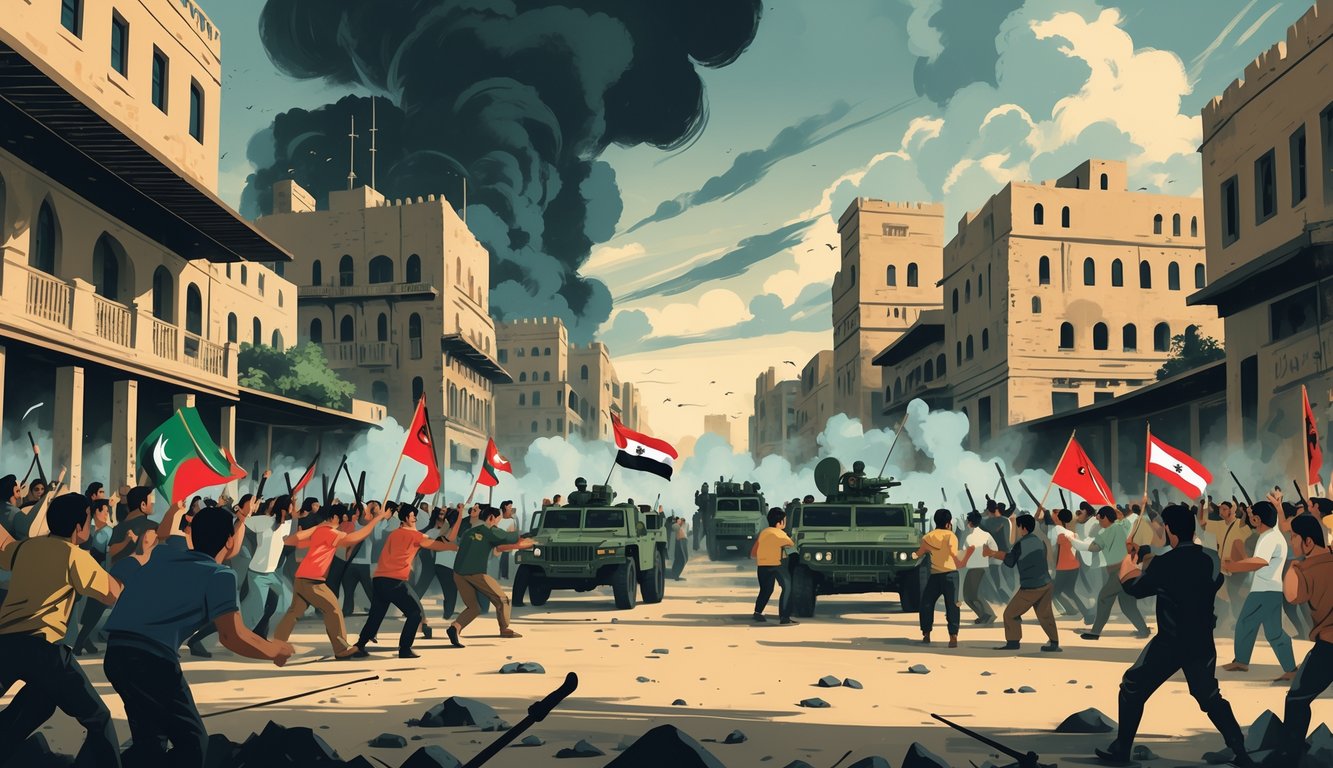
Since the mid-1900s, Libya has experienced dramatic shifts in leadership and national direction. Power changes, coups, and civil wars have marked much of its recent past.
These events have shaped the lives of millions and shifted Libya’s place in international politics.
Rise of Muammar Gaddafi
Muammar Gaddafi first appeared on the public stage as a young military officer. He grew up influenced by Arab nationalism and admired Egypt’s Gamal Abdel Nasser.
By the late 1960s, Gaddafi had become a leading figure within Libya’s armed forces. He was charismatic, ambitious, and determined to challenge the monarchy.
Gaddafi’s vision included ending Western influence in Libya. He wanted to reclaim national resources, especially oil, for Libyans.
After coming to power, he promoted a new political philosophy that combined socialism, tribal traditions, and strong anti-imperialism. His Green Book discussed these ideas in detail.
Through the years, Gaddafi’s rule became more authoritarian. Some praised his programs for education and health, but others criticized his leadership style and harsh response to opposition.
Gaddafi remained at the center of Libyan politics for over four decades.
The 1969 Coup d’État
In September 1969, a bloodless military coup toppled King Idris I from the throne. A group known as the Free Officers Movement, led by Gaddafi, took control of key sites in Tripoli and Benghazi overnight.
They quickly banned the monarchy and declared Libya a republic.
Key Facts about the 1969 Coup:
- King Idris was out of the country when the coup took place.
- The operation was planned in secrecy among a small group of officers.
- There was little violence, and most Libyans did not resist the sudden change.
After the coup, the new government focused on reshaping Libyan society. Leaders nationalized oil, expelled foreign military bases, and called for Arab unity.
The coup changed Libya’s path, replacing a royal government with a revolutionary one centered around Gaddafi and his allies. For more information, readers can see revolutions that changed nations at Top 10 Revolutions that Changed the World.
Political Turbulence and Civil War
Libya’s political landscape has been shaped by instability and ongoing conflict, especially since 2011. In that year, a popular uprising and armed revolt, inspired by the broader Arab Spring, led to the fall and death of Gaddafi.
Rival groups began to compete for control. Militias formed and cities became battlegrounds.
The central government lost much of its power, leading to a split between eastern and western factions. Many other countries have become involved, choosing sides and providing support to different groups.
This international attention made the conflict even harder to resolve. As of today, no single government has full control, and Libya remains divided and fragile.
More about these modern revolutionary upheavals is discussed at Essential Readings: Revolutions in the Contemporary Middle East.
Archaeological Mysteries and Preservation
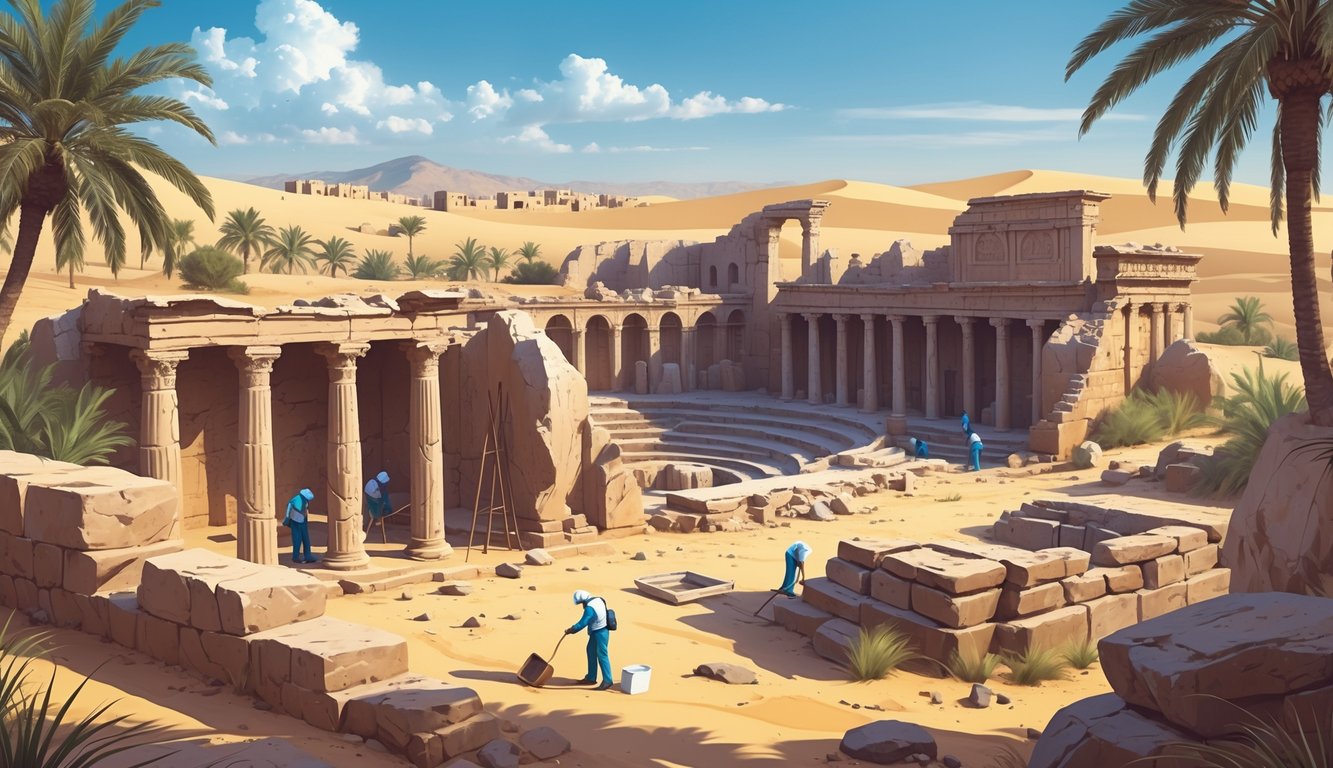
Libya is home to some of the most impressive ancient ruins in North Africa. Many sites remain unexplored.
Ongoing risks, such as looting and conflict, threaten the country’s unique heritage. Local and international groups work to protect what remains.
Unexcavated Sites
Many areas in Libya have not been properly investigated by archaeologists. In regions like the Fezzan, deserts hide traces of prehistoric and Amazigh cultures.
Ruins of Greek, Roman, and Byzantine cities like Leptis Magna and Cyrene are famous. Scholars say less-known sites still wait beneath the sand.
Exploration is difficult due to long distances, limited funding, and security challenges. Scientists often rely on satellite imagery and aerial surveys to look for new discoveries.
Large sections of Libya’s history are still hidden, with important answers about North African civilizations yet to be found.
Threats to Libya’s Heritage
Libya’s archaeological sites face many modern dangers. Armed conflict and political instability have left ancient ruins open to looting, vandalism, and bomb damage.
According to recent reports, damage and destruction often result from urban growth, unregulated agriculture, and illegal digging.
Main threats include:
- Looting: Thieves steal artifacts to sell on the black market.
- Urban expansion: New buildings and roads threaten old sites.
- Conflict: Armed groups sometimes use ruins for shelter or target them for strategic reasons.
Sites like Sabratha and the Garamantes settlements are especially at risk. Some areas have lost key features forever due to continued neglect.
International Preservation Efforts
Several organizations are helping protect Libya’s heritage. UNESCO works with local experts for site conservation and has trained communities to safeguard local monuments.
Conservation projects focus on stabilizing crumbling walls, cleaning carvings, and documenting sites through photography and databases. Programs such as the Endangered Archaeology in the Middle East and North Africa (EAMENA) project use new technology to record at-risk locations.
International teams work together to teach preservation skills because local resources are limited.
Goals of these efforts:
- Prevent further loss through monitoring and community education
- Restore damaged ruins with local involvement
- Increase awareness to gain more support for Libyan heritage
Local people play an important part in reporting threats and caring for ancient sites. Outside help provides tools and training when needed.
For more on what is being done to protect Libya’s ancient ruins, see current preservation efforts.
Cultural Legacies: Music, Dance, and Festivals
Libyan culture is shaped by a mix of Berber, Arab, African, and Mediterranean influences. These traditions are kept alive through music, dance, and festivals.
Music, dance, and festivals bring people together and highlight local customs.
Traditional Music and Dance
Libya’s music blends sounds and rhythms from many backgrounds, creating a unique style. Andalusi music is famous in the region, with Maluf as a standout genre using string instruments like the oud and hand drums such as the darbuka.
Each local community adds its own touch. Among the Tuareg people, folk music uses flutes and chanting, often played during social gatherings.
Traditional dances usually feature group movements and call-and-response singing. Lyrics in Libyan songs often explore themes like love, history, and national identity.
Modern music sometimes combines Arabic pop and even influences of reggae. These musical forms let Libyans celebrate their past while also expressing daily joys and challenges.
Learn more about the role of music in Libyan heritage.
Festivals and Local Customs
Throughout the year, Libyans enjoy a variety of festivals that show off their vibrant culture. Some are based on religion, such as Eid celebrations, while others are linked to local harvests or historical events.
Festivals often include music, communal dances, and traditional dress. At these events, people gather in public spaces, cook special foods, and share with neighbors.
Street parades and performances add color and excitement, with children and elders participating together. These gatherings strengthen the sense of unity in local communities and help pass down stories and values from older to younger generations.
Even during social or political challenges, the spirit of celebration remains strong. People continue to mark major holidays and local events as a way to maintain connection to their roots.
For more about how Libyans celebrate, visit this page on Libyan festivals and customs.
Influence of Ancient Traditions
Libya’s cultural practices have deep roots in its ancient past. Berber customs, Arab traditions, and Mediterranean elements influence daily life and celebrations.
These influences appear in music, clothing, and holiday rituals. Some dances and songs performed today date back centuries, passed down through families and community gatherings.
Many festivals follow old agricultural and seasonal calendars. Traditional instruments and dance styles reflect both African rhythms and Mediterranean melodies.
Ancient storytelling and poetry remain important, often included in public celebrations. Communities value these historical legacies because they help people remember their unique past and foster pride in Libyan culture.
For a closer look at how these traditions endure, explore this article about Libya’s cultural heritage.
Urban Legends: Tripoli and the Medina
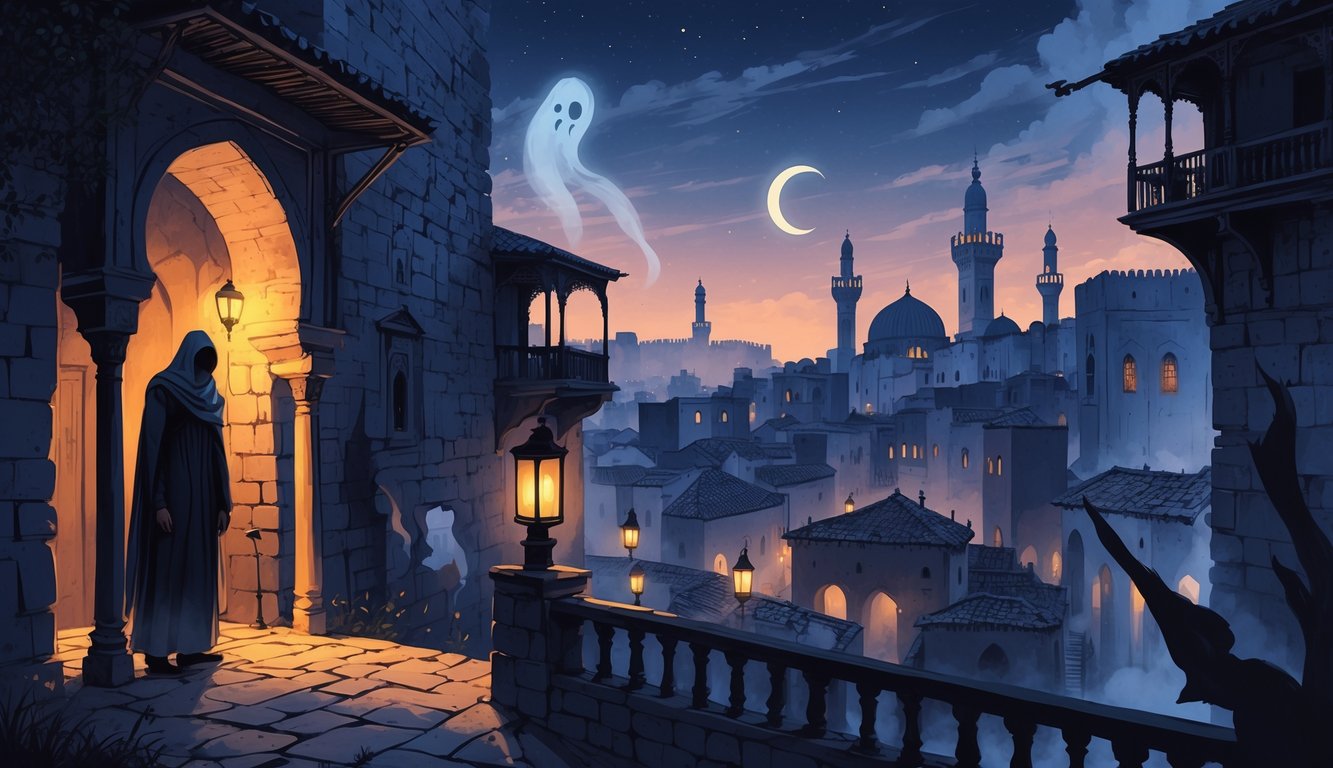
Tripoli’s old city, or medina, is full of legends and stories that have grown over centuries. Its narrow streets, historical buildings, and location by the Mediterranean coast make it a place of mystery and history.
Tripoli’s Mysterious Past
Tripoli’s roots stretch back thousands of years. Different cultures and empires, including Phoenicians, Romans, and Ottomans, have ruled the city.
Each group left its mark, adding layers to Tripoli’s mysterious past. Stories of hidden tunnels under the city have spread for generations.
Some believe secret passages once connected important sites. People could move undetected during wars and sieges.
Tales also mention lost treasures hidden when invaders attacked. Even today, some older residents recall stories about coins, pottery, and Roman relics buried under buildings or along the old walls.
Legends of the Medina
The medina is a maze of winding streets and tight alleys. Many urban legends come from these hidden corners and ancient buildings.
Some locals speak of haunted houses where people hear whispers at night. Others see shadows moving inside empty rooms.
Market areas are especially rich in stories. Shopkeepers tell of spirits that protect the old souks, guarding them from thieves or vandals.
The old archways and homes add to the feeling that history is always close by. Many visitors feel the past is alive in the medina, especially at dusk when the streets get quiet.
The blend of stories and setting creates a special atmosphere. Locals and tourists explore its mysteries. Learn more about the Tripoli Old City (Medina).
Architectural Wonders
The city’s architecture gives clues to its complex history. The medina is filled with buildings from different eras.
Old mosques, centuries-old homes, and former embassies stand side by side along the twisting streets. Some sites, like the former Bank of Rome built in 1917, now serve as banks or public offices.
Arches, courtyards, and mosaics reflect the city’s cultural heritage. Traders from across the Mediterranean coast influenced these designs.
A table of notable sites highlights key parts of Tripoli’s medina:
| Site Name | Notable Feature | Period |
|---|---|---|
| Gurgi Mosque | Unique minaret and tilework | Ottoman |
| Bank of Rome Building | Early 20th-century Italian design | Italian period |
| Old Consulate Houses | Spanish, French & US architectural styles | 18th-19th century |
Conflicts, Security Concerns, and Modern Mysteries
Libya’s recent history includes ongoing conflicts and threats from extremist groups. Shifting political and economic landscapes affect people’s daily lives.
These issues make it hard for tourism and economic growth to develop. Many residents face uncertainty and challenges.
Impact of Extremist Groups
Since 2011, the fall of Gaddafi led to political chaos and power struggles. Extremist groups like ISIS and other militias took advantage of this instability.
They targeted major Libyan cities including Sirte and Benghazi. Locals faced violence, kidnappings, and loss of resources.
Extremist groups brought new security worries. Travel became risky even within Libya’s borders.
Safe beaches and once-popular adventure sites lost visitors and funding. International forces sometimes helped fight these groups.
Security remains fragile. The actions of extremist groups continue to shape the country’s future.
Current Situation and Challenges
Today, Libya has two governments competing for control. Many armies and militias run different parts of the country.
This power struggle makes it hard for the government to deliver basic services. Limited resources and frequent fuel shortages make daily life harder.
People worry about their safety and must deal with checkpoints and armed groups. Constant changes in leadership add to the uncertainty.
The political landscape is uncertain. Talks about peace often end without progress.
Residents and businesses struggle to plan for the future. The threat of sudden conflict or changes in control is a daily reality.
Tourism and Economic Growth
Tourism in Libya could become a major part of the economy. The country has beautiful beaches, historic ruins, and unique adventure spots.
However, travelers stay away because of security concerns and ongoing instability. The loss of tourism hurts businesses, hotels, and guides.
Investors avoid risky environments, so economic growth remains slow. The government spends limited resources mainly on security instead of improving services or attracting visitors.
Libya’s treasures, from the Sahara to ancient cities, remain hidden to most of the world. Many hope for peace so the country can open up its adventures and culture to travelers.
For more on unsolved historical and modern mysteries in Libya, visit the National Geographic history mysteries page.