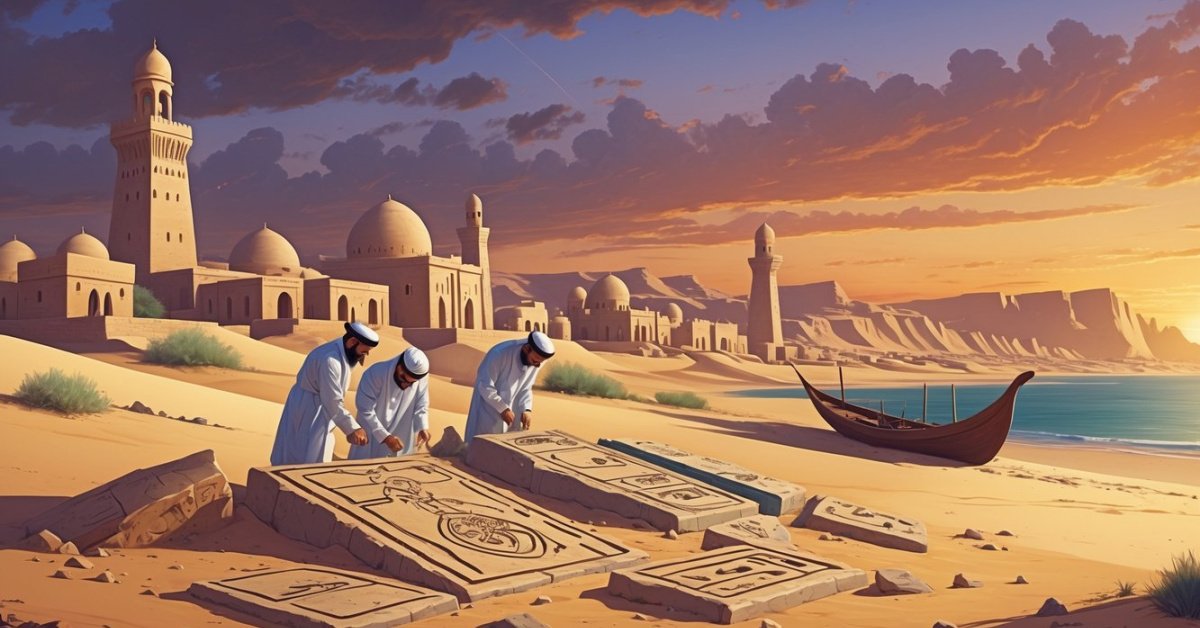
Kuwait’s past is full of puzzles and surprises that continue to amaze historians and archaeologists.
The biggest historical mysteries in Kuwait include ancient artifacts, lost civilizations, and unusual discoveries that challenge what we know about the region’s roots and cultural heritage.
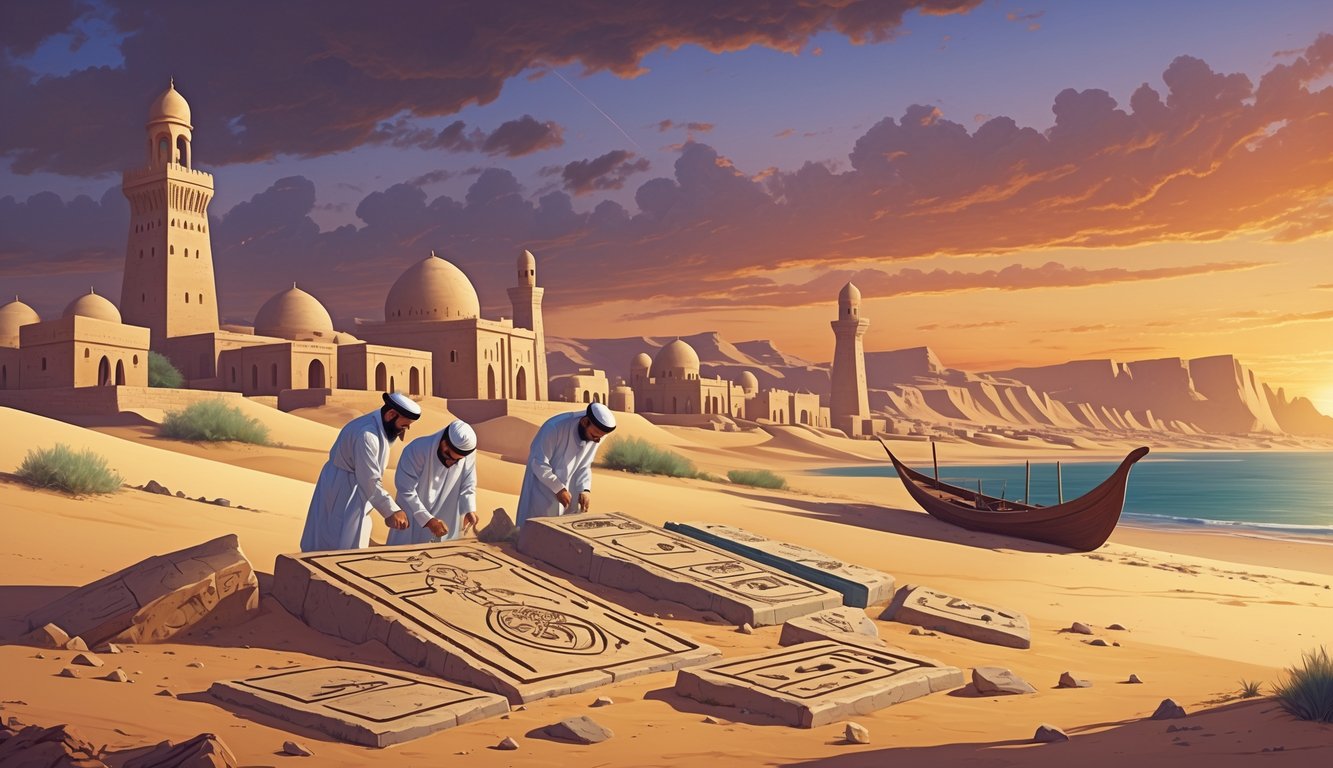
Findings hidden under the sands and stories that reach back thousands of years offer new clues about how people once lived and thrived in this part of the world.
Some secrets, like a 7,000-year-old figurine with alien-like features, have sparked debates and new theories about Kuwait’s earliest inhabitants.
These findings show how much we still have to learn about the ancient peoples who called this land home.
Anyone interested in history or culture will find these stories compelling.
They reveal the deep and sometimes surprising layers that make up Kuwait’s cultural heritage.
If you love a good mystery, get ready to explore the untold secrets beneath Kuwait’s sands.
Overview of Kuwait’s Historical Landscape
Kuwait’s past is shaped by its strategic spot on the Arabian Gulf.
Different civilizations, ancient sites, and efforts to preserve traditions all play a key role in its story.
Ancient Civilizations in the Arabian Gulf
People have lived in Kuwait’s region for thousands of years.
Early settlers came because of its location at the head of the Persian Gulf.
Ancient trade routes connected Kuwait with Mesopotamia, Persia, and the Indus Valley.
Nomadic Bedouin tribes and traders moved goods and animals through this area.
Archaeological evidence links Kuwait to civilizations such as the Dilmun, a powerful trading culture around 2000 BCE.
These early groups built settlements, fished, and traded pearls.
Over the centuries, different empires like the Babylonians and Persians controlled the area.
Kuwait became a crossroads for many peoples and customs.
Key Archaeological Sites
Kuwait hosts several historic sites with remains from different ages.
One important site is Bahra 1, dating back to the Ubaid period, more than 7,000 years ago.
Artifacts found here include tools, pottery, and ancient houses.
These finds help experts learn about daily life in early settlements.
Notable Sites in Kuwait:
| Site Name | Age (approx.) | Key Discoveries |
|---|---|---|
| Bahra 1 | 5500 BCE | Pottery, houses, tools |
| Failaka Island | Hellenistic to Islamic | Temples, coins, seals |
| H3 site | Bronze Age | Stone tools, jewelry |
Failaka Island has Greek temples and castles from Alexander the Great’s time.
Artifacts from the Sassanian and Islamic eras show Kuwait’s long history as a trading hub in the Arabian Gulf.
Cultural Heritage Preservation
Kuwait works to save and restore its historical sites and traditions.
The government and local groups support museums and protection projects for ancient ruins, such as those on Failaka Island and in old Kuwait City.
Restoration projects focus on keeping old buildings and sites safe from damage caused by weather, modern development, or neglect.
Museums display objects like pottery, coins, and jewelry found at archaeological sites.
Cultural events and educational programs help people learn about Kuwait’s diverse past.
These efforts keep history alive and help new generations connect with their country’s legacy.
The Enigmas of Failaka Island
Failaka Island stands at the heart of Kuwait’s ancient mysteries.
Its remains offer clues about early civilizations, religious changes, and the story of education in Kuwait.
Unsolved Failaka Mysteries
Failaka Island has a history stretching back over 4,000 years.
Archaeologists have discovered traces of Mesopotamian, Greek, and Persian settlements, but much about these past societies remains unknown.
One mystery centers around Failaka’s role during ancient transitions.
Excavations reveal a well and artifacts from the period when the island switched from Christianity to Islam.
Researchers still question how islanders practiced their faith and organized society during these times.
Other puzzles include the reason for Failaka’s strategic importance.
Some experts believe it was a trade stop.
Others suggest it was a religious site.
Its exact position in the region’s trade and culture is still debated.
Historians and archaeologists remain fascinated by these questions.
Discovery and Archaeological Surveys
In recent decades, international teams have conducted several archaeological surveys on Failaka Island.
These teams have found temples, houses, coins, and pottery from Greek and Mesopotamian periods.
Key discoveries on Failaka include:
- A 1,400-year-old water well in Al-Qusour
- Ancient Christian churches
- Forts and city walls from different eras
The ongoing archaeological efforts have highlighted Failaka’s rich and complicated past.
Researchers from Kuwait University and other nations continue to study the island, piecing together clues about migration, lifestyle, and economic activity.
Influence on Modern Education
Failaka Island’s finds have shaped history lessons and school curricula throughout Kuwait.
Artifacts from the island are often included in textbooks, giving students a window into their past.
Kuwait University’s archaeology department often uses Failaka as a case study.
Students visit the island for fieldwork and learn hands-on excavation skills.
Failaka’s discoveries help educators teach about different cultures and the growth of cities.
By integrating these lessons, schools foster national pride and a better understanding of local heritage.
Bahra 1 and the Secrets of Prehistoric Monuments
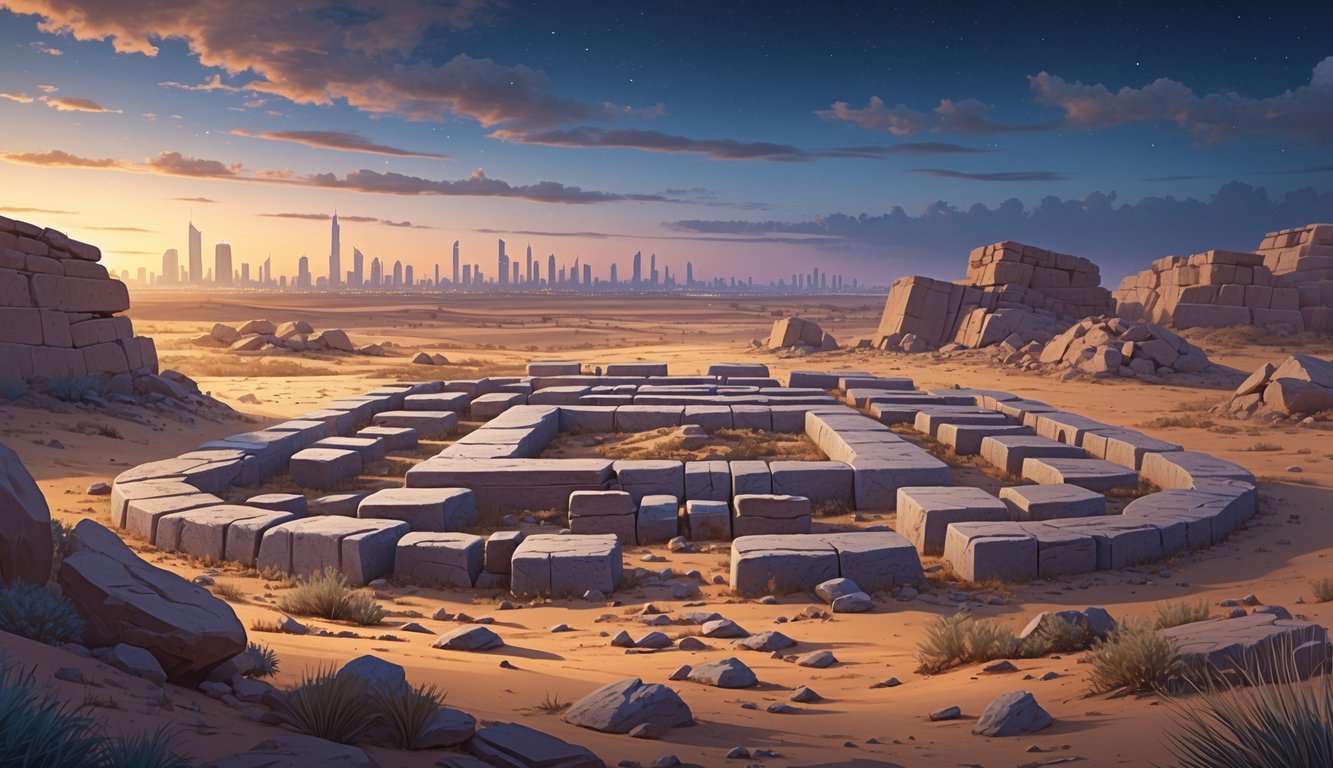
Bahra 1 is an archaeological site in northern Kuwait known for its age and mysterious structures.
Important discoveries here have revealed new clues about life, art, and technology during the Ubaid period in the Arabian Peninsula.
Bahra 1’s Mysterious Origins
Bahra 1 is over 7,000 years old.
Archaeologists believe it dates back to the Ubaid period, which lasted from about 5500 to 4000 BCE.
The site is located in Kuwait’s Subiya Desert, where the landscape is dry and open.
Researchers have found the remains of a large settlement, making Bahra 1 the oldest and largest of its kind in the region.
The site includes ancient buildings and a workshop for crafting jewelry out of shells.
One of the most intriguing finds is a small clay head figurine with unusual features.
Some experts call it a “snake person” because of the shape of the head and eyes.
This artifact has raised questions about the beliefs and culture of the people who lived here.
Archaeologists also discovered early pottery production at the site, which is rare for the Arabian Gulf.
All these features make Bahra 1 unique among prehistoric sites in the Middle East.
More about these discoveries can be found at Bahra 1’s ancient settlement and bizarre clay head figurine.
Comparisons to Other Sites
Bahra 1 stands out when compared to other prehistoric sites in Kuwait and the wider Gulf region.
While many early villages were small or temporary, Bahra 1 was a large and lasting settlement.
Its size and complexity suggest that its people were skilled builders and craftspeople.
The jewelry workshop and early pottery show that Bahra 1 had strong cultural ties with the Ubaid civilization in southern Mesopotamia.
Artifacts from the site have similarities to those found in Iraq, which hints at possible trade or contact between distant groups.
Few other sites in the Gulf offer such evidence of both local creativity and connections to far-off places.
Researchers continue to study how Bahra 1 fits into the broader story of early communities in Arabia.
The discoveries here help fill in gaps about the technology and daily lives of prehistoric people.
Challenges in Preservation
Preserving Bahra 1 is not easy.
The desert environment poses problems, as wind and sand erosion threaten the ancient structures and fragile artifacts.
High summer temperatures cause materials to crack and decay.
Restoration efforts are also complicated by the remote location of the site.
Archaeologists must work quickly during short field seasons.
Security and funding can be hard to maintain over time.
To protect Bahra 1, experts have started using new documentation methods like 3D mapping and digital record keeping.
There are ongoing efforts to cover exposed remains and stabilize walls, but more resources are needed for long-term restoration.
The Kuwaiti-Polish archaeological team continues to seek support to ensure future generations can study and visit this important prehistoric monument.
Unexpected Discoveries in Kuwait City
Kuwait City has revealed surprising finds that change what people know about its early history.
Buried objects and long-hidden layers tell stories of ancient life and culture right beneath modern streets.
Lost Artifacts
Archaeologists working around Kuwait City have uncovered remarkable items in recent years.
One stunning find was a 7,700-year-old jewelry workshop in the Subiya desert, just outside the city.
Tools, beads, and unfinished pieces show that skilled craftspeople were active in the region long before the city existed.
Among the most unusual items is a small clay figurine with a head that looks almost alien.
This artifact, linked to the prehistoric Ubaid culture, features slanted eyes and a smooth face not seen in others from the same period.
Finds like these are often displayed at the Kuwait National Museum, giving people a direct link to their deep past.
Some discoveries raise questions that even experts cannot answer.
Lists of unknown tools, rare seals, and mysterious idols suggest there is much more to learn about who lived and worked in this area thousands of years ago.
Hidden Layers Beneath the City
Modern Kuwait City covers layers of earlier settlements.
Recent archaeological digs show that beneath busy roads and buildings, older structures and streets remain hidden.
These buried levels help experts map the city’s growth over time.
Studies near the city have revealed remains of ancient homes, storage rooms, and communal spaces.
Sometimes, pieces of pottery or carved stones stick out from the dirt, offering clues about daily life or trade.
Archaeological sites in this area show that the location has always been important for travel, trade, and culture.
Carefully made maps and cross-section diagrams help researchers see how one era’s buildings were covered by another.
Today’s Kuwait City stands on ground rich with layers of history waiting to be explored.
For more on these discoveries, see the details about the ancient workshop and rare figurine or learn about the mysterious clay figurine found in this region.
Mysterious Geoglyphs and Monuments
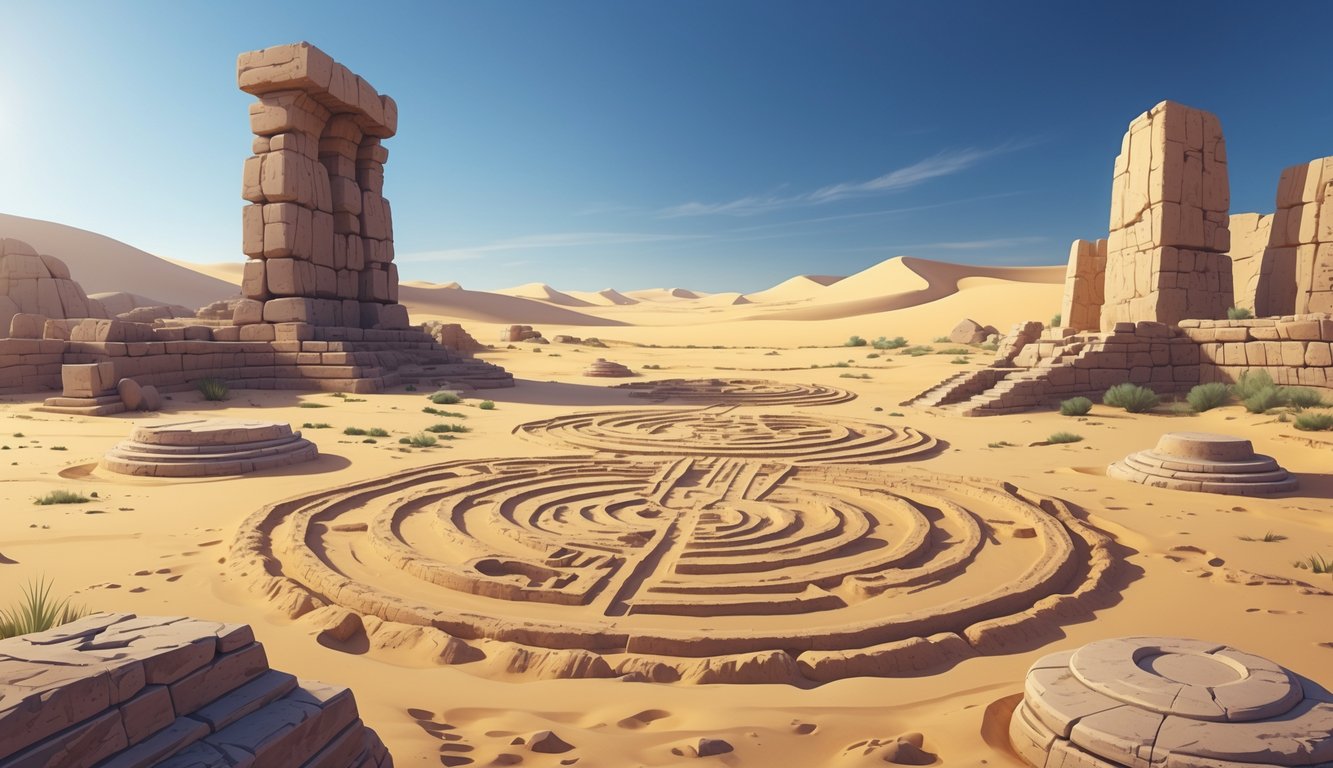
Kuwait’s desert holds traces of ancient artwork and puzzling stone structures.
Some of these shapes and formations are visible only from above and have sparked debate about why they were created and who built them.
Unexplained Patterns in the Desert
Throughout Kuwait’s dry plains, researchers have noticed unusual lines, circles, and shapes marked into the ground. These patterns are not as well-known as the famous Nazca Lines in Peru but have drawn local and international interest.
Many of these geoglyphs do not lead anywhere or mark natural water sources. Unlike the massive, carefully formed Stonehenge of England, Kuwait’s formations are often simpler.
Their purpose remains a mystery. Scholars use satellite images and drones to spot new geoglyphs, since many are too large to see from the ground.
Wind and sand shifting over time make it hard to determine the age of these markings. Some believe that the shapes may have been used for rituals or early forms of communication.
Role of Geoglyphs in Kuwaiti History
Geoglyphs play a unique role in understanding Kuwait’s past. Unlike other ancient regions with well-recorded histories, little is known about the people who made these marks.
The geoglyphs offer clues, but not answers. Many local legends mention travelers following stone lines to guide their path across the vast desert.
Some experts think these patterns pointed out seasonal camps or gathering spots. There are also theories that the geoglyphs served for tracking stars or marking time, similar to why ancient people built places like Stonehenge.
Without written records, the meanings are left to careful study and educated guesses. Today, these mysterious monuments attract archaeologists and tourists interested in Kuwait’s hidden past.
Histories of Drama and Intrigue

Kuwait’s past is filled with dramatic moments and unanswered questions. From crimes that have slipped through the cracks of history to mysterious events that shaped the country, these stories mix crime, drama, and sometimes romance.
Crimes Lost to Time
Some crimes from Kuwait’s past still puzzle researchers and the public. These cases often involve unsolved disappearances, unknown motives, or sudden events that were never fully explained.
Police and local historians have searched for answers, but some details remain hidden. Key example: Smuggling cases across the Gulf in the early decades of the 20th century.
Goods and people moved secretly under cover of darkness. Many escaped justice, and documents with important information vanished.
Rumors about hidden treasures and forbidden love also play a part in these mysteries. Urban legends speak of couples who ran away together, leaving only questions behind.
Some old neighborhoods in Kuwait City are well-known for whispered stories about lost fortunes and broken hearts.
Dramatic Events and Their Mysteries
Kuwaiti drama often draws inspiration from real historical events. The nation’s rich theater and television scenes explore topics like power struggles, social change, and forbidden romance.
In the 1960s, politics and personal drama played out as Kuwait became independent. Moments of conflict, secret deals, and shifting alliances led to stories that feel like a script—full of suspense and emotion.
Some historical series, such as Dof’at Al Qahera, focus on the experiences of Kuwaitis in other countries. They show the mystery and drama faced while pursuing education and new beginnings.
These shows highlight how big events and private lives can collide and create lasting mysteries.
A table below outlines major themes found in these stories:
| Theme | Example in Kuwait History |
|---|---|
| Crime | Smuggling rings, unsolved thefts |
| Drama | Political intrigue, social changes |
| Romance | Forbidden love stories, escapes |
Kuwait Towers: Icons With Unknown Stories
Kuwait Towers stand at the edge of the Arabian Gulf, drawing both locals and tourists. Besides their unique design, these towers contain historical secrets and efforts to keep them alive for future generations.
Symbolism of the Towers
The Kuwait Towers are more than just modern buildings. Built in 1979, they stand as a bold symbol of Kuwait’s national pride, independence, and cultural heritage.
The design combines Islamic patterns with a sleek, futuristic look. Three towers make up the landmark:
- The main tower holds a viewing sphere and water tank.
- The second also stores water.
- The third lights up the skyline.
Many people wonder about the deeper meaning behind the towers’ shapes and blue mosaic patterns. Some historians say the spherical shapes represent traditional water towers and Kuwait’s close ties to the sea.
This reflects a blend of the old and the new. The Kuwait Towers continue to inspire curiosity about their symbolism and purpose.
Restoration Efforts
Crews have restored the Kuwait Towers several times to protect their structure and design. Damage during the 1990 Gulf War left lasting marks, so repairs focused on restoring both technical and artistic features.
Key restoration projects included:
- Replacing damaged ceramic tiles
- Upgrading electrical and plumbing systems
- Bringing public spaces up to safety standards
Workers made sure original details, like the colorful domes and patterns, matched the first designs. These restoration efforts help preserve the towers as a part of Kuwait’s cultural heritage.
Tourists today can visit observation decks and museums safely, learning more about the towers’ stories and lasting value.
International Influences and Comparisons
Kuwait’s history is deeply linked to ancient civilizations and their mysteries. The region’s connections with Mesopotamia and its role in archaeology reveal fascinating clues about early human society.
Shared Mysteries with Mesopotamia
Kuwait and Mesopotamia share a long stretch of ancient history. Archaeologists have found trade goods in Kuwait that are similar to those from Sumer and Akkad.
This suggests strong trading ties thousands of years ago. Ideas, myths, and mysteries likely traveled between these lands.
A key example is the island of Failaka in the Persian Gulf. Failaka has ruins from the Dilmun civilization, which is mentioned in many Mesopotamian texts.
Historians still debate the exact role of Dilmun—whether as a trade hub, a sacred place, or both. Some items found on Failaka, like seals and pottery, match those discovered in southern Mesopotamia.
Clay tablets and ancient carvings often reference places that some scholars believe were in or around modern Kuwait. The lack of exact evidence leaves many questions about the people and cultures who lived here.
Kuwait’s Place in Regional Archaeology
Kuwait serves as a bridge between ancient empires and cultures. Archaeological digs in the country have provided rare finds that help researchers compare artifacts from Egypt, Mesopotamia, and Persia.
The discovery of ancient ports in Kuwait has helped experts map out trade routes across the Gulf and beyond. Key archaeological sites, like those on Failaka Island, have uncovered not only local artifacts but also foreign goods.
This mix shows that Kuwait was not isolated, but instead played a key part in regional exchange. Experts study how local and imported objects at these sites reveal the region’s influence and connections with powerful neighbors.
International projects often bring together experts from different fields to piece together the puzzle. Many finds are featured in museums around the world, boosting interest in Kuwait’s deep past and the secrets that still lie buried in its soil.
Modern Preservation Initiatives
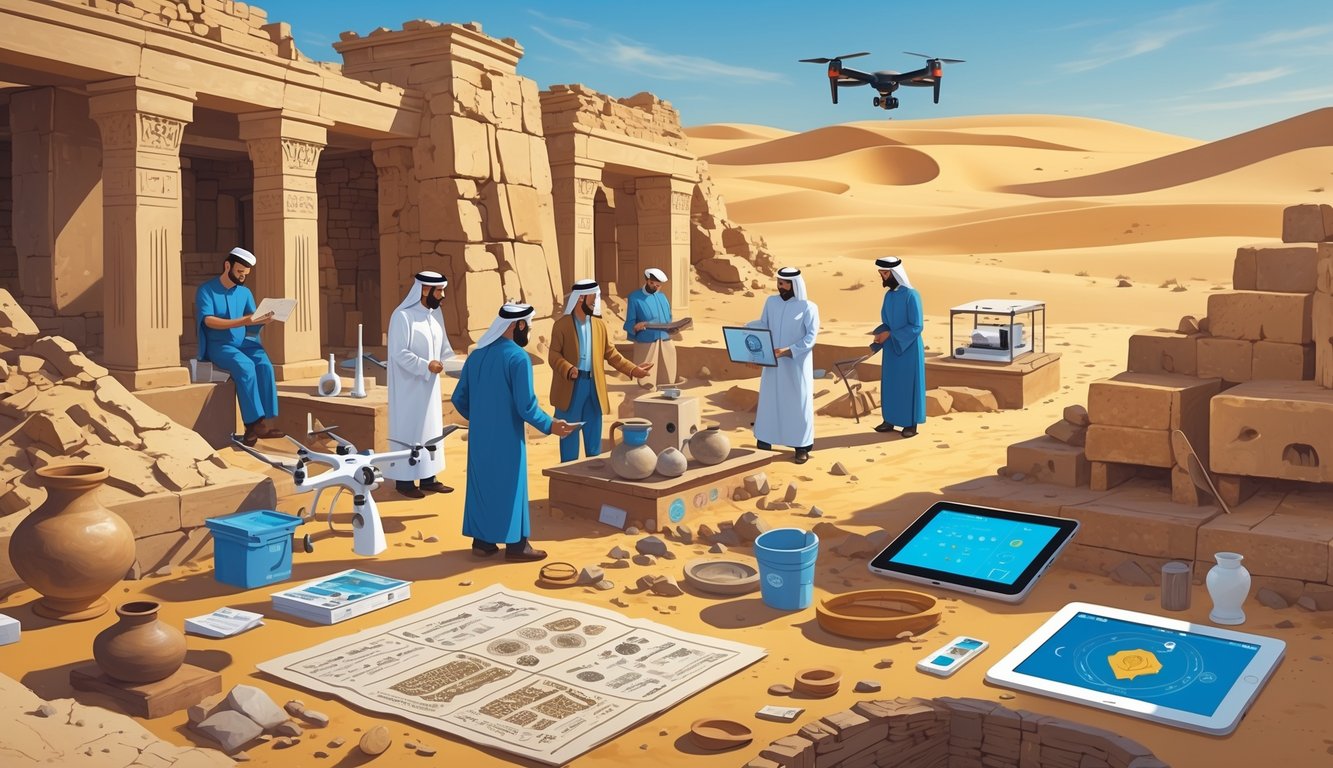
Kuwait is investing in new ways to protect its history by using both public organizations and important cultural centers. These efforts help save artifacts, restore historic sites, and teach people about the nation’s heritage.
The Role of the National Council for Culture, Arts and Letters
The National Council for Culture, Arts and Letters (NCCAL) leads many of Kuwait’s main preservation projects. It focuses on restoring old sites and turning them into places that attract visitors from around the world.
The NCCAL manages sustainable development of historical areas, aiming for international recognition and World Heritage status. The council also supports education programs and events that share Kuwaiti culture, such as exhibitions, festivals, and art workshops.
According to Dr. Mohammed Al-Jassar, their main goal is long-term protection of cultural identity, while making sure these sites help the economy by boosting tourism and job opportunities. More details can be found about NCCAL’s work to transform historic sites into cultural destinations at this informative article.
Kuwait National Museum’s Contributions
The Kuwait National Museum is key to displaying and protecting priceless objects from Kuwait’s past. It holds collections that range from ancient artifacts to important documents, showing the story of Kuwait’s people and their traditions.
The museum runs conservation projects to make sure items are handled with care and preserved for younger generations. Educational programs for schools and families connect the public with their own heritage by inviting visitors into exhibits and hands-on activities.
Many artifacts from the museum have appeared in conservation projects described in this detailed coverage. This strong focus on both preservation and public education makes the museum an important part of Kuwait’s cultural landscape.
The Ongoing Mystery: Unanswered Questions of Kuwait’s Past
Much of Kuwait’s ancient history is still hidden beneath the sand, waiting for more thorough exploration. While some ruins and artifacts have been found, many important details about the region’s past remain unknown.
Unidentified Sites Awaiting Discovery
Kuwait is home to many archaeological sites that have not been fully studied or even located. Some sites are believed to be under urban areas or deep in the desert, making access difficult.
Archaeological surveys have uncovered clues about ancient civilizations, but large parts of the country have yet to be explored in detail. For example, a mysterious figurine found on Kuwait’s coast, estimated to be 7,000 years old, raises many questions about the people who once lived there.
The lack of information leaves historians and archaeologists with limited knowledge, which adds to the mystery of these ancient places. Local experts believe that even greater finds may still be waiting if research efforts increase.
New discoveries could help explain how early settlers lived, traded, and developed their communities. For more about these hidden locations, see this article on Kuwait’s archeological potential.
Future Directions for Research
The future of uncovering Kuwait’s history depends on more focused archaeological surveys and increased funding. Researchers say that more financial support is needed to properly search for, study, and protect ancient sites throughout the region.
Education programs could play a key role in this process. Involving students and local communities in archaeological projects can help knowledge and appreciation for Kuwait’s heritage grow.
Collaboration between national and international experts may also improve research skills. This cooperation can introduce new technology to exploration efforts.
Stronger government interest in historical research could help guide and support upcoming projects. Investment in these areas increases the chances of discovering answers about Kuwait’s early societies and their global connections.