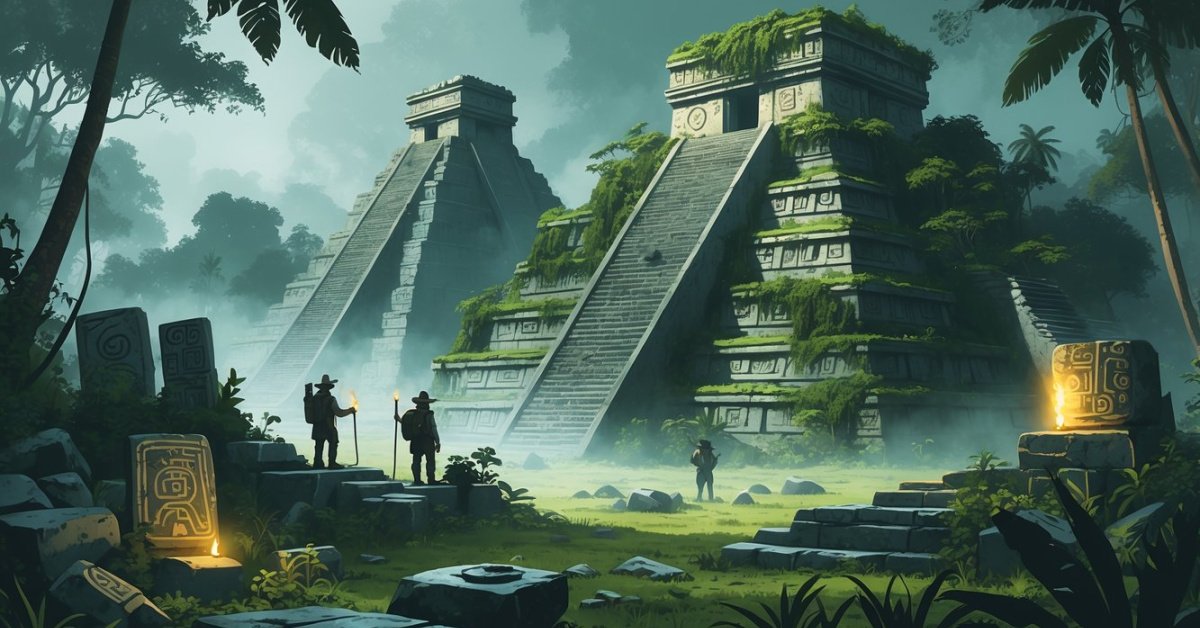
Central America is filled with ruins and artifacts left by great civilizations. Many of their secrets are still not fully understood.
Some of the biggest historical mysteries in Central America include ancient cities, mysterious monuments, and lost cultures that puzzle archaeologists. These mysteries invite questions about how people built giant stone temples and why they abandoned their cities.
People also wonder what beliefs shaped their world.
From the dense jungles of Guatemala to the stone ruins in Honduras, the region is home to intriguing sites. These places capture the imagination.
Visitors and researchers are drawn to mysterious ruins and ancient structures that hint at stories waiting to be uncovered. Every new discovery adds a piece to Central America’s complicated history.
The Mystery of the Maya Civilization
The Maya civilization had an advanced writing system and stunning stone cities. They also created a precise calendar.
Many questions about their origins, their sudden decline, and their complex glyphs remain unsolved.
Origins of the Maya
Historians and archaeologists still try to understand how the Maya civilization began. Evidence suggests the earliest Maya settlements appeared around 2000 BCE.
It is not clear where the people came from before that. Some theories say the Maya evolved from earlier farming cultures in the region.
Others believe outside influences helped shape their society. Pottery, artifact styles, and early architecture in Maya cities show a mix of native and foreign ideas.
The Maya quickly developed city-states like Tikal, with elaborate structures and organized governments. This growth points to a rich network of trade and communication.
It also hints at contact with other ancient civilizations in Mesoamerica.
The Collapse of Mayan Cities
One of the biggest unsolved mysteries is why great Maya cities such as Tikal and Copán were abandoned. Around 900 CE, populations fell and cities were left empty.
Stone monuments stopped appearing at this time. There are many theories about the cause of this collapse.
Severe drought, overfarming, and war between city-states are possible reasons. Changes in climate may have hurt the food supply.
Some researchers think political struggles and fighting among the elite made things even worse. Still, the collapse of the Maya civilization remains one of history’s greatest puzzles.
No single reason fits every city or region.
Hidden Secrets of Maya Architecture
Maya architecture is famous for its step pyramids, ball courts, and intricate stone carvings. Cities like Tikal and Palenque have some of the tallest ancient buildings in the Americas.
The Maya built these structures without metal tools or the wheel. Much of their construction remains a mystery.
Underground water channels, hidden tunnels, and secret chambers lie beneath temples. Some of these features may have helped control floods, while others might have had a spiritual purpose.
LiDAR technology helps researchers find buried buildings in the jungle. New discoveries suggest the Maya built more structures than previously thought.
They often aligned buildings precisely to the sun or stars. Many ancient Mayan mysteries are still being uncovered through archaeology.
Unsolved Maya Glyphs
The Maya created one of the most detailed writing systems in the ancient world. Their glyphs used pictures and symbols to record history, royal events, and religious beliefs.
While many glyphs have been translated, some remain mysterious. Large parts of Maya books known as codices were destroyed in the 16th century.
This destruction makes it difficult to understand the full language. The surviving texts are key to learning more about their daily life and science.
Archaeologists and language experts keep working to decode these glyphs. Each new find helps reveal more about Maya kings, wars, and discoveries in math and astronomy.
The story written in stone is still unfinished, leaving unanswered questions about their society.
Unraveling the Enigma of the Olmecs
The Olmecs are known as Mesoamerica’s “mother culture.” They laid the foundations for later cultures in the region.
Major questions still surround their massive stone heads and their mysterious decline. People also wonder how far their ideas spread through ancient civilizations.
The Colossal Olmec Heads
The Olmecs are famous for their huge carved stone heads. Each head weighs several tons and can stand up to 10 feet tall.
They carved these heads from basalt and transported them over long distances. Most heads have unique facial features, which suggests they may represent individual rulers or important people.
Archaeologists have found these heads mostly at sites such as San Lorenzo and La Venta. The skill and effort required to create and move these monuments show the Olmecs’ advanced knowledge and strong leadership.
The meaning and purpose of the heads remain one of Central America’s great secrets. Some experts think the heads honored powerful kings, but there is no clear written record to explain their purpose.
For more background, read about the impressive Olmec achievements.
Mysterious Olmec Civilizational Decline
The Olmec civilization flourished between about 1200 BC and 400 BC. During this time, their cities grew strong and influenced neighboring groups.
Suddenly, these centers were abandoned and the culture faded. The reasons for their decline are still debated by archaeologists.
Some believe natural disasters, such as earthquakes or changes in river patterns, forced the Olmecs to move. Others suggest internal conflict or disease might have played a role.
The lack of written records from the Olmecs makes it hard to know for sure. Researchers keep searching for clues with every new dig.
The fall of this advanced society remains one of Central America’s biggest historical puzzles. You can explore more about the mystery of the Olmec decline and civilization.
Unknown Influence on Later Cultures
Many things the Olmecs started—like pyramid building, rituals, and the concept of zero—appeared in later cultures, including the Maya and Aztec. Historians call the Olmecs “Mesoamerica’s first great civilization” because so much of their culture shaped the region.
It is not clear exactly how their knowledge and traditions passed down. Some scholars think Olmec art and religion spread through trade and migration.
Others suggest their ideas may have changed over time as different groups adopted and adapted them. Archaeologists are still uncovering objects and ruins that connect the Olmecs with later societies.
The full extent of their influence on other ancient civilizations is still being studied. To learn more about the Olmecs’ key role, see this article on unlocking the mysteries of the Olmecs and their impact on Mesoamerica.
Unexplained Monuments and Ancient Architecture
Central America has many ancient sites that puzzle archaeologists. Giant pyramids, lost temples, and hidden cities reveal the creativity and skill of past civilizations.
How some of these monuments were built is still not fully understood.
Mysterious Pyramids of Central America
Pyramids in Central America stand as some of the region’s most impressive prehistoric monuments. Civilizations like the Maya and the Aztecs built these pyramids for religious ceremonies, burials, and astronomy.
The Pyramid of the Magician in Uxmal has an unusual oval shape and steep sides. People are unsure why it was different from most other step pyramids.
The Tikal temples in Guatemala reach above the treetops and show advanced engineering skills. The site of Tikal was once a major city with huge structures.
Much about its construction and the purpose of some buildings remains a puzzle. You can learn more about mysterious ancient structures that continue to confound experts.
Designs found on some pyramids hint at knowledge of math, astronomy, and even acoustics. These ancient artifacts and carvings are still being studied to understand their full meaning.
Quick Facts:
- Major Sites: Teotihuacan, Tikal, Uxmal
- Main Uses: Religious ceremonies, tombs, observatories
- Notable Mystery: Unique design choices and lost building methods
The Temple of the Sun and Its Secrets
The Temple of the Sun at Teotihuacan in Mexico is one of the largest structures of its kind. Built around 200 CE, this massive pyramid is made from millions of tons of stone.
The exact methods used for construction remain uncertain. Builders aligned the temple with the sun, possibly to mark special events like equinoxes or other celestial moments.
Inside and around the temple, researchers have found tunnels and chambers that spark debate about their purpose. Some experts think they might have been used for burial rituals or to hide precious artifacts.
No king’s tomb has ever been found at Teotihuacan. Archaeologists continue to wonder whether the temple served as the city’s spiritual heart or as a place for elite burials.
Experts are still unsure how or why some ancient buildings were made the way they were.
Highlights:
- Built from volcanic stone and earth
- Aligned to the movement of the sun
- Secret chambers still being investigated
Lost Maya Cities in the Jungle
Many Maya cities are hidden deep in the forests of Central America. These lost cities, like El Mirador and parts of Tikal, were covered by jungle for centuries.
Modern discoveries often come from using advanced tools like LiDAR, which can scan through thick trees and spot ancient walls and pyramids below. Large causeways, plazas, and massive temples show that thousands of people once lived and worked there.
The reasons why many of these cities were abandoned are still being studied. Environmental changes, war, or lack of food may have played a role.
Some remote cities contain artifacts, carvings, and murals not found anywhere else. Much remains buried, so researchers hope that new technology will help reveal even more secrets about the Maya and their once-great cities.
Key Sites:
- El Mirador: Known for one of the world’s biggest ancient pyramids
- Tikal: Filled with temples, tombs, and advanced Maya architecture
- Calakmul: Rival city to Tikal, hidden in the jungle
Deciphering Ancient Writings and Calendars
Central America’s ancient cultures left complex records on monuments, codices, and ceramics. They used unique writing systems and sophisticated calendars.
These systems connected math, astronomy, and religion in daily life.
The Mayan Calendar’s Hidden Meanings
The Maya created one of the most advanced calendar systems in the world. Their calendar was based on cycles, including the 260-day Tzolk’in and the 365-day Haab’.
These cycles helped them plan rituals, farming, and important celebrations. Their calendar wasn’t just practical.
It was also tied to astronomy and complex beliefs about time. The Maya used math involving the concept of zero and advanced place-value notation.
They predicted solar eclipses and tracked the movements of planets like Venus. Sometimes, people believe the Maya predicted “the end of the world.”
However, the end of one calendar cycle was simply the start of another. Researchers are still discovering how their calendar influenced politics and spiritual life.
Undeciphered Scripts and Glyphs
Not all ancient writings in Central America have been fully decoded. The Maya script is one of the few ancient American writing systems that has been partly deciphered.
This writing used hundreds of different glyphs. Some glyphs represent whole words, while others stand for sounds.
Russian scholar Yuri Knorozov played a key role in cracking the code in the 1950s. He showed that the script was a mix of phonetic signs and symbols, making reading the glyphs possible.
Some glyphs’ meanings remain unclear. Scripts from lesser-known groups aren’t understood at all.
Experts use mathematics, computer analysis, and knowledge of related languages to decode these scripts. New finds and technology may help reveal the lost stories still hidden in monuments and ancient books.
Astronomical Knowledge and Mathematics
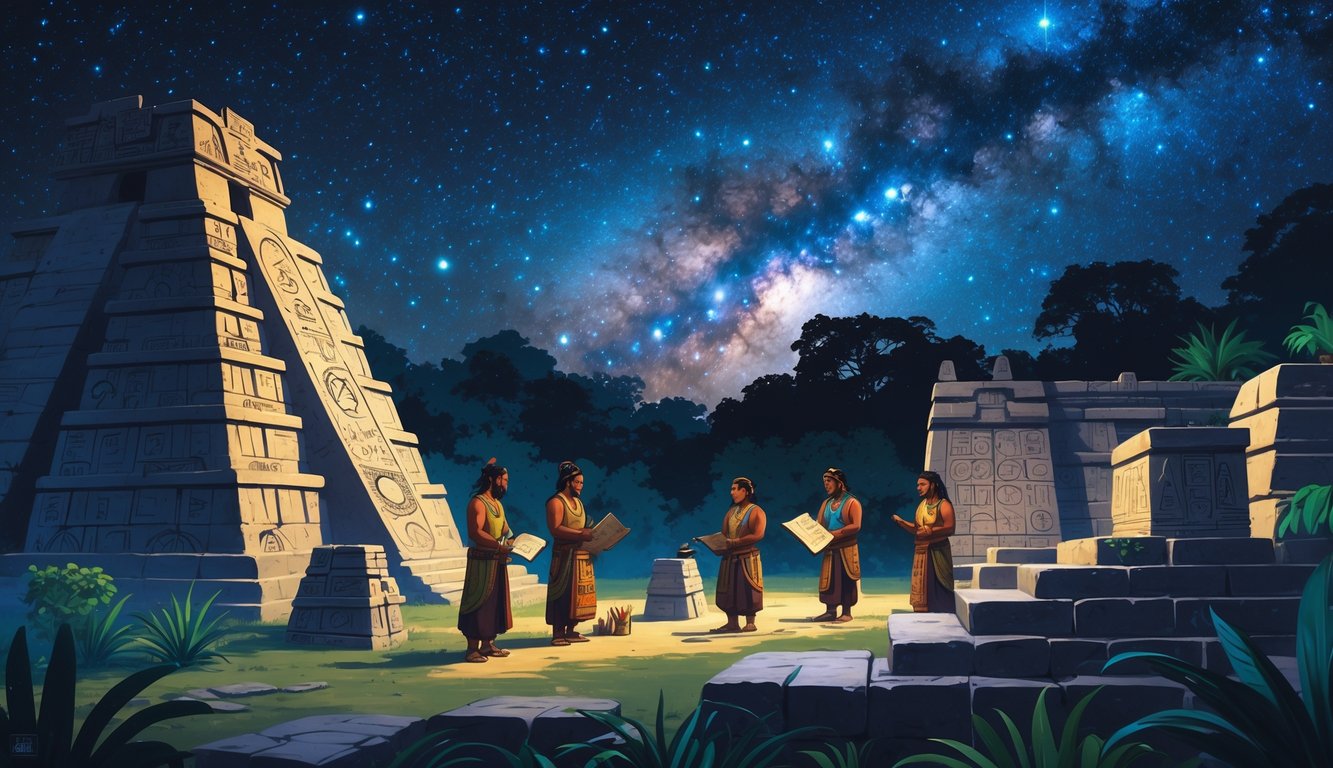
Civilizations like the Maya became known for their study of the sky and number systems. These skills helped them build advanced cities and create calendars that tracked time with high accuracy.
Ancient Observatories and Astronomy
The Maya and other Mesoamerican civilizations built observatories to study the stars, sun, and planets. Structures like El Caracol in Chichén Itzá had special windows and alignments to watch celestial events.
They tracked the cycles of the sun, moon, and Venus. This knowledge helped them plan farming, religious festivals, and even wars.
Priests and astronomers recorded detailed observations in codices and carvings. The Maya used their knowledge to create complex calendar systems, including the Long Count and the 260-day Tzolk’in.
These calendars shaped religious and daily life. Their records still puzzle scientists today as new discoveries come to light.
Learn more about these ancient astronomical achievements at Mesoamerican observatories and their astronomical knowledge.
Mathematical Puzzles of Pre-Columbian Civilizations
Maya mathematics included a base-20 (vigesimal) number system and the concept of zero, which was rare in ancient times. They used dots for one, bars for five, and a shell-shaped glyph for zero.
This system made it easy to show both small and large numbers. Maya scribes combined math and calendars to track the movement of planets and important historical dates.
This helped them make accurate predictions and keep complex city records. Some mathematical discoveries, like how they calculated such precise calendar cycles, still leave modern scholars searching for clear answers.
For more on this topic, visit this overview on Mesoamerican math and calendars.
Legendary Lost Cities
Central America has long been home to stories about cities lost to time. These myths involve places like Atlantis and the search for ancient civilizations hidden in jungles or buried beneath ruins.
Theories About Atlantis in Mesoamerican Lore
Many people know about Atlantis from the writings of Plato. He described it as a powerful island civilization that vanished under the sea.
While Atlantis is usually linked to the Mediterranean, some researchers and writers believe it could have been in the Americas—possibly in the region of Mesoamerica. These ideas tie the lost city of Atlantis to ancient civilizations like the Maya and Olmec.
Some suggest similarities in architecture or myth between Platonic Atlantis and old Mesoamerican cities. However, there is no direct evidence that Atlantis was really in Central America.
Adventure writers and some explorers have tried to connect the two, wondering if stories of lost civilizations in Central America inspired Plato or share a common root.
Other Legendary Cities: Fact or Fiction?
Beyond Atlantis, Central America is rich with its own tales of hidden cities. One of the best known is Ciudad Blanca, or the “White City”, said to be deep within the Honduran jungle.
Local legends describe large white structures and claim it was once a center for a forgotten civilization. Expeditions in the 20th and 21st centuries have found ruins in the region.
Archaeologists debate the exact connection between these findings and ancient legends. Some believe new discoveries may one day reveal the truth behind these stories.
There are also fables about cities of gold or lost empires with vast temples, like those sought by explorers after hearing indigenous stories and old rumors. Fact and fiction mix easily here, making the search for lost civilizations a major historical mystery in Central America.
Ancient Artifacts and Unsolved Finds
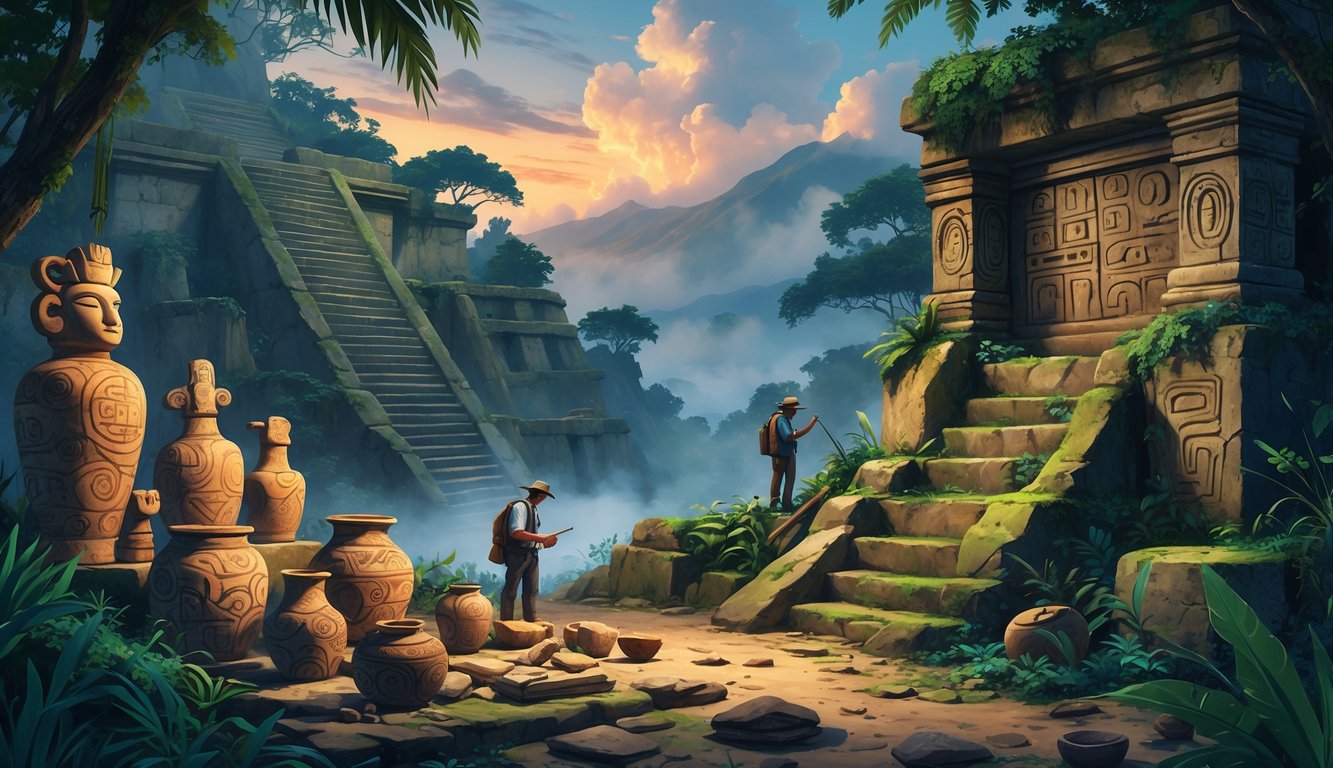
Some ancient objects and maps from Central America have raised questions that experts still cannot answer. These puzzling finds show how complex and connected old civilizations could have been.
Piri Reis Map and Mysterious Maps
The Piri Reis Map is a famous old map from the early 1500s. Drawn by the Turkish admiral Piri Reis, it has details that have puzzled historians for years.
Parts of the American coastline appear much earlier than many believe Europeans had explored those areas. One surprising thing about the map is how it accurately shows parts of South America and possibly even the edge of Antarctica.
People wonder how the mapmaker gained access to this information. Some suggest lost charts from older civilizations.
Some coastlines on the map look as if they were drawn before the land was covered by ice, pointing to very old sources. Other ancient maps found in Central America hint at lost knowledge and advanced observation skills.
These maps challenge what experts thought they knew about early navigation.
Artifacts of Unknown Origin
Central America is home to many artifacts that defy easy explanation. Some objects are made from materials not found near where they were discovered, raising questions about trade and travel in ancient times.
The use of gold and silver in some pieces shows advanced metalworking and possible connections between distant cultures. Among the most baffling archaeological discoveries are objects whose purpose is still unknown today.
Statues, stone spheres, and tools have been found with carvings and symbols that experts cannot fully decode. Lists of mysterious archaeological finds include these artifacts.
Some seem out of place or time. Sometimes, the journeys these artifacts took remain a mystery.
Experts debate if they were part of lost trade routes or belonged to civilizations that disappeared. The stories behind these finds continue to puzzle archaeologists and excite anyone interested in the mysteries of the past.
Geoglyphic Wonders Beyond the Maya
Central America is home to some of the world’s most intriguing geoglyphs. Ancient symbols and shapes carved or arranged into the land puzzle researchers and inspire stories about pre-Columbian culture and technology.
Costa Rica’s Mysterious Stone Spheres
Costa Rica’s stone spheres are one of the greatest archaeological mysteries in the region. Known as “Las Bolas,” these nearly perfect round stones range in size from a few inches to over 7 feet in diameter.
Some weigh several tons. They are often made from a type of rock called gabbro, and many were found in the Diquís Delta.
Archaeologists have not agreed on their exact age, but most were likely made between 500 and 1500 CE. The people who created them, likely ancestors of the Boruca, left no written explanation.
Their original purpose is unknown. Some theories suggest they marked important places or acted as symbols of power, but there is no strong evidence for any one idea.
Visitors can see the spheres in places like Finca 6, now part of a UNESCO World Heritage site. The craftsmanship of these giant orbs still fascinates scientists and travelers.
The mystery of how they were made and moved from quarries miles away adds to their appeal. For more on unique ruins and ancient sites in Central America, this article offers images and details.
Connections With Nazca Lines and Other Geoglyphs
Geoglyphs are large designs found across the world, but the most famous are the Nazca Lines in Peru. These massive drawings, best seen from the air, include shapes of animals and geometric patterns.
Both the Nazca Lines and Costa Rica’s stone spheres are mysterious and have sparked ideas about ancient communication or ceremonial practices. Some researchers think there might be cultural connections between these geoglyphs.
They notice similar attention to size, scale, and placement on the landscape. The technology to create such precise designs is still being studied.
Unlike the flat Nazca Lines, Costa Rica’s spheres stand out as three-dimensional forms. While there is no direct link proven between the spheres and the Nazca designs, both invite questions about ancient societies’ knowledge and skills.
The creativity and skill it took to make these features remind people of the diversity and complexity of ancient Central American cultures.
Influence of Other Ancient Civilizations
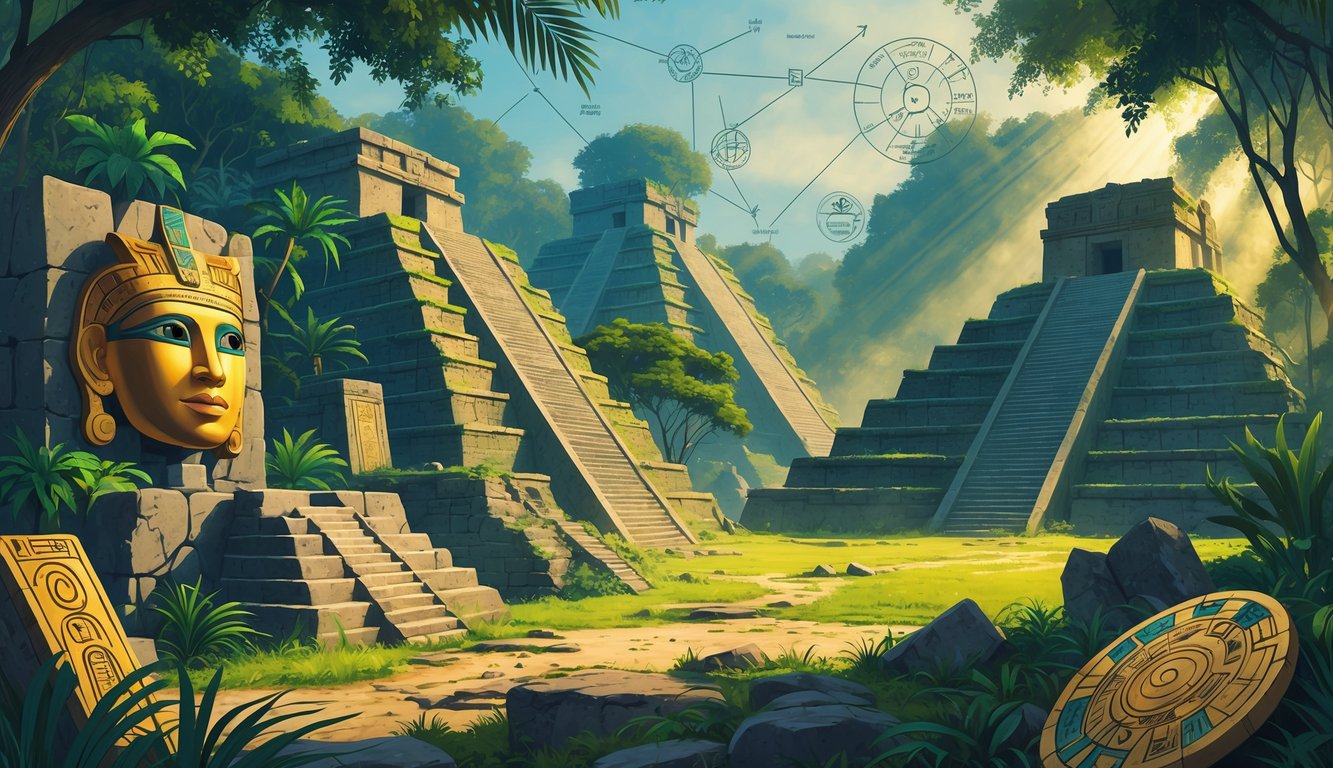
Central America’s ruins and artifacts often raise questions about how these cultures developed such advanced knowledge and skills. Some researchers have pointed out fascinating similarities between Central America and distant ancient empires.
Contact Theories with Ancient Egypt
Some believe there were possible connections between Central American empires and ancient Egypt. These theories usually focus on pyramid structures, certain symbols, and art styles that look alike in both regions.
For example, both the Maya and Egyptians built step pyramids. Some claim that artwork in both cultures shares animal motifs, though those ideas are debated.
Mainstream historians say there is no solid evidence that Egyptians traveled to Central America or that direct contact took place. Central American societies like the Maya developed writing, mathematics, and astronomy all on their own.
While their pyramids may look similar, they served different purposes and were built in different ways.
Parallels with Stonehenge and Terracotta Army
People sometimes notice resemblances between the ruins in Central America and famous ancient wonders like Stonehenge and the Terracotta Army.
Stonehenge, built in England, and some Central American temples both use large stone blocks placed with advanced planning. However, there is no proof that the builders ever met or knew of each other.
The layouts and reasons for building these sites are not the same. The Terracotta Army of China is a collection of clay soldiers built as part of an emperor’s tomb.
Central America does not have a similar feature, but both cultures made lifelike statues and believed in an afterlife. These similarities are mostly a result of cultural needs evolving in different parts of the world at different times.
Ongoing Archaeological Mysteries
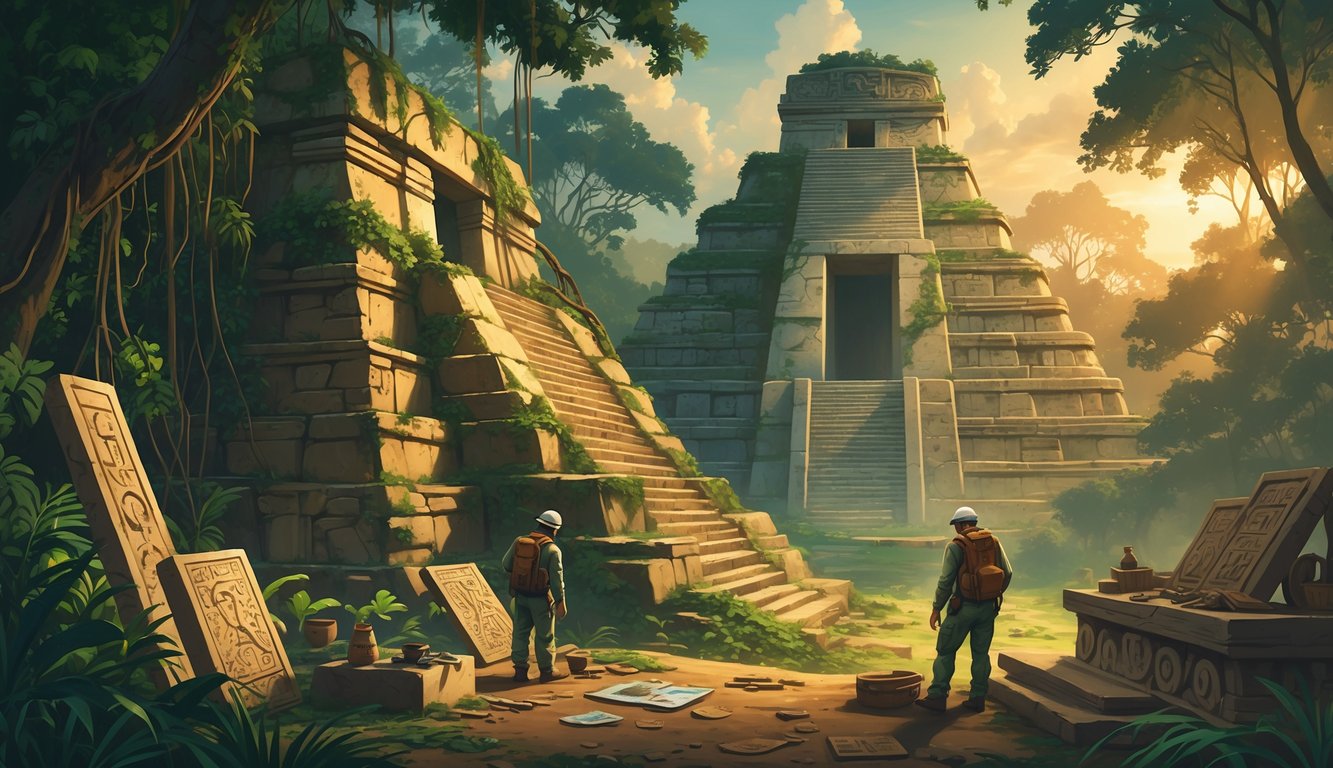
Central America is filled with ancient sites and mysterious artifacts that continue to challenge what researchers know about early civilizations. New finds are offering new clues, while modern technology is helping archaeologists discover ruins that were once hidden.
Recent Discoveries Changing History
Archaeological teams are locating lost cities and ancient tombs deep in jungles. They use tools like LiDAR to find these sites.
In Guatemala, researchers have uncovered large Maya cities with bridges and pyramids. These structures were invisible under dense trees.
Recently discovered tombs reveal secrets about Maya rulers and daily life. These findings help explain why civilizations like the Maya may have declined.
Some experts are uncovering rare artifacts and mysterious structures. The famous stone spheres of Costa Rica are a good example.
The Diquís culture created these nearly perfect spheres. Their purpose remains a mystery.
Excavations reveal new facts and challenge old beliefs about Mesoamerican culture. They also change our understanding of how different groups interacted.
Future Prospects in Central American Archaeology
Many secrets from ancient Central America remain buried. Researchers believe that dozens of temples, palaces, and even entire cities still wait to be found as technology advances.
LiDAR and other digital mapping tools can reveal ruins hidden under thick forests. These discoveries are especially likely in countries like Honduras and Belize.
Archaeologists hope to answer big questions about how early civilizations adapted to their environment. They also want to learn what led to the disappearance of powerful societies like the Maya.
Ongoing efforts aim to protect and study mysterious ruins. Some of these sites, such as seldom-visited pre-Columbian locations in Central America, remain largely unexplored.