South Sudan is a young nation with a long and complicated past. Its history is filled with events that are still not fully understood, such as the origins of ancient kingdoms and the impact of colonial borders.
Some of the biggest historical mysteries in South Sudan involve the roots of its diverse cultures and the secrets hidden in its remote regions.
Many questions remain about how different ethnic groups formed alliances. Historical decisions shaped the country’s path to independence.
Hidden stories from before and after independence still puzzle historians and people today. South Sudan’s past offers a unique look into the unknown.
The Ancient Kingdoms and Early Civilizations
South Sudan has a rich history of kingdoms, riverside cultures, and powerful peoples. Many details about these early civilizations remain unknown.
Scholars continue to look for clues in language, ruins, and oral traditions.
The Funj Sultanate and Its Legacy
The Funj Sultanate appeared in the early 16th century and centered around the region that is now eastern and central Sudan. It affected areas along the southern Nile.
The Funj people ruled a mixed land of Africans and Arabs, blending cultures, languages, and religions. The Funj Sultanate became an important trade link between the north and south.
It supported trade in gold, ivory, and slaves while introducing Islam into many local customs. The sultans built towns and created traditions that influenced South Sudan’s neighboring people for centuries.
One mystery is how the Funj maintained control over such a large area with limited technology or strong military. Some believe their success relied on strong local alliances and the use of both African and Islamic traditions.
The decline of the Sultanate in the 19th century ended their direct rule. Their legacy still shapes culture in the region today.
Mysteries of the Azande and Madi Kingdoms
The Azande and Madi are two of the oldest and most intriguing kingdoms in South Sudan. The Azande kingdom, known for its organized leadership, ruled a forest-rich region stretching to the borders of the Congo and Central African Republic.
Azande society had a class structure and a strong belief in magic and oracles, which guided many of their decisions. How these beliefs spread so widely remains a puzzle.
The Madi, located mostly in the south and east, relied heavily on farming and their connection to the land. Few written records exist for either group.
This has left many gaps in our knowledge about their first rulers or even the exact ways their communities started. Archaeologists continue to search for more evidence to piece together the early lives and secrets of these two kingdoms.
The Role of the Nile and Nilo-Saharan Peoples
The Nile River is the lifeblood of South Sudan. For centuries, it gave rise to settlements, farming communities, and trade routes.
Ancient cultures like the Nilo-Saharan peoples, which include Dinka, Nuer, and Shilluk, relied heavily on the river for water, food, and transportation. The Nilo-Saharan people have spoken languages with deep connections to the land and rivers.
Their cattle-herding and fishing traditions remain central to life in the region. Many details about their early migrations and how they developed unique cultures are still unknown.
Some historians wonder how early Nilo-Saharan societies organized without modern tools or major cities. Studies of oral history, tools, and settlement patterns hint at complex social structures that may have been lost over time.
The mysteries surrounding the Nile and its earliest settlers continue to attract researchers and travelers from around the world.
Colonial Conquests and Forgotten Agreements

South Sudan’s early modern history was shaped by a series of colonial struggles and secretive treaties. Competing foreign powers imposed control, leaving behind a legacy of confusion and unresolved boundaries.
The Egyptian Conquest and Ottoman Khedivate
In the early 1800s, Egypt—ruled by the Ottoman Khedivate—sent military expeditions into the region that would later become South Sudan. The main goals were to control trade routes, expand the empire, and tap into resources such as ivory and slaves.
Egypt established several forts and trading posts. Some of these, like Fashoda, became flashpoints for later conflicts.
Local societies had to adapt to new rulers, pay taxes, and face frequent raids. These changes disrupted traditional ways of life.
The Egyptians and Ottomans never fully controlled the area. Their rule was mostly limited to garrisons and major rivers.
Many agreements from this time remain unclear, causing confusion about land ownership and alliances that still matter today.
British-Egyptian Rule and Condominium Period
In 1899, Britain and Egypt signed an agreement to run Sudan together, calling it the Anglo-Egyptian Condominium. Both countries claimed authority, but British officials made most decisions.
Under this arrangement, South Sudan was often ignored or treated differently from the north. British rule relied on dividing up the region and using indirect rule.
This created new borders and sometimes new ethnic divisions. Disputes about land and boundaries were common.
Important treaties and deals from the condominium period were not always explained clearly to local leaders. Many promised rights and protections never happened, leading to mistrust that would later fuel civil conflict.
The Southern Policy and Its Impact
The British government adopted the Southern Policy in the 1920s. This policy aimed to keep southern regions, including South Sudan, separate from the Arab and Muslim north and limit contact between the two parts.
British authorities hoped to protect local cultures but also feared southern resistance. Southern Sudanese communities were often prevented from interacting or trading with the north.
Missionaries and British officials worked to change education and laws, weakening old connections with neighboring regions. When Sudan moved toward independence in the 1950s, these policies left the south isolated.
Poor communication, neglected infrastructure, and mixed loyalties made it difficult for the new nation to unite. The policy’s legacy remains a key issue in South Sudan’s modern history.
Ethnic Diversity and Unresolved Tribal Histories
South Sudan has a long history of tribal groups with unique cultures, stories, and rivalries. The country’s past is filled with unanswered questions about where its main ethnic groups came from and how colonial borders changed their lives.
Dinka, Nuer, and Shilluk: Origins and Myths
Three of the largest tribes in South Sudan are the Dinka, Nuer, and Shilluk. Each group has its own stories about where its people came from.
According to oral traditions, the Dinka and Nuer are both Nilotic, meaning they trace their roots to the Nile Valley, but their ancestors split long ago. The Shilluk have different myths, claiming descent from a legendary founder named Nyikang.
Researchers often debate how much of these stories are true and how much is myth. Even today, there are disagreements among elders and historians about the tribes’ migration routes and ancient settlements.
These tribal narratives help explain lasting divisions in South Sudan. Each group sees itself as unique and separate from others.
Ethnic Divisions and Colonial Legacies
Ethnic divisions in South Sudan grew sharper during the colonial period. British and Egyptian rulers drew borders without much knowledge of local communities, sometimes splitting tribes or forcing rivals together.
They also used a policy called “divide and rule,” making some tribes stronger or weaker for political reasons. The British favored some groups, including the Dinka and Shilluk, for certain jobs or military roles.
Other tribes were left out, leading to resentment. The arrival of Arab traders and administrators added another layer of tension.
These decisions still affect relationships between tribes today. Old rivalries mix with the scars of outside rule.
For more, see a detailed analysis of ethnic divisions and colonial legacies.
Mysterious Tribal Disappearances
South Sudan was once home to many smaller tribes whose histories are not well-known. Some groups, such as the Fertit, Balanda, and Jur, saw their populations drop or scatter during wars, drought, and migration.
Others lost their language or were absorbed into larger tribes. Historians and anthropologists often find only scattered clues about these lost tribes.
Ancient sites, old clan names, or ritual objects provide hints, but the full stories may never be recovered. Tribal disappearances are a key mystery in the region’s history.
These changes leave open questions about the country’s original ethnic map. See more about changes in South Sudanese tribal diversity and beliefs.
Conflicts and Civil Wars: Hidden Motives and Lost Records
South Sudan’s story is marked by decades of warfare, secret plans, and struggles for control. Many events remain unclear because leaders’ true motives and outside involvement often went unrecorded or hidden.
The First and Second Sudanese Civil Wars
The First Sudanese Civil War broke out in 1955 and lasted until 1972. It began with southern soldiers’ mutiny against the government in Khartoum after years of political and cultural tensions.
The conflict caused widespread suffering and displacement. Many official records were lost or never kept.
The Second Sudanese Civil War started in 1983 and lasted until 2005. It was largely fought between the Sudanese government and rebel groups in the south.
Key issues included oil, religion, and regional autonomy. Both wars were marked by shifting alliances and unclear leaders’ intentions.
Many details about war negotiations, ceasefires, and broken deals remain hidden. This period shaped modern South Sudan and left behind many unanswered questions about who did what and why.
For deeper analysis, visit this comprehensive study on the South Sudan conflict.
The Anya Nya Movement
Anya Nya was the main rebel group during the First Sudanese Civil War. Its name means “snake venom.”
Anya Nya fought government forces from Khartoum and led many attacks on military positions. The group’s leadership structure was often secret, with rival groups forming and splitting.
Their funding and supplies came from unknown sources, sometimes with international links. This made it hard for outside observers to track who controlled what or what their real goals were.
Anya Nya’s internal disputes and disagreements contributed to both the persistence of the conflict and the lack of clear historical records. Many leaders disappeared or never left behind written accounts of their actions.
This left a gap in what is known about this period.
Shadowy Roles of Mercenaries and Foreign Influences
During both civil wars, outsiders played major but often hidden roles. Mercenaries from neighboring countries and beyond were sometimes brought in for specialized missions, including training or targeted attacks.
Their payments and contracts were rarely documented. Governments outside Sudan also gave weapons and support to different sides, trying to influence the outcome in their favor.
These actions shaped the course of battles, especially near oil fields and border regions. Foreign involvement further muddied the facts.
It is difficult for historians to piece together an accurate story. The true scale of outside influence in funding, strategy, and peace negotiations remains one of the biggest unsolved mysteries of the conflict.
Leadership Struggles and Enigmatic Political Figures
South Sudan’s history features dynamic leaders and bitter political rivalries. Unanswered questions about presidents, coups, and sudden deaths continue to interest people who study the nation.
John Garang: Life, Vision, and Death
John Garang played a key role in South Sudanese history. He led the Sudan People’s Liberation Movement (SPLM) and focused on unity, peace, and equal rights.
He helped negotiate the Comprehensive Peace Agreement in 2005, which ended decades of civil war. Garang’s mysterious death in a helicopter crash, just months after becoming Sudan’s First Vice President, shocked the nation.
Many still debate whether his death was an accident or linked to political tensions. His passing left South Sudan with leadership challenges that have proved difficult to solve.
Garang inspired thousands to fight for independence. The country’s later struggles with unity and leadership highlight his legacy for those studying South Sudan’s nation-building challenges.
Salva Kiir and Riek Machar: Power Rivalries
Salva Kiir became President after Garang’s death, with Riek Machar as his deputy. Their feud soon led to deeper political divisions along ethnic lines.
Competition for control of the government and military shaped South Sudan’s politics for years. In December 2013, a dispute led to violent fighting in the capital, splitting the nation.
Each accused the other of trying to stage a coup, starting a war that displaced millions. Efforts to work together in transitional unity governments often failed.
Both leaders have signed peace deals, but trust has remained low and violence has flared up during attempts at forming stable governments.
Coup Attempts and Transitional Governments
Coup attempts have caused chaos and uncertainty in South Sudan. Accusations of coups, real or false, have sparked violence during elections and political disputes.
Transitional governments have become a common solution. These coalitions brought together rivals like Kiir and Machar, but their cooperation has often proved fragile.
Promised elections have been delayed, making it hard for citizens to trust the process. Many still wait for lasting change.
Path to Independence: Secret Negotiations and Referendums
South Sudan’s journey to nationhood involved dealmaking, compromise, and strong hopes for self-rule. Events like the Addis Ababa Agreement, the Comprehensive Peace Agreement, and the 2011 referendum guided the country through conflict and toward a new identity.
Addis Ababa Agreement and Its Consequences
The Addis Ababa Agreement was signed in 1972 after years of civil war between north and south. This deal aimed to end fighting by granting limited self-rule to the southern region of Sudan.
It marked the first major step toward peace after years of unrest. Southern Sudan received its own regional government, allowing more control over local decisions and resources.
However, the implementation faced many problems. The Sudanese central government later dissolved the southern administration and split the region, causing anger and renewed fighting.
The collapse of the Addis Ababa Agreement led to a second, even longer civil war. For further reading, visit the complex path to independence.
Comprehensive Peace Agreement (CPA)
The Comprehensive Peace Agreement (CPA) was signed in 2005. Years of secret meetings, international diplomacy, and pressure from both sides led to this deal.
The CPA ended most large-scale fighting and restored hope. It established steps leading directly to the vote for independence.
Key features included power-sharing between the Sudanese government and SPLM, revenue sharing from oil, and a path to a referendum on independence after six years. Detailed coverage of the history of South Sudan’s independence is available online.
The 2011 Referendum for Self-Determination
In January 2011, South Sudan held a referendum for self-determination as promised in the CPA. Citizens chose between remaining part of Sudan or becoming independent.
Almost 99% chose independence, showing unity and will among the people. The Sudanese government accepted the result, and South Sudan became independent on July 9, 2011.
The moment was celebrated but brought big challenges about governing a new nation. Issues such as borders, citizenship, and resource sharing needed solutions.
For more about how South Sudan won its independence through referendum, you can read more online.
Resources and Economic Controversies
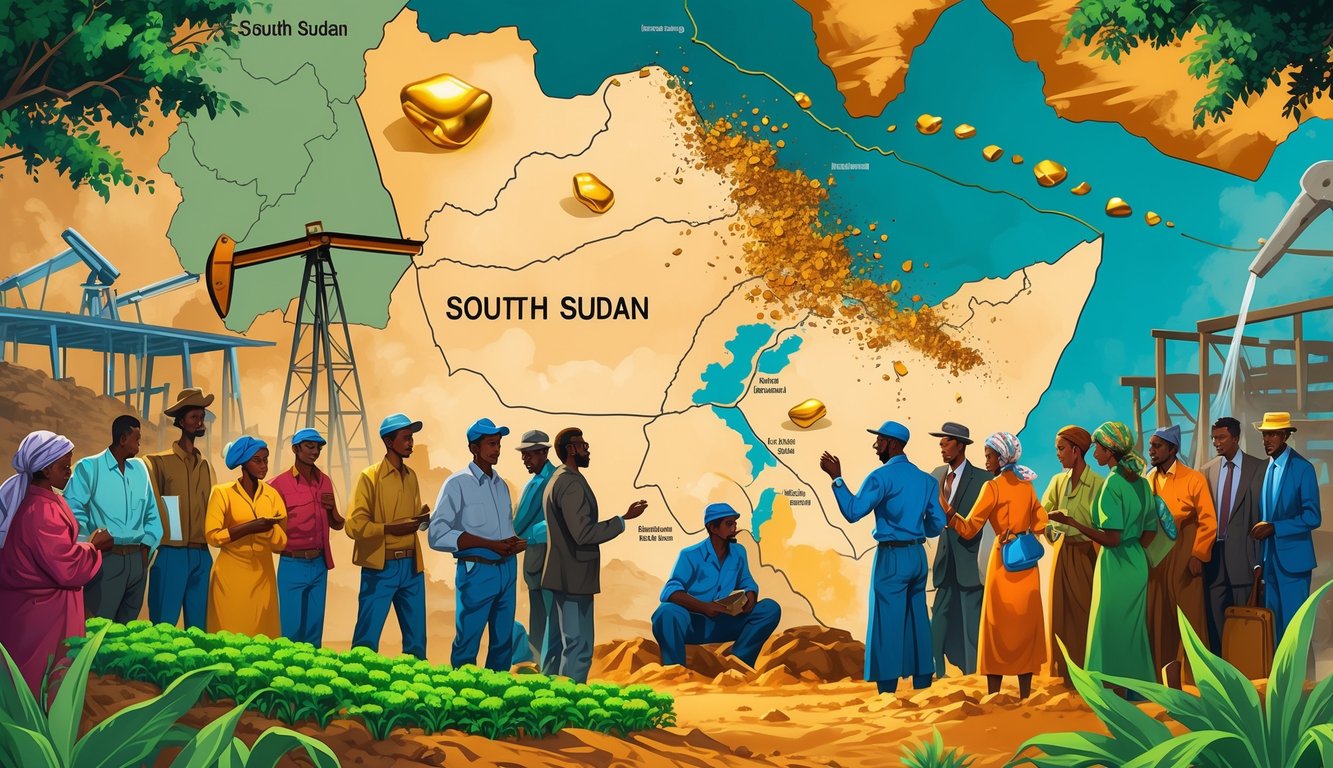
South Sudan’s story includes big questions about resources like oil, water, and farmland. These issues have created tension and continue to affect the country’s economy and development.
Oil Discovery, Exploitation, and Disputes
Oil is South Sudan’s most valuable resource. When the country gained independence in 2011, it took about 75% of Sudan’s oilfields—roughly 3.8 billion barrels.
Oil exports now make up almost 90% of South Sudan’s exports, making the country heavily dependent on this single resource. Most of this crude oil goes to China.
Oil wealth has also sparked controversies. Arguments over who controls the oil fields, especially along the border with Sudan, have continued.
Disruptions and disagreements about pipeline fees with Sudan have caused repeated halts in oil production. This dependence on oil has hurt development and left the country vulnerable to conflict and global price changes.
Economic shocks, like pipeline closures, have triggered hyperinflation and worsened living conditions. For more details, see South Sudan’s oil economy and recent crisis.
Water Rights and the Sudd Marsh
South Sudan is home to the Sudd Marsh, formed by the White Nile. This region is one of the largest wetlands in the world.
The Sudd has vital ecological importance and provides water for farming, fishing, and local communities. The country faces many unclear claims about water rights around the Sudd.
Disagreements exist over whether to develop the marsh for farming and infrastructure or to protect the wetland’s natural state. Plans like the unfinished Jonglei Canal—meant to divert White Nile water—remain controversial and have raised worries about damage to livelihoods and wildlife.
Many people want access to the water for growing crops. Environmental groups stress the need to preserve the area to support traditional communities and keep the ecosystem healthy.
Agriculture and Land Ownership Mysteries
Agriculture is crucial to life in South Sudan, but questions remain about who owns farmland and how land can be used. Families rely on crops and livestock for survival, and disputes over land have led to community conflicts.
Colonial and postcolonial land policies often left out clear rules, making it hard to settle ownership arguments. Changes in population, conflicts, and new development projects have added more challenges.
Some land remains under communal or traditional ownership. Outsiders trying to acquire large plots have faced pushback.
This uncertainty around land rights slows rural development and makes it hard for people to plan for the future.
Culture, Religion, and Unanswered Social Questions
South Sudan is shaped by its many cultures, religions, and deep social questions. These mysteries affect how people see themselves as a nation and how they connect with their communities.
Traditional Beliefs, Religion, and National Identity
Religion in South Sudan is a mix of Christianity, Islam, and traditional African beliefs. Many people follow Christianity, but traditional beliefs remain important, especially in rural areas.
Some families practice both, blending rituals and customs in daily life. Christian holidays are widely celebrated, but spiritual leaders from older traditions also guide communities, settle disputes, and heal sickness.
This mix makes it hard to define a single national identity. Questions about religious freedom remain, and ongoing discussions focus on the rights of minority faiths and the place of local traditions in the country.
Religious differences can become more visible during national events, such as peace talks, where ethnic and religious identities matter. More can be read about how religious vulnerabilities shape social life in South Sudan.
The Impact of Language and Education
South Sudan is home to more than 60 languages. Local languages like Dinka, Nuer, and Bari are spoken in homes and villages.
English is the official language of government and schools. Many children grow up speaking a local language before learning English at school.
This sometimes causes confusion and affects learning. Not all teachers are trained, and some rural schools have few books or supplies.
It can be hard to create a shared national feeling when people are split by language and educational differences. Girls and children from remote areas attend school less often than boys from cities.
These gaps create questions about how to build unity and offer equal chances for all.
Role of Women and Community Mysteries
Women in South Sudan play many roles in the family and community, yet they face many struggles. Traditions often expect women to marry young, raise children, and run the household.
Girls face challenges like early marriage and limited education. Women’s voices are often not heard in discussions about peace or politics.
Many groups are working to change this, but progress is slow. People wonder how to make sure women have a bigger role in decision-making and nation-building.
Community tensions sometimes keep secrets about women’s experiences during the civil war or prevent open talk about gender-based violence. These social mysteries affect both peace and healing, leaving questions about how to build fairer and safer communities.
Modern South Sudan: Ongoing Mysteries and Peace Efforts
South Sudan faces many unresolved problems, from fighting between groups to questions about corruption and leadership. These mysteries make daily life difficult and hold back progress.
Internal Conflicts and the South Sudanese Civil War
South Sudan became the world’s newest country in 2011. Peace was short-lived.
By 2013, a split between the president and his former deputy led to fighting known as the South Sudanese civil war. This war spread fast, leaving millions without homes and causing suffering across the country.
Violence often flares up even after peace deals. Ethnic tensions over resources and power add to the problem.
In some regions, local groups fight over cattle or land. In others, political struggles mean more violence.
The root causes are complex and tied to deep distrust between communities. You can learn more about recent unrest and its causes from the Global Conflict Tracker.
International Support and Peace Negotiations
Global leaders and organizations have tried for years to help end the fighting. The United Nations and African Union have both played key roles in peace talks.
After several failed agreements, leaders signed a peace deal in 2018. However, trust between leaders remains weak, and the risk of renewed violence is high.
Neighboring countries have hosted talks and tried to help mediate. The Juba Conference was one example, where groups met to discuss a lasting peace.
The United States and Europe have supported efforts through sanctions and aid. Yet, fragile truces often break down.
For updates on peace efforts and outside help, check the UNDP’s perspective.
Challenges in State-Building and Corruption
Building a stable government in South Sudan is still a work in progress. The country has struggled with elections being delayed and worries about officials misusing money.
Corruption is a big problem. Many people feel that powerful leaders often help their friends or families instead of serving everyone.
This makes it hard for basic services like schools and clinics to work well. Lack of trust in the system means some citizens are scared to speak up or take part in politics.
Honest elections are seen as a key step, but these have been pushed back. For further detail on government challenges, see this PDF report on peace and stability.
Humanitarian Crises and the Search for Stability
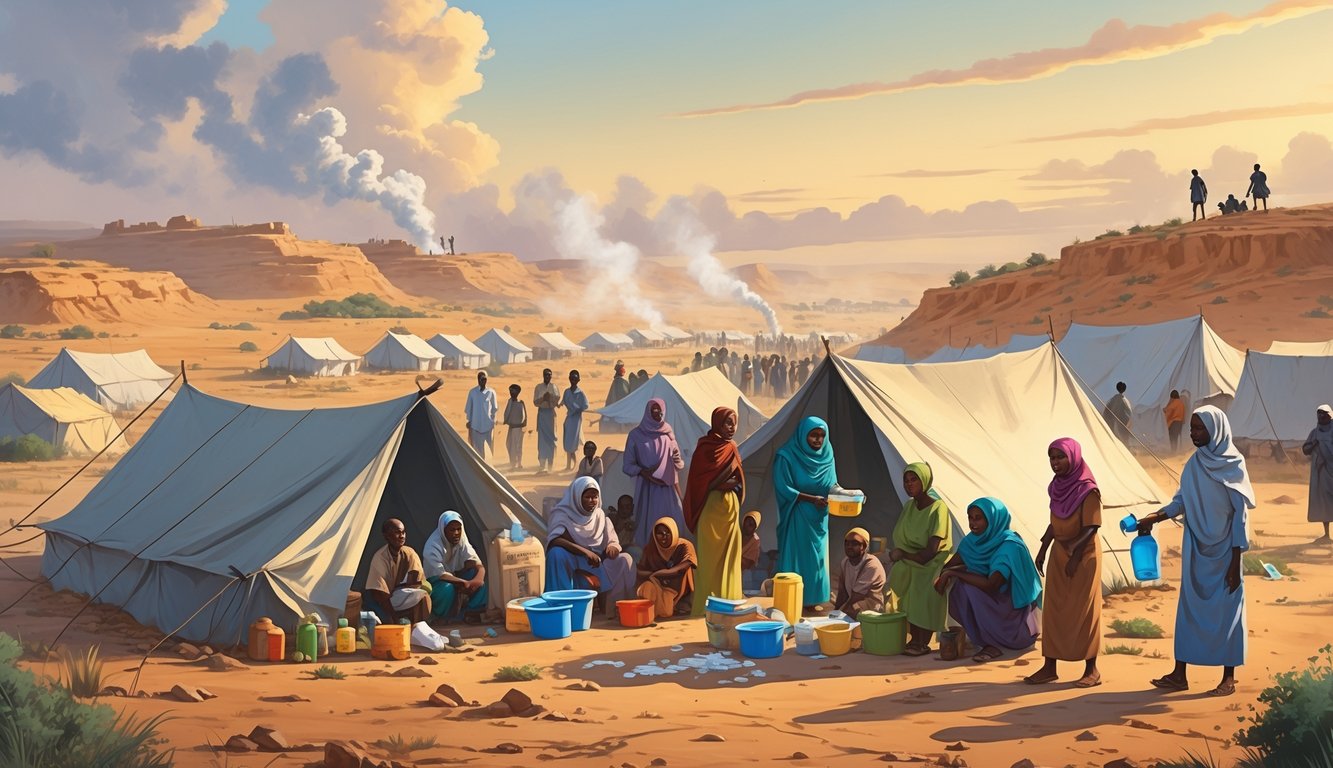
South Sudan faces constant threats from famine, waves of displacement, and stalled development projects. Cycles of conflict make it hard for international aid and rebuilding plans to succeed.
Famine and Food Insecurity Mysteries
People in South Sudan have faced starvation many times since independence. Weather extremes, ongoing violence, and the collapse of farms have all played a role.
Each year, millions worry about not having enough food to survive. Sometimes, aid reaches only some areas, while fighting blocks help from others.
Droughts can wipe out crops in one region but leave others untouched.
Key issues include:
- Unpredictable weather
- Disrupted trade routes
- Loss of farming tools and seeds
Groups like the World Food Programme and other organizations continue to battle these problems. Hunger puts stress on families and weakens the country as a whole.
More details about South Sudan’s hunger crisis are updated by humanitarian groups such as the World Health Organization.
Population Displacement and Refugee Stories
Conflict and food shortages have forced thousands to leave their homes. Many flee to Ethiopia, Sudan, or refugee camps within South Sudan.
Children and elderly people often face the harshest conditions during these moves. During the civil war, huge numbers crossed borders in search of safety.
These movements strain neighboring countries’ resources and increase tensions near borders. Many South Sudanese remain displaced, living far from where they grew up.
Some families move many times, searching for security or food. These journeys often break families apart and make it tough for children to go to school.
According to recent reports, over 9 million people in South Sudan need humanitarian help.
Infrastructure and Development Dilemmas
Building roads, schools, and hospitals in South Sudan has been a major challenge. Years of war have destroyed much of what used to exist.
In many places, roads are unpaved or washed out. Travel is risky and slow.
Power and clean water systems are rare in rural towns. Cities like Juba have grown fast, but basic services often lag behind.
International organizations start development projects, but they sometimes stop early due to funding cuts or conflict. Aid groups struggle to reach people without steady infrastructure.
Many efforts to rebuild face setbacks. Global organizations keep looking for ways to support local communities and encourage long-term growth.