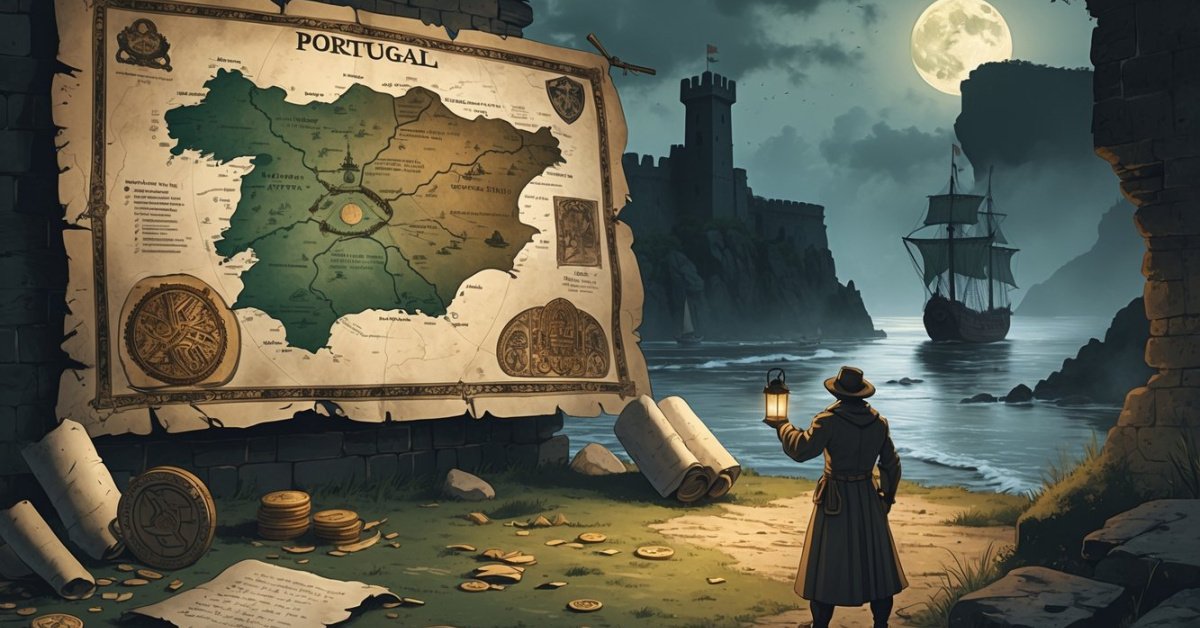
Portugal is filled with unanswered questions that go back thousands of years. From the ancient and mysterious Cromlech of the Almendres, a stone monument older than Stonehenge, to unexplained legends about vanished islands and cursed places, this country is home to many puzzling secrets.
Stories about hidden treasures and lost cities still capture people’s imaginations today.
Portugal’s biggest historical mysteries include ancient ruins, unsolved legends, and strange discoveries that continue to surprise everyone. Across its beautiful landscapes, there are tales of ghostly monasteries and queens crowned after death.
These stories help shape Portugal’s unique sense of history and wonder. Anyone interested in Europe’s most unusual past will find Portugal’s mysteries both fascinating and puzzling.
There’s always another legend, hidden artifact, or strange place waiting to be explored. Locations like the Cromlech of the Almendres and Portugal’s most enigmatic legends draw curious minds.
The Enigma of the Disappearance at Sintra
Sintra is famous for its stunning palaces, lush landscapes, and deep woods. Events in these forests have sparked questions and inspired a mix of historical facts and legendary tales.
Mysterious Events in the Forest
In the heart of Sintra’s dense forests, stories often surface of people vanishing without a trace. Locals and visitors have described sudden fogs, echoing footsteps, and strange lights that seem to follow anyone who wanders off the paths.
The exact number of these unexplained disappearances remains uncertain. Old newspaper clippings and community accounts keep these tales alive.
Cases sometimes center around lesser-known spots near the town’s iconic sites. People recall hearing whispers in the trees or stumbling upon oddly arranged stones deep in the woods.
Many believe these areas are tied to rituals conducted by secret groups in Portugal’s past. Even today, hikers sometimes report feeling watched or hear odd sounds at dusk.
The blend of real disappearances and eerie reports strengthens Sintra’s reputation as a place of unsolved mysteries.
The Role of Portuguese Legends
Legends form the backbone of Sintra’s longstanding air of mystery. Stories passed down from generation to generation often blend real accounts with folklore.
Ancient myths speak of enchanted groves and hidden portals said to appear when the moon is full. One popular legend involves a group known as the Knights Templar, who some say met in the forest to hide treasures or perform secret rites.
Others mention connections to lost cities, such as the idea that Sintra and Mafra may be part of the myth of Atlantis in Portugal. These tales fuel local imagination and keep old mysteries alive.
Sometimes, children learn about these legends in school or from grandparents. Portuguese people often see these stories not just as entertainment, but as a link to their ancestors.
The Impact on Local Identity
Sintra’s unsolved mysteries and legends shape how people think about their community. Many residents feel a sense of pride about living in a town with such a strange and interesting history.
These stories also bring locals together. Festivals and nighttime tours explore forgotten corners of the forest.
Mystery adds value for tourists and helps support local businesses. For the people in Sintra, tales of disappearances and hidden secrets give their town a unique place in Portugal’s story.
The Mysteries Surrounding Queluz Palace
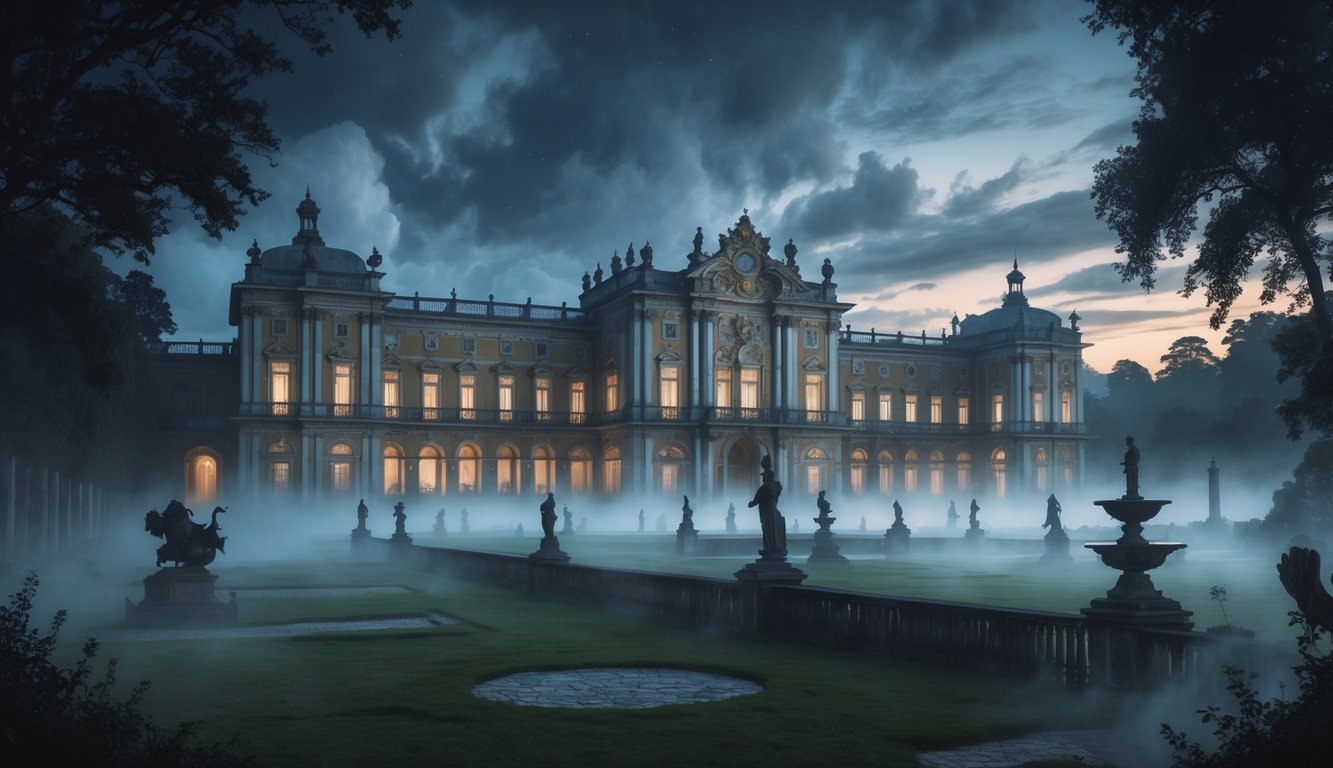
Queluz Palace stands out for its grand architecture and gardens. It is also known for links to royal secrets and unexplained happenings connected to the Portuguese court.
Some events at this famous palace continue to puzzle historians and visitors who study its past.
Unexplained Disappearances
Reports from the 18th and 19th centuries speak of sudden disappearances among palace staff and visitors. While some absences may have been due to illness or travel, records show individuals who vanished without a trace.
Local stories mention missing officials whose belongings were left behind in unlocked rooms. At times, letters home told loved ones they would visit Queluz, but no one ever heard from them again.
Police investigations from this period, though incomplete, add weight to these incidents. Many questions remain about how these mysteries may relate to the complex layout of the palace or hidden passageways rumored throughout the building.
Queluz Palace’s environment and history have fueled theories of foul play or secret activities beneath its elegant façade. Guided tours sometimes highlight these mysteries as reminders of what remains unknown about daily life at Queluz Palace.
Court Intrigue and Secret Rooms
Portuguese royalty often used Queluz as their summer retreat. Palace records hint at behind-the-scenes intrigue, especially during the late 1700s.
Historians have documented political schemes and rivalries among nobles. Tensions often came to a head within the palace walls.
Legends claim that hidden rooms and corridors were constructed for private meetings, romantic liaisons, or even hiding during moments of crisis. Some secret doors now remain locked to the public.
Floor plans suggest that entire sections of the palace may still contain unexplored spaces. Rumors continue about crucial decisions made in these rooms, possibly linked to important crimes or political deals that changed the fate of the country.
Visitors and researchers remain fascinated by what may still be concealed within the sprawling halls and gardens of Queluz.
Lisbon’s Lost Treasures and Hidden Histories
Lisbon is full of stories about missing treasures, unsolved crimes, and secret tunnels beneath its busy streets. Each mystery gives a deeper look into how the city’s past was shaped by its people, legends, and landmarks.
Missing Relics and Artworks
Over the centuries, Lisbon has lost many priceless relics and works of art. During the 1755 earthquake, churches and palaces collapsed, burying gold, religious icons, and tapestries forever.
Some believe rare manuscripts from Jerónimos Monastery vanished around this same time. Pirates and foreign invaders also stole artwork from Lisbon’s wealthy homes and grand cathedrals.
These losses are still felt today. Historical records hint that mysterious vaults may still hold some lost pieces, but their locations remain unknown.
A few locals claim to find traces of hidden treasure during renovations in old neighborhoods. Lisbon’s lost relics continue to spark the imaginations of historians and treasure hunters alike.
Forgotten Crimes of the Port
Lisbon’s port has long been a gateway for explorers, traders, and criminals. In the 16th and 17th centuries, smuggling, ship hijackings, and even assassinations took place in the foggy docks and warehouses.
Merchants often bribed officials to look the other way, letting illegal goods slip through undetected. Victims sometimes disappeared without a trace.
The whereabouts of stolen cargo and missing people from this era remains a puzzle. Historical records sometimes mention notorious gangs that used clever disguises and secret codes to avoid arrest.
These crimes helped shape laws and security in the city’s busy shipping districts. The dark stories of the port’s underworld are still whispered about today by those who work near the water.
Legends of Underground Tunnels
Many Lisboetas speak of hidden passages beneath the city. According to local legends, a maze of tunnels connects major sites like São Jorge Castle, the old cathedral, and the waterfront.
Some tunnels were used as escape routes during times of war. Others hid treasures or became meeting places for rebels.
Historians believe some of these passages collapsed with time, while others remain sealed off behind walls and locked doors. Modern explorers have found partial tunnels under buildings, but the full extent of the underground network is unknown.
Tales of secret entrances and mysterious doors still invite curious minds to look deeper into Lisbon’s hidden past.
Unsolved Political Mysteries of the Dictatorship Era
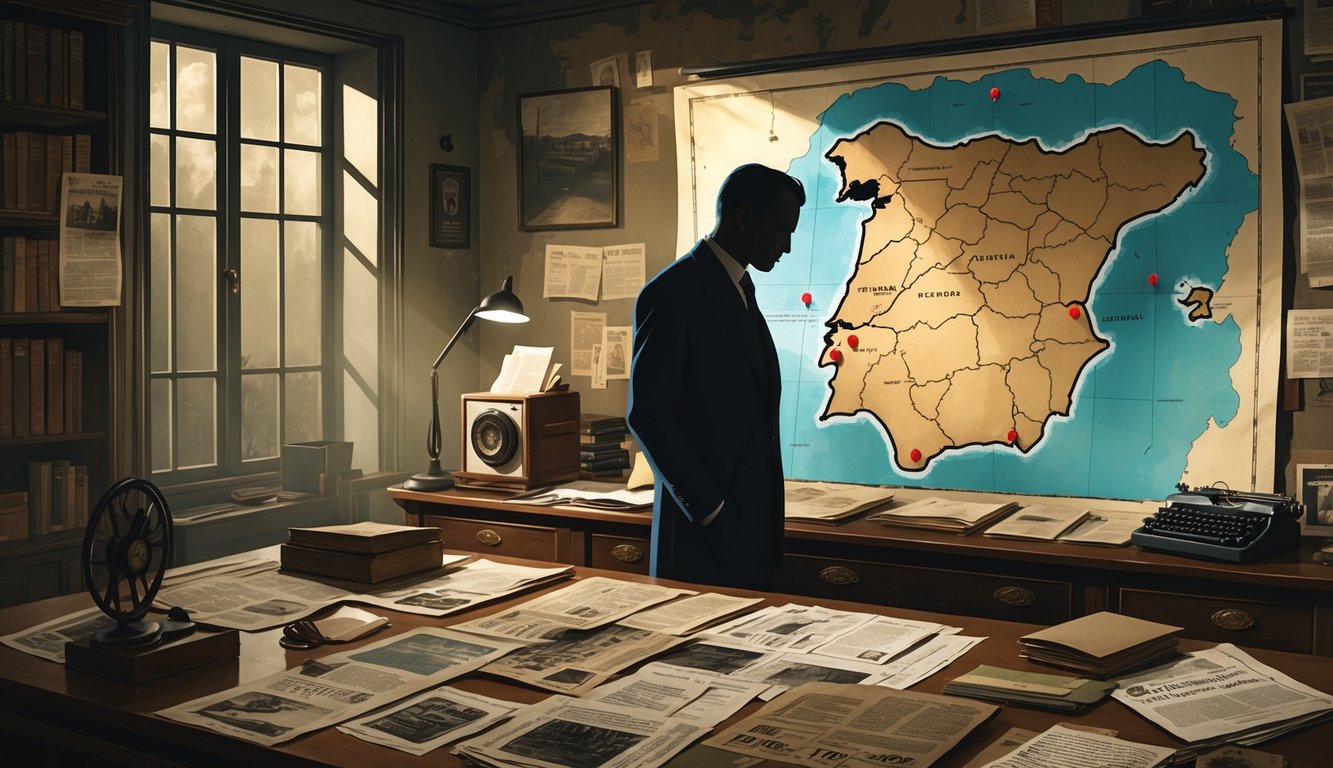
During Portugal’s dictatorship, many events were shrouded in secrecy. Several cases from this era still leave families, historians, and the Portuguese people searching for answers.
Disappearance of Political Dissenters
Many citizens who stood against the dictatorship vanished without explanation. Records about political prisoners are incomplete or missing, making it hard to trace what really happened to these individuals.
Families often reported loved ones being taken in the night, with police offering no information. Many dissenters were never seen again.
In some cases, rumors spread about secret prisons or unmarked graves, but nothing was confirmed. Despite the fall of the dictatorship, investigations into these disappearances led nowhere.
Even today, this silence continues to haunt the families of those who tried to stand up for justice and change.
Secret Trials and Lost Justice
Secret trials were common tools for silencing those who opposed the regime. Proceedings happened without public knowledge and often denied the accused any legal defense.
Judgments came quickly. Many people, including writers and students, were convicted with little evidence.
Sometimes, authorities forced confessions, making it impossible to know if justice was truly served. Court documents frequently disappeared or were destroyed, adding to the mystery.
The Portuguese people now have limited access to what really went on behind closed doors during these years of censorship and control. Lists of suspected dissidents were created but rarely made public.
The Carnation Revolution’s Unanswered Questions
The Carnation Revolution changed Portugal’s history, ending decades of dictatorship and leading to democracy. However, questions about missing official records and the identity of some participants remain.
Missing Documents and Records
Some important documents from the time of the Carnation Revolution are still missing today. These include papers from the Estado Novo government and military files used during the coup on April 25, 1974.
Historians say official records that could explain details about certain decisions and actions during the revolution have disappeared. This makes it harder to prove exactly who was involved in key moments.
It is also difficult to know the real reasons for certain choices. For example, details about secret plans, contacts between officers, or the planning of Operation Viragem Histórica (Operation Historic Turn) have not all been made public or preserved.
This loss makes it difficult for researchers to build a complete story. Parts of the revolution’s history remain open to speculation.
The missing records also affect Portugal’s collective memory of the revolution. Without clear evidence, myths and rumors can fill in the gaps, making some events seem larger or more mysterious than they actually were.
Unidentified Participants
While many leaders of the Carnation Revolution are well known, some people involved in the events have never been clearly identified. These include lower-ranked soldiers, civilian supporters, and activists who played quiet but critical roles in protests and planning.
Even today, photos and reports from April 25, 1974, show faces and names that historians cannot fully match. Some participants stayed anonymous for safety, while others faded into the background as the country moved forward.
Lists of awards and honors sometimes leave out those who helped most behind the scenes. Discussions about the revolution’s legacy often focus on famous generals or politicians instead of the many hidden individuals who made a difference.
People still search for these missing names to give proper credit and to better understand the full story of Portugal’s most important peaceful uprising. The question of true identity remains a mystery for families and the wider public, fueling interest and debate about what really happened during the Carnation Revolution.
Historical Crimes That Still Haunt Portugal
Portugal’s past includes stories of dark events and unresolved mysteries. Some of these crimes have left deep marks on the people and the country’s sense of history.
Infamous Unsolved Murders
Several killings in Portugal remain unsolved even today. These cases have led to rumors, police investigations, and speculation across generations.
The streets of Porto hold memories of unsolved killings that have become legends among locals. The identity of those behind certain crimes remains a mystery, leading many to wonder who was truly responsible.
Residents and visitors still discuss details and share theories about these events. These topics are part of what makes Portugal’s cities both fascinating and a little unsettling.
Some cold cases are well-documented, with disappearances and unsolved crimes that locals continue to talk about in neighborhoods and coffee shops. These mysteries from the past unsettle both the families of victims and anyone who loves a good detective story, as shown by stories circulating in places like Porto.
You can find more about these legends and unsolved crimes that linger in Porto’s history.
Theft Cases That Defied Resolution
Major thefts have also left their mark on Portugal’s history. Priceless artwork, valuable jewels, and even church treasures have disappeared.
Some robberies were so well-planned that the criminals escaped capture. Investigations often spanned years, but many items were never found.
These thefts sometimes involved famous places, including old castles, palaces, and museums. The stolen goods, sometimes dating back centuries, represent a lost part of Portugal’s heritage.
The stories of these unsolved thefts now belong to the country’s folklore. People often discuss them alongside Portugal’s most baffling unsolved mysteries.
For more about these historically significant and mysterious unresolved thefts in Portugal, several spots are even rumored to be haunted because of the crimes that took place there.
Portugal’s Enigmatic Stone Monuments
Monumental stone circles and standing stones lie scattered across Portugal, some dating back to prehistoric times. The mysterious shapes, careful arrangements, and ancient carvings have sparked curiosity among archaeologists and locals alike.
Origins and Meanings
Many of Portugal’s megalithic monuments, such as the Almendres Cromlech, are thousands of years old. The Almendres Cromlech is one of the largest megalithic sites in Europe and features over 90 granite stones arranged in two circles.
These formations show advanced knowledge of construction and land organization from prehistoric communities. Archaeologists believe that these stone structures may have had religious or ceremonial roles.
They could have been used for seasonal celebrations, burials, or astronomy. Some stones are carved with symbols, adding to the ancient mystery and raising questions about their meanings.
Legends passed down through generations claim the stones were put there by giants or magical beings. The different types of megalithic sites in Portugal include:
- Stone circles (cromlechs)
- Standing stones (menhirs)
- Alignment rows
Each type might have served a unique purpose based on its design and placement.
Stonehenge Connections
Almendres Cromlech is sometimes called Portugal’s Stonehenge because of its size and layout. Both sites feature rings of large stones and date to the Neolithic period.
While Stonehenge in England is more famous, the Portuguese circles are older and less disturbed. There are key similarities:
- Circular layouts
- Alignment with the sun or stars
- Mysterious symbols carved on the stones
Some researchers suggest contact or shared traditions between ancient builders of Stonehenge and the Almendres site. However, there is no strong proof that the sites or peoples were directly linked.
The comparison helps show that early communities across Europe built large stone monuments, creating legends that are still debated today.
The Secrets of Maritime Discoveries

Portugal has a long history of sea exploration that helped shape its identity. Many puzzling events still remain from these years, including lost ships and strange details on early maps.
Lost Expeditions and Ships
Portugal’s coastline and surrounding waters have seen many shipwrecks over the centuries. The Atlantic Ocean near the Portuguese coast, Madeira, and the Azores hides a vast underwater record.
Researchers have created a database that lists 8,620 sunken ships documented through historical records and reports from witnesses. Some vessels were heading to distant ports in Africa, Asia, and the Americas during the Age of Discovery.
Many vanished without a trace, leaving no clues about their fate. The search for these shipwrecks continues and sometimes surprises archaeologists.
For example, a team recently recovered two bronze pulleys estimated to be 300 years old from the bay of Lagos, Portugal. Such discoveries provide small clues about trade, technology, and the everyday challenges that explorers faced as they built Portugal’s maritime identity.
New finds are still being made. Each artifact helps fill gaps in Portugal’s long connection to the sea.
Read more about these finds in this article on underwater treasures found in Lagos.
Unexplained Map Anomalies
Many early Portuguese maps have details that historians cannot fully explain. Some maps drawn by Portuguese explorers in the 15th and 16th centuries show places and ports that no longer exist or have never been found.
These spots sometimes appear on several different maps, which adds to the confusion. Sometimes, small islands appear on old maps off the coast of Portugal but not on modern maps.
These map anomalies make experts wonder if the islands sank, were found in error, or were just included by mistake. Some of these mysteries suggest that explorers reached ports or lands that remain lost to history.
Historians and geographers still study these maps, looking for clues about ancient sea routes and the thinking of the mapmakers. By comparing old maps to underwater discoveries, researchers hope to understand more about Portugal’s role in global exploration.
Some details are explained by shifting coastlines or natural disasters, but many questions remain open. Learn more about the impact of Portuguese maritime explorations on history and mapmaking.
Legends, Folklore, and the Power of Memory

Stories passed from generation to generation have shaped how the Portuguese people see their past. These legends and tales mix memory with imagination, giving life to heroes and mysteries that are still remembered today.
Famous Portuguese Legends
Portugal is home to a rich collection of myths and legends. One famous example is the legend of Our Lady of Fátima.
In 1917, three children in Fátima said they saw visions of the Virgin Mary. This story has become a powerful memory for many Portuguese people and attracts people from around the world.
Another well-known story is the legend of the Rooster of Barcelos. A wrongly accused man proved his innocence when a roasted rooster stood up and crowed, saving him from execution.
The rooster is now a traditional symbol of faith and justice in Portugal. Tales of mystical creatures like the Enchanted Moorish Maiden are also popular.
These stories tell of beautiful maidens guarding treasures or searching for lost love. Visitors can learn about more mythical figures that have become part of Portugal’s rich folklore, showing how these legends still matter today.
The Blending of Fact and Fiction
The line between fact and fiction can be hard to see in Portuguese folklore. For many, these stories are more than tales—they become memories that help build community and identity.
People often treat legends as true, even if the details are not always clear or proven. This has helped keep these stories alive through generations.
Portuguese history is full of events that blend with legend. Explorers from the Age of Discoveries are heroes in many stories, and their deeds are sometimes a mix of real events and creative retelling.
This combination of truth and story has shaped how the Portuguese people remember their past. These tales highlight the power of collective memory.
Even when the facts fade, the lessons and emotions behind the stories continue to carry meaning. Legends and memory remain tightly connected in Portuguese culture, helping to pass down values and identity through time.
Modern Mysteries and Unsolved Cases

Portugal is home to many modern mysteries that puzzle both locals and visitors. Some unsolved cases involve strange crimes, lost treasures, and unexplained events.
One of the most famous cases is the disappearance of Madeleine McCann in 2007. The young British girl disappeared from her family’s holiday apartment in Praia da Luz.
Despite global attention, her fate remains unknown. There are also stories about unsolved crimes in cities like Porto.
These stories include mysterious deaths and secret legends. Guided tours in Porto sometimes share tales of a governor’s ghost and an unsolved lawyer’s death.
Here are some modern mysteries that attract attention in Portugal:
| Mystery/Case | Location | Year | Status |
|---|---|---|---|
| Madeleine McCann Disappearance | Praia da Luz | 2007 | Unsolved |
| Lawyer’s Death | Porto | Unknown | Unsolved |
| Former Governor’s Ghost | Porto | Various | Legend |
Unsolved mysteries sometimes raise issues of justice. Families and the police continue searching for answers.
New clues and theories still appear today. People in Portugal find these stories both spooky and interesting.
They remind everyone that some questions still need answers.