Kiribati is a remote island nation with a long and fascinating past. Many mysteries from its early days remain unsolved, leaving people curious about how its first settlers arrived and what ancient events changed its islands.
Stories from Kiribati’s past blur the line between fact and legend. Ancient clues and traditions help us piece together its unique history.

Some questions reach back thousands of years, such as where the first Micronesian settlers came from and how they crossed the vast Pacific Ocean. Other mysteries come from ancient objects, like the shark tooth weapons and stone boulders found across the islands.
These objects hint at forgotten traditions and natural disasters. Stories passed down through generations—like accounts of a massive tsunami or haunted locations—add to the island’s sense of wonder and the unknown.
The Disappearance of Early Settlers
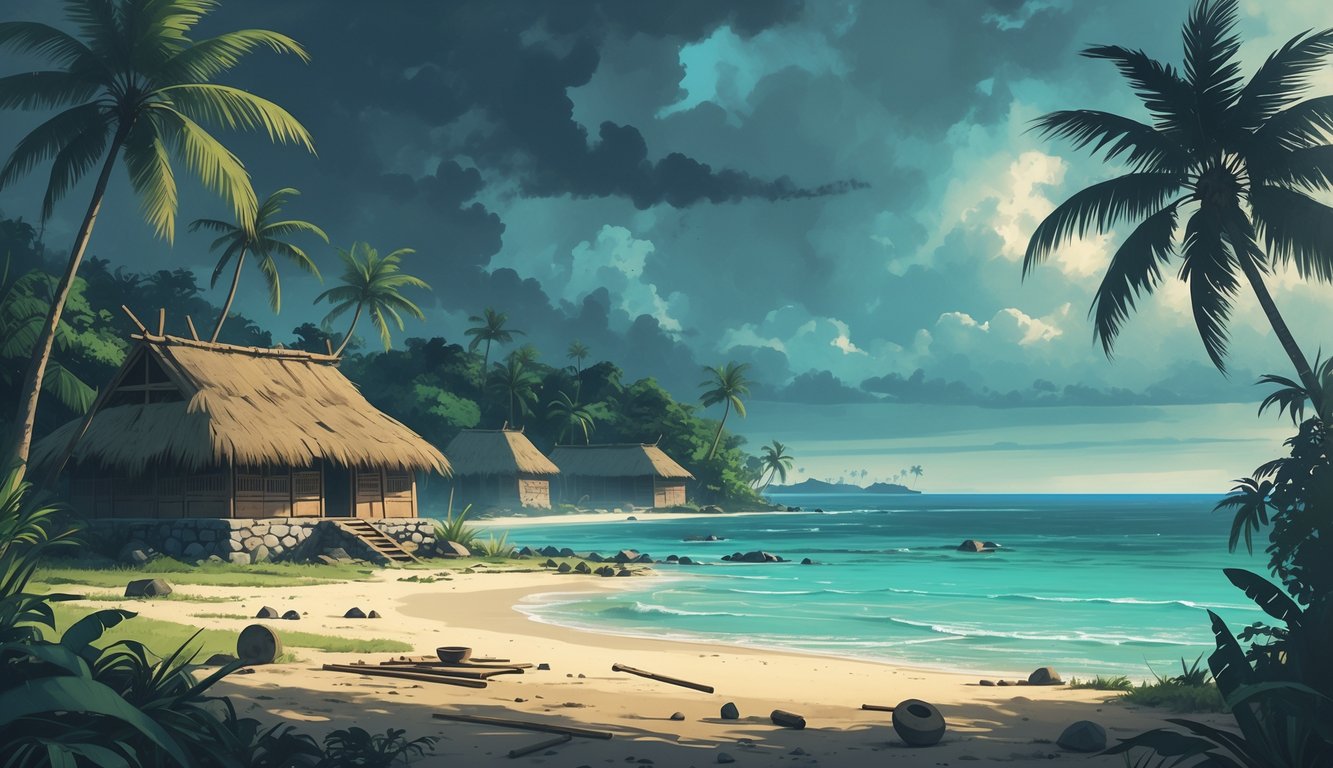
Kiribati’s earliest residents left clues about their lives on its atolls. Many questions still remain.
Archaeologists and researchers try to understand how the first settlers lived and moved in the middle of the South Pacific. They also study how people dealt with the island environment.
Archaeological Evidence
Archaeologists have found remains of early settlements on several Pacific islands that now make up Kiribati. These include stone tools, pottery shards, and remains of ancient homes.
Some of these findings date back about 4,000 to 5,000 years. This shows that people have lived here for much longer than once believed.
Many early artifacts show links to other areas in Micronesia. Differences in building methods and materials suggest that the first settlers brought unique ideas and skills from their original homes.
Old weapons and fishing tools show how communities relied on the ocean and adapted to island life. The spread and location of these remains suggest that certain islands were abandoned or populations shifted at some points.
Researchers wonder what caused these changes and where the early people may have gone.
Migration Patterns
Scholars trace the movement of early settlers by comparing tools, language, and DNA. Most evidence points to central Kiribati being settled by people from Southeast Asia and Micronesia.
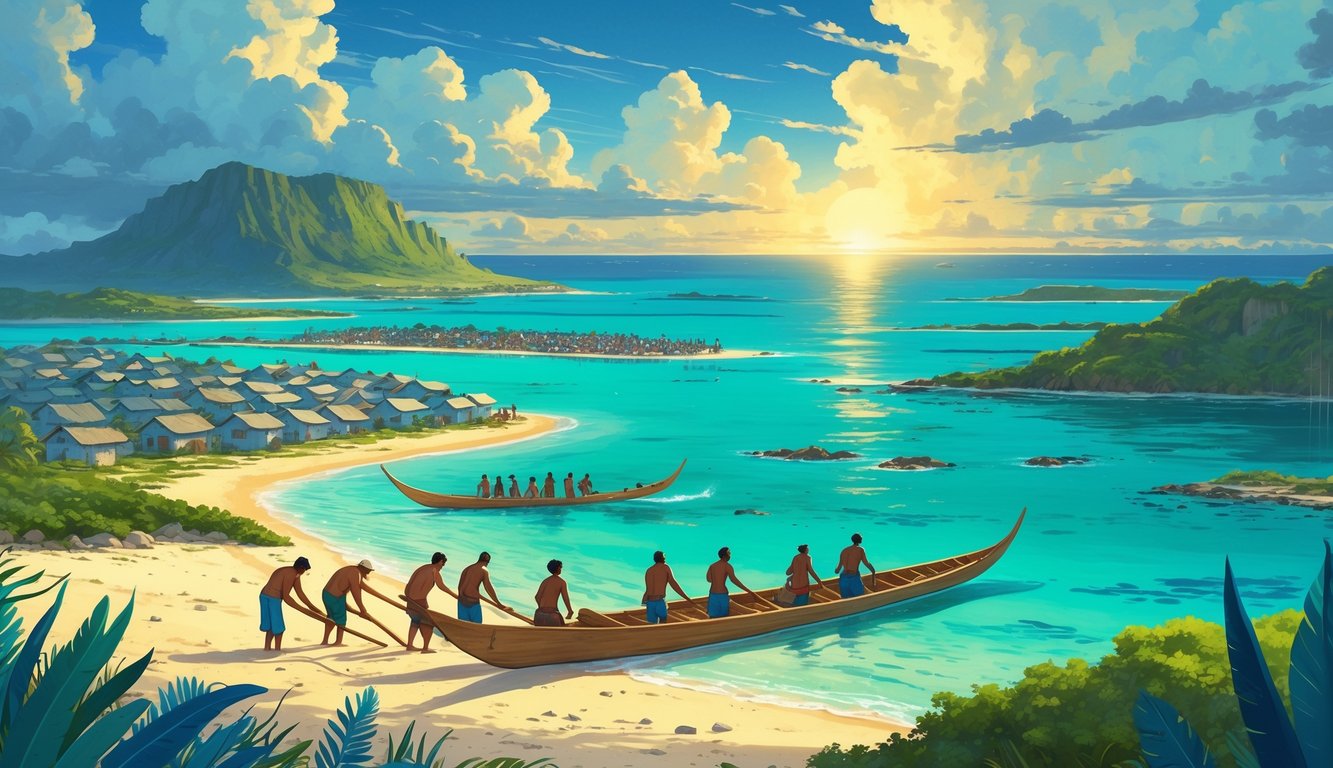
Some groups likely traveled by canoe across hundreds of miles of open ocean. Records mention an influx of Samoan people around the 14th century, which changed the existing culture.
This arrival may have caused some earlier groups to move or disappear. Over time, the loss of local traditions and stories has made it hard to track every group’s path or reason for leaving.
Today, traces of these migrations appear in the islands’ unique cultural heritage. Influences from several regions blend together in Kiribati.
However, gaps remain. Some settlement sites show signs of being left empty with no clear explanation for the disappearance of their people.
For more on this, visit the Britannica overview of Kiribati history.
Impact of Climate Change
Environmental challenges have always shaped life on Kiribati’s atolls. Rising sea levels, changing weather, and drought made survival difficult for early settlers.
Some researchers believe these climate changes caused early population shifts and disappearances. Soil erosion and saltwater flooding could ruin crops, making it impossible for communities to stay in one place.
Severe storms might force whole villages to move or abandon certain islands. Periods of extreme weather could wipe out food supplies or freshwater sources.
These pressures might explain why some settlements suddenly disappeared. Only faint traces remain for anyone to study today.
Mysteries of Pre-Colonial Contact
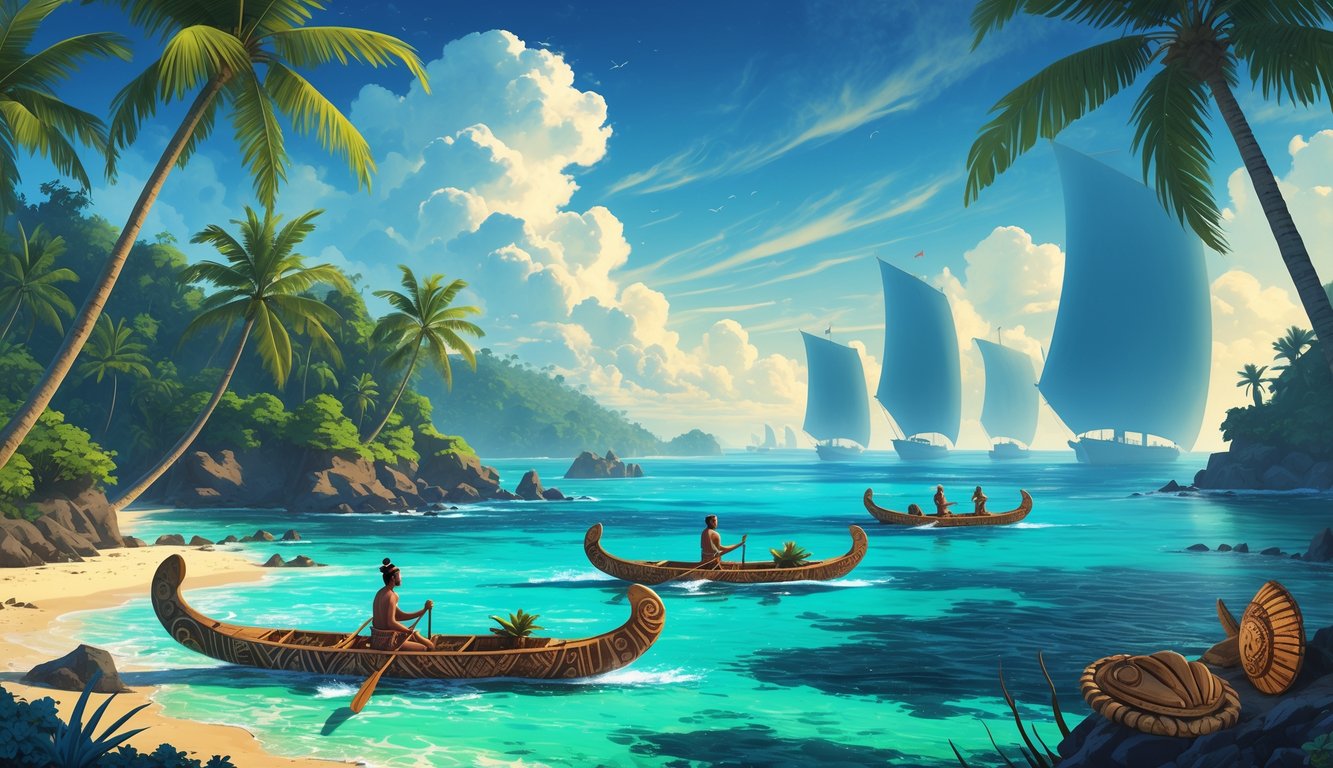
Many details about Kiribati before European arrival remain uncertain. Stories, artifacts, and traditions hint at outside influences, but hard evidence is scarce.
Possible Spanish Explorers
Old stories suggest Spanish explorers may have sighted the Gilbert Islands (now Kiribati) as early as the 16th or 17th century. Early records mention vague Pacific discoveries, but no direct Spanish documentation of landing on Kiribati exists.
Maps from that time sometimes show unnamed islands in the central Pacific. Some researchers think Spanish ships blown off course might have seen the islands during their long Pacific voyages.
Missing logs and unclear records make it hard to know if these islands were actually Kiribati. The lack of Spanish artifacts or cultural influence suggests they may have only passed by.
Influences from Samoa and Southeast Asia
Settlers first arrived in Kiribati thousands of years ago, possibly from Southeast Asia. Later, evidence shows links to Samoa and other Pacific islands.
Linguists notice that the Gilbertese language connects with both Micronesian and Polynesian languages. Archaeological finds, like traditional boat types and house designs, also hint at cultural exchange.
Some oral histories mention visits or contact with people from Samoa, bringing new traditions and technology. This mixed heritage shows that settlers interacted across long distances by sea.
Traditions, language, and skills traveled between islands over centuries. These exchanges make it tough to trace exact times and routes.
For more on ancient settlement and culture, visit this history of Kiribati resource.
Trade with Whalers and Traders
Before formal colonial rule, foreign traders and whalers visited the islands. Starting in the late 1700s, European and American ships hunted whales nearby and often stopped at Kiribati for supplies like water and food.
Local people exchanged coconut products, turtle shells, and other goods for iron tools, cloth, and beads. These early contacts changed the local economy and influenced clothing and tools.
Older residents passed down stories of adventurous meetings with outsiders. Some tales describe shipwrecked sailors joining island communities.
Whalers and traders played a key role in shaping early outside contact. This happened even before formal European exploration began.
Unsolved Questions of Banaba and Phosphate Mining
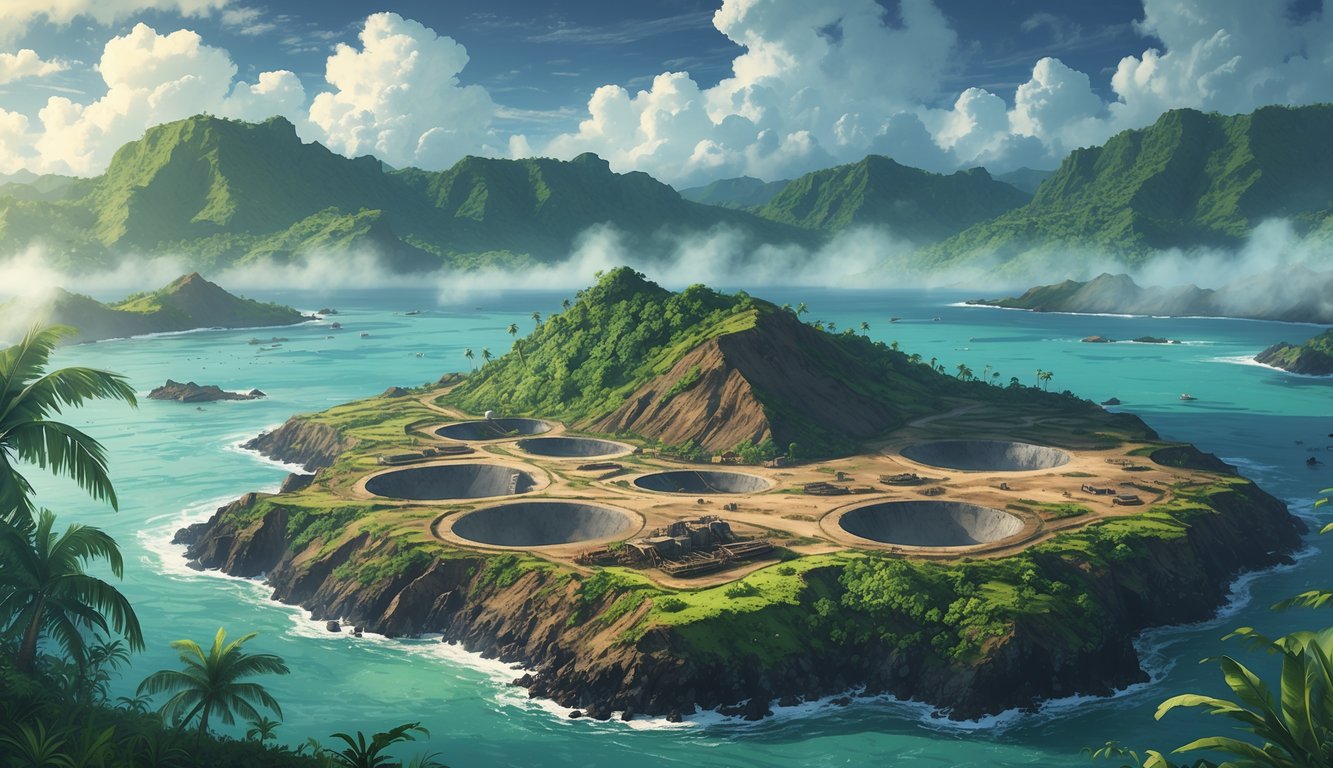
Banaba, once covered in lush vegetation, changed forever after the discovery of rich phosphate deposits. Questions remain about the impact of phosphate mining on the people and land of this island.
Displacement of the Banabans
The Banabans lived on Banaba for centuries before British prospectors found high-grade phosphate in 1900. The land’s fertile soil became valuable overnight.
By the mid-20th century, aggressive phosphate extraction had dug up much of the island. In 1945, officials forcibly removed many Banabans from their home and sent them to Rabi Island in Fiji.
Their removal made way for increased mining. The move broke up communities and separated families from their ancestral land.
Even today, Banaban leaders still seek acknowledgment and compensation for what they lost. Some families continue to fight for their rights to land and resources that once belonged to them.
Key Issues:
- Forced relocation in 1945
- Loss of cultural and community ties
- Ongoing legal and moral debates
Environmental Degradation
Phosphate mining completely changed Banaba’s environment. Before mining, Banaba had underground caves that stored precious rainwater.
Intensive extraction destroyed these natural water catchments, leaving the island dry. Over time, the rich topsoil and plants disappeared.
Roughly 90% of the island’s surface was stripped bare. After the phosphate ran out, almost nothing was done to restore the land.
Banaba now struggles with severe environmental damage. The original ecosystem cannot recover easily, and droughts are worse.
Major Effects:
- Loss of fertile land
- Ruined water sources
- Ongoing health and safety issues for the Banabans
Banaba still has not recovered from the damage left by phosphate mining.
The Enigma of the Lost Phoenix Islands
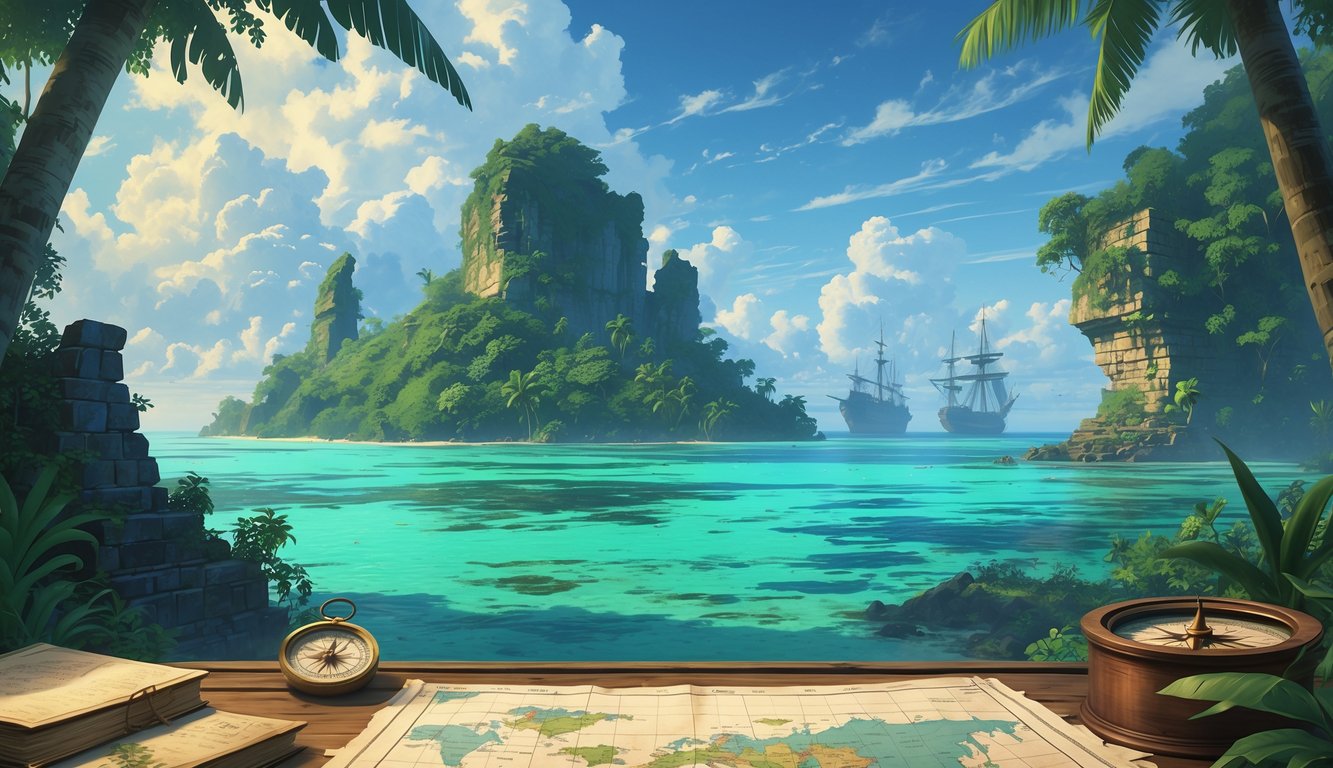
The Phoenix Islands, found in the Republic of Kiribati, are scattered atolls in the central Pacific Ocean. Stories of their early settlement and the strange vanishing of their communities still fascinate people.
Origins and Legends
The Phoenix Islands include eight atolls and two submerged reefs. Located between Hawaii and Fiji, this remote chain became part of Kiribati after the country gained independence.
Oral history says that islanders once visited the Phoenix area to fish, camp, and collect coconuts. Old legends talk about spirits and unusual lights seen near the islands at night.
Some believed these places were cursed or protected by powerful forces. The lack of fresh water made the islands hard to live on, so only small groups traveled there.
In the early 20th century, Britain tried to settle the islands as part of the Phoenix Islands Settlement Scheme. Settlers faced storms, isolation, and shortages.
The Phoenix Islands remain mostly unoccupied, with little physical evidence left behind from early visitors. The deep mystery and wild beauty of the Phoenix Islands draw historians and travelers alike.
For more details, see this exploration of the lost civilizations of the Phoenix Islands.
Disappearance of Settlements
The British hoped to solve overcrowding in other Pacific colonies by sending people to the Phoenix Islands. They started new settlements on several atolls, like Orona and Nikumaroro, in the 1930s.
At first, settlers built houses, planted coconut trees, and tried to live off the land. Fresh water shortages quickly became a huge problem.
Many people became ill or left due to harsh living conditions. During World War II, supply ships stopped visiting, making life even harder for those who stayed.
By the early 1960s, all the settlements were abandoned. Buildings rotted away or were covered by brush.
Some atolls, such as Nikumaroro, later became famous in connection with the disappearance of Amelia Earhart. Today, visitors see only traces of this chapter in Kiribati’s history.
The abandoned Phoenix Islands now make up one of the world’s largest marine protected areas. Their secrets remain safe for future generations.
Learn more about these historical mysteries of the South Pacific.
Line Islands and the International Date Line Puzzle
Kiribati’s Line Islands are not only remote but also stand out for their unique relationship with time. The way the International Date Line bends around these islands has created a historical puzzle that still affects people’s lives today.
Geopolitical Impact
In 1995, Kiribati made a big change by moving the International Date Line to include all its islands on the same calendar day.
Before this, the country was split into two time zones that were almost a whole day apart.
This caused confusion for government work, travel, and everyday life.
The shift moved the Line Islands, like Kiritimati, from UTC-10 to UTC+14.
Now, the islands see the new day first in the world.
The adjustment helped Kiribati run its government more smoothly.
It also made it easier to keep in touch with neighbors and international groups.
However, not every world map shows this move.
Many atlases and global organizations still display the old line.
This makes the political borders and time zones around the Line Islands confusing for many people.
Cultural Adaptation
People living on the Line Islands have had to adjust to this unusual twist in time.
Families sometimes had to learn new habits, especially when the Date Line changed their official day overnight.
Now, locals on islands like Kiritimati start their week while much of the world is still a day behind.
Special events, school schedules, and church services shifted to fit the new calendar.
Many in the community feel proud to greet the sunrise before anyone else.
Being this far ahead in time can make holidays and international calls tricky.
Neighbors on other islands, across the equator or the Date Line, might still be on “yesterday.”
For more background on how the International Date Line was adjusted for the Line Islands, visit this detailed history.
The Battle of Tarawa and WWII Secrets
Tarawa Atoll was the site of one of World War II’s toughest battles.
Fierce fighting, hidden bunkers, and the scars of war still shape Kiribati’s history and landscape today.
Japanese Occupation
The Japanese military took control of the Gilbert Islands, including Tarawa, soon after the attack on Pearl Harbor in 1941.
They quickly built bunkers, gun emplacements, and airfields to defend against Allied advances.
Over 4,600 Japanese and Korean soldiers stayed on Tarawa alone.
Life changed dramatically for the people living on the atolls.
The occupying forces forced many locals into labor.
The Japanese used the islands as a base to launch air and sea patrols in the central Pacific.
They hoped to control important sea lanes.
Japanese soldiers created a network of tunnels and hidden bunkers, making their defenses very strong.
Betio Island, the main battlefield, became a maze of obstacles for invading Allied troops.
Learn more about the occupation and its impacts at Battle of Tarawa.
Allied Forces Strategy
The United States and its Allies planned “Operation Galvanic,” an invasion to take back the Gilbert Islands from Japan.
Tarawa was chosen because capturing it would help the Allies advance toward Japan, and it had a strategic airfield.
The battle started on November 20, 1943, with a massive amphibious assault on Betio Island.
Thousands of Marines landed under heavy fire and faced strong Japanese resistance.
Over just four days, nearly 1,000 Americans died, and about 2,100 were wounded.
The shockingly high casualties made headlines at home.
The Battle of Tarawa taught the Allies new techniques for future island battles in the Pacific.
These included better beach landings and improved coordination between air, sea, and land forces.
For a more detailed look, visit Operation Galvanic and Allied strategy.
Unexplored Sites
Even today, Tarawa and other Kiribati islands still hold many unexplored WWII sites.
Old bunkers, rusting shipwrecks, and hidden tunnels remain on Betio and nearby islands.
Many places are untouched or are slowly being rediscovered by historians and divers.
Some areas are still dangerous because of leftover explosives and unstable structures.
Locals and visitors sometimes find old equipment or even human remains from the fierce fighting.
Experts believe secret tunnels and unexplored wreckage still lie beneath the sands and reefs.
Preservation groups and the Kiribati government work to protect important sites and recover missing soldiers.
This ongoing search continues to reveal stories about the people and hidden history of the Battle of Tarawa.
Legacy of the Gilbert and Ellice Islands Colony
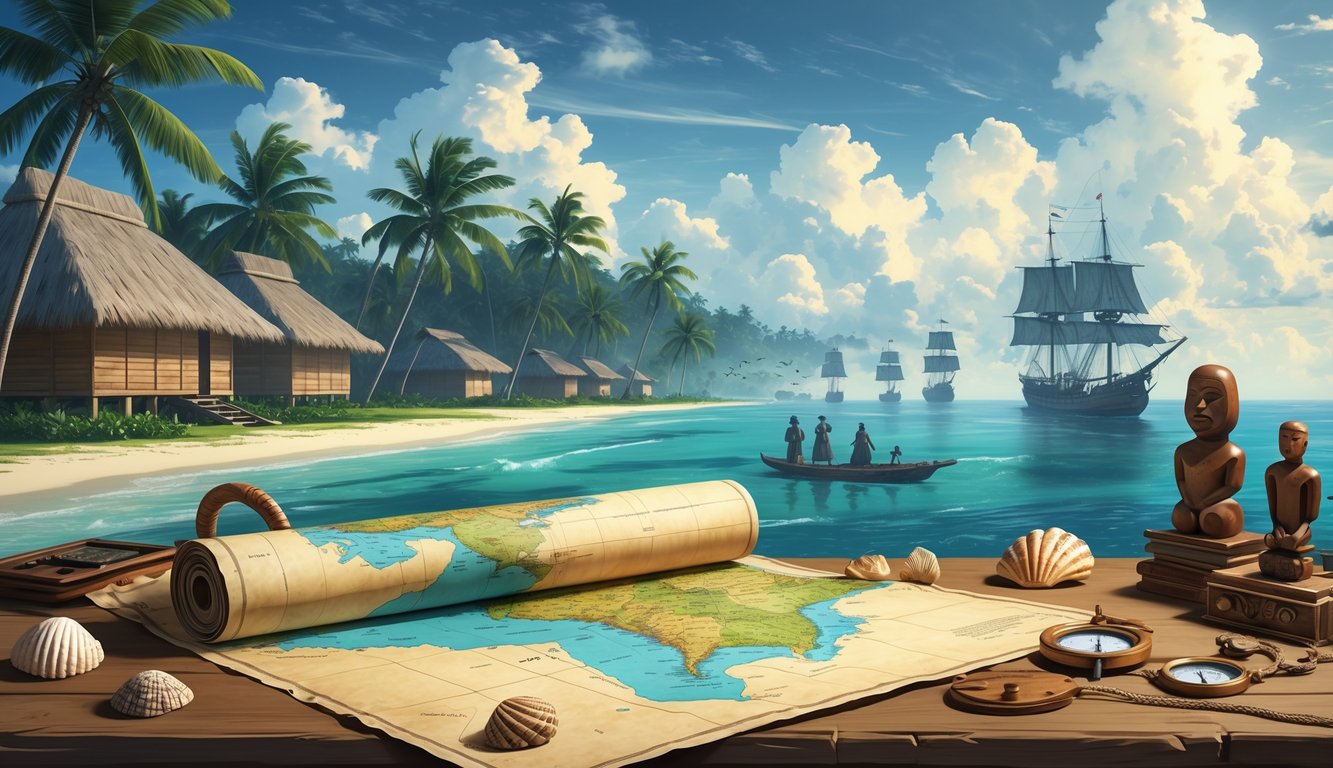
British colonial rule over the Gilbert and Ellice Islands shaped the path to nationhood for Kiribati and Tuvalu.
This period began with external control and ended with the push for self-government and independence.
British Protectorate Status
The Gilbert Islands and Ellice Islands became a British protectorate in 1892.
This move was part of the wider spread of British colonial rule across the Pacific.
British officials arrived on ships, raised the Union Jack, and claimed authority.
They mainly wanted to stop other colonial powers from taking control.
The British focused on managing trade and keeping order among local chiefs.
In 1916, the Gilbert and Ellice Islands merged to form a single colony.
This included other island groups like the Phoenix and Line Islands.
British rule introduced new laws and systems, but daily life for most islanders changed slowly at first.
Resource interests grew, especially after Banaba (Ocean Island) was annexed in 1900 for phosphate deposits.
Britain valued the colony’s resources and mainly used them for the empire’s benefit.
The colonial period set up many of the borders and institutions that remain today.
Steps Toward Independence
After World War II, a global trend toward decolonization reached the Pacific.
The idea that people should have self-determination began to influence policies in the Gilbert and Ellice Islands Colony.
By the 1970s, feelings of national identity were growing.
Differences between the Gilbertese and Ellice communities led to calls for separation.
In 1975-76, the colony split into two territories: the Gilbert Islands and the Ellice Islands (now Tuvalu).
Local government was introduced, and both areas held elections for their own leaders.
The Gilbert Islands gained self-government and declared independence as the new Republic of Kiribati in 1979.
Tuvalu also became independent.
This period established much of the political structure and the idea of self-rule for Kiribati and Tuvalu.
It marked the end of colonial rule and the start of self-determination for both nations.
Migration, Overpopulation, and Modern Mysteries
Kiribati faces unique challenges as its islands adapt to rapid population growth and urban shifts.
Rising population and crowded living areas bring both opportunities and new problems for the I-Kiribati people.
Population Pressures
Kiribati’s land area is small and low-lying.
More people means higher stress on resources like food, water, and housing.
Overpopulation is a growing concern, especially in South Tarawa.
Thousands have moved from outer islands seeking better education and jobs.
This crowded environment has led many I-Kiribati to migrate within the islands or even abroad.
Families often live with several generations under one roof, which can make daily life stressful.
The national House of Representatives debates how to handle these changing demographics and their effect on traditional life.
Limited farmland, fresh water, and space have sparked ongoing questions about how Kiribati’s people will support themselves in the future.
Uncertainty about the next steps remains a modern mystery for planners and leaders.
Urbanization on Tarawa
Tarawa, especially the capital area of South Tarawa, has become the hub of urban life in Kiribati.
The move from the outer islands to the city has created both new jobs and new problems.
Traffic, waste management, and pollution challenge city leaders every day.
A look at everyday life on South Tarawa:
| Factor | Rural Outer Islands | South Tarawa Urban Area |
|---|---|---|
| Housing | Sparse, traditional | Dense, modern & crowded |
| Water | Local wells | Often imported and shared |
| Jobs | Mainly fishing | Government & services |
Many I-Kiribati must find ways to adapt old customs to crowded city life.
People now share limited resources with many neighbors.
As urbanization continues, community leaders and the House of Representatives search for answers to keep Tarawa livable while protecting the traditions that make Kiribati unique.
If you want to know more about how islands like Kiribati deal with modern mysteries such as lost cities or changing societies, articles like this list of unsolved historical mysteries can provide some perspective.
Cultural Practices and Lost Traditions
Kiribati has a rich cultural history, shaped by its island geography and a mix of outside influences.
Many traditional practices, including dance, music, and rituals, have changed over time.
Others have faded due to colonial and religious impacts.
Traditional Dance and Music
Traditional dance in Kiribati, known locally as tungaru, is famous for its unique style.
Dancers use only their arms, hands, and torsos, while standing in straight lines.
Their movements often tell stories about the sea, fishing, and the spirits of the islands.
Music played a key role, using local instruments such as wooden clappers, coconut shell rattles, and singing.
These performances were usually group events, with everyone in the community participating or watching.
Today, some traditional dances and songs have been lost or changed as young people have become more interested in modern styles.
Locals still practice tungaru at ceremonies and important events.
This helps keep the culture alive.
However, not all of the old dances are remembered.
There are growing efforts to teach the younger generation about these traditional practices.
Secret Rituals
In the past, secret rituals were important among Kiribati islanders.
These rituals often involved chanting, sacred dances, and offerings to ancestral spirits.
Only certain members of the community, often elders or people chosen through family lines, could perform these rites.
Much of the knowledge about these ceremonies was passed down orally.
Details were easily forgotten.
After outside influences arrived, especially missionaries, many secret rituals stopped.
Some islanders say that a few ritual practices and beliefs still exist.
Much of this old knowledge is now hidden or lost.
Today, some families remember small pieces of their ritual heritage.
It is rare to find full records or eyewitnesses.
Influence of Missionaries
Christian missionaries arrived during the 19th and 20th centuries and changed daily life and culture in Kiribati.
Missionaries encouraged or demanded the end of ritual dances, magic practices, and local ceremonies that did not fit with Christian values.
Many elders stopped teaching the old songs, stories, and dances to children.
They focused instead on hymns, prayer, and church life.
The spread of Christianity led to the loss or blending of some traditional practices and beliefs.
Today, Christianity is an important part of Kiribati society.
Communities are working to preserve surviving customs and find ways to celebrate their unique heritage alongside their faith.
Churches sometimes include local music and dress during celebrations, reminding people of their shared history.
Environmental Threats and the Future

Kiribati faces complex dangers linked to climate change. Its people and leaders are working on creative solutions and local action to protect their future.
Rising Sea Levels
Sea levels around Kiribati are rising faster than the global average. Warmer temperatures melt glaciers and expand seawater.
Saltwater washes into farms, making it hard to grow crops and get clean drinking water. Some islands shrink as waves eat away the land.
The threat is so serious that Kiribati’s former president, Anote Tong, has called climate change an existential threat to his country. If this continues, whole communities or even the nation itself could be forced to move.
Adaptation Strategies
Communities have come up with many ways to cope with these changes. People build sea walls to keep the ocean out and collect rainwater in big tanks to avoid using salty groundwater.
Planting mangroves along the shore helps stop erosion and protects the coast. The government also plans for the long term.
Some families move to less crowded islands. There have even been talks about “migration with dignity,” where people leave Kiribati by choice, not disaster.
Support from countries like Australia and New Zealand has funded better infrastructure and climate projects.
Key community adaptations in Kiribati:
| Adaptation | Purpose |
|---|---|
| Sea walls | Block rising tides |
| Rainwater tanks | Provide clean water |
| Mangrove planting | Slow erosion and shield coasts |
| Planned relocation | Reduce crowding, improve safety |
International Advocacy
Kiribati speaks out on the world stage to highlight its struggles. Leaders go to United Nations meetings to ask for more action on climate change.
Their message is clear: the world must help small island nations survive. Anote Tong and others work closely with Australia and New Zealand, urging these neighbors to cut pollution and give support.
Global partnerships bring funding for climate adaptation and technology. Kiribati’s advocacy has inspired new talks about protecting climate refugees and sharing climate knowledge.
Through international cooperation, Kiribati pushes for fair treatment and resources.
Modern Mysteries in Kiribati’s Era of Independence
Since gaining independence in 1979, Kiribati has faced unique puzzles connected to its political changes and international status. Each area brings questions about how the nation manages its growth and the well-being of its people.
Political Evolution
When Kiribati became a republic, it started a new journey in self-governance. Creating a stable government has not always been easy.
Leaders like Teburoro Tito played key roles in shaping modern Kiribati. Political transitions often stirred confusion and sudden changes.
Questions remain about how power is shared between the president and the parliament. Many people wonder about the behind-the-scenes decisions that guide national policy.
Elections in Kiribati are peaceful, but sometimes people dispute voter fairness or regional representation. The spread of education and improvements in healthcare also play into these mysteries.
Policymakers have faced tough choices about where to direct limited resources. As the country develops, citizens still debate the most effective ways to improve schools and clinics.
International Relations
Kiribati’s role in the world has not been simple. The country is part of big groups like the Commonwealth of Nations and the Pacific Islands Forum.
Kiribati must often choose between powerful allies. One of the biggest mysteries is Kiribati’s relationship with both China and Taiwan.
The government once switched recognition from one country to the other, surprising citizens and sparking debates. Decisions like these affect not just foreign aid but also trade and how other Pacific nations view Kiribati.
Tourism is another area that raises questions. Although Kiribati’s islands could attract more visitors, political alliances sometimes impact investment and partnerships.
As plans change, people closely watch how international connections will shape the country’s future.
Continued Enigmas
Even after independence, Kiribati faces several enduring puzzles. One involves how economic development can happen without harming the fragile environment.
Fishing and tourism are main industries. Balancing growth and conservation is challenging.
Healthcare and education gaps are also hard to solve. Many people on remote islands struggle to get equal services.
Some mysteries relate to how government decisions are made and shared. Transparency and communication remain key concerns.
Citizens want more clarity on national goals and spending. These questions shape everyday life across Kiribati.