Jamaica is known for its beautiful beaches and vibrant culture. The island also hides many secrets that have puzzled people for years.
Some of the biggest historical mysteries in Jamaica include unsolved disappearances, haunted places, and strange local legends that still baffle experts today. These stories have become part of Jamaican folklore, making the island more interesting for mystery lovers.
From tales of haunted hidden gems to mysteries listed by the Jamaica Observer, there is much to uncover. Legends about shadowy figures like the feared Obeah shadow killers offer a peek into a side of the island many never see.
Exploring these Jamaican mysteries is more than just spooky fun. It helps people learn about the island’s history, beliefs, and the events that shaped it.
Each mystery holds a story waiting to be discovered. They are perfect for anyone curious about Jamaica’s past.
The Legend of the White Witch of Rose Hall
Rose Hall in Montego Bay is famous for one of Jamaica’s most chilling mysteries. The story centers on Annie Palmer, who is said to haunt the old plantation.
Historians have debated the facts for years. The legend remains strong.
Annie Palmer’s Secrets
Annie Palmer is remembered by many as the “White Witch.” She was rumored to have been a cruel plantation owner at Rose Hall during the early 1800s.
Stories spread that she practiced dark magic and took part in murder. This made her one of Jamaica’s most talked about figures.
Locals believed Annie used voodoo rituals to control her enslaved workers and her husbands. The legend says she killed three husbands and several slaves.
These stories fueled fear and fascination. Rose Hall became a place linked with ghosts and strange happenings.
Visitors claim to have heard unexplained noises and seen mysterious sights at Rose Hall. Her tale draws tourists interested in the paranormal and the island’s dark colonial history.
Historical Investigations
Historians have found little evidence to support most of the claims about Annie Palmer. Records show Annie Palmer did exist, but the stories of witchcraft and murder may have been exaggerated or invented later.
Some believe her tale spread to attract tourists or sell books. The mansion itself, built in the 18th century, survived events that destroyed many other great houses in Jamaica.
Only about fifteen of these homes, including Rose Hall, still stand today. Researchers continue to explore old documents, graveyard records, and local stories to separate fact from fiction.
Disappearances and Unsolved Cases
Jamaica has seen a number of puzzling disappearances and unsolved cases. These events have left families searching for answers and sparked deep interest in Jamaican mysteries.
Vanishing of the Morgan Girls
The story of the Morgan sisters stands out as one of the most mysterious disappearances in the island’s history. The girls lived in Montego Bay during the 1960s.
One evening, the two sisters went missing after leaving home to visit a relative nearby. No trace of the Morgan girls was ever found.
Over the years, their case has remained cold. Police, community members, and private detectives have all failed to find out what happened.
Rumors and theories include everything from abduction to supernatural events. Nothing has ever been confirmed.
The disappearance deeply affected the Montego Bay community. The unsolved case is still discussed by locals as a haunting example of Jamaican mysteries.
Modern Day Missing Persons
In recent decades, Jamaica has continued to struggle with cases of missing persons. Each year, there are reports of men, women, and children vanishing without explanation.
Many of these disappearances go unsolved. This causes worry in both urban and rural areas.
The number of cold cases in the country is high, with thousands of files still open. Law enforcement faces challenges such as limited resources and witness fears, which make it hard to solve these incidents.
Families often keep hope alive for answers. They seek closure that sometimes never comes.
These cases remind people that Jamaica’s history includes not only well-known criminals and political events, but also everyday people whose absences leave lasting marks.
Jamaica’s Ancient Taino Enigmas
Jamaica’s earliest people, the Taino, left behind mysterious artifacts and ruins. Their culture remains one of the greatest Jamaican mysteries, with many questions about their beliefs and practices still unanswered.
Mysterious Petroglyphs
Petroglyphs, or rock carvings, are hidden in Jamaica’s forests and caves. The Taino carved these symbols into limestone hundreds of years ago.
Some show people, animals, and strange faces with large eyes and open mouths. Others use shapes or lines that experts still do not fully understand.
Historians have tried to guess what these carvings mean. Some believe petroglyphs may record important events or show religious ceremonies.
Others think they marked sacred places—maybe even places where rituals like human sacrifices happened. The Taino did not leave any writing behind.
Visitors can still see carvings at places such as the Mountain River Cave. These ancient images provide a window into a world that has mostly vanished.
Lost Temples
Long ago, the Taino built special spaces for worship and ceremonies. Some temples or “zemis” sites have been found, but many details about their use are still missing.
Archaeologists say these spaces may have included stone circles, altars, or wooden statues for Taino gods. Some researchers believe lost temples could be hidden by forests or buried underground.
They might hold clues about the Taino’s rituals, daily life, and how they honored their ancestors. Discoveries at a few Jamaican sites have shown tools, pottery, and other remains.
Still, the locations of many original temples are unknown. Local legends say certain temples were places for powerful spiritual events.
Some stories even talk about bones and remains that might link to human sacrifices. Much about these sacred places is yet to be found or explained.
Mysterious Murders of the 20th Century
Some of Jamaica’s most shocking moments in the 1900s are tied to murders that still leave people with questions. These cases involve political tension, unsolved deaths, and a lasting impact on local communities.
The Green Bay Massacre
The Green Bay Massacre took place in 1978 and involved five men killed by soldiers from the Jamaica Defence Force. This event happened in an isolated area called Green Bay, near Port Henderson.
The men were members of a political group and were lured there under false pretenses. Many believe this was a politically motivated attack during a period of great violence in Jamaica.
The government at the time faced intense criticism, and people called for justice for the victims. Some accused officials of trying to cover up what happened.
Years later, families still seek answers. Although officials investigated, no one was truly held responsible for the murders.
The Green Bay Massacre is now seen as a symbol of the dangers of political conflict in Jamaica’s past.
Key facts:
| Year | Location | Victims |
|---|---|---|
| 1978 | Green Bay | 5 men |
Unsolved Celebrity Deaths
Some famous Jamaican personalities died under mysterious circumstances, and their murders remain unsolved. These cases add to the country’s reputation for puzzling crime stories.
In the late 20th century, several well-known musicians and public figures became targets. Jamaican reggae musicians, for example, sometimes faced threats because of their popularity or political ties.
Some deaths received little investigation, and families are still left wondering who was responsible for these crimes. This group of unsolved murders is often included in lists of notable cases from the 20th century.
Notorious Gangs and Urban Legends
Jamaica’s past is full of stories about dangerous gangs and tales about famous neighborhoods. These groups and places have shaped crime, politics, and even the popular culture of the island.
Shower Posse Origins
The Shower Posse is one of the most talked about criminal gangs in Jamaica’s history. It started in the late 1970s and quickly grew in Kingston, especially around the Tivoli Gardens area.
The group earned its name from the phrase “shower of bullets,” as its members were known for their violent tactics. The Shower Posse was not just a street gang.
People believe it had strong ties to political parties, providing muscle during tense election seasons. By the 1980s, the gang expanded operations into the United States, especially in cities like Miami and New York.
This move gave them access to the international drug trade. Members of the gang became involved in smuggling cocaine and guns.
Their reach, violence, and links to politics created a powerful and mysterious reputation. The truth about their connections and full influence remains a subject of debate and deep investigation.
Tivoli Gardens Myths
Tivoli Gardens is more than just a housing project in Kingston. It is the heart of many Jamaican mysteries and urban legends.
This area has often been linked to the Shower Posse and has seen some of the country’s most notorious police clashes and security operations. Stories describe hidden tunnels under the neighborhood, used by gang members to escape police raids.
Locals speak in hushed tones about mysterious disappearances and secret deals. Some tales suggest certain leaders had a mystical hold over the community.
Many believe that powerful figures from Tivoli Gardens impacted both criminal activities and politics. While some rumors are likely exaggerated, these stories have become part of Jamaican folklore.
They blend fact and myth in a way that keeps people guessing about the real truth behind Tivoli Garden’s legends.
The Mystery of Stonehenge in Jamaica
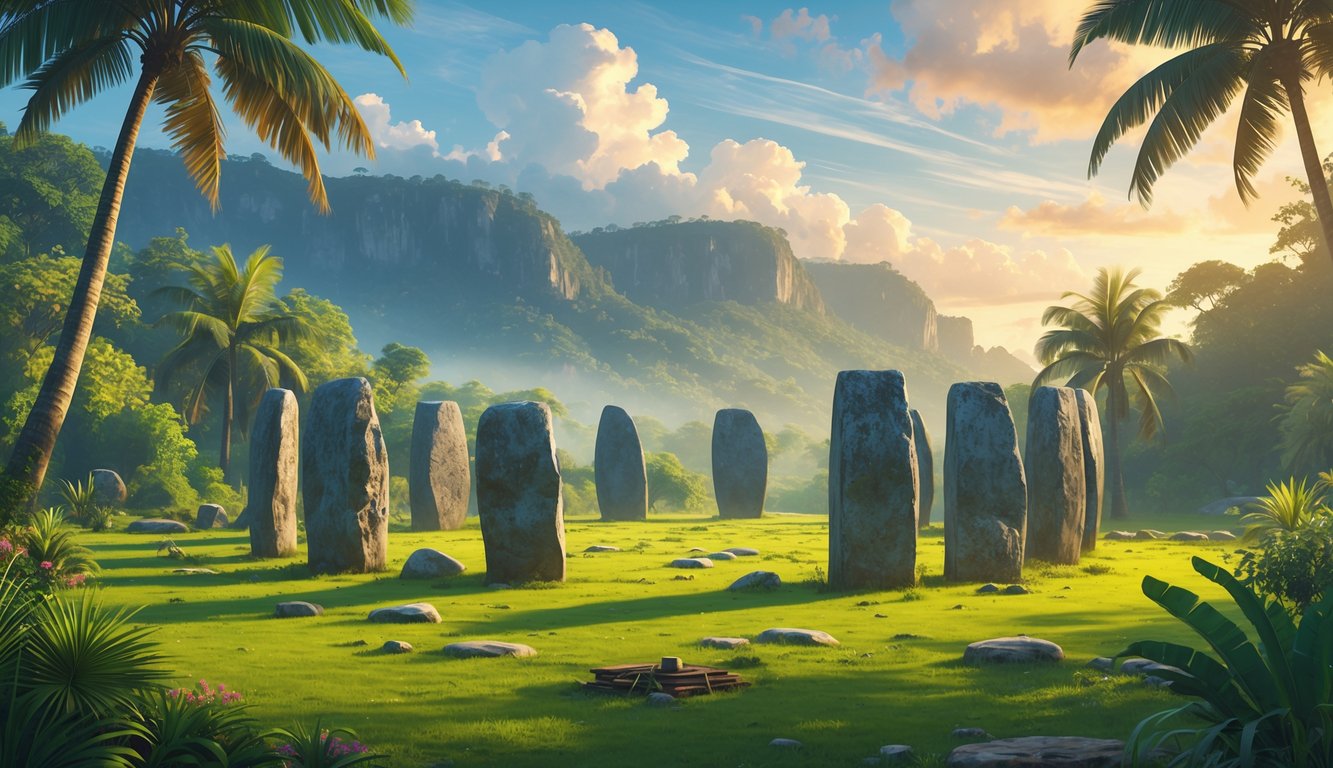
Stonehenge in Jamaica may not be as famous as the one in England. People still wonder about its origins, purpose, and the stories surrounding its name.
Discovery and Theories
There is a small community named Stonehenge in the hills of St. James Parish, Jamaica. Its name leads many to wonder if there is an ancient stone circle or monument similar to England’s Stonehenge in the area.
No prehistoric stone circle or ancient monument exists in Jamaican Stonehenge. British settlers likely named it after the famous English site.
Early planters used the name for its mystical charm and to remind them of Britain. The Jamaican site has no known ancient stones, but it still holds an air of mystery.
Visitors and locals often hear rumors of hidden caves or buried treasures nearby. The area’s quiet hills and thick forests add to the sense of something lost or hidden.
Local Legends
Locals share stories about the St. James Stonehenge passed down for generations. One common legend tells of strange lights that appear on foggy nights in the hills.
People say these glowing orbs lead the brave to long-lost gold hidden by runaway slaves or pirates. Some tales claim the name “Stonehenge” connects the area to ancient spirits.
Elders sometimes warn children not to wander too far after sunset, saying that energies from the old world linger among the trees. In Stonehenge, legends blend British folklore with African traditions, making it a unique spot where stories live on.
Supernatural and Haunted Places
Jamaica’s past is filled with stories where history, legend, and the supernatural mix. Some locations are known for their haunted reputations and attract those curious about ghostly events.
Ghosts of Edinburgh Castle
Edinburgh Castle is an abandoned mansion in the hills of St. Ann Parish. Lewis Hutchinson, Jamaica’s first recorded serial killer, owned the mansion in the 1700s.
People say strange things happen here even today. Local stories mention hearing disembodied voices, doors shutting on their own, and cold spots throughout the ruins.
Ghost hunters often visit because they hope to see a shadowy figure or feel sudden chills. The story of Hutchinson’s crimes and his gruesome execution keeps interest in this location alive.
Visitors sometimes leave gifts, hoping to calm the restless spirits linked to the site. Many believe this haunting is one of the most chilling parts of Jamaican folklore.
For more on the haunted reputation and what people have reported at Edinburgh Castle, check out this guide to haunted places in Jamaica.
Secrets of Rose Hall
Rose Hall, a grand plantation house in Montego Bay, is famous for its legend about Annie Palmer—the “White Witch.” Built in the 1770s, the house is now a top spot for those interested in haunted history.
People believe Annie Palmer practiced voodoo and was responsible for the deaths of several husbands and slaves. The mansion’s lavish features hide its troubled past.
Many claim to have seen Annie’s ghost wandering the halls or heard eerie laughter in empty rooms. Guides tell visitors about the mysterious events and sightings that make Rose Hall so popular.
The legend has led to books, tours, and films inspired by her story. For a more detailed look at the haunting of Rose Hall and its unique place in Jamaican mysteries, explore the haunted attractions of Jamaica.
Rituals and Human Sacrifice in Jamaican History
Human sacrifice, strange rituals, and mysterious beliefs have shaped many tales throughout Jamaica’s past. From the days of slavery to the present, some customs blended African, European, and local practices.
Colonial Era Practices
During the colonial period, enslaved Africans brought a range of spiritual beliefs and rituals. Some groups practiced rites that outsiders misunderstood or feared.
Colonists spread myths about human sacrifices and dark magic to justify strict control over slaves. There is little hard evidence of organized human sacrifice on the island during this era.
Tales of mysterious disappearances and powerful rituals have become part of Jamaican folklore. Practices like Obeah and Myalism sometimes involved animal sacrifice, spirit possession, and secret ceremonies in the countryside.
Colonial authorities outlawed these rituals, but many enslaved and free black Jamaicans continued them in secret. Stories of hidden powers and unsolved mysteries passed down through generations.
Modern Folk Beliefs
In modern Jamaica, old traditions continue to influence daily life in both rural and urban areas. Obeah, for example, is a form of folk magic that includes rituals for healing, protection, or revenge.
Although most Jamaicans today do not practice or believe in human sacrifice, isolated cases and disturbing rumors sometimes surface. Tragedies involving fringe cults occasionally make headlines.
Death rituals still mix African, Christian, and European customs. Common practices include covering mirrors, stopping clocks, and removing the body feet first to confuse spirits, as described in the study of Jamaican death rituals.
The fascination with the supernatural remains part of Jamaican culture.
Lost Treasures and Sunken Secrets
Many legends and unanswered questions surround Jamaica’s hidden riches and underwater discoveries. Stories of pirates and sunken ships continue to interest historians, divers, and treasure hunters.
Pirate Gold Mysteries
Jamaica once had a reputation as a pirate haven, especially in places like Port Royal. In the 1600s, Port Royal was filled with pirates, including Captain Morgan.
These pirates stole huge amounts of gold, silver, and jewels. Much of this loot was never found.
Dug-out tunnels, hidden chambers, and rumors about secret locations have kept curiosity alive. Some experts still look for signs of buried treasure, hoping to find traces left behind under sand or ruins.
Ongoing archaeological digs keep uncovering coins, weapons, and relics from the pirate era. No one has ever found a massive hoard of treasure.
This keeps the legend of Jamaican pirate gold alive. It remains one of the most famous jamaican mysteries.
Sunken Spanish Ships
During the 16th and 17th centuries, Spain shipped gold and goods between its colonies using large fleets. Hurricanes, battles, and accidents often caused Spanish ships to sink off the Jamaican coast.
Many of these vessels carried riches back to Europe. Wrecks belonging to the Spanish Armada are thought to rest underwater near Jamaica, filled with cargo never claimed or seen again.
Storms or reefs made the waters very dangerous for these ships. Divers and researchers have found cannons, trade goods, and pieces of shipwrecks on the seafloor.
Some believe valuable items are still hiding in the silt or deep water. These unsolved sunken secrets continue to attract explorers and add to the island’s sense of mystery.
Unexplained Natural Phenomena
Jamaica has fascinating natural sites that still confuse scientists and locals. These places have sparked rumors, tall tales, and field studies for years.
The Blue Hole Legends
The Blue Hole is a deep, natural pool surrounded by lush forest in Jamaica’s hills. It appears almost bottomless, with water so clear it seems to glow.
Swimmers and divers have reported strange changes in water temperature, even when standing in the same spot. Some say currents are unusually strong, pulling objects deeper with sudden force.
Local legends claim the Blue Hole hides ancient secrets. Stories talk of lost valuables and even missing people, adding to the mystique.
Some believe the pool connects to unexplored underground caves. Despite research, the true depth and connections remain unknown.
Many visitors are drawn to its beauty and mystery. Some leave with more questions than answers about how such a place formed and why it acts so strangely.
The Blue Hole remains one of the most talked about Jamaican mysteries.
Marching Stones of Cockpit Country
Deep in Cockpit Country, people have found small rocks that seem to move by themselves.
Locals call these the “marching stones” because they appear to change places overnight.
Trails sometimes appear in the dirt, suggesting the stones slid or rolled with no human help.
Researchers have tried to explain this odd movement.
Some theories involve changes in soil moisture or the action of tiny animals beneath the rocks.
Controlled experiments have not matched the real-life behavior seen in Cockpit Country.
The marching stones remain one of the most curious Jamaican mysteries.
Their unexplained movement has led to many stories in local folklore.