Indonesia is a country full of surprises and secrets. Its long history, diverse cultures, and vast islands have given rise to many stories that still puzzle people today.
Some of the biggest historical mysteries in Indonesia remain unsolved. Experts and locals continue searching for answers.
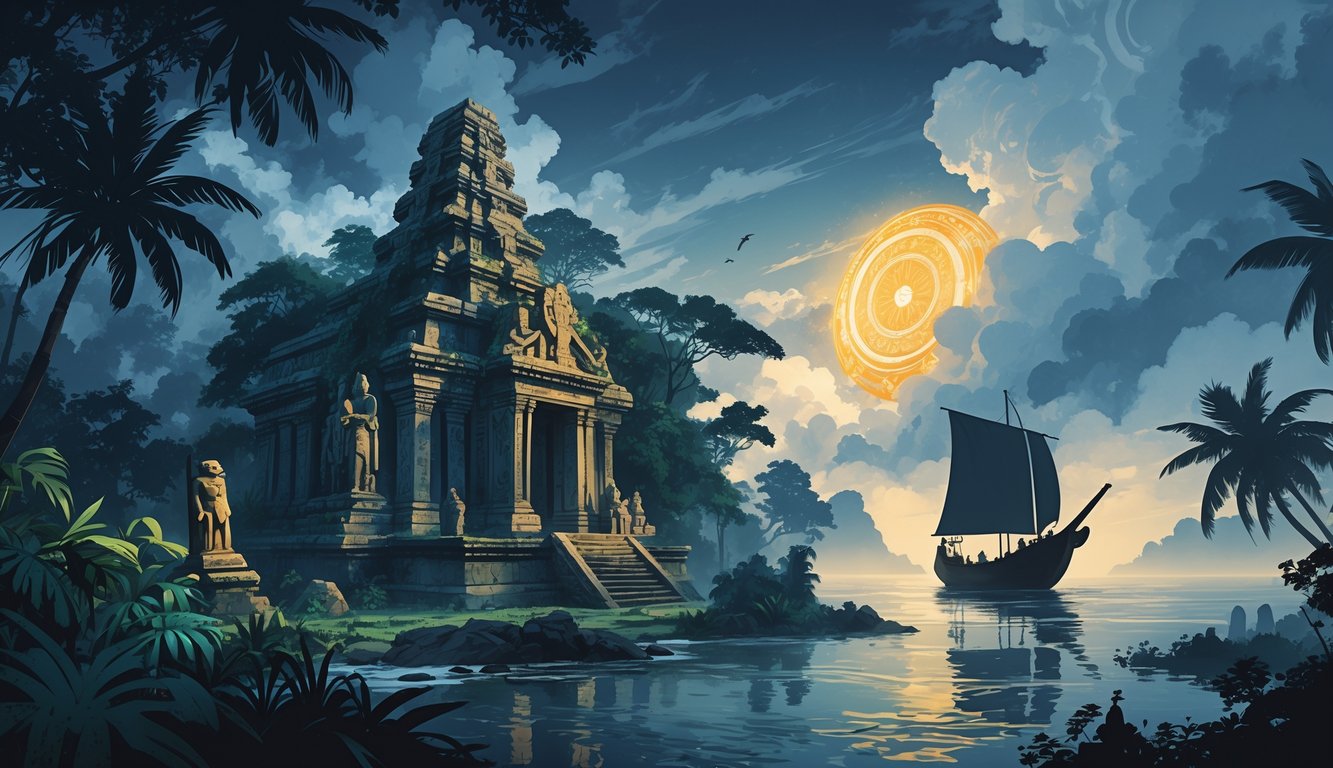
These mysteries range from strange ancient sites and lost kingdoms to famous disappearances and unexplained natural events. Each one captures the curiosity of visitors and locals.
If you are interested in history, adventure, or the unknown, learning about these unsolved mysteries in Indonesia could give you a new view of this fascinating country.
Enigmas of Lost Cities and Kingdoms
Indonesia is filled with mysterious stories about lost cities and magical kingdoms. People here share tales of sunken empires, magical rulers, and hidden places that mix history with legend.
These stories have become an important part of local culture. Many keep searching for the truth.
The Search for Atlantis in Indonesia
Some researchers and local legends claim a connection between Indonesia and the lost city of Atlantis. The idea became popular when experts noticed similarities between ancient texts about Atlantis and the geography of Indonesia.
The Ring of Fire, volcanic eruptions, and rising sea levels in the region match the disaster that supposedly sunk Atlantis. Large ruins found under the sea near islands like Java and Sumatra fuel these theories.
People point to these sites and wonder if they are the remains of a powerful ancient city. Many are still searching for solid proof.
Key Points:
- Some believe Atlantis could have been in Indonesia.
- Theories focus on Indonesia’s unique landscape and disaster history.
- No firm evidence yet, but the story is popular.
The Magical Kingdom of the South Sea
Indonesia’s southern coast, especially around Pelabuhan Ratu in West Java, is famous for stories about the magical kingdom of the South Sea. Locals believe Nyi Roro Kidul, the mystical Queen of the South Sea, rules this kingdom.
She is an important spiritual figure and appears in many traditional Balinese and Javanese dances and ceremonies. People say Nyi Roro Kidul can travel between her underwater world and the human realm.
Fishermen and visitors bring offerings to the shore to ask for her blessings or protection. According to legendary stories, it is risky to wear green clothes near the water, as her spirit may pull people into the sea.
Quick facts:
- Associated with Pelabuhan Ratu and Bali culture.
- Nyi Roro Kidul is both respected and feared.
- Rituals and taboos are still practiced today.
Saranjana: The Hidden Magical City
Another legend tells about Saranjana, a hidden magical city said to exist in South Kalimantan. Saranjana does not appear on any official map, but stories claim it is full of tall, beautiful buildings and advanced technology.
People speak of cars and lights unlike anything seen in real towns. Some locals tell stories of visitors accidentally wandering into Saranjana and seeing its wonders, but returning unable to find the city again.
The city is sometimes described as a place between reality and the spirit world, where only certain people can enter. The legend of Saranjana keeps alive the idea that magical places may be hidden from view.
Notable features of Saranjana:
- Not visible on modern maps
- Linked to magical technology
- Stories passed down through generations
Ancient Architectural Mysteries
Indonesia is home to some of the world’s oldest and most impressive structures. These sites show advanced building skills and leave experts with questions about their origins.
Unraveling Borobudur Temple
Borobudur Temple is a giant Buddhist monument in Central Java. Built in the 9th century, this massive structure reaches over 30 meters and has thousands of carved stone reliefs.
Each stone block fits together without mortar, showing careful planning and skilled craftsmanship. Scholars still do not know how ancient builders moved and lifted over two million stone blocks without modern machines.
The temple’s unique design, which looks like stacked platforms topped by a dome, follows complex mathematical and spiritual ideas. Its construction methods and symbolic layout remain a subject of study.
Ancient manuscripts found across Indonesia—including some on the island of Bali—offer clues about religious rituals and temple building. They often do not explain the full story behind Borobudur’s creation.
The Megalithic Wonders of Mount Padang
Mount Padang, located in West Java, is the country’s largest megalithic site. The site features thousands of volcanic stone pillars arranged in terraces on a hilltop.
Carbon dating suggests that some layers of the site might be more than 4,000 years old. Researchers are puzzled by how such large stones were transported up the mountain and how the terraces were built.
New discoveries at the Mount Padang site hint at hidden chambers and even older structures buried underground. Archaeologists still debate the purpose of the site.
Some believe it had religious importance, while others think it might have been a meeting place for ancient communities. The secrets of Mount Padang’s builders continue to fascinate scientists and tourists.
Unsolved Natural Phenomena
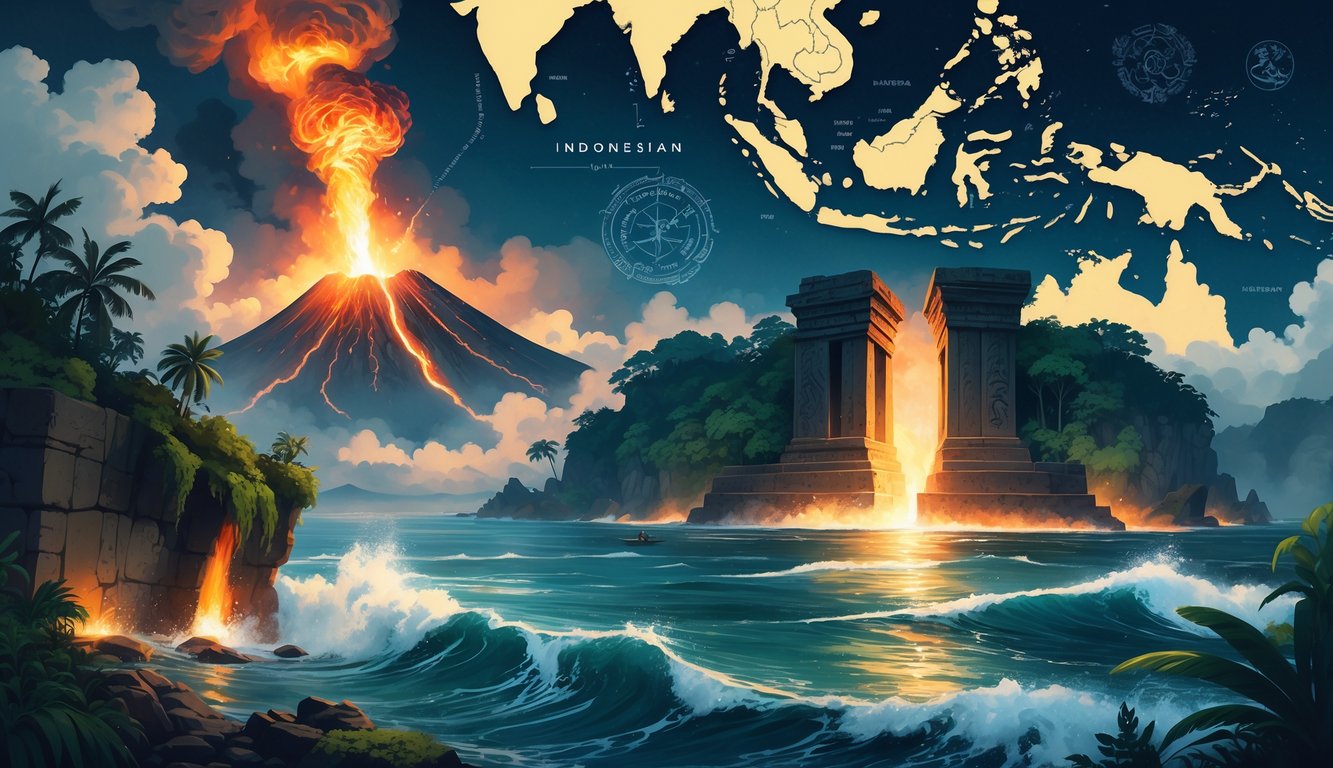
Indonesia has experienced dramatic natural events that still puzzle scientists. Some disasters changed history, while certain waters remain dangerous for unexplained reasons.
The Catastrophe of Mount Krakatoa
Mount Krakatoa, located between Sumatra and Java, erupted in 1883. The explosion was so powerful that people heard it nearly 3,000 miles away.
It caused tsunamis, destroyed thousands of villages, and killed over 36,000 people. A strange phenomenon followed: the “sea of fire,” where hot ash and lava turned the nearby waters red and boiling.
The sun appeared blue and sunsets were seen as far away as Europe and America. People still debate the exact reasons for the eruption’s intensity and the unusual atmospheric effects.
After the eruption, much of the volcano sank under the sea. Later, a new volcanic island called Anak Krakatoa (Child of Krakatoa) slowly rose from the water.
Key facts:
- Location: Between Sumatra and Java
- Death toll: Over 36,000
- Sea turned red, sun turned blue
- New island formed after eruption
The Mystery of Masalembo Waters
The Masalembo Waters lie in the Banda Sea, between Java, Sulawesi, and Borneo. This area is sometimes called “Indonesia’s Bermuda Triangle.”
Ships and planes have disappeared here without explanation. Since the 1980s, dozens of boats and ferries have gone missing.
The biggest case was in 2007, when a ferry carrying over 600 people vanished. Bad weather, strong currents, and unpredictable waves are often blamed, but investigators have never found a clear answer.
Local fishermen tell stories of unusual storms and lights above the water. Scientific studies suggest strong whirlpools and shifting tides might play a part.
None fully explain why so many accidents happen in this spot. Details about these lasting puzzles are discussed at Some Unsolved Mysteries in Indonesia.
Mysterious features of the Masalembo Waters:
- Sudden, violent storms
- Dangerous whirlpools
- High number of shipwrecks
- Comparisons to the Bermuda Triangle
Mysterious Islands and Caves

Indonesia is home to unusual islands and caves that have sparked curiosity and debate. Some places are linked to strange lights, legends, or unexplained events.
The Legends of Jomblang Cave
Jomblang Cave, found in Gunung Kidul, Yogyakarta, is famous for its huge vertical entrance and deep forest at the bottom. Many say a strong beam of sunlight known as the “heavenly light” appears at certain times, adding to its mysterious feel.
Stories about Jomblang Cave often mention paranormal events. Local guides speak of eerie sensations and odd sounds that cannot be explained.
The cave’s tunnels stretch far underground, and some believe there may be hidden passages no one has explored yet. Accidents in the cave and legends about people getting lost add to the sense of danger.
The combination of unique geology and local folklore makes Jomblang Cave in Gunung Kidul one of Indonesia’s most talked about natural mysteries.
Indigenous Tribes and Forgotten Peoples
Indonesia is home to many indigenous groups and hidden communities. Some tribes live in remote forests while others are only known through legends or rare sightings.
The Elusive Mante Tribe of Aceh
The Mante tribe is one of the most talked-about lost peoples in Aceh. Locals say the Mante tribe lived deep in the rainforests, avoiding contact with outsiders.
Their reputation comes from rare glimpses and local stories. No one knows for sure if the Mante still exist.
Some villagers claim to have seen small, fast people quickly disappearing into the jungle. The government and explorers have searched for them but have not found proof.
The mystery of the Mante tribe in Aceh remains. People continue to wonder if they will ever meet the Mante or if the tribe has vanished from Aceh’s forests forever.
Ghost Stories and Haunted Sites
Indonesia is known for its deep superstitions and rich blend of history and horror. Some places have become famous for ghost stories that attract curious travelers and locals.
Lawang Sewu: Semarang’s Haunted Landmark
Lawang Sewu means “Thousand Doors.” This historic building stands in Semarang.
The Dutch built it during their colonial era. Its many arched doors and windows make it famous.
Locals believe Lawang Sewu is one of Indonesia’s most haunted places. People claim to hear mysterious footsteps and see ghostly figures inside its halls.
Visitors often feel sudden chills, especially at night. Some say tragic events from World War II left restless spirits behind.
During the war, the basement served as a prison. Tales include sightings of a ghostly lady in white and whispers from empty rooms.
Today, tourists visit Lawang Sewu for its history and spooky reputation. Guided tours share stories about its past and haunted legends.
Mass Murders and Dark Historical Events
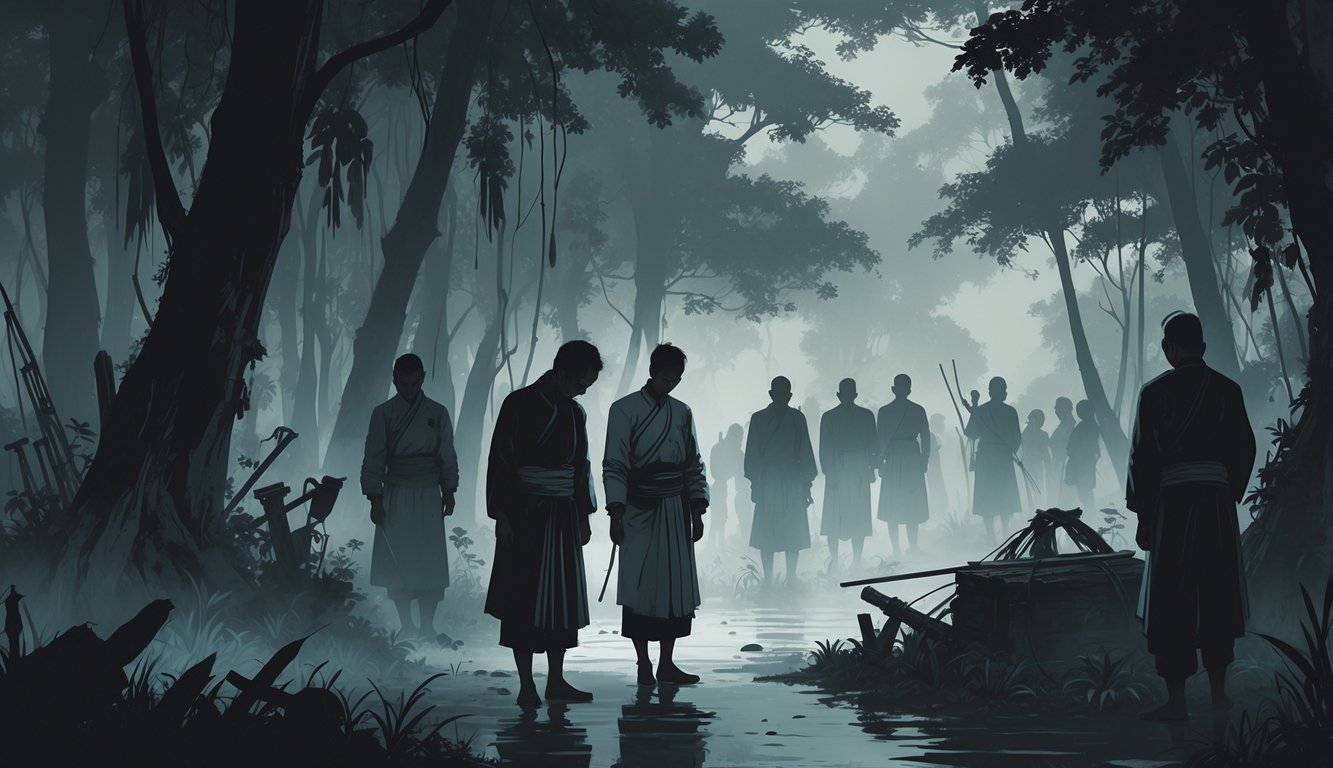
Indonesia’s past includes several tragic events. These moments involved mass murder and left scars that still affect the country.
The Infamous Lubang Buaya Incident
The Lubang Buaya incident took place in Jakarta in September 1965. People linked to the Indonesian Communist Party (PKI) kidnapped and killed a group of army generals.
They threw the bodies into a well called Lubang Buaya, which means “Crocodile Hole.” This event started a wave of violence across Indonesia.
The government blamed the communists, and many people died. Around 500,000 people were killed, and many others went to prison without trial.
These killings are among the deadliest in Indonesia’s history. The true details and those responsible remain under investigation.
Sea Legends and Supernatural Beliefs
Indonesian sea legends tell stories of dangerous spirits and magical kingdoms. Local beliefs mix the supernatural with real places.
The ocean feels both magical and mysterious to many. These stories shape how people see the sea.
Nyi Roro Kidul: The Queen of the South Sea
Nyi Roro Kidul is one of Indonesia’s most famous supernatural figures. People call her the Queen of the South Sea.
Many believe she rules the Indian Ocean’s southern waters. On Java, stories describe her magical kingdom beneath the sea.
Local legends say Nyi Roro Kidul appears dressed in green and surrounded by waves. Some believe she can pull people into the ocean if they wear green clothes.
These tales make visitors cautious on South Java beaches. Her legend remains an important part of Javanese culture.
People give offerings to respect her spirit. Communities continue to share stories about her paranormal powers and unexplained sea events.
Learn more about the ocean as a supernatural realm in Indonesian mythology.
Folklore, Superstitions, and Legendary Stories
Indonesia has a long tradition of myths and legendary stories. Many tales mix local beliefs with history.
These stories help people understand the unknown. Superstitions often guide everyday choices.
The Allure of Indonesia’s Paranormal Beliefs
Many Indonesians believe in mystical beings and haunted places. For example, the kuntilanak (a ghostly woman in white) often appears in local stories and movies.
Some parents warn children not to stay out late or the kuntilanak might appear. Other superstitions say whistling at night invites spirits.
People believe certain trees house powerful spirits and should not be disturbed. Lists of these bizarre superstitions show how beliefs shape daily life.
Families pass down legendary stories and superstitions. These tales continue to shape Indonesian culture.
Lesser-Known Mysteries Across the Archipelago
Many Indonesian islands hold secrets that puzzle locals and visitors. Some stories remain unsolved despite community tales and researchers’ efforts.
Unsolved Enigmas in Bali
Bali is famous for its temples and traditions. It also has strange events that remain unexplained.
Locals talk about the ghost village of Trunyan on Lake Batur. Here, bodies rest in the open, yet the air does not smell bad.
Special trees in the area absorb odors. No one fully understands how this works.
Another riddle in Bali involves mysterious rice field patterns. Intricate shapes sometimes appear overnight.
Some people think these patterns are natural or made by animals. Others believe spirits or unknown visitors create them.