Turkey sits at the crossroads of Europe and Asia, making it a land full of stories and secrets that have puzzled people for ages. From the mysterious carved stones at Göbekli Tepe, thought to be the world’s oldest temple, to the complex and puzzling underground city of Derinkuyu, Turkey’s past is scattered with sites that still leave experts debating their purpose and the people who built them.
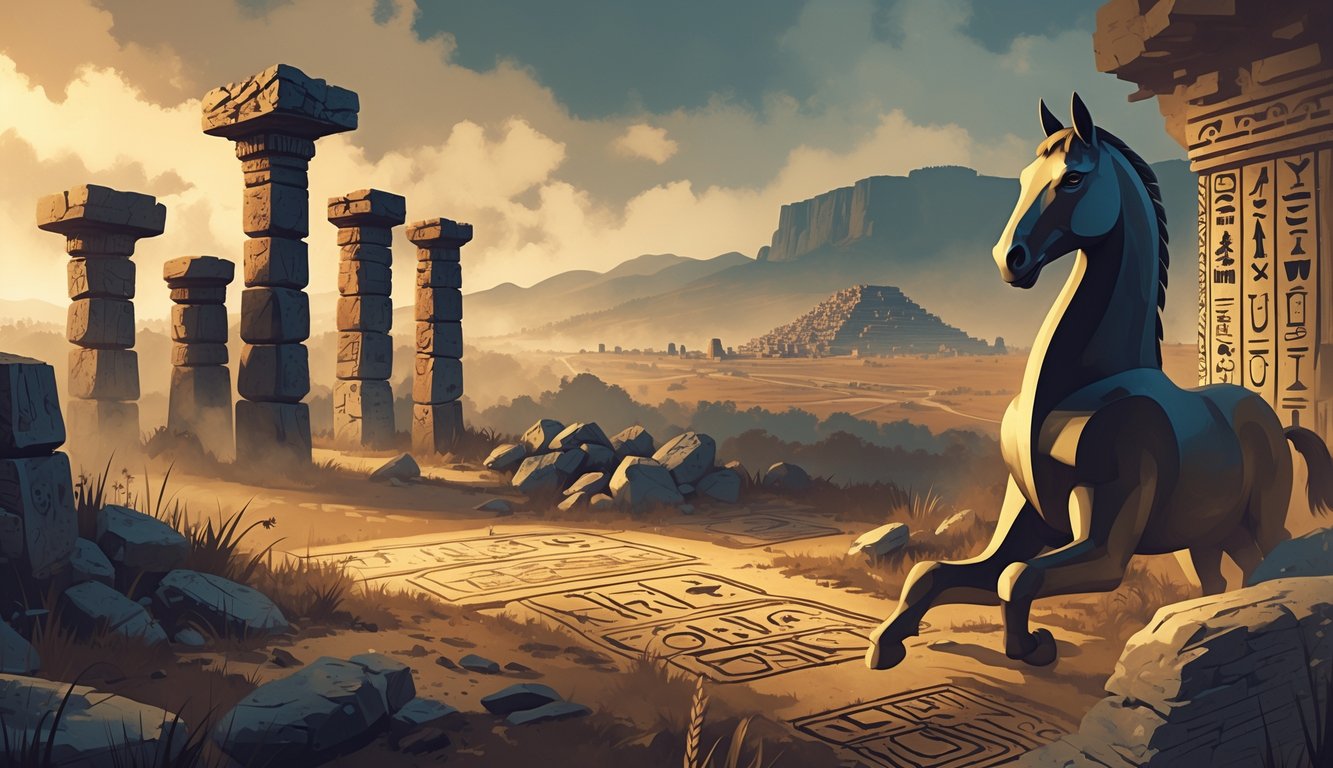
The biggest historical mysteries of Turkey include ancient constructions that challenge our ideas about early human life and lost civilizations. The age, meaning, and techniques behind these places have not been fully explained, and new digs often reveal even more questions than answers.
Anyone who is curious about unsolved mysteries, old cities, and forgotten cultures will find Turkey’s history full of intrigue. To this day, travelers and historians alike are drawn to these sites, hoping to unlock secrets from thousands of years ago, like those at Göbekli Tepe and Derinkuyu.
Göbekli Tepe: The World’s Oldest Temple
Göbekli Tepe is a remarkable archaeological site found in southeastern Turkey. Built more than 11,000 years ago, it has changed how many people see the origins of religion, art, and complex society.
Discovery by Klaus Schmidt
The site of Göbekli Tepe was first noticed by locals in the 1960s, but it gained true attention in 1994 when German archaeologist Klaus Schmidt visited. He quickly realized the mound was not natural—it was packed with ancient stone pillars buried just beneath the surface.
Schmidt, working with the German Archaeological Institute, started detailed excavations. He and his team confirmed that the ancient site was much older than others like Stonehenge. Carbon dating placed Göbekli Tepe’s origins at about 9600 BCE, making it over 11,000 years old.
The discovery was so surprising because it was created by people who lived as nomadic hunter-gatherers. Until then, most experts believed only settled farming communities could build such complex structures. The find rewrote some of the ideas about early civilization.
Mysterious Megaliths and Carvings
Göbekli Tepe is known for its monumental stone circles, or megaliths. These pillars stand up to 20 feet tall and weigh several tons. Many are arranged in circles and feature carved reliefs of animals such as snakes, birds, and wild boars.
The carvings cover the surfaces of the stones with images that are both realistic and symbolic. Some show strange humanoid forms. Unlike temples from later periods, Göbekli Tepe’s pillars were shaped with stone tools, giving a glimpse into early human skill.
Archaeologists have found no signs that the site was used for daily life—there are no houses or trash heaps. This suggests its purpose was very different from typical settlements of its time.
Debates on Purpose and Builders
One of the biggest mysteries is why Göbekli Tepe was built and who built it. Some scholars argue that it served as the world’s first temple complex, possibly used for ceremonies, sharing beliefs, or community gatherings.
Others suggest it was a meeting point for nomadic groups, helping form social bonds. Despite these ideas, there is no agreed answer—some theories even claim links to lost civilizations or offer more speculative ideas.
A key point of debate is that such a huge project seems beyond the abilities of small bands of hunter-gatherers. Yet, no evidence has been found of large settlements, which raises questions about how the builders organized labor and resources. Today, Göbekli Tepe remains an important mystery, connecting the earliest known religious sites with the rise of human society.
Enigma of Troy: Legend and Archaeology
Troy’s story mixes myth and real history. Its age, layers, and famous war have fascinated archaeologists, historians, and storytellers for centuries.
History and Layers of the Ancient City
Troy is located in what is now western Turkey. The city stood at the crossroads of Europe and Asia, making it important for trade and culture.
Archaeologists found Troy at a site called Hisarlik. Detailed digs reveal nine main layers of settlements, showing that people lived there for thousands of years from the Early Bronze Age onward. Some layers show evidence of destruction, fire, and rebuilding.
Each layer tells a story. Troy VI and VII, from about 1700 to 1200 BCE, are often linked with the famous Trojan War era. The walls from these layers were strong, and archaeologists discovered remains of houses, storage jars, and weapons.
Table: Main Layers of Troy
| Layer | Time Period | Notes |
|---|---|---|
| Troy I | 3000–2550 BCE | Early Bronze Age, oldest |
| Troy VI | 1700–1250 BCE | Large walls, rebuilding |
| Troy VII | 1250–1040 BCE | Destruction, war evidence |
The Trojan War: Myth Versus Reality
The Trojan War is famous thanks to Homer’s Iliad. Poets described a long siege, fierce battles, and legendary heroes, but the real history is not so clear.
There is no single piece of evidence proving the war happened as Homer wrote. However, signs of fire and damage in Troy VII suggest a violent conflict around 1200 BCE. Tools, arrowheads, and broken weapons found in these layers hint at fighting.
The idea of a giant wooden horse and the exact events stay in the realm of legend, but real clues suggest Troy faced battles. Researchers agree that the story mixes myth with some truths from ancient warfare and city life.
Unearthing the City’s Ruins
Heinrich Schliemann first excavated Troy in the late 1800s, uncovering treasures and stone walls. Since then, more teams have explored the site, mapping its gates, towers, and underground passages. New digs uncovered hidden arcades and storage areas, revealing how people defended and supported the city during war.
Recent discoveries, like the network of underground arcades beneath the city, help archaeologists understand daily life, defense systems, and how Troy survived attacks. Finds such as pottery, jewelry, and Bronze Age weapons show that Troy was not just a myth, but a real place where real people lived and struggled.
For more detail on the old city and new finds, see this article on the archaeology and allure of Troy and underground arcades under the ancient city.
Secrets of Mount Nemrut
Mount Nemrut is a mountain in southeastern Turkey known for its strange archaeological discoveries and monumental ruins. This ancient site holds giant statues and the remains of a royal tomb that still puzzles historians and visitors today.
Colossal Statues and Tomb Sanctuary
At the summit of Mount Nemrut, there is a collection of massive stone heads and seated statues. These figures include images of Greek, Persian, and Armenian gods, as well as statues of King Antiochos I, who ordered their creation in the 1st century BC. Some of the heads are nearly 10 feet tall and lie detached from their bodies.
The statues are arranged around a large mound made of crushed stone, believed to cover the royal tomb of King Antiochos I. The site reflects a mix of cultural influences because the Kingdom of Commagene, to which it belonged, sat on the border between major empires. The area draws interest because the statues have survived for over 2,000 years, withstanding earthquakes and harsh weather. Mount Nemrut’s unique tomb sanctuary remains one of the most surprising ancient ruins in Turkey.
Hidden Purpose of the Monument
The true reason for building this complex remains uncertain. Most experts believe the main goal was to honor King Antiochos I and connect him spiritually with the gods. He claimed descent from Persian and Macedonian royalty and wanted the monument to show both Greek and Persian roots.
Some researchers think the site might have held ceremonies related to the king’s afterlife and was meant to impress both the local population and travelers. Despite many archaeological discoveries, the royal tomb itself has not been found—nobody knows exactly where Antiochos I is buried. The blend of cultural symbols and the missing tomb continue to fuel questions about the monument’s mysterious purpose and why the site was designed in such a grand way.
Lost Wonders of Ephesus
Ephesus was once a thriving ancient city on Turkey’s west coast. Today, visitors find its ruins full of impressive sights and mysteries, especially the Temple of Artemis and the efforts to protect what remains.
Unsolved Mysteries of the Temple of Artemis
The Temple of Artemis at Ephesus was one of the Seven Wonders of the Ancient World. It was famous for its huge size, elegant marble columns, and impressive sculptures. Yet, only a few pieces of its foundation remain visible at the Ephesus archaeological site today.
Historians still can’t agree on all the facts of its construction and destruction. Ancient texts report that the temple burned down multiple times. Some say the first fire in 356 BC was caused by arson, while other sources are less clear. Even its exact original appearance is debated, since different artists and writers described the temple in different ways.
Visitors can see a single column re-erected from its original stones. The rest of the temple’s mysteries continue to puzzle archaeologists and draw history lovers from all over the world.
Rediscovery and Preservation Efforts
Centuries after Ephesus began to decline, its ruins were largely forgotten, covered by earth and debris. Archaeological digs began in the 19th century, uncovering streets, houses, and monuments that had been lost for ages.
Today, researchers carefully study and protect the site. They use modern tools to preserve fragile ruins like the Library of Celsus and the theatre. Preservation teams face constant challenges from weather, tourism, and time.
Local and international organizations support these preservation efforts, making Ephesus one of the best-preserved ancient cities in the world. Guided tours, walkways, and clear signs help visitors experience the city’s past while protecting the archaeological site for future generations.
Cappadocia’s Underground Cities
Cappadocia is home to a network of ancient underground cities carved into soft volcanic rock. These remarkable archaeological discoveries reveal clues about daily life, survival, and cultural history in central Turkey.
Purpose Behind the Hidden Cities
The underground cities of Cappadocia were not ordinary dwellings. They offered protection during invasions and served as safe havens for local communities. Early builders included the Hittites in the 12th century BCE, with later expansions by Persians, Greeks, and Christians escaping persecution.
People lived, stored food, and even kept livestock in these vast underground spaces. It was possible for thousands to hide for long stretches thanks to features like fresh water wells and ventilation shafts. The largest site, Derinkuyu, could shelter up to 20,000 people and extended more than 18 levels underground. The cities were built carefully, allowing families to survive sieges while staying completely out of sight.
Key purposes:
- Protection from attack
- Storage of food and valuables
- Secrecy during religious persecution
Enigmatic Architecture
The ruins of Cappadocia’s underground cities reveal a complex and thoughtful design. The soft tuff rock made it possible to carve intricate tunnels, staircases, storage rooms, and even churches right into the earth. Builders arranged rooms around central ventilation shafts, providing breathable air to deep levels.
Many passages have rolling stone doors, which could be sealed from the inside for safety. The largest sites, such as Derinkuyu, stretch more than 85 meters below the surface and include kitchens, wine cellars, wells, schools, and chapels. These ancient sites show clear planning and engineering skills.
Notable features:
- Multi-level rooms and tunnels
- Stone doors for security
- Underground wells and ventilation systems
- Spaces dedicated to religion and community activities
The House of the Virgin Mary in Ephesus
The House of the Virgin Mary sits just a few kilometers from the ancient city of Ephesus in Turkey. This small stone house draws visitors for both its religious meaning and the mysteries surrounding its discovery and history.
Historical and Religious Significance
Many Christians believe that Mary, the mother of Jesus, spent her final years near Ephesus. Tradition says that after Jesus died, Saint John the Apostle brought Mary to this region for safety. The house, known today as the House of the Virgin Mary, is located on Mount Koressos, also called Bülbüldağı.
The story about this house became widely known in the 19th century. Anne Catherine Emmerich, a German nun, claimed to have visions describing the exact location of Mary’s home. Inspired by these visions, a group searched and found the house fitting her description near Ephesus. This made the site special for both Catholics and Orthodox Christians.
The house is now a Catholic shrine. Below is a table showing key facts:
| Fact | Detail |
|---|---|
| Location | Near Ephesus, Turkey (Mount Koressos) |
| Distance | About 7 km from Selçuk |
| Significance | Believed to be the final home of Mary |
| Religious groups | Catholics, Orthodox Christians, some Muslims |
You can read more facts about the House of the Virgin Mary near Ephesus.
Controversies and Pilgrimages
The history and authenticity of the house have led to many questions. Some historians doubt whether Mary really lived there. There is little solid proof from the ancient world linking her to the site. However, the discovery based on Emmerich’s visions and its connection to early Christian legends give it special appeal.
Despite these doubts, the House of the Virgin Mary is now a popular pilgrimage site. Every year, thousands of visitors from different faiths come here. Catholics visit for prayer, and so do Orthodox Christians. Even some Muslims visit, showing respect for Mary, who is honored in Islam as the mother of Prophet Isa (Jesus). The Catholic Church does not require belief in the site but does support pilgrimages. Over time, popes have visited and blessed the house.
Pilgrims often leave written prayers or light candles near the house. The site’s peaceful atmosphere and religious importance continue to draw people. For more about its history and significance, see this guide to the House of the Virgin Mary in Ephesus.
The Disappearance of the Hittites
The Hittite Empire was once a powerful force in the Bronze Age world, known for its rulers, vast lands, and important ancient sites. Centuries later, its sudden end remains one of Turkey’s most puzzling historical mysteries.
Rise and Fall of the Civilization
The Hittites built an empire in Anatolia (now Turkey) and played a leading role in the region from about 1600 to 1180 BC. Their capital, Hattusa, was a major ancient site with impressive walls, gates, and temples. The city’s ruins have revealed important archaeological discoveries, including cuneiform tablets that show the Hittites had advanced laws and wrote the world’s first known peace treaty.
At their height, the Hittites controlled lands that stretched from the Aegean Sea to parts of Syria. They traded, fought, and sometimes cooperated with other great empires like Egypt and Assyria. Despite their power, their civilization vanished in a short time, leaving few clear marks in later history.
Unanswered Questions about Their Decline
Scholars still debate what caused the Hittites to disappear so suddenly. Some point to invasions by groups like the Kaskas, who may have destroyed Hattusa around 1190 BC, burning much of the city and contributing to its abandonment. Others mention large-scale droughts and climate change, as evidence shows a rare drought matched the Hittite Empire’s collapse.
Other possible reasons include civil wars, loss of trade, or new invaders in the region. The Hittite Kingdom vanished from written records, and the land was soon taken over by others, like the Assyrians. The quick rise and fall, along with few clues, still leaves the fate of the Hittites a mystery for historians and archaeologists to solve.
Hidden Treasures and Lost Artifacts
Turkey’s past is full of secrets and discoveries. Some treasures from its ancient and Ottoman history remain lost, while others have been found but still raise questions.
Vanished Relics of the Ottoman Empire
The Ottoman Empire once controlled massive lands across Europe, Asia, and Africa. Over centuries, priceless artifacts disappeared during wars, invasions, and the empire’s fall.
Some missing items include the Sacred Standard of Prophet Muhammad and rare jewels from the palaces. Several manuscripts and religious relics, once held in Topkapi Palace, vanished, especially in the chaos of World War I. Paintings, ancient coins, and ceremonial swords are rumored to be in private collections or lost forever.
Experts are still searching for these vanished relics, hoping to uncover connections to Ottoman sultans and forgotten customs. There are also efforts to track down objects scattered across museums worldwide. Every rediscovered piece adds a new chapter to the story of the empire’s rich legacy.
Famous Archaeological Finds and Their Mysteries
Turkey is home to many legendary archaeological sites, including Göbekli Tepe, Troy, and the lost city of Ani. Discoveries at these sites continue to surprise researchers with their age and unique features.
At Göbekli Tepe, massive stone pillars carved with animal figures have puzzled scientists. Debate remains about who built it and why, as it is much older than the Egyptian pyramids. In Troy, hidden layers of the city reveal ruins linked to the tales of the Iliad, though some remains still leave questions about the real history.
Under Lake Van, archaeologists found pieces of a long-lost kingdom. Items like sculptures and ancient weapons continue to surface in places like Dara and Çatalhöyük, offering clues to religious practices and early daily life. These finds are important for understanding the roots of civilization in this land.
Mysteries from the Middle Ages
During the Middle Ages, Turkey was a crossroads for different empires. The land holds many secrets, especially in its ancient cities and ruins, where legends and real events blend. Castles that still stand and figures whose stories remain unclear add to the questions about this time.
Legendary Castles and Fortresses
Turkey is filled with medieval castles and fortresses, many of which still puzzle historians today. Some, like the Rumeli Fortress near Istanbul, have clear records. Others, such as Ani’s citadel in the ancient city of Ani, raise questions about who built certain towers or why parts were sealed off for centuries.
Visitors to Bodrum Castle learn about its medieval knights, but local tales hint that secret tunnels and hidden chambers still lie undiscovered below the ruins. In Cappadocia, underground complexes like Derinkuyu go deep into the earth. It is still debated if these were just for defense or served unknown religious or political groups.
Archaeologists continue to use technology to explore these ruins. Scans and careful digging sometimes uncover artifacts, but often lead to more new questions. Travelers walking among the crumbling walls feel the mystery that historians still cannot solve.
Shadowy Figures in Turkish History
The Middle Ages produced many famous rulers and warriors, yet some figures remain in the shadows. One mystery is about Hasan Sabbah, who led the feared Assassins. While his castle at Alamut was in present-day Iran, his influence shaped events in Anatolia. Details about his network and its hidden members are still debated.
Another mysterious figure is Köse Mihal, a Byzantine convert who joined the early Ottomans. His role in winning battles and spreading alliances across ancient cities is partly lost to time. Old records mention his name, but the full story of his loyalty swap and deeds is missing.
Medieval Turkish history also hints at forgotten female leaders. Tombs, inscriptions, and clothing found in ruins suggest that some women held more power than once believed. Researchers are still sorting rumor from fact as they study graves in cities like Bursa and Konya, hoping to uncover the true lives behind these mysterious figures.
For more on Europe’s wider unsolved medieval tales, check out these medieval mysteries that remain unsolved to this day.
Modern Archaeological Techniques Revealing the Past
Today’s archaeologists use advanced tools to unlock hidden details about Turkey’s ancient sites. These methods make it easier to find out how old something is and to understand its history with greater accuracy.
Carbon Dating Advancements
Carbon dating has become an essential tool for determining the age of artifacts found at Turkish archaeological sites. Scientists use it to measure the decay of carbon-14 in organic materials like bones, seeds, or wood.
Modern equipment has made carbon dating more precise. Small samples now give accurate dates, even for very old sites such as Göbekli Tepe and Karahantepe. With these tools, teams can create clear timelines for settlements, temples, and burial grounds.
This technique allows experts to better connect finds from different layers of a site. For example, discoveries that used to seem unrelated can now be dated and placed in order, helping researchers find answers to old questions about Turkey’s place in human history. The ability to date items precisely gives context to daily life, religious practices, and even climate changes in ancient times.
The Role of the German Archaeological Institute
The German Archaeological Institute plays a major role in Turkey’s archaeological research. This group has worked at famous sites such as Hattusha, Pergamon, and Bogazkoy.
They bring experts in geophysics, conservation, and digital mapping. These specialists use non-invasive scanning techniques like ground-penetrating radar and 3D imaging. This technology reduces the need for heavy digging and helps preserve delicate structures.
The German Archaeological Institute often partners with Turkish scholars, sharing knowledge and training. Their joint efforts lead to discoveries like new underground chambers and ancient road networks. This teamwork is especially important for large sites that cover many acres, where traditional methods would be too slow and disruptive. This international cooperation has moved Turkish archaeology forward, revealing details about daily life, architecture, and trade that might otherwise stay hidden.