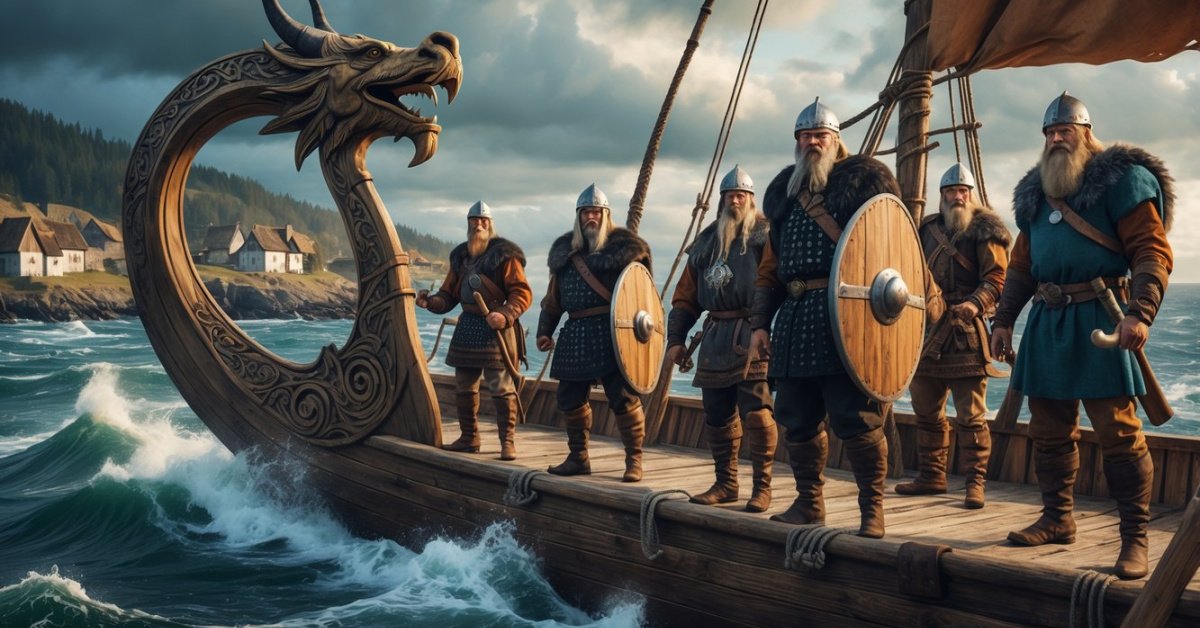
The Vikings came from the rugged lands of Scandinavia. They sailed into history with skill, ambition, and determination.
From the late 8th to the 11th century, Norse seafarers transformed small coastal communities into powerful forces. They shaped much of European history through exploration, trade, settlement, and warfare.
The Vikings rose to power by changing the political and cultural map of medieval Europe.
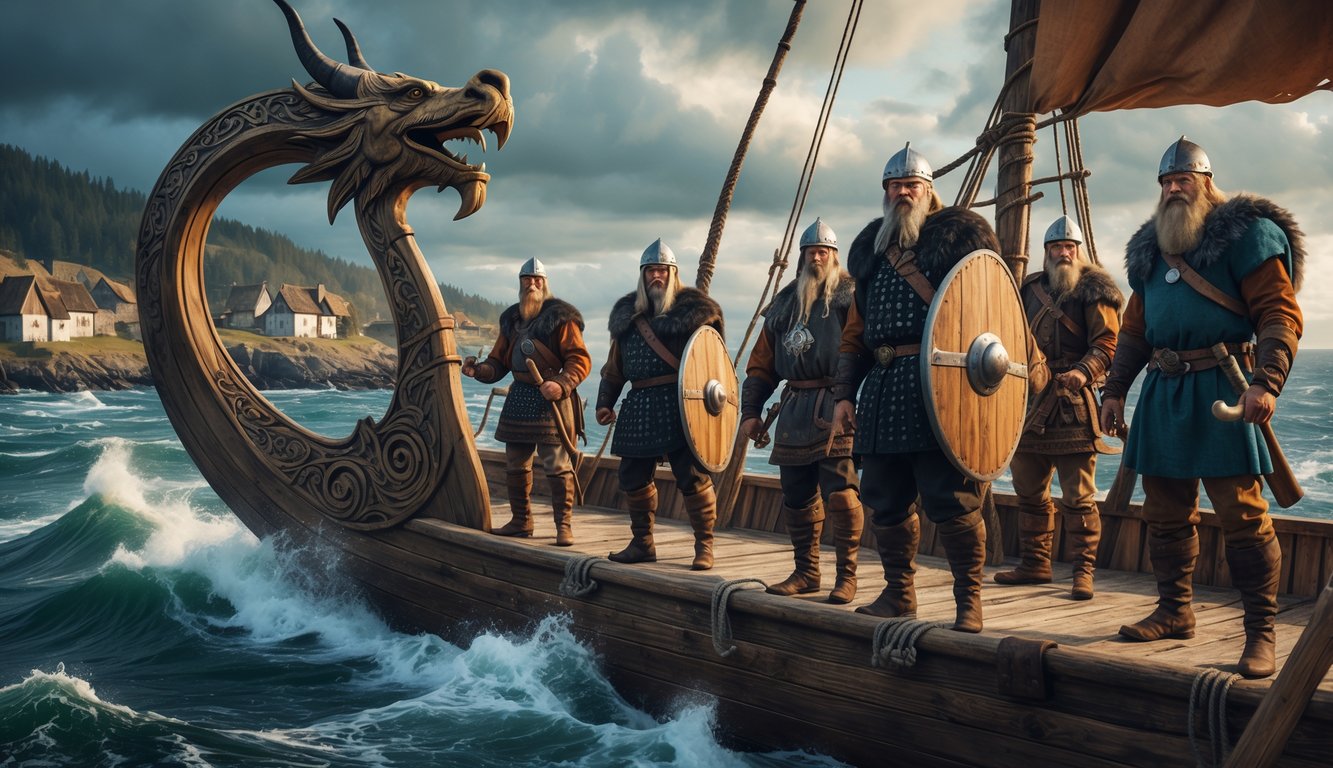
Their story begins in the north, where harsh landscapes demanded resilience and resourcefulness. As the Viking Age began, they launched daring voyages across the seas.
They raided, traded, and established footholds from the British Isles to Eastern Europe. In places like Western Europe and the lands of the Rus, they left lasting marks on politics, commerce, and culture.
Beyond warfare, Vikings built complex societies with unique laws, traditions, and beliefs. Their influence reached the Mediterranean and the far North Atlantic.
Origins of the Vikings
The Vikings lived in a northern region with long winters, rugged coastlines, and limited farmland. Their homeland shaped their skills in shipbuilding, navigation, and survival.
Social organization, resource needs, and population growth all pushed them to expand into other parts of Europe.
Geography and Climate of Scandinavia
Scandinavia includes Norway, Sweden, and Denmark. These countries have mountains, forests, and long coastlines.
The terrain made large-scale farming difficult but provided rich fishing grounds and access to the sea. Winters were long and cold, while summers were short but productive.
People stored food and planned for harsh seasons. Communities relied on both farming and seafaring to survive.
Norway’s fjords offered natural harbors and protection from storms. In Sweden, inland lakes and rivers connected settlements and made trade easier.
Denmark’s flatter land allowed more farming. Its location between the North Sea and Baltic Sea made it a hub for travel and exchange.
Early Norse Societies and Power Structures
Small communities led by local chieftains made up early Norse societies. These leaders controlled land, settled disputes, and defended their people.
Power often came from owning land, livestock, and commanding warriors. No single king ruled all of Scandinavia during the early Viking Age.
Alliances and rivalries shifted between clans and regions. Leaders built influence through both trade and raiding.
Free men discussed laws at public assemblies called things. These gatherings allowed them to settle conflicts and make agreements.
The system gave communities a voice but favored the wealthy and powerful.
Population Pressures and Resource Scarcity
By the late 8th century, population growth in Scandinavia strained local resources. Farmland was limited, and inheritance customs often left younger sons without land.
Fishing and hunting helped, but could not fully support the growing numbers. Trade with neighboring regions brought goods and revealed the wealth of foreign lands.
Many Vikings built sturdy ships and sailed abroad. Some traveled to raid, while others settled new territories.
These movements started the widespread activities of the Vikings across Europe.
The Dawn of the Viking Age
In the late 8th century, Norse seafarers began to make their presence felt far beyond Scandinavia. Their skilled maritime technology, targeted raids, and drive for new resources reshaped political and economic life across many regions.
The Lindisfarne Raid and Its Significance
In 793 CE, Norse warriors attacked the monastery at Lindisfarne on England’s northeast coast. Many consider this event the formal beginning of the Viking Age.
The monastery held religious treasures, manuscripts, and wealth. The raid shocked Christian Europe because monasteries were sacred and often unprotected.
Writers at the time described the event as violent and unexpected. The attack showed that Vikings could strike quickly along coastlines and rivers.
It also forced kingdoms to invest in coastal defenses. Lindisfarne’s fall warned that no settlement near the sea was entirely safe.
Advancements in Viking Shipbuilding
Viking expansion depended on the longship, a fast, narrow vessel with a shallow draft. This design let them travel in open seas and shallow rivers.
Longships used overlapping planks, called clinker-built construction, which made them strong and flexible. The symmetrical bow and stern let the ship reverse direction without turning around.
Crews could row or sail a typical longship, allowing for speed and efficiency. They could beach the vessels directly on shore for quick raids and retreats.
These innovations gave Vikings a strategic advantage over many European powers. Shipbuilding skill was central to their success in both raiding and trade.
Motivations for Expansion
Several factors drove Viking expansion between the late 8th and 11th centuries. Population growth in Scandinavia increased pressure on farmland and resources.
Political rivalries pushed ambitious leaders to seek wealth and land abroad. Raiding offered immediate rewards and prestige at home.
Trade opportunities also played a role. Vikings exchanged furs, amber, and iron for silver, textiles, and spices.
Religious differences sometimes caused conflict, but economic gain was often the main goal. Resource needs, political ambition, and maritime skill helped Vikings reach from England to the Byzantine Empire.
Viking Raids and Expansion
Viking warriors used swift ships and coordinated strikes to reach distant shores. Their movements changed trade, settlement patterns, and political control across the British Isles and mainland Europe.
Tactics and Strategies of Viking Warriors
Vikings relied on the longship, a fast and shallow-draft vessel. This design let them travel up rivers and land directly on beaches.
They struck targets with surprise, often at dawn or during religious festivals. Monasteries were common targets because they held wealth and had little protection.
Small, mobile groups helped them avoid large enemy armies. Leaders coordinated attacks through signals and pre-arranged meeting points.
This flexibility let Vikings raid across the North Sea, the coasts of France, and deep inland along rivers. Vikings also fought as mercenaries for foreign rulers, gaining wealth and influence.
Transition from Raiding to Settling
Over time, some Viking groups shifted from short-term raids to permanent settlements. This happened in places with fertile land, trade opportunities, or political advantages.
In the British Isles, Norse settlers established towns like Dublin and York. These towns became important trade hubs connecting the North Sea and the Irish Sea.
In Normandy, Viking leader Rollo secured land from the French king in exchange for defending the coast. This agreement created a lasting Norse presence in northern France.
Settlements often began as seasonal camps. Over years, they grew into farming communities with markets, fortifications, and local governance.
This shift from raiding to farming and trade helped Vikings become part of local societies.
Impact on Medieval Europe
Viking expansion changed European history through trade, politics, and culture. They opened new trade routes from the North Atlantic to the Caspian Sea.
Their settlements introduced Norse language and customs to England, Ireland, and France. Some place names and legal traditions still come from this period.
The threat of Viking raids pushed kingdoms to improve coastal defenses and build stronger navies. Political alliances formed to resist them, changing regional power structures.
In some areas, Viking rulers blended with local elites through marriage and diplomacy. This left a lasting mark on medieval governance and society.
For more on their influence, see the detailed history of Viking expansion.
Vikings in the British Isles
The Vikings reached the British Isles in the late 8th century. They began with raids on coastal monasteries and towns.
Over time, they shifted from plundering to settlement. This change shaped political borders, trade networks, and culture across England, Ireland, and Scotland.
Conquest of England and the Danelaw
In 793, Norse raiders attacked the monastery at Lindisfarne, starting Viking activity in England. These early raids targeted wealth and religious sites.
By 865, the Great Heathen Army landed in East Anglia. This force aimed to conquer and settle, not just raid.
They seized large parts of eastern and northern England. The conquered territory became known as the Danelaw, where Scandinavian laws and customs replaced Anglo-Saxon ones.
It included key towns such as York, Lincoln, and Nottingham. Viking rule in the Danelaw changed trade, governance, and land ownership.
Many Norse settlers integrated with the local population. They left a lasting mark on place names and language.
You can read more about this period in the history of Viking activity in the British Isles.
Viking Presence in Ireland and Scotland
Vikings began raiding Ireland in the late 8th century. They targeted monasteries like Iona and Kells.
These raids disrupted local kingdoms and opened new trade routes. Over time, Norse groups established fortified settlements along the coast.
These settlements became hubs for trade in silver, slaves, and goods from across Europe. In Scotland, Vikings settled in the Northern and Western Isles, including Orkney, Shetland, and the Hebrides.
They also controlled parts of the mainland coast. Norse influence shaped local politics, especially where Gaelic and Norse cultures blended.
Some Viking leaders in Scotland allied with Irish and Pictish rulers, while others fought for territory. This mix of conflict and cooperation helped define the region’s medieval history.
Learn more in accounts of Viking settlement in the British Isles.
The Founding of Dublin
Around 841, Vikings established a longphort, or ship fortress, at the site of modern Dublin. This base let them control trade and launch inland raids.
Dublin grew into a major Norse kingdom in Ireland. It became a center for commerce, especially in slaves, textiles, and precious metals.
The city’s spot on the River Liffey gave it access to both the Irish Sea and inland river routes. This made it a strategic link between the British Isles and the wider Viking world.
Over time, Dublin developed into a mixed Norse-Gaelic settlement. Its rulers often played a role in Irish politics, forging alliances or waging war with surrounding kingdoms.
Read more in studies of Vikings in the British Isles.
Vikings in Western Europe
Viking activity in Western Europe changed political borders and helped new powers grow. Their actions led to both destruction and the creation of lasting settlements that became part of local culture.
Raids on France and the Siege of Paris
Vikings began raiding the Frankish kingdoms in the late 8th century. Their longships let them travel deep into French territory by river.
In 845, Ragnar Lodbrok led a fleet up the Seine and attacked Paris. Charles the Bald, the Frankish king, paid them a ransom to leave.
This payment encouraged other Viking groups to demand ransoms too. In 885–886, Vikings launched their most famous assault during the Siege of Paris.
Hundreds of Viking ships surrounded the city. The defenders held out for months.
Eventually, the Vikings took payment and left Paris. These attacks weakened royal power and forced local rulers to defend themselves or negotiate.
The Formation of Normandy
By the early 10th century, Frankish leaders looked for a lasting solution to Viking attacks. In 911, King Charles the Simple made an agreement with the Viking leader Rollo.
Charles gave Rollo and his followers land along the lower Seine River. This land became known as Normandy, meaning “land of the Northmen.”
Rollo agreed to defend the region from other Vikings and to convert to Christianity. This deal made Viking raids less common in the area and improved local defenses.
Normandy’s location allowed control over trade routes between the English Channel and inland France. Over time, settlers adopted French language and customs but kept some Norse traditions.
Rollo and the Rise of the Normans
Rollo started a dynasty that ruled Normandy for generations. His descendants gained power through alliances, marriage, and warfare.
By the 11th century, the Normans had become a major force in European politics. They built strong castles, organized efficient administrations, and led skilled armies.
William the Conqueror, a descendant of Rollo, became famous for leading the Norman conquest of England in 1066. This event changed English history.
Vikings in Eastern Europe and the Rus
Scandinavian traders and warriors traveled deep into Eastern Europe during the Viking Age. They built settlements and controlled trade routes through both commerce and military strength.
The Varangians and the Kievan Rus
The Varangians were Norse seafarers who entered the river systems of modern Russia, Ukraine, and Belarus. They came for trade, raiding, and political influence.
Starting in the mid-9th century, they took control over local Slavic tribes. This political structure became the Kievan Rus, a federation centered on important trade cities.
The Rus acted as middlemen in trade between the Baltic and the Byzantine Empire. They moved goods like furs, wax, honey, and slaves to markets in Constantinople and the Islamic world.
Varangians also brought Scandinavian law, military organization, and shipbuilding to the region.
Rurik and the Foundation of Kiev
A Norse leader named Rurik is credited with founding the Rus state. Records suggest he first ruled from Staraya Ladoga and then Novgorod.
After Rurik died, his successors expanded south along the Dnieper River. They took control of Kiev and developed it into a major political and trading center.
Kiev’s position gave it control over the route from the Baltic to Byzantium. This made it a central point for exchanging goods and ideas between northern Europe and the Mediterranean.
By the 10th century, the Kievan Rus had grown into a strong and wealthy state with ties to both Scandinavia and Byzantium.
The Varangian Guard in Byzantium
Many Varangians served in the Byzantine Empire as elite soldiers. The Varangian Guard became known for loyalty to the emperor.
The Byzantines recruited these soldiers from the Rus and other Norse communities. They protected the emperor and joined military campaigns.
The Guard became famous for their large axes and strict discipline. Their presence in Constantinople showed close ties between Byzantium and the Kievan Rus.
These soldiers linked the Viking world to the courts of the Eastern Roman Empire.
Vikings in the North Atlantic and Beyond
The Norse expanded westward across the North Atlantic during the late Viking Age. They set up farming communities, explored new coasts, and created trade routes connecting Scandinavia to distant lands.
Their journeys reached as far as present-day Canada, showing early European contact with the Americas.
Settlement of Iceland and Greenland
Norse settlers reached Iceland in the late 9th century. Many came from Norway, and some arrived from Norse colonies in the British Isles.
They built farms, raised animals, and adapted to the volcanic landscape. By the 980s, explorers pushed farther west.
Erik the Red was exiled from Iceland and sailed to Greenland. He named it to attract settlers.
Archaeology shows that Norse farmers established two main settlements in Greenland: the Eastern Settlement and the Western Settlement.
Greenland’s communities raised sheep, goats, and cattle. They hunted seals and traded walrus ivory with Europe.
These colonies survived for centuries despite the harsh climate.
Leif Erikson and the Discovery of Vinland
Leif Erikson, Erik the Red’s son, sailed west from Greenland around the year 1000. He followed earlier reports of land sightings and reached a place he called Vinland.
Descriptions in the sagas suggest Vinland had mild weather, forests, and wild grapes. This was very different from Greenland’s icy landscape.
Leif’s expedition explored the area and may have set up a seasonal base. His journey marked the first known European exploration of mainland North America.
Modern historians connect Vinland to the Canadian coast, possibly Newfoundland or nearby regions.
Vikings in Newfoundland and North America
Archaeological finds at L’Anse aux Meadows in Newfoundland confirm a Norse presence in North America around 1000 AD. Excavations uncovered turf buildings, iron-working sites, and artifacts like those from Greenland and Iceland.
The Norse likely used the site as a base for exploration and gathering resources. They may have traveled further south for timber and supplies.
The sagas suggest some contact with Indigenous peoples. However, the Norse settlements in North America did not last long.
They eventually left these sites and focused on Iceland and Greenland, where their communities were more stable.
Influence in the Mediterranean and Other Regions
Viking activity reached beyond Northern Europe, shaping ties with southern powers. Their actions in ports and cities connected them to trade networks and military alliances in the Mediterranean and beyond.
Raids and Settlements in Sicily
In the 9th and 10th centuries, Norse warriors appeared in Sicily. Some raided coastal towns under Arab control, while others worked as mercenaries for local rulers.
Sometimes Vikings cooperated with Muslim forces, and other times they fought against them. This reflected the island’s complex politics.
Their time in Sicily was brief but influenced local defenses and trade. Controlling the island gave access to Mediterranean markets.
Viking Contact with Constantinople
The Vikings, called Varangians in the east, formed strong links with Constantinople, the capital of the Byzantine Empire. Many served as elite guards for the Byzantine emperors in the Varangian Guard.
These warriors gained wealth and prestige through imperial service. They also brought back goods, coins, and new ideas to their homelands.
Vikings traveled to Constantinople using river routes through Eastern Europe. Their role in the Byzantine military strengthened ties with the eastern Mediterranean.
Trade with the Mediterranean and Middle East
Viking trade reached into the Mediterranean and the Middle East. They traded furs, amber, and slaves for silver, glassware, spices, and textiles.
Their longships let them travel quickly between northern and southern ports. This mobility connected Scandinavia to trade hubs like Constantinople, Sicily, and Arab-controlled ports.
Archaeologists have found Arabic silver coins in Scandinavia, showing the reach of this trade. These exchanges helped Viking lands join wider medieval trade networks.
Viking Society and Culture
Viking society balanced farming, trade, and seafaring with a system of leadership and law. People’s roles depended on status, family, and community needs.
Kings, warriors, farmers, and craftsmen all played a part in the spread of Norse influence across medieval Europe.
Social Hierarchy and Daily Life
Viking society had clear social ranks. At the top were kings and jarls (nobles) who owned land and led warriors.
Below them were karls, the free farmers and craftsmen who formed most of the population. At the bottom were thralls, enslaved people who worked on farms, in homes, or on ships.
Daily life changed with the seasons. Men farmed, fished, or traded, and women managed households and food production.
Many Norsemen also joined voyages for trade or raids, bringing back wealth. Homes were longhouses made from wood, turf, or stone, often shared with animals in winter.
People wore wool or linen clothes, and wealthier families used silk or decorated jewelry. Social gatherings included feasts, stories, and games.
Role of Women and Family
Women in Viking society had more rights than in many other medieval cultures. They could own property, manage farms, and ask for divorce.
Widows could inherit land and run estates. Marriage helped form alliances between families.
Both men and women worked for the household’s survival. Women handled weaving, dairy, and food storage, and also supervised servants or thralls.
Children learned skills early. Boys trained in farming, fishing, or fighting, while girls learned domestic work and trade.
Families valued honor and reputation, teaching children to protect these values. Some women traveled on voyages or took part in trade, and a few even fought alongside men, though this was rare.
Viking Law and Governance
The Vikings used a legal system called the thing. Free men gathered at these assemblies to make decisions and settle disputes.
Local things managed community matters. Larger regional things addressed wider issues.
A lawspeaker memorized and recited the laws aloud. Punishments included fines, exile, or sometimes execution.
People paid compensation, called wergild, to avoid blood feuds.
Kings and chieftains built authority through wealth, military skill, and the support of other leaders. As Viking territories grew, leaders changed governance to control trade, land, and larger populations.
Norse Mythology and Beliefs
Norse mythology shaped how Vikings saw the world. It guided their beliefs about gods, the afterlife, and daily life.
These stories influenced their laws, social order, and actions in war, trade, and exploration.
Major Gods: Odin, Thor, and Loki
The Norse pantheon included many gods, but three were especially important. Odin, the All-Father, ruled Asgard and was linked to wisdom, poetry, and war.
People often described Odin as a one-eyed wanderer who searched for knowledge.
Thor protected gods and humans. He used his hammer Mjölnir to defend Asgard from giants.
Farmers, warriors, and sailors prayed to Thor for safety and luck.
Loki was a trickster god known for cleverness and mischief. His actions often caused problems for gods and humans.
Loki’s role in Baldr’s death started the events leading to Ragnarök, the end of the world in Norse belief.
| God | Role | Symbol |
|---|---|---|
| Odin | Wisdom, war, poetry | Spear Gungnir |
| Thor | Protection, storms, strength | Hammer Mjölnir |
| Loki | Trickery, chaos, change | None fixed |
Valhalla and the Afterlife
Vikings believed in several afterlife realms. The most famous was Valhalla, a great hall in Asgard ruled by Odin.
Warriors who died bravely in battle joined Valhalla to train for Ragnarök.
Those who did not die in battle went to Hel, a cold realm ruled by the goddess Hel. This place was not a punishment, but it lacked Valhalla’s honor.
Fólkvangr, ruled by Freyja, welcomed some fallen warriors as well.
These beliefs reflected the Viking value of courage and skill in battle.
Religious Rituals and Festivals
Vikings held seasonal festivals and sacrifices to honor the gods. They called these ceremonies blóts and offered food, animals, or valuable objects.
Leaders hosted blóts to seek blessings for harvests or victory.
Major celebrations followed the farming calendar. Yule, held in midwinter, honored gods like Odin and marked the new year.
Midsummer festivals celebrated fertility, sunlight, and Thor’s protection.
Some rituals took place at sacred groves, stones, or temples. Feasts, storytelling, and the recitation of myths helped preserve Norse beliefs.
The Lasting Legacy of the Vikings
The Vikings left a lasting mark on Europe. Their influence can be seen in languages, family lines, place names, and borders.
Viking settlements, trade routes, and social systems shaped regions from the North Atlantic to Eastern Europe.
Genetic and Linguistic Influence
Viking expansion spread Scandinavian ancestry across Europe. DNA studies show Norse genetic traces in the British Isles, Normandy, and Russia.
Many coastal communities in Scotland and Ireland still have high levels of Norse ancestry.
Language changed as well. Old Norse words blended into English, Scots, and Irish Gaelic.
Common English words like sky, egg, and window came from Norse contact. Place names ending in -by (meaning “farm” or “village”), such as Whitby and Grimsby, show Viking settlement patterns.
Viking influence also reached Eastern Europe. The Rus’, a group with Viking roots, brought Norse words into Slavic languages.
Formation of New Kingdoms and Dynasties
Vikings founded and ruled territories that became major European powers. The Normans, descended from Viking settlers in northern France, established the Duchy of Normandy in the 10th century.
They later conquered England in 1066, changing its political and cultural landscape.
In Ireland, Viking leaders founded cities like Dublin, which became important trade hubs. In Eastern Europe, Norse leaders created the Kievan Rus’, which laid the foundation for Russian and Ukrainian states.
These realms blended Viking governance with local traditions. The mix shaped political systems and dynasties that influenced medieval Europe for centuries.
Enduring Cultural Impact
Viking society valued skilled craftsmanship and navigation. They built adaptable trade networks that shaped the art, shipbuilding, and commerce of the regions they visited.
Vikings founded towns that became major centers of trade. These towns linked Europe with the Middle East and Asia.
Their mythology and sagas preserved Norse beliefs and history. These stories inspired later literature and art.
Today, places like Dublin, Normandy, and parts of Scandinavia celebrate Viking heritage. People honor this legacy through cultural events, historical reenactments, and preserving archaeological sites.