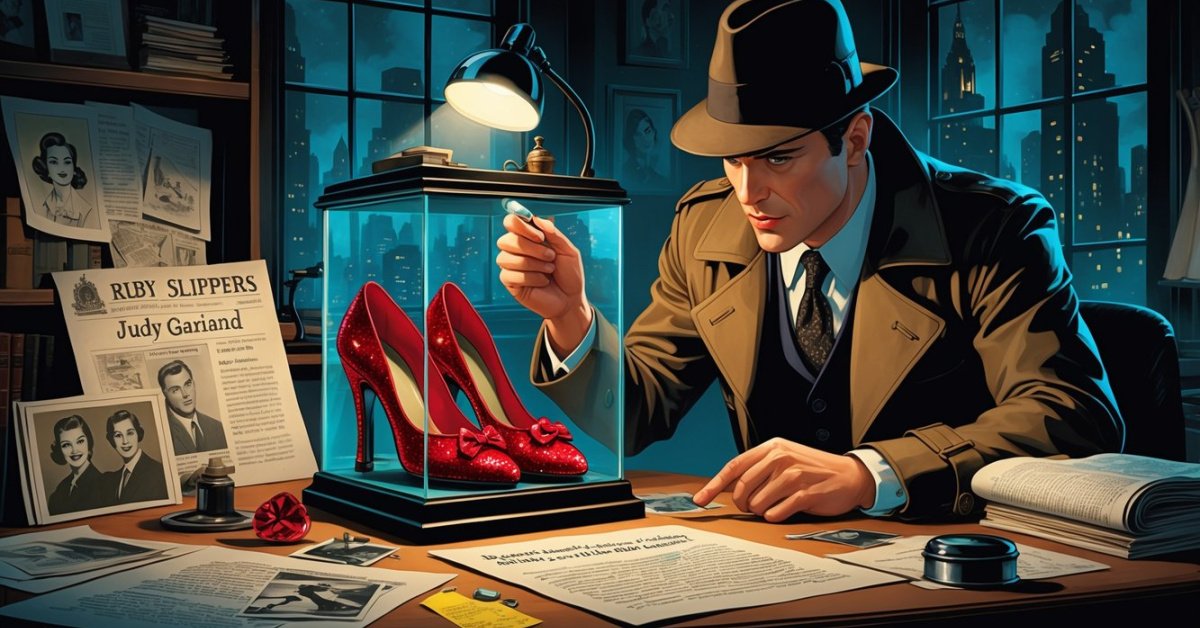
For nearly two decades, one of Hollywood’s most famous treasures remained missing. Someone stole the ruby slippers Judy Garland wore as Dorothy in The Wizard of Oz from the Judy Garland Museum in Minnesota in 2005, sparking a mystery that baffled fans, law enforcement, and memorabilia experts.
Investigators have now solved the case, and authorities recovered the slippers after years of searching.
The theft involved more than just a pair of shoes—it represented a piece of film history tied to one of the most beloved movies of all time. Federal investigators, including the FBI, worked for years to track them down and uncovered surprising details about the crime.
The story of these iconic ruby slippers is filled with twists, from the night of the break-in to the moment the shoes returned. Their disappearance and recovery continue to fascinate anyone who treasures classic cinema and its rarest artifacts.
The Iconic Status of Judy Garland’s Ruby Slippers
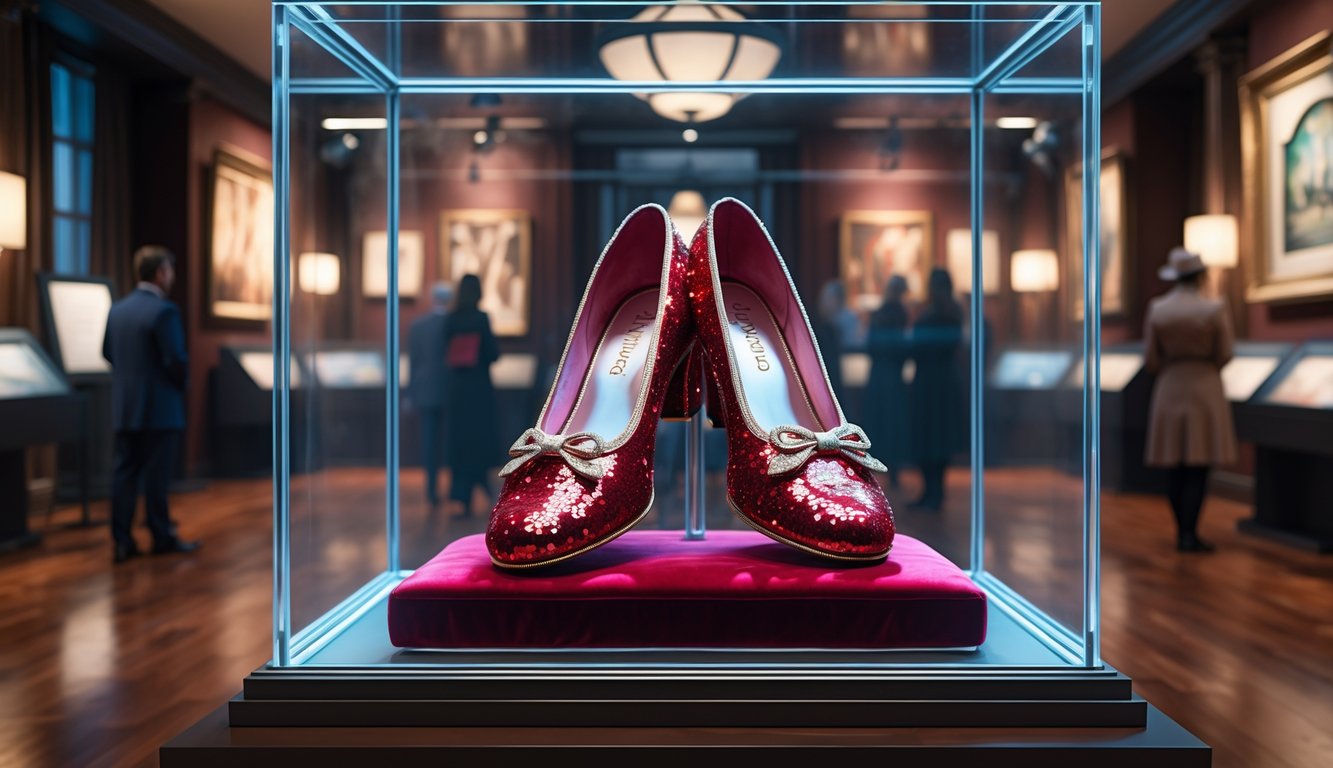
Judy Garland’s ruby slippers are among the most recognized pieces of movie memorabilia in history. Their fame comes from their role in The Wizard of Oz and their lasting presence in popular culture.
Cultural Significance in The Wizard of Oz
Judy Garland wore the slippers as Dorothy Gale in The Wizard of Oz in 1939. The shoes played a central role in the story, helping Dorothy return home with the phrase, “There’s no place like home.”
Filmmakers chose to make the shoes ruby red instead of silver, as in L. Frank Baum’s original book. They wanted to use Technicolor to make the shoes visually striking on film.
Over the years, the slippers became a symbol of the film. They appeared in posters, merchandise, and museum exhibits, keeping the movie’s legacy alive for new generations.
Symbolism and Value of the Ruby Slippers
The ruby slippers symbolize hope, determination, and the idea that solutions can be found close to home. These themes resonated with audiences during the late 1930s.
Collectors value the slippers for their rarity, condition, and connection to Judy Garland. Authentic pairs have sold for millions of dollars at auction.
Because of their fame, the slippers have been targeted for theft and forgery. In 2005, thieves stole a pair from the Judy Garland Museum in Minnesota, and the FBI later recovered them after years of searching.
Known Surviving Pairs and Their Owners
At least four original pairs of ruby slippers from The Wizard of Oz still exist. Each pair was made slightly differently for filming, such as for close-ups or dance scenes.
The Smithsonian’s National Museum of American History holds one pair. A private collector purchased another in 1970.
The Judy Garland Museum’s pair was stolen in 2005 and returned nearly two decades later. A fourth pair, once owned by MGM costume designer Kent Warner, has appeared at auction.
Owners carefully preserve these pairs and sometimes display them to the public under strict security.
The 2005 Theft at the Judy Garland Museum
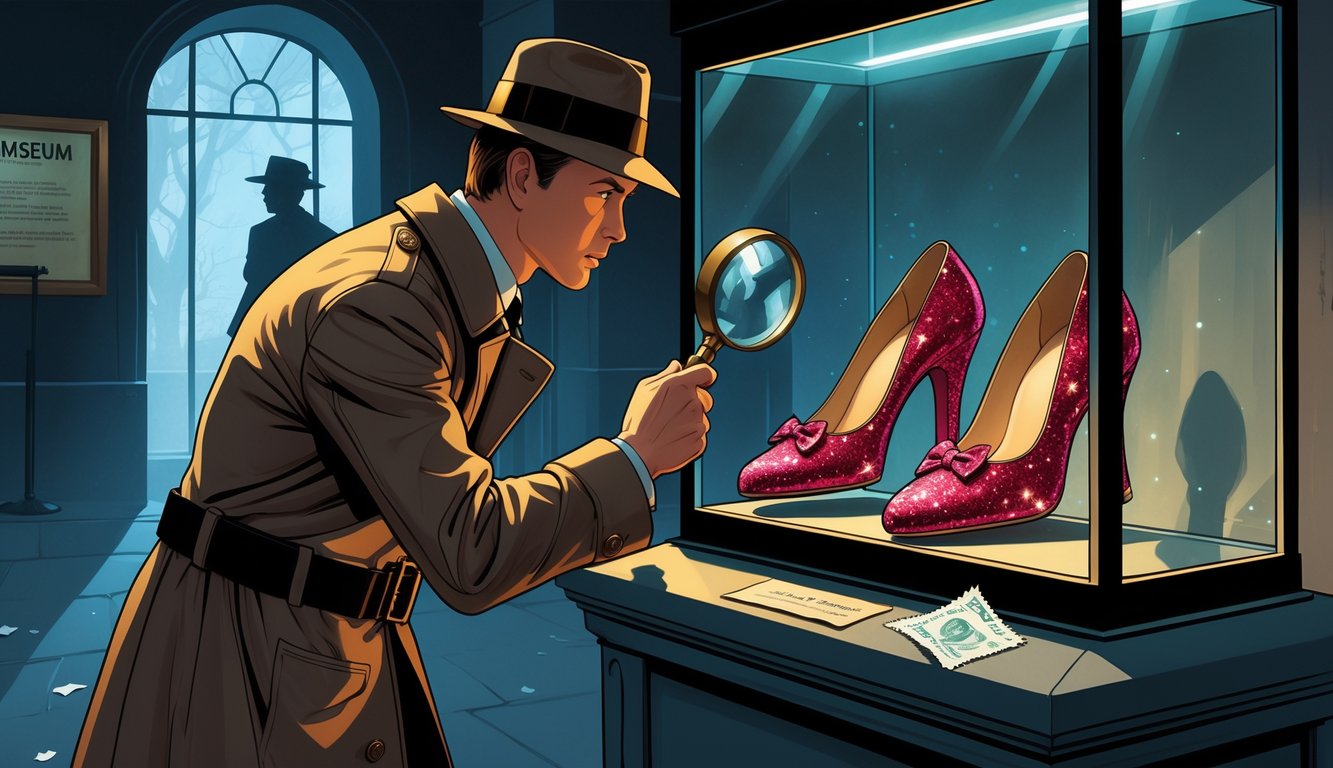
In 2005, someone stole a rare pair of ruby slippers worn by Judy Garland in The Wizard of Oz from the Judy Garland Museum in Grand Rapids, Minnesota. The theft shocked both local residents and film memorabilia collectors.
Details of the Break-In
The theft happened overnight on August 27, 2005. The museum’s security alarm went off when a thief broke through a window.
The thief targeted only the slippers and ignored other valuables. This detail suggested the crime was planned.
Investigators later identified Terry Jon Martin as the person who carried out the break-in. Court documents revealed he believed the slippers’ sequins might contain real rubies, making them worth more than their insured value of $1 million.
A private collector had loaned the shoes to the museum. The thief smashed the clear display case and escaped with the slippers in just a few minutes.
Immediate Aftermath and Community Impact
The Judy Garland Museum closed temporarily to assess the damage and improve security. Staff and volunteers felt sadness and frustration over the loss.
Local residents saw the theft as a blow to the town’s identity. Grand Rapids, Judy Garland’s birthplace, relies on the museum as a major tourist attraction.
The museum’s founding director called the crime a “dark cloud” over the institution. The community continued to honor Garland’s legacy with events and exhibits, even without the slippers.
Media coverage spread nationwide, raising awareness of both the theft and the slippers’ cultural value. Interest from collectors and historians in preserving film memorabilia increased.
Initial Investigation Efforts
Police and the FBI began working together immediately after the theft. Authorities collected fingerprints, reviewed alarm records, and interviewed museum staff.
A $250,000 reward was offered for information leading to the recovery of the slippers. No solid leads emerged in the early years.
Investigators suspected the slippers might have been sold on the black market for movie memorabilia. Progress was slow without witnesses or surveillance footage.
The case remained unsolved for over a decade until the slippers were finally recovered in 2018 during an FBI sting operation, as detailed in this report.
The FBI’s Role in the Search and Recovery
The FBI took over the investigation after the theft crossed state lines and involved valuable cultural property. Agents used forensic analysis, undercover work, and public tips to track the stolen ruby slippers and identify those responsible.
Their efforts combined traditional detective work with specialized art crime expertise.
Federal Involvement and Sting Operations
The theft of the ruby slippers from the Judy Garland Museum in 2005 quickly drew federal attention because the shoes were insured for $1 million and considered a national treasure.
The FBI’s Art Crime Team, which handles major cultural property thefts, joined the case. Agents worked with local police and museum officials to gather evidence and interview witnesses.
In 2018, the FBI carried out a sting operation that led to the recovery of the slippers. Investigators posed as potential buyers and arranged an undercover meeting.
Agents confirmed the slippers’ authenticity and secured them without damage.
Key Breakthroughs in the Case
The investigation stalled for years due to a lack of evidence and leads. The slippers disappeared without a trace, and no ransom demands appeared.
A breakthrough came in 2017 when a man approached the insurance company claiming he could help recover the shoes. The FBI followed this tip and set up the 2018 sting.
Forensic testing later confirmed the recovered slippers matched the original pair worn by Judy Garland in The Wizard of Oz. Prosecutors charged Terry Jon Martin, who eventually admitted to the museum heist.
Public Appeals and Media Coverage
The FBI made public appeals to keep the case in the spotlight. Press conferences and news releases asked for information from anyone who might have seen or heard about the slippers.
Major outlets like CNN and NPR covered the story, helping maintain public interest.
Media coverage included photos of the recovered shoes and updates on the investigation’s progress. This attention encouraged tips from the public and reinforced the cultural importance of the ruby slippers.
Suspects and Motives Behind the Crime
The 2005 theft of Judy Garland’s ruby slippers from the Judy Garland Museum puzzled investigators for nearly two decades. Evidence and confessions eventually revealed who was involved and why the crime happened.
Terry Jon Martin’s Confession
Terry Jon Martin, a 76-year-old man from Minnesota, admitted he stole the slippers in 2005. He broke into the museum, smashed the display case, and took the shoes in under a minute.
Court records showed Martin had a criminal past but had been out of crime for years. He claimed he acted alone, though investigators suspected others may have helped afterward.
Martin explained he thought the slippers’ rubies were real gems. This belief led him to target the shoes instead of other items in the museum. His guilty plea in 2023 closed the long-running mystery.
Accomplices and Their Roles
While Martin admitted to the theft, investigators believe others helped after the crime. These individuals may have helped hide or try to sell the slippers.
The FBI recovered the shoes in 2018 during a sting operation. The slippers had been moved between several locations, making tracking difficult.
Authorities questioned some people connected to organized crime. However, no one else faced major charges because of insufficient evidence or lack of cooperation from witnesses.
The chain of custody for the slippers between 2005 and 2018 remains partly unclear.
Motivation: Myths About the Slippers’ Value
Martin’s main motive came from a misunderstanding about the shoes’ value. He believed the slippers contained real rubies worth millions, but the stones were glass.
The slippers’ true value comes from their cultural and historical significance, not precious materials. They are one of four known pairs worn by Judy Garland in The Wizard of Oz.
Rumors about gemstone content may have fueled criminal interest at the time of the theft. This false belief influenced Martin’s decision, thinking he could make a quick profit.
The Recovery of the Ruby Slippers
Law enforcement, including the FBI, worked with museum officials to confirm the stolen ruby slippers’ identity and prepare them for public display again.
How the Slippers Were Found
Thieves took the slippers in 2005 from the Judy Garland Museum in Grand Rapids, Minnesota. Their location remained unknown for over a decade.
In 2018, the FBI conducted a sting operation after receiving a tip about someone trying to sell the shoes. Agents arranged a meeting to check the claim.
The operation confirmed the slippers were genuine. Agents seized them without damage and secured them as evidence.
The recovery ended a 13-year search that puzzled museum staff, collectors, and fans.
Condition and Authentication
When they recovered the slippers, experts saw signs of age but no major harm from the theft. The sequins dulled slightly, and some threads loosened. The structure stayed intact.
Experts compared the shoes to other surviving pairs from the 1939 film. They used fiber analysis, sequin pattern comparison, and construction details to confirm authenticity.
The FBI worked with the Smithsonian Institution, which holds another pair, to match specific wear marks and stitching. These tests confirmed the recovered shoes were the same ones stolen from the museum in 2005.
Return to the Judy Garland Museum
After authentication, the museum received the slippers under strict security. Staff updated the display case with reinforced glass, alarms, and climate controls.
Visitors can now view the slippers up close. The exhibit includes historical details about their role in The Wizard of Oz.
The display explains the theft and recovery, adding context to their cultural value. Museum staff say attendance increased after the return, as many wanted to see the shoes that had been missing for so long.
The slippers remain one of the museum’s most important and recognized artifacts.
Impact on the Judy Garland Museum and Community
The theft of Judy Garland’s ruby slippers in 2005 changed both the museum and the town of Grand Rapids, Minnesota. It disrupted exhibits and reduced visitor numbers.
The incident sparked years of investigation and public interest.
Museum’s Response to the Theft
Thieves stole the slippers just two years after the Judy Garland Museum opened. This setback made it harder for the museum to grow attendance and revenue.
Staff reviewed and improved security. They worked to protect other artifacts, including costumes and personal items from Garland’s career.
The museum’s director said the theft hurt its ability to attract tourists. The museum continued hosting events and tours to keep Garland’s legacy alive.
When the slippers were recovered in 2018, the museum held a special event to put them back on display.
Community Efforts and Fundraising
Grand Rapids residents took pride in Judy Garland’s hometown. After the theft, the community organized events to raise awareness and money for the museum.
Local businesses donated goods and services for auctions. Volunteers helped with benefit concerts and themed movie nights.
These efforts aimed to cover lost revenue and improve security. In recent years, the museum launched a campaign to buy back and permanently secure the slippers.
The goal was to raise $3.5 million through donations and partnerships, as reported by ArtNews.
Plans for Future Exhibits
With the slippers recovered, the museum began planning new displays that highlight their history, theft, and recovery. Visitors can now learn about the investigation and see photos from the FBI’s recovery announcement.
Future exhibits will combine movie memorabilia with interactive features. These may include behind-the-scenes production details from The Wizard of Oz and stories from Garland’s early life in Minnesota.
The museum plans to rotate special exhibits to draw repeat visitors. By doing so, it hopes to keep interest high while protecting its most valuable artifacts.
Legal Proceedings and Sentencing
Federal investigators spent years tracking down the stolen ruby slippers. The case involved a 2005 theft from the Judy Garland Museum and included work by the FBI to recover the shoes and identify those responsible.
Court records show how the thief and others faced legal consequences after the long investigation.
Charges Filed and Court Outcomes
In 2023, prosecutors charged Terry Jon Martin, 76, with theft of a major artwork for stealing the slippers in 2005. He admitted breaking into the museum in Grand Rapids, Minnesota, and taking the shoes because he believed they contained real rubies.
The FBI recovered the slippers in 2018 after a tip led agents to them. They confirmed the shoes were one of the four surviving pairs worn by Judy Garland in The Wizard of Oz.
Martin pleaded guilty in October 2023. According to the U.S. Department of Justice, the charge carried a possible sentence of up to 10 years in prison, but his health and other factors influenced the outcome.
Sentences for Those Involved
In January 2024, a federal judge gave Martin no prison time, citing his terminal illness and limited life expectancy. The court ordered him to pay restitution to the museum’s insurer.
Court documents showed Martin had no prior record of major art theft. The judge noted that his role was limited to the burglary itself and that others may have been involved in hiding the slippers for years.
The stolen slippers, valued at several million dollars, returned to their owner after the case concluded. The Associated Press reported that Martin expressed regret for the crime during sentencing.
Legal Challenges and Unanswered Questions
Authorities never publicly identified all individuals who handled or concealed the slippers between 2005 and 2018. The FBI has not disclosed details about how the shoes changed hands during those years.
This lack of information has fueled speculation about whether organized crime or private collectors played a role. Although the main thief was charged and sentenced, the full chain of possession remains unclear.
Investigators have suggested that further prosecutions are unlikely due to limited evidence and the amount of time that has passed.
The Legacy of the Ruby Slippers’ Theft
The theft of the ruby slippers from the Judy Garland Museum in 2005 left a lasting mark on both the institution and the wider museum community. It exposed weaknesses in artifact protection and led to changes in how cultural treasures are safeguarded.
Lessons Learned for Museums
The break-in at the Judy Garland Museum showed how quickly thieves can exploit gaps in security. In this case, the intruder smashed a plexiglass display and escaped in less than a minute.
Museums began to see the importance of layered security, including alarms, motion sensors, and reinforced display cases. Smaller institutions, often with limited budgets, recognized the need for insurance coverage on high-value artifacts.
Staff training became a higher priority. Employees learned to spot suspicious behavior and respond quickly to emergencies. Some museums also reviewed their artifact loan policies to ensure safer transport and storage.
Influence on Security Practices
The recovery of the slippers, later confirmed by the FBI, encouraged museums to adopt more advanced technology. Many upgraded to 24-hour surveillance with remote monitoring.
Institutions began working more closely with law enforcement. This included sharing detailed records, photographs, and serial numbers for valuable items.
Some museums invested in GPS tracking for certain portable objects. Others installed vibration or pressure sensors in display mounts, which trigger alarms if an item is disturbed. These steps reflected a shift toward proactive protection.
Enduring Fascination with the Case
Even after the slippers were returned, the story continued to draw public interest. The fact that the theft remained unsolved for over a decade gave it a sense of mystery.
Fans of The Wizard of Oz see the ruby slippers as more than just film memorabilia—they are a symbol of Hollywood history. The shoes’ disappearance and eventual recovery became part of their lore.
Media coverage, including reports on the thief’s confession, kept the case alive in public memory. Exhibits featuring the slippers now attract visitors who want to see the famous shoes that once vanished without a trace.
Where Are the Ruby Slippers Now?
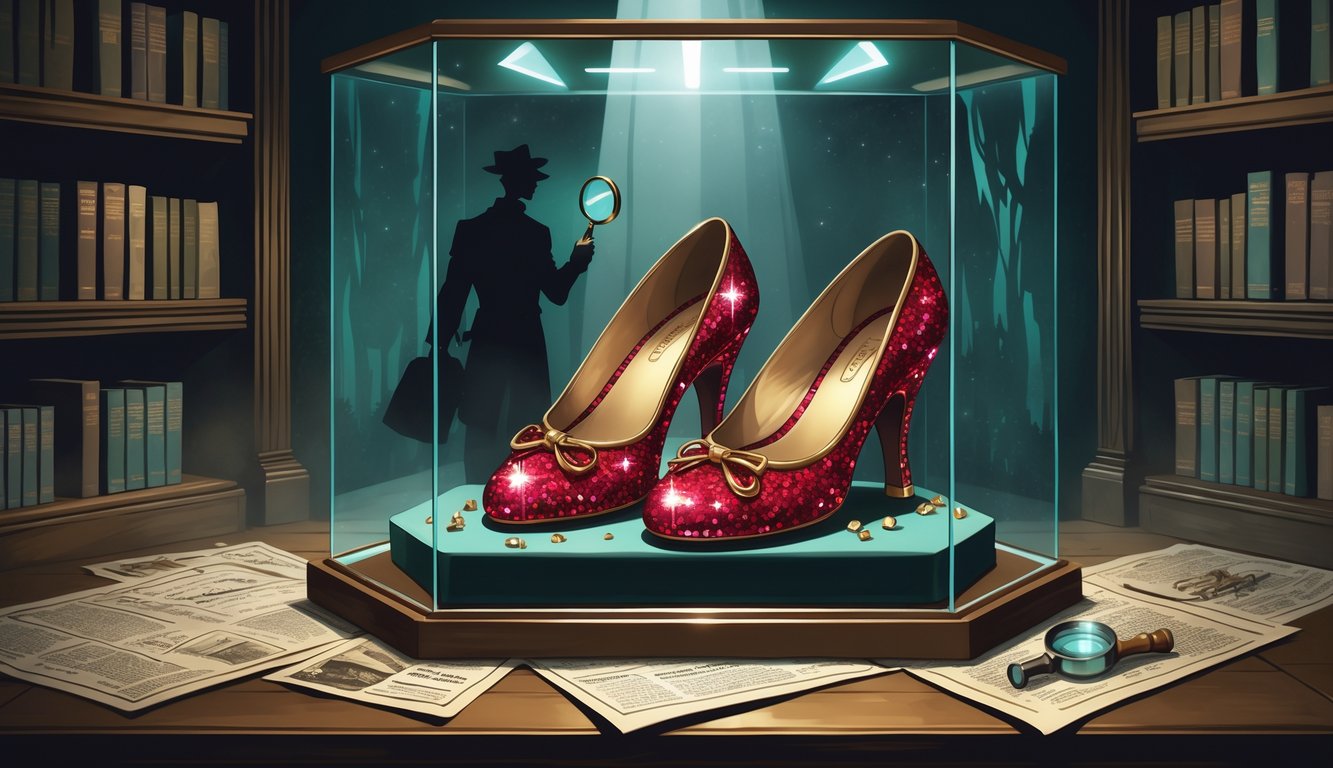
The ruby slippers worn by Judy Garland in The Wizard of Oz have been recovered after years of investigation. They are no longer in FBI custody and have entered a new chapter involving private ownership, museum interest, and potential public exhibitions.
Current Ownership and Auction Plans
After their recovery, the legal owner received the slippers. In March 2024, an auction sold them for $28 million, making them one of the most expensive pieces of movie memorabilia ever sold.
The winning bidder has not been publicly identified. Auction records confirm the sale included a certificate of authenticity and detailed provenance.
A high-profile collectibles house handled the auction. Reports say the slippers are in excellent condition, with minimal signs of wear from filming.
Collectors view the shoes as both a cultural icon and a valuable investment. The sale price reflects the rarity of the surviving pairs—only four known authentic pairs exist.
More details about the auction can be found in this PBS report on the recovered ruby slippers.
The Judy Garland Museum’s Bid
The Judy Garland Museum in Grand Rapids, Minnesota, once housed the slippers before the 2005 theft. The museum tried to reacquire them when they went to auction.
Staff and local supporters hoped the shoes would return to their original display, which had been a major draw for visitors. The museum launched a fundraising effort, but the final sale price was far beyond its budget.
Museum officials expressed disappointment but also relief that the mystery of the theft had been solved. They continue to display other Wizard of Oz memorabilia, including costumes and personal items from Garland’s career.
The museum remains a key destination for fans, even without the slippers. More on their history with the shoes is detailed in this Smithsonian Magazine article.
Future Public Displays
The current owner has not announced permanent display plans. Private collectors sometimes loan items to museums for temporary exhibitions.
Experts believe the slippers could appear at major film history events or traveling exhibits. This would allow the public to see them without the owner giving up possession.
Security will remain a priority for any display. The 2005 theft from the Minnesota museum showed how vulnerable high-value artifacts can be without advanced protection.
If exhibited, the slippers would likely be housed in a climate-controlled, alarmed case to preserve their condition and prevent theft.
Some film historians hope the shoes will eventually return to a public institution, ensuring long-term access for fans and researchers.
The Enduring Allure of The Wizard of Oz Memorabilia
Fans still seek items connected to The Wizard of Oz because these pieces offer a direct link to the film’s production and history. Objects tied to Judy Garland and the 1939 movie remain especially valued for their authenticity and condition.
Other Famous Props and Collectibles
Beyond the ruby slippers, collectors prize several notable items from the film. Private collectors or museums often preserve original MGM studio costumes worn by the Scarecrow, Tin Man, and Cowardly Lion.
Vintage movie posters from the film’s first release attract high demand. Their bright Technicolor artwork shows the era’s promotional style and can sell for thousands, depending on rarity.
Fans who want a tangible connection without the high cost of originals buy replicas of key props, such as Dorothy’s basket or Glinda’s wand. Shops like the Warner Bros. Store and specialty sellers on Etsy sell licensed reproductions.
Even small items, like lobby cards or press kits, interest those curious about the film’s marketing history. Collectors track sales on eBay’s Wizard of Oz memorabilia section to find rare items.
Cultural Impact of Judy Garland’s Legacy
Judy Garland played Dorothy and secured her place in American film history. Audiences still connect with her performance and voice, especially in “Over the Rainbow.”
Fans of her broader career often seek memorabilia linked to Garland. They collect concert posters, signed photographs, and personal letters.
Collectors value her image in many items. Framed prints and autographs, such as those sold on Amazon, show her lasting popularity.
Modern merchandise also draws inspiration from Garland’s legacy. Designers blend her likeness with new styles to keep her connection to the film fresh for new generations.