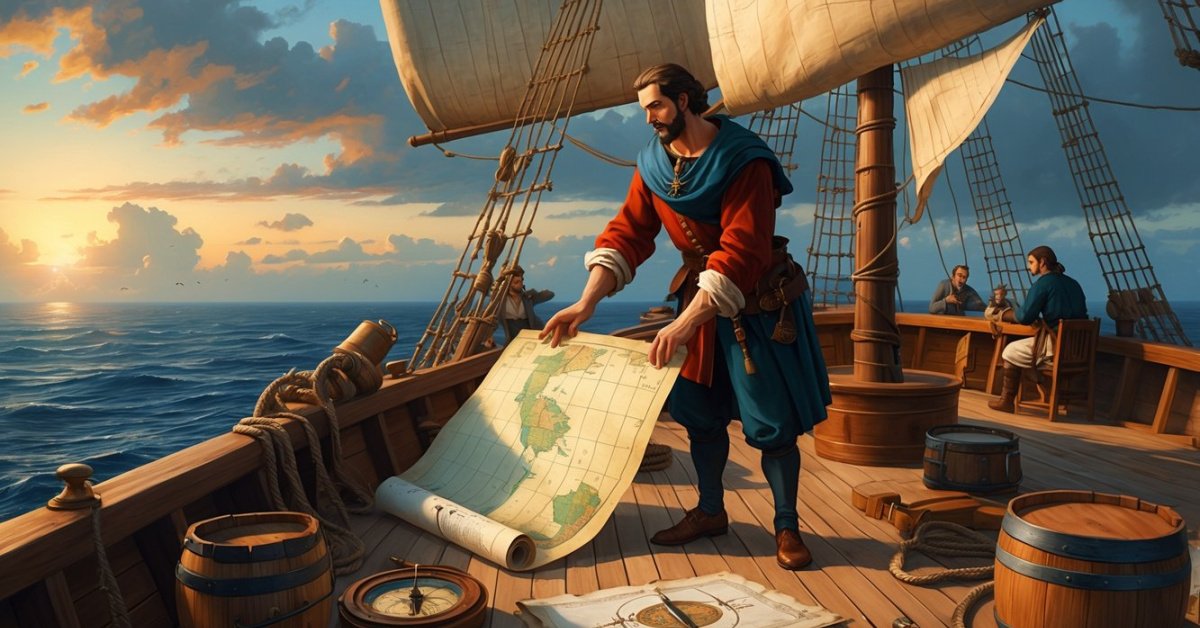
Christopher Columbus is often remembered as the man who sailed across the Atlantic in 1492. However, his life contains much more than the simple story taught in school.
Historians and researchers still debate many details about his origins, motives, and legacy. New evidence continues to challenge long-held beliefs.
Questions remain about where Columbus was truly born and the political forces that influenced his voyages. His story is more complex than it first appears.
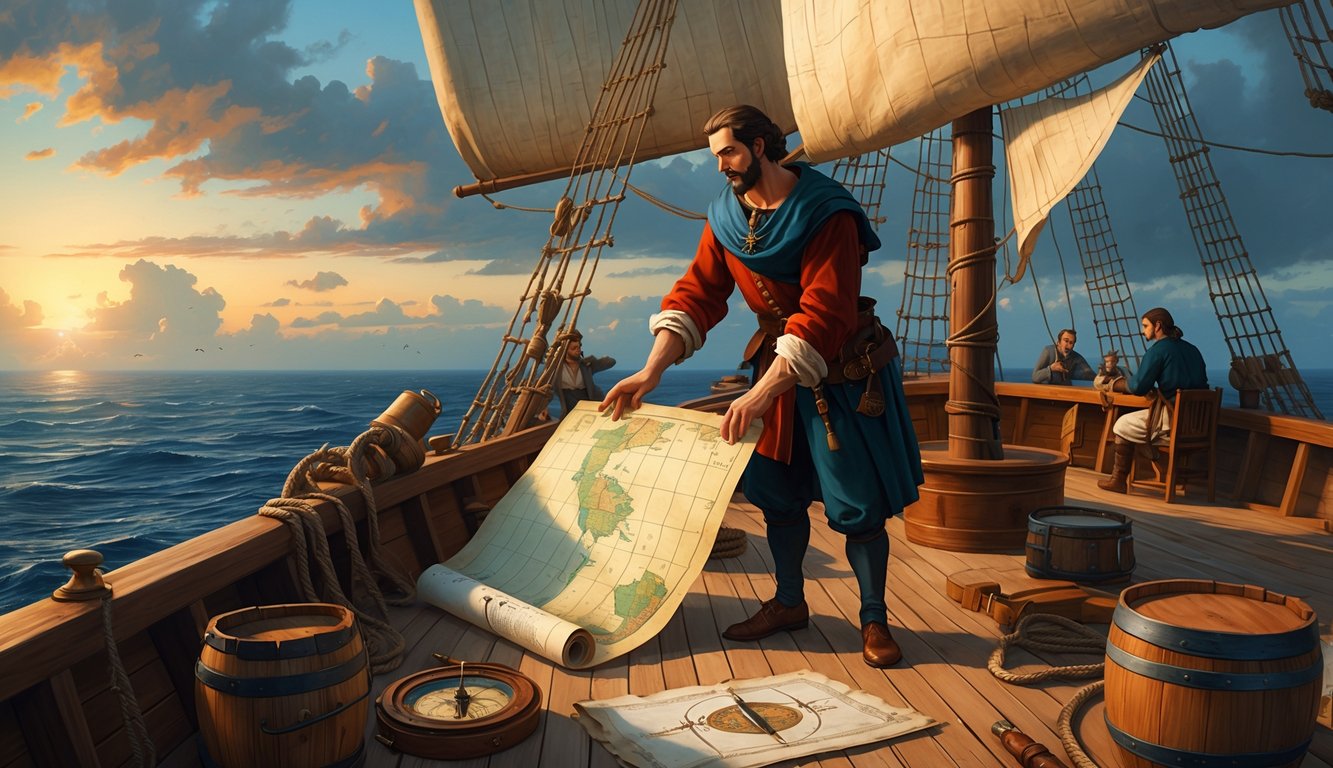
Some historians suggest he may not have come from Genoa, Italy, as commonly believed. Investigators, including those featured in works like Secrets & Mysteries of Christopher Columbus, explore alternate theories about his background, funding sources, and even his final resting place.
These discoveries highlight the people and events that influenced his path across the ocean. Uncovering lesser-known aspects—such as the financiers who backed him, the routes he chose, and the encounters that shaped history—gives new meaning to his voyages.
Unveiling New Facts About Christopher Columbus
Recent studies and historical reviews reveal details about Christopher Columbus that challenge older accounts. Researchers have examined his travels, personal background, and even his remains to better understand his life and legacy.
Recent Discoveries and Controversies
Between 1492 and 1504, Columbus led four voyages across the Atlantic. These expeditions connected Europe with the Caribbean and parts of Central and South America.
Historians now focus on the broader impact of these voyages. Records show they caused lasting changes in trade, culture, and population movement.
Modern debates question how Columbus should be remembered. Some see him as a skilled navigator who opened new routes for exploration, while others highlight the negative effects on Indigenous peoples.
Archaeological and archival researchers continue to adjust the timeline of events. For example, updated maps and ship logs have clarified the routes of his journeys.
This work helps separate facts from myths that developed over centuries.
DNA Evidence and Origins
For many years, most accounts said Columbus was born in Genoa, Italy. Some researchers, however, have proposed other birthplaces.
Spanish scientists analyzed DNA from remains believed to be his. Testing confirmed that bones in a Seville tomb match Columbus, though some fragments may also rest in the Dominican Republic.
These studies aim to compare his genetic profile with living relatives. According to recent reports, results could confirm or challenge the Genoa origin theory.
Genetic work also helps verify the authenticity of historical relics linked to him. This includes hair samples and preserved documents that may hold biological traces.
Debates Over Columbus’s Identity
Columbus’s identity has sparked speculation for centuries. While many historians agree he was a Genoese navigator, some theories suggest he may have come from regions such as Catalonia or Portugal.
Supporters of these ideas point to differences in language use, writing style, and personal records. For example, Columbus never wrote in his native Italian, instead using Spanish and Portuguese.
A documentary investigation has gathered claims from scholars, DNA experts, and even descendants. They argue that political or personal reasons may have led Columbus to hide his origins.
This ongoing debate shows how evidence and interpretation can shape historical identities.
The True Origins of Christopher Columbus
Researchers have debated Christopher Columbus’s background for centuries. They use historical records and modern science to piece together his identity.
New DNA studies and archival evidence bring fresh details to light. These findings challenge long-held beliefs about his birthplace and family.
Genoa or Portugal: The Birthplace Debate
Many historians believe that Columbus was born in Genoa, Italy, based on legal documents and his own statements. In 1498, he wrote that he wished to maintain an estate in Genoa “because from it I came and in it I was born.”
Some researchers point to records suggesting a possible Portuguese origin. Supporters of this theory note similarities between Columbus’s handwriting and Portuguese documents, as well as his early presence in Portugal before sailing for Spain.
Recent DNA analysis compared remains linked to Columbus with living relatives from Genoa and Portugal. While results lean toward Genoese roots, they have not completely ruled out a Portuguese connection.
This keeps the birthplace debate alive for historians and scientists.
Royal Connections and Ancestry
Columbus’s career brought him into close contact with the Spanish monarchy, especially Ferdinand II of Aragon and Isabella I of Castile. These royal patrons funded his voyages.
Some theories suggest his ties to nobility may have gone beyond professional support. Genealogical research has explored whether Columbus descended from lesser-known noble families in the Iberian Peninsula.
Such connections could explain his access to influential circles before his first voyage in 1492. While no proof links him to royal blood, historical letters and court records show he enjoyed privileges rarely granted to foreigners.
This unusual status continues to raise questions about his ancestry and early life.
Jewish Heritage and Family Secrets
A recent Spanish-led DNA study claims that Columbus was of Sephardic Jewish descent from Western Europe. He may have concealed this heritage due to religious persecution during the Spanish Inquisition.
Scientists involved in the project say genetic markers match those found in Sephardic Jewish populations. Historical context supports the possibility.
In 1492, Spain expelled its Jewish population, and many converted or hid their heritage to survive. Columbus’s family may have been among them.
Some researchers suggest he kept his background secret to ensure acceptance at the Spanish court. This new genetic evidence, reported by outlets such as CNN, adds another layer to the complex story of Columbus’s identity.
Financing the Voyages: Behind the Scenes
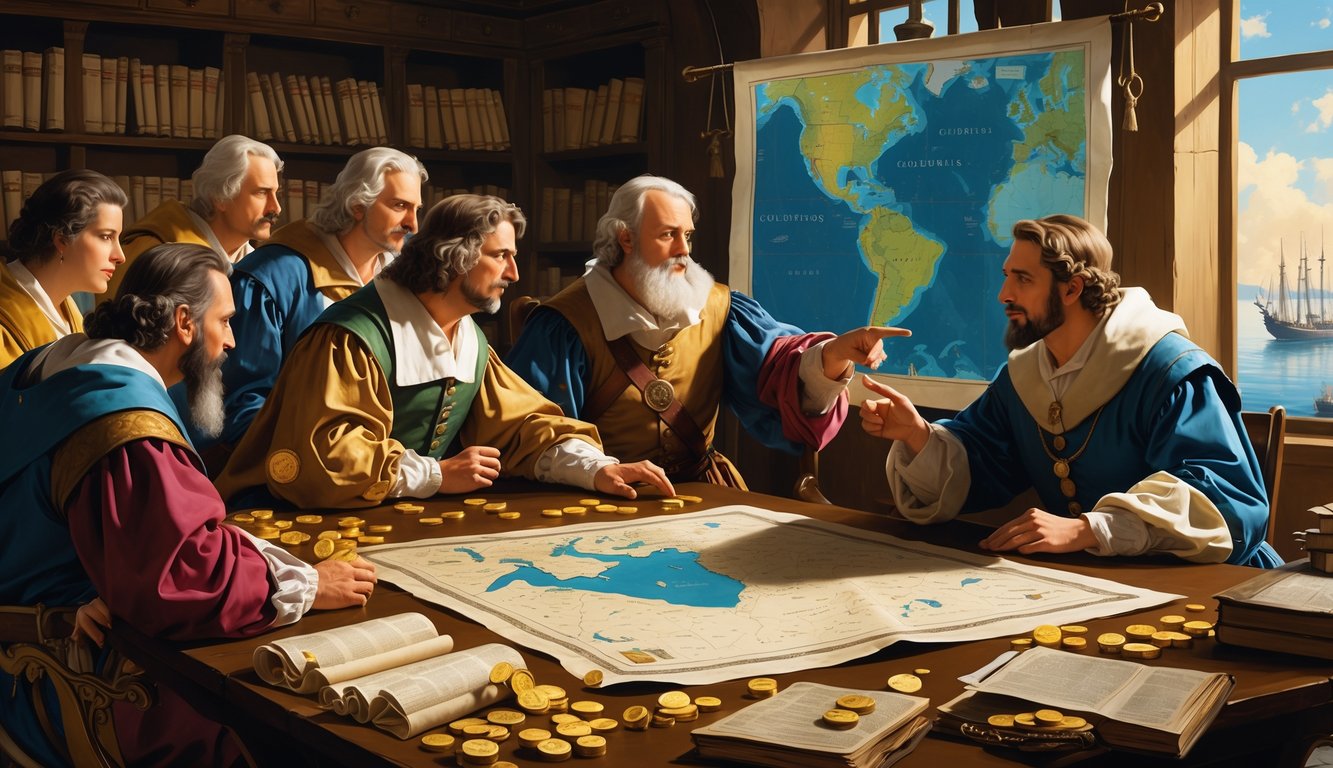
Christopher Columbus faced years of rejection before finding the money to sail west in 1492. He received funding from royal support, personal contributions, and private financiers who saw potential profit in his plan.
Securing Support from the Spanish Crown
Columbus first approached Portugal for backing, but they declined. He then turned to Spain, where he met officials connected to the Spanish Crown.
He spent almost a decade petitioning and meeting with Spanish leaders before they agreed to fund him. His proposal promised new trade routes, potential wealth, and the spread of Christianity.
Spain’s agreement included ships, crew, and supplies in exchange for a share of any profits. Historical accounts state that the Crown granted Columbus titles like Admiral of the Ocean Sea and a percentage of the riches he might bring back.
The Capitulations of Santa Fe formalized the deal and outlined his rights and rewards. This document was critical in making the voyage happen.
Role of King Ferdinand and Queen Isabella
King Ferdinand and Queen Isabella played key roles in Columbus’s success. Isabella made the final decision to support him after initial hesitation.
Ferdinand focused on the political and economic benefits. He saw the voyage as a way to compete with Portugal’s growing influence in overseas trade.
The royal couple financed part of the expedition directly from their treasury. They also authorized the use of ships from the port of Palos, which shipowners provided as part of a penalty settlement owed to the Crown.
Their support was a calculated move to expand Spain’s influence and wealth. The monarchs allowed Columbus to sail under the Spanish flag, giving his mission legitimacy and protection.
Jewish Bankers and Other Backers
The Spanish Crown provided much of the funding, but private financiers also helped. Luis de Santángel, a royal official of Jewish descent, lent money to cover part of the costs.
Santángel quickly advanced funds, helping Columbus prepare for departure without delays. His support was significant because royal finances were stretched thin from the recent war with Granada.
Other backers included merchants and shipowners who hoped for a return on investment through trade in spices, gold, and other goods. These contributions, though smaller than the Crown’s, were essential for outfitting the ships and hiring experienced sailors.
Royal and private funding combined to make the 1492 voyage possible. Political ambition blended with personal risk and financial opportunity.
The Voyages: Ships, Routes, and Discoveries
Christopher Columbus made four transatlantic journeys between 1492 and 1504 under the Spanish flag. He sailed west from Spain aiming for Asia but instead reached islands and coasts in the Caribbean and parts of Central and South America.
His voyages changed European maps and trade forever.
The Santa Maria, Niña, and Pinta
Columbus’s first voyage in 1492 used three ships: the Santa Maria, the Niña, and the Pinta.
The Santa Maria was the largest and served as his flagship. It was a slow, sturdy carrack suited for carrying supplies.
The Niña and Pinta were smaller caravels, faster and easier to handle in unknown waters.
The fleet left Palos de la Frontera, Spain, in August 1492. They crossed the Atlantic following a southern route via the Canary Islands to use the trade winds.
On Christmas Day 1492, the Santa Maria ran aground off Hispaniola. Columbus used its timbers to build a small fort called La Navidad.
The Niña returned to Spain with him in early 1493. The Pinta arrived separately.
| Ship Name | Type | Role in Voyage |
|---|---|---|
| Santa Maria | Carrack | Flagship, cargo carrier |
| Niña | Caravel | Fast, maneuverable |
| Pinta | Caravel | Fast, scouting duties |
First Encounters in the New World
Columbus first sighted land on October 12, 1492, in what is now the Bahamas. He named the island San Salvador.
He met the Taíno people, who lived on several islands in the region. These early meetings involved trading goods such as beads, cloth, and food.
From the Bahamas, he sailed to Cuba, which he believed might be part of Asia. He also explored parts of Hispaniola, noting fertile land and natural harbors.
These encounters marked the first sustained contact between Europeans and the native peoples of the Caribbean. They also set the stage for later Spanish colonization, as described in the voyages of Christopher Columbus.
Exploring Hispaniola, Cuba, and South America
On later voyages, Columbus returned to Hispaniola and established Spanish settlements. He named the main town Santo Domingo, which became the first permanent European colony in the Americas.
He explored the southern coast of Cuba, mapping bays and rivers. He continued to believe he was near the Asian mainland.
In 1498, during his third voyage, he reached the coast of South America near present-day Venezuela. He noted the large rivers and rich vegetation, realizing this land was different from the islands.
By his fourth voyage in 1502, he searched for a passage to the Indian Ocean along Central America’s coast. His travels expanded European knowledge of the Caribbean and nearby continents and influenced future exploration routes.
Encounters with Indigenous Peoples
Christopher Columbus sailed to the Caribbean in 1492 and met the indigenous people living there. He and his crew traded with them, observed their customs, and later used force to get resources and labor.
These events changed how Europeans and native peoples interacted for many years.
Meeting the Taino People
Columbus met the Taíno people on Guanahani island in the Bahamas. The Taíno lived in small villages, grew crops like cassava and maize, and fished in nearby waters.
He described the Taíno as friendly and open to trade. They exchanged parrots, cotton, and food for glass beads and small tools.
Columbus noticed they did not have metal weapons and thought he could easily control them. In his journal, he wrote that he could convert them to Christianity and use them for labor.
Some Taíno guided Columbus to other islands, including Hispaniola. Columbus took others back to Spain, starting a pattern of forced relocation.
Cultural Exchanges and Conflicts
At first, the Taíno and Columbus exchanged goods and ideas. The Taíno showed him foods like sweet potatoes and pineapples and taught him their fishing methods.
Europeans brought iron tools, cloth, and horses. Columbus’s crew often took what they wanted without fair trade.
Disputes broke out when the Spanish seized resources or when Taíno resisted demands. The Spanish tried to replace Taíno spiritual beliefs with their own religion.
This led to tension and mistrust. On some islands, resistance turned violent and villages were destroyed.
Impact on Indigenous Populations
Columbus’s arrival changed life for the indigenous peoples of the Caribbean. The Spanish forced the Taíno to work in fields and gold mines under the encomienda system.
European diseases like smallpox spread rapidly and killed many people who had no immunity. Most of the Taíno population died within a few decades.
The Spanish disrupted traditional farming and fishing. Communities that once supported themselves began to rely on European goods.
These changes started a period of decline for many indigenous peoples in the region.
Columbus and the Columbian Exchange
Christopher Columbus’s voyages in the late 15th century began a large transfer of plants, animals, and diseases between Europe, Africa, and the Americas. This exchange changed diets, economies, and populations on several continents.
The Spread of Smallpox and Other Diseases
When Europeans arrived in the New World, they brought diseases like smallpox, measles, and influenza. Europeans had some immunity to these illnesses.
Indigenous peoples in the Americas had never been exposed to these diseases. Outbreaks spread quickly and killed many people.
In some areas, more than half of the population died within a few years. Smallpox caused fever, rashes, and often death.
Survivors sometimes had permanent scars or lost their sight. The disease spread through contact and contaminated items, making it hard to stop.
Historical accounts describe how entire villages became empty after epidemics. This loss of life disrupted farming, trade, and traditions.
It also made it easier for Europeans to take control of land and resources.
Transformations in Agriculture and Trade
The Columbian Exchange brought new crops and animals to both hemispheres. Europeans brought wheat, sugarcane, and coffee to the Americas.
They also brought horses, cattle, and pigs, which changed farming and transportation. The Americas gave Europe, Africa, and Asia crops like maize, potatoes, tomatoes, and cacao.
Potatoes became a staple food in parts of Europe and helped populations grow. These new goods created new trade networks.
For example, Caribbean sugar plantations sent large amounts of sugar to Europe, which increased demand and helped start the transatlantic slave trade.
Over time, these changes altered diets, economies, and landscapes. People cleared forests for plantations and changed farming methods to suit new crops and animals.
Rival Explorers and Predecessors
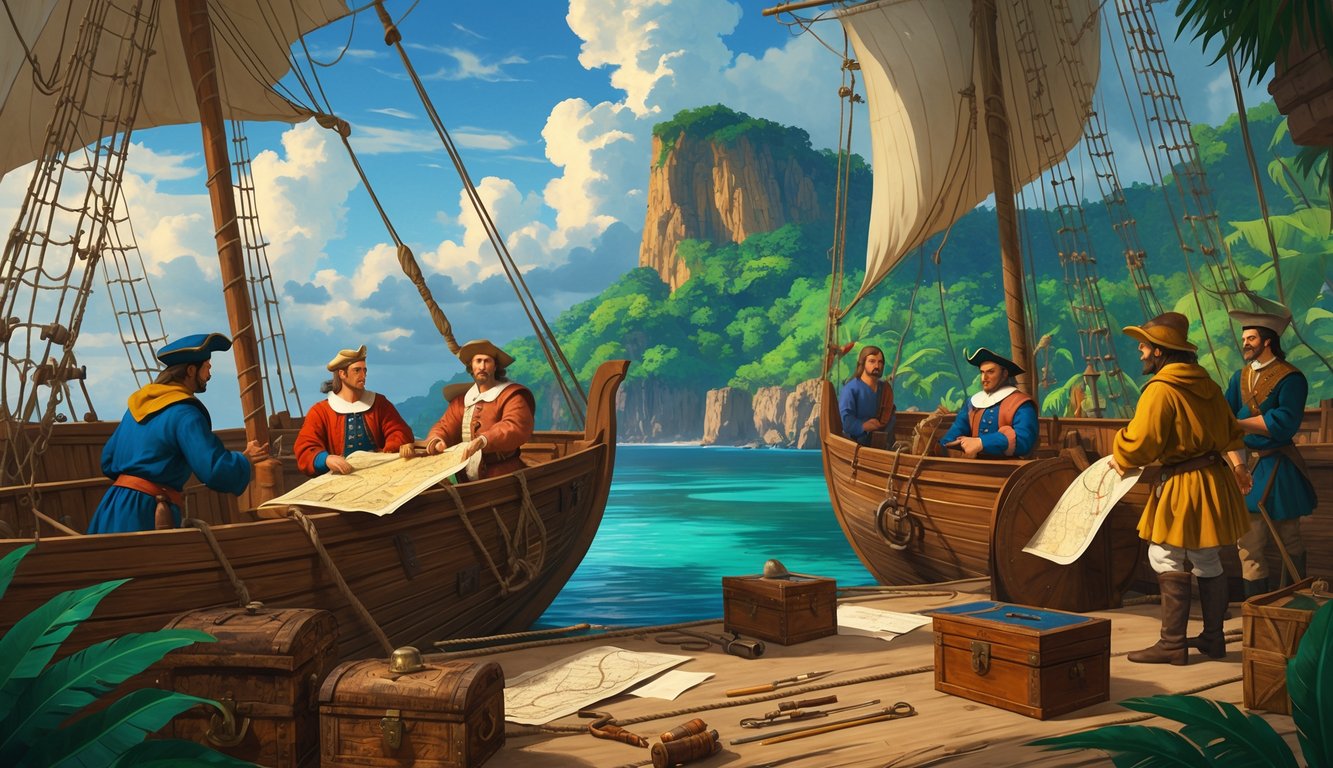
Before Columbus crossed the Atlantic, other explorers had already reached parts of North America. Historical records and archaeological finds show that Norse voyages happened centuries earlier.
Leif Erikson and the Norse Expeditions
Leif Erikson, a Norse explorer from Iceland, reached North America around the year 1000. His father, Erik the Red, started the first Norse settlements in Greenland.
According to sagas, Leif sailed west from Greenland and landed in a place he called Vinland. This area likely included parts of modern-day Newfoundland.
The Norse described Vinland as having wild grapes, mild weather, and good fishing. Norse expeditions were small seasonal journeys for resources and exploration.
Crews traveled across the North Atlantic in ships called knarrs, stopping at places like Baffin Island and Labrador before reaching Vinland.
These voyages prove that transatlantic travel was possible long before Columbus. Norse contact with North America did not result in permanent European settlements.
Newfoundland: Evidence of Earlier Landings
Archaeologists found a Norse settlement at L’Anse aux Meadows in Newfoundland, Canada. This site, dated to around 1000 CE, contains remains of timber buildings, iron nails, and Norse tools.
The site’s layout matches descriptions from Norse sagas, showing it was a base for exploration and gathering resources. The location gave access to good fishing and timber, which Greenland lacked.
Finds at L’Anse aux Meadows prove Norse explorers reached North America centuries before Columbus. The settlement was abandoned after a short time, but it remains the earliest known European presence in the Americas.
Controversies and Criticisms
Christopher Columbus’s actions in the Americas received both praise and criticism during his lifetime. People debated his leadership, treatment of others, and conflicts with the Spanish Crown.
Governance and Treatment of Colonists
Columbus ruled Hispaniola as governor. Spanish settlers reported harsh discipline and physical punishments for minor offenses.
Some colonists accused Columbus and his brothers of ruling by fear. Complaints reached the Spanish Crown, and officials investigated.
Witnesses said disputes over food, gold, and land increased under his rule. Tension between settlers and the administration led to unrest.
Enslavement and Its Legacy
Columbus ordered the capture and transport of Indigenous people to Spain as slaves. This began soon after his first voyages and continued in later expeditions.
Historical records show that Spanish crews took hundreds of Taíno men, women, and children from the Caribbean. Many died during the voyage due to poor conditions.
These actions helped start forced labor systems in the Americas. Supporters said it funded further exploration, but modern historians note the heavy human cost.
Loss of Titles and Arrest
By the late 1490s, unrest among colonists and disputes with royal officials hurt Columbus’s reputation. The Spanish Crown sent Francisco de Bobadilla to investigate.
Bobadilla arrested Columbus and his brothers in 1500. Authorities sent them back to Spain in chains, accused of mismanagement and abuse.
King Ferdinand and Queen Isabella later freed Columbus and restored some honors, but they did not return his governorship. Columbus permanently lost his titles of “Viceroy” and “Governor.”
Columbus’s Legacy and Modern Perspectives
Public opinion about Christopher Columbus has changed as more people learn about the effects of his voyages on Indigenous communities. These changes affect national holidays, monuments, and education.
Columbus Day vs. Indigenous Peoples’ Day
Columbus Day became a U.S. federal holiday in 1937 to honor his 1492 voyage. Many Italian Americans have viewed it as a celebration of their heritage.
In recent decades, several states and cities replaced or added Indigenous Peoples’ Day to recognize the history and strength of Native peoples. This shift reflects more awareness of the violence, forced labor, and disease that followed European arrival.
Some places, like South Dakota and Maine, only observe Indigenous Peoples’ Day. Others, such as New York, celebrate Columbus Day but also hold events for Indigenous communities.
| State | Holiday Observed | Year Adopted Change |
|---|---|---|
| Maine | Indigenous Peoples’ Day only | 2019 |
| South Dakota | Native Americans’ Day only | 1990 |
| New York | Columbus Day (with Indigenous events) | N/A |
| Alaska | Indigenous Peoples’ Day only | 2017 |
Debates Over Commemoration
Public monuments of Columbus have sparked heated debates. Supporters say these statues honor exploration and the connection between Europe and the Americas.
Critics highlight Columbus’s role in colonization and the suffering of Indigenous peoples. Some cities have removed or moved statues after protests.
Questions about Columbus’s character go back to his lifetime, including disputes with Spanish officials and resistance from the Taíno. Modern discussions often bring up the same concerns.
The debate also affects parades and festivals. Some communities keep traditional celebrations, while others change events to include Indigenous history and culture.
Changing Views in Education and Culture
Schools in the U.S. now include both Columbus’s achievements and the negative impacts of his voyages. Many textbooks discuss the Columbian Exchange and the displacement of Native peoples.
Museums and cultural groups present more balanced exhibits. They often include Indigenous voices to explain how European arrival changed their societies.
Columbus’s voyages inspired other explorers like Hernán Cortés and Francisco Pizarro, who also changed the Americas. Including these figures helps students understand the wider effects of exploration.
Films, books, and public talks now highlight Indigenous perspectives. This shift encourages a more complete understanding of the past and moves away from a single heroic story.
The Final Years and Resting Place of Columbus
In his last years, Christopher Columbus faced illness and political disputes. He also struggled with uncertainty about his legacy.
People continued to debate the location of his remains for centuries.
Later Life and Death
Columbus spent his later years trying to regain the titles and wealth the Spanish Crown had promised him. After his fourth voyage in 1504, he returned to Spain in poor health.
He lived mostly in Seville and suffered from gout and arthritis. He asked King Ferdinand to restore his privileges, but he only had partial success.
On May 20, 1506, Columbus died in Valladolid, Spain, at about 54 years old. People buried him without much ceremony because his reputation had already begun to fade.
Mystery of His Remains
Columbus’s remains changed locations several times. Historical records show that people first moved them from Valladolid to Seville.
Later, they reportedly sent his remains to Hispaniola (present-day Dominican Republic) and placed them in the cathedral of Santo Domingo. When Spain lost control of the island in 1795, people said the remains were taken to Havana, Cuba, and then later returned to Seville.
Modern forensic work, including DNA testing, shows that some of his bones are in Seville Cathedral. The Dominican Republic still claims to hold part of his remains in Santo Domingo.
Ongoing Debates Over Burial Sites
Seville and the Dominican Republic continue to dispute the final resting place of Columbus. Scientists in Seville analyzed bone fragments and matched them to Columbus’s known relatives.
Officials in the Dominican Republic use historical evidence to support their claim. They insist that the remains in Santo Domingo never left the island and display a large tomb in the Columbus Lighthouse monument as proof.
Visitors find two major sites connected to Columbus’s memory: the Seville Cathedral in Spain and the Columbus Lighthouse in the Dominican Republic. Each site shares its own story about the explorer’s final journey.