The Caribbean has a long history of shipwrecks, hidden coves, and coastal hideouts where pirates once stored their loot. Spanish galleons often carried gold, silver, and jewels between the Old World and the New.
Today, you can still explore real sites where pirate treasure was lost, buried, or sunk beneath the waves.
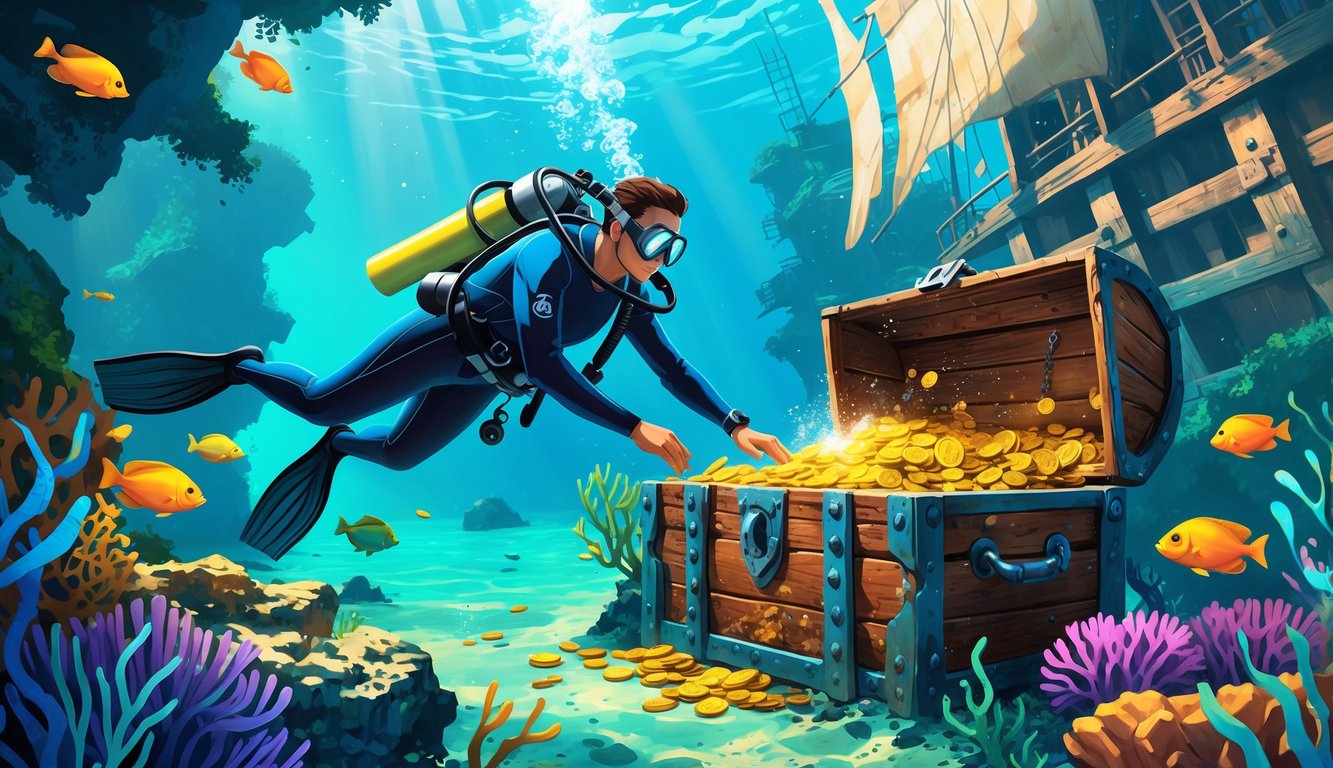
Stories about Captain William Kidd’s buried plunder and centuries-old shipwrecks scattered along the seafloor fill the region with history and adventure. Divers and archaeologists have uncovered some finds, while others remain untouched, waiting for discovery.
Treasure hunters in the Caribbean can explore coral-covered cannons, weathered chests, and relics from the Golden Age of Piracy. With the right gear, knowledge, and respect for local laws, they can follow in the footsteps of infamous seafarers.
The Allure of Pirate Treasure in the Caribbean
The Caribbean saw real pirate activity, shipwrecks, and hidden caches of gold and silver. Spanish galleons that sank during storms or pirate attacks left behind valuable cargo that still attracts explorers.
Legends and Lore of Buried Booty
Stories of buried treasure often mix fact with fiction. Pirates sometimes hid loot on remote islands or in caves to avoid capture, but most stashes were quickly recovered.
Tales like those in Treasure Island by Robert Louis Stevenson shaped the image of a lone pirate digging on a beach at night. The book, though fictional, drew from real Caribbean history and pirate legends.
Some sites, such as those in legends of lost pirate treasure in the Caribbean Sea, describe hidden chests buried under sand or stone. These stories fuel tourism and inspire treasure hunts, even if actual finds remain rare.
The Role of Pirates in Caribbean History
During the 17th and 18th centuries, pirates thrived in the Caribbean’s busy shipping lanes. They targeted merchant and treasure ships moving between the Americas and Europe.
Blackbeard and Calico Jack became infamous for their attacks and ability to evade capture. Their actions disrupted trade and challenged colonial powers.
The many islands, coves, and reefs in the Caribbean provided perfect hiding places for ships and stolen goods. Pirates used these spots to store or bury treasure until they could sell or trade it.
Famous Pirate Tales and Inspirations
Real-life events inspired fictional works and modern treasure hunts. Stevenson’s Treasure Island drew on stories about pirates like William Kidd, who was rumored to have buried gold.
In recent years, shows like Caribbean Pirate Treasure have followed explorers searching for wrecks and artifacts linked to pirate legends. These expeditions combine diving, history, and local stories to track down possible treasure sites.
Divers have recovered coins, weapons, and ship parts from wrecks. Each discovery adds to the understanding of pirate life and the maritime history of the Caribbean.
Real-Life Pirate Treasures: Fact Versus Fiction
Books and movies have created many stories about pirate treasure. While some cases of hidden loot are real, most pirates handled their plunder in practical ways that left little behind for modern treasure hunters.
Separating Myth from Reality
Most pirates did not bury treasure. They usually kept stolen goods on their ships until they could sell or trade them.
Crews often divided gold and silver soon after capture. The idea of a pirate drawing a map and hiding a chest on a deserted island comes mostly from fiction.
Historians say buried pirate treasure was rare, and treasure maps were even rarer. Captain Kidd and a few others may have hidden valuables, but these cases were exceptions.
Most loot included perishable items like food, cloth, or rum, making it pointless to bury them.
Historical Accounts of Buried Booty
Some documented cases of hidden wealth involve shipwrecks rather than secret land caches. Spanish galleons carrying gold from the Americas to Europe sometimes sank in storms, leaving cargo on the ocean floor.
Treasure hunters in the Caribbean often target these wrecks. Many finds include coins, jewelry, and trade goods lost at sea.
Wrecks found near the Bahamas and Florida Keys have yielded silver coins and gold bars. Most of these belonged to former merchant or naval ships, not pirate vessels.
Influence of Treasure Island on Popular Belief
The image of a one-legged pirate with a treasure map marked “X” comes mainly from Treasure Island. Robert Louis Stevenson’s 1883 novel popularized the idea of a buried chest guarded by clues and danger.
Before this book, buried treasure was not central to pirate lore. Stevenson used the idea as a plot device, and it became a lasting part of popular culture.
Movies, TV shows, and games have repeated this version of events. Many now believe that real pirates often hid their gold, though historical evidence says otherwise.
Legendary Pirates and Their Hidden Hoards
Some of the most famous pirate treasures are tied to real historical figures. These caches, whether buried on remote islands or lost at sea, have inspired treasure hunters for centuries.
Captain Kidd’s Lost Fortune
Captain William Kidd, a Scottish privateer turned pirate, died in 1701 after authorities executed him for piracy and murder. Before his capture, he reportedly hid part of his loot along the American coastline.
One famous claim places a stash on Gardiners Island near Long Island, New York. Authorities recovered some gold, silver, and jewels there, but many believe much more remains undiscovered.
Legends suggest Kidd’s hidden wealth may be scattered across the Caribbean and even in Madagascar. His story is one of the few with documented finds, fueling theories that more treasure is still out there.
For more details, see this overview of Captain Kidd’s fortune.
Blackbeard’s Elusive Booty
Edward Teach, known as Blackbeard, terrorized the American coast and the Caribbean in the early 1700s. Despite his reputation, no confirmed hoard has ever been found.
He often anchored near Ocracoke Island in North Carolina, where he died in 1718. Some believe he buried gold and valuables along the coastline before his final battle.
Others think his treasure lies in the wreck of his flagship, Queen Anne’s Revenge, which sank near Beaufort Inlet. Archaeologists have recovered weapons and artifacts from the site, but no large store of gold or silver.
You can read more about Blackbeard’s hidden loot and ongoing searches for it.
Calico Jack Rackham and His Crew
John “Calico Jack” Rackham is remembered more for his crew than for vast treasure hauls. His ship, the Revenge, was home to two famous female pirates—Anne Bonny and Mary Read.
Rackham operated mainly in the Bahamas and around Jamaica during the early 18th century. Records show he captured several small merchant vessels, but there is little evidence of a massive fortune.
Some accounts suggest he may have hidden small amounts of loot on cays in the Caribbean. These would likely include coins, trade goods, and weapons rather than large stores of gold.
Find more about Calico Jack Rackham’s exploits and his crew’s adventures.
Infamous Shipwrecks and Sunken Riches
Valuable shipwrecks in the Caribbean still rest beneath the sea, holding gold, silver, and artifacts from centuries past. Some carried royal treasure from the New World, while others belonged to pirates who plundered trade routes before they met their fate.
Spanish Galleons and Their Treasures
Spanish galleons were large, heavily armed ships that transported gold, silver, and precious goods from the Americas to Spain. These vessels often sailed in fleets for protection.
The Nuestra Señora de Atocha sank in 1622 off the Florida Keys during a hurricane. Divers later recovered millions in coins, emeralds, and jewelry.
Many galleons were lost during the 1600s and 1700s due to storms or attacks. Their cargo often included:
| Cargo Type | Origin |
|---|---|
| Gold & Silver | Peru, Mexico |
| Emeralds | Colombia |
| Spices & Porcelain | Asia via Manila |
Some wrecks remain undiscovered. Modern treasure hunters use maps, sonar, and diving gear to search for them.
The Whydah: Pirate Ship Turned Legend
The Whydah began as a slave ship before pirate captain Samuel “Black Sam” Bellamy captured it in 1717. It became his flagship, loaded with plunder from more than 50 captured vessels.
That same year, the Whydah sank in a storm off Cape Cod, taking Bellamy and most of his crew with it. Archaeologists discovered the wreck in 1984 and recovered thousands of artifacts, including gold coins, weapons, and personal items.
The Whydah is the only fully authenticated pirate shipwreck ever found. Its discovery has helped historians learn about pirate life, ship construction, and trade in the early 18th century.
Other Notable Caribbean Shipwrecks
The Caribbean holds many other famous wrecks, each with its own story. The Queen Anne’s Revenge, once commanded by Blackbeard, ran aground near North Carolina in 1718 and has yielded cannons, tools, and navigational instruments.
The San José, a Spanish galleon sunk in 1708 near Colombia, reportedly carried gold and silver worth billions today.
Some wrecks, like the Nossa Senhora do Cabo, remain partly unexplored. These sites continue to draw interest from historians and treasure hunters.
Diving for Pirate Booty: Underwater Adventures
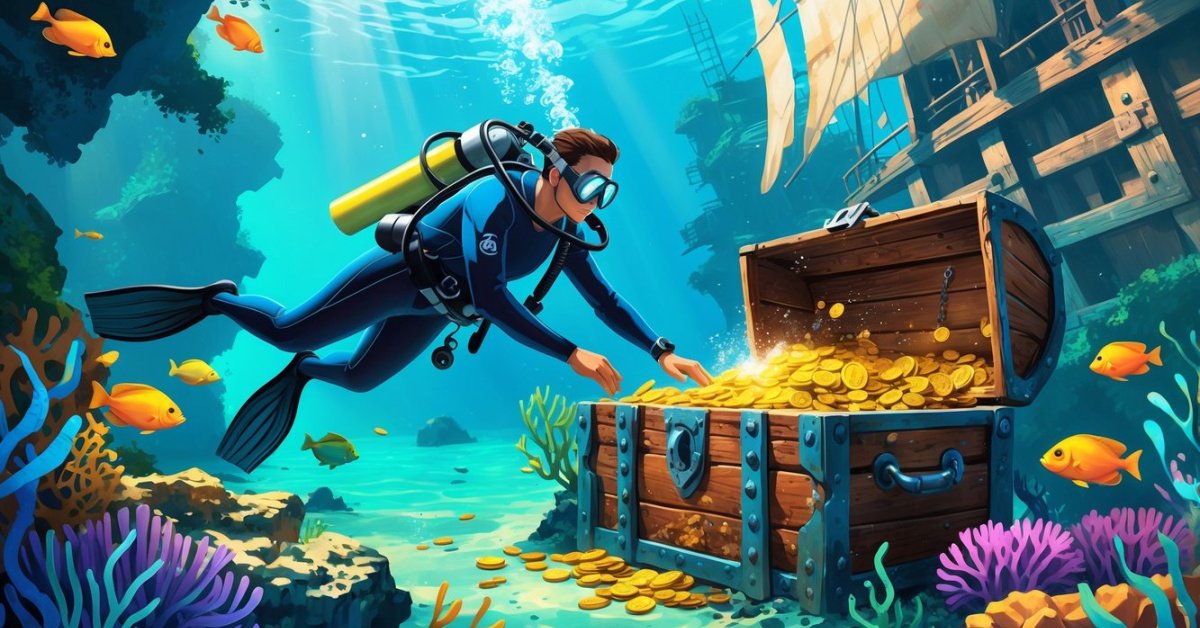
Treasure seekers explore warm Caribbean waters where shipwrecks rest on the sea floor. These dives can reveal coins, tools, and artifacts left behind by 18th-century pirates and merchant ships.
Calm seas, clear visibility, and rich marine life make the search both challenging and rewarding.
Popular Diving Spots for Treasure Hunters
Many divers visit the Bahamas, especially near Nassau, once a pirate stronghold. The area’s shallow reefs and historic wrecks attract both beginners and experts.
Off the coast of the Cayman Islands, organizers run events like the Underwater Treasure Hunt. Participants search for hidden prizes among coral formations.
In the Dominican Republic, divers can explore sites such as the wreck of the Nuestra Señora de Guadalupe. These sites reveal glimpses of colonial trade routes.
Some divers choose less tourist-heavy spots like the waters near Tortuga in Haiti. These areas may hide shipwrecks that no one has fully documented yet.
Tip: Always check local regulations before removing any artifacts. Many sites are protected by law.
Essential Gear and Safety Tips
Treasure diving needs more than swimming skills. Divers usually use scuba gear with tanks, regulators, and buoyancy control devices.
Waterproof metal detectors help find coins or tools buried in sand. A sturdy dive knife cuts fishing lines or rope.
Gloves protect hands from sharp coral or rusted metal.
Safety comes first. Divers should always:
- Check weather and tide conditions.
- Dive with a buddy.
- Monitor their air supply.
Training in underwater navigation helps divers avoid getting lost near large wrecks. Many treasure-rich sites have strong currents, so physical fitness is important.
Snorkeling Versus Scuba Diving
Snorkeling lets people explore shallow wrecks and reefs without heavy equipment. It costs less and needs little training.
However, snorkeling limits how deep and how long someone can search.
Scuba diving allows longer exploration of deeper shipwrecks where many artifacts rest. It requires certification, more gear, and careful planning.
For beginners, snorkeling near shore can reveal small finds like shells or decorative items planted for events.
Serious hunters often use both methods. They snorkel to scout an area before committing to a full dive.
Some events, like the Cayman Islands treasure hunts, welcome both snorkelers and scuba divers. This makes the search accessible to many participants.
Famous Treasure Discoveries in the Caribbean
Divers have found many of the Caribbean’s most valuable treasures in shipwrecks from the age of Spanish galleons. These discoveries often took years of searching and careful diving.
San José: The Holy Grail of Shipwrecks
The Spanish galleon San José sank in 1708 near Colombia while carrying gold, silver, and emeralds from the Americas to Spain. British warships attacked the ship during the War of the Spanish Succession, and it exploded before sinking.
In 2015, Colombia announced that it had discovered the wreck. Experts believe its cargo could be worth billions, though exact figures remain debated.
The treasure includes coins, bullion, and precious stones. Ownership of the San José is still contested between Colombia, Spain, and private salvage companies.
The site lies deep underwater, so recovery is complex and costly. Over a century of storms and currents has scattered the wreck across the seabed.
The Nuestra Señora de Atocha Find
A hurricane sank the Nuestra Señora de Atocha in 1622 near the Florida Keys. The ship carried gold, silver, copper, and valuable gems from the New World.
In 1985, treasure hunter Mel Fisher and his team found the wreck after 16 years of searching. The find included over 40 tons of gold and silver, along with thousands of emeralds.
Much of the treasure is now displayed in museums. Some pieces were sold to fund further exploration and legal costs.
Modern-Day Treasure Hunting Success Stories
Today, new underwater scanning and diving gear help divers find more treasures across the Caribbean. Divers have uncovered gold coins, silver ingots, and artifacts from pirate ships and merchant vessels.
Wrecks from the Golden Age of Piracy have yielded small caches of coins and weapons. Storms sometimes expose long-buried debris in shallow coastal waters.
Some expeditions focus on historical research to find likely wreck sites. Others partner with governments to preserve and display recovered artifacts instead of selling them privately.
Golden Age of Piracy: Setting the Stage for Treasure
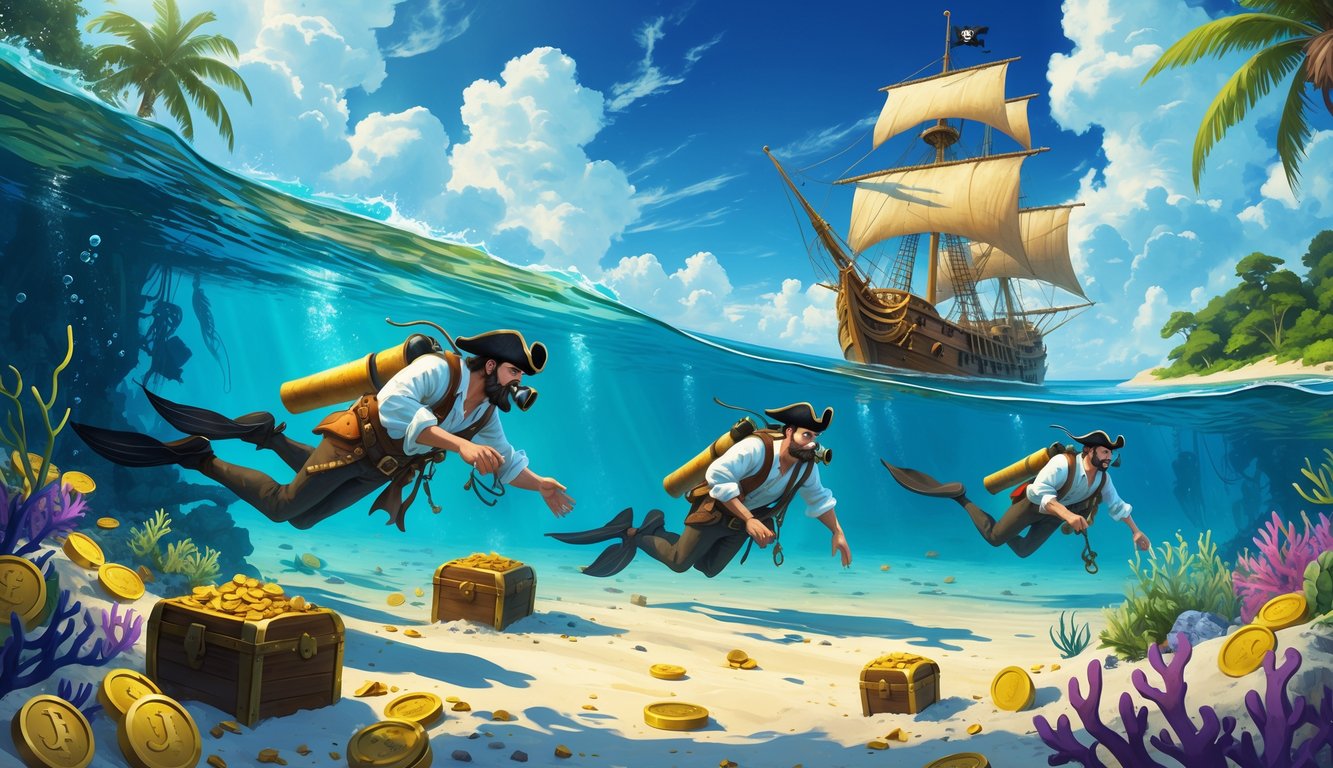
During the late 1600s and early 1700s, the Caribbean became a hotspot for piracy. Trade routes carried gold, silver, and goods between Europe and the Americas, making these waters a prime target for pirates.
Weak naval patrols and scattered islands gave pirate crews both opportunity and cover.
Why the Caribbean Was a Pirate Haven
The Golden Age of Piracy (about 1650–1726) saw pirates thrive in the Caribbean because of busy shipping lanes. Spanish treasure fleets carried silver from the Americas, while other European nations shipped sugar, rum, and tobacco.
Hundreds of islands and hidden coves made it easy to hide ships and avoid capture. Shallow waters kept large naval vessels away, giving smaller pirate ships an advantage.
European powers were often at war, so fewer ships protected merchant vessels. Privateers who had worked during wars often turned to piracy when peace left them without work.
For more historical detail on how these conditions came together, see the Library of Congress guide on the Golden Age of Piracy.
Notorious Pirate Havens and Hideouts
Several ports sheltered pirates. Port Royal in Jamaica was one of the most notorious, offering taverns, ship repair, and a market for stolen goods.
Nassau in the Bahamas served as a pirate republic in the early 1700s, attracting figures like Blackbeard and Charles Vane.
Other hideouts included Tortuga off Haiti and remote cays in the Bahamas. These locations let pirates resupply, repair ships, and sell plunder with little interference from authorities.
Many of these havens operated between legality and crime. Local governors sometimes ignored pirates in exchange for bribes or a share of the loot.
You can read more about how pirates used such ports in this overview of Caribbean piracy.
Economic Impact of Piracy
Piracy disrupted trade across the Caribbean and beyond. Merchant losses included treasure and goods like sugar, spices, and textiles.
These attacks raised shipping costs and forced nations to send more naval patrols.
Local economies in pirate-friendly ports often benefited. Merchants and tavern owners profited from supplying crews, and stolen goods entered local markets at low prices.
However, risky ports sometimes lost trade partners, and colonial governments faced pressure from Europe to crack down.
For a closer look at how plunder was divided and sold, see this breakdown of treasure and booty in the Golden Age of Piracy.
How to Start Your Own Pirate Treasure Hunt
Finding pirate treasure takes more than a shovel and a dream. Hunters need accurate information, permission to search, and methods that protect both history and the environment.
Researching Pirate Legends and Maps
Many real pirate legends connect to specific islands, coves, and trade routes in the Caribbean. Hunters often start by studying historical records, ship logs, and maritime maps from the 17th and 18th centuries.
Old maps sometimes turn up in archives, museums, or digital collections. Some treasure maps are genuine navigational charts, while others are fictional or altered to mislead rivals.
Cross-checking stories with archaeological surveys and shipwreck databases can help. Guides like this pirate treasure hunt planning resource show how maps can help create accurate search routes.
Keeping detailed notes of each location’s history, past searches, and environmental conditions can save time and avoid dead ends.
Legal Considerations and Permits
Most Caribbean nations protect buried treasure and shipwreck artifacts with local heritage laws. Many governments require permits before digging, diving, or metal detecting.
Some areas are marine parks or protected archaeological zones where treasure hunting is banned. Authorities often fine hunters or confiscate finds if they break these rules.
Contact the relevant cultural heritage department before planning a search. They can provide maps of restricted zones and explain how to apply for legal permission.
In some cases, treasure hunters work under agreements to give a portion of recovered items to the state or a museum.
Responsible Treasure Hunting Practices
Responsible hunters preserve history instead of damaging it. They avoid disturbing coral reefs, seagrass beds, or historical structures.
When excavating or diving, they use tools that minimize harm to the site. Recording the location and condition of each find helps archaeologists understand its context.
Hunters should remove trash and debris, even if it is not part of the treasure. This keeps the area safe for wildlife and future explorers.
Sharing discoveries with local museums or heritage groups helps the public study and appreciate pirate treasure rather than lose it to private collections.
Pirate Culture and Lasting Legacy in the Caribbean
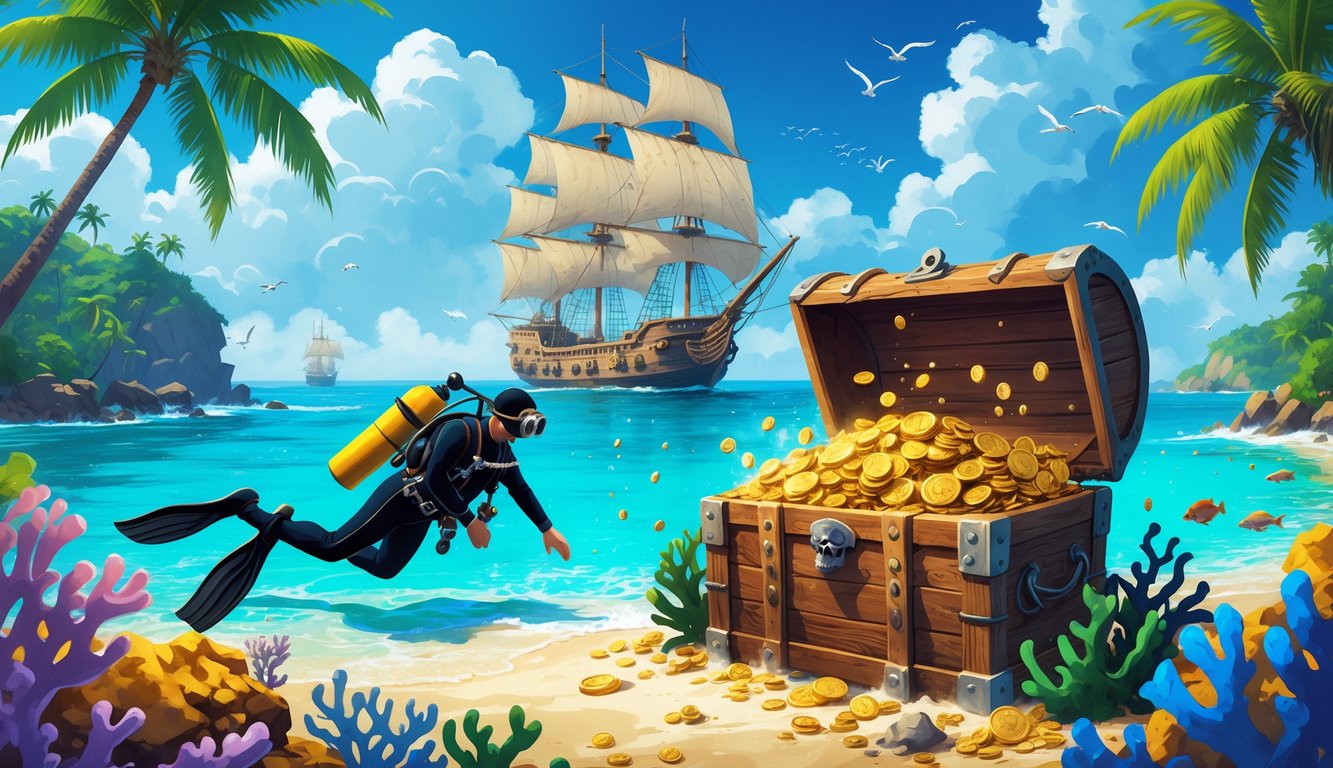
Pirates left more than wrecked ships and stolen goods in the Caribbean. Their history shapes local events, attractions, and stories that still draw visitors from around the world.
Towns and islands use this past to share heritage and support tourism.
Influence on Caribbean Festivals and Tourism
Many islands host festivals that celebrate pirate history with costumes, music, and reenactments. In the Cayman Islands, the annual Pirates Week Festival brings parades, street dances, and mock “invasions” that attract locals and tourists.
These events often feature traditional food, local crafts, and boat races. Visitors get a chance to experience island culture and learn about the region’s past.
Some destinations, such as Nassau in the Bahamas, build tourism campaigns around their pirate-era stories. Guided tours take visitors to former pirate hideouts and beaches once used for smuggling.
Festivals and themed tours help preserve historical knowledge for future generations. The mix of history and celebration keeps pirate lore alive in a way that is accessible and engaging.
Pirate Museums and Attractions
Several Caribbean islands operate museums dedicated to pirate history. The Pirates of Nassau Museum in the Bahamas offers life-size ship replicas, interactive exhibits, and artifacts from the Golden Age of Piracy.
In Jamaica, visitors can explore Port Royal, once called the “wickedest city on earth,” before much of it sank in an earthquake. Guided tours explain how pirates, merchants, and sailors shaped its history.
Some attractions focus on shipwrecks and treasure finds. Certain museums in the region display recovered coins, weapons, and navigation tools from Spanish galleons.
These sites combine education with hands-on experiences, making history more memorable. They also give context to the legends told in books and films by grounding them in real events and objects.
Modern Interpretations in Literature and Media
Books, television, and movies continue to feature pirate stories. Many authors and filmmakers mix real history with fiction, as seen in adaptations of Treasure Island and stories about Blackbeard.
Modern novels and travel features explore the influence of pirates on Caribbean culture. These works combine facts with local legends and keep the topic interesting for new readers.
Television documentaries show shipwreck discoveries and treasure hunts. These programs attract people who enjoy adventure and archaeology.
Pirate culture appears in many types of media and sparks curiosity about the Caribbean’s past.
Tips for Planning a Caribbean Treasure Diving Adventure
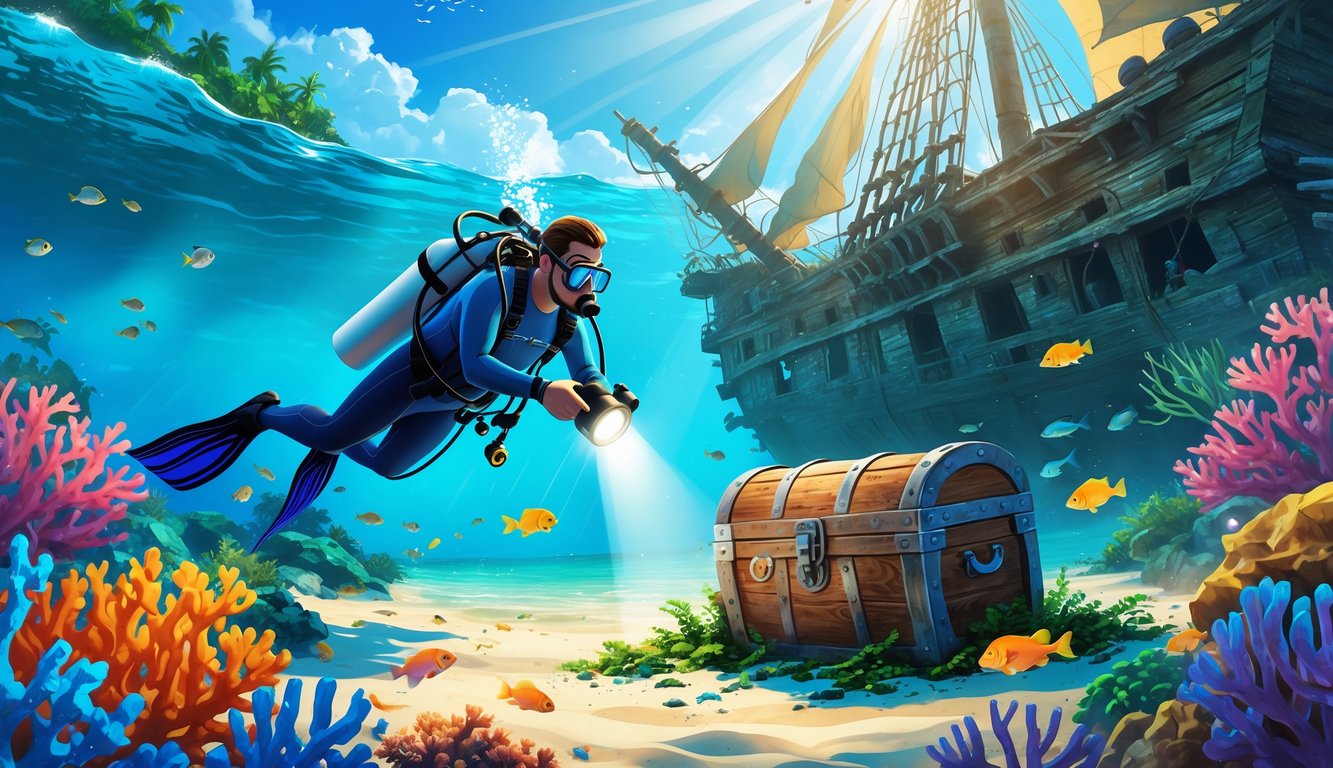
The Caribbean has warm waters, clear visibility, and many shipwrecks. Divers and treasure hunters visit for these reasons.
Travelers should pick the right location, work with experienced guides, and follow safety and environmental rules.
Choosing the Best Islands for Treasure Diving
Some Caribbean islands have more pirate history and shipwreck sites than others. Nassau in the Bahamas has a strong pirate past and offers shallow wrecks for beginners.
St. Barts features quiet coves where metal detecting and amateur exploration are popular.
For deeper dives, the Cayman Islands and Dominican Republic have wrecks with historical artifacts. The clear waters help divers spot items easily.
When choosing a location, travelers should check:
| Factor | Why It Matters | Example Islands |
|---|---|---|
| Water clarity | Improves visibility for spotting objects | Cayman Islands |
| Depth of sites | Matches diver skill level | Bahamas (shallow), Grenada (deep) |
| Historical activity | Increases chance of finds | St. Barts, Nassau |
Guided Tours and Local Experts
Local dive operators help visitors stay safe and find shipwrecks. Many guides know where the wrecks are and help guests avoid restricted areas.
In Nassau, guided treasure hunts combine diving with stories about history. In Grenada, licensed dive shops arrange trips to sites like the Bianca C shipwreck.
Local experts can:
- Provide gear for wreck and treasure diving
- Offer tips for finding small artifacts
- Make sure visitors follow local laws on artifact removal
Travelers should choose operators with good safety records.
Travel Safety and Environmental Responsibility
Travelers should research weather and sea conditions before booking. Hurricane season, from June to November, can make diving dangerous.
Check local forecasts and follow guide instructions for safety.
Environmental care is important. Divers should avoid touching coral or stirring up sediment.
Do not remove items without permission. Some wrecks are protected heritage sites, and disturbing them can lead to fines.
If you are not certified in scuba, try snorkeling near wreck sites as a low-impact alternative. This lets visitors enjoy marine life and history without harming underwater ecosystems.