Death Ranch sits on a remote property in Texas and has a chilling reputation. Strange cattle deaths and unexplained events attract investigators and locals.
In “Round-Up at Death Ranch,” the Expedition X team investigates whether the cause is natural, predatory, or something stranger.
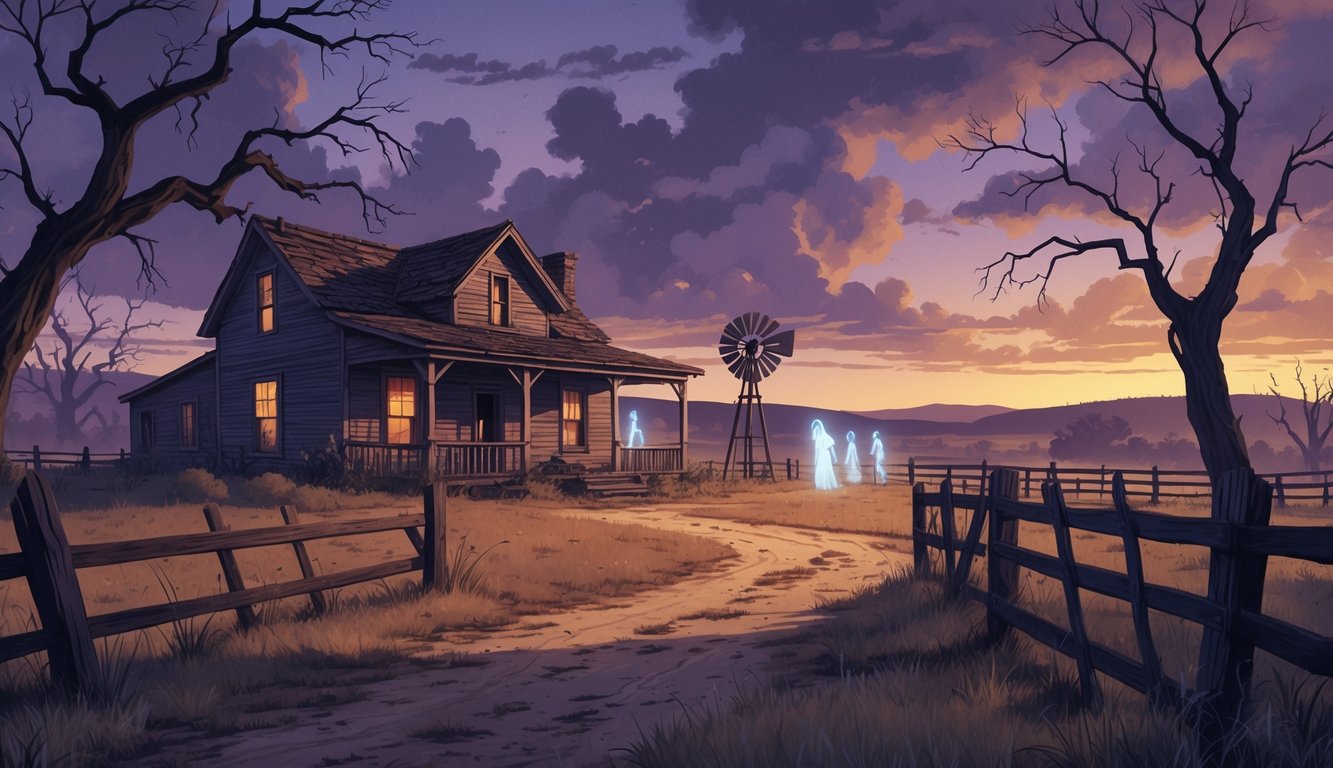
Josh Gates sends Jessica Chobot and Phil Torres to explore the mystery. They use their skills to follow every lead.
Jessica and Phil examine physical evidence and talk with people living nearby. They try to piece together what’s happening on the ranch.
The investigation looks beyond the land and considers similar cases in the Pacific Northwest.
Bizarre cattle mutations raise more questions. The team faces the possibility of predators, human interference, or unexplained forces.
They mix science, fieldwork, and local stories. This approach makes the case one of the show’s most intriguing, as seen in Round-Up at Death Ranch.
Overview of Round-Up at Death Ranch
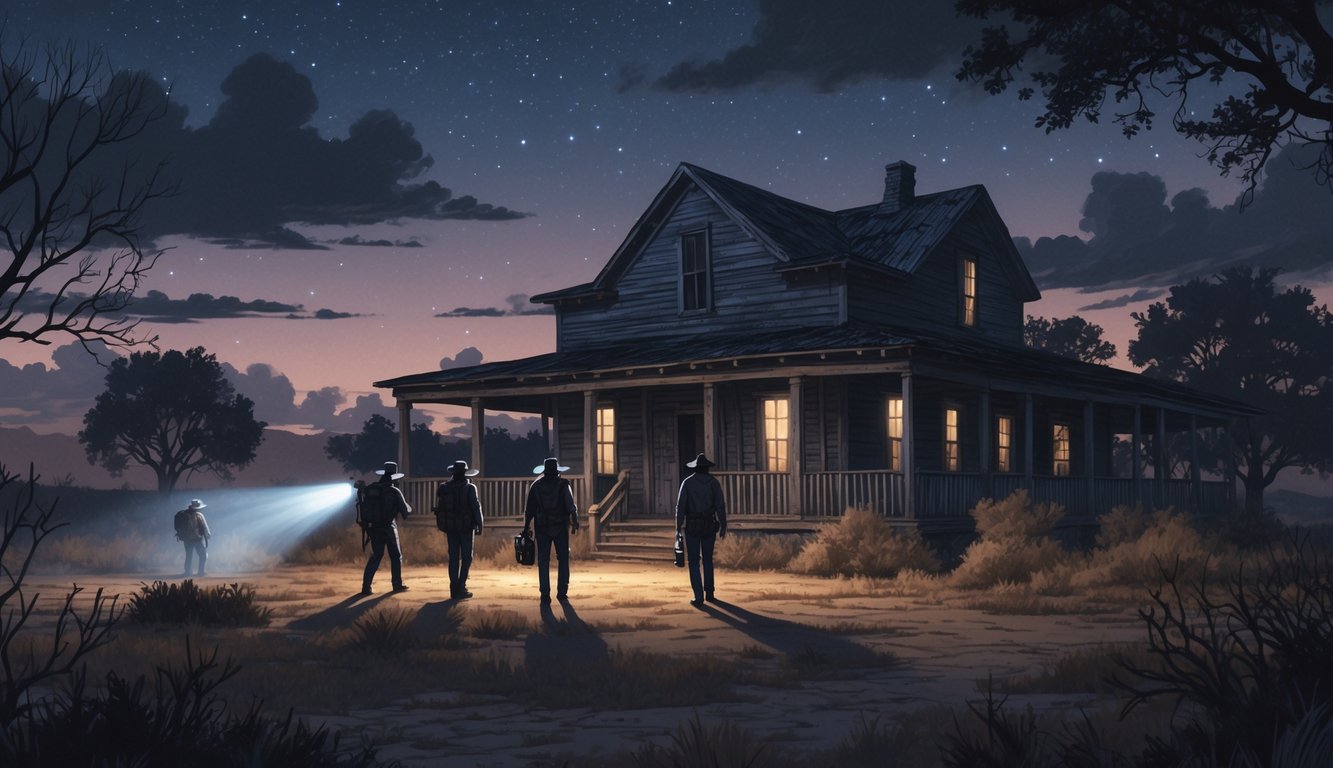
The 2020 Expedition X episode “Round-Up at Death Ranch” follows an investigation into unusual cattle deaths and strange activity. The team looks at evidence, local reports, and environmental factors to understand what is happening.
Episode Synopsis
In this Season 2 episode, host Josh Gates sends Jessica Chobot and Phil Torres to a ranch in the Pacific Northwest after reports of bizarre cattle mutilations.
The team speaks with ranchers, examines carcasses, and collects samples. They use night vision cameras and motion sensors to watch for predators or intruders.
Suspected causes include apex predators and human involvement. The investigation blends fieldwork with interviews and gives viewers a step-by-step look at the process.
For more details, the episode guide on TVmaze lists the main cast, guest appearances, and location information.
Key Themes and Mysteries
The episode focuses on three main questions:
- What caused the cattle deaths?
- Is there a natural explanation?
- Could human actions be involved?
The team considers environmental hazards, predators, and deliberate harm. They discuss similar cases reported in other rural areas.
Evidence like clean cuts on carcasses and a lack of blood at the scene raises questions about predator behavior. The investigators test different theories, including the use of specialized tools.
Connection to Texas
The title “Round-Up at Death Ranch” draws on Texas ranching culture. Texas has a long history of cattle roundups and ranch life.
Events like the Texas Ranch Round-Up celebrate ranching traditions. The show’s phrasing evokes the rugged landscapes often linked to Texas, even though the investigation site is elsewhere.
Expedition X: The Team Behind the Investigation
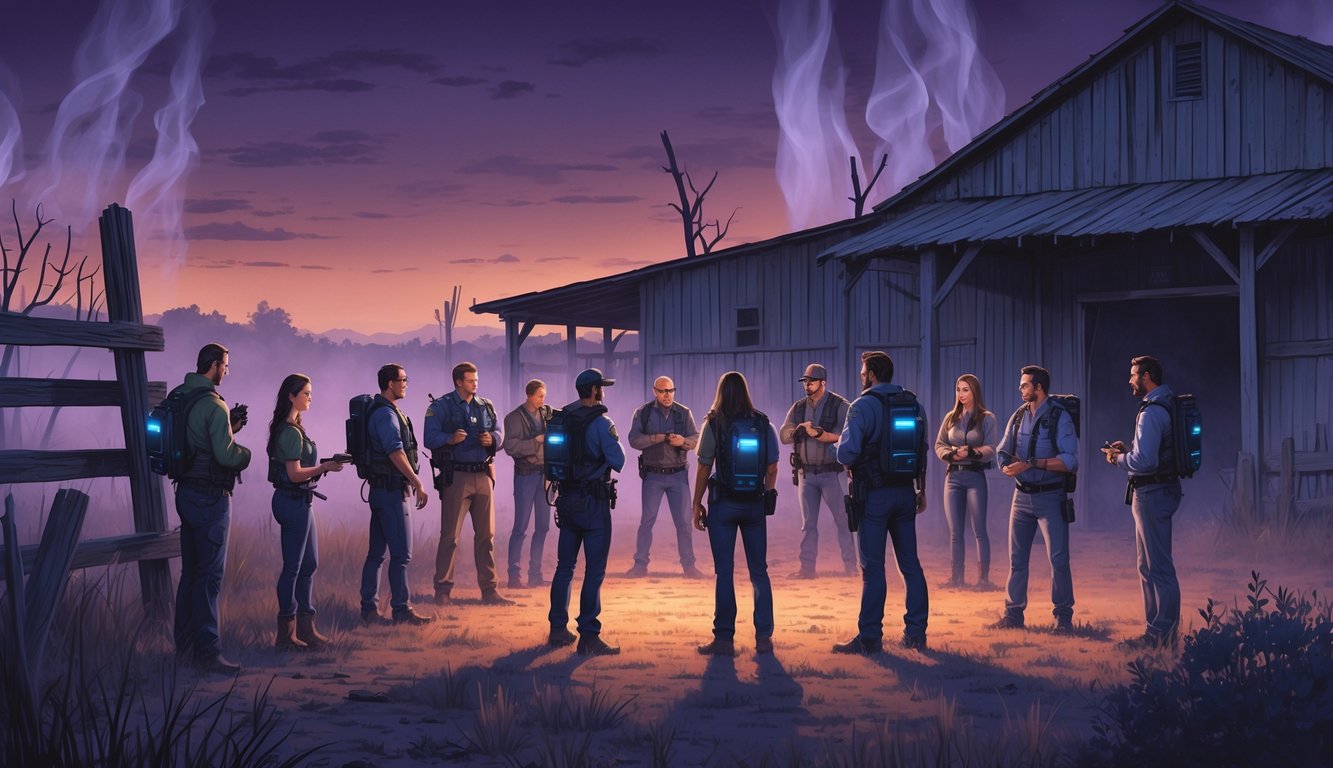
The investigation at the Texas ranch brings together leadership, field skills, and problem-solving. Each member plays a clear role, from planning to gathering evidence.
Their combined efforts help them tackle both practical and unusual aspects of the case.
Josh Gates: The Visionary
Josh Gates serves as executive producer and host of Expedition X. He designs investigations that balance scientific methods and open-minded exploration.
Gates directs the mission’s scope and goals, even when he does not join the fieldwork. He ensures the team has the right tools, contacts, and safety plans.
Gates’ background in anthropology and archaeology helps him approach cases with a research-driven mindset. He reviews historical records, local accounts, and environmental data before sending the team.
In Round-Up at Death Ranch, he selects the location for its reported paranormal activity and unexplained animal deaths. His planning shapes the team’s cautious and thorough approach.
Jessica and Phil: Investigators in the Field
Jessica Chobot and Phil Torres handle the fieldwork for Expedition X. Jessica interviews witnesses and documents evidence, focusing on the human side of the story.
Phil’s background in biology and environmental science helps him analyze physical evidence. He examines animal remains, tracks, and environmental changes for natural causes.
Jessica talks with ranch owners and residents about sightings and strange events. Phil inspects the land for signs of predators or hazards.
Their teamwork allows them to compare findings in real time. This method helps them rule out false leads and focus on credible evidence.
Adventure and Approach
The Expedition X team combines curiosity with preparation. They travel to remote locations and often work in unpredictable conditions.
Before arriving, they map out investigation points, such as hotspots for activity or areas tied to witness reports.
They use tools like night-vision cameras, motion sensors, and environmental monitors. They record field notes and video documentation for later review.
By combining scientific testing with open inquiry, the team addresses both natural and unexplained possibilities. This balanced approach defines their work on cases like Round-Up at Death Ranch.
Bizarre Cattle Mutations: Unraveling the Mystery
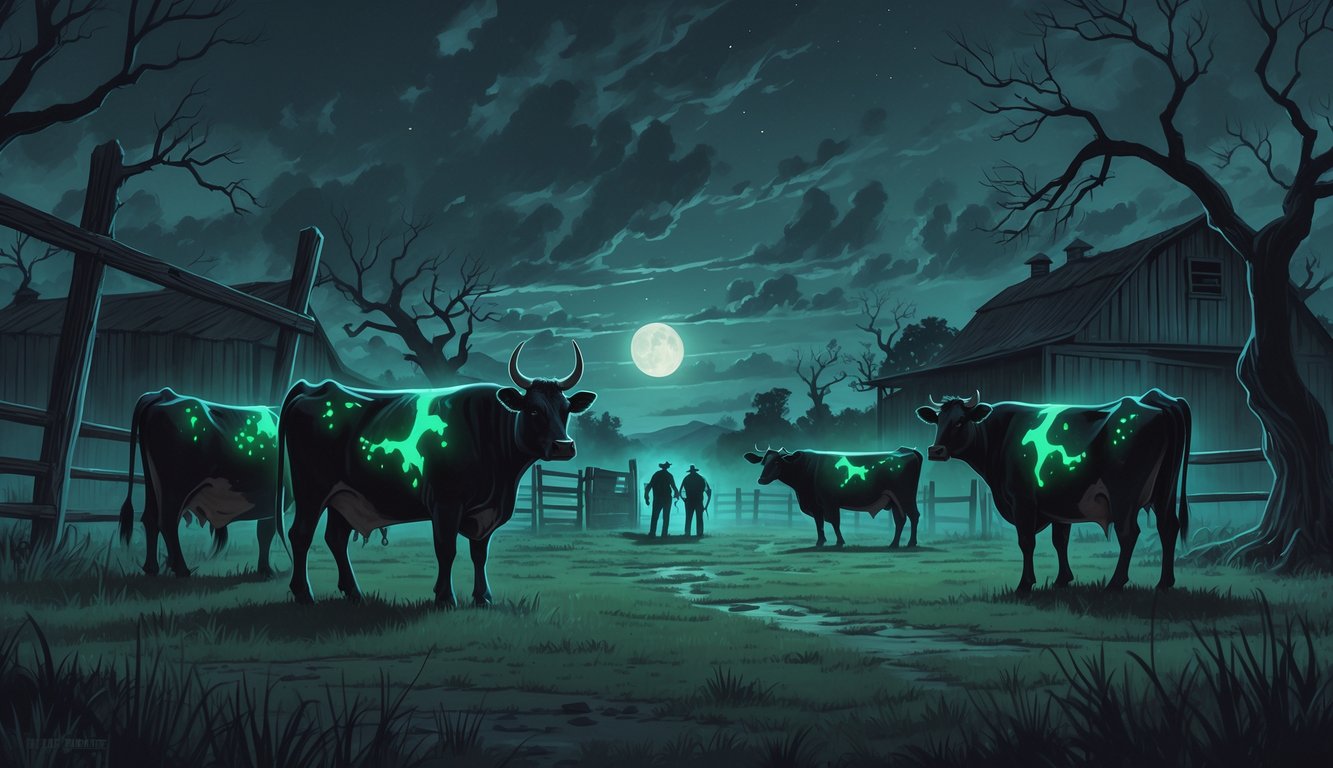
Ranchers in parts of the United States have reported strange livestock deaths with precise and unexplained injuries. These cases often show no clear signs of predators, human interference, or environmental causes.
Discovery of the Mutations
The first reports come from remote ranchlands where ranchers find cattle dead with unusual wounds. Sometimes, the animals have missing organs, such as tongues or reproductive parts, but there is no blood on the ground.
Investigators notice that the cuts look clean and almost surgical. This detail raises questions about whether tools or natural predators caused the injuries.
Similar cases have happened in multiple states, including Oregon’s Death Ranch, where teams document baffling livestock deaths. Ranchers there find carcasses with no signs of a struggle or scavenger activity.
These discoveries often happen in the early morning, suggesting the deaths occur overnight. Local law enforcement sometimes joins the investigations but rarely finds conclusive evidence.
Patterns and Anomalies
Reports show certain patterns that repeat across regions.
| Feature | Description |
|---|---|
| Missing Organs | Tongues, eyes, and reproductive organs often removed |
| No Blood | Wounds appear bloodless despite major tissue loss |
| Clean Cuts | Edges of wounds look smooth, not torn |
| Lack of Tracks | No predator or human footprints nearby |
Some cases involve several cattle dying in the same week.
Anomalies also appear. In one Texas case, only one side of the animal’s face was affected, while the rest of the body was untouched. In others, the animals are found in open fields with no shelter, making stealthy human activity less likely.
These inconsistencies make it hard for experts to agree on a single explanation.
Impact on Local Ranchers
For ranchers, these cattle mutations mean financial loss and emotional strain. Each animal represents months or years of care and resources.
Some ranchers install cameras, motion sensors, and higher fencing to prevent further incidents. Others work with researchers and investigators to document new cases.
The uncertainty affects community trust. Neighbors share information closely, and some avoid grazing cattle in isolated pastures at night.
In some areas, ranchers form informal watch groups to monitor their herds.
Apex Predators or Something More Sinister?
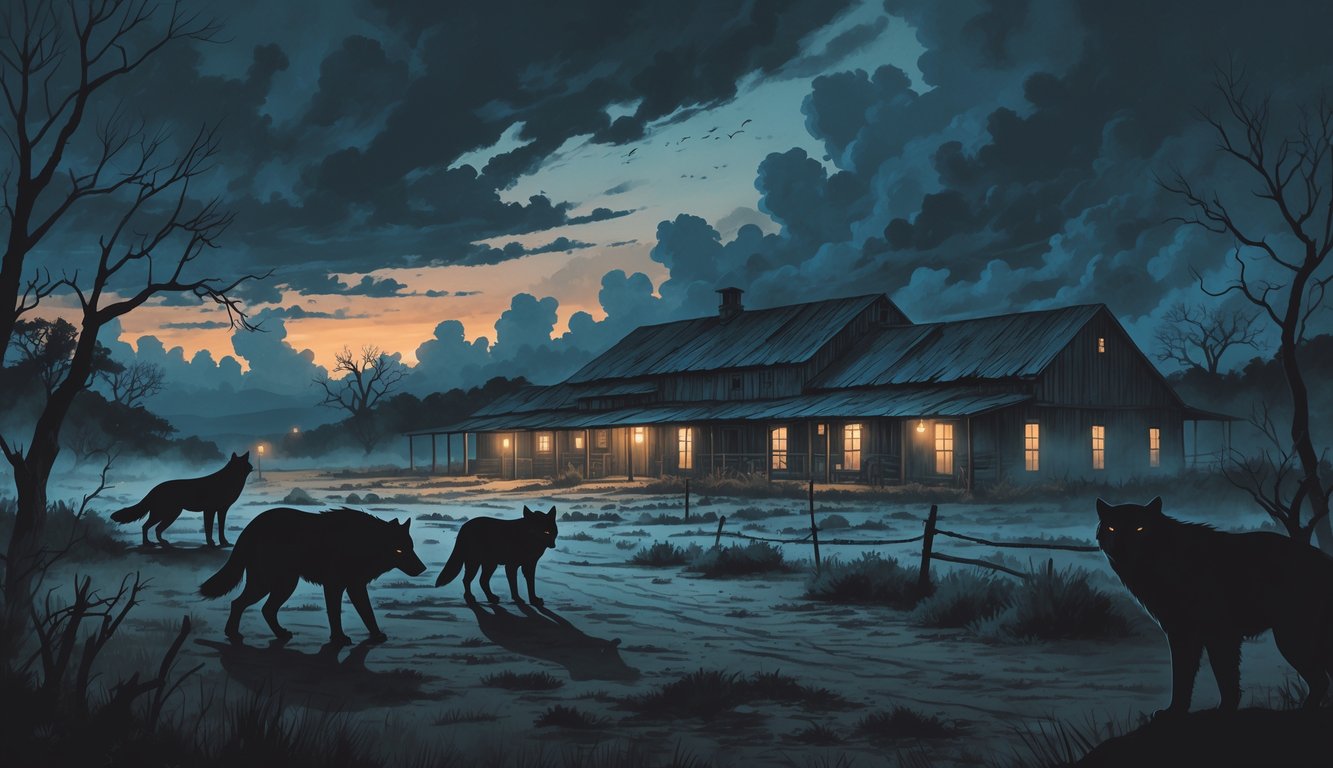
Investigators find unusual injuries on several dead cattle. Some signs point toward natural predators, while others suggest human involvement or unknown factors.
Predator Evidence
Field teams find clean puncture wounds and missing organs in some carcasses. These injuries could match bite patterns of large carnivores.
Tracks in the area sometimes look like those of coyotes or mountain lions. However, the spacing and depth of some prints do not match known species.
Some ranchers report hearing howls and growls at night. Wildlife cameras capture blurred images of large animals, but the footage lacks enough detail for clear identification.
Possible predator suspects include:
| Predator | Hunting Style | Likelihood |
|---|---|---|
| Mountain Lion | Ambush, neck bite | Medium |
| Coyote Pack | Group chase | Medium |
| Feral Hog | Rooting, scavenging | Low |
Alternative Theories
Some researchers suggest the deaths might not be due to predators. They point to the precision of certain wounds, which could indicate human tools.
Others consider disease or environmental toxins. Lab tests on tissue samples do not show common livestock illnesses or poisons.
A few locals mention stories of strange lights in the sky before the cattle are found. These claims add to speculation about non-predator causes.
The Expedition X episode “Round-Up at Death Ranch” explores these possibilities, showing how the team weighs wildlife evidence against unusual explanations.
Local Wildlife in Texas
Texas has a range of apex predators that can threaten livestock. Mountain lions roam remote areas, especially near rocky hills and brush.
Coyotes adapt well to rural and semi-urban environments. Bobcats, though smaller, can prey on young calves.
Feral hogs are more likely to scavenge than kill healthy cattle but can damage property and attract other predators.
Seasonal changes affect predator behavior. Drought can push wildlife closer to ranches in search of food and water.
Paranormal Possibilities at Death Ranch
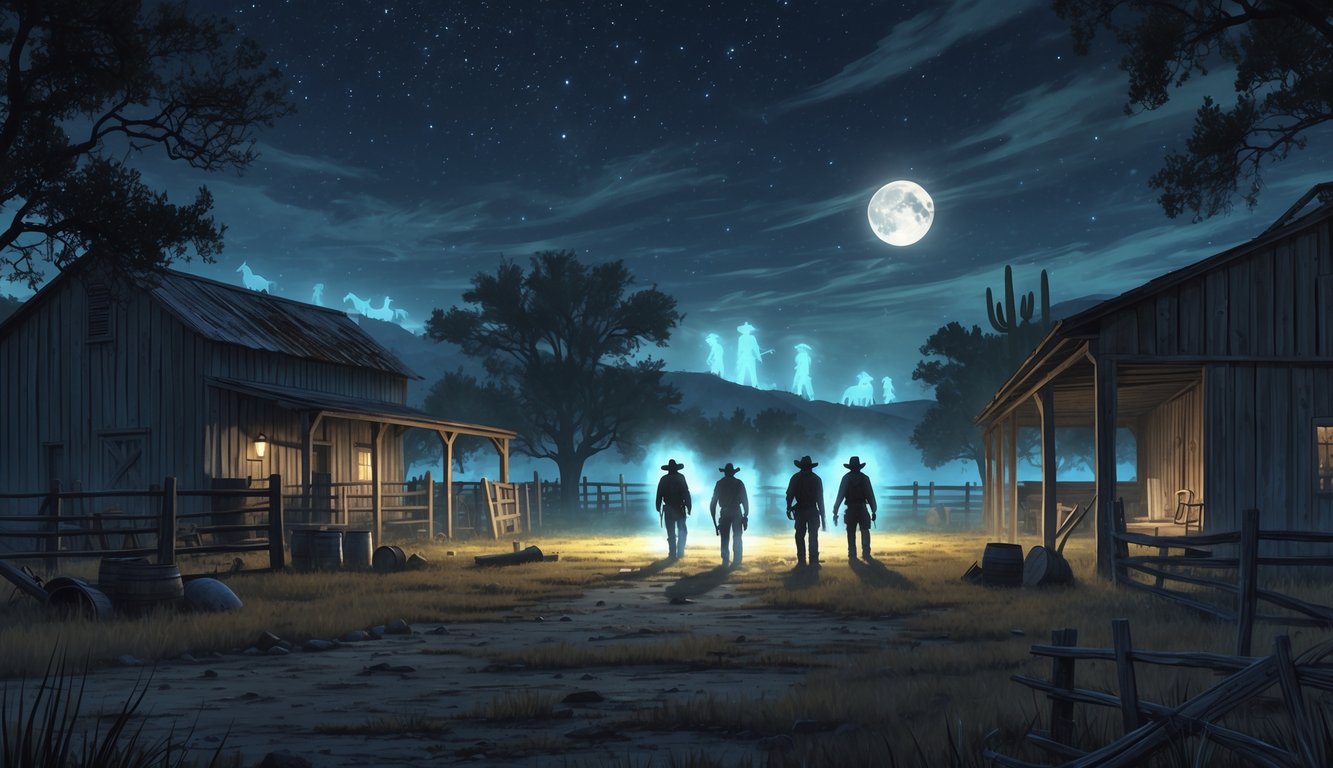
Death Ranch draws attention for its unusual events, from unexplained animal deaths to strange lights in the sky. Locals, investigators, and visitors share accounts that add to the ranch’s eerie reputation.
Haunted History
The ranch’s history includes decades of unexplained livestock deaths and sightings of strange figures. In some cases, cattle are found with precise cuts and missing organs, but there are no signs of predators or a struggle.
Reports from the Pacific Northwest and other rural areas mirror the mutilations documented at Death Ranch. Some investigators suspect human involvement, while others believe unknown forces may be at work.
Over the years, rumors have linked the ranch to secretive government activity. Former owners claim to see unmarked helicopters flying low over the property. These sightings often happen after unusual events and raise questions about surveillance.
The combination of documented cases, personal accounts, and unverified stories cements the ranch’s reputation as a place of mystery.
Reported Phenomena
Visitors and residents have described a variety of strange activity. These include:
| Phenomenon | Description |
|---|---|
| Unexplained lights | Glowing orbs moving silently across the sky. |
| Animal mutilations | Livestock found with clean incisions and missing organs. |
| Strange sounds | Low hums, mechanical noises, and distant voices with no clear source. |
| Physical sensations | Sudden drops in temperature or feelings of being watched. |
Some researchers have tried to capture these events on video. Shows like Expedition X sent teams to investigate, using night-vision cameras and thermal imaging.
Community Experiences
Many locals consider Death Ranch a dangerous place after dark. Ranchers in the area have lost livestock under unusual circumstances, often without a clear cause.
Some residents recall seeing mysterious helicopters and strange boxes left on the property. Others mention circles burned into the ground, with no signs of fire or machinery.
A few community members believe the land itself holds an unexplained energy. They avoid certain areas, claiming they feel disoriented or uneasy there.
Even skeptics note that similar stories from unrelated people are difficult to ignore.
The Role of the Pacific Northwest in the Investigation
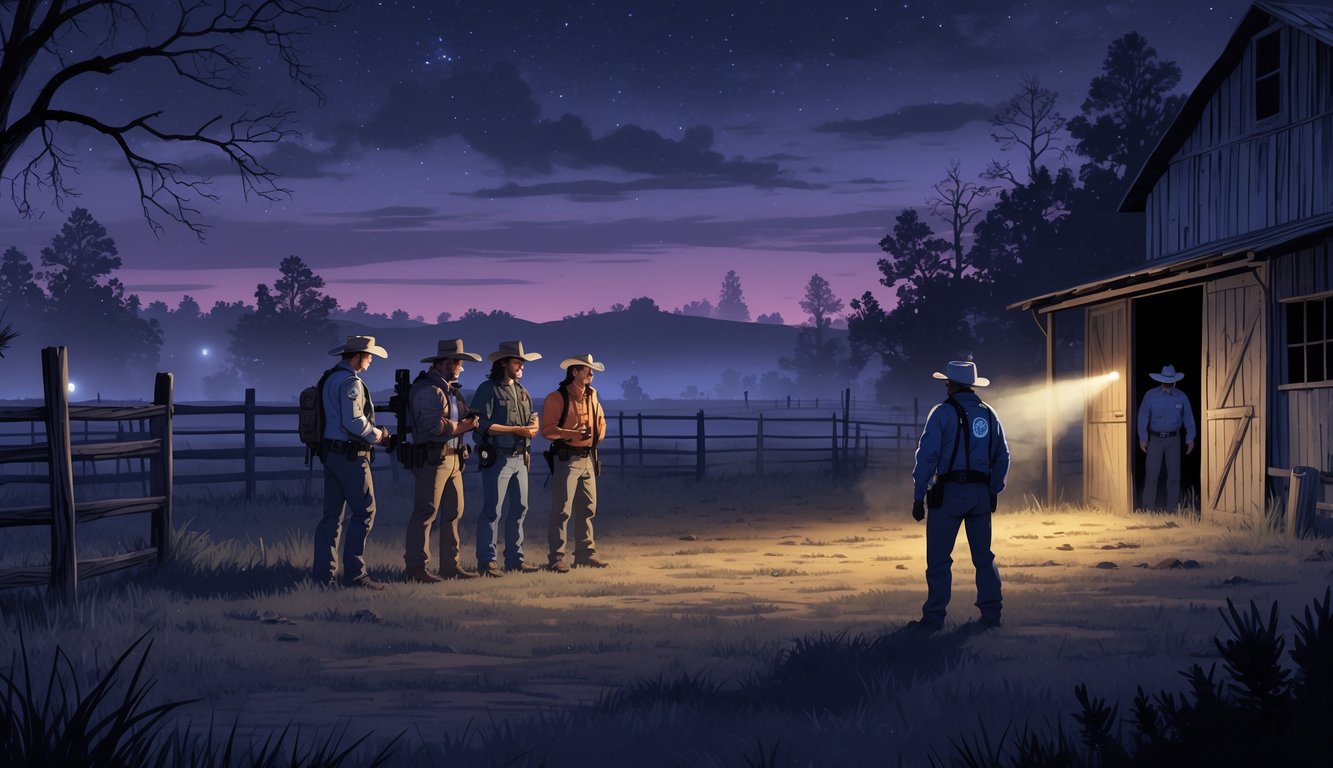
Investigators traced unusual animal deaths in the Pacific Northwest that shared similarities with events at the Texas ranch. These findings offered clues about possible environmental factors, predator activity, and patterns of unexplained livestock injuries.
Geographical Links
The Pacific Northwest covers parts of Washington, Oregon, and Idaho. Its terrain includes dense forests, farmland, and rugged coastlines.
This variety supports many types of wildlife, including large predators such as cougars and wolves.
Investigators found cattle with precise wounds in rural Oregon and Washington. The team studying the Texas site also examined these cases.
They noted the absence of tracks, minimal blood loss, and no signs of scavenger activity.
Weather in the Pacific Northwest, with frequent rain and cool temperatures, slows decomposition. This preserves evidence longer than in hotter climates like Texas.
Investigators collected more accurate data on the condition of remains because of this.
Authorities used mapping tools to compare locations in both regions. They identified clusters of incidents near remote ranching areas with limited human activity.
This suggested that isolation might play a role in the events.
Previous Cases in the Region
The Pacific Northwest has seen unusual livestock deaths for decades. Some incidents involved cattle found with unexplained injuries and missing organs.
In one case, ranchers in central Washington reported multiple cattle deaths over a short period. The animals showed clean, surgical-like cuts, and investigators found no evidence of human or animal predators.
Television programs such as “Round-Up at Death Ranch” highlighted these cases. They noted that the patterns matched those seen in Texas.
Local law enforcement in Oregon and Washington worked with federal agencies to examine these cases. Many remain unsolved due to a lack of physical evidence and the remote nature of the affected areas.
Jessica and Phil: Personal Perspectives
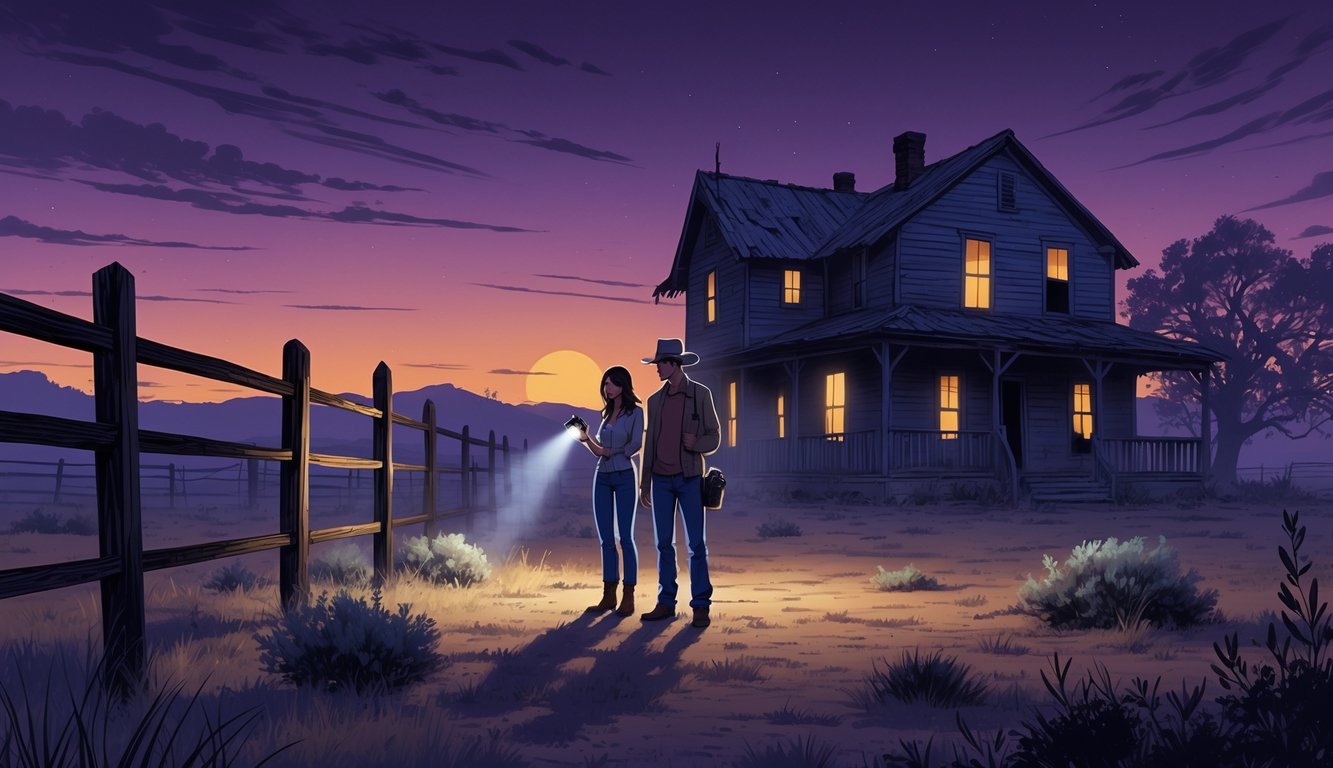
Jessica Chobot and Phil Torres brought different skills and personalities to the Texas ranch investigation. Their observations and problem-solving approaches shaped how the team handled the unusual events and evidence.
On-Site Reactions
Jessica showed curiosity and caution while walking the ranch grounds. She paused often to take notes and photographs, focusing on unusual markings near cattle pens.
Phil used an analytical approach. He examined the environment for signs of predators or environmental causes.
His background in biology helped him look for natural explanations first.
Both noticed the unsettling quiet at night. Jessica mentioned the lack of insect and animal sounds, and Phil pointed out changes in livestock behavior.
They spoke with local ranchers to gather firsthand accounts. Jessica asked open-ended questions to encourage detailed stories, while Phil compared these accounts with physical evidence.
Key observations they made included:
- Odd patterns in animal injuries
- Unusual soil disturbances
- Changes in cattle movement patterns
Challenges Faced During the Investigation
The remote location created logistical problems. Jessica and Phil managed limited power sources for cameras and sensors, forcing them to prioritize equipment use.
Weather caused more issues. Sudden storms damaged some recording devices, which required quick repairs in the field.
Phil handled most technical fixes. Jessica reorganized the investigation schedule to adjust for delays.
They found it hard to separate fact from rumor. Local stories often mixed history with speculation, making confirmation difficult.
Jessica cross-referenced accounts with public records. Phil verified environmental data.
Nighttime safety was another challenge. The rough terrain and limited visibility increased the risk of injury.
They used headlamps, GPS trackers, and kept constant radio contact to stay safe.
Both stayed focused on collecting clear, verifiable evidence for the Expedition X investigation.
2020: The Year of the Investigation
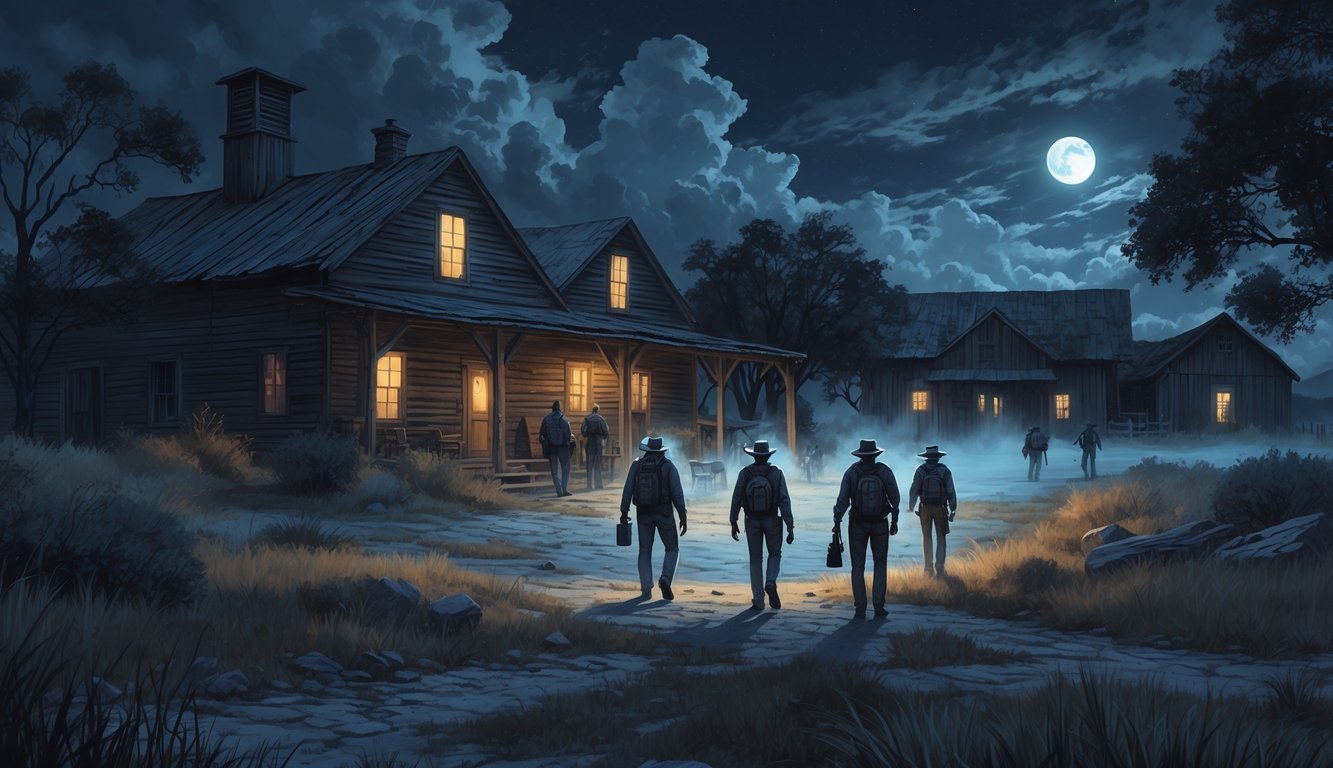
In 2020, the Expedition X team traveled to the Pacific Northwest to investigate unusual cattle deaths linked to strange injuries. The case drew attention because the events matched long-standing rancher reports of unexplained livestock losses.
The crew documented their process on location. They used field interviews and technical equipment to gather evidence.
Production Background
The episode “Round-Up at Death Ranch” aired in November 2020 as part of Expedition X Season 2. Host Josh Gates sent Jessica Chobot and Phil Torres to examine reports of cattle found with unexplained wounds.
Filming took place on rural ranch land. The crew worked with local ranchers and recorded eyewitness accounts, photographed carcasses, and collected environmental samples.
The production combined documentary-style interviews with nighttime field surveillance. They used thermal imaging cameras, motion sensors, and drone footage to monitor the area for predators or human activity.
The team balanced investigative work with on-camera discussions. They showed the challenges and limitations of gathering proof in remote areas.
Filming conditions were often cold, wet, and unpredictable, which affected travel and equipment.
For viewers, the episode offered investigative detail and visual documentation of the ranch environment. More information about the episode is available on its Discovery listing.
Relevance to Contemporary Events
The investigation took place during 2020, a year shaped by the COVID-19 pandemic. Travel restrictions and safety protocols affected how the crew moved between locations and interacted with locals.
Ranchers in the region faced economic strain from market instability. The sudden loss of cattle added financial pressure, making the investigation more urgent for those affected.
The case reflected public interest in unexplained animal deaths. This topic often sparks debate between wildlife experts and paranormal researchers.
By airing during a time when many people stayed home, the episode reached a larger television audience. It provided entertainment and insight into an issue that blends agriculture, wildlife, and mystery.
Community Impact and Local Reactions
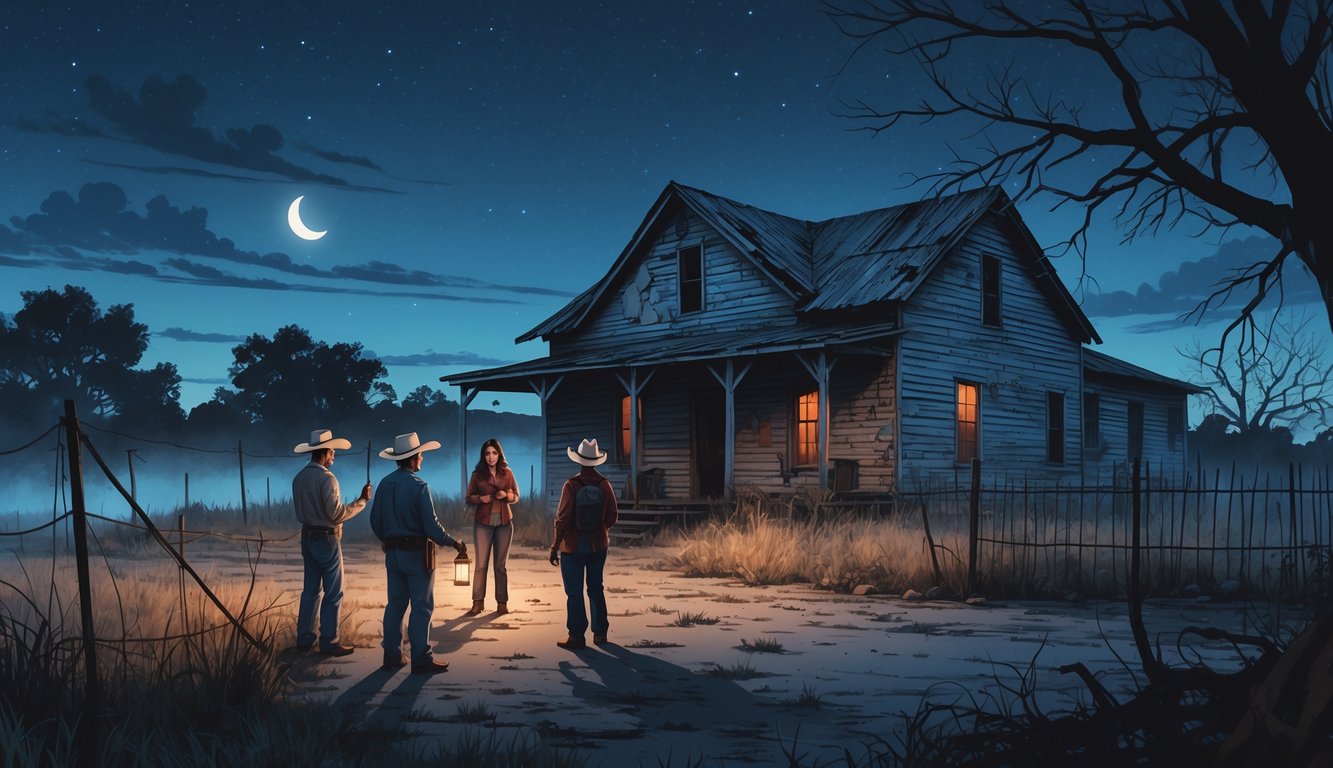
Local residents have voiced concerns about unusual livestock deaths and strange activity near the ranch. News outlets and investigators have documented these events, sparking curiosity and caution in nearby communities.
Rancher Testimonies
Several ranchers in the region have found cattle with unexplained injuries. Some said the wounds did not match common predator attacks, such as those from coyotes or mountain lions.
A few landowners reported hearing low mechanical hums at night. They later discovered dead or mutilated animals the next morning.
Others mentioned seeing lights over open fields, though they could not confirm their source.
One longtime rancher explained that these incidents caused financial strain. Loss of livestock means lost income, and veterinary costs for surviving animals can be high.
Many ranchers now keep detailed logs of herd health, weather patterns, and unusual sightings. Some have installed motion-activated cameras to capture possible evidence.
Media Coverage in Texas
Local newspapers and TV stations in Texas have covered the story. They often focus on the economic and emotional toll on ranch families.
Outlets like Community Impact have provided updates on how rural communities are responding.
Coverage has included interviews with ranchers, law enforcement, and investigators from shows like Expedition X, which examined the Death Ranch mystery. Reports balance skepticism with firsthand accounts from credible witnesses.
Some media segments compare the events to unexplained livestock cases in the Pacific Northwest, such as those featured in Round-Up at Death Ranch. These comparisons help frame the Texas incidents within a broader pattern of similar reports.
Public interest has grown, leading to more online discussion and community meetings where residents share information and safety tips.
Legacy of Round-Up at Death Ranch
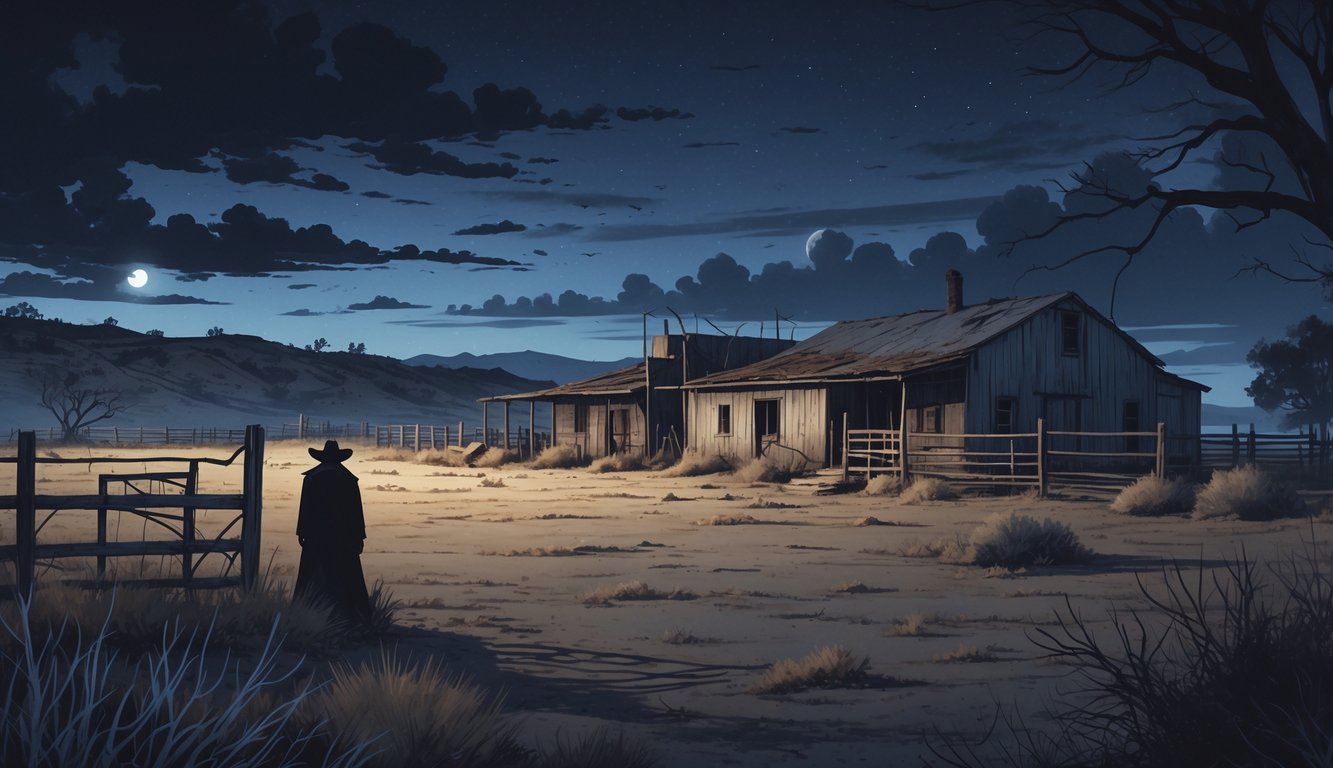
The events at the ranch attracted both paranormal investigators and local authorities. Reports of unusual cattle deaths and unexplained activity have kept the site in public discussion for years.
Influence on Paranormal Research
The investigation featured in Expedition X’s “Round-Up at Death Ranch” brought the location into the spotlight for paranormal researchers. Teams used EMF detectors, thermal cameras, and audio recorders to document potential anomalies.
Researchers noted patterns of livestock injuries that did not match known predator attacks. Some explored theories involving environmental factors or human interference.
The case encouraged collaboration between paranormal investigators and wildlife experts. By comparing animal behavior data with reported sightings, they tried to separate natural causes from unexplained phenomena.
Work at the ranch has since appeared in discussions about how to conduct field investigations in rural, open environments.
Continuing Mysteries
Investigators have visited the ranch multiple times, but questions remain. Locals report strange lights and sudden equipment failures.
People also hear unexplained sounds at night. Some ranch workers notice that odd incidents happen more often during certain seasons.
Others mention the land’s history and suggest past events may influence what happens now. No one has confirmed a single explanation for the cattle mutilations in the area.
Some believe newly arrived predators are responsible. Others suspect deliberate human acts, but the evidence does not clearly support any theory.