
In the remote hills of Montana, a 19th-century sheriff named Henry Plummer left behind more than a controversial legacy. He may have hidden a cache of gold that no one has ever found.
Plummer’s Gold refers to the rumored fortune linked to the Old West lawman. Many believe he stashed it somewhere near the gold rush towns of Bannack or Virginia City.
The mystery has drawn historians, treasure hunters, and adventurers for over 150 years.

Stories describe Plummer’s double life as both a law officer and alleged leader of a gang called the “Innocents.” Theories suggest he hid his wealth in abandoned mines, remote gulches, or even inside sealed cave systems.
Shows like Expedition Unknown’s “Plummer’s Gold” episode have explored similar caves.
The rise of gold rush boomtowns and the vigilante justice that ended Plummer’s life add more intrigue to the legend. The search for his lost fortune mixes history, crime, and adventure.
The Legend of Plummer’s Gold
Henry Plummer served as sheriff in Bannack, Montana, during the 1860s. Many people think he secretly led a gang of outlaws who robbed gold shipments and travelers.
Stories claim that Plummer buried a hidden cache of stolen gold somewhere in the Montana wilderness.
Origins of the Treasure Tale
Henry Plummer arrived in Montana during the gold rush era and soon became sheriff of Bannack. While in office, people accused him of leading a group called the “Innocents,” who targeted stagecoaches and miners.
Witness accounts and confessions from captured gang members raised suspicion that Plummer hid a large amount of stolen gold.
Some say the treasure could be worth thousands in 19th-century currency. The supposed hiding places range from remote riverbanks to secret mine shafts.
After vigilantes captured and hanged Plummer in 1864 without a formal trial, the legend grew. His death left questions about the gold’s location.
Rumors and Early Searches
After Plummer’s execution, locals searched for the missing gold. Early treasure hunters explored the hills around Bannack and the routes to Virginia City.
Rumors spread about coded maps, whispered confessions, and hidden markers carved into trees or rocks. Each clue led to another dead end.
By the late 1800s, the story of Plummer’s gold had become Montana folklore. Newspapers printed stories of supposed finds, but no one ever confirmed them.
Some people searched abandoned mines, while others explored riverbeds and caves. The lack of proof kept the mystery alive.
Modern-Day Expeditions
In recent years, professional explorers and TV crews have joined the hunt. Shows like Expedition Unknown have retraced Plummer’s life and searched hidden cave systems near Bannack.
Modern tools such as ground-penetrating radar and metal detectors help make searches more precise. Still, no one has found the gold.
Some expeditions have explored sealed mines from Plummer’s era. Others have used historical records to find likely hiding spots.
The gold remains undiscovered, and Henry Plummer’s story continues to fascinate people.
Henry Plummer: The Man Behind the Mystery

Henry Plummer’s life mixed law enforcement, frontier opportunity, and accusations of crime. He worked as a sheriff, prospected for gold, and faced charges that still divide historians.
His story links the boomtowns of the California Gold Rush with the rough mining camps of the Montana Territory.
Early Life and California Gold Rush Years
Henry Plummer was born in 1832 in Maine. As a young man, he traveled west during the California Gold Rush in the early 1850s.
He tried mining, but soon found steady work in law enforcement. By 1856, he became city marshal of Nevada City, California.
People knew him for his skill with firearms and his ability to keep order. His career changed when a court convicted him of second-degree murder after a deadly shooting.
Plummer claimed self-defense, but the court sentenced him to prison. He served part of his term, then received a pardon because of poor health.
He left California, looking for a fresh start.
Arrival in Montana Territory
Plummer reached the Montana Territory in 1862 during a gold rush in Bannack. The mining camp was small but growing quickly, with saloons, gambling halls, and disputes over claims.
He built a reputation as a capable leader and was elected sheriff of Bannack in 1863. His duties included protecting miners, guarding gold shipments, and keeping order on dangerous roads.
Bannack sat on the route to Virginia City, where gold shipments attracted robbers. Plummer organized posses to chase criminals and acted quickly during emergencies.
Despite his official role, rumors spread that he had ties to local outlaws. As robberies increased along the trails, suspicion grew.
Controversial Reputation
Many residents accused Plummer of secretly leading the “Innocents,” a group of road agents who robbed and sometimes killed miners. Some say the gang hid stolen gold near Bannack, creating the legend of Plummer’s Treasure.
No one put him on trial to prove these claims. In January 1864, vigilantes hanged Plummer without letting him defend himself.
Supporters said he was a victim of false accusations and frontier justice. Critics believed he was a dangerous outlaw who used his badge as cover for crime.
People still debate his guilt or innocence.
Bannack and Virginia City: Gold Rush Boomtowns
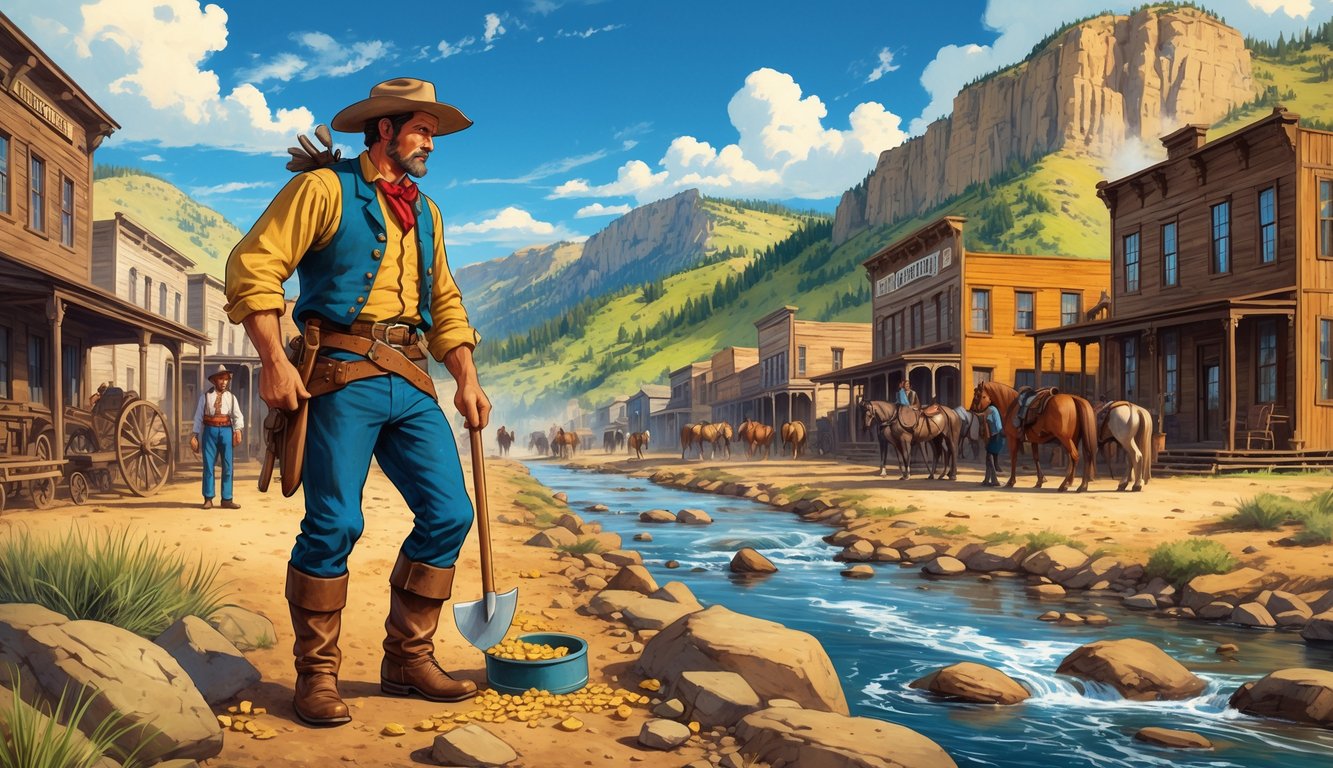
In the early 1860s, gold discoveries in Montana drew miners from across the West. Bannack and Virginia City grew quickly, fueled by placer gold finds that brought both wealth and lawlessness.
Bannack’s Role in the Story
Bannack began in 1862 after gold was found on Grasshopper Creek. Within months, tents and wooden buildings lined the streets.
At its height, Bannack served as the first territorial capital of Montana in 1864. The town was both a mining hub and a center of crime.
Henry Plummer, elected sheriff in 1863, was later accused of secretly leading the Innocents, a gang that robbed travelers and miners. The road between Bannack and Virginia City became notorious for ambushes.
Mining in Bannack changed over time, with early placer mining giving way to smaller operations. By the mid-1900s, the post office and school closed, leaving Bannack a ghost town.
Today, visitors can walk the same streets where miners once traded gold dust for supplies.
Virginia City’s Connection
Virginia City rose almost overnight in 1863 after a rich strike in Alder Gulch. Many miners left Bannack to chase new gold deposits.
The route between the two towns was vital for moving gold and supplies. Plummer’s road agents targeted stages and pack trains along this route.
Large shipments of gold dust often disappeared before reaching their destination. Virginia City later replaced Bannack as the territorial capital.
While gold production declined in later years, Virginia City remains one of the best-preserved mining towns in the West. Its wooden boardwalks and historic buildings attract visitors interested in Montana’s gold rush past.
Bannack State Park Today
Bannack is now protected as Bannack State Park. The park preserves more than 60 structures, many still in their original locations.
Visitors can explore the old courthouse, schoolhouse, and saloons. Signs explain the town’s history, from its gold rush beginnings to its decline.
Each year, events like Bannack Days bring the past to life with gold panning, blacksmithing, and frontier crafts. The park shows how a once-thriving boomtown became a quiet reminder of Montana’s mining heritage.
The Rise of Sheriff Henry Plummer

Henry Plummer’s path to becoming sheriff in the Montana Territory followed his reputation for quick thinking and persuasive charm. His background combined prospecting with law enforcement.
His time in Bannack put him at the center of a booming gold rush community where law and order were always needed.
Election as Sheriff
In May 1863, Bannack’s citizens elected Henry Plummer as sheriff. The town, then part of the Idaho Territory, was growing fast due to nearby gold strikes.
Plummer’s experience as a lawman in California helped build trust among voters. Many saw him as someone who could manage the rough mining camps and keep order.
He promised to protect miners, traders, and travelers from theft and violence. His win showed both his political skill and the urgent need for law enforcement in the region.
Establishing Law and Order
After taking office, Plummer created a visible presence of authority in Bannack. He set patrols along the road between Bannack and Virginia City, where bandits often targeted gold shipments.
He enforced town ordinances and settled disputes among miners. Public hangings for serious crimes served as a warning to others.
Some residents noticed that robberies continued despite his efforts. This suspicion would later lead to serious accusations against him.
Deputies and Associates
Plummer appointed several deputies to help cover the large and dangerous territory. Among them were Buck Stinson, Ned Ray, and Bill Bunton.
These men were known for their toughness and knowledge of the local mining camps. Some townspeople later claimed that these deputies belonged to a secret network of “road agents” who robbed gold shipments.
According to some accounts, this group became known as the Plummer Gang. Their reputations fueled growing mistrust.
The close ties between Plummer and his deputies played a major role in the events that ended his life.
The Road Agents and the Innocents Gang
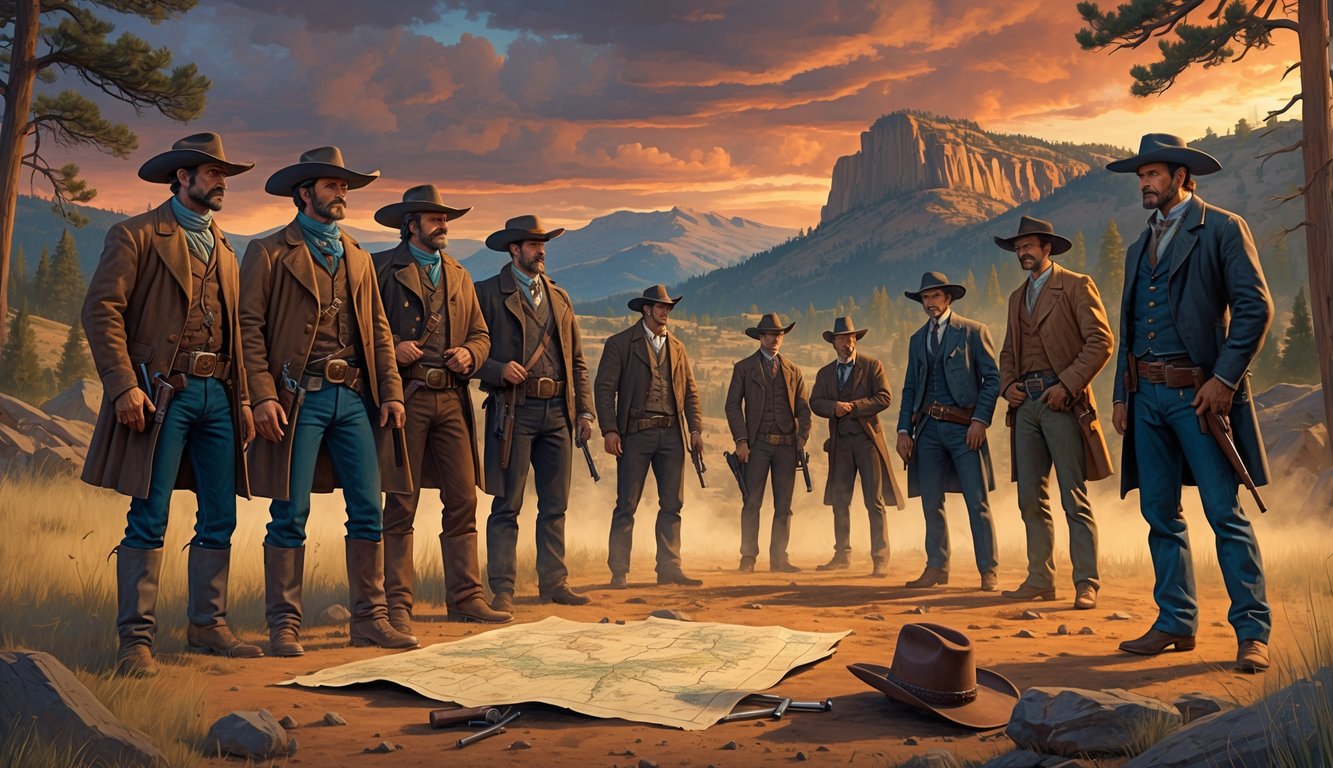
During the Montana gold rush of the 1860s, organized bands of highway robbers targeted gold shipments and travelers between Bannack and Virginia City. Many stories point to a group called the Innocents, whose members used insider information to plan thefts and ambushes along remote trails.
Formation and Organization
Bannack sheriff Henry Plummer allegedly led the Innocents after taking office in May 1863. As sheriff, he learned details about gold shipments, stagecoach schedules, and travelers’ plans.
The gang operated as road agents, robbing travelers on the trails. They used Rattlesnake Ranch, about 12 miles from Virginia City, as a base for planning crimes.
Reports say the group may have grown to over 100 members across the territory. Members worked in small teams to avoid attention but shared information and loot.
This loose but coordinated structure let them operate for months without being caught.
Notorious Members
Several men gained notoriety for their roles in the gang’s activities. George Lane often took part in robberies, and vigilantes later captured him.
Bill Bunton scouted and set up ambush points for the gang.
Jack Cleveland had a violent temper and publicly feuded with Plummer before his death. Ned Ray worked as a co-conspirator and allegedly shared details about gold shipments.
These men and others monitored stagecoaches and miners leaving gold camps. Vigilance committees arrested or executed many of them.
Infamous Robberies
The Innocents carried out a series of robberies along the route between Bannack and Virginia City. They targeted wagons carrying freshly mined gold from Alder Gulch.
They blocked narrow mountain passes and forced travelers to hand over gold and supplies. Sometimes, they killed those who resisted.
One well-known incident involved a gold shipment bound for Virginia City that disappeared without a trace. Plummer and his men used inside knowledge of departure times to intercept the load, according to historical records.
These robberies sparked public outrage and spurred vigilante justice in the region.
Vigilantes and Frontier Justice
In the 1860s, Montana’s mining towns had little law enforcement and were far from courts. Residents formed their own groups to confront robbery, murder, and corruption.
These actions shaped the region’s history and legends.
Montana Vigilantes’ Origins
The Montana Vigilantes formed in late 1863 in Bannack and Virginia City. Gold strikes drew thousands, but crime quickly increased.
Community leaders organized to protect lives and property since courts were unreliable. They acted outside legal authority, but many settlers supported them.
Henry Plummer, Bannack’s sheriff, became a central figure in the conflict. Some people accused him of secretly leading a gang of “road agents” who robbed travelers. Others argued he was framed.
The vigilantes targeted Plummer and his associates, launching their most famous campaign.
The 3-7-77 Symbol
The cryptic 3-7-77 symbol became a warning from Montana vigilantes. People saw it on cabins, tents, and coffins.
Historians debate its meaning. Some say it referred to grave dimensions—3 feet by 7 feet by 77 inches—warning the accused to leave town or face burial. Others think it referenced membership numbers or dates.
The symbol spread beyond the 1860s and later appeared on Montana Highway Patrol badges. Its exact origin is unclear, but it always served as a threat to suspected criminals.
Key Lynching Events
In January 1864, vigilantes hanged Sheriff Henry Plummer and two deputies in Bannack without a trial.
Over the next few weeks, they executed more than twenty suspected road agents. These hangings happened publicly, often before large crowds.
A partial timeline of major actions:
| Date | Event | Location |
|---|---|---|
| Jan 10, 1864 | Plummer and two deputies hanged | Bannack |
| Jan 14, 1864 | Five road agents executed | Virginia City |
| Feb 3, 1864 | Additional suspects hanged | Nevada City |
These events cemented the vigilantes’ reputation as enforcers of frontier justice in Montana’s early mining towns.
The Downfall of Henry Plummer

In early 1864, tensions in Bannack, Montana, reached a breaking point. Local vigilantes accused Sheriff Henry Plummer of secretly leading a violent outlaw gang called the “Innocents.”
Within weeks, vigilantes decided Plummer’s fate through swift frontier justice.
Capture and Execution
Vigilantes arrested Plummer without a formal investigation. Members of the Vigilance Committee surrounded him near his cabin.
They accused him of organizing robberies and murders along the road between Bannack and Virginia City.
On January 10, 1864, vigilantes hanged Plummer without a trial. They also captured and executed two deputies, Buck Stinson and Ned Ray, that same day.
Witnesses said Plummer begged for his life and offered to lead them to hidden gold. The vigilantes ignored his plea, and any secret about treasure died with him.
Role of Buck Stinson and Ned Ray
Buck Stinson and Ned Ray worked as Plummer’s closest allies in Bannack. Both served as deputies, giving them authority and access to information about travelers and gold shipments.
Vigilantes accused them of riding with the “Innocents” and taking part in robberies. Like Plummer, they received no trial and were hanged together in public.
Locals believed these three men led the outlaw network. Whether the accusations were true remains debated.
Aftermath in Bannack
The hangings sent a strong message to Bannack’s residents. The Vigilance Committee’s actions removed the town’s law enforcement overnight.
For a time, robberies along the stage routes decreased. Merchants and miners felt safer, though some worried about the absence of formal justice.
Rumors spread about Plummer’s hidden gold, which many believed was buried near Bannack or along travel routes.
Searches for the treasure began almost immediately. Despite decades of digging, no confirmed cache has been found.
The mystery continues to attract treasure hunters to the old gold camp.
The Lost Fortune: Theories and Clues
Henry Plummer’s alleged stash of stolen gold has fueled debate for more than 150 years. Accounts from his arrest, execution, and confessions from associates give historians and treasure hunters a few leads.
These details point to possible hiding spots and hint at what Plummer may have revealed in his final hours.
Plummer’s Last Words and Bargain
When vigilantes captured Henry Plummer in Bannack in January 1864, some accounts say he tried to save his life by offering to lead them to his hidden gold.
Witnesses claimed he promised to reveal the location if they spared him. The vigilantes refused, and Plummer was hanged without giving directions.
Reports differ on whether this offer was real or a desperate bluff. Some historians believe he may have hidden gold from robberies committed by the Plummer Gang. Others think the treasure never existed, and the story grew over time.
No verified map or written clue from Plummer himself has ever surfaced.
Possible Cache Locations
Treasure hunters believe the gold could be in several areas near Bannack. Common theories include:
| Location Type | Notable Details |
|---|---|
| Caves | Natural limestone caves in the surrounding hills could hide gold for decades. |
| Abandoned Mines | Many shafts existed during the Montana gold rush, offering concealed storage. |
| Rivers and Creeks | Gold could be buried near Rattlesnake Creek or Grasshopper Creek. |
Some believe the fortune lies in a mine sealed over a century ago, similar to one explored in Expedition Unknown.
The rugged terrain and harsh winters make searching difficult. This may explain why no confirmed discovery has happened.
Clues from Associates
Several captured gang members made statements that hinted at hidden loot. One road agent claimed Plummer directed the gang’s robberies and kept a personal share separate from the group’s split.
Another said the gold was buried “within sight of Bannack,” but gave no further details.
These testimonies are inconsistent. Some may have tried to reduce their own sentences.
The mix of vague directions, multiple possible hiding spots, and the violent end of the gang has kept the legend of Plummer’s gold alive in Montana history.
Modern Searches and Pop Culture

Interest in Plummer’s Gold has grown in recent decades due to television, organized expeditions, and tourism in Montana. Many searches focus on the rugged terrain near Bannack State Park, where history and legend meet.
Expedition Unknown and Other Documentaries
The TV series Expedition Unknown followed host Josh Gates as he investigated the mystery of Henry Plummer’s hidden fortune. The crew filmed in Montana’s gold rush country, including remote caves and a mine sealed for over a century.
They used metal detectors, ground-penetrating radar, and historical maps to search for possible hiding spots. The episode highlighted the challenges of searching in mountainous terrain.
Other documentaries and YouTube channels have also covered the story. These shows often blend historical research with on-site exploration, keeping the legend alive.
Treasure Hunters’ Discoveries
Independent treasure hunters have searched the hills, riverbanks, and abandoned mines near Bannack for decades. Some claim to have found small gold flakes or old coins, but no confirmed stash linked to Plummer’s gang has surfaced.
Searchers often focus on Alder Gulch and other areas mentioned in old accounts. Many use 19th-century newspaper reports, outlaw confessions, and maps of stagecoach routes between Bannack and Virginia City.
Common search methods include:
- Metal detecting along historic trails
- Exploring collapsed mine shafts
- Scuba diving in nearby rivers for hidden caches
Despite the lack of proof, these efforts keep the hunt active year after year.
Influence on Wild West Lore
The story of Plummer’s Gold has become part of broader Wild West folklore. Henry Plummer’s dual role as Bannack’s sheriff and alleged gang leader adds to the image of lawmen who secretly broke the law.
Local museums and Bannack State Park tours often highlight the tale to show the lawless nature of Montana’s early mining camps. Visitors hear about the “Innocents” gang, stagecoach robberies, and the vigilante justice that ended Plummer’s life.
The legend also appears in novels, podcasts, and western history books. The search for the gold remains both a cultural story and a treasure hunt.
Legacy and Historical Debate
Henry Plummer’s story blends documented history with unanswered questions. His brief time as sheriff in the Montana Territory left a lasting mark on Bannack and nearby gold rush towns.
The debate over his true character continues to shape how people remember him and the events of the Wild West.
Innocent or Outlaw?
Historians disagree on whether Plummer was a lawman trying to keep order or the leader of a criminal gang. Some accounts claim he led the “Innocents,” a group accused of robbing and killing miners for gold.
Others point to his election as sheriff in 1863 as proof that many locals trusted him. He also worked as a prospector and owned a gold claim.
The case against him relied heavily on testimony from captured road agents. These men may have named him to save themselves from vigilante justice.
His hanging in 1864 by Bannack vigilantes ended the question for his time but left historians debating whether the evidence was strong or circumstantial.
Impact on Montana History
Plummer’s life and death shaped the identity of early Montana Territory. His arrest and execution became one of the most famous episodes of frontier vigilante action.
This incident showed that remote mining camps lacked formal law enforcement. Settlers often handled justice themselves because courts and police were not available.
Bannack, once the territorial capital, gained a reputation for both gold strikes and violent justice. The story of Plummer’s downfall remains central to the town’s historical tours.
Today, Bannack operates as a state park. Visitors can explore the jail and gallows connected to his final days.
Enduring Fascination
The mystery of Plummer’s alleged hidden gold keeps treasure hunters searching the hills around Bannack. Some people believe he stashed stolen gold before his capture.
Others doubt the treasure ever existed.
TV episodes like Plummer’s Gold, documentaries, and books draw inspiration from his life. These stories introduce the legend to new audiences.
Unanswered questions make his story compelling. People continue to talk about Henry Plummer as one of the most famous figures of the Wild West.