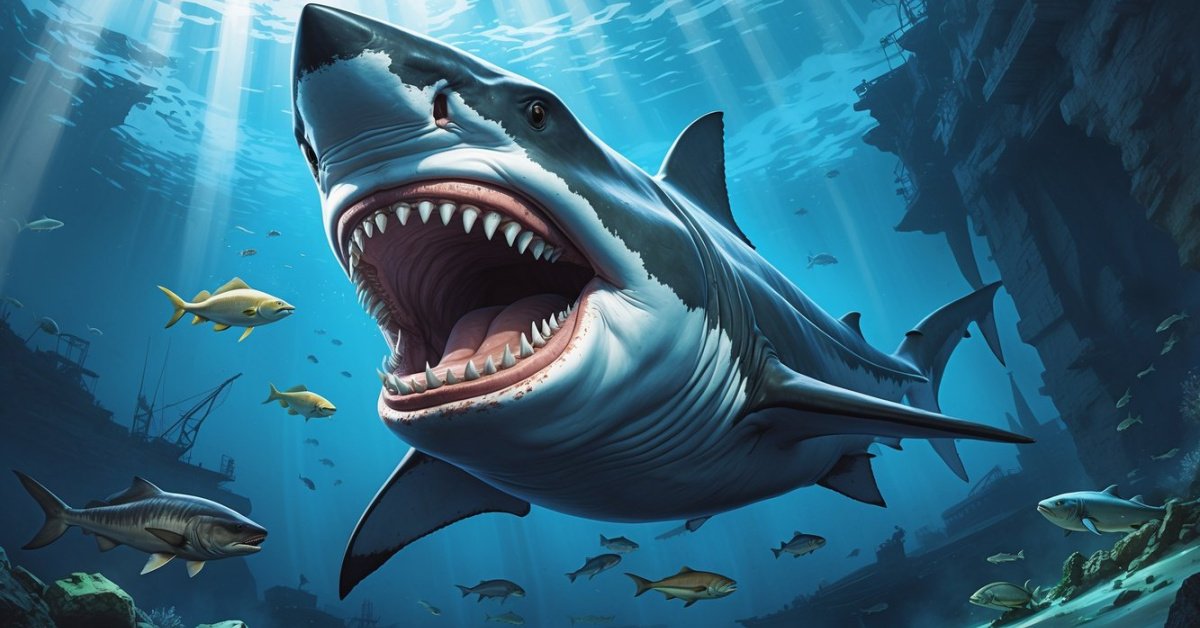
The megalodon ruled ancient oceans millions of years ago as one of the largest sharks to ever live. Fossils show it could grow over 65 feet long, with teeth the size of a human hand.
Scientists have confirmed that the megalodon is extinct. Its enormous size and power still spark curiosity today.
Researchers have studied massive fossilized teeth and vertebrae to understand the megalodon’s life. These clues reveal how it hunted, what it ate, and its role in ancient marine ecosystems.
Scientists use these discoveries to learn about its biology and behavior. Ongoing research continues to surprise experts.
Theories about its extinction and comparisons to modern sharks like the great white add to the mystery. New findings keep changing what we know about this giant predator.
Unraveling the Mystery of the Megalodon
The megalodon lived millions of years ago as a massive prehistoric shark. Fossil evidence shows it was one of the largest predators ever, with teeth over 6 inches long and a body up to three times longer than a great white shark.
Its extinction and role in marine ecosystems continue to interest scientists and the public.
Enduring Fascination With the Ancient Shark
People remain fascinated by the megalodon’s size and power. Scientists estimate it could grow up to 50–60 feet long, making it a dominant predator in its time.
Fossils have turned up on every continent except Antarctica, showing its wide range. These finds help researchers learn about its hunting habits and migration.
Its extinction about 3.6 million years ago is still debated. Some studies suggest competition with early great white sharks played a role, while others point to climate change and prey shortages.
Collectors prize the shark’s fossil teeth, and museums display them with life-size jaw reconstructions. These exhibits give visitors a sense of the animal’s scale.
Depictions in Popular Culture
The megalodon appears in films, books, and video games, often with exaggerated features. Movies like The Meg have introduced it to new audiences, but these versions rarely match scientific facts.
No evidence shows the species survives today. Fictional stories, however, keep the legend alive.
Television documentaries sometimes blend accurate reconstructions with speculation. This approach can blur the line between science and entertainment.
Video games and novels often portray the shark as an unstoppable force. These creative works keep the megalodon in popular memory, even if the details are not always accurate.
The Role of Scientific Curiosity
Researchers study megalodon fossils to learn about ancient marine ecosystems. By analyzing isotopes in teeth, scientists estimate its diet and place in the food chain.
Understanding when and why it disappeared helps reveal how ocean predators respond to environmental changes. This information may help predict how modern species will react to climate shifts.
Paleontologists, marine biologists, and geologists work together to uncover new details. Each fossil find adds to the story of the megalodon’s life as an apex predator.
What Was Megalodon? Size, Shape, and Unique Features
Megalodon lived between about 23 and 3.6 million years ago. It was the largest shark ever known, built for hunting large prey in warm oceans.
Scientists use fossil teeth and vertebrae to estimate its size, shape, and feeding power.
Physical Characteristics and Estimated Size
Researchers estimate that megalodon reached lengths of 15–18 meters (50–59 feet) on average. Some individuals may have grown even larger.
This size made it roughly three times bigger than most adult great white sharks.
Studies of fossilized vertebrae suggest its body was more elongated and streamlined than once believed. It may have looked more like an oversized lemon shark than a bulky great white.
The shark’s teeth were a standout feature. Each tooth could measure over 18 centimeters (7 inches) long, with thick enamel and sharp serrations for slicing flesh and bone.
Megalodon had multiple rows of teeth, allowing it to replace lost teeth throughout its life.
Comparisons With Modern Sharks
Megalodon and the great white shark have similarities but are not direct relatives. Megalodon belonged to the extinct genus Otodus, while great whites are in the genus Carcharodon.
The average great white measures 4–6 meters (13–20 feet), making it much smaller than megalodon. Even the largest great whites weighed far less than a large megalodon.
Both species were apex predators, likely hunting large marine mammals such as whales, seals, and dolphins. Megalodon’s size let it target much larger prey than modern sharks.
Jaw Structure and Bite Force
Megalodon’s jaw could span over 2.5 meters (8 feet) wide. This size allowed it to swallow prey as large as a modern adult human, though it mainly ate marine animals.
Studies suggest its bite force was among the strongest of any animal in history. Some estimates put it over 40,000 pounds of force, much stronger than the bite of great white sharks.
The teeth’s serrated edges and robust structure helped it cut through thick blubber and bone. Its powerful jaw made megalodon an efficient predator.
The Fossil Record: Evidence of Megalodon’s Existence
Scientists have learned most about megalodon from fossilized remains, especially its large, serrated teeth. These fossils provide details about the shark’s size, diet, and range.
Researchers use them to estimate when the species lived and when it went extinct.
Megalodon Teeth Discoveries
Megalodon teeth are the most common fossils from this shark. They can reach over 7 inches long, much larger than great white shark teeth.
The teeth are triangular, thick, and serrated, making them ideal for cutting through flesh and bone. Heavy wear patterns suggest megalodon fed on large prey like whales.
Collectors and paleontologists have found teeth on every continent except Antarctica. Many turn up in coastal sediments, riverbeds, and inland areas that were once underwater.
These finds help scientists learn about the shark’s feeding habits and growth.
Global Distribution of Fossils
Megalodon fossils have been found in North America, South America, Europe, Africa, Asia, and Australia. This wide distribution shows the species thrived in warm, coastal waters worldwide.
A table of notable fossil sites:
| Region | Example Locations | Notes |
|---|---|---|
| North America | Florida, South Carolina | Rich deposits in riverbeds |
| South America | Peru, Chile | Coastal cliffs yield large teeth |
| Europe | United Kingdom, Belgium | Marine sediments hold many finds |
| Australia | Southern and eastern coasts | Well-preserved specimens found |
The global spread of fossils shows megalodon was a top predator in many marine ecosystems. The variety of sites suggests it could adapt to different environments.
Challenges in Shark Fossilization
Sharks have skeletons made mostly of cartilage, unlike bony fish. Cartilage breaks down quickly and rarely fossilizes.
As a result, the fossil record for megalodon is mostly teeth and occasional vertebrae. Teeth, made of dentin and enamel, are much more durable and can last millions of years.
The lack of complete skeletons makes it hard for scientists to know the shark’s exact body shape. Researchers compare living sharks like the great white to estimate its size and appearance based on fossil evidence.
Life as an Apex Predator
The megalodon held the top position in the food chain, shaping marine ecosystems for millions of years. Its size and feeding habits influenced many other ocean species.
Dominance in Ancient Oceans
The megalodon lived between about 23 and 3.6 million years ago, during the Miocene and Pliocene epochs. It thrived in warm, coastal waters and could travel across open seas.
As an apex predator, it had no natural enemies. This allowed it to control populations of large marine animals, including early whales.
Its dominance likely affected migration routes, breeding grounds, and feeding patterns of other marine life. When megalodons disappeared, certain whale populations increased.
Paleontologists study tooth size and bite marks on fossilized bones to understand the megalodon’s role in ancient ecosystems. These clues show it hunted some of the largest animals of its time.
Diet and Hunting Strategies
The megalodon ate large prey such as baleen whales, dolphins, and seals. Fossilized whale bones with tooth marks show it could bite through thick bone to reach blubber and muscle.
Its powerful bite allowed it to crush the rib cages of large marine mammals.
Researchers believe it used ambush tactics, attacking from below or behind. It likely aimed for vital areas like the chest to quickly disable prey.
Young megalodons probably hunted smaller marine animals until they grew large enough to target whales. This shift in diet helped reduce competition between young and adult sharks.
Interactions With Other Marine Predators
The megalodon shared the oceans with other large hunters, including ancient sperm whales and giant predatory dolphins.
Some of these species may have competed for similar prey. The megalodon’s size likely gave it an advantage in securing feeding areas.
Other predators may have scavenged leftovers from megalodon kills. This behavior provided an important food source in marine ecosystems.
Fossil records suggest that changes in climate, prey availability, and competition may have contributed to the megalodon’s extinction.
Paleobiology and Physiology of Megalodon
Fossil evidence, especially teeth, reveals how megalodon lived, grew, and hunted. Studies of its biology suggest it was a highly adapted predator with traits that helped it dominate ancient oceans for millions of years.
Body Temperature and Regional Endothermy
Recent research shows the Megalodon was at least partially warm-blooded, a condition called regional endothermy. This means it could keep parts of its body, like swimming muscles, warmer than the surrounding water.
A study in the Proceedings of the National Academy of Sciences found that chemical analysis of its teeth supports this idea. Warm-bloodedness let Megalodon swim faster and hunt in cooler waters.
This trait also appears in modern great white sharks. By regulating muscle temperature, Megalodon could hunt in areas cold-blooded sharks might avoid.
Growth and Lifespan Insights
Paleobiologists like Kenshu Shimada studied growth bands in fossilized vertebrae to estimate Megalodon’s age and growth rate. These bands act like tree rings, showing yearly growth.
Evidence shows Megalodon grew quickly when young, reaching over 30 feet as a young adult. Adults could reach up to 50–60 feet long.
Estimates suggest they lived 40 to 50 years. Growth slowed with age, which may have affected reproduction and survival.
Adaptations for Survival
Megalodon had several physical traits that made it a strong predator. Its thick, serrated teeth sliced through the flesh and bone of large prey like whales.
Tooth size sometimes exceeded 7 inches in height. Its jaws were massive, with one of the strongest bite forces in the animal kingdom.
A streamlined body helped it ambush or chase prey. Fossil evidence shows Megalodon lived in warm coastal waters worldwide, except Antarctica.
Its ability to exploit different marine environments and specialized hunting adaptations helped it thrive until environmental changes and prey loss led to its extinction.
Megalodon’s Ancient Marine Ecosystems
Megalodon lived in warm, coastal seas where large marine animals thrived. Its hunting patterns influenced the size, behavior, and distribution of other ocean species.
This giant shark’s role as a top predator shaped the balance of life in ancient waters.
Prey Species and Food Chains
Fossil evidence shows Megalodon fed on a variety of large prey, especially early baleen whales and toothed whales. These whales were abundant during the Miocene and Pliocene.
It also hunted seals, sea turtles, and large fish. This diet put Megalodon at the top of the marine food chain.
Smaller predators often stayed away from areas where Megalodon hunted. Scientists believe it targeted young whales more often than adults.
Calves were easier to catch and gave high energy returns. This predation may have influenced whale migration routes and breeding grounds.
Example of a simplified food chain involving Megalodon:
| Level | Example Species | Role |
|---|---|---|
| Apex Predator | Megalodon | Hunts large marine animals |
| Secondary Consumers | Orcas, large sharks | Feed on smaller whales and fish |
| Primary Consumers | Baleen whales, sea turtles | Eat plankton or vegetation |
| Producers | Phytoplankton | Base of the food web |
Impact on Marine Biodiversity
As an apex predator, Megalodon helped control populations of large marine animals. By keeping whale numbers in check, it indirectly affected plankton and the fish that fed on them.
Its presence in ancient marine ecosystems created a balance between predator and prey. Without such predators, some species could have grown in numbers and disrupted food webs.
Megalodon’s extinction likely caused shifts in biodiversity. Some whale species may have expanded into new areas without the threat of predation.
This change could have increased competition among marine mammals and altered ocean life structure.
Theories Behind Megalodon’s Extinction
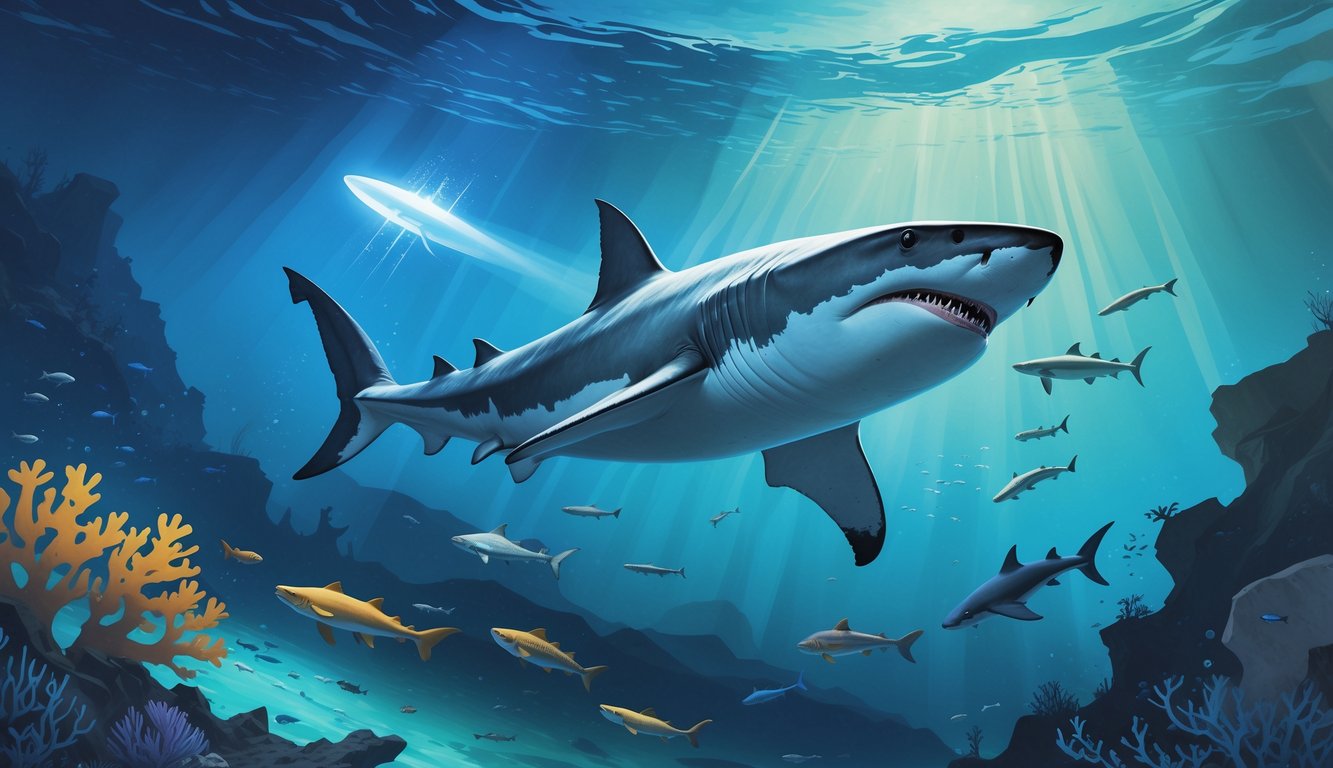
Scientists have identified several factors that likely caused Megalodon’s disappearance. Changes in ocean temperatures, shifts in the food chain, and the rise of strong competitors played a role.
Climate Change and Habitat Loss
During the Pliocene epoch, global temperatures dropped. This cooling trend led to the start of ice ages and caused tropical waters to shrink.
Megalodon preferred warm seas, so its habitat shrank. As ocean temperatures fell, warm-water coastal zones moved closer to the equator.
This forced Megalodon into smaller ranges. Research shows these changes made it hard for the shark to find breeding and hunting grounds.
Colder waters also changed where prey lived. Many marine mammals migrated to cooler regions where Megalodon could not survive.
This shift reduced available food sources and increased survival challenges.
Competition With Other Predators
Megalodon’s decline matched the rise of new predators, including the modern great white shark. Great whites, though smaller, could survive in cooler waters.
This gave them an advantage as oceans cooled. These sharks likely competed with Megalodon for prey such as seals and smaller whales.
Over time, great whites may have expanded into areas where Megalodon could not survive. Orcas also appeared in greater numbers, adding more pressure to the food chain.
Decline of Prey Populations
Megalodon relied on large marine mammals, especially early forms of whales. Fossil evidence shows many whale species declined or shifted range during the Pliocene.
Some of this decline was linked to climate-driven habitat changes. As whales moved into colder waters, they became less accessible to Megalodon.
This forced the shark to hunt less optimal prey, which may not have provided enough energy for its large size. Reduced whale numbers likely made survival harder for Megalodon.
Scientific Methods for Studying Megalodon
Researchers use physical evidence from fossils to learn about Megalodon’s size, diet, and role in ancient ecosystems. The most common fossils are its large, durable teeth.
Isotope Analysis of Teeth
Scientists study the chemical makeup of Megalodon teeth to understand its feeding habits. Zinc isotope analysis can reveal the types of prey it ate.
Recent research shows Megalodon had a broader diet than once thought. Teeth are ideal for this work because their enamel preserves chemical traces for millions of years.
By comparing these traces with modern sharks, scientists can infer if Megalodon hunted top predators or fed lower on the food chain. Isotope data can also hint at migration patterns.
Variations in chemical signatures may show if the shark moved between coastal and open-ocean environments.
Fossil Dating Techniques
Dating Megalodon fossils helps place the species in the correct time frame. Radiometric dating of surrounding rock layers is a common method.
The shark’s cartilaginous skeleton rarely fossilized, but the sediments containing its teeth can be measured for age. Biostratigraphy compares the fossil’s location with other species in the same layer.
This method uses well-dated index fossils to narrow down the time range. These techniques confirm that Megalodon disappeared about 3.6 million years ago.
Accurate dating helps scientists understand how ocean changes and competition may have influenced its extinction.
Megalodon and the Modern Great White Shark
Scientists compare fossil evidence and living shark species to understand how Megalodon and the great white shark differ. Research shows they share some traits but also have clear physical and ecological differences.
Evolutionary Connections
Megalodon (Otodus megalodon) and the great white shark (Carcharodon carcharias) do not belong to the same branch of the shark family tree. Megalodon was part of the extinct Otodontidae family, while great whites are members of the Lamnidae family.
They evolved separately, despite looking similar. For years, people pictured Megalodon as a scaled-up great white.
New findings show Megalodon had a longer, more slender body, not the stocky build of a great white. This shape may have helped it swim faster over long distances.
A comparison of traits:
| Feature | Megalodon | Great White Shark |
|---|---|---|
| Average length | 50–60 ft | 13–20 ft |
| Body shape | Slender | Stocky |
| Family | Otodontidae | Lamnidae |
Physical resemblance does not always mean close evolutionary ties.
Dietary and Ecological Overlaps
Both species acted as apex predators, but their diets and hunting strategies reflected their size and environment. Megalodon likely hunted large prey such as whales, seals, and sea turtles.
Its massive bite force let it crush bones easily. Modern great white sharks also hunt marine mammals, but more often eat fish and scavenged carcasses.
Evidence suggests they may have competed for similar prey during the late Pliocene. Some scientists think this overlap, along with changing ocean conditions, contributed to Megalodon’s extinction.
A BBC report suggests great white sharks could have outcompeted Megalodon for food in some regions. This competition may have been especially intense when prey populations dropped.
Both predators played important roles in their ecosystems, but their survival depended on different adaptations and environmental pressures.
Ongoing Research and Discoveries
Scientists continue to refine what is known about Megalodon. New fossil evidence and updated modeling techniques reveal more about its body shape, maximum size, and ecological role in prehistoric oceans.
Recent Scientific Findings
Researchers believe the megalodon went extinct about 3.6 million years ago. New fossil measurements show it may have been more slender than earlier reconstructions.
This change in body shape affects estimates of its speed and hunting style. A 2024 study found that earlier models may have overstated its bulk.
Some scientists now set the largest credible size at around 24.3 meters (about 80 feet). They base this number on vertebrae size and comparisons with living sharks.
Fossil evidence supports this figure rather than speculative scaling. Scientists have also examined tiny placoid scales found near megalodon teeth.
These scales suggest it may not have been as fast as previously thought. This could affect theories about its preferred prey.
Contributions by Kenshu Shimada
Paleobiologist Kenshu Shimada has played a key role in re-evaluating megalodon size and anatomy. He uses direct fossil measurements, such as vertebrae diameter, to avoid overestimation.
Shimada’s team supports the 24.3-meter maximum as the most scientifically justified upper limit. This method differs from earlier estimates that relied on scaling from great white sharks.
He has also studied the shark’s ecological role. By modeling its body proportions, Shimada and colleagues suggest that megalodon may have targeted large marine mammals.
He has helped clarify misconceptions fueled by popular media portrayals of the species through peer-reviewed publications and public outreach.
Future Directions in Megalodon Studies
Researchers plan to use 3D modeling to better understand megalodon’s swimming mechanics and bite force.
Scientists will use improved digital reconstructions to test how body shape affected its hunting strategies.
Teams may conduct deep-sea fossil searches to uncover more complete skeletons.
Most current knowledge comes from teeth and vertebrae, so finding other bones could answer questions about its fins and tail design.
Scientists might analyze isotopes in fossilized teeth to reveal migration patterns and water temperatures the shark experienced.
This data could explain how climate changes contributed to its extinction.