Cleopatra VII, the last queen of Egypt, has fascinated historians for centuries. Her political skill and dramatic death are well known, but her final resting place remains hidden.
Researchers have not confirmed the exact location of Cleopatra’s tomb. New discoveries in Egypt continue to bring them closer.
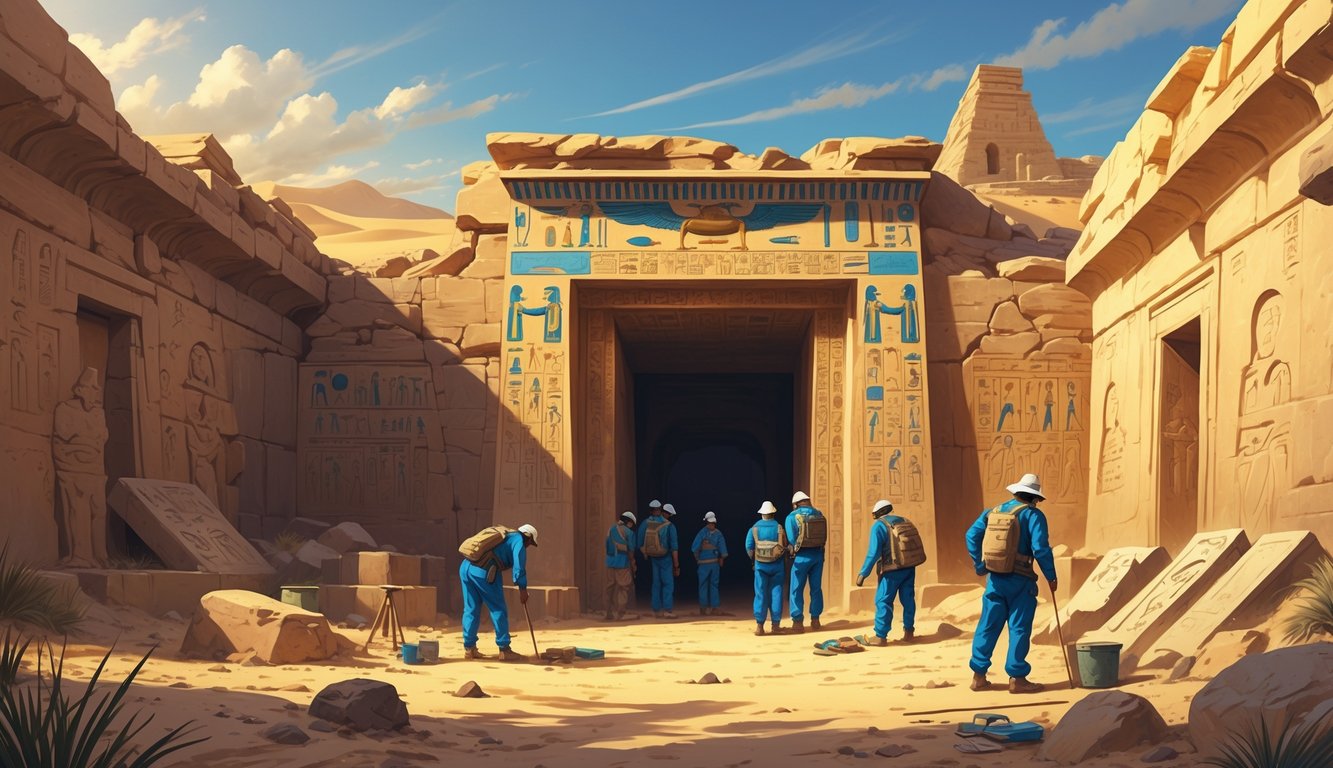
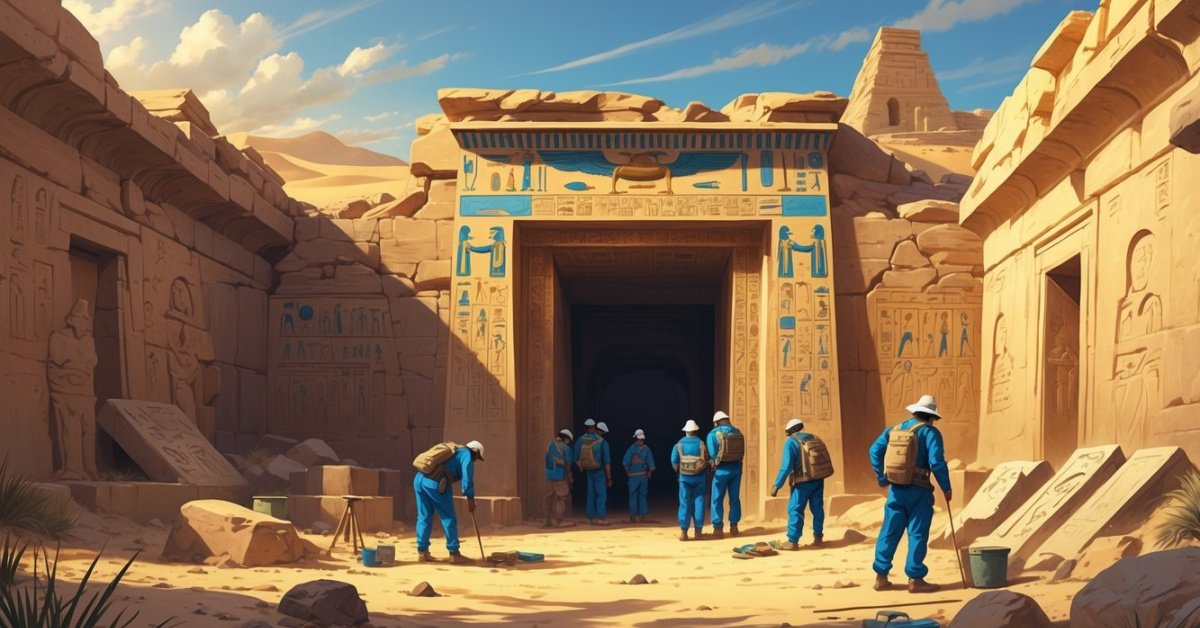
Archaeologists have searched sites across Egypt, from Alexandria to the ruins of Taposiris Magna. Some think her tomb may lie beneath modern structures, while others follow clues from ancient texts and artifacts.
Recent work at Taposiris Magna has uncovered tunnels and chambers that might hold answers. The mystery continues because people likely kept Cleopatra’s burial secret to protect it from desecration.
Each new excavation reveals more about her life and death. The search blends history, archaeology, and hope of finding one of the ancient world’s most elusive treasures.
The Enduring Mystery of Cleopatra’s Tomb
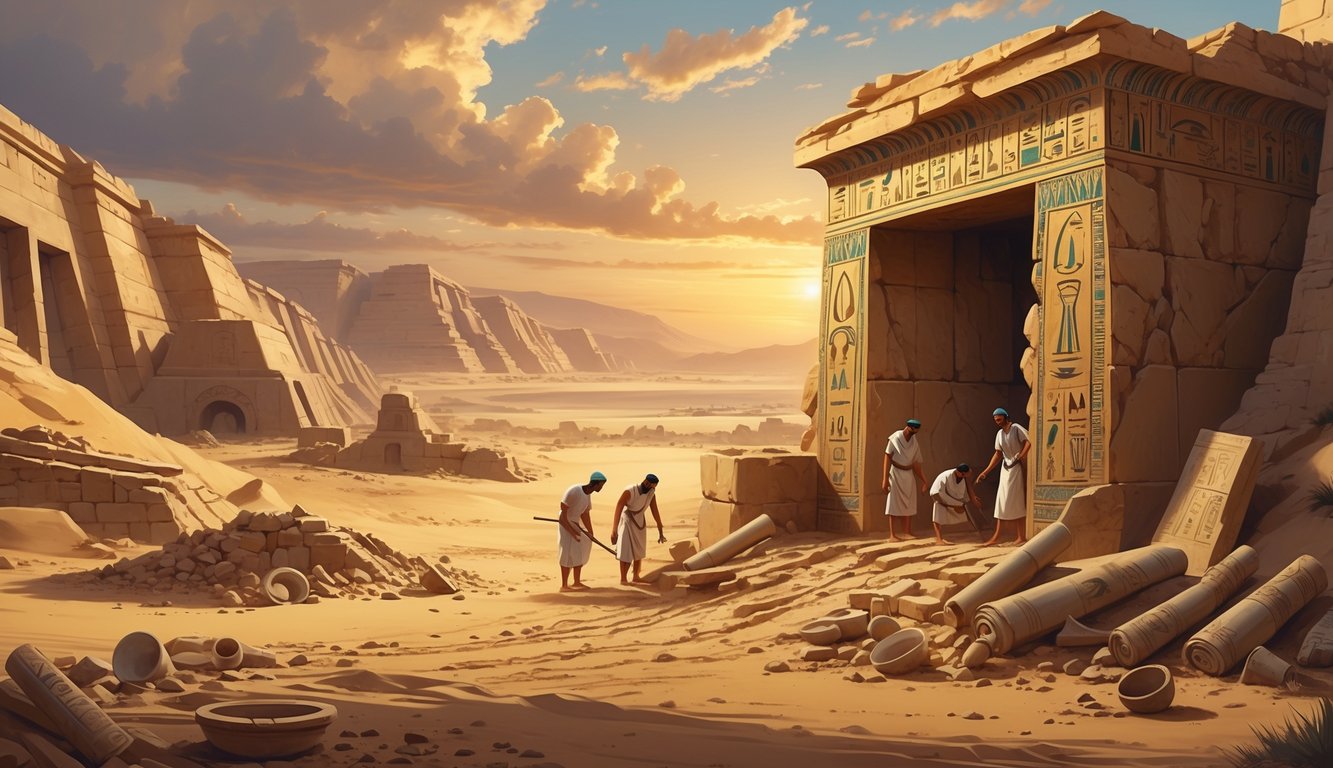
Historians and archaeologists have searched for Cleopatra VII’s final resting place for centuries. Evidence from ancient writers, ruins, and modern excavations has not revealed a confirmed burial site.
Why Cleopatra’s Burial Remains Unsolved
Ancient accounts say Cleopatra was buried with Mark Antony after their deaths in 30 BCE. These records do not give exact location details.
Archaeologists have searched Alexandria and Taposiris Magna, but they have not found conclusive proof. Some think her tomb may be under modern buildings or submerged by coastal changes.
Political instability and urban growth make excavation difficult. Even promising finds, like a tunnel under Taposiris Magna, remain unverified.
Researchers rely on limited texts and scattered artifacts, which often lead to conflicting theories. This uncertainty keeps the mystery alive.
Legends and Myths About the Tomb
Cleopatra’s tomb has inspired stories that mix history with legend. Some tales claim it holds treasures, while others imagine secret chambers to protect her remains.
Medieval and early modern travelers repeated reports of a lavish burial chamber filled with gold and royal regalia. These stories helped shape her image as a powerful ruler.
Modern culture sometimes suggests the tomb is cursed or guarded, echoing myths from other famous Egyptian burials. No evidence supports these ideas, but they attract public attention.
Such myths often overshadow the historical reality. They also keep interest in the search alive.
Historical Significance of the Discovery
Finding Cleopatra’s tomb would give direct evidence about her final days and burial customs. It could confirm or challenge ancient accounts about her life and reign.
The discovery would add a major chapter to Egyptian history. It might offer insights into the end of the Ptolemaic dynasty and its ties with Rome.
Artifacts from the tomb could reveal details about Cleopatra’s life, religious beliefs, and art of her era. For the public, such a find would connect ancient history to real evidence.
Cleopatra VII: Life, Death, and Legacy
Cleopatra VII ruled Egypt during a time of political instability and rising Roman power. Her leadership and alliances shaped the final chapter of the Ptolemaic dynasty.
Cleopatra’s Rise to Power
Cleopatra VII Philopator was born in 69 BCE into the Ptolemaic dynasty, a Greek-speaking royal family ruling Egypt since Alexander the Great. She became co-ruler with her father, Ptolemy XII, and later with her younger brothers.
When her father died in 51 BCE, Cleopatra became pharaoh alongside her brother Ptolemy XIII. Political tensions soon led to conflict between them.
In 48 BCE, she allied with Julius Caesar, who helped her reclaim the throne after a civil war. This partnership strengthened Egypt’s position against Rome.
Cleopatra gave birth to Caesar’s son, Caesarion, in 47 BCE. This secured her royal lineage.
Political Alliances and Relationships
Cleopatra used diplomacy and personal relationships to protect Egypt’s independence. After Caesar’s assassination in 44 BCE, she aligned with Mark Antony, a powerful Roman leader.
Their partnership was both political and personal. They had three children and ruled territories in the eastern Mediterranean.
Cleopatra and Mark Antony presented themselves as divine rulers, linking their image to Egyptian gods. Their alliance angered Octavian (later Augustus), who saw them as a threat to his rise in Rome.
Roman propaganda portrayed Cleopatra as a dangerous foreign queen. This image shaped her legacy in Roman history.
The Fall of the Ptolemaic Dynasty
The conflict between Octavian and the couple ended at the Battle of Actium in 31 BCE. Antony and Cleopatra’s forces were defeated, forcing them to retreat to Egypt.
In 30 BCE, with Octavian’s army closing in, Mark Antony died by suicide. Cleopatra followed days later, possibly by poison or snake bite.
She was buried alongside Antony in a now-lost tomb, according to historical accounts. After her death, Egypt became a Roman province.
Her son Caesarion was executed on Octavian’s orders. This ended nearly 300 years of Ptolemaic rule.
Ancient Accounts and Literary Sources
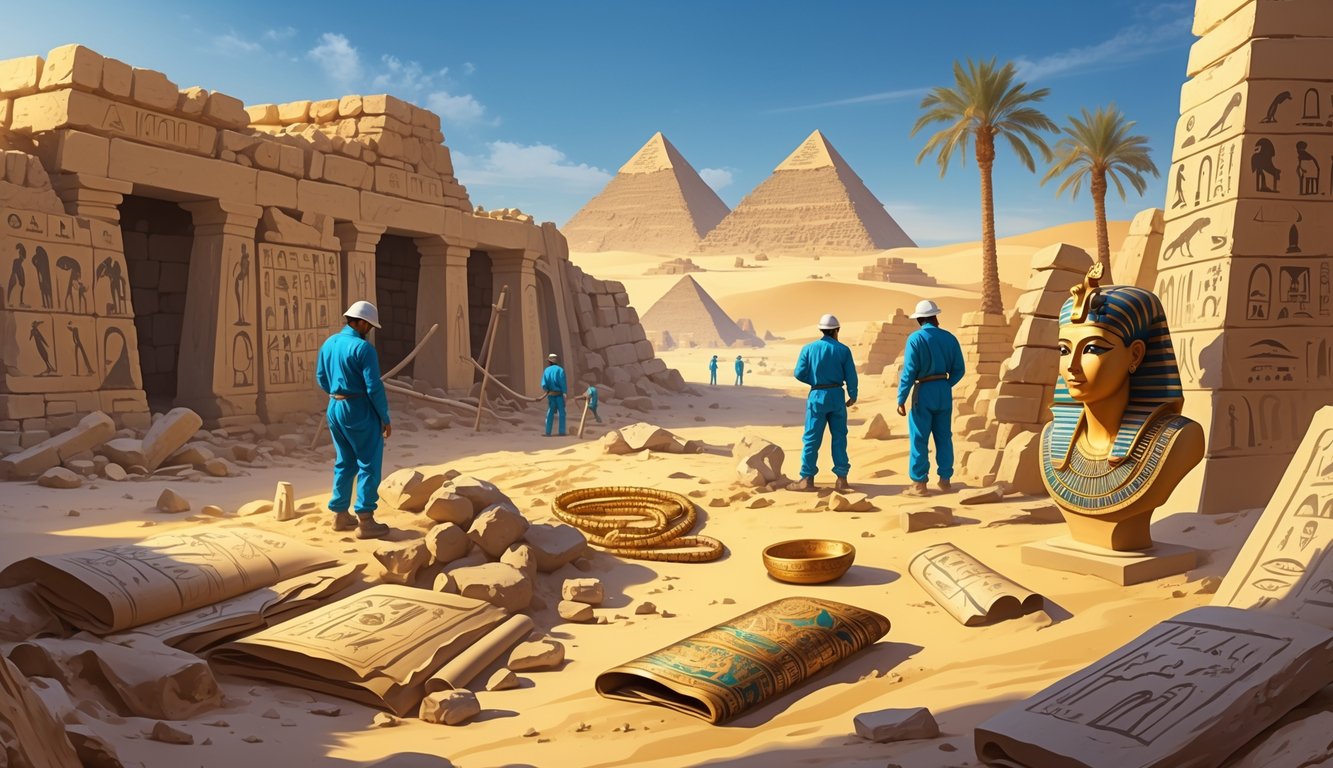
Ancient writers recorded details about Cleopatra’s death and burial that still guide research. These texts describe her tomb and the events of her final days.
Plutarch’s Descriptions
The Greek historian Plutarch wrote about Cleopatra more than a century after her death. In Life of Antony, he described her last days in Alexandria.
He claimed she was buried with Mark Antony in a grand mausoleum. The structure was said to hold treasures of gold, silver, and royal ornaments.
Plutarch also wrote that Roman Emperor Augustus allowed the burial to take place. This suggests a level of respect or political calculation.
Historians note that Plutarch relied on earlier sources. His account blends facts with moral lessons common in ancient biographies.
Cassius Dio and Other Historians
Cassius Dio, a Roman historian, described Cleopatra’s death and burial with a focus on the political consequences. He wrote that Augustus ordered the preservation of Cleopatra’s body, possibly to display her as a conquered ruler before burial.
Other ancient authors, such as Suetonius and Strabo, added small details. Strabo mentioned royal tombs in Alexandria but did not confirm which belonged to Cleopatra.
These accounts offer fragments of information. They differ in focus and reliability, leaving debate about the tomb’s location.
Roman and Egyptian Perspectives
Roman writers often described Cleopatra as a political threat and a symbol of Eastern luxury. This perspective influenced how they wrote about her burial.
Egyptian traditions placed great importance on the burial of rulers. Tombs served as sacred spaces tied to the afterlife.
If Cleopatra’s burial followed Egyptian customs, her tomb may have been built with religious symbolism, possibly outside central Alexandria. Roman control after her death means the design could have blended both cultures.
These differences shape how archaeologists interpret ancient texts and search for the tomb.
Theories on the Location of Cleopatra’s Tomb
Archaeologists have studied ancient texts, coastal ruins, and inland temples to narrow down possible burial sites. Some focus on areas tied to Cleopatra’s rule, while others explore locations linked to her final days.
Alexandria and Its Submerged Secrets
Many historians believe Cleopatra was buried in Alexandria, the city she ruled. In ancient times, Alexandria was a thriving port and home to landmarks like the Pharos Lighthouse.
Much of the ancient city now lies underwater due to earthquakes and tsunamis. Divers have explored the submerged ruins, including palace remains, searching for her tomb.
Some experts think the tomb could be near the royal quarter, where Cleopatra lived and died. Teams have searched the seabed for chambers or artifacts matching ancient descriptions.
Underwater excavations have revealed statues, jewelry, and inscriptions. However, no confirmed evidence of Cleopatra’s burial has been found in these sites.
Alternative Sites Across Egypt
Some researchers suggest Cleopatra may have been buried away from Alexandria to protect her remains. One leading theory focuses on Taposiris Magna, a temple complex about 25 miles west of the city.
Archaeologist Kathleen Martinez has led digs there for years, uncovering tunnels, coins, and mummies from the same period. She believes the temple’s connection to the goddess Isis could link it to Cleopatra’s burial.
Findings at Taposiris Magna include ceremonial artifacts and evidence of a royal presence. Still, no direct proof ties the site to Cleopatra.
Other ideas point to undiscovered tombs along the Nile or in remote desert areas. These theories remain unproven but keep the search active.
Taposiris Magna: The Leading Candidate
Taposiris Magna sits on Egypt’s northern coast, west of Alexandria. Builders constructed it during the Ptolemaic Period.
The site holds ruins of a temple, ancient walls, and burial sites. Archaeologists believe its location, history, and religious ties make it a strong candidate for Cleopatra VII’s final resting place.
History of Taposiris Magna
Ptolemy II founded Taposiris Magna in the 3rd century BCE. The city became a key coastal settlement during the Ptolemaic Period and linked trade routes between the Mediterranean and the Nile Delta.
The city’s large temple complex stood at its center. Its design combines Egyptian and Hellenistic styles, showing the cultural blend under Ptolemaic rule.
The name Taposiris Magna means “Tomb of Osiris.” This name points to ancient funerary traditions and may explain why the city was chosen for important burials.
Archaeologists uncovered city walls, harbor remains, and underground structures. These finds show that Taposiris Magna served as both a religious site and a fortified urban center.
Religious Importance of Isis and Osiris
The main temple at Taposiris Magna honored Isis and Osiris, two of Egypt’s most important deities. Egyptians believed Osiris ruled the afterlife, while Isis represented protection and rebirth.
The cult of Isis gained popularity during the Ptolemaic Period and spread from Egypt to Greece and Rome. Temples dedicated to Isis became pilgrimage sites for rituals about death and resurrection.
At Taposiris Magna, priests may have performed ceremonies reenacting the myth of Isis reassembling Osiris’s body. These rituals were meant to ensure eternal life for the deceased.
Evidence of Royal Burials
Dr. Kathleen Martinez’s team uncovered a 1,305-meter tunnel beneath the temple, which is partly submerged in water. This impressive tunnel may have connected sacred spaces or hidden burial chambers.
Artifacts found nearby include coins with Cleopatra’s image and statues of Isis. These discoveries suggest a direct link between Cleopatra and the site.
Researchers think the temple’s connection to Osiris and its secure underground structures made it a good place to protect a royal tomb. The site’s distance from central Alexandria may have also helped keep it safe from looting.
Modern Archaeological Efforts
Archaeologists continue searching for Cleopatra VII’s final resting place using targeted excavations and advanced imaging tools. Their work at ancient sites has revealed new structures, artifacts, and underground features that may hold clues to her burial location.
Key Excavations and Discoveries
Since 2005, Dr. Kathleen Martinez from the University of Santo Domingo has led excavations at Taposiris Magna, a ruined city west of Alexandria. Her team believes the temple complex could be linked to Cleopatra’s burial.
One major discovery is a 4,300-foot-long tunnel beneath the temple, which experts describe as a remarkable engineering achievement. The tunnel, found in 2022, runs about 13 meters underground and may connect to hidden chambers.
Excavations have also revealed coins with Cleopatra’s image, statues, and burial shafts. These finds support the idea that the site held significance during the Ptolemaic period.
Other Egyptologists, such as Dr. Zahi Hawass, have explored alternative locations like Alexandria’s ancient harbor, where parts of the royal quarter now lie underwater. These searches show the challenge of finding her tomb.
For more about the tunnel, see the tunnel beneath Taposiris Magna.
Role of Ground-Penetrating Radar and Technology
Modern ground-penetrating radar (GPR) helps map underground structures without causing damage. At Taposiris Magna, GPR surveys detected the tunnel and possible voids that might be burial chambers.
GPR sends radar pulses into the ground and measures reflections to find anomalies. This allows archaeologists to focus digs on promising areas rather than digging blindly.
Other tools, like 3D modeling and remote sensing, help Egyptologists visualize what lies below the surface. These methods save time and protect fragile structures.
By combining traditional excavation with modern imaging, teams work more efficiently and accurately. Technology continues to improve the search for Cleopatra’s tomb and gives archaeologists a clearer view of Egypt’s ancient sites.
Dr. Kathleen Martinez and the Ongoing Search
Dr. Kathleen Martinez, a Dominican archaeologist, has spent nearly two decades searching for Cleopatra VII’s tomb. She focuses on Taposiris Magna in Egypt, where evidence suggests the queen may have been buried after her death in 30 BCE.
Martinez’s Hypothesis
Dr. Martinez believes Cleopatra chose to be buried with Mark Antony in a temple dedicated to Isis. This theory comes from Cleopatra’s strong connection to the goddess, who is linked to love, death, and rebirth.
She began her search in 2005 with the Egyptian Ministry of Antiquities. Taposiris Magna, west of Alexandria, became her main excavation site.
Martinez uses historical texts, ancient religious practices, and the site’s symbolic importance to guide her work. She suggests that Roman accounts of Cleopatra’s burial may be incomplete or misleading, and that the tomb may not be in Alexandria.
Her team has spent years excavating, mapping, and analyzing artifacts. Their careful work has uncovered structures and objects that support her theory.
Major Findings at Taposiris Magna
Excavations at Taposiris Magna have revealed coins with Cleopatra’s image, statues, and ceremonial objects from the Ptolemaic period.
A 1,300-meter underground tunnel beneath the temple complex stands out as a major discovery. Some describe it as an “engineering marvel.” Researchers think it could lead to hidden chambers.
Martinez’s team also found burial shafts with mummies that have golden tongues. This practice relates to ancient Egyptian beliefs about speaking in the afterlife.
These discoveries, along with architectural evidence, have led to speculation that the site could hold Cleopatra’s tomb. Ongoing excavations continue to explore deeper sections of the temple and tunnel system.
For more details, see the tunnel discovery at Taposiris Magna.
Other Influential Figures in the Search
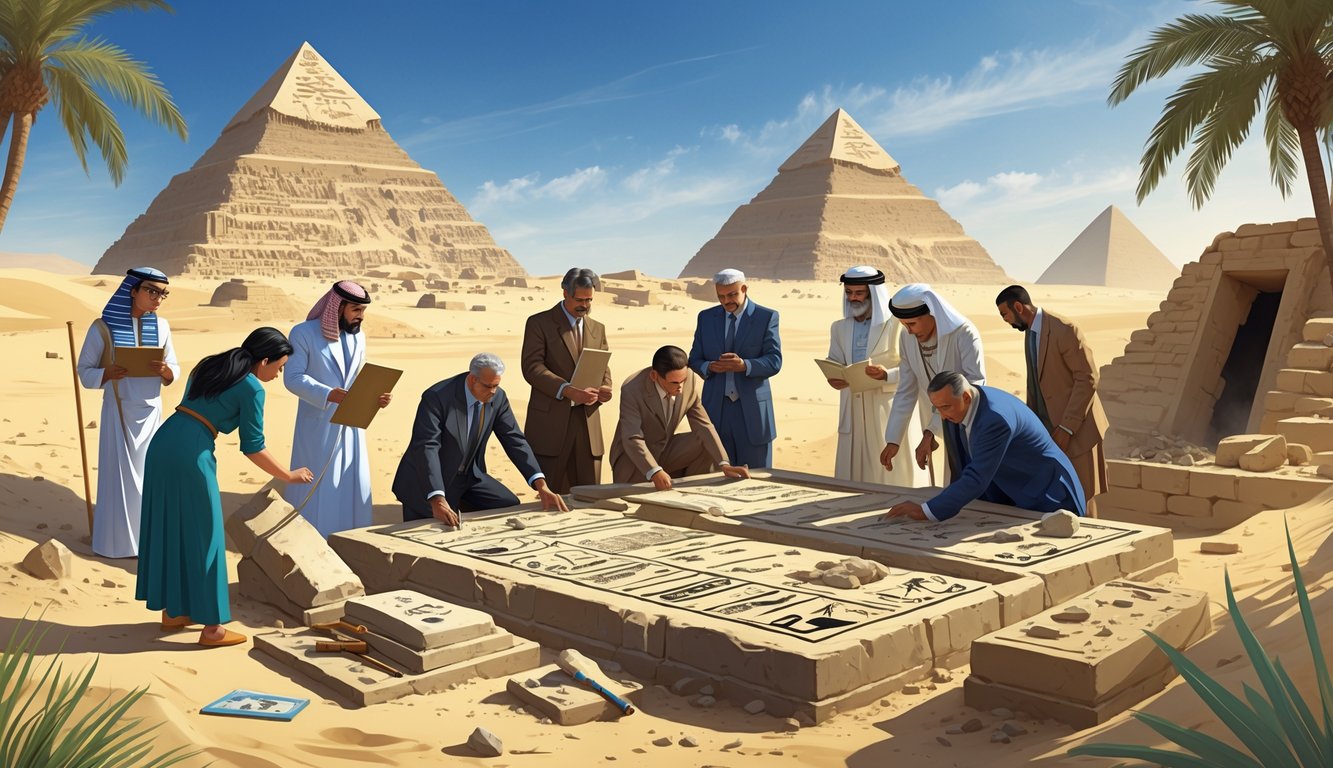
Several archaeologists and researchers have played important roles in the search for Cleopatra’s tomb. They use traditional excavation and modern technology to study both land and underwater sites around ancient Alexandria.
Dr. Zahi Hawass and His Contributions
Dr. Zahi Hawass, a well-known Egyptian archaeologist and former Minister of Antiquities, has led many digs related to Cleopatra’s burial place. He has worked at Taposiris Magna, a temple complex west of Alexandria that some believe may hold the tomb.
Hawass organized teams to explore underground tunnels, burial shafts, and chambers. These excavations uncovered mummies, coins with Cleopatra’s image, and statues from the Ptolemaic period.
He also uses ground-penetrating radar and other non-invasive methods before digging. This helps identify promising sites and protects fragile structures. His leadership has brought global attention to the project and involved experts from around the world.
Franck Goddio and Underwater Archaeology
Franck Goddio, a French underwater archaeologist, focuses on the submerged ruins of ancient Alexandria. Earthquakes and tidal changes have caused much of the city’s royal quarter, including Cleopatra’s palace, to sink beneath the harbor.
Goddio’s team maps and excavates these underwater sites, recovering artifacts like statues, jewelry, and ceremonial objects. Some finds relate to Cleopatra’s reign and may have come from her palace complex.
He uses advanced sonar mapping, underwater photography, and careful artifact recovery. These methods reveal detailed layouts of sunken structures and help historians learn more about Cleopatra’s world.
You can read more in the Tomb of Antony and Cleopatra entry.
Challenges and Controversies in the Hunt
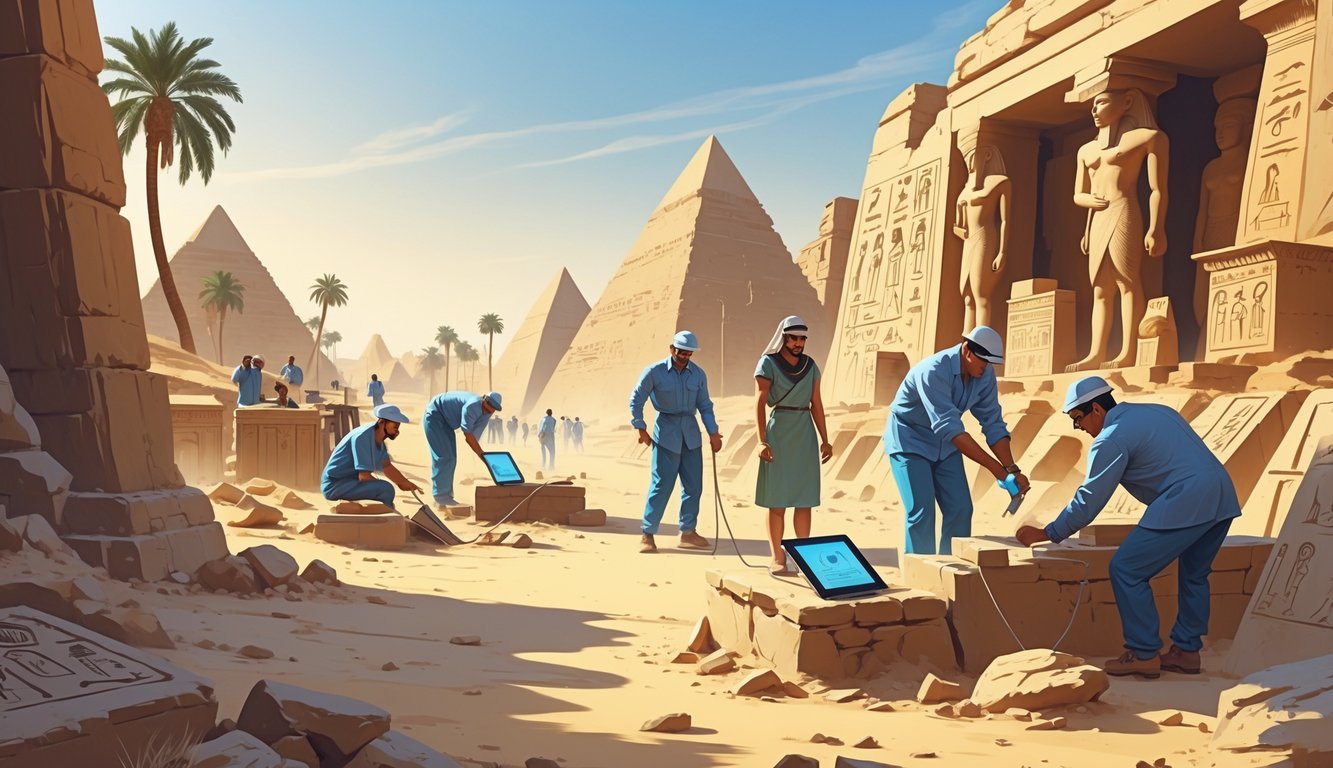
The search for Cleopatra’s tomb brings both scientific disagreements and practical difficulties. Archaeologists must balance historical records with new discoveries while working at sites that are hard to access and protect.
Debates Among Scholars
Researchers disagree about where Cleopatra’s tomb might be. Some think it is near or under modern Alexandria, possibly in areas now covered by buildings or underwater. Others, like Dr. Kathleen Martinez, focus on Taposiris Magna, where recent digs have revealed interesting finds.
Ancient Roman writers add to the confusion. Their accounts may be biased or incomplete, making it hard to know the truth.
Experts also debate the type of tomb Cleopatra would have chosen. Some believe she would be buried with Mark Antony in a grand royal tomb, while others think political turmoil may have forced a simpler burial.
These differences affect where funding goes and which sites get priority. This can slow progress and cause tension among archaeologists.
Obstacles in Archaeological Exploration
Excavating in Egypt is difficult due to logistics and the environment. Many possible sites are under cities, making large digs hard without disrupting daily life. Others are underwater and need special techniques.
Urban growth in Alexandria covers much of the ancient city. Archaeologists often work in small spaces or must wait for construction to pause before they can dig.
Natural factors add more problems. Coastal erosion and changing water levels have damaged or hidden ancient structures. Sand and sediment can bury evidence for centuries.
Security and permits also complicate things. Teams must follow strict regulations from Egypt’s Ministry of Tourism and Antiquities, which can delay projects but help protect heritage.
Some digs, like the search at Taposiris Magna, require years of patient work before making important discoveries. The slow pace tests both resources and morale.
The Potential Impact of Discovering Cleopatra’s Tomb
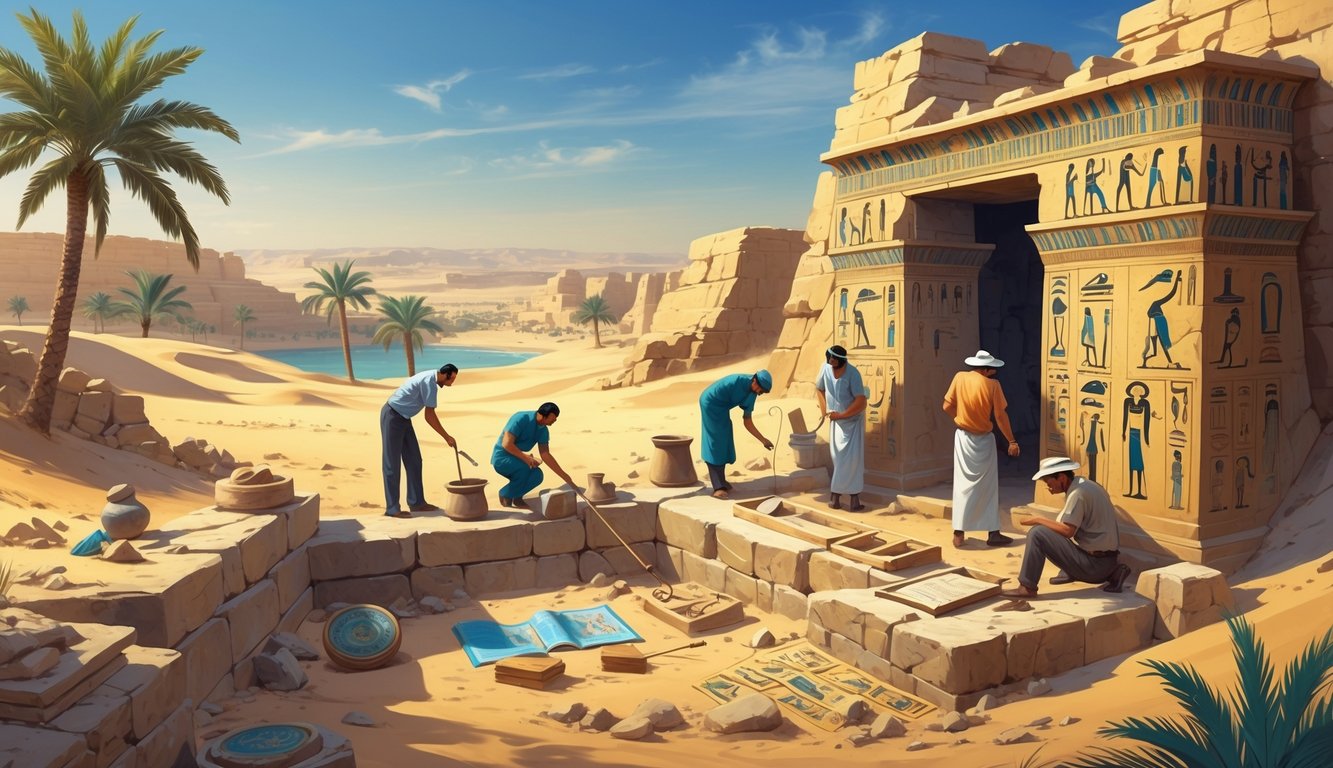
Finding Cleopatra VII’s burial site could provide rare physical evidence beyond what ancient texts and coins reveal. It might also offer artifacts that connect her personal life with the political events of her time. Such a discovery could shape historical research and boost public interest in ancient Egypt.
Insights Into Ancient Egyptian Culture
If archaeologists locate the tomb, they can study burial goods and architectural style. They can also examine inscriptions from the late Ptolemaic period.
These details might show how Greek and Egyptian traditions blended under Cleopatra’s rule. Objects such as jewelry or ceremonial items can reveal how the queen presented her image to her people.
Written records may show the role of women in leadership during that era. The Taposiris Magna site contains structures that mix Egyptian temple design with Greek influences.
Researchers can study the tomb in this setting to clarify how religious practices changed in Alexandria’s final years before Roman control. Archaeologists can use scientific analysis, such as residue testing on containers, to learn about diet and trade goods.
They can also discover more about burial rituals. These findings add to the timeline of Egyptian history in the 1st century BCE.
Cleopatra’s Legacy in Modern Times
Roman propaganda, later literature, and modern film have long shaped Cleopatra’s image. A confirmed tomb could help historians focus on documented history instead of legend.
If researchers preserve her remains, they could use forensic study to learn about her ancestry and health. They might also discover her cause of death.
Newly found artifacts could go on display in museums. This would increase public interest in ancient Egypt.
Tourism in the Alexandria region could grow, much like what happened after the discovery of Tutankhamun’s tomb.
Writers and filmmakers could create updated biographies and documentaries. Teachers could use new classroom materials, helping students see Cleopatra’s legacy through verified evidence.