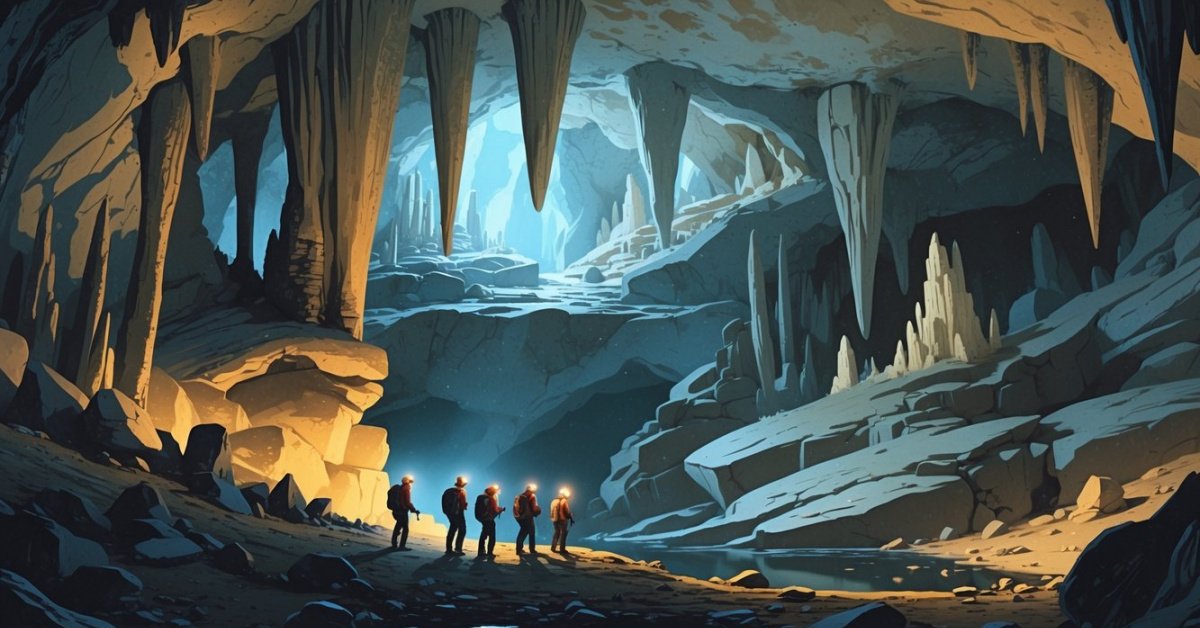
Beneath the rolling hills of central Kentucky lies a vast underground world. Mammoth Cave stretches for more than 426 miles of explored passageways, making it the longest known cave system on Earth.
You can step into a landscape shaped over millions of years. Towering chambers, winding tunnels, and unique formations reveal the story of Earth’s past.
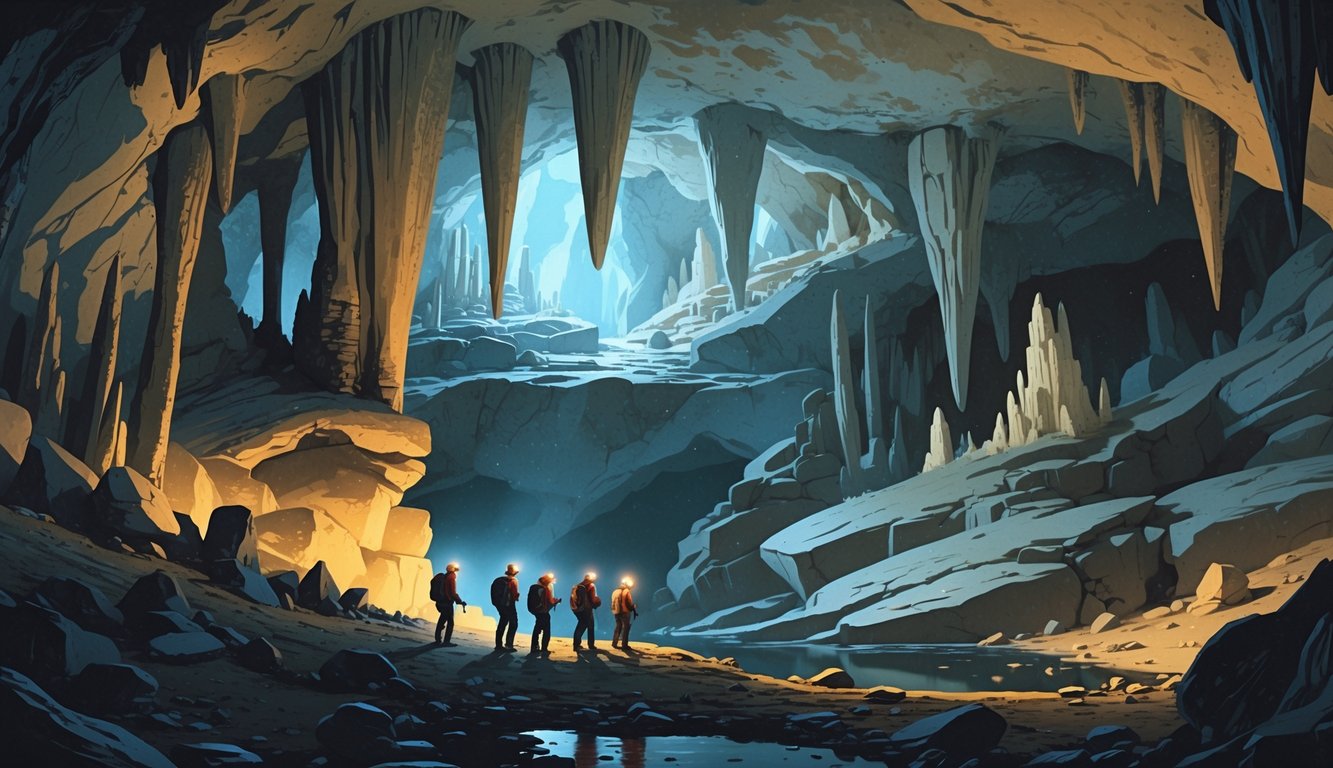
Adventurers discover more than geology inside Mammoth Cave. The cave holds traces of ancient peoples and early explorers.
Scientific breakthroughs have taken place underground. From the massive rooms of the Historic Tour to the shadowy depths of Violet City, each section reveals a different side of this National Park.
The journey through Mammoth Cave is more than just seeing rock formations. Visitors navigate a labyrinth where nature and history meet.
Water, time, and human curiosity have shaped one of Kentucky’s greatest treasures.
Unveiling the Mystery: Mammoth Cave’s Underground Wonders
Mammoth Cave in central Kentucky stretches through hundreds of miles of mapped tunnels. Geology, history, and unanswered questions meet here.
Visitors see vast chambers, unusual rock formations, and traces of human activity from thousands of years ago.
The Allure of the Longest Cave System
Mammoth Cave holds the record as the longest known cave system in the world, with over 400 miles of explored underground passageways. Wide corridors, narrow crawlways, and vertical shafts make up this network.
Explorers map new sections each year. The cave’s size means that even frequent visitors rarely see the same route twice.
The underground environment stays at a steady 54°F (12°C) year-round. This stable temperature preserves delicate mineral formations.
Gypsum flowers, stalactites, and stalagmites formed over millions of years. These features are highlights for visitors.
Notable features often visited on tours:
- Frozen Niagara – a flowstone formation resembling a frozen waterfall
- Grand Avenue – a massive passage stretching for miles
- Historic Entrance – the main entry point used for centuries
Legends and Unexplained Phenomena
Stories about Mammoth Cave include historical accounts and unexplained events. Native American artifacts found deep inside show that people entered the cave more than 4,000 years ago.
Some areas still contain ancient cane torches and petroglyphs. One famous tale is the Mammoth Cave Mystery Walker, a figure reportedly seen by early explorers and modern visitors.
No evidence confirms these sightings, but the legend adds to the cave’s intrigue. Visitors have also reported unusual sounds in isolated chambers.
Researchers often attribute these sounds to dripping water, shifting rock, or echoes in the vast spaces. Some remain unsure about the cause.
Historical records describe miners, guides, and travelers who became lost in the maze-like tunnels before modern mapping. These stories highlight how easy it is to lose one’s bearings in such a complex system.
Why Mammoth Cave Captivates Explorers
Mammoth Cave attracts scientists, history enthusiasts, and casual tourists. Geologists study the cave as a living record of Earth’s natural processes.
Archaeologists find clues about ancient cultures here. Guided tours range from short walks to challenging crawls through tight spaces.
Many explorers feel drawn to the mystery in Mammoth Cave because it blends natural beauty with the thrill of the unknown. The mix of mapped passages and unexplored areas keeps the sense of discovery alive.
Some visitors remember the silence and darkness most. Others find it fascinating that a hidden world still lies beneath Kentucky’s rolling hills.
Kentucky’s Hidden Gem: A Geographic Overview
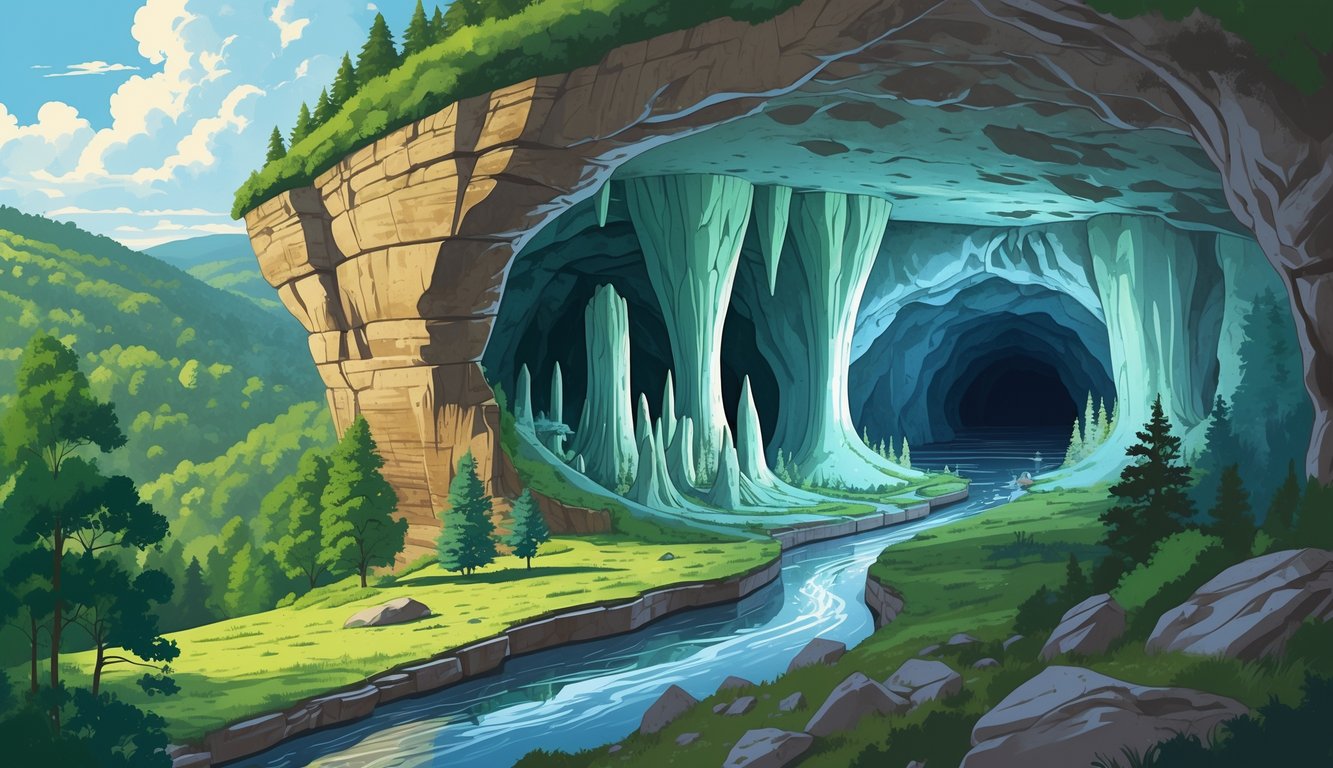
Mammoth Cave sits in south-central Kentucky. Rolling hills hide the entrance to the world’s longest known cave system.
The area blends accessible park facilities with wild, protected lands. Both natural beauty and cultural history are preserved here.
Location and Access
Mammoth Cave National Park is located mainly in Edmonson County. Parts of the park extend into Hart and Barren counties.
The park covers over 52,000 acres of protected land. Visitors can reach the park by car via Interstate 65.
The closest major city is Bowling Green, about 30 minutes away. Louisville is roughly 90 minutes to the north, and Nashville, Tennessee, is about 90 minutes to the south.
The park’s Visitor Center serves as the main entry point for cave tours, maps, and ranger information. Nearby towns such as Cave City and Park City offer lodging and dining options.
Public transportation is limited, so most visitors drive. Parking is available at the Visitor Center and trailheads.
The park is open year-round, though tour schedules change with the seasons.
The Surrounding Landscape
Above ground, the park features forests, river valleys, and limestone hills. The Green River and Nolin River flow through the area, creating wetlands and supporting diverse wildlife.
The land sits on a karst landscape. Water has shaped the soluble rock over millions of years.
This geology creates sinkholes, springs, and underground streams that connect to the cave system. Trails range from short, paved walks to backcountry routes.
Popular spots include the Green River Bluffs Trail and the Big Hollow Trail for hiking and biking. Wildlife is abundant—white-tailed deer, wild turkeys, and over 130 species of birds can be seen.
The park also protects rare plants that thrive in the unique soil and climate.
Significance to Kentucky
Mammoth Cave is a UNESCO World Heritage Site and an International Biosphere Reserve. Hundreds of thousands of visitors come each year, making it a major part of Kentucky’s tourism economy.
The cave’s 400+ miles of mapped passages hold archaeological evidence of Native American exploration dating back thousands of years. This history adds cultural depth to its natural value.
For Kentucky, the park is both a natural wonder and a symbol of environmental preservation. It supports local communities through tourism jobs, conservation programs, and educational outreach.
Mammoth Cave’s scale and history make it one of the state’s most recognized landmarks. Visitors often consider it a must-see when exploring the region.
The Formation of an American Natural Wonder
Mammoth Cave in Kentucky is the longest known cave system in the world, with more than 400 miles of mapped passageways. Its size and variety of rock formations make it one of the most remarkable American natural wonders.
Millions of years of geological change shaped its tunnels, chambers, and underground rivers.
Geological Origins and Development
The cave began forming more than 10 million years ago in thick layers of limestone. Acidic rainwater and groundwater slowly dissolved the rock, creating small cracks.
These cracks widened into passageways and chambers. Geologists call this process chemical weathering.
The limestone bedrock, rich in calcium carbonate, reacts with carbonic acid in water. This natural reaction carved out the cave’s intricate network.
A protective sandstone layer sits above the limestone. This harder rock slowed erosion and helped preserve the cave’s structure.
Without the sandstone, many chambers would have collapsed. Scientists still explore the connections between the Mammoth Cave system and nearby caves.
Some believe there may be hundreds of miles still undiscovered. The system could be even larger than the current mapped extent.
Unique Cave Features and Formations
Water and mineral deposits have shaped many features inside the cave. Stalactites hang from ceilings, while stalagmites rise from the floor.
In some areas, the two meet to form solid columns. Other formations include flowstone, which looks like frozen waterfalls, and gypsum flowers, delicate crystal growths in dry passages.
These features grow slowly, often less than an inch every hundred years. Mammoth Cave also contains rare speleothems made from minerals like mirabilite.
Some of these are found in only a few caves worldwide. The variety of formations makes it a valuable site for geologists and a striking destination for visitors.
For more on these formations, the Flint Ridge Mammoth Cave System offers examples of both common and rare structures.
The Role of Prehistoric Rivers
Long before humans explored it, underground rivers shaped much of the cave. These rivers flowed through cracks in the limestone, carrying away dissolved rock and sediment.
Some passages still contain active streams. Others are dry, marking where water once flowed.
These dry tunnels, called fossil passages, give clues to the cave’s ancient water levels. Prehistoric rivers also created large chambers by eroding softer rock layers.
In some areas, the water carved out spaces big enough to hold entire buildings. Today, parts of the Mammoth Cave National Park still have underground waterways.
These rivers connect to the Green River on the surface. The cave system links to the wider Kentucky landscape.
Exploring Mammoth Cave’s Iconic Chambers
Visitors can see vast stone formations and dramatic height changes. Geological features created over millions of years tell the story of water, minerals, and time.
Mammoth Dome: Towering Majesty
Mammoth Dome rises more than 190 feet from floor to ceiling. Its sheer walls and height give visitors a rare view of large-scale cave architecture.
Water once poured through this chamber and carved the limestone, leaving smooth, vertical surfaces. Today, moisture still drips from above, feeding small formations along the walls.
Guided tours often pause here so visitors can look upward and take in the scale. Lighting along the base and walls highlights the height and texture of the stone.
Because of its size, Mammoth Dome also helps regulate airflow in nearby passages. This feature has made it an important landmark for explorers mapping the system.
Gorin’s Dome: Geological Marvel
Gorin’s Dome is smaller than Mammoth Dome but stands out for its shape and mineral patterns. The chamber’s walls show layers of limestone in different shades.
The dome’s rounded ceiling creates an echo effect, which some tours demonstrate by speaking or clapping. This acoustic feature comes from the smooth, curved surfaces that reflect sound.
Visitors often notice the contrast between the dome’s lighter upper walls and the darker lower sections. This difference comes from mineral staining and changes in water flow.
Named after early cave explorer Frank Gorin, the chamber remains a highlight for those interested in geology. Its compact size lets people see details up close.
The Bottomless Pit: Depths of Mystery
The Bottomless Pit is a vertical shaft that drops about 105 feet. Early explorers once thought it had no end.
Bridges now span the pit, letting visitors cross safely while looking down into the darkness. The view reveals jagged rock edges and shadows that fade into blackness.
Water eroded a vertical crack in the limestone to form the pit, gradually widening it into a shaft. Over thousands of years, falling rock and sediment collected at the bottom.
Today, the Bottomless Pit remains one of the most memorable stops on certain Mammoth Cave tours. Visitors get a safe but thrilling look into the cave’s vertical extremes.
Underground Routes: Navigating the Labyrinth
Mammoth Cave contains over 400 miles of mapped underground passageways. This makes it the longest cave system in the world.
Visitors walk through routes that range from wide, open chambers to tight, twisting corridors. Water carved these passages over millions of years.
These formations create walking trails, narrow squeezes, and large underground avenues. Explorers find both challenges and inspiration as they navigate the cave.
Major Passageways and Avenues
Broad corridors called avenues make up some of Mammoth Cave’s most traveled underground routes. The Main Cave passage stretches for miles with mostly level walking surfaces.
The Broadway section offers a spacious path. Early tour groups once carried lanterns here to light the way.
Wide passages like these make navigation easier. Guided tours often use them.
Other key routes branch off and lead deeper underground. The Cleveland Avenue stands out for its gypsum crystals lining the walls.
Audubon Avenue features large rock formations shaped by slow erosion over centuries.
The National Park Service offers mapped tours of these passageways. These range from short walks to multi-hour treks.
Fat Man’s Misery: A Squeeze Through History
Fat Man’s Misery is a famous, narrow stretch that forces visitors to turn sideways. The walls curve inward, creating a twisting path just a couple of feet wide in places.
This section connects to Tall Man’s Agony, another tight spot that requires careful navigation. Early explorers named these passages because of their physical challenges.
Most visitors can experience Fat Man’s Misery during specific guided tours. Park rangers guide groups through the squeeze and explain its geological history.
The floor is uneven, and the walls show smooth wear from centuries of human contact and water flow.
Famous Underground Landmarks
Several underground landmarks attract attention for their size, shape, or history. The Rotunda is a huge circular chamber near the cave’s entrance and once served as a site for saltpeter mining during the War of 1812.
The Frozen Niagara area features flowstone formations that look like cascading water. This section is accessible on shorter tours and is popular with photographers.
Grand Avenue is a long, winding route that shows the cave’s scale and variety. It links large chambers with smaller side passages.
These landmarks help visitors learn about the cave’s natural and human history. Exploring them reveals the vast underground network of Mammoth Cave National Park.
A Journey Through Time: The Human Story
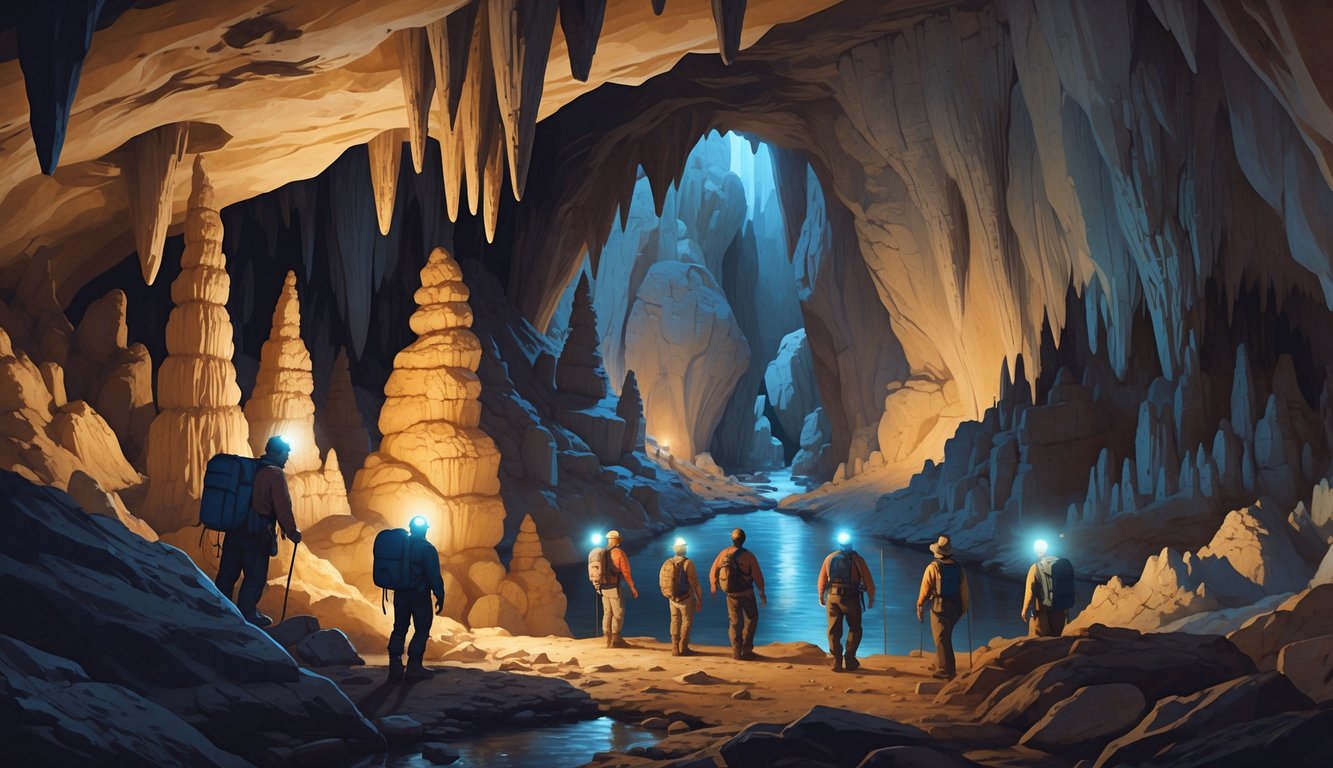
People have explored Mammoth Cave for thousands of years. They left behind tools, footprints, and stories that connect the present to the past.
Over time, its passages provided resources, served as workplaces, and eventually became a protected landmark for visitors worldwide.
Early Discoveries and Native Presence
Archaeological evidence shows that prehistoric Native Americans entered Mammoth Cave at least 5,000 years ago. They traveled deep underground, sometimes more than 19 miles in, to collect minerals like gypsum and epsomite.
Researchers found cane torches, woven footwear, and other tools left behind. These artifacts show they navigated and worked in the dark with skill and purpose.
One remarkable find is a set of ancient human footprints preserved in the cave’s mud. These tracks, over 4,500 years old, offer a rare glimpse into the lives of early explorers.
Learn more about this early history from Mammoth Cave’s archaeological record.
Saltpeter Mining and the War of 1812
In the early 1800s, people used the cave as a key site for saltpeter production. Saltpeter, or potassium nitrate, was essential for making gunpowder.
During the War of 1812, workers mined the cave’s soil and leached it to extract saltpeter for American forces. This operation supplied the military when imports stopped.
Enslaved African Americans did much of the labor. They hauled materials and maintained the leaching vats under tough conditions.
Their skill and endurance kept production steady during the war. You can still see historic mining equipment on guided tours of Mammoth Cave National Park.
From Private Attraction to National Park
After the war, Mammoth Cave became a tourist destination. Private owners hired guides, many of them enslaved men, who became famous for their knowledge of the cave.
Stephen Bishop, an enslaved guide in the mid-1800s, mapped large sections of the cave and led visitors through its most striking chambers. His work helped more people understand the cave’s scale and complexity.
In 1941, the federal government established Mammoth Cave National Park. This move preserved the cave system and surrounding land, ensuring public access and protection for its resources.
Trailblazers and Legends: The Cave Explorers
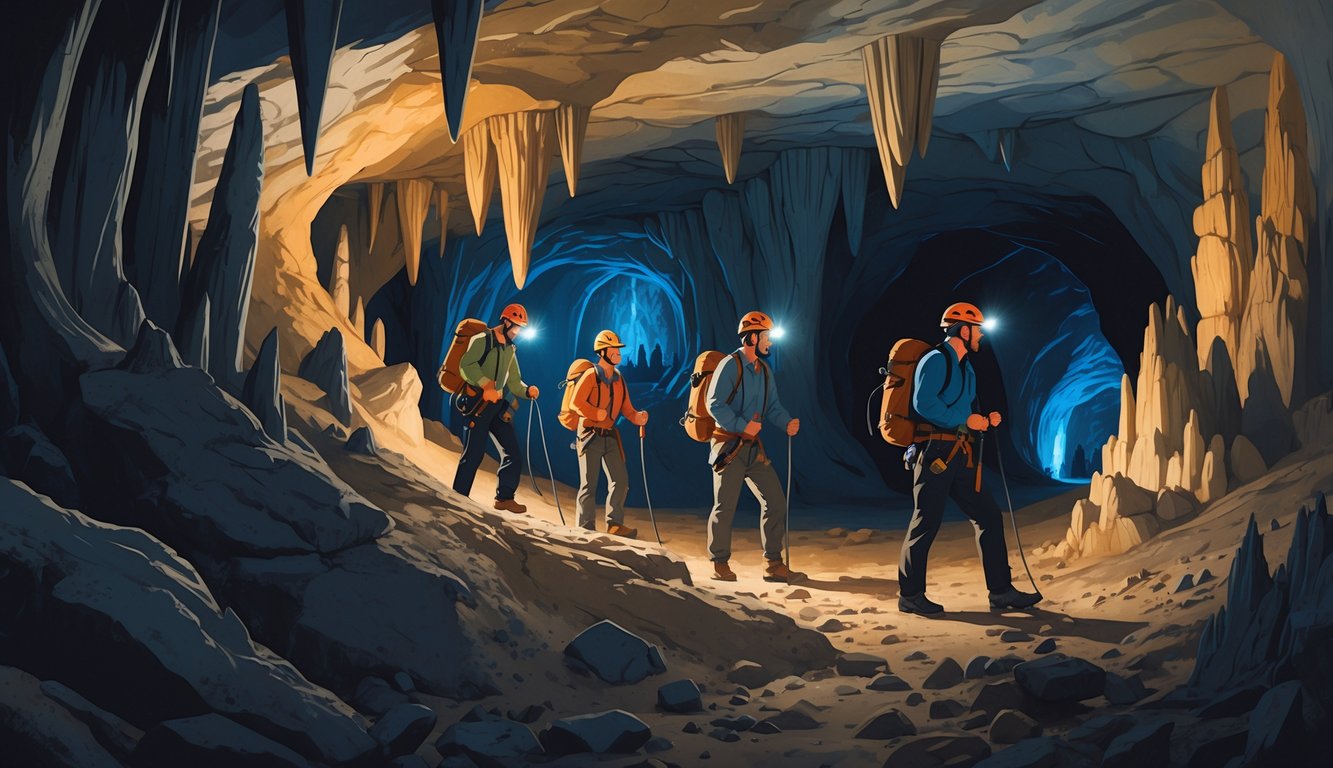
Many important discoveries in Mammoth Cave came from people who spent years exploring and documenting its passages. Their efforts led to mapping, tourism, and scientific study.
Stephen Bishop: Mapping the Unknown
Stephen Bishop, an enslaved man, became one of Mammoth Cave’s most skilled guides in the 1840s. He memorized complex routes and led visitors through miles of passages.
Bishop created one of the first detailed maps of the cave system. His 1845 map was so accurate that explorers used it for decades.
Bishop guided scientists, tourists, and writers through the cave. He often named new features and recorded them for future explorers.
His legacy remains important in both cave history and the history of the slave experience in Kentucky.
Other Notable Guides and Explorers
Other guides also shaped Mammoth Cave’s history. Mat and Nick Bransford, both African American and formerly enslaved, continued leading tours and sharing their knowledge.
In the 20th century, Floyd Collins became famous after his tragic 1925 entrapment in a nearby cave. His story drew national attention and influenced the creation of Mammoth Cave National Park.
Modern exploration teams have mapped over 400 miles of passages. Recent work has revealed new underground passages, proving that the cave still holds secrets.
The Mammoth Cave Experience Today
Visitors to Mammoth Cave National Park can choose from several guided and self-guided tours. Each tour offers a different look at the world’s longest known cave system.
The park provides safety measures, accessibility options, and guidance for newcomers to cave exploration.
Tour Options and Visitor Highlights
The park offers tours for all activity levels. Short, paved walks like the Frozen Niagara Tour showcase colorful formations with few stairs.
Longer routes, such as the Historic Tour, pass through large chambers and narrow passages like Fat Man’s Misery. Adventurous visitors can join crawling tours that explore less-developed areas.
These require helmets, kneepads, and a willingness to get muddy. Families often choose the Domes and Dripstones Tour for its scenery and moderate difficulty.
Some tours highlight history, including stories of prehistoric miners and 19th-century explorers. Others focus on geology and point out features like gypsum crystals and massive domes.
Tickets should be booked in advance through the official Mammoth Cave tour site because popular tours often sell out.
Safety and Accessibility
Park rangers give safety briefings before each tour. Visitors learn to stay with the group, use handrails, and watch their step on uneven surfaces.
Most tours have lighting, but some sections remain dim to protect delicate formations. Visitors should wear sturdy shoes with good grip.
The park provides helmets for tours that require crawling or low ceilings. Accessibility varies by route.
The Accessible Cave Tour uses an elevator and smooth walkways for those with mobility needs. Rest areas are available on certain tours, and service animals are allowed according to park rules.
The cave’s temperature stays around 54°F year-round. Light jackets are recommended even in summer.
Tips for First-Time Explorers
First-time visitors should arrive early for parking, ticket pickup, and restrooms. Food, drinks, and large bags are not allowed in the cave.
A small flashlight can be helpful, though tours have lighting. Comfortable walking shoes and layered clothing make the visit easier.
Those sensitive to enclosed spaces should pick tours with larger chambers and shorter durations. Reading the tour descriptions before booking helps match the right route to personal comfort and ability.
Photography is allowed, but tripods and flash may be restricted on some tours.
Conservation and Preservation Efforts
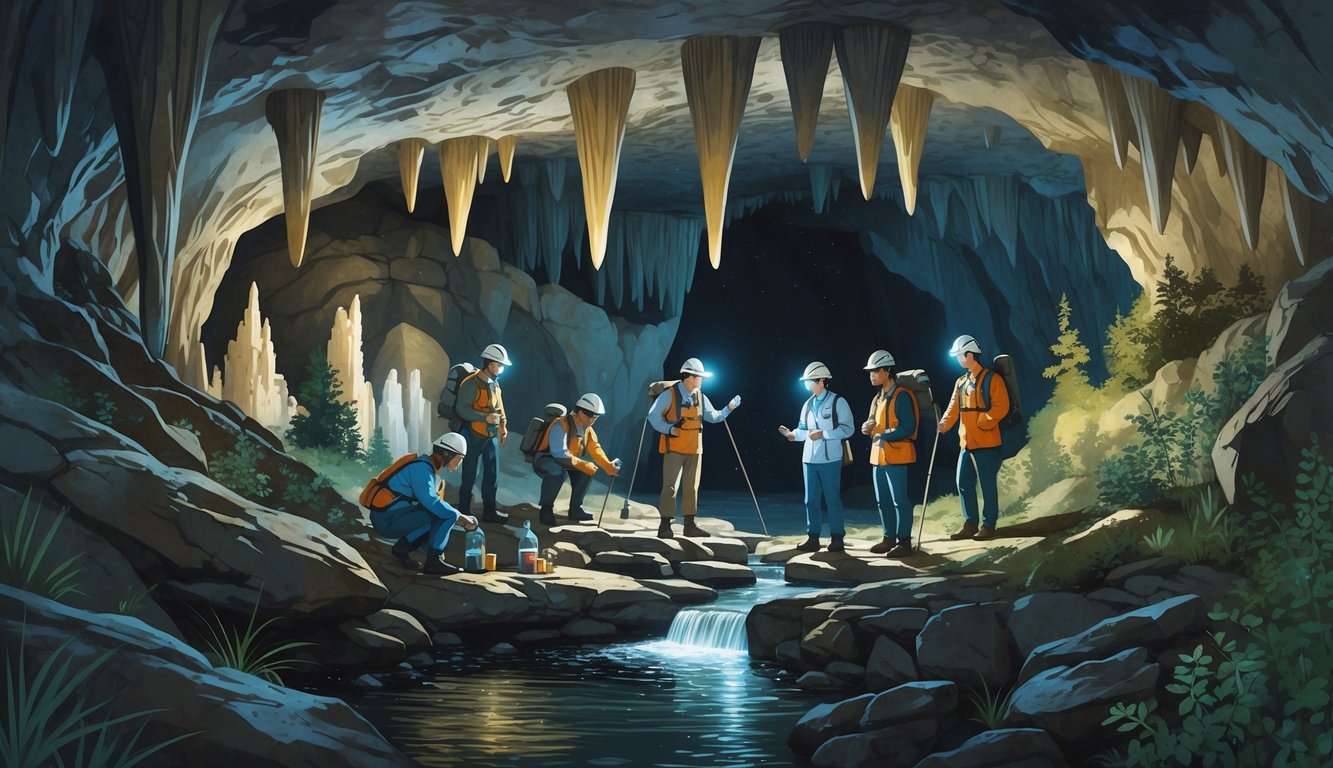
Mammoth Cave National Park relies on careful management to protect its underground passages and the life that depends on them. Efforts focus on both the cave’s geology and the surface environments that support its biodiversity.
Protecting the Cave Ecosystem
The cave’s ecosystem is highly sensitive to changes in water quality, temperature, and light. Even small disturbances can harm species found nowhere else, such as the endangered Kentucky cave shrimp and the Indiana bat.
Park staff monitor groundwater to prevent contamination from nearby development or agriculture. They limit artificial lighting inside the cave to reduce algae growth, which can damage rock formations.
Visitors play a role, too. Rules such as staying on marked trails and avoiding contact with formations help prevent damage.
Educational programs explain why touching formations leaves oils that stop mineral growth. Surface habitats are also important.
The park protects forests, rivers, and wetlands that feed the cave system and provide food for cave-dwelling animals. You can read more about these efforts in Protecting Mammoth Cave for Future Generations.
Sustaining a Natural Wonder for Future Generations
UNESCO recognizes Mammoth Cave as a World Heritage Site and one of the world’s most valuable natural wonders. This status brings international attention and support for conservation.
The park manages tourism through guided tours. These tours control where and how visitors enter the cave, reducing wear on fragile areas and limiting wildlife disturbance.
Partnerships with global networks like UNESCO’s Global Geoparks encourage sharing preservation strategies. These collaborations help protect similar cave systems worldwide.
Government programs and visitor fees fund restoration projects, research, and habitat protection. By balancing access with preservation, the park keeps its underground passages intact for future generations.
Mammoth Cave in American Culture
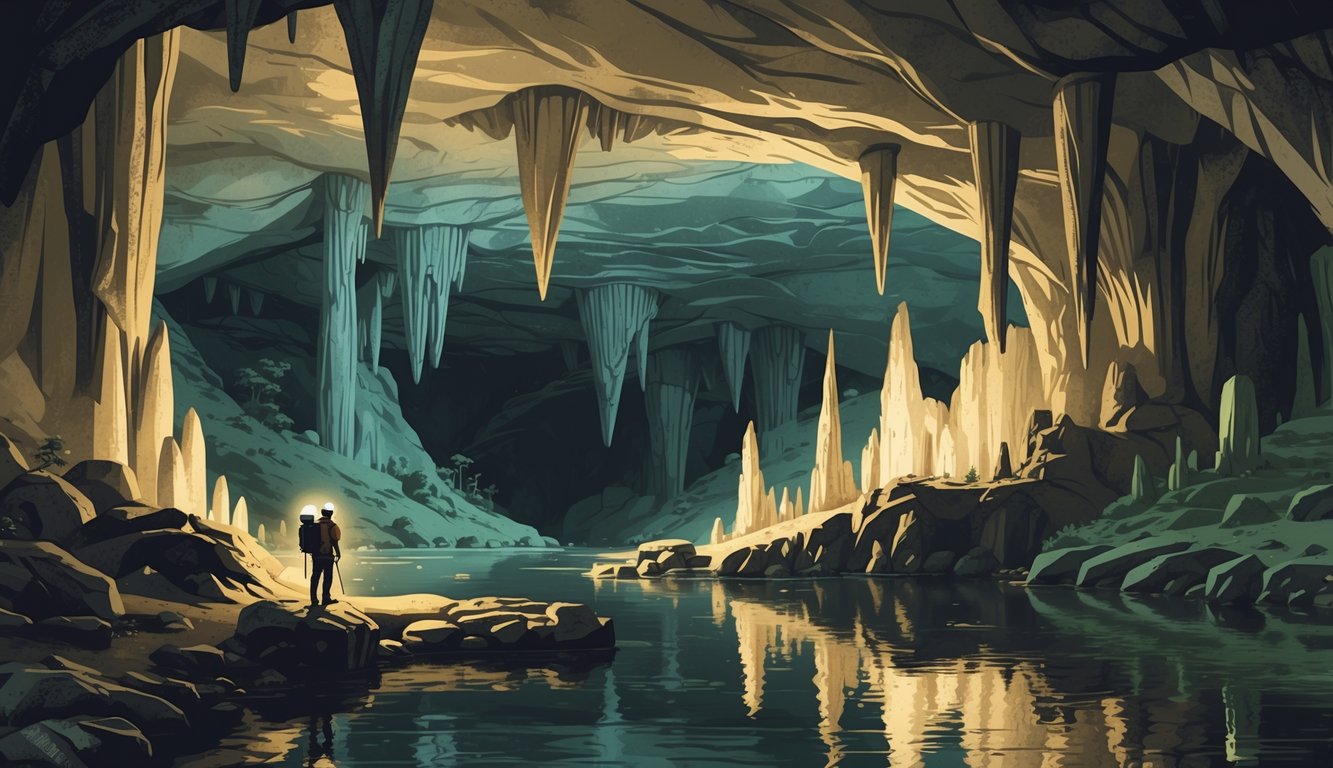
Mammoth Cave has inspired writers, artists, and travelers for more than two centuries. As the world’s longest known cave system and a National Park, it shapes how people view American natural wonders.
It stands with places like the Grand Canyon as a symbol of the country’s unique landscapes.
Literary and Artistic Inspirations
Writers in the 19th century described Mammoth Cave in travel journals, newspapers, and books. They often focused on its size and unusual formations.
These stories introduced the cave to people who could not visit. Artists sketched and painted its chambers, sometimes working by torchlight or lantern.
Later, photographers used early flash powder techniques to capture the cave’s scale. In modern times, Mammoth Cave appears in documentaries, novels, and children’s books.
Many works highlight real features such as Frozen Niagara, Gothic Avenue, and the River Styx. Filmmakers and television crews have used the cave as a backdrop for educational programs.
These efforts help preserve and share its history with new audiences.
Comparisons to the Grand Canyon and Beyond
Many people compare Mammoth Cave to the Grand Canyon because both are vast and geologically important. These American natural wonders attract millions of visitors.
The Grand Canyon impresses people with its open views. Mammoth Cave amazes visitors with its underground passages.
Unlike the Grand Canyon’s visible layers, Mammoth Cave reveals its history only when people explore its passages. Each site offers visitors a unique experience.
Scientists study geology, ecology, and preservation at both locations. These sites also represent the variety of landscapes across the United States.