For more than two thousand years, no one has found the location of Alexander the Great’s tomb. Ancient records describe his burial in Egypt, but no confirmed site exists.
Historians believe his body was first laid to rest in Memphis and later moved to Alexandria. The final location remains a mystery.
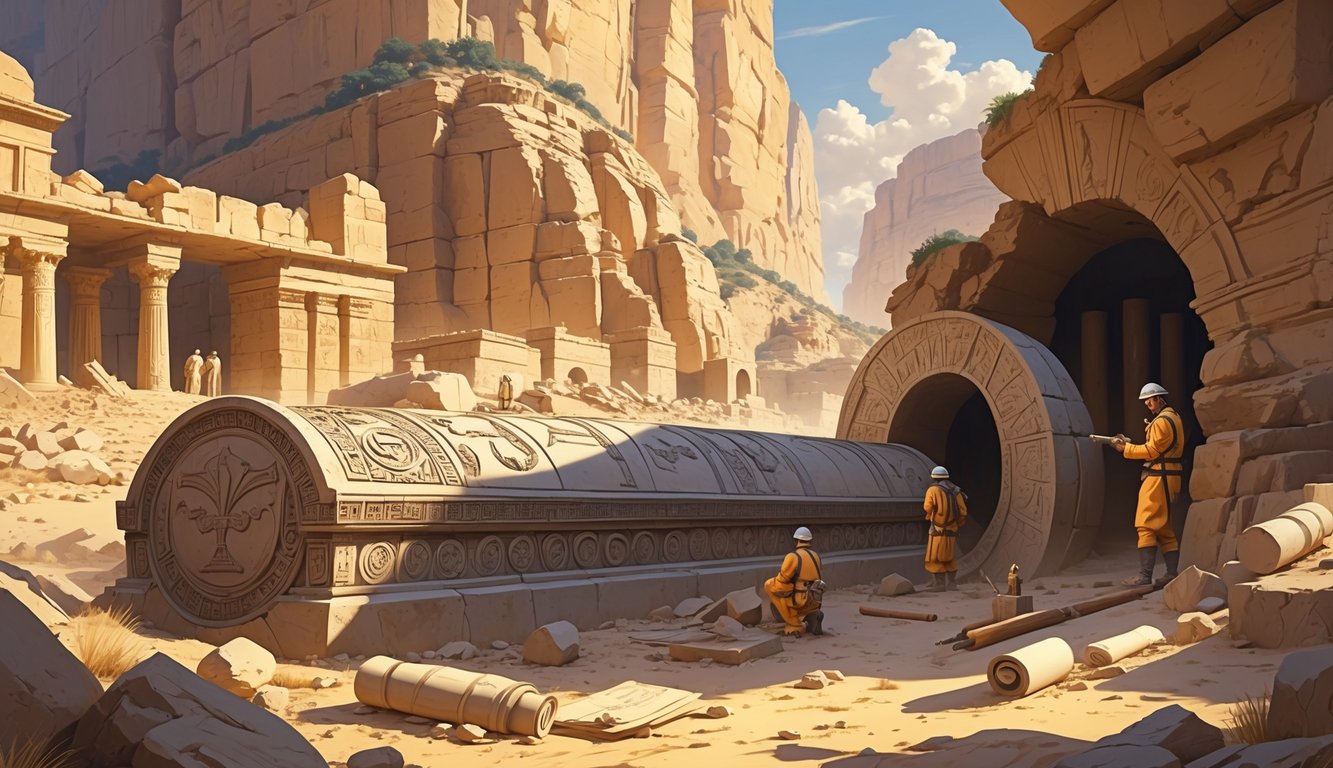
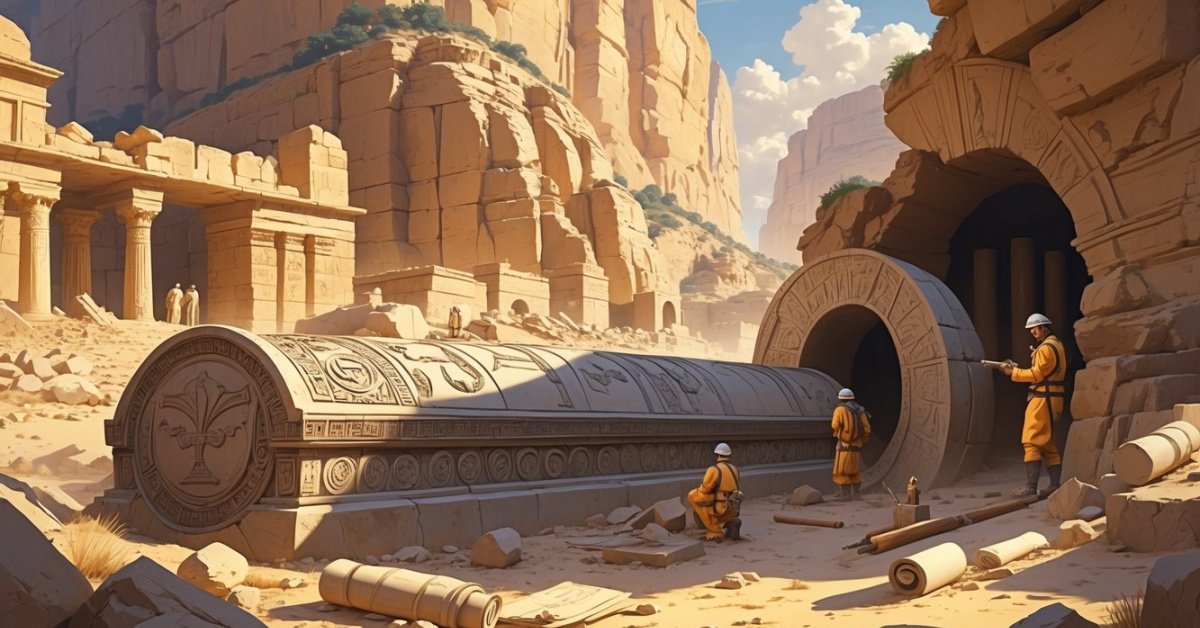
This question continues to inspire archaeologists, historians, and explorers. Recent excavations in Alexandria’s ancient royal quarter have revealed new clues that could point to his long-lost resting place.
Each discovery adds another piece to a puzzle that has fascinated the world for centuries. The search is more than just finding a tomb—it’s about uncovering a missing chapter of history.
From ancient eyewitness accounts to modern digs led by experts like Calliope Limneos-Papakosta, the hunt blends history, archaeology, and curiosity about one of the most influential figures of the ancient world.
The Enduring Mystery of the Lost Tomb
Alexander the Great died in 323 BCE. No one has confirmed the exact location of his burial site.
Ancient records mention several cities and movements of his body. No archaeological dig has produced clear proof of his final resting place.
Why the Tomb’s Location Remains Unknown
Historical accounts suggest Alexander’s body was first buried in Memphis, Egypt. Ptolemy I Soter later moved it to Alexandria.
Later sources describe Roman emperors visiting the tomb in Alexandria. Written records after the 4th century CE stop mentioning it.
Wars, natural disasters, and urban development probably destroyed or buried the site. Modern researchers, including Calliope Limneos-Papakosta, have searched under modern Alexandria for clues.
Despite decades of work, excavations have revealed artifacts from the correct era but not the tomb itself. Theories place the tomb in Alexandria, Vergina in Greece, or hidden beneath other ancient structures.
Each theory relies on limited evidence, making confirmation difficult.
Significance of the Search for Alexander’s Resting Place
Finding the tomb would give direct archaeological evidence about Alexander’s burial practices and his era’s craftsmanship. It could even reveal his remains.
It would help historians verify ancient accounts and understand political events after his death. The movement of his body was tied to control over his empire.
A confirmed site could become one of the world’s most important archaeological destinations, like Tutankhamun’s tomb. For many, locating the tomb is about connecting with a pivotal moment in human history.
Legends and Myths Surrounding the Tomb
Over centuries, stories have grown around the lost tomb. Some medieval texts claim people hid it to protect it from looters.
Others say a natural disaster destroyed it. Ancient visitors reportedly saw the body preserved in a golden sarcophagus, later replaced with glass or crystal.
These details appear in historical writings but remain unverified. Myths also link the tomb to treasures and relics of great value, though no archaeological evidence supports these claims.
Sites like Alexandria remain central to these legends, keeping public interest alive despite the lack of physical proof.
Alexander the Great’s Final Days and Death
Alexander the Great died in Babylon in 323 BCE after a short, severe illness. His death at age 32 left his generals without a clear successor and sparked disputes over his body and burial.
Ancient accounts differ on the exact cause, but all agree it changed the course of history.
Circumstances of Alexander’s Death in Babylon
Ancient historians such as Plutarch wrote that Alexander fell ill after a banquet. He developed a high fever and grew weaker over several days.
Some accounts suggest he suffered from malaria or typhoid fever. Others point to possible poisoning, though most modern scholars doubt this because of the slow progression of symptoms.
During his illness, Alexander stayed conscious and continued to give orders. Witnesses described him greeting his soldiers from his bed, unable to speak but still raising his hand.
He died in the palace of Nebuchadnezzar II in Babylon. His death created a power vacuum, as he left no official heir except his unborn son by Roxana.
Initial Burial Plans and Disputes
After his death, regent Perdiccas took control of Alexander’s body. The generals debated whether to bury him in Macedonia or Egypt.
Perdiccas planned to send the body to Aegae in Macedonia, the traditional burial site of Macedonian kings. However, Ptolemy I Soter, one of Alexander’s former generals, intercepted the funeral procession.
Ptolemy diverted the body to Egypt, first placing it in Memphis and later moving it to Alexandria. This act was politically motivated, as possessing Alexander’s remains gave symbolic power and legitimacy.
The disagreement over his burial reflected growing divisions among his former companions. These tensions would soon lead to the Wars of the Diadochi.
Body Preservation and Embalming Practices
Ancient sources claim Alexander’s body showed little sign of decay for several days after death. Plutarch noted this as unusual, though rapid embalming may explain it.
Egyptian techniques likely preserved his body. Embalmers probably removed internal organs, treated the body with natron, and wrapped it in linen.
Some accounts mention that the body was placed in a golden sarcophagus inside a coffin. Later, it may have been transferred to a glass or crystal coffin for public display in Alexandria.
The care in preserving his remains shows both respect for his status and the political importance of his tomb.
You can read more about the transfer of his body from Babylon to Alexandria in this detailed account of the tomb of Alexander the Great.
The Journey of Alexander’s Body
After Alexander the Great’s death in 323 BCE, his remains became the focus of political rivalry. Control over his body was tied to claims of legitimacy, and the route it took from Babylon to Egypt reflected the ambitions of powerful generals.
Hijacking of the Funeral Procession by Ptolemy
Alexander’s body was originally meant for burial in Macedon according to royal tradition. Regent Perdiccas oversaw the arrangements and ordered a grand funerary carriage for transport.
However, Ptolemy I Soter, then satrap of Egypt, intercepted the procession. He diverted it away from Macedon and toward Egypt.
Ptolemy wanted to strengthen his political authority in Egypt by possessing Alexander’s remains. Ancient accounts describe this as a calculated move.
The seizure of the body also deepened tensions between Ptolemy and Perdiccas. It contributed to the outbreak of the First War of the Diadochi, a conflict among Alexander’s former generals.
The Route from Babylon to Egypt
The funeral procession began in Babylon, where Alexander died. The specially built carriage was richly decorated to reflect his status as a world conqueror.
The planned route would have taken the body north and west toward Macedon. After Ptolemy’s interception, the route shifted south and west.
Records suggest the procession traveled through Syria before crossing into Egypt. The journey covered hundreds of miles, moving slowly because of the size and weight of the carriage.
Ancient sources differ on details, but most agree Ptolemy personally accompanied the body during the final leg into Egypt. This public display reinforced his control over the remains.
Temporary Burial in Memphis
Once in Egypt, Ptolemy arranged for Alexander’s body to be placed in Memphis, the ancient capital. This was a temporary resting place.
Memphis was a major religious and political center. Placing Alexander there linked him to Egypt’s pharaonic tradition.
The tomb in Memphis likely remained for several decades before the body moved to Alexandria. Some historians believe this transfer happened under Ptolemy’s successors, possibly during the reign of Ptolemy II Philadelphus.
The Memphis interment gave Ptolemy immediate prestige. It also allowed time to construct a more permanent monument in Alexandria.
For more on the political intrigue around Alexander’s burial, see the detailed account in The Tomb and Body of Alexander the Great.
The Role of the Ptolemaic Dynasty
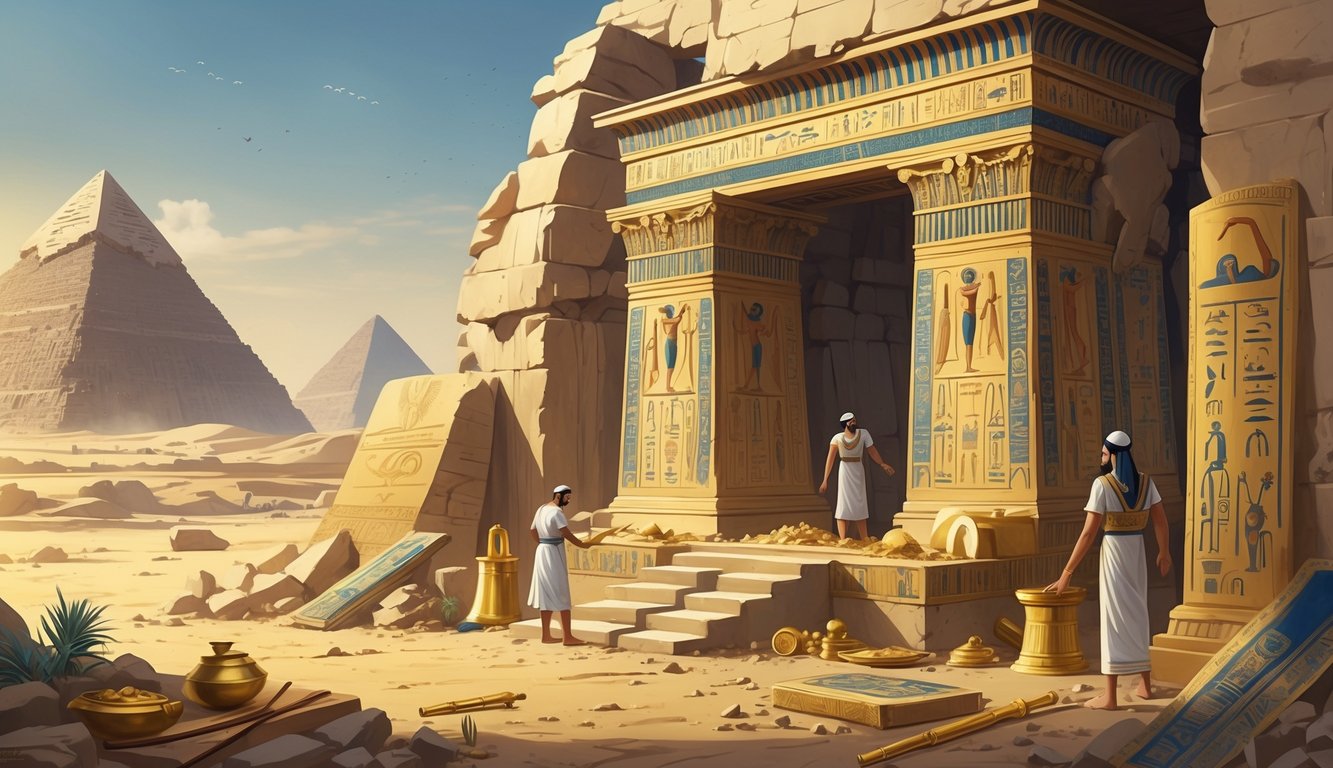
The Ptolemaic dynasty took control of Egypt after Alexander’s death and managed his remains. Their rulers used the tomb as a political symbol and a site of honor, moving his body more than once to suit their goals.
Ptolemy I Soter and the Seizure of the Body
After Alexander died in 323 BCE in Babylon, his generals argued over his body. Ptolemy I Soter, one of Alexander’s former bodyguards, intercepted the funeral procession.
He diverted the remains to Memphis, Egypt, instead of letting them go to Macedonia. This act strengthened his claim to rule Egypt and tied his reign to Alexander’s legacy.
Ancient accounts suggest the body was placed in a lavish tomb in Memphis. This location served as a temporary but politically valuable resting place.
Ptolemy’s decision marked the start of the Ptolemaic dynasty’s control over Alexander’s remains.
Transfer to Alexandria by Ptolemy Philadelphus
Ptolemy II Philadelphus, son of Ptolemy I, later moved the body from Memphis to Alexandria. Most historians believe this happened in the early 3rd century BCE.
The new tomb was reportedly part of the Serapeum complex, a religious site built by Pharaoh Nectanbo II and adapted by the Ptolemies. Relocating the body to Alexandria placed it in the heart of the new capital.
This move increased the tomb’s visibility and made it a key landmark of the city. Visitors from across the Mediterranean came to see it, including Roman leaders centuries later.
By placing Alexander in Alexandria, Ptolemy II linked the city’s identity directly to the conqueror’s memory.
Ptolemy Philopator and the Communal Mausoleum
Under Ptolemy IV Philopator, the tomb was reportedly moved again. Some records suggest it was placed in a communal mausoleum known as the Soma or Sema.
This structure may have been connected to the royal palace complex. It likely housed other Ptolemaic rulers, turning Alexander’s tomb into part of a dynastic burial site.
The shift may have been practical, consolidating royal burials in one secure location. However, it also blurred the distinction between Alexander’s resting place and those of the Ptolemies.
By the 4th or 5th century CE, the tomb disappears from the historical record. Its final location remains unknown.
You can read more about this period in the history of Alexander’s tomb.
The Tomb in Alexandria: Descriptions and Significance
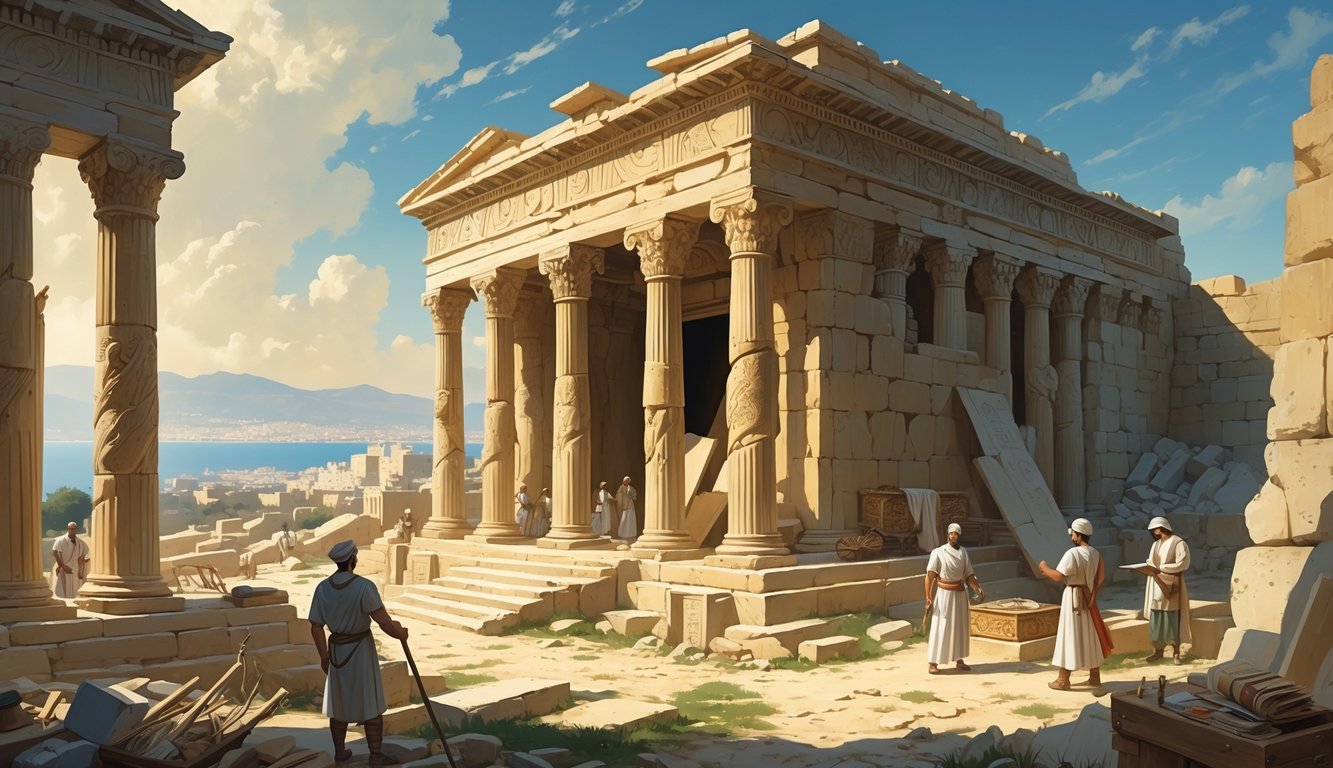
Historical accounts describe a grand structure in Alexandria where officials placed Alexander the Great’s body after his death in 323 BCE.
Ancient writers mention its location in the city’s royal quarter and its role as both a political symbol and a site of public devotion during the Ptolemaic dynasty.
The Soma Mausoleum and Its Features
Historians often call the tomb the Soma or Sema. Builders sealed the mausoleum to protect and display Alexander’s remains.
The name comes from the Greek word for “body” or “grave marker.”
Historians believe the Soma likely featured a stone chamber with elaborate decoration.
A courtyard or colonnade may have surrounded it, allowing visitors to approach the inner sanctum.
Some records say officials placed the body in a gold or glass coffin. Later Roman accounts mention a simpler container.
The design combined Macedonian and Egyptian influences, blending Hellenistic architecture with local traditions.
The structure’s scale and craftsmanship showed Alexander’s status as a military conqueror and a figure of divine reverence in Egypt.
Royal Quarters and the Tomb’s Location
Most ancient sources place the tomb in Alexandria’s royal quarter. This area housed palaces, gardens, and important civic buildings.
This location linked Alexander’s memory to the Ptolemaic rulers who claimed his legacy.
The royal quarter stood near the city’s harbor, making the tomb accessible to residents and foreign visitors.
Archaeologists believe much of this district now lies beneath modern Alexandria, complicating excavation efforts.
Historical accounts indicate that the tomb stood alongside other monuments, reinforcing the city’s role as a political and cultural center.
Its placement also served as a reminder of Alexander’s role in founding Alexandria.
Some modern researchers believe the remains may still be buried under layers of later construction.
Pilgrimage Site and Cult of Alexander
During the Ptolemaic dynasty, rulers, dignitaries, and ordinary citizens visited the tomb as a pilgrimage site.
Visitors honored Alexander, whose image was promoted as a divine or semi-divine figure.
Roman emperors such as Augustus and Caligula visited the site.
Augustus placed flowers and a golden diadem on the body, while Caligula took Alexander’s breastplate.
The tomb played a role in state rituals, reinforcing the legitimacy of the ruling dynasty.
By controlling access to Alexander’s remains, the Ptolemies tied their authority to his enduring legacy.
Over time, the site became central to the cult of Alexander. It blended political power with religious devotion and kept his memory active in Mediterranean culture.
Famous Visitors and Historical Accounts
Several ancient writers recorded visits to Alexander the Great’s tomb when people could still access it in Alexandria.
These accounts offer clues about the tomb’s condition, location, and the respect shown to the Macedonian king long after his death.
Roman Emperor Augustus’ Visit
Roman Emperor Augustus is one of the most famous visitors to Alexander’s resting place.
During his time in Egypt, Augustus went to see the body, which was displayed in a glass or crystal coffin.
He placed a golden crown and flowers on the remains as a sign of honor.
In one account, Augustus accidentally broke the nose of the body while touching it.
This meeting between Rome’s first emperor and the Macedonian conqueror symbolized a link between two of history’s greatest empires.
Augustus’s visit confirmed that the tomb was still intact and accessible during the early Roman period.
Other Roman and Greek Dignitaries
Several other Roman leaders visited the tomb.
Historical sources mention Julius Caesar viewing Alexander’s body during his stay in Alexandria.
Later, Caligula reportedly took Alexander’s breastplate.
Greek dignitaries and scholars also made the journey.
These visits often had political or cultural motives. Paying respects to Alexander could strengthen a leader’s image or a scholar’s reputation.
Such visits turned the tomb into a political stage. Leaders associated themselves with Alexander’s legacy, while the public witnessed acts of homage.
Plutarch’s Testimonies
The Greek historian Plutarch wrote about Alexander’s life and death in detail.
He preserved stories about the treatment of Alexander’s body and the honors given to it in Alexandria.
Plutarch described the elaborate funeral procession and the transfer of the body from Babylon to Egypt.
He also noted the continued reverence for Alexander centuries after his death.
Plutarch did not witness the tomb himself. He drew on earlier sources and oral traditions, making his work important for historians.
Theories and Clues About the Tomb’s Location
Historians and archaeologists use ancient writings, excavation reports, and modern surveys to narrow down possible sites for Alexander the Great’s tomb.
Evidence ranges from early visitor descriptions to remains of monumental structures buried under modern cities.
Ancient Descriptions and Archaeological Evidence
Early accounts say Alexander’s body was laid in a gold sarcophagus and placed in a grand mausoleum in Alexandria, called the Soma.
Writers such as Strabo and Plutarch mentioned Roman leaders visiting the tomb.
Archaeological work in Alexandria’s ancient royal quarter has revealed structures that may match these descriptions.
Excavations have uncovered large stone foundations and artifacts from the Hellenistic period.
Centuries of urban development have buried or destroyed much of the ancient city.
Some researchers believe the mausoleum may now lie beneath modern buildings, making direct excavation difficult.
Clues suggest the tomb could be under layers of later construction or lost to natural disasters.
The Siwa Oasis and the Temple of Zeus Ammon
The Siwa Oasis in Egypt’s Western Desert is linked to Alexander’s life.
He visited the Temple of Zeus Ammon in 331 BCE, where priests allegedly confirmed his divine status.
Some theories suggest Alexander may have wished to be buried there, connecting his legacy to the god Ammon.
The temple complex, with its ancient walls and sacred spring, still stands today.
Archaeologists have found no direct evidence of his burial at Siwa.
The site’s isolation and religious importance keep it in the discussion for possible burial sites.
Modern Hypotheses and Alternative Sites
Recent research has renewed interest in locations beyond Alexandria.
Some scholars believe the tomb could be in Venice, possibly misidentified as a saint’s relic.
Others point to archaeological clues in Alexandria’s royal quarter.
Alternative suggestions include sites in Memphis or hidden chambers beneath existing monuments.
While none have been proven, each theory uses textual evidence, local tradition, and physical remains.
Modern Search Efforts and Discoveries
Archaeologists focus much of their work on Alexandria, Egypt, where historical accounts say Alexander the Great was buried.
New excavations and research use ancient maps and modern technology to narrow possible locations for his tomb.
Excavations in Alexandria
Excavations in Alexandria’s ancient royal quarter have revealed walls, columns, and artifacts from the city’s early history.
This area once held palaces and temples linked to the Ptolemaic dynasty, which ruled after Alexander’s death.
Teams use ground-penetrating radar to map underground structures.
These surveys help locate buried buildings without damaging them.
Some finds match descriptions from ancient texts, increasing interest in the site.
According to National Geographic, these clues may point to the general area of Alexander’s final resting place, though no definitive tomb has been found.
The Work of Greek Archaeologist Calliope Limneos-Papakosta
Greek archaeologist Calliope Limneos-Papakosta has led digs in Alexandria for over a decade.
She directs the Hellenic Research Institute of the Alexandrian Civilization.
Her team works from a 19th-century map showing the city before modern construction buried much of its ancient core.
This map, combined with historical writings, guides excavation trenches.
Papakosta has uncovered marble floors, statues, and parts of large public buildings.
She believes these remains could be near the location of Alexander’s tomb, but more evidence is needed.
Recent Finds and Their Implications
Recent discoveries include a bust of Alexander the Great found in Egypt.
The artifact’s style and craftsmanship suggest it was made during the Ptolemaic period, when Alexander was honored as a founder of the city.
Other finds include coins, pottery, and architectural fragments from the same era.
These items help date the site and confirm the area’s historical importance.
While none of these finds prove the tomb’s location, they strengthen the case for continued exploration in Alexandria’s royal quarter.
Each new piece of evidence adds detail to the story of one of ancient history’s enduring mysteries.
Controversies and Unsolved Questions
The search for the tomb of Alexander the Great has produced competing theories, conflicting records, and unresolved debates.
Archaeologists and historians continue to examine ancient texts, study possible sites, and question how political and religious changes may have altered the tomb’s fate.
Relocation Theories and St. Mark’s Cathedral
One theory suggests that early Christian leaders moved Alexander’s remains from their original resting place in Alexandria to what is now St. Mark’s Cathedral.
Some researchers believe they reburied the body there to protect it from desecration.
This idea is based on reports that a body venerated as St. Mark’s could have been Alexander’s.
Supporters point to similarities in descriptions of the burial site.
However, archaeological evidence is lacking.
Excavations in and around the cathedral have not confirmed the presence of a Macedonian royal tomb.
Critics argue that the theory relies too much on medieval accounts, which may have been influenced by legend.
Conflicting Historical Sources
Ancient writers gave different accounts of Alexander’s burial.
Some claimed his body was taken to Memphis in Egypt before being moved to Alexandria.
Others described a grand mausoleum in Alexandria that became a site of pilgrimage.
Later Roman sources mention emperors visiting the tomb, but they differ on its exact location within the city.
These inconsistencies make it hard to pinpoint the site today.
The destruction and rebuilding of Alexandria over centuries adds to the problem.
Maps from antiquity are scarce, and modern researchers must rely on partial records and interpretations of ancient accounts.
Significant gaps remain in the historical timeline.
The Fate of the Tomb After Antiquity
By the 4th or 5th century CE, references to Alexander’s tomb disappear from written records. Some historians think periods of conflict or natural disasters destroyed it.
Others believe people dismantled the tomb for building materials as the city changed. Religious and political shifts in Alexandria may have also led to its loss.
The rise of Christianity and later Islamic rule changed the city’s priorities for preservation. No one has found physical remains or confirmed structures, so the tomb’s fate is still unknown.
Modern excavations in Alexandria, such as those led by Calliope Limneos-Papakosta, search for clues to solve the mystery.
Legacy and Cultural Impact of the Lost Tomb
The mystery of Alexander the Great’s resting place has shaped research in ancient history. It has inspired archaeological projects and influenced how later cultures viewed their past.
Many people remain fascinated by the story, both in academic circles and among the public.
Influence on Archaeology and Popular Imagination
Archaeologists have searched for the tomb for centuries. They often use ancient texts as guides.
Some accounts say his body was first buried in Memphis, then moved to Alexandria, but the exact location is lost. This search has encouraged the use of interdisciplinary methods, combining archaeology, history, and new technology like ground-penetrating radar.
Modern expeditions, including those led by Calliope Limneos-Papakosta, attract media attention and spark public interest. In popular culture, the lost tomb appears in documentaries, novels, and films.
These stories often mix fact with speculation, keeping the legend alive for new generations.
The Tomb’s Role in Hellenistic and Roman Identity
In the Hellenistic period, Alexander’s tomb served as a political and cultural symbol. Rulers in Alexandria used it to connect themselves to his legacy.
They wanted to legitimize their authority. Roman emperors, including Augustus, reportedly visited the tomb.
Ancient writers describe them viewing his body, which suggests it remained accessible for centuries. The site became a place of reverence and political theater.
The tomb’s presence in Alexandria also showed the city’s role as a center of Greek culture in Egypt. It linked Alexandria’s identity to Alexander’s achievements and the spread of Hellenistic influence across the Mediterranean.
Continuing Allure for Historians and Explorers
Historians study ancient texts, maps, and archaeological evidence to narrow down the tomb’s location. The lack of definitive proof keeps the search active and open to new ideas.
Explorers and researchers accept the challenge of solving a mystery that has lasted over two thousand years. Many hope that finding the tomb will lead to an archaeological breakthrough and reveal more about the final chapter of Alexander’s life.
Teams investigate sites in Alexandria, as shown in recent archaeological reports. Each new discovery, even if indirect, adds to the story of one of history’s most influential figures.