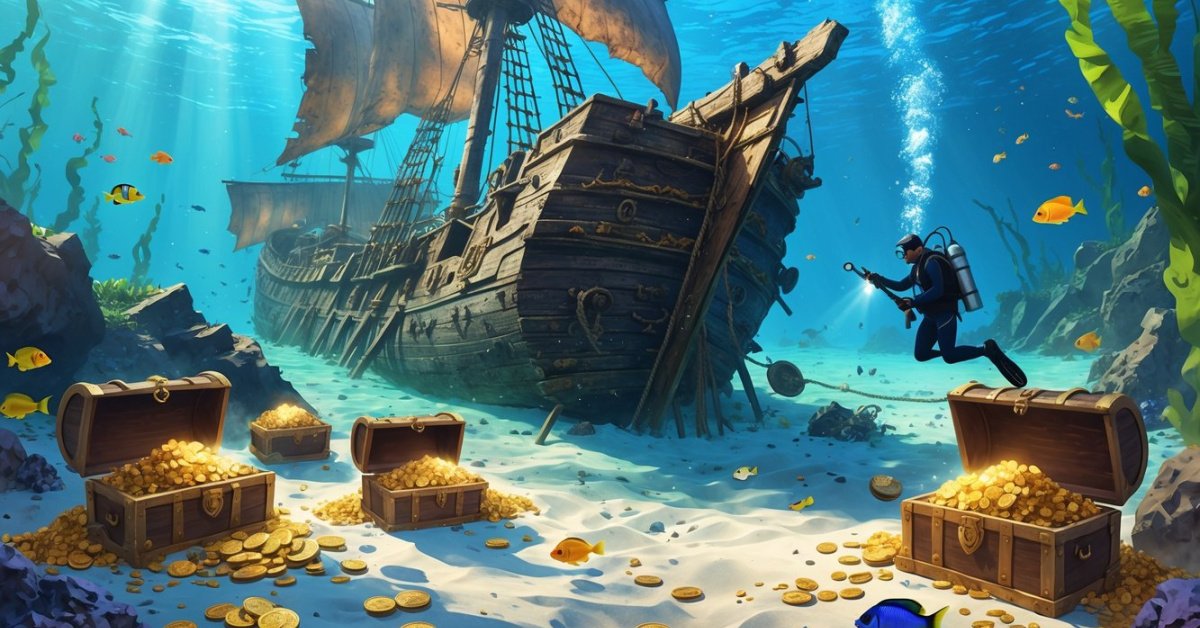
In 1715, a fleet of Spanish ships carrying gold, silver, and precious gems sank off the coast of Florida during a hurricane.
Centuries later, the mystery of their lost cargo still draws explorers to the waters between Florida and Cuba.
Much of this treasure still hides beneath the ocean floor, waiting for discovery.
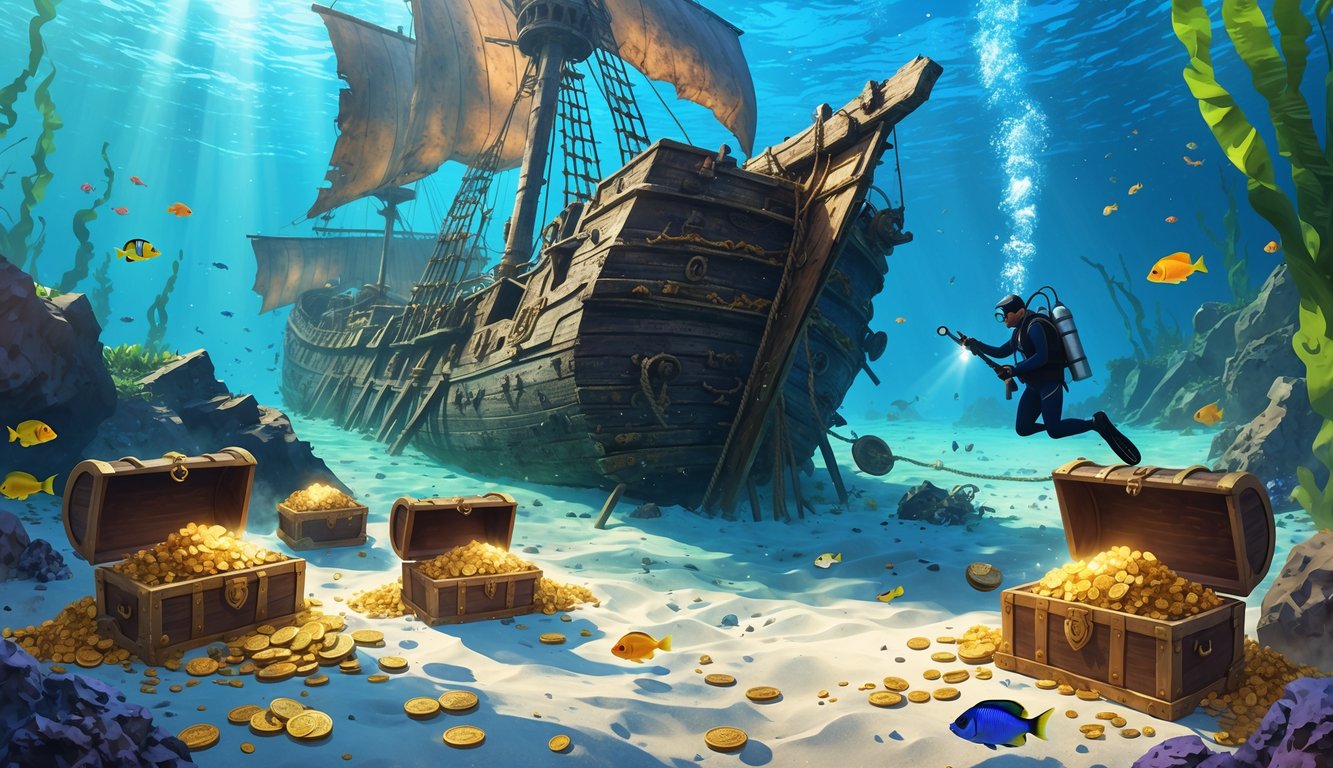
Television host Josh Gates took on this challenge in the episode “Lost Spanish Fortune, Found!”.
He traveled along Florida’s Treasure Coast and into Cuba, following the trail of the fabled fleet.
His journey explored both well-known wreck sites and areas that might still hold untouched artifacts.
This search goes beyond diving for gold.
It combines history, maritime archaeology, and adventure.
From the archives in Havana to the shallow reefs off Florida, each location offers clues that could lead to a remarkable find.
The Lost Spanish Fortune: An Overview
In 1715, a convoy of Spanish ships loaded with gold, silver, and precious gems left the New World for Spain.
These vessels carried wealth from the Americas, much of it mined in Mexico and South America.
They formed part of a highly organized system of treasure transport.
A sudden and powerful hurricane ended their journey.
The 1715 Fleet and Its Cargo
The 1715 fleet included eleven treasure galleons and one armed escort ship.
They sailed from Havana, Cuba, bound for Spain, carrying the year’s accumulated riches from the colonies.
Their cargo included:
- Gold coins and bars
- Silver ingots and coins
- Emeralds and other gemstones
- Fine goods like porcelain and spices
Spain relied heavily on these shipments to fund its government and military.
King Philip V, facing financial difficulties, ordered the departure despite the risk of sailing during hurricane season.
The fleet represented months of preparation and the work of thousands of miners, traders, and sailors.
It was one of the most valuable convoys to leave the Americas that century.
The Tragic Hurricane and Shipwrecks
On July 31, 1715, the fleet sailed into a powerful hurricane in the Florida Straits.
The storm struck quickly, giving the ships little time to seek shelter.
Eleven of the twelve ships sank along Florida’s east coast, now called the Treasure Coast.
Many wrecks crashed on reefs or washed onto sandy shores.
Hundreds of sailors died, and survivors struggled to reach land.
The disaster scattered gold and silver across miles of ocean floor.
Salvagers recovered some treasure soon after, but much remained lost for centuries.
Today, divers and historians search for artifacts from these shipwrecks, as seen in expeditions like Lost Spanish Fortune, Found!.
Spanish Treasure Routes
Spain’s treasure fleets followed well-established routes between the Americas and Europe.
Ships from Mexico and South America met in Havana to form large convoys for protection against pirates and enemy navies.
From Havana, they sailed through the Florida Straits and then across the Atlantic to Spain.
This route posed dangers from shallow reefs, unpredictable weather, and hurricanes.
The 1715 fleet disaster showed the risks of sailing too close to storm season.
Spain continued using these routes for decades, carrying wealth that shaped both European and American history.
The Hunt for Sunken Treasure
Treasure hunting off the Florida coast and in Cuban waters blends history, maritime skill, and advanced tools.
Many expeditions focus on shipwrecks from the 16th to 18th centuries, when Spanish fleets carried gold, silver, and jewels across the Atlantic.
Modern-Day Treasure Seekers
Today’s treasure seekers include professional salvage companies and small independent crews.
Some work full-time, while others join seasonal expeditions.
Many focus on historic wrecks like the 1715 Spanish treasure fleet that sank in a hurricane off Florida.
These wrecks can hold coins, gold bars, and artifacts buried under centuries of sand.
Crews often include divers, historians, and marine archaeologists.
Each member researches old maps or operates recovery equipment.
Some treasure hunters work with museums to preserve artifacts.
Others focus on selling recovered items.
The balance between profit and preservation shapes how an expedition runs.
Technology and Techniques Used
Modern expeditions use tools that make locating and recovering sunken treasure more efficient.
Common equipment includes:
- Side-scan sonar to map the seafloor and detect unusual shapes
- Magnetometers to locate metal objects buried under sediment
- Underwater drones for exploring deep or dangerous areas
Divers use water dredges to remove sand and silt without damaging artifacts.
In shallow waters, small boats with mounted detection gear can search large areas quickly.
Some teams use historical weather data to predict where wrecks may have drifted before sinking.
Others compare old shipping records with modern GPS maps to narrow search zones.
These methods have helped locate famous wrecks like the San José galleon.
Legal Aspects of Treasure Hunting
Treasure hunting laws vary by location.
In U.S. waters, wrecks near the Florida coast may fall under state protection.
Salvors need permits and must share finds with the state.
Internationally, agreements like the UNESCO Convention protect underwater cultural heritage.
This can limit private recovery efforts, especially in Cuban waters.
Disputes over ownership are common.
Governments, descendants of ship owners, and salvage companies may all claim rights to a find.
Successful treasure hunters often work with maritime lawyers to secure salvage rights before recovery begins.
Expedition Unknown: The Search with Josh Gates
Josh Gates led an investigation into the fate of a 1715 Spanish treasure fleet.
He traveled to Florida’s Treasure Coast and into Cuban waters.
Gates combined diving expeditions with archival research to uncover clues about the lost riches.
Journey Along the Florida Coast
The Florida search began along a shoreline known for frequent treasure finds.
This area, called the Treasure Coast, is where several Spanish ships sank during a hurricane in 1715.
Gates joined local divers and historians to examine known wreck sites.
He used metal detectors and underwater cameras to locate artifacts buried in sand and silt.
The team uncovered a cannon near a wreck site, supporting historical records of the fleet’s route and loss.
They also documented coins, ship fittings, and ballast stones.
Florida’s waters challenged the team with strong currents and poor visibility.
Despite these obstacles, Gates and his crew gathered evidence connecting the coastline to the fleet’s final journey.
Exploring the Waters off Cuba
After Florida, Gates traveled to Cuba, which had recently opened more widely to U.S. visitors.
The Cuban search focused on areas where survivors or debris from the 1715 fleet might have reached.
He gained rare access to the National Archives of Cuba, closed to outside researchers for decades.
Inside, he reviewed Spanish colonial documents, ship logs, and survivor accounts.
Cuban waters offered different conditions than Florida’s coast.
The dives here targeted deeper sites and less-disturbed wreckage.
Gates worked with Cuban maritime experts to map possible debris fields.
Archival evidence suggested that some treasure was salvaged soon after the disaster, while other cargo remained lost.
This information helped refine the search areas.
Key Discoveries and Finds
During the expeditions, Gates’ team documented several significant artifacts.
These included ship cannons, navigational tools, and Spanish silver coins dated to the early 1700s.
The team cataloged the finds and compared them with historical records to confirm their link to the 1715 fleet.
In some cases, the artifacts matched descriptions from Spanish salvage reports.
The research uncovered detailed maps and correspondence that shed light on the fleet’s final hours.
These documents provided context for the wreck locations and Spanish recovery efforts.
Florida’s Treasure Coast: Hotspot for Discovery
The stretch of the Florida coast known as the Treasure Coast has produced gold coins, silver bars, and historic artifacts from centuries-old shipwrecks.
Storms, shifting sands, and careful diving expeditions continue to reveal items linked to Spanish fleets lost in the early 1700s.
Notable Finds and Recoveries
In 1715, eleven Spanish galleons carrying gold, silver, and jewels sank in a hurricane off Florida’s east coast.
These wrecks have yielded some of the most valuable finds in U.S. waters.
A diving crew recently uncovered over 200 silver coins from this fleet near Vero Beach.
In 2015, a family found $1 million in gold coins, including a rare “Royal” minted for King Philip V.
Salvage companies like Mel Fisher’s Treasures in Sebastian, Florida, recover artifacts under state and federal permits.
Their work has brought up anchors, navigational tools, and ornate jewelry.
These discoveries often occur in shallow waters less than 20 feet deep.
Strict laws govern recovery to protect historical value.
Beachcombing and Local Legends
After strong storms or hurricanes, beachcombers sometimes spot coins or ship fragments along the shoreline.
In 2021, a 17-year-old found a gold coin from the 1715 Fleet near Turtle Trail Beach.
Locals share stories of coins washing ashore after hurricanes, especially near Fort Pierce and Sebastian Inlet.
These tales add to the area’s reputation as a place where history can be underfoot.
Popular spots for casual searching include Wabasso Beach, Pepper Park, and Corrigan’s Wreck Beach.
Visitors often bring metal detectors, but they must follow Florida’s rules on artifact collection.
Natural erosion, seasonal storms, and centuries-old wreck sites keep the Treasure Coast a unique destination for both professional hunters and curious visitors.
Cuba’s Role in the Spanish Treasure Fleet
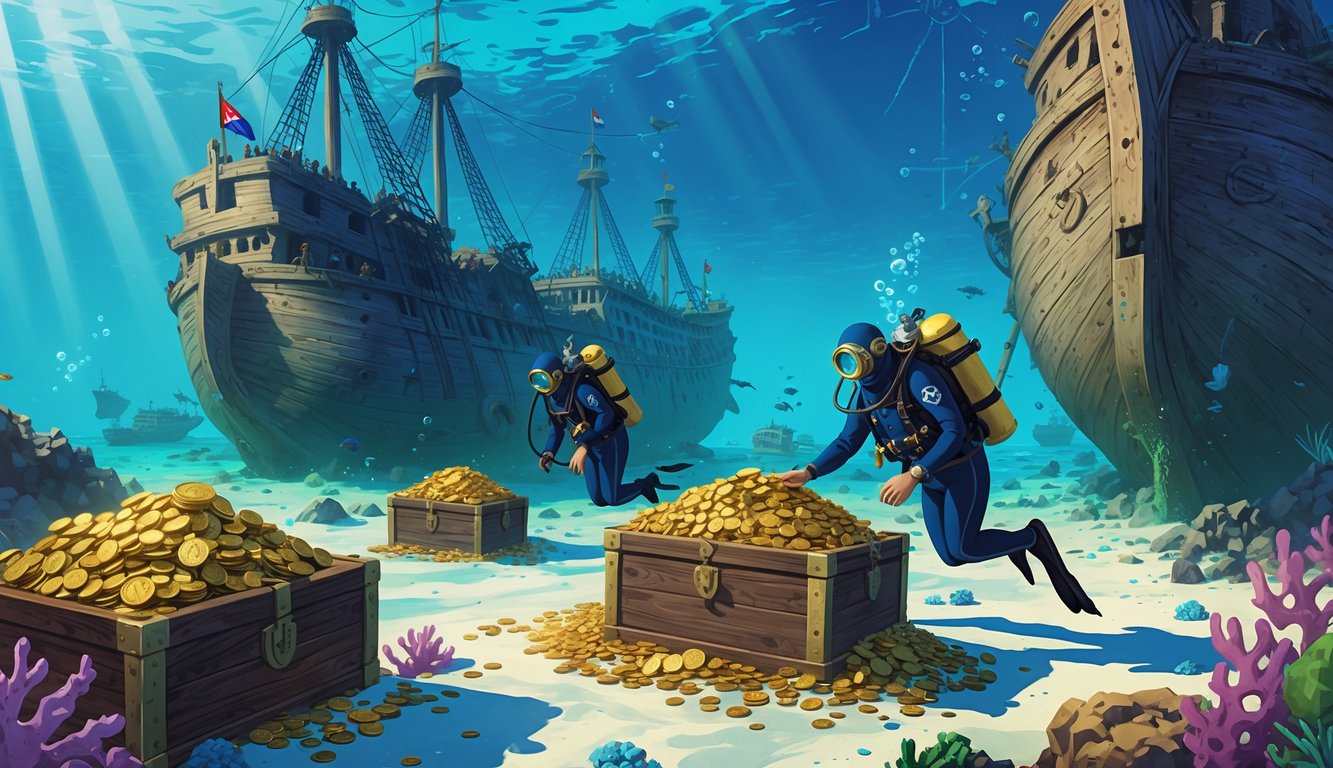
Cuba played a critical role in Spanish maritime operations in the Americas.
Havana acted as the final gathering point for treasure fleets before they crossed the Atlantic.
Its archives preserve valuable records of these voyages.
In recent years, expeditions have explored Cuban waters for wrecks linked to these historic fleets.
Havana as the Fleet’s Departure Point
Havana’s deep harbor and location made it the main staging area for the Spanish treasure fleets from the 16th to 18th centuries.
Ships from Mexico and South America converged here, carrying silver, gold, and goods from across the Spanish Empire.
The Nueva España Fleet brought cargo from Mexico.
The Tierra Firme Fleet carried goods from Central and South America.
Both fleets joined in Havana before departing for Spain.
This stop allowed ships to take on supplies, make repairs, and wait for good weather.
It also concentrated enormous wealth in one place, making the fleets tempting targets for storms and pirates.
In 1715, the combined fleet left Havana for Spain, but a hurricane off Florida sank eleven of twelve ships.
The National Archives of Cuba
The National Archives of Cuba in Havana holds detailed records of Spanish colonial administration. These include shipping logs, cargo manifests, and correspondence related to the treasure fleets.
Researchers study these documents to track ship movements and identify the types of goods they carried. This work helps pinpoint likely wreck locations and confirm the identities of recovered artifacts.
Some records describe the 1715 disaster, noting the loss of ships, crew, and cargo. Other records reveal how the Spanish Crown tried to recover the treasure in the years that followed.
Historians and marine archaeologists rely on these archives to study the fleets.
Recent Expeditions in Cuban Waters
Modern expeditions search Cuban waters for wrecks connected to the treasure fleets. In some cases, teams locate ship remains and artifacts that match 18th-century records.
Television programs such as Expedition Unknown document searches along Cuba’s coastline and in the Florida Straits. Divers recover coins, ceramics, and navigational tools from suspected Spanish ships.
Expedition teams work with Cuban authorities to preserve and study recovered items. Underwater exploration and archival research reveal new details about the fleets’ final voyages and their connection to Cuba.
Inside the National Archives of Cuba
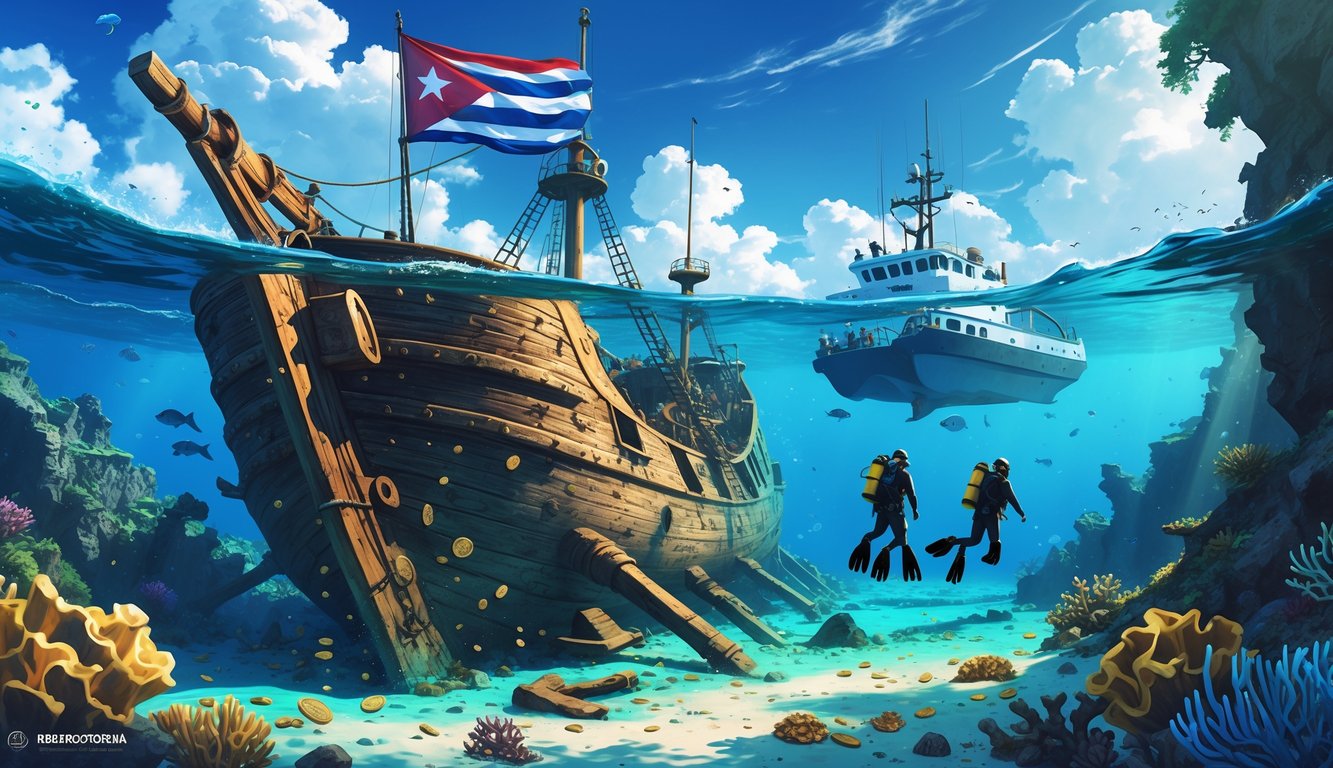
Researchers gained rare access to the National Archives of Cuba in Havana. The archives had remained closed to foreign visitors for decades.
Inside, researchers examined centuries-old Spanish records detailing trade, shipping routes, and cargo manifests connected to the 1715 fleet disaster. These records provided historical evidence that narrowed the search area for the lost treasure ships.
Unlocking Historic Documents
Archivists brought out bound volumes and loose parchment sheets stored in climate-controlled rooms. Many documents were written in 18th-century Spanish, so translators assisted with analysis.
The team focused on shipping manifests, port entry logs, and official correspondence between colonial governors and the Spanish crown. These documents often listed:
| Document Type | Information Provided |
|---|---|
| Cargo Manifests | Gold, silver, and goods on board |
| Port Logs | Departure and arrival dates |
| Royal Orders | Instructions for fleet movements |
Some entries described the exact number of chests of coins or bars of silver loaded onto specific vessels. Other entries recorded delays caused by storms or repairs.
Researchers cross-referenced these details to confirm which ships carried the most valuable cargo before the hurricane struck.
Clues to Lost Shipwreck Locations
The archives also preserve navigation charts and letters from survivors of the 1715 fleet. These accounts note where ships were last seen and describe weather conditions on the day of the disaster.
One letter mentions wreckage near a stretch of Florida’s coastline now called the Treasure Coast. Another document describes debris drifting toward Cuba’s northern shores.
Researchers map these historical references against modern ocean current data. This helps them identify high-probability zones for underwater surveys off Florida and near Cuban waters.
Famous Treasure Hunters and Teams
Notable figures in Florida’s treasure hunting history have revealed centuries-old shipwrecks. They combine diving skill, research, and persistence to recover artifacts from the ocean floor.
The Schmitt Family
The Schmitt family recovered treasure from the 1715 Spanish fleet wrecks off Florida’s east coast. In 2015, they found gold coins worth over a million dollars near Fort Pierce.
Greg and Eric Schmitt, along with other family members, worked with licensed salvage operations at the site. Their discovery included rare coins called royal eight escudos minted for the Spanish king.
They used small boats and metal detectors to scan the seabed. The find was part of a legal agreement with the salvage company and the state of Florida, which keeps a portion of recovered artifacts.
Brent Brisben and Queens Jewels
Brent Brisben co-founded Queens Jewels LLC, the company that owns exclusive salvage rights to the 1715 Treasure Fleet wreck sites. His team has recovered millions in gold, silver, and artifacts since 2010.
In 2015, Brisben’s crew found over 350 gold coins worth several million dollars. Many of these coins were minted during the reign of King Philip V of Spain.
Queens Jewels operates under Florida’s permitting system, which requires that a percentage of recovered items go to the state for museum display. Their work involves divers, magnetometers, and careful mapping of wreck sites.
Mel Fisher and His Crew
Mel Fisher became one of the most famous treasure hunters in modern history. He spent over 16 years searching for the wreck of the Nuestra Señora de Atocha, a Spanish galleon that sank in 1622.
In 1985, Fisher’s team located the shipwreck near the Florida Keys and uncovered gold, silver, and emeralds valued at hundreds of millions of dollars. The find included over 40 tons of precious metals.
Fisher’s company, Mel Fisher’s Treasures, continues to search for remaining cargo from the Atocha and other wrecks. He trained skilled divers and advanced underwater recovery techniques used in modern treasure hunts.
Diving Into Shipwrecks: Techniques and Challenges
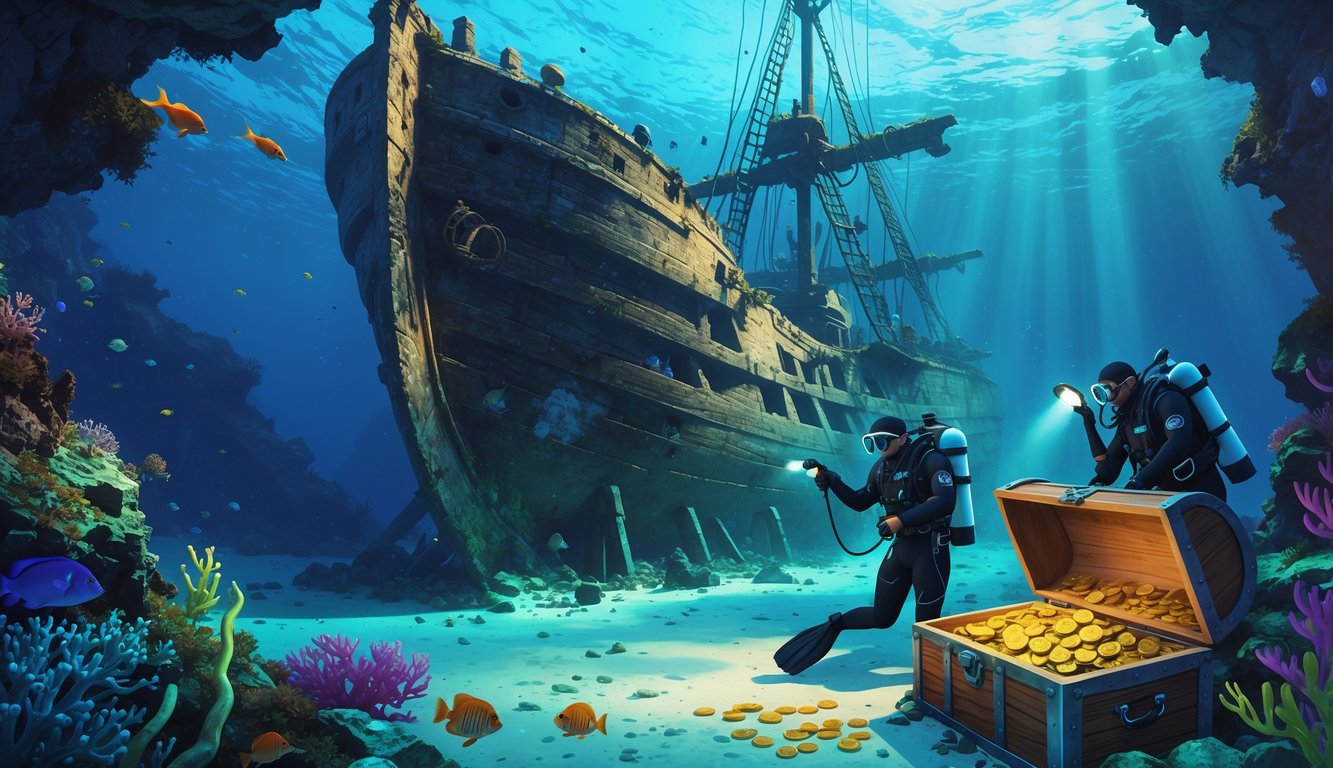
Treasure hunters use specialized tools and practical skills to locate and recover valuable items from shipwrecks. Divers must plan carefully to protect both themselves and the artifacts they find.
Underwater Metal Detecting
Treasure hunters use underwater metal detectors to find coins, jewelry, and other metallic objects buried in sand or silt. Waterproof coils send signals that detect metal beneath the seabed.
A diver sweeps the coil slowly over the ocean floor, listening for changes in tone that indicate a potential find. In areas like the 1715 Treasure Fleet shipwrecks, detectors help pinpoint gold and silver hidden for centuries.
Some detectors work at depths over 200 feet, making them suitable for deep wrecks. Others are compact for shallow searches near reefs or beaches.
Divers often carry small hand tools, such as trowels or scoops, to recover targets without causing damage. They avoid stirring up too much sediment, which can reduce visibility.
Dealing with Currents and Visibility
Strong ocean currents can push divers off course and make it harder to stay near a shipwreck site. In the Florida Keys, currents shift quickly, so divers use guide ropes or anchor lines for stability.
Poor visibility is another challenge. Silt, algae, or plankton can limit sight to just a few feet.
To improve safety, divers work in pairs and use bright underwater lights. These lights help them see details on the wreck and spot small pieces of sunken treasure.
In deeper or darker areas, high-powered lights and communication devices help teams coordinate movements and avoid hazards while exploring fragile shipwrecks.
Preserving and Displaying Sunken Treasures
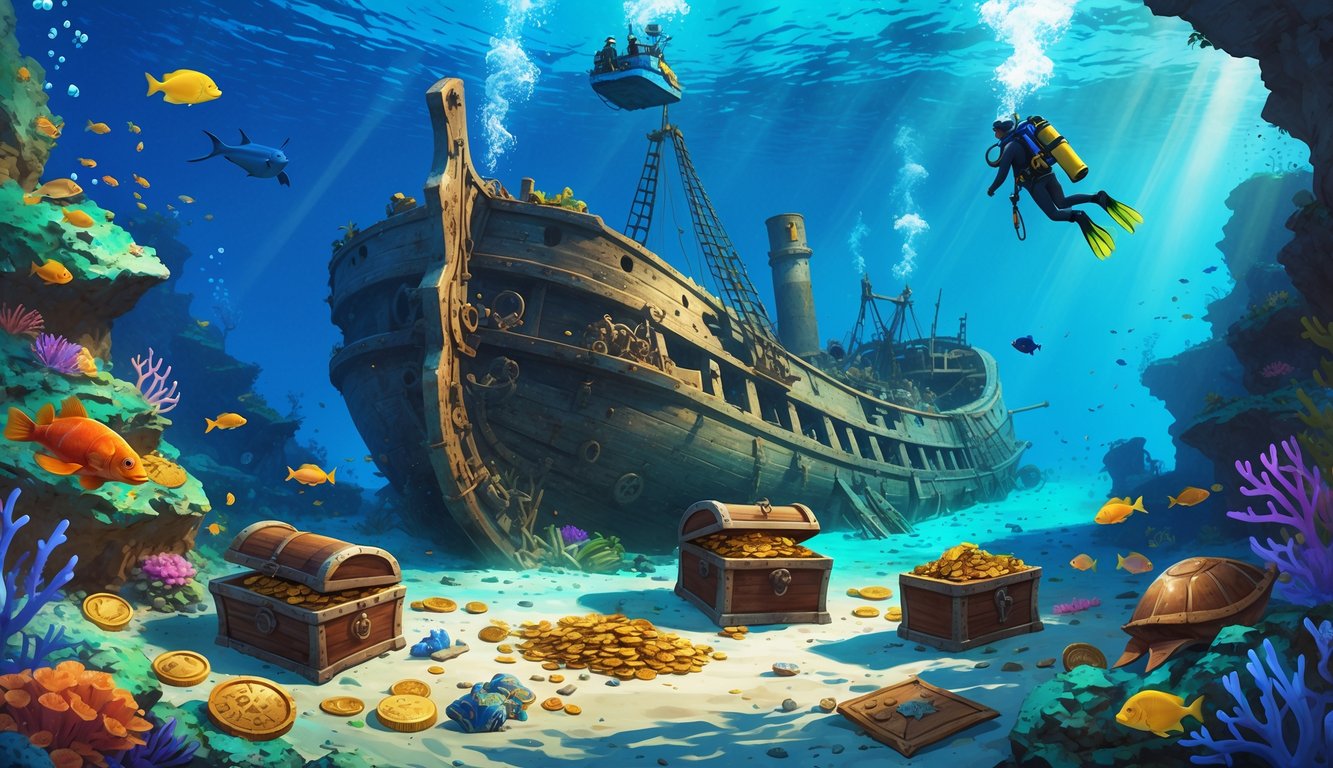
Recovering sunken treasure is only the first step. Coins, weapons, ceramics, and ship fittings often spend centuries underwater and need careful treatment to prevent decay.
Once stabilized, many items are shared with the public through curated displays that protect them and tell their stories.
Artifact Conservation
When artifacts are lifted from the seabed, they are often fragile and waterlogged. Silver and iron can corrode quickly once exposed to air.
Conservators use desalination baths to remove salt from the materials. This process can take weeks or months, depending on the object’s size and condition.
Organic materials such as wood or rope require different methods. For example, conservators treat shipwreck wood with polyethylene glycol (PEG) to replace water in its fibers and prevent shrinking or cracking.
Here’s a quick look at common treatments:
| Material | Common Treatment Method | Purpose |
|---|---|---|
| Iron | Electrolytic reduction | Remove corrosion and chlorides |
| Silver/Gold | Chemical cleaning, desalination | Stabilize and restore appearance |
| Wood | PEG treatment | Prevent warping and decay |
| Textiles | Freeze-drying | Preserve structure and color |
Without these steps, a recovered artifact can deteriorate beyond repair in just a few days.
Museums and Public Exhibits
Museums protect and interpret recovered treasures. Many items from the 1715 Spanish Treasure Fleet are displayed in Florida institutions, where controlled environments keep them stable.
Staff carefully monitor temperature, humidity, and light levels. For example, gold coins may be displayed under low light to reduce glare and protect surface details.
Interactive exhibits often include maps of shipwreck sites, videos of recovery dives, and replicas visitors can handle. This allows the public to connect with the history without risking damage to real artifacts.
Some museums rotate displays with marine archaeologists, so fragile pieces spend part of the year in storage for preservation.
Traveling exhibitions bring these treasures to audiences far from the coast and expand public awareness of maritime history.
The Enduring Allure of Lost Spanish Fortune
For more than three centuries, Spanish treasure fleets have drawn explorers, historians, and divers to the waters off Florida and the Caribbean. Real historical records and the chance to find valuable items keep the interest alive.
Treasure Legends and Cultural Impact
Stories of the 1715 Spanish fleet wrecks and other ship disasters are part of Florida’s coastal identity. Communities along the Treasure Coast host museums, festivals, and tours about these events.
Television programs such as Expedition Unknown bring the history to a wider audience. Modern explorers like Josh Gates follow clues from archives and ship manifests, showing how historical research supports underwater searches.
Treasure hunting also influences local economies. Dive shops, charter boats, and artifact exhibits attract visitors interested in maritime history.
While some see the practice as preservation, others debate the ethics of removing artifacts from the ocean floor.
The stories of ships like the Nuestra Señora de Atocha blend fact and folklore. Each recovered coin or artifact adds to the narrative and makes the history real for new generations.
What Remains Unfound Today
Treasure hunters have searched for decades, but they have not found large portions of the 1715 fleet’s cargo. Storms scattered the wrecks along miles of coastline. Chests of silver, gold bars, and jewelry remain buried under shifting sands.
Mel Fisher partially recovered the famous Atocha in the 1980s. However, experts think a significant part of its treasure still lies on the seabed. Layers of sediment protect these hidden riches.
Modern technology, such as magnetometers and side-scan sonar, helps searchers find wrecks. Submersibles also improve the odds of discovery.
Legal restrictions in Florida and Cuban waters limit where teams can search. These laws also control how they can operate.