Deep in the jungles of Ecuador, a mystery has drawn explorers, scientists, and adventurers for decades. Beneath the dense canopy, the Cueva de los Tayos reportedly guards a “Metal Library” — a collection of engraved metal plates that some believe hold the knowledge of an ancient civilization.
No confirmed evidence has surfaced, but the story keeps sparking curiosity and debate.
The legend gained worldwide attention after explorers like Juan Moricz shared their accounts and high-profile figures such as Neil Armstrong visited the cave. Expeditions have uncovered artifacts and cultural treasures, but have not proven the existence of the library.
The blend of historical intrigue, unverified claims, and the cave’s beauty keeps the search alive.
From the traditions of the Shuar people to modern explorations featured in shows like Expedition Unknown’s “Hunt for the Metal Library”, the quest combines cultural heritage, archaeology, and adventure. Each journey into the cave brings new stories, findings, and questions.
The Legend of the Metal Library
In the Ecuadorian Amazon, stories tell of a hidden cave containing metal plates engraved with unknown writings. These accounts describe artifacts, gold, and unusual sculptures linked to an ancient civilization with advanced knowledge.
Expeditions have tried to confirm these claims, but no verified discovery exists.
Origins of the Metal Library Myth
The legend gained attention in the 1960s when Argentine explorer Juan Moricz claimed he entered the Cueva de los Tayos. He reported seeing a vast chamber filled with metallic plates, strange artifacts, and golden treasures called the gold of the god.
Local Shuar traditions also mention sacred underground places. Their stories differ from Moricz’s account, but they helped shape public fascination with the cave.
In 1976, Stan Hall led an expedition that brought international attention. The team included astronauts like Neil Armstrong, which fueled interest in the alleged metallic library.
No metal plates were found during this expedition.
Claims of Ancient Knowledge
Supporters of the legend believe the plates contain records from an advanced ancient civilization. If real, the engravings could hold historical, scientific, or astronomical information.
Some believe the library preserves knowledge from thousands of years ago, possibly older than known civilizations in South America.
Artifacts reportedly linked to the cave include carved stone figures, intricate metalwork, and ceremonial items. A few pieces, such as spondylus shells at the Catholic University of Quito, are genuine archaeological finds, but they do not prove the existence of the metallic plates.
The idea of a “time capsule” of ancient knowledge keeps attracting researchers.
Influence on Modern Exploration
The legend has inspired expeditions, documentaries, and TV episodes, including the Hunt for the Metal Library on Expedition Unknown. Explorer Josh Gates and his team entered Tayos Cave with help from local Shuar guides.
Modern explorers use traditional stories and scientific methods like mapping, diving, and archaeological surveys.
While no confirmed metallic library has turned up, the search has led to valuable cave studies, cultural exchanges, and preservation efforts. The mystery of the metal plates continues to motivate researchers and travelers.
Cueva de los Tayos: The Mysterious Cave
Cueva de los Tayos is a large cave system in Ecuador known for its unusual geology, unique wildlife, and cultural importance. Its striking sandstone walls, deep passages, and long history of use by Indigenous people draw explorers, scientists, and adventurers.
Location and Geography
The cave lies in the Morona-Santiago province, on the eastern slopes of the Andes in southeastern Ecuador. It sits about 20 miles from the Peruvian border, in a remote area of dense rainforest.
Access is challenging. Visitors travel through humid jungles, often by river and foot, before reaching the cave’s main entrance.
The area combines steep mountains and thick vegetation. This terrain helps preserve the cave’s natural state and limits visitor numbers.
Heavy rainfall and high humidity in the Andean foothills influence the cave environment and the surrounding forest.
Natural Features and Entrances
Cueva de los Tayos stands out for its sandstone composition, which is rare in Ecuador. This geology has created smooth, flat walls and sharp edges that look almost man-made, though scientists agree they are natural.
The cave system includes large chambers, narrow tunnels, and vertical shafts. One main entrance is a deep vertical drop of about 65 meters, so ropes and climbing equipment are needed.
Inside, the air is cool and damp. Streams and small pools form from rainwater filtering through the rock.
The most famous residents are the nocturnal oilbirds (tayos), which nest in the dark chambers and feed on fruit at night.
Other wildlife such as bats and insects also live in the caverns, making it an active ecosystem.
Significance to the Shuar People
For generations, the Shuar people have visited the cave to collect young oilbirds for food and oil. They time these expeditions with the birds’ life cycles.
The Shuar navigate the cave without modern equipment, relying on knowledge passed down through families. They use natural light sources and know the safest paths.
Beyond practical use, the cave holds cultural meaning. It is part of oral histories and local identity, reflecting the Shuar’s long relationship with the land.
Today, the Shuar control access to the Tayos Cave, ensuring that visitors respect its natural and cultural value.
Historical Expeditions and Key Figures
Several expeditions to Cueva de los Tayos in Ecuador have drawn attention from scientists, explorers, and astronauts. These journeys often combine local knowledge with international teams to investigate claims of hidden chambers and unusual artifacts.
Stan Hall’s 1976 Expedition
In 1976, Scottish civil engineer Stan Hall organized one of the largest expeditions to Cueva de los Tayos. He aimed to verify claims made by Juan Moricz about a “metal library” hidden inside the cave.
Hall’s team included over 100 people from multiple countries. They worked with the Shuar people, who know the cave’s passages well.
The group brought advanced caving and climbing gear and scientific instruments. They mapped large sections of the cave and documented its geology, fauna, and cultural significance.
They found no evidence of a library of metal plates, but the operation set a benchmark for future expeditions to Tayos.
Neil Armstrong’s Involvement
Neil Armstrong, the first person to walk on the Moon, joined Stan Hall’s 1976 team as an honorary guest. His presence drew global media attention.
Many wondered why an astronaut would travel to a remote cave in Ecuador. Armstrong saw the trip as an opportunity for exploration and cultural exchange.
Armstrong descended into the cave with other team members. He later described the technical challenge of navigating its deep, narrow passages, comparing it to the need for precision in space exploration.
Other Notable Explorers
Over the years, other explorers and researchers have visited Cueva de los Tayos. Josh Gates filmed an episode of Expedition Unknown in 2018, retracing parts of earlier expeditions.
Local Shuar guides have played a crucial role in every major exploration. Their knowledge of the terrain and cave entrances has kept visiting teams safe.
Writers, archaeologists, and independent researchers have also investigated the site. The cave continues to attract those interested in its history and mystery.
Artifacts and Evidence
Accounts describe unusual objects found in Ecuador’s Cueva de los Tayos and in related private collections. Reports mention metal plates with engraved symbols, gold items, and artifacts resembling those from distant ancient cultures.
Some pieces remain in museums, while others have disappeared or are unverified.
Discovery of Metal Plates
In 1965, ethnologist Juan Moricz claimed he entered a vast tunnel system in Ecuador. He said the chambers contained hundreds of thin metal plates.
He described the plates as engraved with unknown symbols and images. Some researchers suggested these markings could be historical records or technical information.
No confirmed photographs or physical samples from Moricz’s discovery have been made public. Later expeditions, including one in 1976 with Neil Armstrong, found no verifiable evidence of the plates inside the caves.
This lack of proof has fueled both skepticism and continued interest.
Father Crespi’s Collection
Father Carlo Crespi, a Salesian priest in Cuenca, Ecuador, collected many unusual objects from local Shuar people. His collection included gold sheets, carved metal plates, and artifacts made from copper and bronze.
Some pieces showed designs similar to those from ancient Babylon, Egypt, and other distant cultures. Many locals believed the items came from the Tayos caves, although this was never confirmed.
Photographs taken before the collection was dispersed show intricate engravings and unusual symbols. Today, a small portion of the artifacts is preserved at the Catholic University of Quito, but most of the original items are gone.
Lost and Missing Artifacts
Much of Father Crespi’s collection disappeared after his death. Some items were sold to private buyers, while others may have been stolen or misplaced.
The fate of the alleged metal library remains unknown. No confirmed inventory exists for the artifacts Moricz described, and no verified samples have been studied in modern laboratories.
Only a few surviving pieces—such as ceremonial objects and spondylus shells—are held in museums. The absence of the original metal plates makes it impossible to confirm many of the claims tied to the Tayos cave discoveries.
The Shuar People and Cultural Significance
The Shuar are an Indigenous group from the Amazon region of Ecuador and Peru. They have lived near the Cueva de los Tayos for generations, viewing it as more than a natural formation.
For them, the cave is part of their history, identity, and spiritual world.
Shuar Legends and Beliefs
The Shuar pass down stories about the Tayos Cave through oral tradition. Some legends say ancient beings created the cave, while others mention hidden treasures or sacred objects deep inside.
They believe the cave connects the physical world to a spiritual realm. This belief shapes their approach to the site, leading them to act with respect and caution.
The Shuar link the cave to nocturnal oilbirds, or “tayos,” that nest inside. These birds play a role in the cave’s ecosystem and hold symbolic meaning in Shuar culture.
Elders sometimes say the cave holds ancestral knowledge. For the Shuar, its true value lies in cultural and spiritual heritage rather than material treasures.
Spiritual Practices in the Cave
The Shuar use the Cueva de los Tayos for specific rituals, not for casual visits. Before entering, they often prepare by fasting or observing taboos to show respect for the spirits believed to dwell there.
Ceremonies may include chanting, using medicinal plants, and leaving offerings at certain points in the cave. These acts aim to maintain harmony between people and nature.
Shamans often guide these rituals, interpreting visions or signs in the darkness. The cave’s silence, cool air, and deep chambers help create an ideal setting for spiritual connection.
These practices are private expressions of belief that continue today, even as outside interest in the cave grows.
Theories About the Metal Library
The idea of a hidden metal library in Ecuador’s Cueva de los Tayos has inspired explorers, researchers, and writers for decades. Some accounts mention metal plates, unusual artifacts, and tunnels that seem too precise to be natural.
These claims have led to many interpretations about who might have created such a site and why.
Advanced Ancient Civilizations
Some researchers think an advanced ancient civilization created the cave’s supposed artifacts. They suggest that the metal plates and engravings, if real, could record ancient history older than known cultures in the region.
Supporters point to the craftsmanship described in expedition reports. They argue that such precision would need tools and skills beyond what early Amazonian societies were thought to have.
This theory connects the cave to other South American sites with detailed stonework and metalwork. In this view, the library could have served as a secure archive to preserve knowledge for future generations.
Extraterrestrial Hypotheses
Swiss author Erich von Däniken made the cave famous by suggesting the metal library might be evidence of contact with extraterrestrials. He claimed the plates could contain advanced knowledge given to humans by visitors from another world.
In his books and interviews, von Däniken described golden plates, unusual sculptures, and perfectly formed tunnels. He argued that ancient peoples could not have made these features with their available technology.
This idea gained attention after explorers like Neil Armstrong visited the cave. While no direct evidence of alien involvement exists, the extraterrestrial hypothesis continues to attract interest from ancient astronaut theorists.
Skeptical Perspectives
Skeptics say no verified metal library has been found in the cave. Expeditions have discovered archaeological items and shells, but not the described plates or golden artifacts.
Some researchers believe the story may have started from misinterpreted natural cave formations or a mix of real finds and legend. Many reports rely on secondhand accounts, which can be unreliable.
Archaeologists emphasize that extraordinary claims need clear physical evidence. They note that while the Cueva de los Tayos is an impressive natural site, current findings do not confirm the existence of an ancient archive or advanced technology inside.
Geological and Archaeological Insights
The cave sits deep in the eastern Andes of Ecuador, where humid jungle meets steep limestone slopes. Its chambers and tunnels show signs of natural erosion and possible human modification, drawing interest from geologists and archaeologists.
Structure and Age of the Cave
Cueva de los Tayos is a limestone cave system in Morona-Santiago province. It stretches through several chambers, some over 60 meters high.
Geologists say karst processes formed the cave when acidic water dissolved limestone over thousands of years. This slow erosion created the deep shafts and smooth walls seen today.
Some sections look unnaturally straight, leading to debate about possible human alteration. While no definitive proof exists, these features keep researchers and explorers interested.
Studies indicate the cave formed during the late Pleistocene, long before the region’s earliest known human groups. Its age makes it a rare geological landmark in the Amazon basin.
Evidence of Early Human Settlement
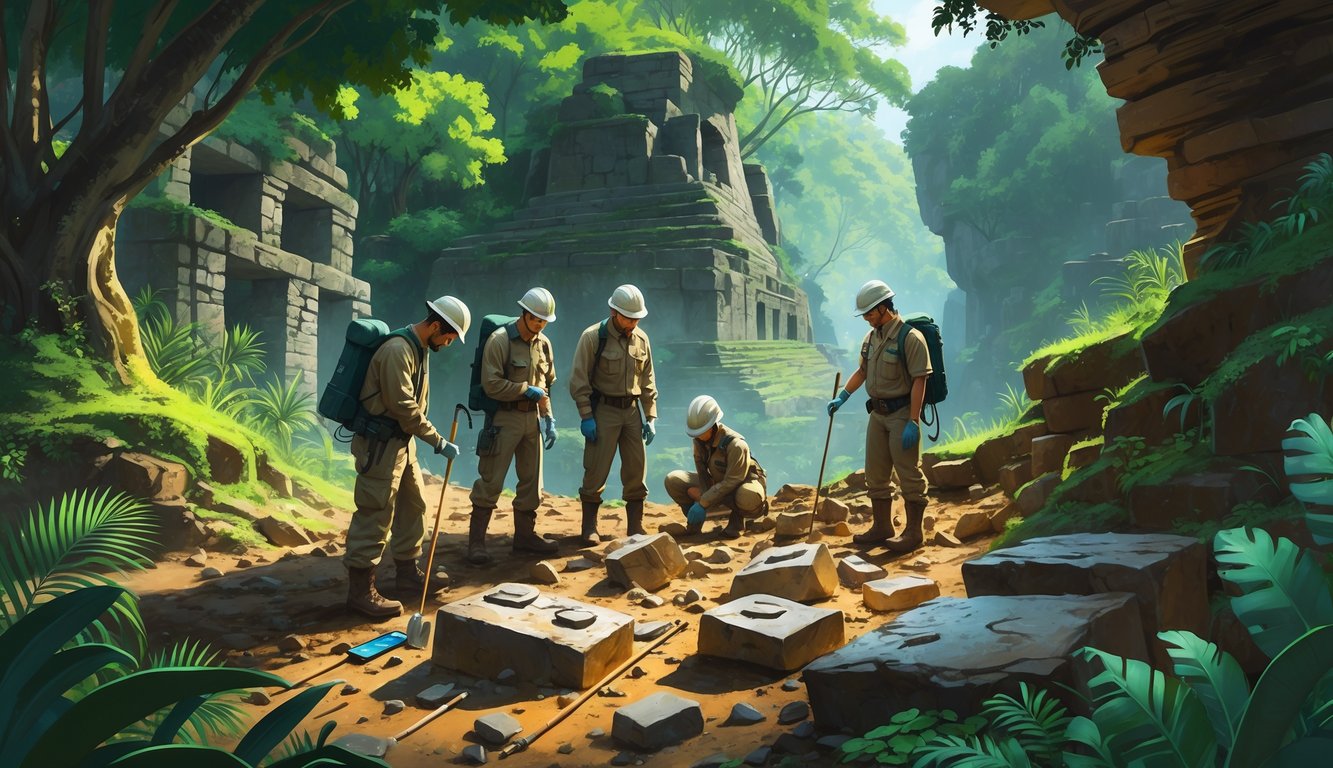
Archaeological surveys have found tools, pottery fragments, and organic remains that show humans used the cave long before modern times. These artifacts may belong to cultures that predate the Shuar people, sometimes called pre-Shuar civilizations.
Researchers have found spondylus shells, a material valued in coastal Ecuadorian trade. Their presence deep in the jungle suggests early long-distance exchange routes.
Excavations uncovered fire pits and food remains, indicating the cave may have served as a temporary shelter or ceremonial site. While no permanent settlements have been confirmed, the evidence shows people were active here for centuries.
Some of these finds are preserved at the Catholic University of Quito for further study, as mentioned in archaeological reports.
Paleolithic and Neolithic Findings
Material evidence points to human activity during both the Paleolithic period and the Neolithic age. Stone tools from the Paleolithic suggest small hunter-gatherer groups used the cave, possibly for shelter during seasonal movements.
In later Neolithic layers, pottery shards and more refined tools appear. These finds indicate the presence of early agricultural communities.
Researchers see a shift from basic tools to items with decorative or symbolic value. This change reflects broader cultural developments as societies became more complex.
The cave’s artifacts provide a rare link between early foraging cultures and later farming communities in the Amazon-Andes region.
Controversies and Debates
Researchers, explorers, and locals share many different accounts about the Cueva de los Tayos and its rumored treasures. Reports often conflict on what was found, how it was documented, and whether the items still exist.
Authenticity of the Metal Library
The metal library remains central to the mystery. Some claim it contains metal plates engraved with unknown symbols, possibly telling the history of an ancient civilization.
Swiss author Erich von Däniken popularized the idea, linking it to theories of advanced prehistoric cultures and extraterrestrial contact. However, no verified photographs or physical evidence have been made public.
Expeditions, including one with Neil Armstrong, explored the cave but did not confirm such a collection. Skeptics say the accounts rely on secondhand testimony and lack verifiable proof.
Believers point to similar descriptions from different witnesses, but critics argue these could be influenced by earlier stories.
Disputes Over Artifacts
Father Crespi, a missionary in Ecuador, collected hundreds of unusual metal sheets, carvings, and sculptures from locals. Some say these came from the Tayos Cave and were part of the Gold of the God—a term for treasures linked to ancient legends.
He displayed many of these artifacts in his museum, but their origins remain unclear. Some looked modern or came from known indigenous cultures, while others were more unusual.
After Father Crespi’s death, most of his collection disappeared. This has fueled debate over whether the most important pieces were hidden, stolen, or destroyed.
The lack of proper documentation leaves historians with little to verify the claims.
Challenges in Verification
Tayos Cave is deep, remote, and hard to navigate. Reaching the rumored chambers requires skilled guides and special equipment.
Political, environmental, and cultural factors can limit access, even when expeditions are organized. The Shuar people, who live nearby, control entry and have their own traditions about the site.
Artifacts linked to the cave are scattered or missing, making scientific testing almost impossible. Without physical samples, researchers must rely on written accounts, interviews, and uncertain photographs.
These barriers make it hard to prove or disprove claims about the metal library.
Modern Exploration and Media Coverage
Explorers and filmmakers have returned to Cueva de los Tayos in recent years, using modern equipment and working with local guides. Television programs and documentaries have brought the story to a wider audience and sparked new interest in the cave’s history.
Expedition Unknown and Josh Gates
In 2018, the TV series Expedition Unknown featured host Josh Gates traveling to Ecuador to investigate the legend. He worked with local Shuar guides and Eileen Hall, whose father led a major 1976 expedition.
The team explored deep sections of the cave, navigating narrow passages and flooded areas. Filming required portable lighting, waterproof gear, and careful planning.
They did not find the rumored metal plates, but the episode showed the challenges of reaching remote areas of the Amazon rainforest. It also highlighted the cave’s cultural importance to the Shuar, who maintain traditional knowledge about its entrances and terrain.
Recent Expeditions
Several modern expeditions have focused on mapping and photographing unexplored sections of Tayos Cave. Some groups have used laser scanning and 3D modeling to create detailed cave maps.
In some cases, Shuar elders told explorers that previous teams entered through the wrong passage. This has led to speculation that the alleged metal library, if it exists, may be in a separate chamber not yet documented.
Environmental conditions remain a major challenge. Heavy rains can flood lower tunnels, and thick jungle slows equipment transport. These factors limit how much ground a team can cover during a single trip.
Documentaries and Public Interest
The story of Tayos Cave has appeared in many documentaries and online videos, including segments on history and archaeology channels. Programs often revisit the 1976 expedition to Tayos that included astronaut Neil Armstrong, using archival footage to connect past and present searches.
Independent filmmakers have interviewed Shuar community members to share their perspective on the cave’s significance. This helps present the legend as part of a living cultural tradition, not just an archaeological mystery.
Public interest remains steady, with social media and streaming platforms making past expeditions more accessible. Viewers can now watch both historic and recent explorations and follow ongoing debates about what might still lie hidden inside.
The Ongoing Hunt and Future Prospects
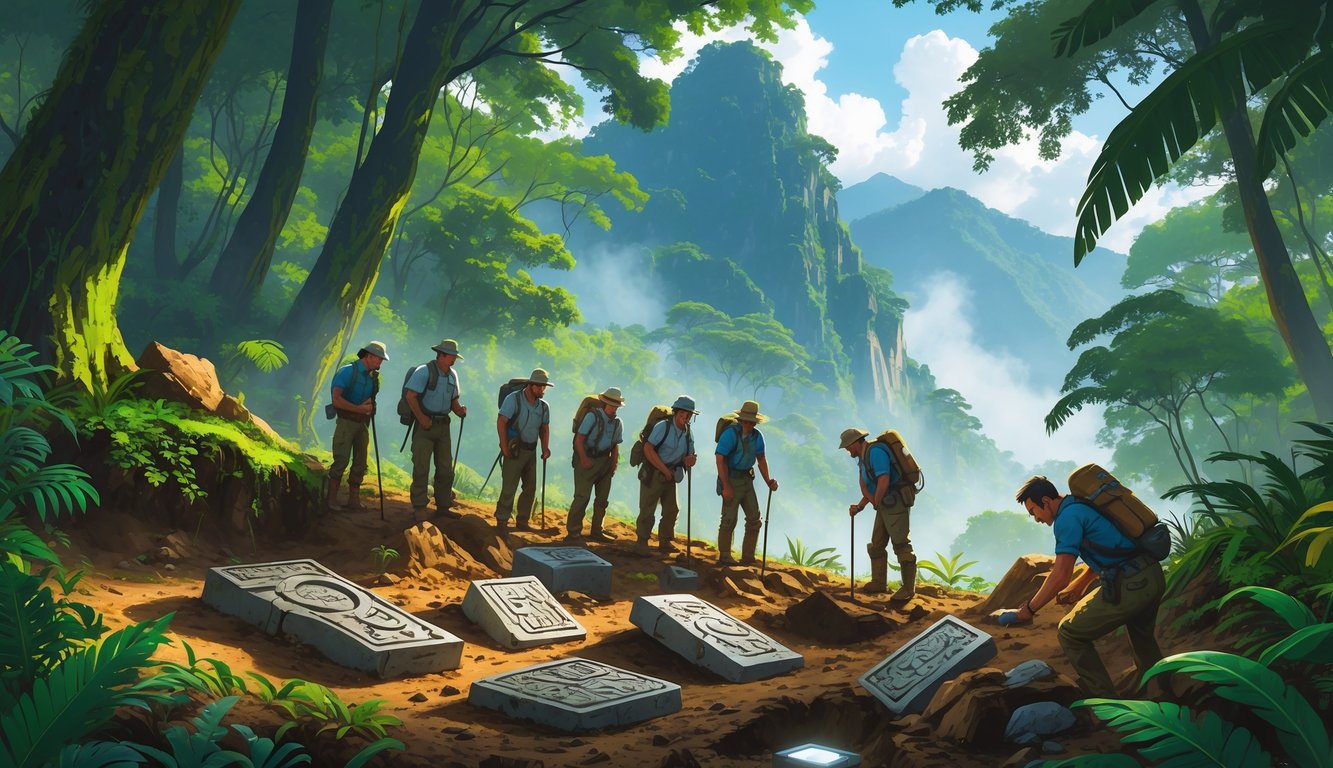
Researchers continue to explore both the physical terrain and historical records to understand the truth behind the Metal Library. They match fieldwork in remote areas with archival studies to piece together credible evidence of its existence.
Current Research Initiatives
Teams from Ecuador and other countries continue to explore Cueva de los Tayos in Morona Santiago province. They use advanced mapping tools, underwater cameras, and 3D scanning to document chambers that are difficult to reach.
Researchers work closely with local Shuar guides, who know the cave’s complex passages well. This teamwork helps them find areas that earlier explorers may have missed.
Archaeologists study artifacts connected to the site, including items once in Father Crespi’s collection in Ecuador. Although many of these artifacts are lost or their origins are disputed, digital archives now preserve photographs and descriptions for research.
Recent projects compare Tayos Cave’s rock formations and cut surfaces with those at other archaeological sites. Researchers want to find out if these features are natural or made by people.
Preservation and Access Challenges
Both geography and policy limit access to Tayos Cave. The cave sits in dense jungle, so visitors must travel by river and use climbing equipment to reach it safely.
Seasonal flooding sometimes blocks certain passages.
Preservation raises concerns as well. Increased tourism and amateur exploration can damage fragile cave structures.
Authorities in Morona Santiago plan to introduce stricter entry rules to protect the site.
Cultural factors also play a role. The Shuar people consider parts of the cave sacred.
Researchers must get consent from the Shuar community and respect their traditions.