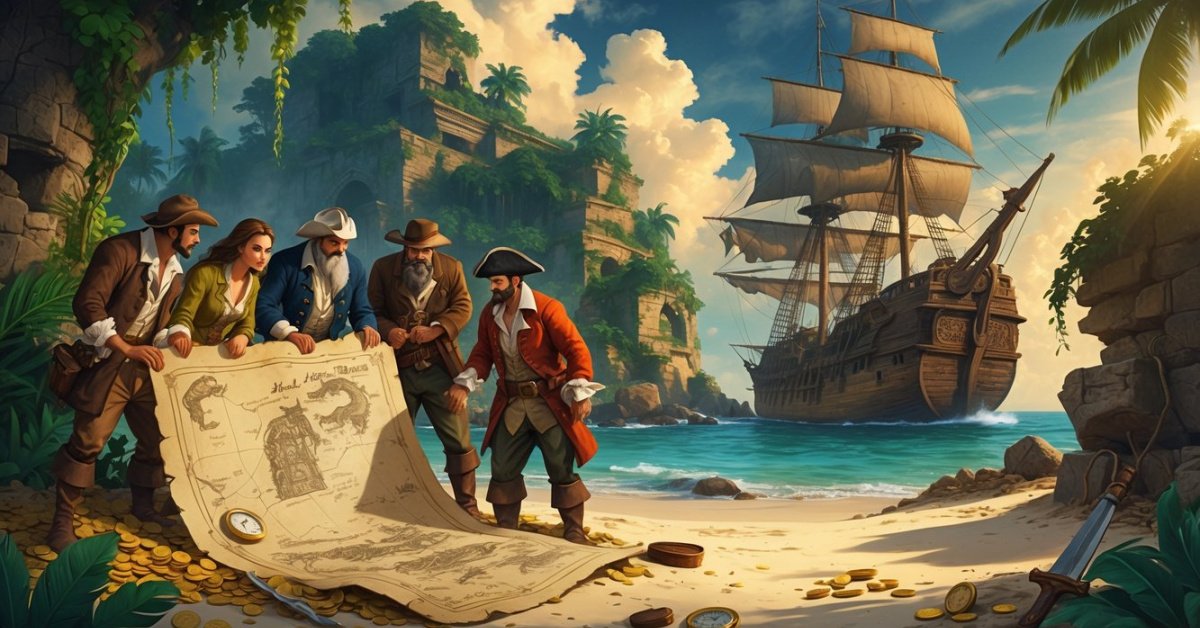
Henry Avery was no ordinary pirate. In 1695, he and his crew captured the Ganj-i-Sawai, a treasure ship belonging to the Mughal Empire, in what became the most profitable pirate raid in history.
No one has confirmed the exact location of Avery’s fortune. This mystery remains one of the greatest unsolved treasure stories.
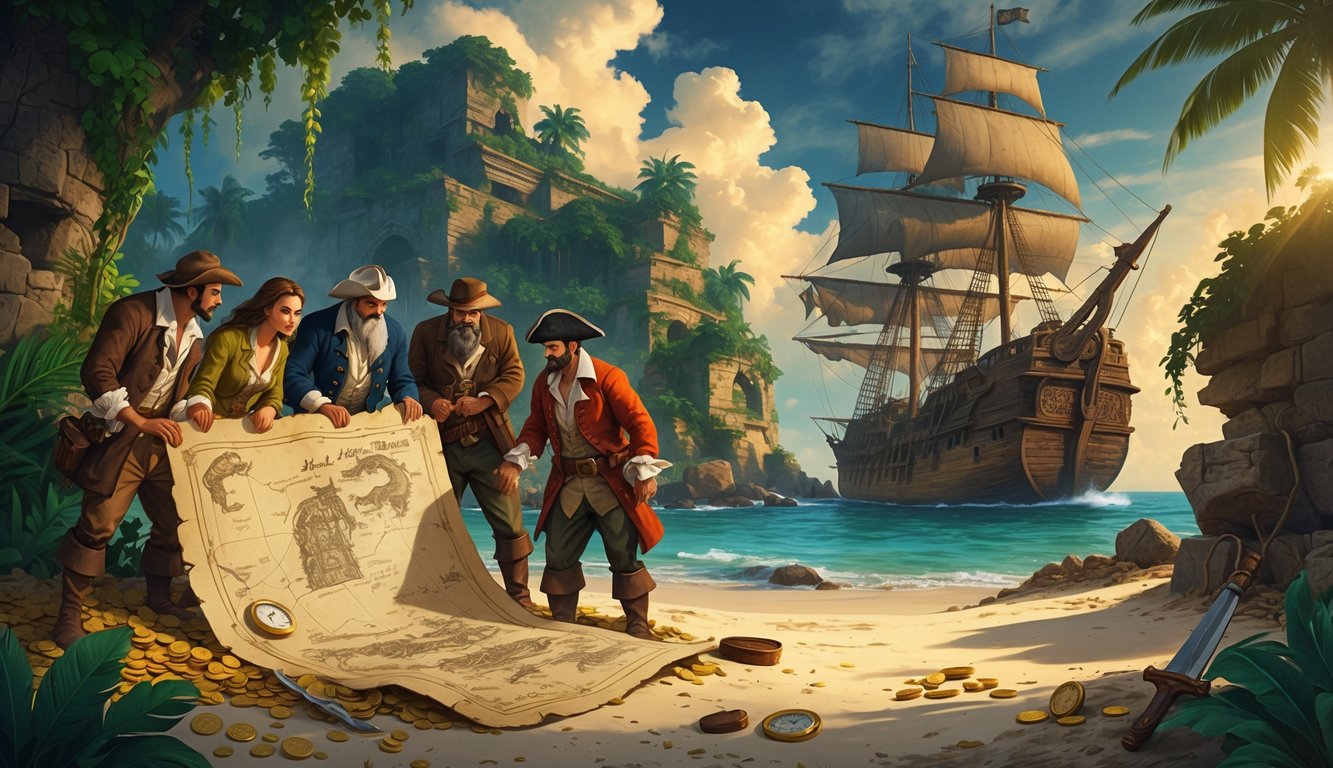
Some believe Avery buried his loot on remote islands or hidden shores. Others point to clues in lost letters and coins found far from the Indian Ocean.
Theories range from West Africa to the Americas. Each has its own evidence and speculation.
Avery’s daring escape, possible royal pardon, and disappearance add to the intrigue. The search for his treasure continues to inspire historians, treasure hunters, and adventurers.
The Legend of Henry Avery’s Lost Pirate Treasure
Henry Avery, also known as Henry Every or the “Pirate King,” became one of the most wanted men of the late 1600s after a single, highly profitable act of piracy. His name is tied to one of the richest treasure hauls in history, yet his final fate and the location of his loot remain unknown.
Origins of the Treasure Mystery
Henry Avery started as a sailor in the Royal Navy before turning to piracy. In 1694, he joined a privateering crew and soon led a mutiny, seizing the ship Charles II and renaming it Fancy.
He and his crew sailed to the Indian Ocean, targeting ships of the Mughal Empire. Avery vanished from historical records after his most famous raid.
No one knows for sure if he kept the treasure, shared it, or lost it. Some reports say he bribed officials in the Bahamas to hide, while others claim he escaped to Ireland under a false name.
Famous Heists and Loot
In 1695, Avery and his crew seized the Mughal treasure ship Ganj-i-Sawai. The vessel carried gold, silver, and jewels worth an estimated £600,000 at the time, equal to about £90 million today.
The pirates overpowered the ship despite its heavy armament. After taking the treasure, they escaped before the Mughal navy could respond.
The crew split the loot, but no one knows how much Avery kept. Some believe he smuggled a large share to safety, while others think he lost his wealth before disappearing.
You can read more about this historic raid in detail from Henry Avery and the most lucrative heist in pirate history.
Enduring Legends and Myths
Stories about Avery’s treasure have persisted for more than 300 years. Some tales claim he buried it on remote islands or along the Cornish coast, including Kennack Sands.
Others suggest he lived quietly under an alias, spending the gold slowly to avoid attention. Some imagine he died penniless after being betrayed by his crew or local merchants.
Modern finds, such as coins linked to Avery in New England, fuel speculation. These discoveries keep the legend alive and inspire ongoing searches for the Pirate King’s hidden fortune.
The Ganj-i-Sawai Heist: The Most Lucrative Pirate Raid
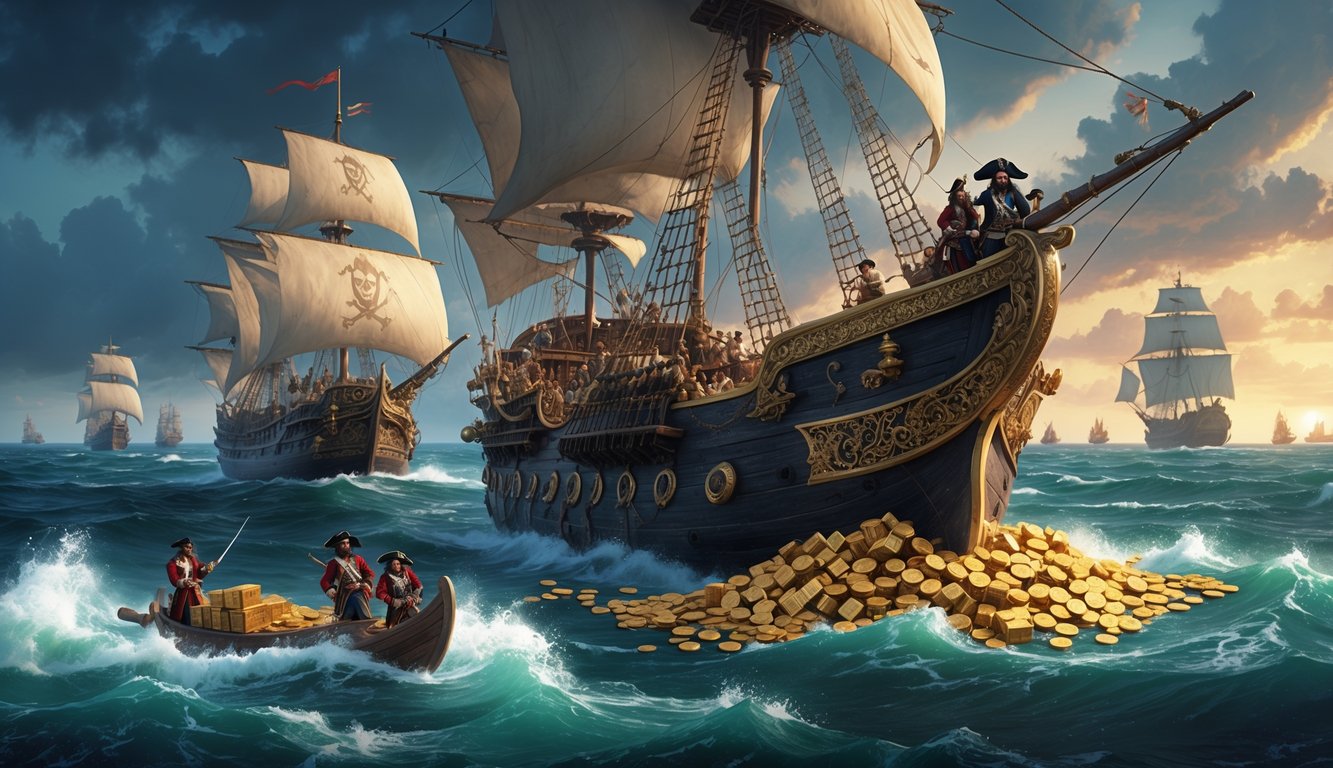
In 1695, Henry Avery led a daring attack in the Indian Ocean. He targeted one of the Mughal Empire’s richest ships.
The raid involved violent combat, a massive haul of treasure, and a diplomatic crisis between two powerful nations.
Attack on the Mughal Treasure Ship
The Ganj-i-Sawai, meaning “Exceeding Treasure,” was a heavily armed Mughal trading ship. It sailed from Mocha in present-day Yemen toward Surat, India, carrying pilgrims and valuable cargo.
Avery and his pirate fleet intercepted it on September 7, 1695. They first captured the ship’s escort, the Fateh Muhammed, leaving the Ganj-i-Sawai vulnerable.
Pirates damaged the Mughal vessel early in the fight when cannon fire disabled its mainmast. They boarded quickly and overpowered the crew.
Historical accounts describe the capture as brutal. Survivors reported violence against passengers and crew.
The pirates took control of the ship and searched for its wealth.
More details about the ship’s background can be found on the Ganj-i-Sawai’s history page.
Aurangzeb’s Response and Aftermath
The treasure ship belonged to Mughal Emperor Aurangzeb, one of the most powerful rulers of the 17th century. News of the attack reached him quickly, and he was outraged.
The heist sparked a diplomatic crisis between the Mughal Empire and England. Aurangzeb demanded justice and threatened to end English trading rights in India.
The English East India Company feared losing its valuable trade. They offered large rewards for Avery’s capture, starting what some historians call the first global manhunt for a pirate.
Despite these efforts, Avery and most of his crew vanished. Their fate remains uncertain.
You can read more about the incident in the Smithsonian’s coverage of Henry Avery.
Looted Riches: Gold, Silver, and Precious Stones
The Ganj-i-Sawai carried a huge amount of treasure. Reports describe gold coins, silver bars, and chests filled with precious stones such as diamonds, rubies, and emeralds.
No one knows the exact value, but it was one of the largest pirate hauls in history. Some estimates suggest the loot was worth millions in today’s money.
The pirates split the spoils before fleeing. Avery’s share would have made him one of the richest men of his time.
Many believe much of this treasure was hidden or spent quickly, and no one has confirmed any recovery.
The Fate of the Treasure: What Happened to Avery’s Loot?
After Avery and his crew captured the Mughal ship Ganj-i-Sawai in 1695, they sailed away with gold, silver, and precious stones worth millions today. What happened next comes from sailor accounts, scattered documents, and later discoveries.
The trail is incomplete but offers some clues.
Splitting the Spoils Among the Crew
Historical accounts say the pirates divided the loot soon after escaping the Indian Ocean. Avery’s ship, the Fancy, carried an enormous haul, possibly worth £600,000 at the time.
Officers and Avery himself took the largest shares, while lower-ranking sailors got less. Some men spent their money quickly in ports across the Atlantic.
Others tried to hide their wealth to avoid arrest. This uneven distribution may explain why some pirates lived comfortably for years, while others died in poverty.
Rumors of Hidden Chests
Stories soon spread that Avery buried part of the treasure to keep it safe. Popular tales placed these hidden chests on remote islands or in secluded coves in the Bahamas.
One theory claims Avery bribed Nassau officials with gold for protection. Another suggests he hid jewels and coins in secret caches before disappearing.
Treasure hunters have searched for these rumored hoards for centuries. Despite many claims, no one has verified a recovery of Avery’s buried loot.
These legends continue to fuel interest in the lost pirate treasure.
Evidence from Historical Records
Some clues about the treasure’s fate come from court documents, letters, and official reports. After the raid, the Mughal Empire demanded justice and pressured England to track down Avery and his men.
Authorities captured and tried a few crew members, who revealed under oath that they had spent or traded away much of their share. Others vanished entirely.
A recently unearthed letter linked to Avery hints that he may have lived quietly under a false name. If true, it suggests the treasure was either sold off gradually or hidden so well that no one has ever recovered it.
Treasure Trails: Clues and Documents

Historians and treasure hunters have found several records that may point to where Henry Avery hid his loot. These range from official archives to cryptic letters, each offering small but important pieces of the puzzle.
The Kresen Kernow Document
In Cornwall’s town of Redruth, the Kresen Kernow archive holds a document linked to Avery’s final years. Researchers believe it may describe his movements after the 1695 raid on the Mughal ship Ganj-i-Sawai.
The text appears to detail a landing near the Cornish coast. Some passages mention buried chests along sandy shores, possibly near The Lizard.
The writing is partly damaged, and archivists have noted unusual place descriptions. These could be old local names no longer in use, making them harder to match with modern maps.
Such details attract both historians and amateur searchers. The combination of location hints and period handwriting gives the document weight as a potential lead.
The Scottish Records Office Letter
At the Scottish Records Office, a letter surfaced that may connect Avery to contacts in Scotland. The letter is dated to the late 1690s and is written in a formal but urgent tone.
It appears to discuss safe passage and the movement of goods, though it never directly names treasure. Some historians suggest the “goods” could have been part of Avery’s haul from the Indian Ocean.
The letter also mentions a possible rendezvous point along the west coast. This location would have been suitable for discreet ship landings away from busy ports.
Its preservation in an official archive adds credibility, but the lack of direct evidence still leaves room for debate.
Coded Messages and Secret Locations
Some accounts say Avery used coded directions to hide his treasure. One example, discussed in a Reddit post on Henry Avery’s hidden treasure, includes a mix of English and French text.
The message refers to “three chests” buried near three stones on a shoreline. The stones are described in vague terms, possibly to disguise the exact spot.
Such codes often relied on landmarks that could change or disappear over time. This makes decoding them a challenge today.
Treasure hunters have tried matching these clues to coves in Cornwall, but no one has made a confirmed discovery.
Hunting Grounds: Where Is the Treasure Hidden?
Henry Avery’s treasure is tied to specific places along the coast of England and beyond. Historical accounts, local legends, and recent finds point to a few key areas that may still hold valuable clues.
Kennack Sands and the Cornish Coast
Many stories place Avery’s loot on the southern coast of Cornwall.
Kennack Sands, a beach near The Lizard, is one of the most mentioned spots.
Local tales claim he either landed or was shipwrecked here after returning from India.
Some versions describe him burying three chests in the sands.
A 19th-century document, now at Kresen Kernow in Redruth, contains a cryptic location description.
It refers to landmarks like “three stones” near a cove, which match features still visible today.
Cornwall’s history of piracy makes this theory more believable.
The coastline served as a known smuggling route, and its many hidden coves offered safe places to hide stolen goods.
You can read more about these legends in accounts of buried pirate treasure at Kennack Sands.
Other Suspected Locations
Not all historians agree on Cornwall as the hiding place.
Some believe Avery may have hidden his loot in other parts of England or even abroad.
One theory suggests he bribed officials in the Bahamas and left treasure there.
Another points to the coast of Devon, where Avery had family ties.
Some claims say treasure could be buried near Lizard Point, a few miles from Kennack Sands.
A letter linked to Avery, discussed in research on Henry Avery’s lost letters, hints at multiple burial sites.
Modern Discoveries and Finds
Recent discoveries have kept interest in Avery’s story alive.
In New England, archaeologists uncovered 17th-century Arabian silver coins that may be linked to his most famous heist.
These finds are detailed in reports about coins found in New England.
In Cornwall, divers and metal detectorists still search the seabed and beaches for signs of shipwrecks connected to Avery.
Some expeditions have located wreck sites off the Cornish coast, though none have been proven to be his.
Researchers at places like Kresen Kernow continue to uncover old maps, letters, and clues.
Each discovery adds a small piece to the puzzle, even if the treasure itself remains hidden.
Escape and Disappearance: Avery’s Final Years
After the 1695 raid on the Mughal treasure ship, Henry Avery became one of the most wanted men in the world.
He avoided capture by moving quickly across territories, using forged identities, and relying on allies in colonial ports.
His final movements remain uncertain, but records and artifacts offer clues.
Flight Through the American Colonies
Avery and some of his crew first sailed toward the Bahamas, where they bribed officials for safe harbor.
From there, he likely crossed the Atlantic to the American colonies.
Reports suggest he landed in places like Charleston and possibly the Carolinas.
These ports offered opportunities to sell stolen goods quietly.
Colonial authorities faced pressure from England to arrest him.
To avoid detection, Avery likely traveled under an alias.
He may have used smaller vessels to move between ports, staying only briefly before heading north.
His movements became harder to track once he reached New England, where pirate sympathizers operated.
Life in New England and Ireland
Some accounts claim Avery lived for a time in Massachusetts or Rhode Island.
New England’s busy trade routes made it easier to blend in, especially for someone with seafaring skills.
A handful of Arabian silver coins found in the region may be linked to his plunder.
These coins match the type taken from the Mughal ship.
Later reports place Avery back in Ireland, possibly under a new identity.
He may have returned to Devon, England, his birthplace, or settled quietly in a rural area.
Without the lavish lifestyle of a pirate, he could pass as a retired sailor.
Theories About Avery’s Fate
Historians debate whether Avery died wealthy or penniless.
One theory holds that he escaped with a fortune and lived in secrecy.
Another, supported by some court records, claims he was cheated out of his share and died in poverty.
An encrypted letter dated 1700, signed “Avery the Pirate,” hints he may have lived years after his supposed disappearance.
Other researchers believe someone captured him under a false name but never identified him.
The lack of confirmed burial records keeps the mystery alive.
The Royal Pardon and Avery’s Secret Life
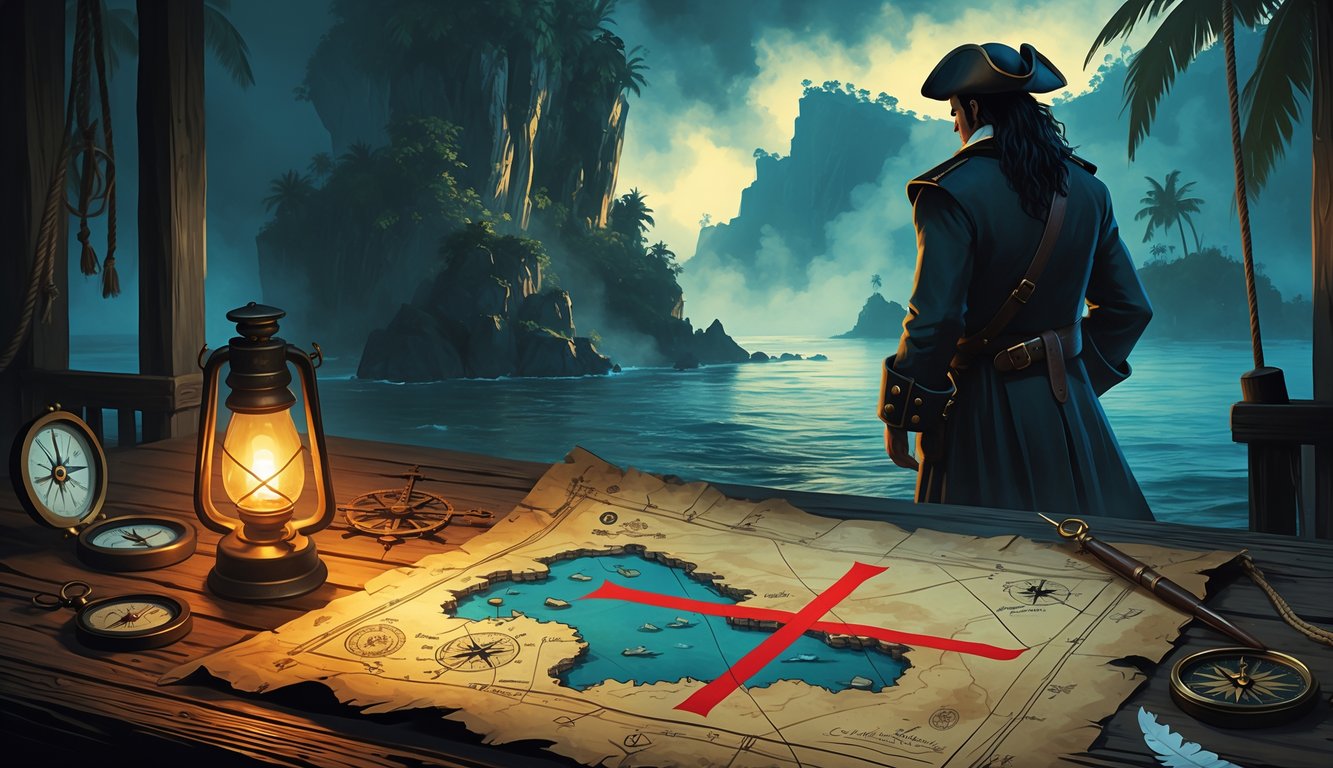
Historical evidence suggests Henry Avery did not simply vanish after his famous raid.
Records and a recently uncovered letter point to a negotiated pardon, covert work for the Crown, and dealings with the East India Company.
Negotiating With Authorities
After the 1695 capture of the Mughal treasure ship Ganj-i-Sawai, Avery became one of the most wanted men in the world.
The Mughal Empire demanded justice, and England faced diplomatic pressure.
A letter Avery wrote hints that he secured a royal pardon.
He would have needed to negotiate with officials willing to overlook his crimes in exchange for something valuable—possibly part of his loot or information.
The pardon would have caused controversy.
Many English merchants feared reprisals from Mughal authorities, and the East India Company had to work hard to restore trade relations.
Avery’s deal, if it happened, shows how piracy and politics could intersect in the late 17th century.
Avery as a Spy and Informant
Marine archaeologist Sean Kingsley has linked Avery to intelligence work for the Crown.
According to a recent investigation, the unearthed letter indicates Avery entered royal service as a spy after his pardon.
He used his skills at sea, knowledge of trade routes, and connections in foreign ports to become a useful asset.
Spies in this era often operated under cover as merchants or sailors, gathering information on rival powers like France, Spain, and the Mughal Empire.
If Avery served as an informant, this could explain why he avoided capture despite being a high-profile fugitive.
His value to the Crown may have outweighed the need for public punishment.
Connections to the East India Company
The East India Company suffered heavy losses after Avery’s attack on the Mughal ship.
Trade with India was briefly at risk, and the Company’s leadership had to reassure the Mughal court that England did not condone piracy.
If Avery’s pardon was real, the Company may have been involved—either directly in the negotiations or by pressuring the Crown to resolve the crisis.
Restoring relations was critical for their profits.
Some historians suggest Avery’s intelligence work could have aided the Company’s interests.
By providing information on rival traders or hostile ports, he may have quietly helped protect English commercial dominance while living under a new identity.
The Golden Age of Piracy: Avery’s Influence
Henry Avery’s short but profitable career helped shape how people viewed pirates during the late 1600s.
His capture of a Mughal treasure ship made him wealthy and influenced how piracy evolved in the years that followed.
His actions showed that a single, well-planned raid could change pirate history.
Rise of Piracy in the 17th Century
The late 17th century saw a surge in piracy due to political conflicts, trade expansion, and weak naval enforcement.
Many sailors turned to piracy after wars ended, leaving them unemployed but skilled at sea.
Trade routes between Europe, Africa, and Asia carried valuable goods such as gold, silver, and spices.
Pirates targeted these routes.
Avery’s 1695 raid on the Mughal ship Ganj-i-Sawai showed the potential rewards of attacking large, well-defended vessels.
The loot from this single event was worth millions in today’s value.
His success inspired others to follow similar tactics.
This contributed to what became known as the Golden Age of Piracy.
Impact on Pirate Lore
Avery’s story spread quickly through ballads, pamphlets, and plays.
Writers portrayed him as both a cunning criminal and a daring adventurer.
Unlike many pirates who met violent ends, Avery vanished without confirmed capture or death.
This disappearance added mystery to his legend.
His exploits were often exaggerated in popular culture, but the core facts—his massive heist and escape—secured his place in history.
Over time, his name became linked with the idea of the pirate as a master strategist rather than just a brute at sea.
This blend of fact and fiction helped shape the romanticized image of pirates that still appears in books and films today.
Avery’s Reputation Among Pirates
Among fellow pirates, Avery earned respect for his planning and leadership.
He managed to unite a crew from different ships, coordinate a risky attack, and divide the loot without immediate mutiny.
His ability to avoid capture made him a figure many pirates admired.
For some, he proved that piracy could be both profitable and survivable.
However, his raid on the Mughal ship caused diplomatic tensions between England and the Mughal Empire.
This led to increased pressure from governments to hunt down pirates, making life at sea more dangerous for others.
Even so, Avery’s name remained a symbol of pirate success.
His story influenced how later captains approached both raids and escape plans.
Modern Investigations and Notable Experts
Modern research into Henry Avery’s fate draws on historical letters, ship logs, and recovered artifacts.
Historians, archaeologists, and archivists work together to trace his movements and identify possible locations of his hidden wealth.
Sean Kingsley’s Research
Maritime historian Sean Kingsley has studied Avery’s life and disappearance for years.
He examined a long-lost letter that may reveal where Avery went after the 1695 raid on the Mughal treasure ship.
Kingsley co-authored a book that reconsiders Avery’s reputation and challenges popular myths.
He argues Avery was more strategic than reckless, using bribery and alliances to evade capture.
His research draws on records from the Scottish Records Office and other archives.
By piecing together ship movements, financial transactions, and personal correspondences, Kingsley has built a clearer picture of Avery’s final years.
Kingsley’s findings suggest Avery may have lived quietly under another identity, possibly in Britain or its colonies.
Recent Archaeological Discoveries
Archaeologists have uncovered physical evidence linked to Avery’s exploits.
A handful of Arabian silver coins found in New England may be tied to the loot from the Ganj-i-Sawai raid.
These coins date to the late 17th century and match currency traded in the Indian Ocean during Avery’s time.
Marine archaeologists have also searched coastal waters for shipwrecks that could be linked to Avery’s crew.
While no confirmed wreck has been found, recovered artifacts give clues about trade routes and hiding places.
Some investigations have combined underwater surveys with historical maps to pinpoint areas worth exploring.
This approach has helped narrow the search for possible treasure caches.
The Role of Museums and Archives
Institutions like Kresen Kernow in Cornwall and the Scottish Records Office preserve important documents about Avery. These documents include ship manifests, court records, and letters from colonial governors.
Researchers use these archives to cross-check events and verify claims in contemporary accounts. Museums display recovered artifacts to make history more accessible to the public.
Staff at these institutions digitize records, which helps historians around the world collaborate. This increased access helps researchers find new connections between pieces of evidence and strengthens the search for Avery’s treasure.
Legacy of Henry Avery’s Lost Pirate Treasure
Henry Avery captured the Mughal treasure ship Ganj-i-Sawai in 1695. His escape with a fortune worth millions today inspired both fear and fascination.
People remember him as the so-called “Pirate King.”
Cultural Impact and Popular Media
Henry Avery’s story appears in books, documentaries, and video games. His reputation as a successful pirate makes him a frequent subject in historical fiction.
Writers focus on his sudden disappearance, which left his fate unknown. This mystery keeps audiences interested even now.
Museums and history websites, such as the Royal Museums Greenwich, show artwork of Avery taking the Ganj-i-Sawai. These images help people visualize the scale of his heist.
His nickname, the “Pirate King,” shows up in novels and online videos. Many portray him as clever and elusive instead of violent, showing how stories change over time.
Ongoing Treasure Hunts
Treasure hunters still search for Avery’s missing loot. Some believe he buried it on remote islands, while others think he spent or hid it in trade goods.
A few relics may link to Avery’s plunder. For example, Arabian silver coins found in New England could connect to his crew’s activities after the raid.
Online forums like TreasureNet share theories and possible locations. These discussions often mix research with speculation, making it hard to separate fact from myth.
No confirmed treasure has surfaced. The mix of history, mystery, and possible reward keeps the search alive for both amateur and professional explorers.
Lessons From the Legend
Avery’s story shows how a single event can shape a person’s legacy. His raid on the Ganj-i-Sawai made him rich.
The raid also turned him into a target for the world’s most powerful empire.
Avery escaped capture, but authorities caught and punished many of his crew.
Historians say he vanished because he planned carefully and had strong connections. His boldness and these traits make him a figure of study and fascination today.