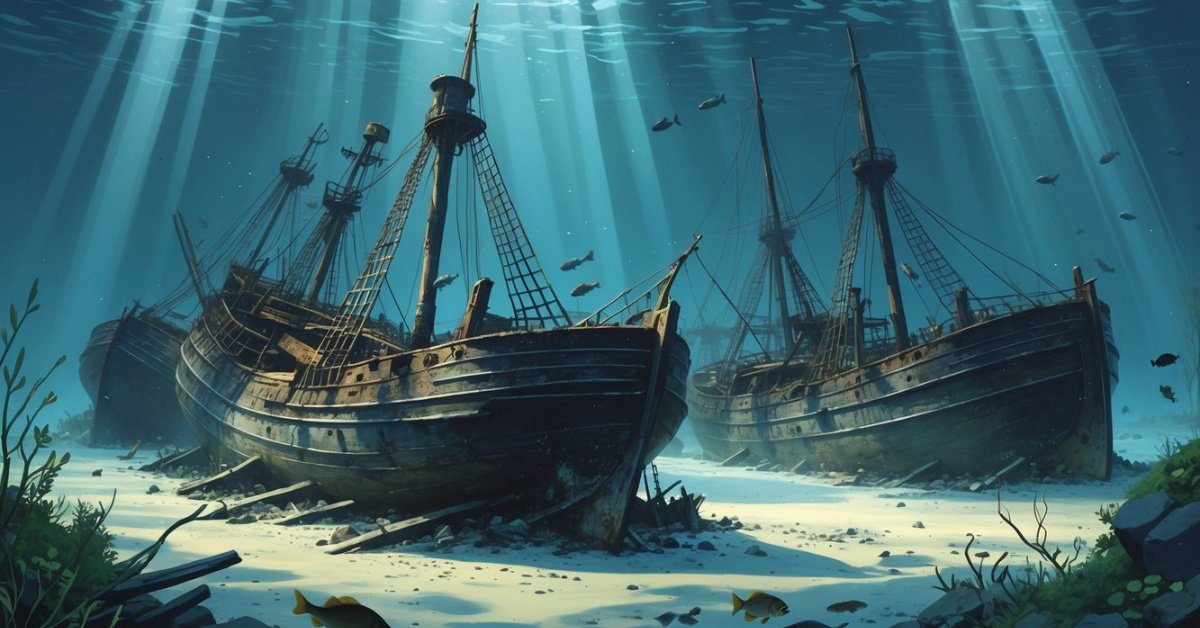
Lake Superior’s southern shore hides a stretch of water known as the Graveyard of the Great Lakes. Hundreds of ships have met their end here.
This 80-mile section between Grand Marais and Whitefish Point offers no safe harbor. Sailors consider it one of the most dangerous places to travel in North America.
More shipwrecks have occurred here than anywhere else on Lake Superior.
Sudden storms, powerful waves, and rocky shallows have trapped ships here for over two centuries. Each wreck, from the Invincible in 1816 to the Edmund Fitzgerald in 1975, tells a story of risk, survival, and tragedy.
Cold, clear waters preserve many of these sites, offering a glimpse into maritime history.
Today, divers, historians, and visitors explore places like Whitefish Point, home to the Great Lakes Shipwreck Museum. They examine artifacts, study navigation changes, and use modern technology to uncover new wrecks.
What Is the Graveyard of the Great Lakes?
The “Graveyard of the Great Lakes” describes a dangerous stretch of Lake Superior where hundreds of ships have sunk. Unpredictable weather, powerful storms, and a lack of safe harbors make navigation risky even for experienced crews.
Defining the Graveyard’s Boundaries
This region lies along the southern shore of Lake Superior in Michigan. It extends roughly from Grand Marais eastward to Whitefish Point.
Some accounts suggest Grand Island as a possible western limit.
This stretch is sometimes called Shipwreck Coast. It spans about 80 miles, with rocky shoals and shallow reefs hidden below the surface.
| Location | Notable Points |
|---|---|
| Western Limit | Grand Marais or Grand Island |
| Eastern Limit | Whitefish Point |
| Length | ~80 miles |
No natural harbors offer shelter along this area. Ships caught in storms often had to face the waves until they reached safety or sank.
History of the Name
The title “Graveyard of the Great Lakes” developed over two centuries of maritime losses. The first recorded commercial wreck here was the Invincible in 1816.
Since then, more than 300 shipwrecks have happened in this stretch of water.
Major disasters, such as the sinking of the Edmund Fitzgerald in 1975, made the name more widely known. This freighter sank with all 29 crew members during a fierce November storm.
Mariners and historians use the term to describe not just the frequency of wrecks but also the high number of lives lost—estimated at over 320 in this region alone.
Notable Features of the Region
Several factors make this part of Lake Superior hazardous. The lake’s size lets storms build large, steep waves.
Sudden squalls can appear with little warning, reducing visibility and control.
Reefs and sandbars below the surface create hidden dangers. Cold water temperatures slow rescue efforts and preserve wrecks for decades.
Whitefish Point, at the eastern edge, is home to the Great Lakes Shipwreck Museum. The museum documents many lost vessels and offers exhibits on navigation, weather, and recovery efforts.
Divers and researchers have found new wrecks, such as the Western Reserve, discovered in 2025 after 132 years on the lakebed.
Lake Superior: Nature’s Shipwreck Trap
Lake Superior’s size, depth, and location often create dangerous conditions for ships. Sudden storms, icy waters, and long stretches without safe harbors have claimed hundreds of vessels over the past two centuries.
Geographic and Climatic Challenges
Lake Superior covers over 31,000 square miles, making it the largest Great Lake. Its open waters can stretch more than 200 miles without shelter.
Powerful winds from Canada and the Arctic sweep across the lake. These winds cause fast-moving squalls and waves over 30 feet high.
Cold water temperatures slow rescue efforts and increase the risk of hypothermia. Even in summer, surface temperatures often stay below 55°F.
Fog, especially in late spring and early fall, makes navigation harder. Reduced visibility makes it difficult for ships to avoid hazards or other vessels.
Shipwreck Coast and Whitefish Bay
The shoreline between Munising and Whitefish Point is known as Shipwreck Coast. This 80-mile area has no safe harbor, so ships must ride out storms in open water.
Whitefish Bay, at the eastern end, can serve as both a refuge and a hazard. Ships trying to reach it often navigate through shallow areas and shifting sandbars.
Over 200 known wrecks lie near Whitefish Point alone. The cold, clear water preserves many of them, attracting divers and historians.
The Great Lakes Shipwreck Museum at Whitefish Point documents many of these losses, including the Edmund Fitzgerald, which sank just 17 miles from safety.
Why So Many Ships Were Lost
In the late 1800s, more than 3,000 commercial vessels traveled the Great Lakes. Heavy traffic increased the risk of collisions, especially in poor weather.
Before radar and GPS, captains relied on compasses, charts, and visual landmarks. Storms often obscured these, leaving ships off course.
Long distances without shelter, unpredictable weather, and the lake’s size created a natural trap. Once a vessel was caught in a storm, escape options were limited.
Sonar mapping continues to reveal new wrecks in the so-called Graveyard of the Great Lakes, adding to the record of Lake Superior’s dangers for mariners.
The Role of Whitefish Point
Whitefish Point is a narrow peninsula on Lake Superior’s southern shore. For nearly two centuries, it has shaped shipping routes.
Its location, weather, and underwater geography make it both a vital navigation point and one of the most dangerous stretches of water in the Great Lakes.
Strategic Importance for Shipping
Ships traveling between Lake Superior and Lake Huron pass near Whitefish Point. This creates a natural bottleneck that concentrates vessel traffic into a narrow corridor.
The area becomes especially hazardous in fall and early winter when storms are frequent. Strong winds, large waves, and sudden visibility changes have caused over 200 documented shipwrecks near the point, making it part of the Graveyard of the Great Lakes.
Whitefish Point marks the eastern end of Lake Superior’s 80-mile “Shipwreck Coast” between Munising and the point. This stretch has no safe harbor, so ships caught in bad weather have few options for shelter.
Whitefish Point Light Station
The Whitefish Point Light Station has operated since 1849. It is the oldest continuously operating lighthouse on Lake Superior.
Its purpose is to guide ships safely past the point and into or out of the lake. The light’s beam reaches far into the lake, helping vessels avoid the shallow reefs and shoals that extend from the point.
Accidents have still happened, especially in severe storms, even with the lighthouse.
The site now hosts the Great Lakes Shipwreck Museum. The museum displays artifacts from notable wrecks, including the bell from the Edmund Fitzgerald.
Visitors can explore the restored 1861 Lightkeeper’s Quarters and learn about the lives of those who maintained the light through harsh winters.
Whitefish Point Underwater Preserve
The Whitefish Point Underwater Preserve protects many of the wrecks in this section of Lake Superior. Divers explore ships dating back to the 1800s, many of which remain well-preserved due to the lake’s cold, fresh water.
The preserve covers an area where wrecks rest at various depths. Some sites are accessible to novice divers, while others require experienced technical divers.
By safeguarding these sites, the preserve helps maintain both maritime history and the natural environment. It also provides a controlled way for people to study and experience the underwater heritage of Whitefish Point.
Historic Shipwrecks of the Graveyard
Lake Superior’s cold, deep waters have preserved many vessels lost to storms, collisions, and mechanical failures. Some wrecks were found only recently, while others have remained hidden beneath the lake’s surface for over a century.
The Sinking of the Western Reserve
The Western Reserve was a steel freighter that sank on August 30, 1892, about 60 miles northwest of Whitefish Point. It carried iron ore when a violent storm broke the ship apart.
Of the 27 people on board, only the captain’s son survived. The rest died with the ship.
For more than 130 years, no one knew the wreck’s location. In July 2025, the Great Lakes Shipwreck Historical Society announced its discovery in nearly 300 feet of water.
The vessel’s remains are well-preserved due to the lake’s frigid temperatures. Divers and researchers now study the site to learn more about ship construction and navigation in the late 19th century.
Stories of the SS Edmund Fitzgerald
The SS Edmund Fitzgerald was one of the largest freighters to sail the Great Lakes. It sank on November 10, 1975, during a fierce storm on Lake Superior.
The ship was hauling taconite pellets when it went down suddenly, taking all 29 crew members with it. No distress call went out before it vanished from radar.
Its sinking remains one of the most famous maritime disasters in U.S. history. The ship’s bell, now displayed at the Great Lakes Shipwreck Museum, serves as a memorial to the crew.
People still debate the exact cause of the wreck. Theories include structural failure, cargo shift, or massive waves known as “three sisters.”
Other Notable Shipwrecks
The “Graveyard of the Great Lakes” covers the southern shore of Lake Superior between Grand Marais and Whitefish Point. This area has seen hundreds of wrecks due to sudden storms and poor visibility.
Notable losses include the SS Cyprus, which sank in 1907, and the John M. Osborn, lost in 1884 after a collision.
Searchers found some ships, like the C.F. Curtis and Selden E. Marvin, decades after they sank. The Selden E. Marvin discovery in deep water helps historians understand early 20th-century shipping routes.
These preserved wrecks act as underwater museums, offering a clear look into the region’s maritime past.
Famous Storms and Disasters
Storms on Lake Superior have changed shipping on the Great Lakes. These events caused the loss of ships, cargo, and lives, leaving reminders along the lake’s dangerous coasts.
Cold water and remote locations help keep many wrecks well preserved.
The Mataafa Storm of 1905
The Mataafa Storm hit Lake Superior in late November 1905. Heavy snow, high winds, and freezing temperatures battered the region.
The storm caught ships off guard as the weather worsened quickly. The SS Mataafa ran aground near Duluth, and several crew members died in the wreck.
Other ships also sank or suffered damage during the storm. Afterward, authorities changed safety rules for Great Lakes shipping.
The U.S. Lighthouse Service added better navigation aids, and harbor protections improved.
The Great Lakes Storm of 1913
The Great Lakes Storm of 1913 was one of the deadliest in the region’s history. It lasted from November 7 to 10, with hurricane-force winds and blizzard conditions.
On Lake Superior, several ships sank or disappeared. The storm destroyed vessels across all five Great Lakes and killed more than 250 sailors.
Some ships vanished and were never found, adding to the graveyard of the Great Lakes. Wind, snow, and freezing spray made navigation impossible.
Ships iced over, making them unstable and hard to control. Many captains did not realize the storm’s size until it was too late.
Shipwreck Preservation and Exploration
Lake Superior holds hundreds of shipwrecks in remarkable condition because of its cold, fresh water. Many rest in protected zones where divers and researchers study them without disturbing their historical value.
These sites reveal details about maritime history, vessel construction, and the dangers of Great Lakes navigation.
Whitefish Point Underwater Preserve
The Whitefish Point Underwater Preserve is one of Michigan’s best-known protected shipwreck areas. It stretches along 80 miles of Lake Superior’s “Shipwreck Coast” and contains at least 200 known wrecks.
Sudden storms and few safe harbors make this area dangerous. Ships like the SS Edmund Fitzgerald sank here, making it a focal point for maritime history.
Divers must follow strict guidelines when visiting the preserve. These rules protect wrecks and keep the site available for future study.
The preserve works with the Great Lakes Shipwreck Museum to share discoveries with the public.
Cold Water Preservation Effects
Lake Superior’s cold, fresh water slows the decay of metal and wood. Temperatures often stay below 40°F (4°C) at deeper depths, so even century-old wrecks remain intact.
Wooden schooners still have their masts, rigging, and deck structures. Iron-hulled freighters show less corrosion than similar ships in saltwater.
Researchers can study shipbuilding techniques, cargo remains, and personal artifacts. Some wrecks look almost the same as the day they sank.
Modern Exploration Techniques
Modern shipwreck exploration combines diving with advanced technology. Side-scan sonar maps the lakebed to find wrecks hidden under sediment or in deep water.
Remotely operated vehicles (ROVs) capture high-resolution video without disturbing fragile structures. Some teams use 3D photogrammetry to create digital models for analysis and display.
These tools have helped researchers discover wrecks like the Selden E. Marvin and C.F. Curtis, both lost in 1914. Modern methods allow experts to document wrecks in detail while preserving them for the future.
Cultural and Historical Significance
Shipwrecks in Lake Superior reveal clues about regional trade, industry, and the lives of those who worked the waters. They also serve as memorials, preserving stories of maritime skill, danger, and community resilience.
Impact on Michigan and Local Communities
The stretch of Lake Superior between Munising and Whitefish Point is known as the Graveyard of the Great Lakes. More than 200 wrecks have been recorded in this area.
Many ships carried iron ore, grain, and lumber—cargo vital to Michigan’s economy in the late 1800s and early 1900s. Their loss often meant economic setbacks for towns that depended on shipping jobs.
Local fishing and shipping families have passed down stories of storms, rescues, and tragedies. These accounts connect present-day residents to their heritage.
Tourism also benefits from shipwreck history. Dive charters, boat tours, and shoreline exhibits attract visitors and support local businesses and museums.
Maritime Museums and Memorials
The Great Lakes Shipwreck Museum at Whitefish Point is one of Michigan’s most visited maritime sites. It displays recovered artifacts, ship models, and exhibits about famous wrecks like the Edmund Fitzgerald.
Visitors can see navigational tools, crew belongings, and cargo remnants that show daily life aboard Great Lakes ships. The museum also preserves the Whitefish Point Light Station, which has guided vessels since 1849.
Memorial walls and plaques honor sailors lost on Lake Superior. These tributes offer a quiet space for reflection, especially for families with personal connections to the tragedies.
Other museums and heritage centers across Michigan also curate collections to keep shipwreck stories accessible to future generations.
Documentaries and Popular Culture
Documentaries have brought Lake Superior shipwreck stories to a wider audience. Public television and independent filmmakers often feature underwater footage, expert interviews, and historical reenactments.
Finding long-lost vessels, such as the Western Reserve, sparks new interest. News coverage and online videos let viewers see wreck sites from home.
Books, podcasts, and songs inspired by Great Lakes shipwrecks keep the stories in popular culture. These works often focus on human experiences and the risks of each voyage.
Navigation Changes and the St. Lawrence Seaway
The opening of the St. Lawrence Seaway changed Great Lakes shipping by creating a direct deep-water link from the Atlantic Ocean to North America’s interior. It altered shipping routes, vessel sizes, and port activity and introduced new safety standards.
Before and After the Seaway
Before 1959, ships traveling between the Great Lakes and the Atlantic used smaller canals and locks that limited vessel size. Cargo often had to be transferred between ships to bypass shallow or narrow channels, which slowed trade and raised costs.
After the St. Lawrence Seaway opened, ocean-going ships called “salties” could reach the Great Lakes directly. This eliminated many transfers and opened the region to global markets.
The Seaway’s locks and channels were built to handle ships up to 740 feet long and 78 feet wide. This “Seawaymax” standard set the new size limit for most Great Lakes vessels.
Ports upgraded facilities to handle larger ships and heavier cargo. These improvements included deeper berths, stronger docks, and new cranes.
Effects on Ship Traffic
The Seaway boosted international trade by making it easier to move bulk goods like iron ore, coal, and grain. Steel mills and manufacturing centers near the lakes benefited from faster delivery of raw materials.
Traffic patterns changed as more foreign-flagged vessels entered the system. Some smaller ports lost business, while major hubs grew busier.
The Seaway also encouraged year-round planning, though winter ice still closes navigation for several months.
Here is a simple breakdown of vessel types using the Seaway:
| Vessel Type | Typical Cargo | Origin/Destination Pattern |
|---|---|---|
| Lakers | Iron ore, coal | Within Great Lakes |
| Salties | Grain, steel, machinery | Overseas to/from Great Lakes |
| Tankers | Petroleum products | Regional and international |
The U.S. and Canada jointly manage the system through agencies like the Great Lakes St. Lawrence Seaway Development Corporation and The St. Lawrence Seaway Management Corporation.
Safety Improvements
The Seaway’s design includes modern navigation aids such as lighted buoys, radar beacons, and well-marked channels. These features help reduce accidents in tricky areas.
Locks have safety gates, mooring systems, and water flow controls to protect ships and infrastructure. Pilots trained in local waters guide many vessels through challenging stretches.
In high-risk areas like the southern shore of Lake Superior, improved charts and communication systems have lowered the risk of groundings.
Better weather monitoring now gives crews more warning about storms. This has reduced losses during the fall shipping season, when sudden squalls are common.
Modern-Day Shipwreck Mysteries
Lake Superior still reveals hidden shipwrecks that have rested for decades on its cold, deep floor. Modern sonar and diving technology have helped locate some, while others remain missing despite extensive searches.
These discoveries offer new insight into maritime history and the dangers of navigating the lake’s unpredictable waters.
Recent Discoveries
In recent years, teams have found several wrecks once thought lost forever. In 2025, researchers found the Western Reserve, a steel freighter that sank in 1892, about 60 miles northwest of Whitefish Point in the Graveyard of the Great Lakes.
The Great Lakes Shipwreck Historical Society also found the Selden E. Marvin and C.F. Curtis, both lost in the same 1914 storm. Side-scan sonar and remotely operated vehicles (ROVs) made these finds possible.
Many of these wrecks are well-preserved due to Lake Superior’s cold, fresh water. Wooden hulls, metal fittings, and even cargo remain intact, creating valuable underwater time capsules for maritime historians.
Unsolved Cases
Despite technological advances, some shipwrecks remain hidden. The Griffon, a French vessel, vanished in 1679 while carrying furs from Green Bay to Niagara.
After centuries of searching, people still do not know what happened to the Griffon.
Smaller freighters and fishing boats have also disappeared, puzzling researchers. Many vanished without distress calls, likely because sudden storms or ice struck quickly.
The Shipwreck Coast stretches 80 miles between Munising and Whitefish Point. This area has claimed over 200 ships, but searchers have not found all of them.
Missing wrecks often rest in deep or remote waters. Their locations are hard to find.
Shifting sediment and harsh weather make searches difficult. Limited search windows add to the challenge.
Ongoing Research Efforts
Search teams use high-resolution sonar and underwater drones to map Lake Superior’s floor. These tools can find wrecks deeper than 800 feet, where divers cannot safely go.
Researchers usually work during short summer seasons when the lake is calmest. They join forces with museums, universities, and volunteer divers to document and preserve new findings.
Museums share data from discoveries with the public through exhibits like those at the Great Lakes Shipwreck Museum. This connects communities with stories of lost ships and crews.
Researchers study artifacts to ensure they are preserved rather than removed carelessly.
Visiting the Graveyard of the Great Lakes Today
Lake Superior’s southern shore offers history, natural beauty, and hands-on exploration. Visitors can see preserved artifacts and explore historic sites.
Some people even dive to view shipwrecks resting on the lakebed.
Tourism and Responsible Exploration
Whitefish Point is a popular spot along the Shipwreck Coast. It is home to the Great Lakes Shipwreck Museum and the oldest operating lighthouse on Lake Superior.
The museum displays the recovered bell of the Edmund Fitzgerald. Exhibits tell the stories of over 200 wrecks in the area.
Visitors can walk the sandy beach and view the rocky shoreline where many ships met their end.
Tourists should stay on marked trails and avoid disturbing natural habitats. The Whitefish Point Unit of the Seney National Wildlife Refuge protects bird nesting grounds in this area.
Photography is welcome, but people may not remove artifacts or natural materials. This protects both history and the environment for future generations.
Diving and Underwater Adventures
The Whitefish Point Underwater Preserve covers a large section of the lake. Many wrecks remain well-preserved in cold, fresh water.
Divers can explore schooners, freighters, and steamers at various depths. Visibility is often excellent in summer, but water temperatures stay cold all year.
Proper thermal protection is essential. Some wrecks are shallow enough for beginner divers, while others require advanced training and deep-diving experience.
Popular sites include the SS Vienna and the M.M. Drake. Local dive charters offer guided trips, equipment rentals, and safety briefings.
All divers must follow Michigan’s laws, which forbid removing or disturbing wreck materials.
Preserving the Legacy
Maritime historians, divers, and local communities document and protect the Graveyard of the Great Lakes. The Great Lakes Shipwreck Historical Society leads research projects and conserves artifacts.
They also run public education programs. Interpretive signs and exhibits explain the human stories behind each wreck.
These projects honor the memory of sailors and passengers who lost their lives. Teams monitor wreck sites for damage from anchors, fishing gear, and invasive species.
Volunteers help with shoreline cleanups. They report any disturbances to state authorities.