In October 1216, King John of England crossed the tidal flats of The Wash in Norfolk with a baggage train full of valuables. Chroniclers say the wagons carried gold coins, silver plates, and the royal crown jewels.
The treasure vanished somewhere along the route. No one has found it since.
The First Barons’ War created chaos as John moved between strongholds and tried to secure his rule. Misjudged tides and dangerous marshes probably caused the loss.
Centuries of shifting land and water keep the mystery alive. Historians and archaeologists still debate whether the treasure lies under farmland or deep silt in the estuary.
Modern searches use field surveys and high-tech mapping. They focus on The Wash and the route from King’s Lynn to Newark.
The story combines documented history and legend. Treasure hunters hope to uncover England’s most famous lost hoard.
The Fateful Loss: King John’s Vanished Crown Jewels
In October 1216, King John of England suffered a major mishap. His royal treasure, including the crown jewels, disappeared in the tidal flats of The Wash in East Anglia.
This event happened during the First Barons’ War and days before his death.
The 1216 Disaster at The Wash
On 12 October 1216, King John tried to travel from Spalding to King’s Lynn. His route crossed The Wash, a coastal estuary passable only at low tide.
John’s army and baggage train entered the marshes, but they misjudged the tide. The sea rushed in and covered the path.
Soft mud and shifting sands trapped carts and horses. Historical accounts say the advancing tide swept away wagons loaded with possessions.
The loss happened quickly. Recovery was impossible in the dangerous waters.
The Baggage Train and Its Precious Cargo
The baggage train carried more than supplies. It reportedly included gold, silver, royal regalia, and the crown jewels.
Chroniclers list ceremonial robes, valuable plate, and coin chests. These items symbolized royal authority and paid troops.
Transporting treasure through East Anglia’s marshes was risky. Heavy wagons moved slowly, and the tidal route required precise timing.
When the tide turned, the cargo’s weight made escape impossible. The treasure’s disappearance in The Wash became one of England’s enduring lost treasure legends.
Immediate Aftermath and Rumors
The disaster happened at a critical point in the First Barons’ War. King John was already ill, possibly from dysentery, and the loss weakened his position.
Within a week, he died at Newark Castle. Some chroniclers said the shock of losing the treasure hastened his death.
Rumors spread. Some claimed locals recovered parts of the treasure. Others believed it sank deep into the mud.
Despite searches, including modern ones, no confirmed finds have ever surfaced.
The Historical Backdrop: King John and His Troubled Reign
King John ruled England in the early 13th century. His reign saw political unrest, foreign threats, and disputes with his own barons.
His decisions in war, law, and taxation shaped his reputation. They left a lasting mark on English history.
King John’s Life and Legacy
John was born in 1166, the youngest son of King Henry II and Eleanor of Aquitaine. As the youngest, he was not expected to inherit the throne.
His nickname “Lackland” came from having no significant lands early in life. He became king in 1199 after the death of his brother, Richard the Lionheart.
John’s rule is often remembered for heavy taxation, failed military campaigns, and disputes with the Church. Chroniclers described him as untrustworthy and ruthless, but modern historians see a more complex figure.
Popular culture, including Robin Hood legends, portrays him as greedy and unjust. These stories reflect his unpopularity during his lifetime.
Tensions Leading to Magna Carta
By the early 1210s, John’s relationship with his barons had broken down. Heavy taxes for wars in France and arbitrary justice caused resentment.
In 1215, rebel barons forced John to negotiate at Runnymede. The result was the Magna Carta, a charter limiting royal power and establishing some legal rights.
The Magna Carta addressed unlawful imprisonment, excessive taxation, and the right to a fair trial. Though John tried to annul it, the document became a cornerstone for later constitutional law.
Military Campaigns and the Struggle for Power
John’s reign included conflict with France. He lost Normandy and Anjou early in his rule.
To win them back, John launched costly campaigns. In 1214, his forces lost at the Battle of Bouvines, ending hopes of reclaiming Normandy.
Civil war followed, with French prince Louis joining rebel barons against him. This conflict, the First Barons’ War, left England divided.
In 1216, during this turmoil, John lost his treasure in The Wash while traveling between strongholds.
The Treasure’s Route: From King’s Lynn to Newark
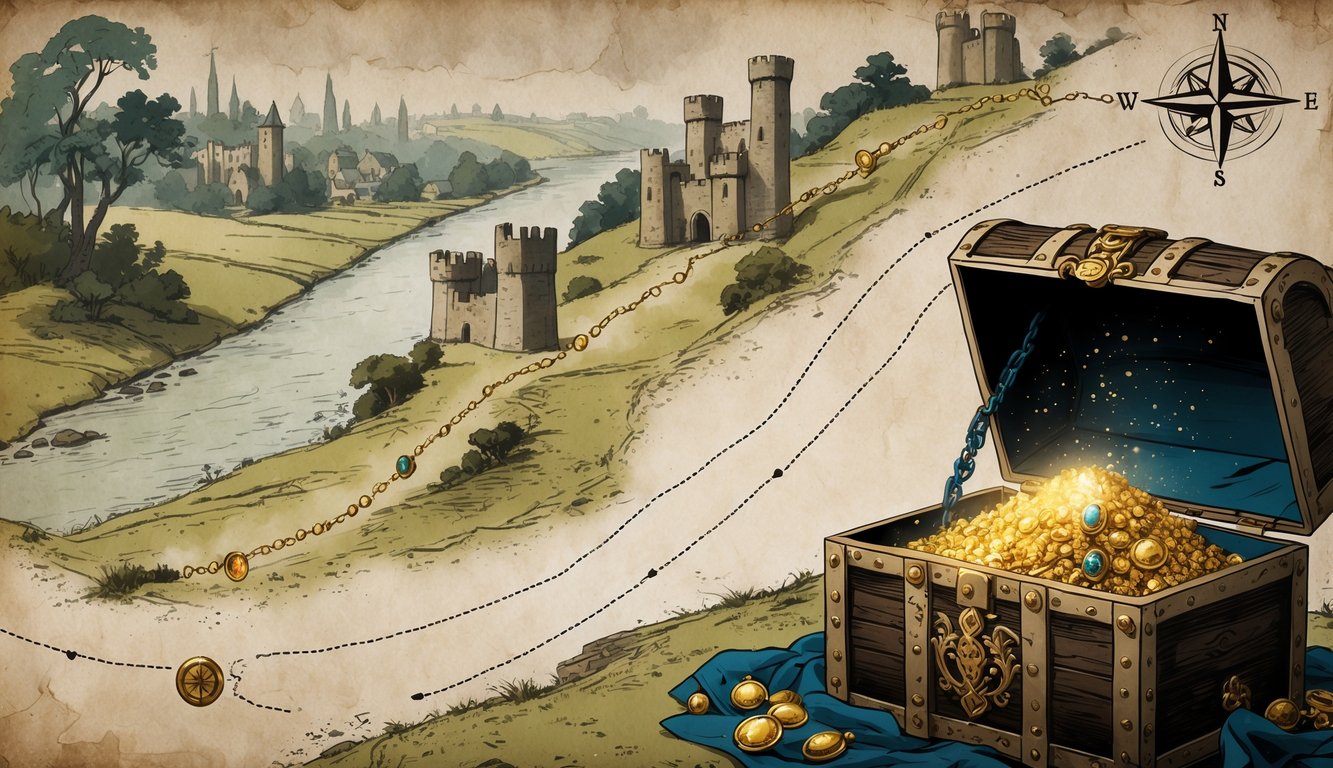
In October 1216, King John moved with his court and treasury across eastern England. War and illness made the journey difficult.
He traveled from the Norfolk coast through marshlands and ended at Newark, where he died days later.
Departure from King’s Lynn
King John left King’s Lynn (then Bishop’s Lynn) after gathering supplies and reinforcements. The port town was a trading hub, giving him access to ships and goods.
His baggage train carried royal possessions, including the Crown Jewels, gold, silver, and records. They loaded these onto wagons for overland travel.
Poor weather or the need to move quickly may have influenced his decision to travel overland. The king’s presence would have drawn attention in the busy market town.
Crossing the Fenlands and Walpole Marsh
The route passed through the flat, wet Fenlands, prone to flooding. Medieval roads here were often raised earthen tracks.
Near Walpole Marsh, about 8 km from today’s coastline, the baggage train faced a dangerous stretch. The marshland was tidal, with channels and mudflats that could trap carts and horses.
Later accounts say the wagons were caught by the tide in The Wash, a large estuary north of Norfolk. Heavy loads and deep mud made escape difficult.
| Risk Factor | Impact on Travel |
|---|---|
| Tidal waters | Could submerge low-lying paths |
| Soft ground | Wagons could sink or stall |
| Poor visibility | Made navigation harder |
Many believe the treasure vanished during this part of the journey.
Final Days and Death at Newark
After the loss, King John continued west toward Newark in Nottinghamshire. He was already ill, possibly from dysentery.
He reached Newark Castle but survived only a short time. On 18 October 1216, he died there.
Chroniclers noted his weakened state and the political turmoil after his death. The missing royal possessions were never recovered, fueling centuries of speculation and searches like the recent Norfolk excavations.
The Wash: A Treacherous Tidal Estuary
The Wash in eastern England is a wide, shallow bay where rivers meet the North Sea. Its shifting sands, fast tides, and marshes have challenged travelers for centuries.
Geography and Hazards of The Wash
The Wash lies between Lincolnshire and Norfolk in East Anglia. Four rivers—Witham, Welland, Nene, and Great Ouse—flow into the sea here.
The area is known for mudflats, salt marshes, and sandbanks. These features change with the tides and storms.
Much of the surrounding land was marshland. Over time, land reclamation built sea walls and drained areas for farming, but large parts remain tidal.
Travel across The Wash has always been risky. Without modern navigation, travelers could easily misjudge the route or timing.
Tidal Surges and the 13th Century Landscape
In the 13th century, The Wash was even more dangerous. The coastline extended farther inland, and the estuary covered more area.
Tides can rise and fall by several meters in hours. A tidal surge can flood low ground quickly, cutting off escape routes.
In medieval times, there were no modern sea defenses. Paths across the sands depended on local guides and good weather.
When King John’s baggage train tried to cross in 1216, shifting channels, soft ground, and fast-moving water caused disaster, as shown in accounts of his lost treasure in The Wash.
What Was Lost: The Contents of King John’s Treasure
King John’s lost treasure included more than a crown or a few coins. It likely contained ceremonial regalia, valuable metals, gemstones, and personal items from court life.
Many of these objects held both financial and symbolic importance to the English monarchy.
Crown Jewels and Royal Regalia
The most famous part of the lost treasure is the crown jewels. Historians debate whether the actual coronation crown was among them, but records show that royal regalia such as crowns, sceptres, and ceremonial swords may have traveled with the baggage train.
These items were more than decoration. They represented the king’s authority and played a role in official ceremonies.
Losing them would have dealt a major blow to royal prestige.
Some accounts describe ornate objects made from gold and silver, set with precious stones. These might include gilded chalices, ornamental spurs, and jeweled brooches used in state events.
No complete inventory survives. The idea that parts of England’s early regalia remain buried in the tidal flats of The Wash still attracts historians and treasure hunters.
Coins, Jewels, and Personal Effects
King John’s baggage train likely carried large amounts of gold and silver coins. He needed these coins to pay soldiers and secure loyalty during his military campaigns.
In 1215, the king asked church leaders for valuables. This brought him cups, goblets, dishes, basins, belts, clasps, staffs, and rings, as recorded in historical accounts.
Such items were portable wealth. People could melt them down or trade them.
Personal effects may also have been lost, including fine clothing, seals, and important documents. Some records mention that charters or legal papers might have been among the items, making the loss more than just financial.
Theories and Legends: What Really Happened?
In 1216, King John’s baggage train vanished in the wetlands of the Wash in eastern England. Historians still debate whether nature, poor planning, or foul play caused the loss of the royal regalia.
Natural Disaster or Human Error?
Most people believe the treasure was lost to the tides of the Wash. This tidal estuary in Norfolk is known for fast-moving waters, shifting sands, and deep mud.
Accounts say King John’s wagons, carrying the English Crown Jewels, gold, and important documents, became trapped as the tide came in. The rising water swept away carts, horses, and men before they could escape.
Some blame poor timing by the royal escort. Crossing the Wash needed careful knowledge of the tide schedule, and a mistake could be deadly.
Others mention bad weather and seasonal flooding. Heavy rain in October 1216 may have made the route more dangerous.
Historical records, such as those cited in History Hit, show that the exact details remain uncertain. Natural hazards and human error likely played a role.
Possibility of Theft or Sabotage
Another theory says the treasure was never lost in the Wash. Instead, thieves may have stolen it during the chaos of the First Barons’ War.
King John had many enemies, including rebel barons and foreign mercenaries. These groups may have intercepted the baggage train before or after it entered the Wash.
The loss happened during a time of political instability, making theft possible. If thieves took the treasure, they might have hidden or melted it down to avoid recognition.
Some legends claim locals from the marshlands looted abandoned wagons. As Wikipedia’s account notes, no confirmed artifacts have ever been found. This keeps the theft theory alive among treasure hunters.
The Ongoing Search: Archaeologists and Treasure Hunters
Archaeologists and amateur treasure hunters search for the possible resting place of King John’s lost riches. They use historical records and modern tools to narrow the search area and improve their chances.
Modern Expeditions and Techniques
Recent digs in Norfolk focus on areas near The Wash and the Fenlands, where records say the treasure was lost in 1216. Teams use LiDAR technology to scan the landscape for hidden features beneath soil and plants.
LiDAR creates detailed 3D maps. Researchers use these maps to find ancient river channels or embankments that might have trapped the baggage train. This reduces the need for large, costly excavations in the wrong places.
Some expeditions use ground-penetrating radar and magnetometry to detect buried metal objects without disturbing the soil. These tools can reveal possible targets for smaller, focused digs.
Metal detectorists also help. In one case, a detectorist started to excavate a farm field he believed could hold King John’s 800-year-old treasure. Sometimes, these leads point archaeologists toward promising sites.
Role of WNKLAS and Local Societies
The West Norfolk and King’s Lynn Archaeological Society (WNKLAS) plays a key role in the search. Its members combine local knowledge with formal archaeological methods and often work with national experts.
WNKLAS organizes surveys, records finds, and helps secure permits for excavation. They also work with landowners, which is important in rural Norfolk where much of the suspected treasure route lies on private farmland.
Local societies like WNKLAS host talks and field walks to share updates with the community. This keeps public interest alive and may encourage residents to report unusual finds.
Their partnership with larger research teams has supported digs near Walpole Marsh, a place some believe could hide the lost baggage train. These partnerships help connect professional archaeology with local treasure hunts.
Transforming Landscapes: Land Reclamation and Its Impact
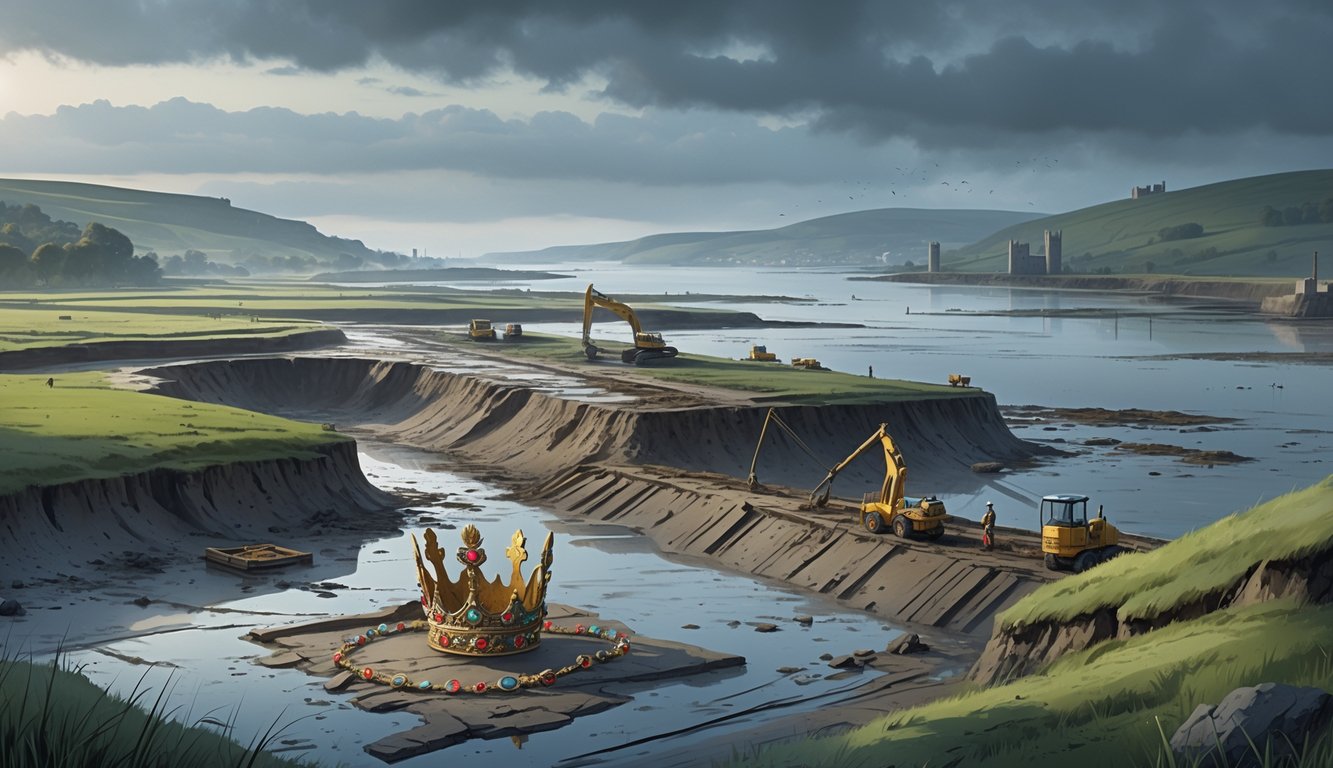
People have reshaped large parts of eastern England, especially in low-lying coastal areas. Changes to wetlands and marshes have altered drainage patterns, farming, and even the accessibility of certain regions. These changes still affect how people search for historical sites today.
Changes to the Fenlands Over Centuries
The Fenlands of Norfolk and Lincolnshire were once vast wetlands. Natural flooding and tides shaped the landscape, creating rich habitats but making travel difficult.
From the 17th century onward, large-scale land reclamation projects drained much of the marsh. Engineers built embankments, dug drainage channels, and used wind-powered pumps to move water. This turned wetlands into farmland.
Over time, the reclaimed land began to sink as the soil dried and compacted. This made some areas more likely to flood, especially during storms.
People diverted or filled historic waterways, changing access routes that once crossed open water. These changes make it harder to find where medieval roads or river crossings once stood.
In some places, the original coastline moved miles from where it was in King John’s time. This makes it more difficult to match old maps with today’s geography.
Challenges for Recovery Efforts
Searching for buried artifacts in the Fenlands is difficult. The shifting landscape means that places mentioned in medieval accounts may now be farmland, drained fields, or even under modern roads.
Water management systems add more complexity. Ditches, sluices, and pumps constantly move water, which can bury objects deeper or disturb the soil.
Soft peat soils can preserve some materials well, but heavy farming may damage fragile items. Sandy or silty reclaimed areas may erode faster, exposing finds to the weather.
Researchers use aerial surveys, soil tests, and historical maps. Projects like Lost Landscapes use digital mapping to compare centuries of change, helping to narrow down search areas despite the altered terrain.
Cultural Legacy: Myths, Folklore, and Modern Fascination
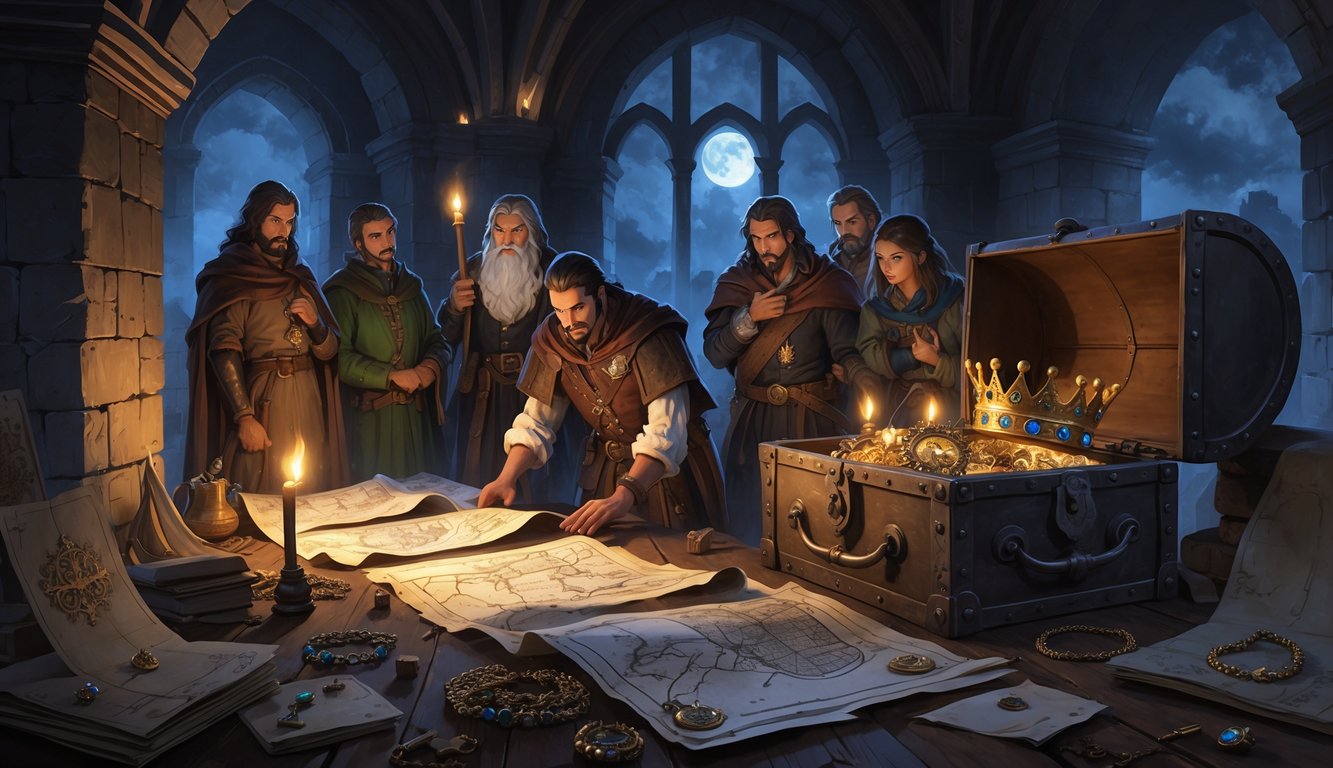
Stories about King John’s lost treasure continue to spark interest. They connect real events in English history with legendary figures and local traditions.
These tales mix facts with folklore. They inspire books, films, and tourism.
Robin Hood and King John in Popular Culture
King John often appears as a villain in Robin Hood stories. Ballads and films show him as greedy and oppressive.
Robin Hood’s defiance stands in contrast to King John’s corruption. This rivalry helped create the idea of John as a ruler who might hoard or lose great riches.
Modern media keeps this rivalry alive. From classic films to animated versions, the link between Robin Hood and King John remains a staple of entertainment.
Examples in media:
- The Adventures of Robin Hood (1938) – John as a scheming usurper.
- Disney’s Robin Hood (1973) – John as a comical yet greedy antagonist.
- BBC’s Robin Hood series – blending history with legend.
These portrayals, though fictional, shape how people imagine the fate of the crown jewels.
The Enduring Mystery in Local Lore
In towns near the Wash, where the treasure was supposedly lost, stories have passed down for generations. Locals speak of wagons sinking into mudflats during a tide, never to be found.
Some residents treat the tale as a warning about the area’s shifting sands and unpredictable waters. Others see it as an invitation for treasure hunts.
Folklore often blends with tourism. Guided walks and talks highlight both the real events and the myths that grew around them.
As folklore continues to bridge generations, the story of King John’s lost treasure remains part of the region’s identity. It mixes archaeology, oral history, and community pride.
Technological Advances: LiDAR and Future Prospects

Archaeologists now use advanced scanning tools to map the Norfolk landscape in detail. These tools help them find hidden features that could reveal the location of King John’s lost treasure without digging.
How LiDAR Technology Is Used in the Search
LiDAR technology uses laser pulses to create precise 3D maps of the land. It can show small changes in elevation, even through plants or shallow water.
Teams such as the West Norfolk and King’s Lynn Archaeological Society (WNKLAS) use LiDAR to find ancient river channels, buried roads, and possible camp sites. These details may reveal the exact route King John’s baggage train took in 1216.
The process involves scanning from aircraft or drones, then turning the data into visual models. Archaeologists compare these models with old maps and historical accounts to narrow down search areas.
LiDAR helps researchers spot patterns that are invisible to the eye. This reduces the need for large-scale digging, saves time, lowers costs, and protects parts of the site that may hold valuable historical information.
New Discoveries and Ongoing Projects
Recent surveys in the Wash and surrounding marshes have found possible man-made embankments and causeways. These features match descriptions from medieval records of the route to the coast.
In some cases, LiDAR has identified areas where soil movement shows past flooding or tidal surges. This finding supports theories that shifting waters of the Wash caused the treasure to be lost.
Current projects combine LiDAR data with ground-penetrating radar. Archaeologists in Norfolk are using these methods to investigate farmland that may have been part of the original crossing.
These efforts help researchers better understand the medieval landscape. They also guide future digs toward the most promising locations.