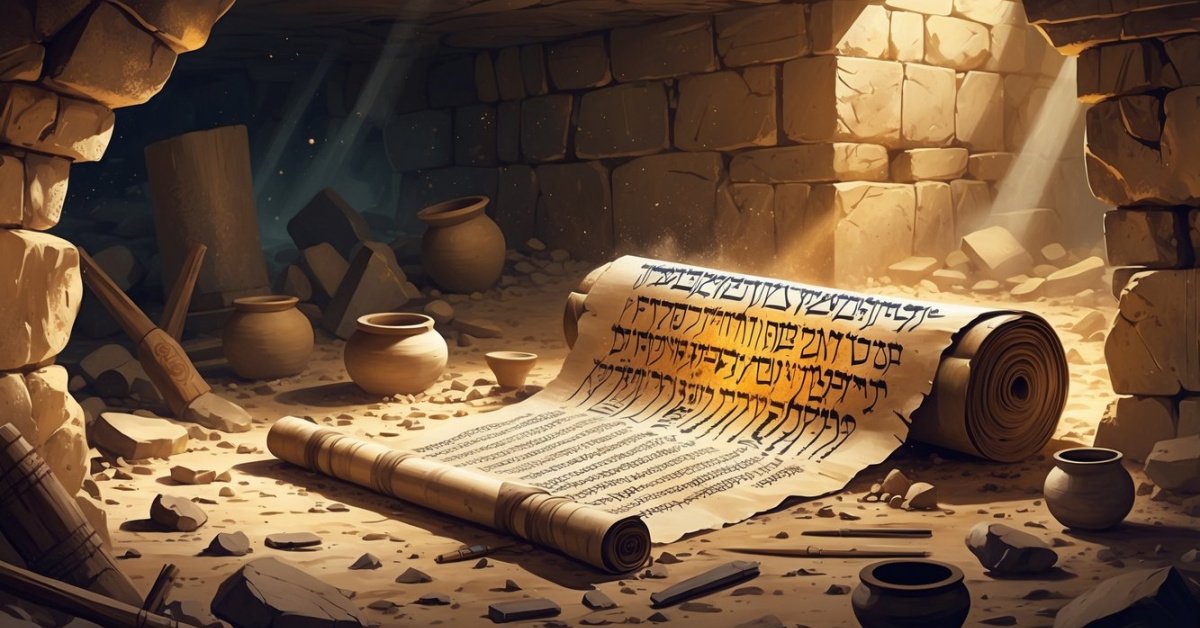
For centuries, the Dead Sea Scrolls hid in caves near the shores of the Dead Sea. In the mid-20th century, archaeologists discovered these ancient manuscripts, which include some of the oldest known biblical texts.
Among these texts is a set of writings that some believe contain clues to an ancient prediction about the end of days. The “Doomsday Prophecy” describes a final battle between forces of light and darkness, possibly reflecting real events and fears from over 2,000 years ago.
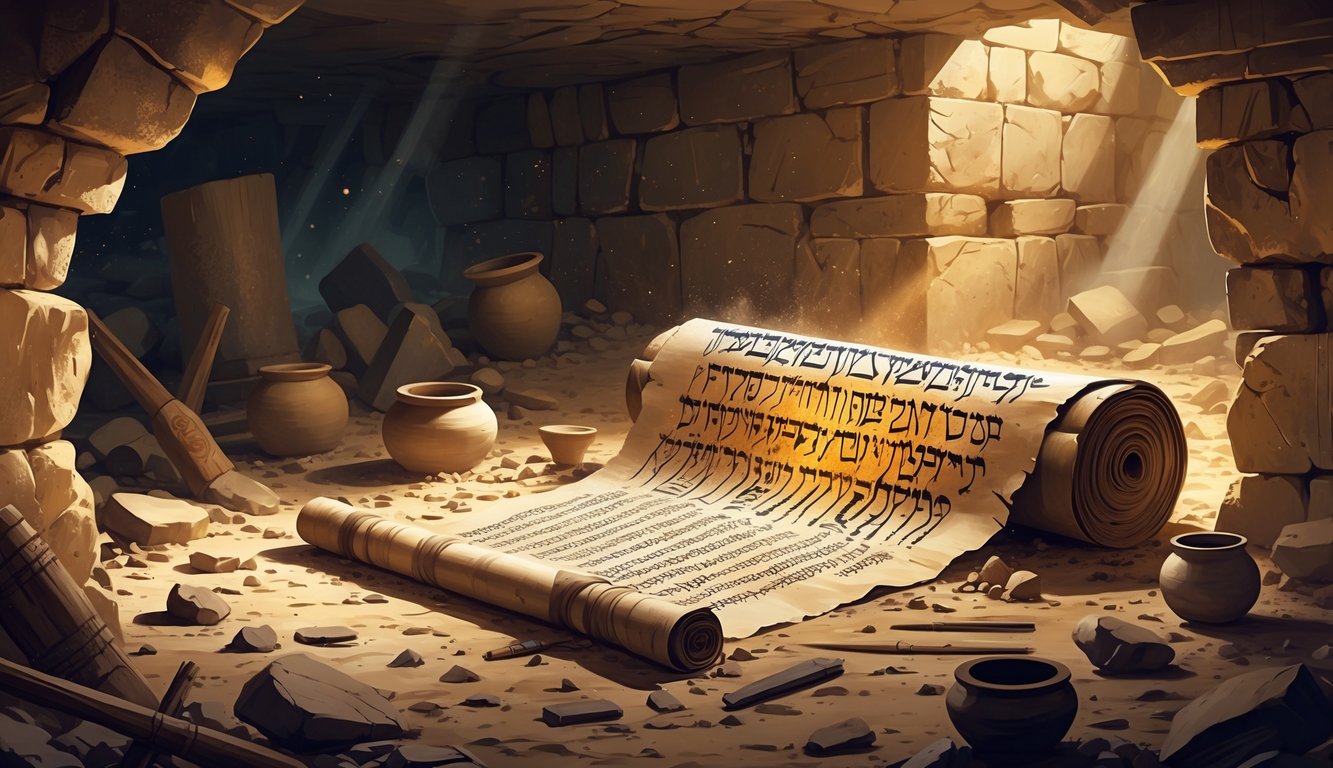
The documentary Dead Sea Scrolls: The Doomsday Prophecy explores these texts using archaeological evidence, historical context, and modern interpretations. It examines the “War Scroll,” a manuscript that outlines a dramatic conflict between Jewish rebels and the Roman Empire.
The documentary considers whether the War Scroll’s words served as prophecy, political strategy, or symbolic hope. By connecting ancient history with ongoing research, the story of the Dead Sea Scrolls becomes more than a relic of the past.
It offers a window into the fears, beliefs, and struggles of a community facing powerful enemies. It also raises questions about how prophecy shaped their identity and survival.
Understanding the Doomsday Prophecy in the Dead Sea Scrolls
The Dead Sea Scrolls include ancient texts that describe a final conflict between forces of light and darkness. These writings reveal the beliefs of a Jewish sect living near Qumran over 2,000 years ago.
They viewed their own time as part of a larger prophetic timeline.
Origins of the Doomsday Prophecy
The doomsday prophecy comes mainly from the War Scroll, one of the most notable texts among the Dead Sea Scrolls. It outlines a war between the “Sons of Light” and the “Sons of Darkness.”
Archaeologists say the Essenes, a Jewish sect that lived in isolation near the Dead Sea, wrote the scroll. The Essenes likely saw themselves as the chosen defenders of God’s law.
The political unrest of the era, including Roman occupation and internal Jewish divisions, may have shaped the prophecy. Fears of cultural decline could have strengthened their belief that a decisive battle was near.
Fragments from other scrolls support this apocalyptic worldview. These include rules for the community, descriptions of heavenly armies, and timelines for the end events.
Key Themes and Messages
The prophecy focuses on good versus evil, with a clear moral divide between the faithful and their enemies. The faithful receive promises of divine help, while the enemy faces destruction.
Another theme is purity of the community. The texts stress strict obedience to religious laws and separation from outsiders.
This separation was seen as necessary to win God’s favor in the final battle. The prophecy also reflects a structured plan for war.
The War Scroll includes detailed battle formations, weapon lists, and the order of trumpet blasts. This suggests the writers saw the prophecy as both spiritual and practical.
Some scholars believe the writings may not have served as a literal prediction. Instead, they could have acted as a moral guide and a way to strengthen group identity.
Historical Significance
The doomsday prophecy reveals the mindset of a community living under foreign rule. It shows how ancient texts could mix religious faith with real-world events.
Modern researchers use archaeology and translation to connect the scrolls to historical conflicts, such as the Jewish revolt against Rome. The prophecy also helps historians understand the diversity of Jewish thought in the Second Temple period.
While not all Jewish groups shared this apocalyptic view, it influenced later religious writings. The preservation of these texts for nearly 2,000 years in the Qumran caves makes them some of the most important archaeological finds of the 20th century.
Discovery of the Dead Sea Scrolls
Archaeologists uncovered the Dead Sea Scrolls in a remote desert region. Historians, archaeologists, and religious scholars quickly showed interest in the discovery.
Their discovery led to years of careful study. The scrolls revealed ancient writings that shed light on Jewish life and beliefs over 2,000 years ago.
The 1947 Find Near the Dead Sea
In early 1947, a group of Bedouin shepherds explored caves near the northwest shore of the Dead Sea. One shepherd threw a stone into a cave and heard pottery breaking.
Inside, they found tall clay jars, some holding tightly wrapped scrolls made of parchment and papyrus. The dry desert climate kept these scrolls remarkably well-preserved.
The location, later known as Qumran, became a major site for archaeological investigation. Over the next decade, researchers found fragments from more than 900 manuscripts in 11 caves.
Many texts included parts of the Hebrew Bible, sectarian writings, and other ancient documents.
Bedouin Shepherds and Archaeologists
The shepherds sold the first scrolls to local traders in Bethlehem. Scholars soon heard about the find, and archaeologists began organized excavations.
Both locals and experts played important roles. The Bedouin continued searching for scrolls, often selling them to dealers, while archaeologists focused on careful excavation and documentation.
This partnership led to the recovery of thousands of scroll fragments. Some were pieced together into complete or nearly complete manuscripts, while others stayed in small fragments because of age and damage.
Initial Reactions and Impact
When scholars first examined the scrolls, they realized these were among the oldest known biblical manuscripts. Some dated as far back as the third century BCE.
The discovery excited the academic world and religious communities. It provided direct evidence of how biblical texts were copied and preserved over centuries.
Museums and universities raced to acquire and study the scrolls. The Dead Sea Scrolls became central to debates about ancient Judaism, religious practices, and the historical context of the region under Roman rule.
The War Scroll: Foretelling the Final Battle
The War Scroll stands out as one of the most detailed ancient texts among the Dead Sea Scrolls. It outlines a plan for an apocalyptic war, including military formations, weapon types, and the sequence of battles.
It also describes the opposing sides and the role of divine intervention in the conflict.
Description of the Apocalyptic War
The War Scroll, also called The War of the Sons of Light Against the Sons of Darkness, was found in Qumran Cave 1 in 1947. Its 19 preserved columns of Hebrew text use a Herodian script.
It describes a forty-year war between two opposing forces. The plan includes initial defeats for the Sons of Light, followed by decisive victories with divine aid.
The document gives precise instructions for troop organization. It details the number of soldiers, the arrangement of units, and the types of weapons to use.
Shields, spears, and trumpets are all listed with specific purposes. The text also includes prayers and blessings to be recited before and during combat.
These show that the war was seen as both a physical and spiritual struggle.
Forces of Light Versus Darkness
The Sons of Light represent the faithful members of the community, often linked to the Essenes. Angelic hosts join them in the fight.
The Sons of Darkness include foreign nations and enemies of Israel. In some interpretations, they also represent spiritual forces opposed to God.
The War Scroll describes the conflict unfolding in seven battle stages. The Sons of Light win the final stage after God intervenes to destroy their enemies.
A simple contrast appears as:
| Side | Allies | Outcome |
|---|---|---|
| Sons of Light | Israel, angels | Final victory |
| Sons of Darkness | Enemy nations | Defeat |
This dualistic view reflects the apocalyptic mindset of the Qumran community.
Interpretations of the War Scroll
Scholars debate whether the War Scroll describes a literal future war or serves as symbolic prophecy. Some see it as a plan for a real uprising against Rome.
Others view it as a spiritual vision drawn from biblical books like Daniel and Ezekiel. Archaeologists note its detailed military instructions could reflect real training practices.
However, its inclusion of angelic armies suggests a theological dimension. Many modern readers interpret it as a blend of both—a framework for resistance and a vision of divine justice.
The Israel Museum’s digital presentation of the War Scroll allows close study of its preserved text and layout.
This combination of military precision and religious belief makes it one of the most distinctive writings in the Dead Sea Scrolls collection.
Jewish Rebels and the Roman Empire: Historical Context
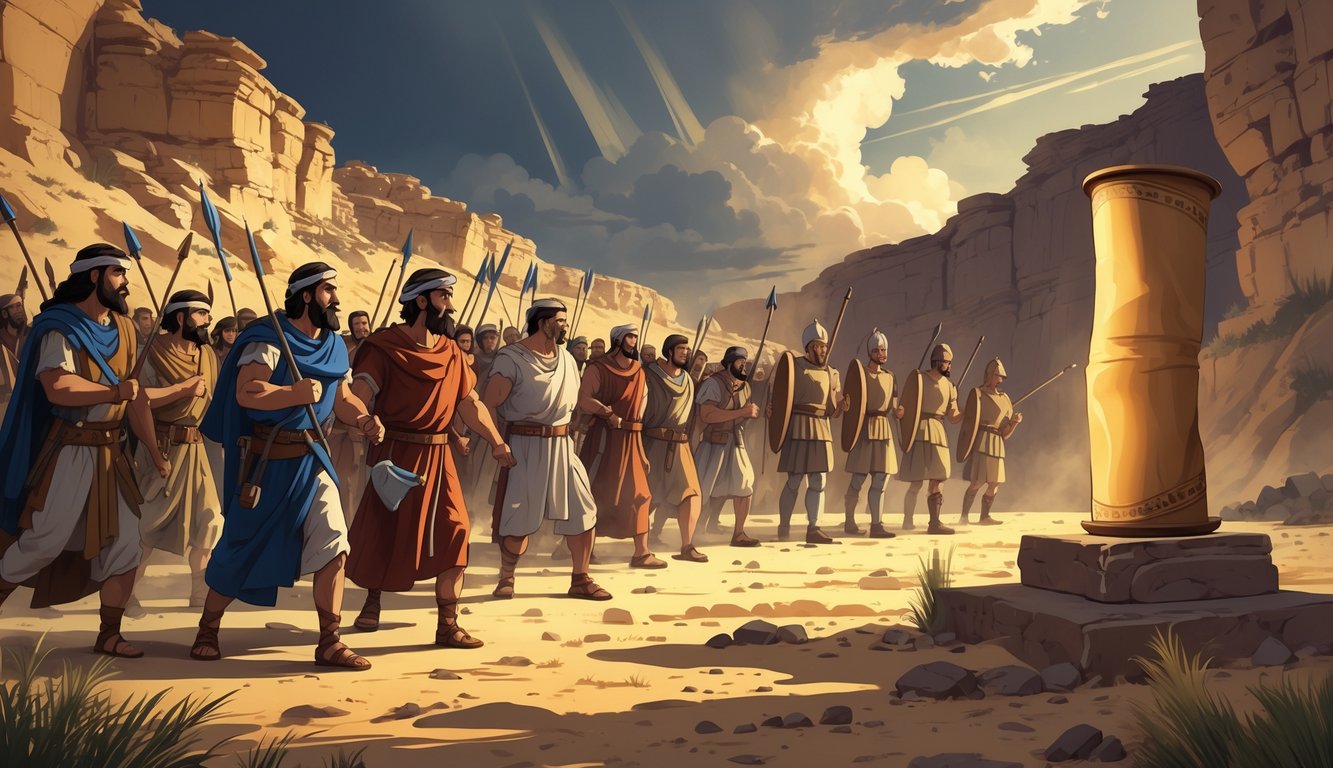
The conflict between Jewish rebels and the Roman Empire involved political control, religious identity, and military resistance. These events reveal how different rebel groups fought Rome and the strategies they used.
The Siege of Masada
Herod the Great built Masada as a fortress on a plateau near the Dead Sea. After Jerusalem fell in 70 CE, a group of Jewish rebels, mainly Sicarii, took refuge there.
Roman governor Lucius Flavius Silva led the siege in 73–74 CE. The Romans built a massive ramp to breach the fortress walls.
Archaeological evidence shows the ramp still exists today. According to the historian Josephus, the rebels chose death over capture.
He wrote that they carried out a mass suicide to avoid becoming Roman slaves. Some scholars debate the accuracy of this account, but it remains a central story of Jewish resistance.
Masada’s fall marked the end of large-scale armed resistance in the region. It also became a lasting symbol of defiance against imperial rule.
The First Jewish–Roman War
The First Jewish–Roman War (66–70 CE) began after years of tension over Roman taxation, governance, and religious interference. Many Jews saw Roman rule as a threat to their faith and traditions.
Rebel forces took control of Jerusalem and defeated a Roman garrison. Rome responded with a large military campaign led by General Vespasian and later his son Titus.
The siege of Jerusalem in 70 CE was one of the war’s most destructive events. The Romans destroyed the Second Temple, a central place of worship for Jews.
This loss deeply impacted Jewish religious life. The war ended with Roman victory, widespread destruction, and the dispersal of many Jewish communities.
It also set the stage for later uprisings, including those tied to the Dead Sea Scrolls and the Jewish War against Rome.
Role of the Sicarii
The Sicarii were a radical faction of Jewish rebels active during the First Jewish–Roman War. Their name comes from the short curved daggers (sicae) they used for assassinations.
They targeted Romans and Jews seen as collaborators. These attacks often took place in crowded public areas, creating fear among Roman supporters.
The Sicarii played a major role in holding Masada after the fall of Jerusalem. They resisted Roman forces until the final siege.
Some historians link the Sicarii to the group behind certain Dead Sea Scrolls writings, suggesting they were part of a larger anti-Roman movement.
Their tactics were controversial, but they stayed committed to fighting Roman control until the very end.
Prophecies and Messianic Expectations
During the late Second Temple period, several Jewish groups studied ancient writings that described a coming leader and a time of great change. These texts often linked political struggles with divine plans, blending historical events with religious prophecy.
Messianic Beliefs of the Essenes
The Essenes, a Jewish sect living near Qumran, likely wrote or preserved many of the Dead Sea Scrolls. They expected a messiah who would restore righteousness and lead Israel by God’s law.
Some texts say they looked for two messianic figures — one priestly and one kingly. This “two-messiah theory” meant a spiritual leader would reform worship and a political leader would deliver Israel from foreign rule.
Scrolls like the 4QFlorilegium connect biblical passages such as 2 Samuel 7 to these future figures. The Essenes understood these prophecies as promises of a divinely chosen ruler who would fulfill God’s covenant with David.
Predictions of Divine Intervention
Many scrolls describe a final conflict between the “Sons of Light” and the “Sons of Darkness.” This battle shows the struggle between faithful followers of God and forces seen as corrupt or evil.
The War Scroll explains strategies, troop divisions, and trumpet signals for this expected war. The text presents the event as part of a divine timetable, not just a human rebellion.
Some writings, like those in The Dead Sea Scrolls: Ancient Writings and the Prophecy of Doomsday, say God would intervene to ensure victory. This belief led the Essenes to separate from mainstream society as they prepared for a future shaped by prophecy.
Other Apocalyptic Texts
The scrolls also contain other apocalyptic writings. These include visions of cosmic upheaval, judgment, and the renewal of the world.
Some texts use imagery from older biblical books like Daniel and Isaiah, blending them with new revelations. They warn of trials before the arrival of God’s kingdom.
Scholars say these writings gave hope to communities facing Roman occupation and internal divisions. The eschatology of the Dead Sea Scrolls shows how ancient texts shaped expectations of history’s end and the role of divine justice.
Archaeological Investigations and Modern Discoveries
Archaeologists have studied the Dead Sea Scrolls for decades using both traditional excavation and modern technology. Their work has revealed new fragments, clarified historical events, and deepened understanding of life in the region over 2,000 years ago.
Recent Excavations and Findings
Teams excavated Qumran and nearby caves, uncovering scroll fragments, pottery, and tools. Many of these items date between the third century B.C. and the first century A.D.
Researchers mapped caves with drones and 3D scanners to find hidden chambers. This approach helped locate areas that may still hold undiscovered artifacts.
Some finds include parchment pieces with biblical text and coins from the Roman period. These objects connect the scrolls to specific historical events, including the Jewish-Roman conflicts.
Researchers also studied how the scrolls were stored. They placed the scrolls in jars to protect them from humidity and decay, which preserved many documents for over two millennia.
Scientific Analysis of the Scrolls
Modern science has changed how experts study the Dead Sea Scrolls. Radiocarbon dating confirms their age, and DNA testing identifies the animal skins used for parchment.
Advanced imaging, like multispectral scanning, reveals faded ink invisible to the naked eye. This process has recovered missing words and clarified damaged passages.
Chemical analysis of the ink shows it was made with carbon-based materials and minerals from the Dead Sea region. This links the scrolls to local production.
Researchers compare handwriting styles to determine if multiple scribes worked on a single text. These studies help map out the community’s literary practices and the spread of biblical manuscripts.
2020 Documentary Insights
The 2020 television special Dead Sea Scrolls: The Doomsday Prophecy explored new archaeological discoveries and translations. It focused on the link between the scrolls and the siege of Masada around 73 A.D.
Experts in the program examined whether the scrolls predicted a final battle between Jewish rebels and the Roman Empire. They used historical records and the latest scientific findings.
The documentary highlighted how ongoing excavations and lab analysis continue to reshape understanding of the scrolls. Viewers saw how modern technology bridges gaps in ancient history.
Interpretations and Controversies
The Dead Sea Scrolls include ancient writings that some believe describe a final battle or end times. Texts like the War Scroll have led to different views about their meaning, historical context, and possible links to later religious prophecies.
Scholarly Debates
Historians and archaeologists debate whether the doomsday prophecy in the scrolls was a literal prediction or a symbolic account of first-century events.
Some experts connect the War Scroll to the conflict between Jewish rebels and Rome. Others see it as a theological vision with no direct link to actual battles.
A key debate is whether these prophecies targeted only the Qumran community or a wider audience. Research into the scrolls’ language and dating has shown multiple authors and time periods, adding to the complexity.
Modern studies, including archaeological investigations, use advanced imaging to piece together damaged fragments, which sometimes changes earlier interpretations. Scholarly opinions continue to shift as new discoveries emerge.
Religious Perspectives
Different faith traditions view the Dead Sea Scrolls through their own beliefs. Some Christian scholars value them for understanding the roots of New Testament prophecy.
Jewish perspectives often treat the scrolls as historical documents that shed light on Second Temple Judaism, not as predictive texts.
Certain groups interpret the doomsday prophecy as proof of divine foreknowledge. Others see it as an example of common apocalyptic literature from that era.
The scrolls’ connection to biblical prophecy, including similarities to Isaiah and Daniel, has led to study and theological debate. Some believe the texts affirm long‑held religious views, while others say they challenge traditional interpretations.
Conspiracy Theories
Secrecy after the scrolls’ discovery in the mid‑20th century fueled speculation. For years, some texts were not released to the public, leading to claims of hidden end of days predictions.
Popular theories suggest authorities withheld certain writings because they might disrupt mainstream religious teachings.
Some conspiracy claims link the scrolls to modern global events, drawing questionable parallels between ancient prophecies and current politics.
Most historians reject these ideas, but the mix of mystery, missing fragments, and apocalyptic themes keeps such theories alive. Media coverage, such as reports on their prophetic content, often increases public curiosity.
Influence on Modern Apocalyptic Thought
The Dead Sea Scrolls have shaped how people understand ancient ideas about the end of the world. Their descriptions of conflict, judgment, and renewal have influenced religious groups and inspired cultural works.
Impact on Religious Movements
Some religious movements draw direct inspiration from the scrolls’ descriptions of an apocalyptic war between the “Children of Light” and the “Children of Darkness.” The community at Qumran saw this as a final battle that would decide the fate of humanity.
Modern groups sometimes use these writings to support their own doomsday prophecy timelines. Certain Christian and Jewish sects study them alongside the Book of Daniel and Revelation to interpret current events.
The scrolls’ detailed rules for community life appeal to believers seeking a model for spiritual purity before an expected end time. These texts are often treated as evidence of prophetic accuracy, though historians caution against linking them directly to modern events.
Cultural Representations
The dramatic imagery of the scrolls appears in films, documentaries, novels, and television specials. Programs like Dead Sea Scrolls: The Doomsday Prophecy blend historical discovery with suspense.
Writers often adapt the “war scroll” narrative into fictional battles between good and evil. This appears in historical dramas and modern thrillers.
Museums and traveling exhibits use visual displays and interactive media to bring these apocalyptic scenes to life. This helps audiences connect with the ancient worldview.
Secular Interpretations
Outside religious circles, scholars see the scrolls as a window into the beliefs of a small Jewish sect from over 2,000 years ago. They view the apocalyptic war imagery as a reflection of political and social tensions of the time, not as a literal prediction.
Historians compare the scrolls to other ancient apocalyptic writings to trace how ideas about the end of the world developed in different cultures.
Some researchers say the scrolls influenced modern literature and film indirectly by shaping the broader concept of apocalyptic storytelling. Their legacy extends into the study of human imagination.
The Legacy of the Dead Sea Scrolls
The Dead Sea Scrolls are one of the most important archaeological discoveries of the 20th century. They reveal details about ancient Jewish life, early biblical texts, and the region’s history during Roman rule.
Preservation and Display
Many Dead Sea Scrolls are fragile, made from parchment or papyrus over 2,000 years old. Conservators use climate-controlled storage and low-light display cases to prevent further damage.
Digital imaging lets researchers create high-resolution scans. This allows study of the scrolls without handling them.
Some scrolls are displayed at the Shrine of the Book in Jerusalem. Others stay in secure archives, accessible only to scholars. Exhibitions often rotate items to limit light exposure and extend their lifespan.
International collaborations fund preservation projects. These efforts help the public and researchers continue to access the scrolls.
Ongoing Research
Scholars still analyze the scrolls to better understand their origins, language, and historical context. Advanced techniques like multispectral imaging reveal faded or hidden text.
Archaeologists continue to investigate the Qumran region, where the scrolls were found. New digs sometimes uncover pottery, coins, and other artifacts that help date the texts and link them to their writers.
Linguists compare the scrolls’ Hebrew, Aramaic, and Greek passages with other ancient manuscripts. This work has refined translations of biblical books and clarified how religious practices evolved in the Second Temple period.
Researchers also look for signs of multiple scribes, using handwriting analysis to identify different authors. This sheds light on how the texts were copied and preserved in antiquity.
Enduring Mysteries
Despite decades of study, many questions about the scrolls’ exact purpose remain. Some texts describe apocalyptic events.
Scholars debate whether these writings reflect real historical fears or use symbolic religious visions.
Historians still do not know who wrote the scrolls. Many experts think a Jewish sect, possibly the Essenes, created them, but no one has found definitive proof.
Untranslated or fragmented scrolls add to the mystery. Researchers may one day reconstruct pieces too damaged to read by using AI-based restoration.
Theories link the scrolls to events like the siege of Masada. Programs such as Dead Sea Scrolls: The Doomsday Prophecy explore these ideas with archaeological evidence.
Conclusion
The Dead Sea Scrolls stand out as one of the most important archaeological finds of the 20th century.
They give historians and researchers a closer look at ancient Jewish beliefs and practices.
The War Scroll describes a coming battle between the Children of Light and the Children of Darkness.
Some scholars connect these writings to apocalyptic expectations at Qumran.
Experts disagree about the meaning of these texts.
Some see them as symbolic, while others think they show real fears of conflict with the Roman Empire.
Key points often discussed include:
- The scrolls date from about 250 BCE to 70 CE.
- Discoverers found them in caves near the Dead Sea between 1947 and 1956.
- The scrolls contain biblical texts, community rules, and prophetic writings.
Archaeologists continue to study the scrolls and find new details about the people who wrote them.
These discoveries help place the scrolls in the historical setting of the late Second Temple period.
Researchers compare the scrolls to other ancient writings to better understand the culture, religion, and politics of the time.