Cleopatra VII, the last pharaoh of ancient Egypt, left behind a legacy of power, politics, and intrigue. More than two thousand years after her death, the location of her tomb remains unknown.
Archaeologists have not confirmed where she was buried. Evidence suggests her final resting place may lie hidden beneath ancient ruins near the Mediterranean coast.
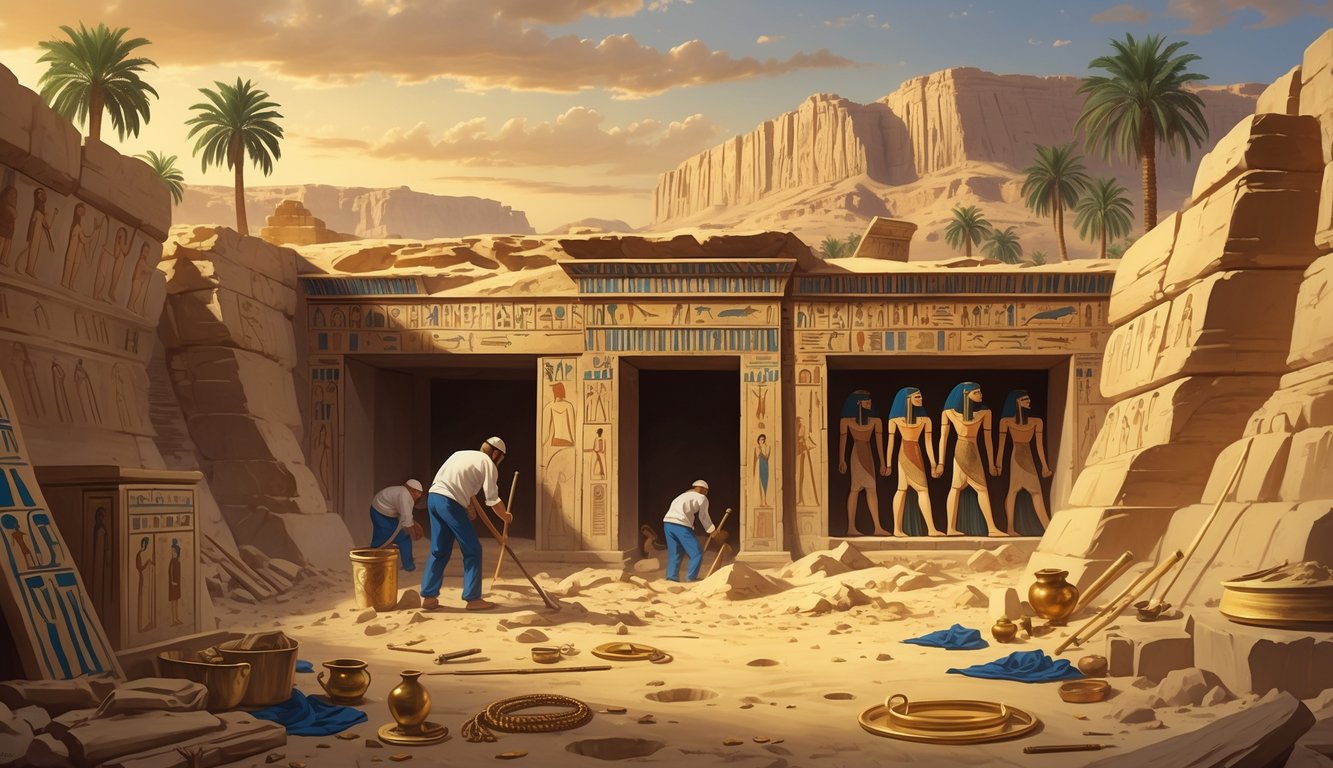
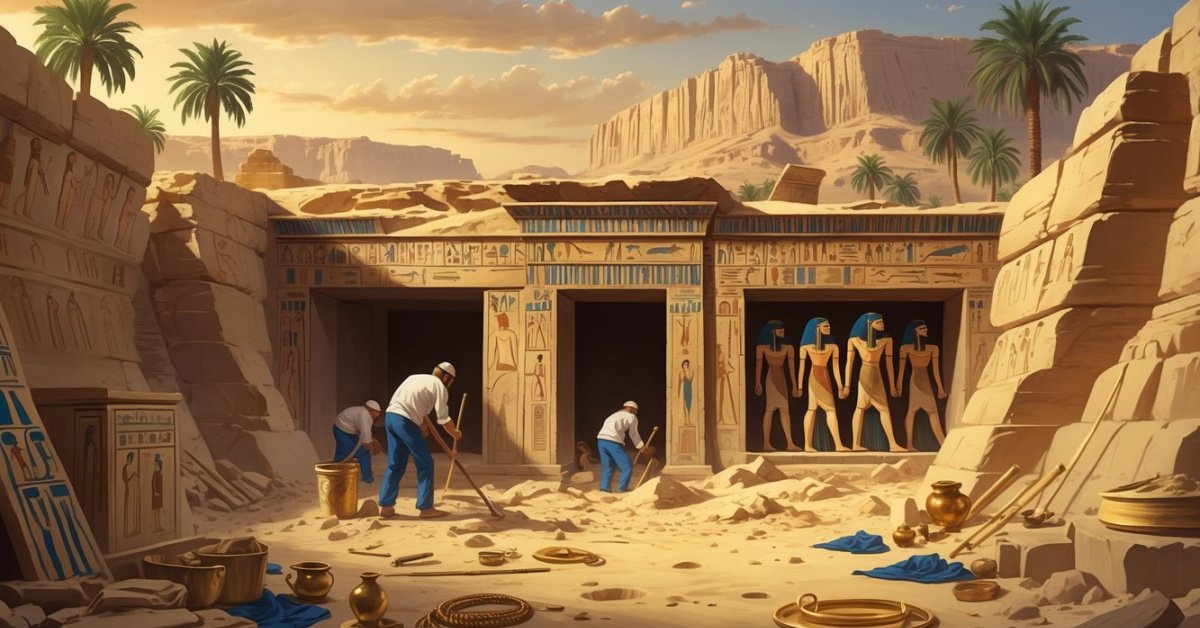
Many researchers have searched sites like Taposiris Magna, a temple west of Alexandria. Excavations there have revealed tunnels, artifacts, and high-status burials from Cleopatra’s era.
These discoveries have fueled hope that Cleopatra’s tomb could still be found. Archaeologists continue to investigate these sites.
From the political drama of her reign to modern-day digs led by Kathleen Martinez, the search blends history with ongoing archaeological work. Each discovery brings researchers closer to answering one of Egypt’s most enduring questions—where does Cleopatra rest?
Cleopatra’s Lost Tomb: The Enduring Mystery
Cleopatra VII, the last active ruler of Egypt’s Ptolemaic dynasty, died more than 2,000 years ago. Archaeologists and historians have searched for her burial site for centuries, but its location remains unknown.
Why Cleopatra’s Tomb Remains Unfound
No surviving ancient texts record the exact location of Cleopatra’s burial. Many written accounts from her time were lost, destroyed, or never created.
Earthquakes, floods, and urban development have changed the ancient landscape of Alexandria and its surroundings. Some areas that once held royal tombs are now underwater or buried beneath modern structures.
At sites like Taposiris Magna, archaeologists have uncovered tunnels, sealed chambers, and artifacts from the Ptolemaic period. However, they have not found direct evidence of Cleopatra’s remains.
These challenges make the search slow and complex.
Historical Accounts of Her Burial
Ancient writers such as Plutarch and Cassius Dio described Cleopatra’s death in 30 BCE. They wrote that she was buried alongside Mark Antony but did not specify the exact location.
Some historians believe Cleopatra’s tomb was within a temple dedicated to the goddess Isis, reflecting her strong religious ties. This theory matches her role as both queen and high priestess.
Other records suggest that people may have hidden her burial site to protect it from Roman desecration. Without detailed maps or inscriptions, researchers rely on limited historical descriptions and archaeological clues.
Significance to Egyptology
If researchers find Cleopatra’s tomb, it could provide rare insight into the final years of the Ptolemaic dynasty and the transition to Roman rule. It could also reveal details about burial practices for female pharaohs.
Artifacts, inscriptions, and the tomb’s construction might confirm how Cleopatra presented herself as both a Greek ruler and an Egyptian monarch. These findings could clarify her political alliances and religious devotion.
Cleopatra: The Last Pharaoh of Egypt
Cleopatra VII ruled Egypt during a time of political change and foreign influence. She maintained Egypt’s independence for nearly two decades through diplomacy and strategic alliances.
Her political skill and personal relationships shaped both her reign and her legacy in history.
Cleopatra’s Reign and Legacy
Cleopatra became queen in 51 BCE as the last active ruler of the Ptolemaic dynasty. She first co-ruled with her younger brother Ptolemy XIII before taking sole control.
She spoke several languages and was the first Ptolemaic ruler to learn Egyptian. This helped her connect with the local population.
She focused on protecting Egypt’s economy. Cleopatra managed trade along the Nile, secured grain exports, and formed alliances with Rome to protect Egypt from annexation.
Cleopatra promoted Egyptian religion and culture. She presented herself as the living embodiment of the goddess Isis, reinforcing her role as both a political and spiritual leader.
Her ability to combine Greek and Egyptian traditions strengthened her authority in a diverse kingdom.
Relationship with Mark Antony
Cleopatra formed a political and personal alliance with Roman general Mark Antony after meeting him in 41 BCE. Their partnership was both strategic and romantic.
She provided Antony with financial and military support for his campaigns. In return, Antony recognized her authority over Cyprus and parts of modern-day Lebanon.
They had three children together, linking Egypt and Antony’s political ambitions. Their relationship created tension with Rome, especially with Octavian, Antony’s rival.
Roman propaganda portrayed Cleopatra as a manipulative foreign queen. This image influenced how she was remembered in Roman histories.
Despite this, their alliance represented one of the most significant political partnerships between a pharaoh and a Roman leader.
Her Death and Aftermath
In 31 BCE, Antony and Cleopatra’s forces lost to Octavian at the Battle of Actium. They retreated to Alexandria, where Octavian’s army soon arrived.
Historical accounts state that Antony died by suicide after hearing false news of Cleopatra’s death. Soon after, Cleopatra also died, possibly by poison or the bite of an asp.
Her death ended the rule of the pharaohs in Egypt. Octavian annexed Egypt as a Roman province, marking a major shift in Mediterranean power.
The exact location of her tomb remains unknown. Archaeologists continue to search areas such as Taposiris Magna near Alexandria for clues to her burial site.
Theories About Cleopatra’s Final Resting Place
Researchers have studied ancient texts, Roman records, and Egyptian burial practices to narrow down possible places where Cleopatra VII might have been buried. Discoveries of temples, tunnels, and artifacts have led to several leading theories.
Alexandria: The Ancient Capital
Many historians believe Cleopatra was buried in or near Alexandria, the city she ruled from. Ancient accounts suggest she and Mark Antony were laid to rest together after their deaths in 30 BCE.
Much of ancient Alexandria now lies underwater because of earthquakes and tsunamis. Large sections of palaces, temples, and the royal quarter are submerged in the harbor.
Underwater archaeologists have recovered statues, coins, and inscriptions from the sunken city. These finds confirm the area’s royal connections but have not revealed a tomb.
The dense urban setting and limited access to submerged ruins make further exploration difficult.
Taposiris Magna and Its Secrets
Another major theory centers on Taposiris Magna, a temple complex west of Alexandria dedicated to the goddess Isis. Archaeologist Kathleen Martinez has led a long-term excavation here, believing it could be Cleopatra’s burial site.
In 2022, her team discovered a long tunnel 43 feet underground, along with sealed chambers and artifacts from Cleopatra’s era. These include coins with her image and statues that may depict her.
The temple’s link to Isis is significant. Cleopatra often presented herself as the living embodiment of the goddess.
Burial in such a place would align with her religious and political image. While no tomb has been found yet, the site continues to yield promising clues, as reported in recent excavation updates.
Other Proposed Locations
Some researchers suggest Cleopatra may have been buried in a yet-undiscovered site along the Nile Delta or in a rural sanctuary. Ancient writers left few details, and political turmoil after her death may have hidden the tomb’s location.
Others point to smaller temples dedicated to Isis outside Alexandria. These locations might have offered privacy and protection from Roman interference.
A few theories propose that her tomb lies within a now-collapsed coastal structure. However, without archaeological evidence, these remain speculative compared to the stronger cases for Alexandria and Taposiris Magna.
Taposiris Magna: The Leading Candidate
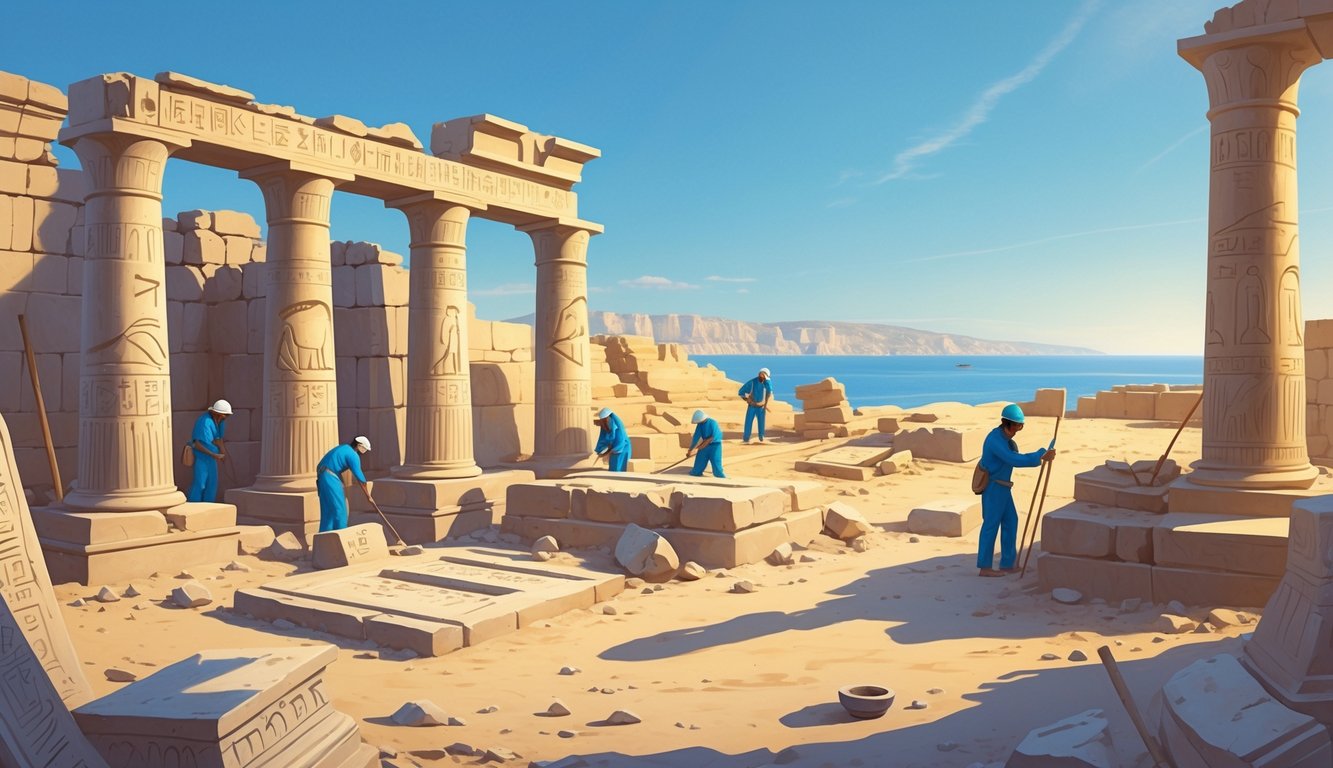
Taposiris Magna sits west of modern Alexandria and contains ruins from Egypt’s Ptolemaic period. Archaeologists believe its location, religious ties, and hidden structures make it one of the most promising sites for finding Cleopatra’s burial place.
Temple Complex and Its History
Builders constructed the temple complex at Taposiris Magna in the 3rd century BCE under Ptolemy II. It was dedicated to Osiris and the goddess Isis, both central to Egyptian royal traditions.
Its position near the Mediterranean coast gave it strategic and ceremonial importance. The site included large stone walls and inner sanctuaries.
Historical records suggest the temple remained active well into the Roman period. This overlap with Cleopatra’s lifetime adds weight to the theory that she may have been connected to the site.
Today, visitors can still see limestone columns, carved reliefs, and the remains of a once-tall lighthouse-like structure.
Recent Archaeological Discoveries
In recent years, archaeologists uncovered a long underground tunnel beneath the temple, stretching over 1,300 meters through solid rock. This tunnel discovery has been called a “geometric miracle” due to its precision.
Dr. Kathleen Martinez has led excavations at Taposiris Magna since 2004. She believes the tunnel may lead to hidden chambers.
Sealed rooms and artifacts found nearby suggest the site still holds untouched areas. Archaeologists have also uncovered coins bearing Cleopatra’s image and mummies of high-status individuals from her era.
These finds strengthen the idea that the temple complex could be linked to the queen’s final days.
Importance of the Goddess Isis
Cleopatra often portrayed herself as a living embodiment of the goddess Isis, a deity associated with protection, motherhood, and kingship. Temples dedicated to Isis were considered sacred spaces for rulers tied to her cult.
Taposiris Magna’s dedication to Isis may have made it a fitting burial site for a queen closely linked with the goddess. Rituals honoring Isis often involved beliefs about rebirth and the afterlife.
By choosing a temple of Isis, Cleopatra could have reinforced her divine status in death as in life. This religious symbolism is one reason researchers consider the site a strong candidate for her tomb.
Isis’s enduring role in Egyptian culture also means the temple would have been respected and maintained long after Cleopatra’s time, protecting any possible burial within.
Alexandria’s Role in the Search
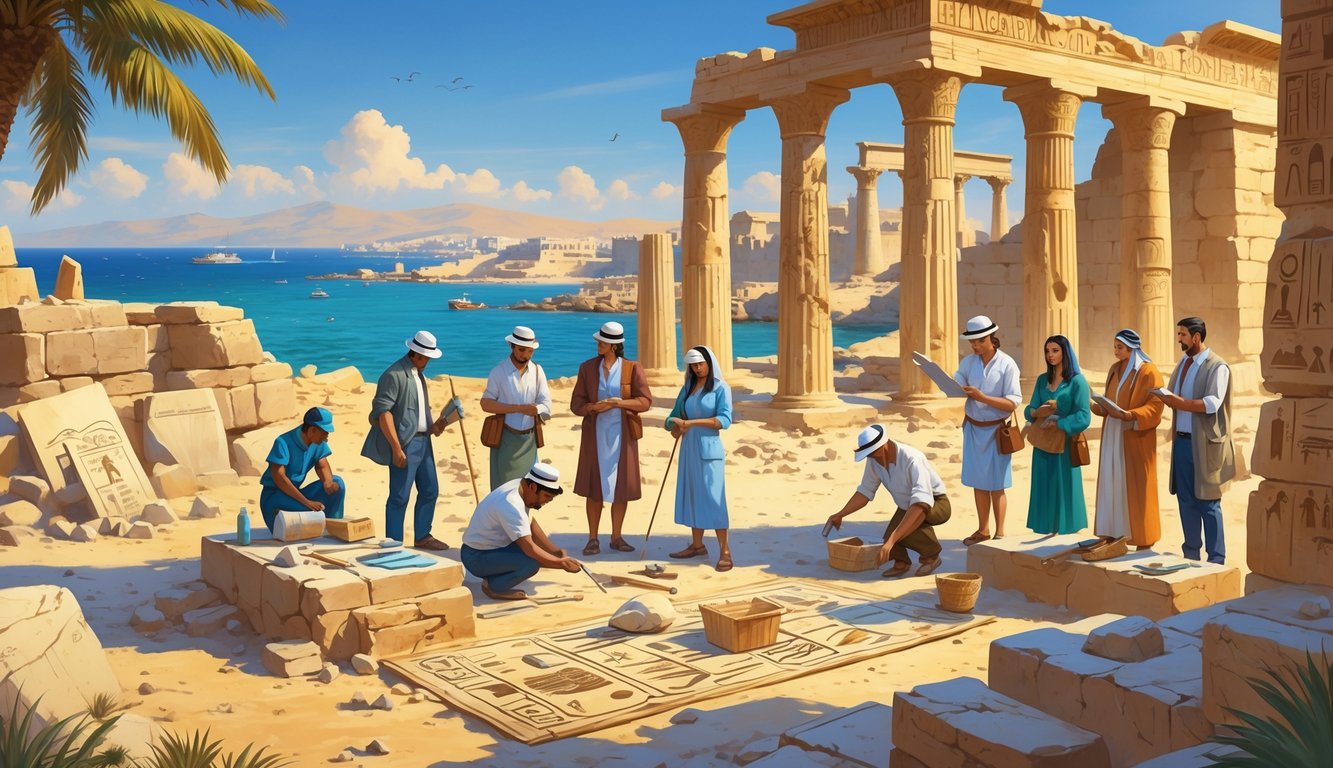
Alexandria holds many clues to Cleopatra’s life and death.
Once a center of political power and culture, parts of the ancient city now lie underwater.
These ruins may connect to her rule and final days.
Cleopatra’s Palace and Lost Monuments
Cleopatra’s royal palace once stood along the shores of Alexandria’s harbor.
Historical accounts place it in the area now known as the Eastern Harbor, near the island of Antirhodos.
Archaeologists believe Cleopatra met foreign envoys at this palace.
She may have spent her last moments there before her death in 30 BCE.
Key structures linked to her reign included the royal quarter with administrative buildings.
There were also temples dedicated to Egyptian and Greek gods.
Gardens and courtyards hosted ceremonies.
Ancient earthquakes and floods caused much of this royal district to sink.
Its remains now lie hidden beneath the harbor.
Underwater Excavations
Modern teams use diving surveys and sonar mapping to explore Alexandria’s submerged ruins.
They have found columns, statues, and building foundations that match ancient descriptions of Cleopatra’s palace.
Notable finds include a large granite block carved with hieroglyphs.
A headless statue likely represents a Ptolemaic ruler.
Coins bearing Cleopatra’s image help confirm the site’s historical importance.
Underwater archaeologists face challenges such as low visibility and shifting sediment.
Despite these obstacles, they continue to search the submerged ruins for direct evidence of her life and burial traditions.
Earthquakes and Submerged Sites
A series of powerful earthquakes between the 4th and 8th centuries CE caused parts of Alexandria’s coastline to collapse into the sea.
These events submerged entire neighborhoods, including parts of the royal quarter.
Researchers have mapped the sunken areas to understand the ancient shoreline during Cleopatra’s reign.
This mapping helps narrow the search for her lost tomb by showing where important buildings once stood.
Some submerged sites, like the island of Antirhodos, are now key archaeological zones.
They offer a rare chance to study structures preserved underwater for over 1,500 years.
Kathleen Martinez and the Modern Search
Dominican archaeologist Kathleen Martinez has spent nearly two decades investigating whether Cleopatra’s tomb lies beneath the ancient temple of Taposiris Magna near Alexandria.
Her work combines historical research with hands-on excavation.
She has made discoveries that have drawn global attention and sparked academic debate.
Martinez’s Hypotheses and Methods
Martinez began her search in 2005 after studying ancient texts and Roman accounts of Cleopatra’s final days.
She concluded the queen may have chosen to be buried in a sacred temple rather than a royal mausoleum in Alexandria.
Her focus shifted to Taposiris Magna, a Ptolemaic-era temple dedicated to Osiris and Isis.
Martinez believed its religious symbolism matched Cleopatra’s wish to be linked with the goddess Isis.
She leads excavations using standard archaeological tools and techniques.
Her team also uses ground-penetrating radar to locate hidden structures.
The team maps underground features and records artifacts in place.
They carefully document each layer of excavation.
Martinez’s approach blends historical interpretation with methodical fieldwork.
This allows her to test her theory while preserving the site’s integrity.
Major Finds and Their Significance
Excavations have revealed a network of underground tunnels stretching more than a kilometer beneath the temple.
One section, called an “engineering marvel,” sits 13 meters below the surface and may connect to a burial chamber.
Artifacts discovered include coins bearing Cleopatra’s image, statues of Isis, and burial objects from the Ptolemaic period.
These finds suggest the temple remained active during Cleopatra’s reign.
In one area, Martinez uncovered mummies wrapped in gold leaf.
These burials indicate high status.
While none have been identified as Cleopatra, their presence supports the idea that important individuals were interred at the site.
The discoveries at Taposiris Magna have strengthened Martinez’s belief that the queen’s tomb could be nearby.
Controversies and Debates
Some Egyptologists argue there is little evidence Cleopatra was buried outside Alexandria.
They point to ancient writers who describe her tomb as part of the city’s royal quarter, now submerged.
Critics also note that high-status burials at Taposiris Magna do not prove the queen’s presence.
The temple could have served as a regional religious center without housing her remains.
Martinez’s findings have generated interest among scholars and the public.
Some view her theory as speculative, while others see it as a plausible alternative to long-held assumptions about Cleopatra’s burial site.
Archaeological Discoveries and Artifacts
Archaeologists have uncovered objects that may connect directly to Cleopatra VII and her time as Egypt’s last pharaoh of the Ptolemaic dynasty.
These finds include personal likenesses, burial goods, and structures that may point to her final resting place.
Coins and Statues Bearing Cleopatra’s Likeness
Excavations near Alexandria have revealed coins stamped with Cleopatra’s profile.
These coins often show her wearing a diadem, a symbol of royal authority.
Some coins also feature her alongside Julius Caesar or Mark Antony.
This reflects the political alliances of her reign.
The artistry helps historians confirm her appearance and how she presented herself as a ruler.
In addition to coins, archaeologists have found statues carved from marble and limestone.
A recent discovery at Taposiris Magna included a white marble statue believed to depict Cleopatra.
While not confirmed, the facial features and style match other known representations from her era.
These artifacts give insight into how Cleopatra balanced Greek and Egyptian traditions in her image.
Funerary Goods and Inscriptions
Teams working at temple and burial sites have uncovered amulets, pottery, and gold items that may have been part of royal funerary practices.
Many of these goods feature symbols linked to protection in the afterlife, such as the Eye of Horus and the ankh.
Some inscriptions found on stone fragments mention rulers from the late Ptolemaic period.
Although Cleopatra’s name has not been clearly identified, the style of writing and associated artifacts suggest a connection to her reign.
Researchers believe these goods could have been offerings placed in or near a tomb.
Lists of items and hieroglyphic dedications hint at rituals meant to honor a high-status burial.
Burial Chambers and Tunnels
Archaeologists discovered a narrow tunnel 43 feet underground at Taposiris Magna.
The tunnel runs for over a kilometer and passes beneath ancient temple walls.
Sealed chambers connected to the tunnel may contain undisturbed burials.
Archaeologists suspect these spaces could hold members of the royal family or even Cleopatra herself.
The design of the tunnel suggests both practical and ceremonial purposes.
It may have been used to transport offerings or to provide a hidden route to a sacred burial site.
Religious and Cultural Context of Cleopatra’s Burial
Cleopatra’s burial likely reflected a blend of ancient Egyptian religion and Roman influences.
Her status as a political leader and religious figure meant her tomb would have carried symbolic meaning tied to divine kingship and the political realities of her time.
Cleopatra as a Living Goddess
As the last ruler of the Ptolemaic dynasty, Cleopatra was portrayed as a living embodiment of a deity.
Egyptian tradition often linked pharaohs to gods, and Cleopatra aligned herself closely with the goddess Isis.
This connection was not just ceremonial.
Depictions in temples show her wearing the headdress of Isis, reinforcing her divine role.
Such imagery likely influenced the design and symbolism of her burial.
Her political image also benefited from this divine association.
By presenting herself as Isis, she linked her reign to the long line of pharaohs who claimed divine descent.
This was important in both Egyptian and Roman political contexts.
Isis and Osiris in Royal Funerary Practices
In Egyptian belief, the myth of Isis and Osiris shaped royal burial customs.
Osiris, the god of the afterlife, was said to have been resurrected by Isis after his death.
This story became a model for how rulers were honored in death.
Pharaohs were often identified with Osiris after they died, while their queens took on the role of Isis.
For Cleopatra, this tradition likely influenced the rituals performed at her burial.
Tombs often included Osirian symbols such as the djed pillar (stability) and the ankh (life).
These symbols were meant to ensure safe passage into the afterlife and eternal protection.
If archaeologists find Cleopatra’s tomb, they expect such iconography to be present based on royal funerary traditions.
Egyptian-Roman Burial Traditions
Cleopatra ruled during a time when Egypt was under strong Roman influence.
Her burial may have combined Egyptian religious customs with Roman funerary practices.
Roman elites often favored elaborate tombs with inscriptions and portraits.
Egyptian royal burials emphasized religious symbolism, mummification, and alignment with sacred sites.
Cleopatra’s final resting place may have merged these traditions.
Some archaeologists, such as Dr. Kathleen Martinez, believe her tomb may be near Taposiris Magna, a temple dedicated to Isis.
This could reflect both her religious identity and political ties to Rome as described in ongoing excavations.
This cultural blend would have made her burial unique in both Egyptian and Roman history.
Challenges and Controversies in the Search
Archaeologists have spent decades studying possible burial sites for Cleopatra VII, but many questions remain.
Excavations in areas like Taposiris Magna near Alexandria have produced intriguing finds, yet none have proven the queen’s final resting place beyond doubt.
Lack of Conclusive Evidence
Despite years of digs, no confirmed artifacts directly linked to Cleopatra have been found.
Items such as coins, statues, and temple inscriptions offer clues, but they do not prove where she was buried.
Dr. Kathleen Martinez has led excavations at Taposiris Magna since 2005.
She uncovered a long underground tunnel and sealed chambers.
These features suggest the site’s importance, but have not yielded remains or inscriptions naming Cleopatra.
Some historians believe her tomb may have been destroyed or lost to natural disasters.
Earthquakes and rising sea levels in Alexandria’s history could have submerged parts of the ancient city.
This makes recovery difficult.
Without physical proof, theories remain speculative.
Researchers must rely on indirect evidence.
This lack of certainty fuels debate and slows progress.
Conflicting Theories Among Experts
Experts disagree about whether Cleopatra’s tomb lies inland or under the waters near ancient Alexandria.
One group believes she rests in a royal mausoleum in the city. Others, including Martinez, argue that Taposiris Magna—a temple complex about 45 kilometers west of Alexandria—matches historical accounts of her burial.
Ancient writers like Plutarch provide few details. This lack of information leaves room for many interpretations.
Some scholars suggest Cleopatra was buried with Mark Antony in a place that symbolized their political and personal union.
These disagreements shape excavation priorities. Funding and permits usually go to projects that follow the main theory, so alternative ideas receive less attention.
Obstacles Facing Archaeologists
Environmental and administrative challenges hinder archaeologists. In coastal Alexandria, strong currents, poor visibility, and unstable ruins make underwater sites hard to reach.
At Taposiris Magna, deep excavation needs careful planning to protect ancient walls. The narrow tunnel found there stretches over a kilometer, so exploration is slow and expensive.
Political instability and permit restrictions in Egypt can delay fieldwork. Seasonal weather, like heavy rains, also reduces the time available for excavations.
Archaeologists must preserve uncovered artifacts immediately, which adds to the search’s complexity and cost.
For more details on recent discoveries at the site, see the update on Cleopatra’s tomb clues at Taposiris Magna.
The Legacy of Cleopatra’s Lost Tomb
The search for Cleopatra’s final resting place has changed archaeological methods. It has inspired many works of art and media.
Each new clue helps us understand ancient Egypt’s politics, culture, and burial customs.
Impact on Modern Archaeology
Cleopatra’s tomb serves as a long-term example of persistence and teamwork. Archaeologists like Kathleen Martinez use historical texts, ground surveys, and advanced imaging to find possible locations.
This search has increased the use of non-invasive technology, such as ground-penetrating radar and 3D mapping. These tools reveal underground structures without harming sites.
The project has strengthened partnerships between Egyptian authorities and international teams. This cooperation helps protect artifacts and improves historical research.
Influence on Popular Culture
Cleopatra’s life and mysterious burial have inspired films, novels, documentaries, and video games. Her story often mixes historical facts with creative storytelling.
The idea of a hidden tomb fascinates the public. Exhibitions about ancient Egypt highlight the ongoing search and attract large audiences.
Some media projects use recent discoveries, like the tunnel beneath a temple complex, to create realistic settings. This keeps the archaeological search in the public eye and sparks interest in ancient history.
Her story continues to spark debates about leadership, identity, and cultural legacy.
Future Prospects for Discovery
Researchers continue to focus on ongoing excavations near Taposiris Magna. Martinez and her team think the site’s layout and artifacts suggest it could hold Cleopatra’s burial chamber.
Future work will likely use digital modeling and underwater archaeology. The team also plans to expand their digs.
Some scholars think the tomb may lie in an area now underwater because of ancient earthquakes and rising sea levels.
Funding and political stability will affect how quickly the search moves forward.
International attention will help ensure that any discovery receives careful study and preservation.