Zambia holds many stories from its past, some of which remain unsolved and mysterious. The biggest historical mysteries in Zambia include ancient civilizations, the rise and fall of powerful empires, and unexplained legends that have been passed down for generations.
From the time Bantu-speaking peoples first settled in the region to the impact of colonial rule, Zambia’s history is filled with events that still puzzle historians today.
Many places in Zambia are wrapped in legend and rumor. The country attracts people interested in history and the unknown.
Haunted sites and mysterious ruins draw both locals and visitors. They come to learn more about the secrets Zambia hides beneath its surface.
Explore these mysteries and legends to uncover what makes Zambia’s history so intriguing.
The Enigma of Broken Hill Man
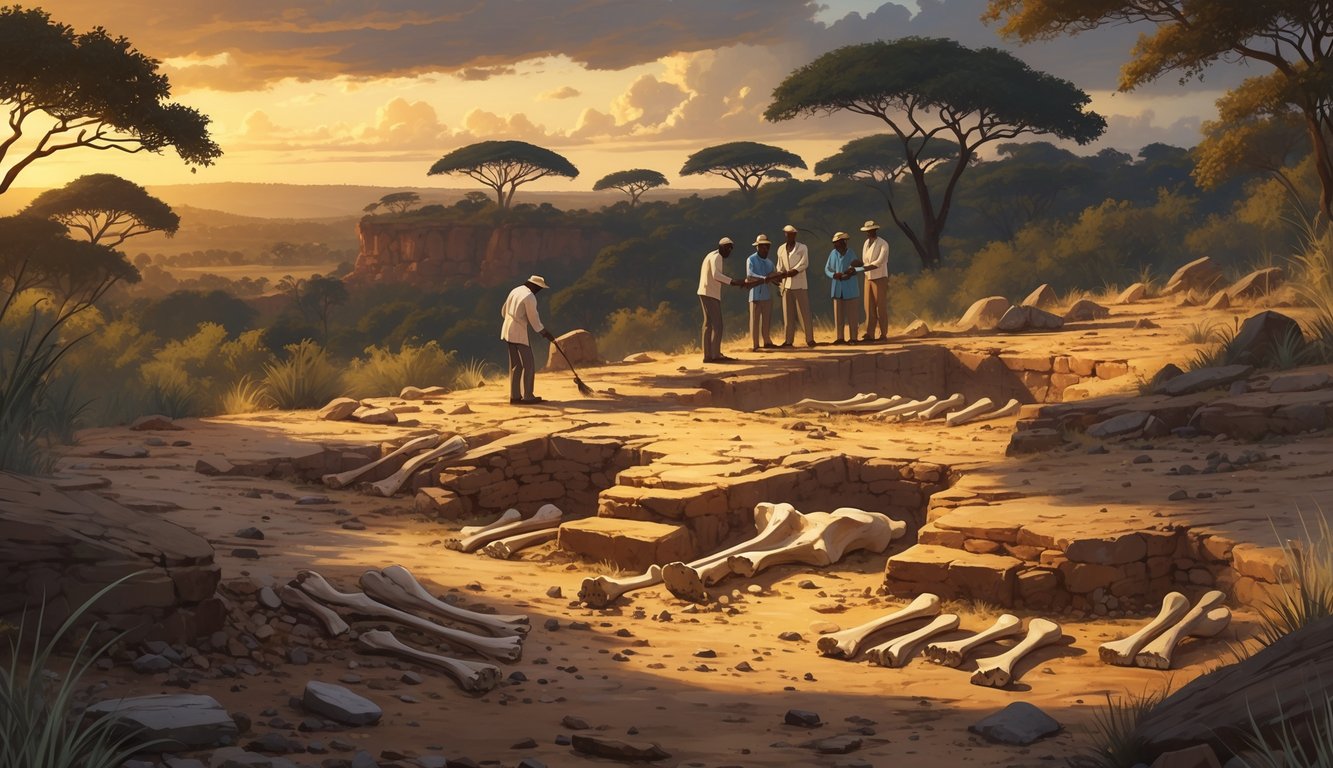
The discovery of Broken Hill Man opened a window into prehistoric life in what is now Zambia. This find revealed much about early human habitation.
Its skull has sparked scientific debates and cultural discussions that continue today.
Discovery and Significance
Miners found Broken Hill Man, also known as Kabwe 1, in 1921 at a lead and zinc mine in Kabwe, Zambia, then called Broken Hill.
The skull is almost complete, making it an extraordinary find from the early days of paleoanthropology.
Scientists believe it belonged to an archaic human species and estimate it to be about 300,000 years old.
This fossil was the first of its kind found in Africa. Its discovery gave scientists direct evidence of ancient human life in the region.
Broken Hill Man placed Zambia on the map of human evolution research. The country’s history became closely linked with important questions about humankind’s development.
You can learn more about the site and history of the Broken Hill Man.
Debates on Human Evolution
Scientists still debate where Broken Hill Man fits on the human family tree. Early researchers called it “Rhodesian Man” and thought it was closely related to Neanderthals.
Many now classify it as Homo heidelbergensis, a possible common ancestor of modern humans and Neanderthals. Some experts see unique traits not found in other fossils from the same period.
Because the skull dates to about the same time as early modern humans, it raises questions about how and where our species began. These debates highlight Africa’s importance, especially Zambia, in the study of human evolution.
Modern Interpretations
Today, Zambians see Broken Hill Man as both a scientific treasure and a symbol of cultural heritage. The skull remains in the United Kingdom, and Zambians continue to call for its return.
Groups like the “Women’s History Museum of Zambia” work to create digital archives and displays to share the story locally. A monument in Kabwe honors the discovery and its impact on the history of Zambia.
These actions reflect pride in Zambia’s ancient past and a commitment to reclaiming heritage lost during colonial times.
Ancient Civilizations And Prehistoric Mysteries
Zambia’s past stretches back thousands of years and includes traces from early humans and lost communities. Scientists and archaeologists still investigate its early cultures, mysterious artifacts, and ancient trade connections.
Early Stone Age Sites
Zambia is home to some of Africa’s oldest traces of human life. Archaeologists have discovered stone tools and fossils in places like Kalambo Falls and Victoria Falls.
These finds show that early humans lived here over 300,000 years ago.
At Kalambo Falls, researchers found Acheulean hand axes and evidence of ancient campfires. Stone tools from this era were mostly used for hunting, cutting, and daily survival.
These sites give clues about how ancient communities survived harsh environments and developed skills over time.
Victoria Falls also reveals important prehistoric artifacts. Fossil remains found nearby prove that early humans once settled along river banks, using the water for food and resources.
The Stone Age discoveries in Zambia show that people here were among the first to use stone technology.
Lost Trade Networks
Long before modern borders, ancient Zambians traded goods with distant peoples. Archaeologists found glass beads, shells, and copper items at ancient sites, even though those materials do not come from the local area.
This shows that Zambia was connected to large trade networks across Africa. Local copper became a valuable trade material, and traders brought rare items from as far away as the Indian Ocean coast.
Villages in Zambia’s past acted as trading posts for salt, iron, and ivory. Some experts believe these ancient trade routes helped early cities and powerful kingdoms develop in this part of Africa.
Unsolved Questions of Human Habitation
Many unsolved questions remain about early human habitation in Zambia. No one knows for sure when the first humans arrived or how their way of life changed as the climate and environment shifted.
There are also mysterious gaps in the archaeological record. Sometimes, burial sites and settlements suddenly disappear for reasons that remain unclear.
Researchers use new tools like satellite mapping and ancient DNA testing to search for clues. Each discovery brings more information and new questions about Zambia’s prehistoric past.
Mysterious Monuments and Rock Art
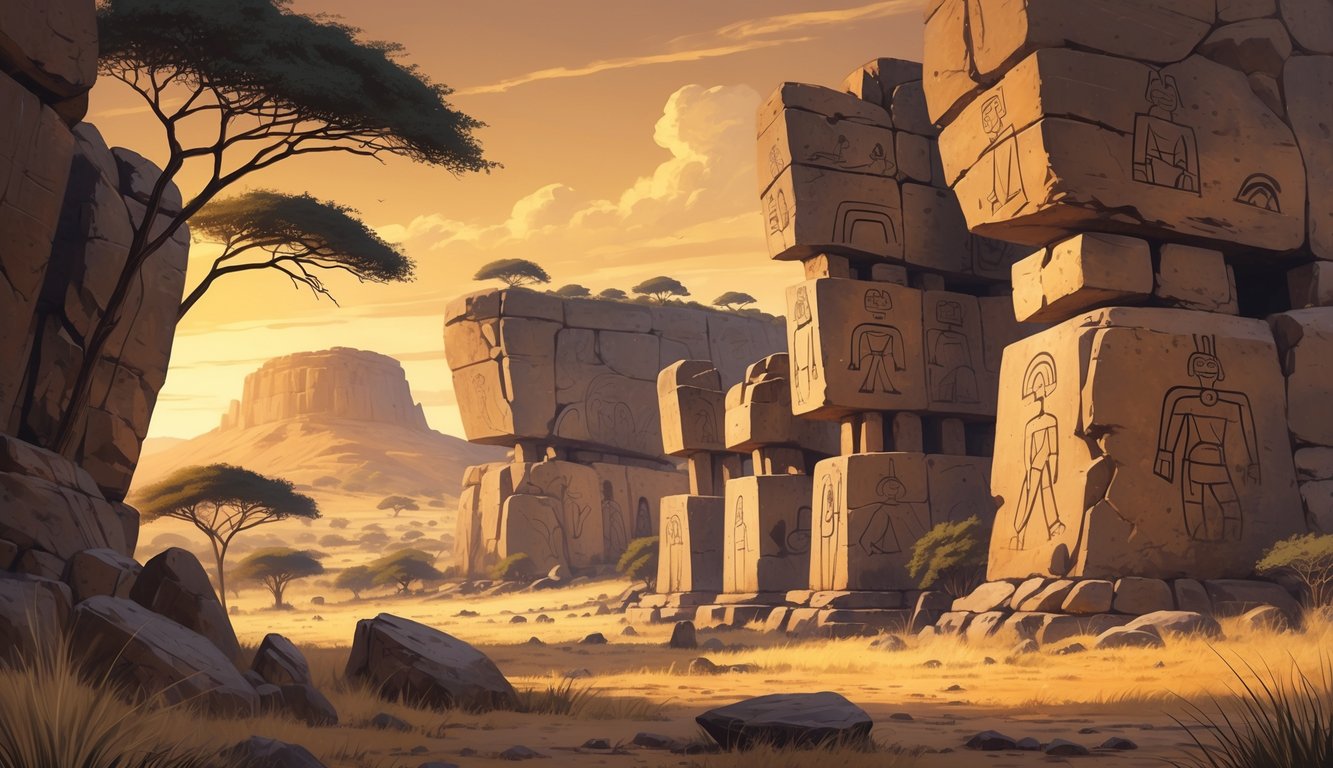
Zambia is home to ancient wonders, from archaeological sites beside waterfalls to mysterious rock carvings. These places hold clues about life in prehistoric times and the creativity of early artists.
Kalambo Falls Archaeological Riches
Kalambo Falls is one of Africa’s tallest waterfalls and an important archaeological site. Researchers have found ancient tools and wooden objects near the falls, some dating back over 250,000 years.
These discoveries make the area one of the oldest sites of human activity in southern Africa.
Archaeologists uncovered hearths at Kalambo Falls, which shows that people here used fire for cooking and warmth very early on. Some tools found at the site show clear signs of improvement and skill over time.
Other remains include bones, seeds, and wooden structures. These give hints about what prehistoric people ate, hunted, and how they survived.
Kalambo Falls is not just a natural wonder; it is a key archaeological site where experts continue to search for answers about human history.
Stone Circles and Prehistoric Monuments
Across Zambia, ancient stone circles and other prehistoric monuments show how early communities marked important places. Some of these stone structures are believed to be burial grounds, while others may have served as meeting spots or landmarks.
The shapes and arrangements of the stones have puzzled experts. No one knows for sure what all these circles and settings mean, but they show that people built landmarks that lasted through the ages.
Many of these sites are now national monuments and are protected for their historical value. Exploring them offers clues about ancient ceremonies and social life in early Zambia.
Hidden Meanings in Artistic Expression
Zambia’s rock art is some of the most detailed in southern Africa. Places like the Mwela Rock Paintings feature hundreds of animal shapes, stick figures, and symbols painted on cave walls and rock faces.
These paintings show animals like elephants and antelopes, as well as scenes of humans with bows and other tools. The meaning behind many symbols remains a mystery, but some may tell stories about hunting or daily life.
Artists used natural pigments, showing creativity and a strong connection to their environment. This rock art offers a window into how early people saw their world and how they wanted to be remembered.
Secrets of Victoria Falls and Kariba Dam
Victoria Falls inspires visitors with its natural beauty. Kariba Dam stands as a symbol of engineering across the Zambezi River.
Both places are surrounded by mysteries, tales, and little-known facts that attract tourists to Zambia and Zimbabwe.
Legends of Victoria Falls
Locals call Victoria Falls “Mosi-oa-Tunya,” meaning the smoke that thunders. Myths and stories about the falls have been passed down for generations.
Many believe powerful spirits dwell within the mist. Some legends claim the river and its falls are watched over by Nyami Nyami, a serpent-like god who controls water and protects the people.
Traditional ceremonies are sometimes held at the site to honor these spirits.
Visitors come for both the sight of the giant curtain of water and the stories tied to the place. Archeological findings point to ancient human activity near the falls.
For more about the myths and culture surrounding Victoria Falls, visit this guide to the myths and legends of Victoria Falls.
Kariba Dam Construction Mysteries
Kariba Dam is one of Africa’s largest dams and a vital source of hydroelectric power. Its construction in the 1950s brought huge challenges, including strong currents and moving thousands of people from the valley.
Engineers faced unexpected problems as the dam’s foundations shifted during building. Cracks in the dam wall appeared soon after completion, leading to concerns about safety and the need for repairs.
A local belief links the dam’s problems to Nyami Nyami, the river god said to be angered by the dam’s creation. These stories remain part of the area’s mystery and add to its appeal for those interested in both engineering and culture.
To learn more about its history, see this summary of Kariba Dam’s construction.
Colonial Shadows and the Northern Rhodesia Era
Zambia’s colonial past shaped its borders, government, and identity. The period known as Northern Rhodesia left many untold stories, with hidden moments of both struggle and hope.
Lost Histories of Northern Rhodesia
Northern Rhodesia formed in 1911 when North-Eastern and North-Western Rhodesia joined. The British South Africa Company managed the region, focusing on mining copper and controlling land.
Many personal stories from ordinary Zambians under colonial rule have faded over time. Indirect rule depended on local chiefs, but British administrators held real power.
Records from this era highlight the economic interests of foreigners and the movement of resources. These records often leave out the voices of workers and villagers.
Unanswered questions remain about traditional leadership and how communities adapted. Gaps in written history make it difficult to know how people resisted, cooperated, or rebuilt their lives.
Important details are missing from public memory. Many events were never recorded or have been lost.
Long-standing problems with reconstructing these stories have led historians to debate what “tribes” meant and how colonial ideas shaped different groups in Zambia’s past.
Struggles for Independence
Colonial rule in Northern Rhodesia brought strict government policies and forced labor. Copper mining dominated the economy, but most profits went outside the country.
This led to growing anger among local communities. Political groups and voices for independence grew stronger in the 1940s and 1950s, challenging colonial authorities.
Key leaders called for self-government, organizing protests and demanding fair treatment for Africans. Events like the formation of the United National Independence Party and strikes by mine workers put pressure on Britain.
These movements shaped Zambia’s fight for freedom and changed daily life for many people. In 1964, Northern Rhodesia gained independence and became Zambia.
The transition ended colonial rule but left behind questions about how new leaders could address deep economic and social divisions. For more details, see the timeline of colonial rule and independence.
Influential Figures Shrouded in Mystery
Some people in Zambia’s history stand out not just for what they did, but because mysteries still surround parts of their lives. These stories spark curiosity and debate among historians and people in Zambia today.
David Livingstone’s African Expeditions
David Livingstone remains one of the most famous explorers connected to the history of Zambia. He is best known for his journeys across southern Africa and was the first European to reach Victoria Falls, which he named after Queen Victoria.
Many details about his expeditions remain debated. Some records are missing or incomplete, so researchers often question what really happened during his long treks across Zambia and nearby regions.
There are disagreements about which routes he took and whether he really met all the local leaders his writings describe. The circumstances surrounding his death continue to be discussed by historians.
Although he died in present-day Zambia, there are mysteries about his burial site and the events leading up to his final days. This uncertainty adds another layer to his legendary status.
Kenneth Kaunda’s Hours of Turmoil
Kenneth Kaunda was Zambia’s first president after independence and played a huge role in shaping the country’s early years. While his leadership is well-documented, there are key times—especially during political crises—where details remain unclear.
During Zambia’s transition from colonial rule, Kaunda faced both strong support and opposition. Some events, such as secret meetings and political alliances during these tense times, are still not fully understood.
Historians sometimes debate Kaunda’s decisions during military stand-offs and his strategy for dealing with rivals.
Key questions remain:
- Why did he make certain choices regarding one-party rule?
- What pressures did he face from outside forces?
- Why are there gaps in the official records from these periods?
Because records from Kaunda’s government are sometimes incomplete or missing, these uncertainties are likely to continue as part of Zambia’s complex history.
Political Instability and Its Historic Impact
Political instability in Zambia has influenced its society, especially in recent decades. Lusaka, as the capital, has seen significant change, protests, and government transitions that have shaped the country’s future.
Unexplained Events in Modern Zambia
Modern Zambia has faced several unexpected and puzzling political events. One notable incident was the peaceful yet surprising transfer of power in 2021, when Hakainde Hichilema defeated President Edgar Lungu.
Many expected instability or violent unrest, but Zambians instead marked the moment with calm, surprising both locals and foreign observers. The reaction highlighted the unpredictability of Zambian politics.
At times, sudden public protests and shifts in government policy have left people questioning what happens behind the scenes. These events sometimes lead to rumors of outside influence or secret deals.
Despite periods of political calm, unease and suspicion still linger among citizens in Lusaka and beyond, especially during election seasons.
Read more about these unusual political developments in Zambia.
Turning Points and Repercussions
Key turning points, such as peaceful power shifts or accusations of unfair elections, have shaped how Zambians view their leaders. In some situations, economic struggles and government actions have sparked public outcry or unrest in Lusaka, adding to the feeling of instability.
Political tension affects both politics and the everyday lives of ordinary Zambians. Investors watch closely, since stable leadership makes economic growth more likely, while uncertainty can stall projects or investments.
Warnings from experts suggest that unresolved issues can quickly lead to bigger problems, including ethnic or sectarian unrest. Read more about warning signs and efforts to prevent conflict in Zambia.
Agriculture, Economy, and Enigmas of Development
Zambia’s past is filled with puzzling changes in how people farmed and made a living. Questions about how agriculture shaped the nation, from ancient times to the present, are still debated today.
Agricultural Mysteries of Early Societies
Early Zambian societies depended on farming and cattle-keeping. Archaeologists often find remains of ancient tools and crop seeds, but there are gaps in the exact methods and crops used.
Some villages thrived for centuries, yet it’s unclear which farming techniques allowed this success. Experts still debate how early farmers managed rainfall and drought.
The movement of tribes and their crops, such as millet, remains an area full of unknowns. Mystery also surrounds how local knowledge and outside influences shaped farming.
These uncertainties continue to interest scholars who study Zambia’s agricultural history.
Challenges Since Independence
Since gaining independence in 1964, Zambia has worked to strengthen its farm sector. Problems such as drought, price changes, and government policy have caused uncertainty.
Leaders have tried different plans to help farmers, but some efforts failed. Growth in agriculture has not always matched population needs.
Food shortages have sometimes forced the country to rely on imports. Modern Zambia still faces the challenge of turning its rich soil and water into stable economic growth.
Unexplained gaps in data make it hard to analyze progress. Many researchers continue to investigate these unsolved mysteries in Zambia’s development.
Tourism and Lost Heritage in Zambia
Zambia’s past is full of sights and stories that draw people from far and wide. Visitors find both legendary tales and ancient sites that give a window into the country’s deep history.
Myths Attracting Modern Tourists
Many tourists visit Zambia because of its ancient myths and legends. The story of the legendary Lwezi gold, said to be hidden by early civilizations, still sparks the imagination of adventurers who travel deep into Zambia’s forests and valleys.
Besides folklore, places like Victoria Falls have become world-famous, not only for their beauty but also because of historic legends tied to them. For example, local stories about spirits guarding the falls add to its mysterious appeal.
These myths are passed down through villages and showcased during cultural festivals. Tourists are often drawn by the unique mix of history and storytelling, making myths an important part of Zambia’s tourism experience.
- Popular mythical stories:
- Lwezi gold legend
- Spirits of Victoria Falls
- Rock art from ancient tribes
Both real sites and mythical tales work together to create a powerful draw for those wanting to discover the history of Zambia.
Unexplored Archaeological Sites
Zambia is home to thousands of heritage sites. Yet, many ancient sites remain hidden or only partly explored.
Caves with prehistoric rock art show how long humans have lived in the area, but many of these sites are rarely visited and not fully studied. Archaeologists have only begun to uncover the secrets of places like Kalambo Falls, which reveals evidence of some of Africa’s earliest settlements.
Stone tools, pottery, and burial grounds found near these and other areas give hints about ancient lifestyles. Limited resources and rugged terrain make research and site preservation tough.
This means important pieces of the history of Zambia could still be waiting to be understood. Many archaeological discoveries are yet to be shared with visitors, making Zambia a country where much of its lost heritage remains unseen.
Other Global Mysteries: Myths and Misattributions
Many mysteries around the world have confused people for years. Some sites and strange events are often compared and mixed up with local legends, sometimes leading to misunderstandings about their origins.
Stonehenge and Other Global Comparisons
Stonehenge in England stands as one of the world’s most famous ancient monuments. Its massive stones, shaped and placed in a circle, have led to many guesses about its original use.
Some researchers think it was a place for ceremonies, while others suggest it might have helped track the seasons. People sometimes compare these ancient sites to local landmarks in other countries, even though there is no evidence linking them.
Similarities in stone circles or earthworks are often due to common building techniques, not a shared culture. This can lead to confusion when myths connect global sites like Stonehenge to places in Africa or Asia without real proof.
Here’s a quick comparison table:
| Site | Location | Common Theories | Key Facts |
|---|---|---|---|
| Stonehenge | England | Calendar, burial site | Built ~5,000 years ago |
| Great Zimbabwe | Zimbabwe | Royal palace, trade center | Large stone ruins |
Famous Unsolved Cases in Popular Culture
Several unsolved mysteries have become well-known through books, movies, and news. The story of Jack the Ripper shocked people in 19th-century London.
Even today, no one knows who committed the crimes. The Zodiac Killer in the US sent strange coded letters to the media and claimed more murders than could be proven.
His true name remains a secret. Monsters like the Loch Ness Monster have also drawn attention.
Many have searched for proof, but no one has ever found clear evidence. These mysteries keep their hold on popular culture because they are unsolved and spark curiosity in each new generation.
Modern Health Challenges with Historical Roots
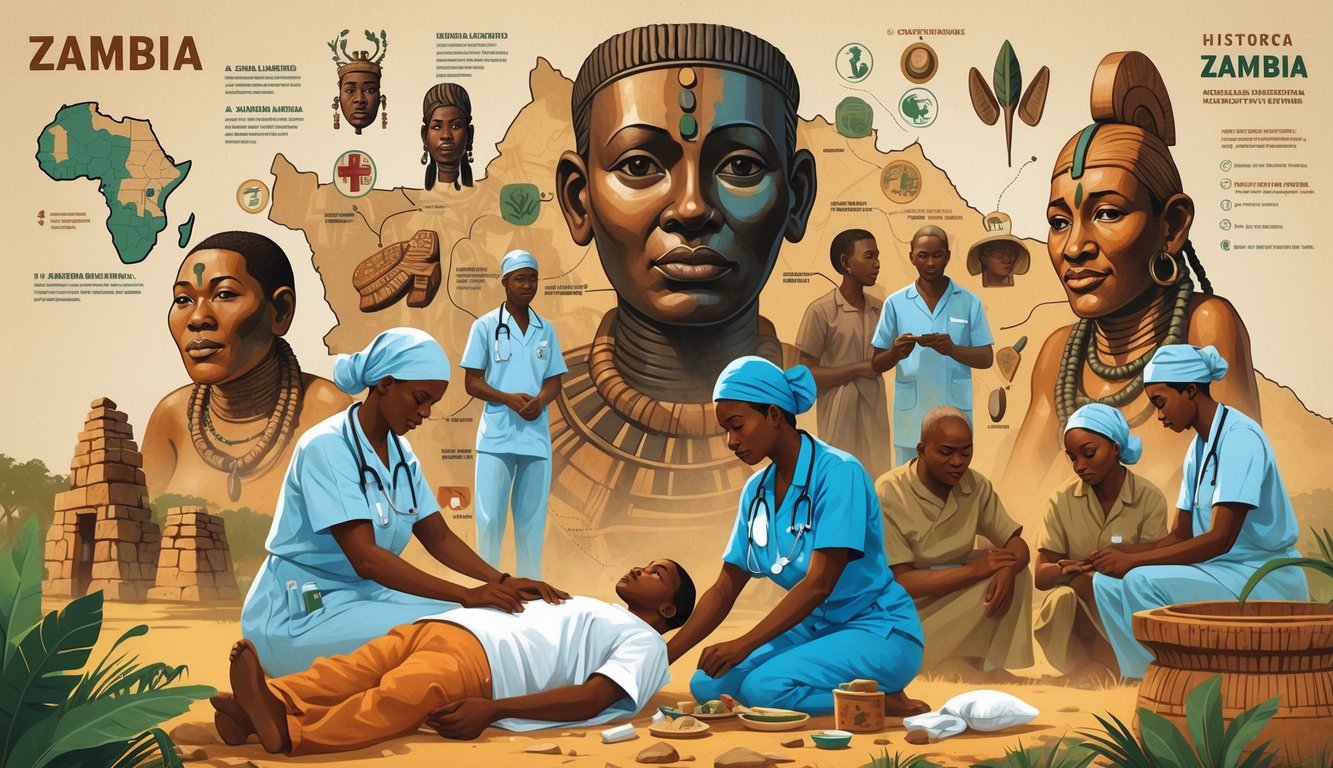
Health issues in modern Zambia often connect to events and decisions from the past. Choices made decades ago still shape the nation’s ability to fight infectious diseases and manage public health.
HIV and Its Historical Impacts
HIV remains one of Zambia’s most serious health problems. The disease’s roots go back to the 1980s, when it first spread throughout southern Africa.
Social changes and increased travel helped HIV spread quickly. Limited public health resources in this era also made the situation worse.
Many families lost parents and support systems. This led to long-term economic struggles.
The government and health organizations invest in education and medicine. Stigma and resource shortages still cause problems.
Collaborative community models have improved local care. Decentralization has strengthened family support in the fight against HIV.