Every country hides secrets from its past. Trinidad and Tobago stands out for its unique history and unsolved mysteries.
Some of the biggest historical mysteries in Trinidad and Tobago include the strange story of the Betty Stiven tomb in Tobago, the unanswered questions around Lapeyrouse Cemetery in Port of Spain, and mysterious cases like the death of Akiel Chambers. These stories are part of the country’s rich heritage.
Visitors come to experience adventure and uncover secrets hiding in plain sight.

People from around the world visit these sites to learn more about the island’s history. The mysteries add to the charm of Trinidad and Tobago and make each visit memorable.
Whether it’s the cryptic writing on an old grave or legends passed down over generations, these puzzles invite everyone to join the story.
Unveiling the Mystery Tombstone of Plymouth
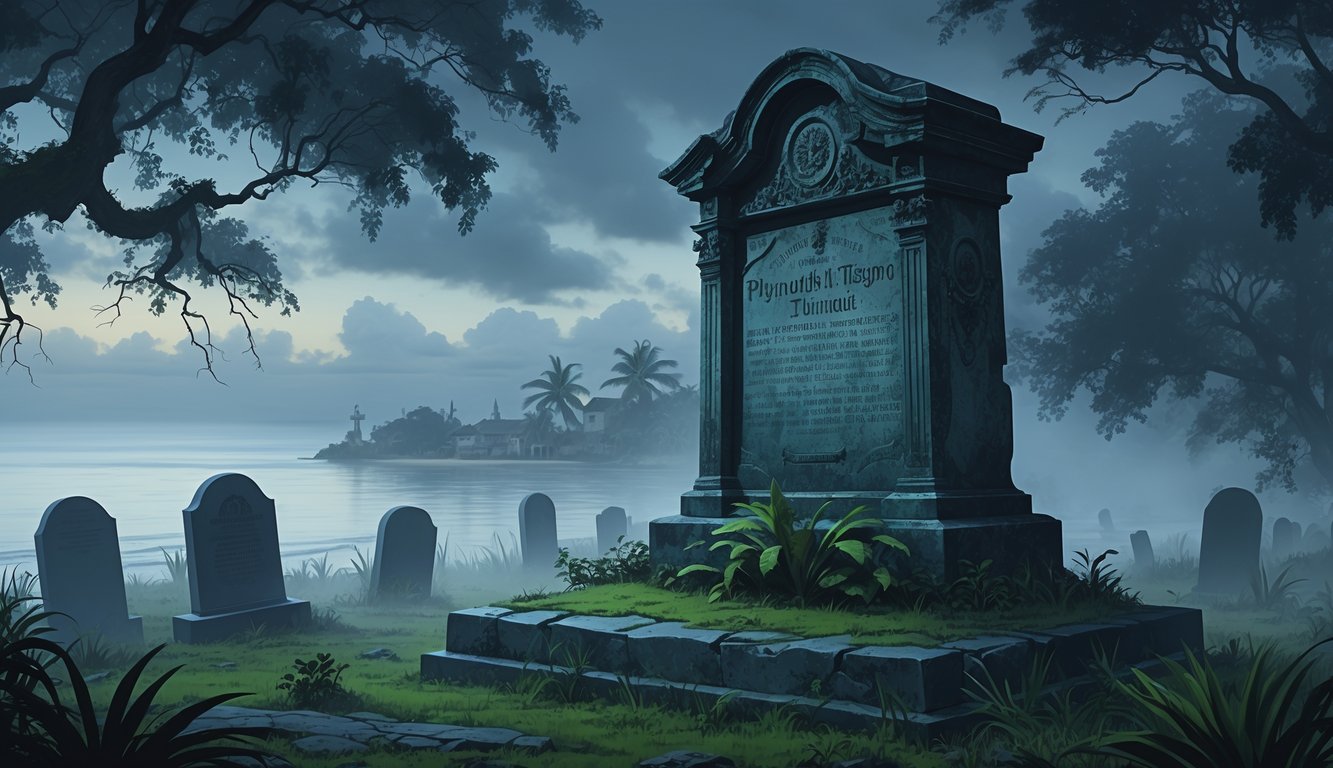
The Mystery Tombstone stands in the quiet village of Plymouth, Tobago. It is one of the island’s oldest and most puzzling landmarks.
This grave has captured curiosity for centuries because of its strange inscription and unclear background.
History Behind the Tombstone
The Mystery Tombstone sits in Plymouth’s old cemetery, a town with deep colonial roots.
The tomb dates back to the 18th century. Its unusual epitaph reads: “She was a mother without knowing it and a wife without letting her husband know it.”
The tombstone marks the grave of Betty Stiven. Its craftsmanship reflects the skills and materials of that era.
The stone stands out for both its design and the story carved into it.
Local folklore surrounds the site, making the Mystery Tombstone of Plymouth a popular stop for tourists and history fans.
The area reminds visitors of the cultural layers found throughout Trinidad and Tobago.
Betty Stiven: Life and Enigma
Betty Stiven remains a mysterious figure. She died in 1783, and few reliable records exist about her life.
Her background is unclear, but the grave inscription suggests a complex and secretive life. Some stories link her to the Stiven family, including Alex B. Stiven, but the exact relationship is debated.
Many believe Betty’s life involved events or hardships that were never revealed. The eerie wording on her tombstone has led people to wonder if she had a secret marriage or lost a child under mysterious circumstances.
Her resting place shows how personal stories can turn into legends when facts are missing.
Theories and Interpretations
People have suggested several theories to explain the riddle on Betty’s tombstone.
Some think Betty was the victim of lost love or tragedy. The inscription might hint at a child and a marriage that neither she nor her husband fully recognized.
Others believe cultural or legal restrictions in the 18th century kept her story hidden.
A few think the epitaph is a poetic way to express sorrow or social judgment. Historians and visitors still debate its meaning, making the tomb of Betty Stiven a lasting source of fascination.
Betty Stiven’s Story and Family Connections
Betty Stiven’s life and tombstone in Tobago are wrapped in mystery. Her family and her role in the community have drawn interest for more than two centuries.
The Stiven Family Legacy
The Stiven family became known in Tobago during the late 18th century. Betty Stiven died in 1783 at just 23 years old.
Her grave features an inscription that still puzzles people. The words say she was “a mother without knowing it and a wife without letting her husband know it except by her kind indulgences to him,” sparking many theories about her life.
Some think Betty may have died during childbirth, which was common at the time. Stories mention her father as a respected community member who felt deep grief at her loss.
The famous tombstone sits in Plymouth, Tobago and has become a historical landmark.
In the 18th century, families like the Stivens could have owned land or enslaved people, following the norms of the time. There is no clear record that Betty herself owned enslaved people.
The attention given to her tomb shows her importance to both her family and the community.
Alex B Stiven and Community Ties
Alex B Stiven, believed to have been Betty’s husband, had ties to the local community. He was likely involved in business or plantation life, as many men were in Tobago then.
His relationship with Betty remains debated. People wonder if the couple had children, especially because of the mysterious inscription on her grave.
Community members at the time would have known the Stiven family’s status. Their tomb’s size and inscription show they were well-off or respected.
Local stories suggest Alex was unaware of being a father, possibly because Betty died soon after childbirth.
The grave’s location in Plymouth puts it near what was the center of 18th-century life in Tobago. The legacy of Betty Stiven and her husband is now a symbol of family loss and historical curiosity for Tobago and visitors.
Folklore, Spirits, and Supernatural Legends

Trinidad and Tobago has a rich tradition of mysterious stories featuring strange spirits, magical beings, and legendary characters. These tales reflect the islands’ history and mix of cultures, including African, French, and island-born beliefs.
Jumbies and La Diablesse
Jumbies are some of the most well-known spirits in Trinidad and Tobago folklore. People believe these supernatural figures are restless souls who return to the world of the living.
Jumbies come out at night to cause mischief or frighten the living. La Diablesse is one of the most feared jumbies.
She appears as a beautiful woman but hides a cloven hoof under her dress and covers her face with a wide-brimmed hat. Many believe if someone follows her into the forest, they could become lost or disappear.
Folklore warns not to speak to strangers at night or wander alone, as jumbies and La Diablesse might be near.
Local people in Trinidad and Tobago use salt, prayers, or special herbs to protect themselves from jumbies. These stories teach lessons and help explain things that can’t be seen or easily understood.
Gang Gang Sara: The Flying African
Gang Gang Sara is one of Tobago’s most beloved folklore figures. People know her as the Flying African, believed to have magical powers and the ability to fly across great distances.
According to tales, she left Africa to search for her family and landed in Tobago. After arriving, Gang Gang Sara lost her powers by eating local food, which kept her grounded among the people.
She became a respected elder in the Tobago village of Les Coteaux. Villagers saw her as wise, helpful, and kind, making her a symbol of hope and a connection to African roots.
Gang Gang Sara’s legend reminds people about identity, freedom, and the endurance of traditions. Her story highlights the magical and mysterious ideas shaping Trinidad and Tobago’s folklore.
Courland Bay and Lost Colonies
On Tobago, the story of the Courlanders stands out as a unique historical event. Their efforts to establish a colony left real landmarks and memories that shape how people remember the island’s past.
The Courland Monument’s Historic Role
The Courland Monument stands at Great Courland Bay, marking where settlers from the Duchy of Courland and Semigallia tried to build a new community.
This stone marker, often overlooked by tourists, honors the Courlanders who arrived from what is now Latvia in the 17th century.
The monument connects Europe and the Caribbean, making it a symbol of international history on Tobago. Travelers find plaques in different languages, showing the colony’s mix of cultures.
The Courland Monument is a physical reminder that Tobago has a rich and complicated past. While the Couronian effort did not last long, the monument helps keep the memory of this unique project alive.
Today, it is an important part of Tobago’s heritage and draws people interested in the story of Couronian colonization in the Americas.
Settlement of Great Courland Bay
The settlement began in the mid-1600s at Great Courland Bay, where the first settlers arrived under Duke Jacob of Courland’s orders. They chose this northern coast for its natural harbor and hoped it would be a base for trade and farming.
Life for the settlers was difficult. They faced conflicts with other European powers and resistance from local groups.
The settlers built small structures and tried to start plantations, but threats were constant. At one point, a Spanish expedition attacked the site and destroyed the colony.
Courlanders tried again to colonize Tobago in later years, but their efforts ended by the late 17th century. The settlement of Great Courland Bay still holds a special place in the island’s story and is one of the biggest mysteries in Tobago’s colonial history.
Today, the area is known for its scenic views and unique past.
Fort James, Fort Bennett, and Plymouth’s Fortified Past
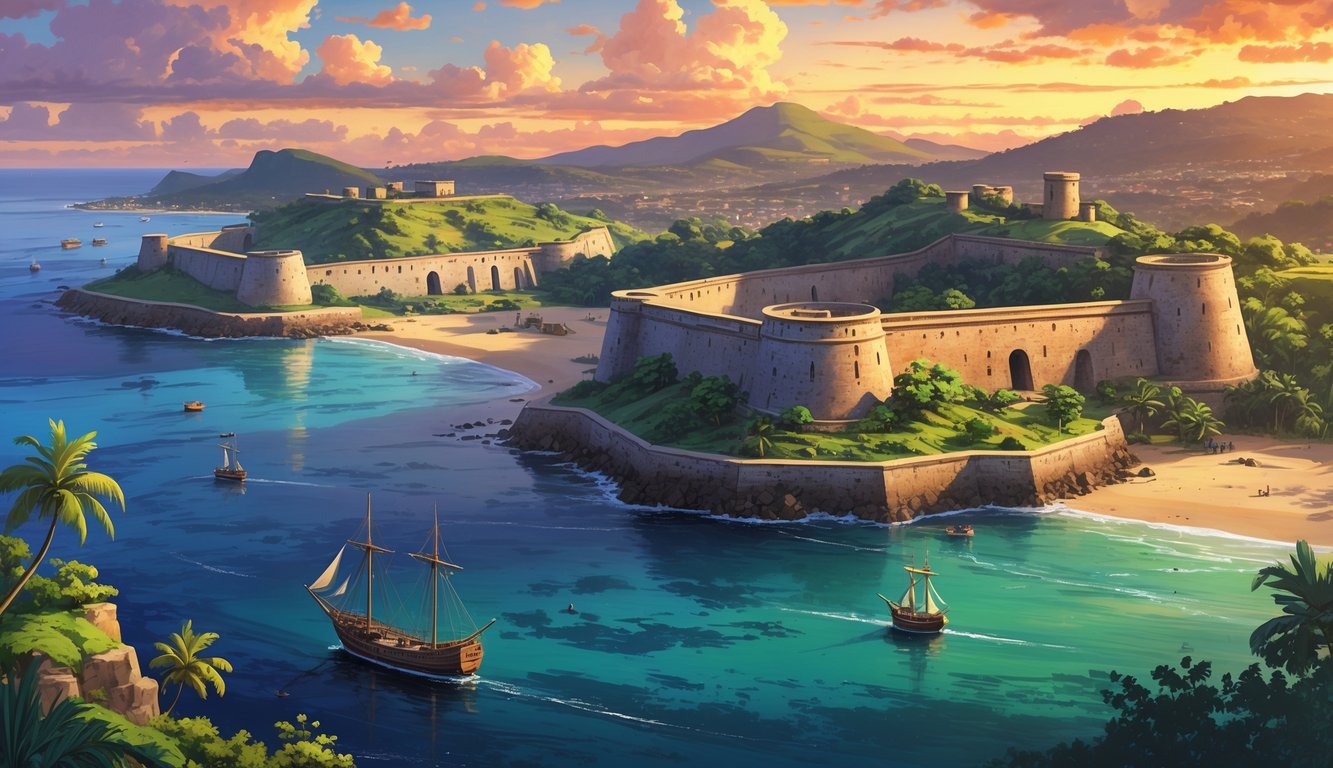
Plymouth, a historic town in Tobago, is home to two important forts: Fort James and Fort Bennett. These landmarks sit along the coastline where they once guarded against invasions.
Fort James: Sentinel of Tobago
Fort James stands in Plymouth, built by the British in the 1760s. Its hilltop location gave it a strong view over the bay and land.
The British used the stone fort to defend against pirates, invading armies, and rebels. The area changed hands several times between the French and British.
Fort James was attacked many times but survived, making it one of the island’s oldest military sites.
Today, visitors can still see old cannon batteries and the fort’s foundation. The site is a major heritage spot for both its history and its scenic view of Courland Bay.
Fort James represents Tobago’s turbulent past and remains a recognizable landmark in Plymouth.
Fort Bennett: Guardians of Stonehaven Bay
Fort Bennett sits to the west, overlooking Stonehaven Bay and the nearby shores of Arnos Vale Bay. The Dutch built it in the early 1600s.
In the 1680s, settlers from Courland (now part of Latvia) restored and strengthened the structure to secure their growing colony. This site was key for watching sea approaches and protecting the settlements around Black Rock and Grafton Beach.
The British and French both occupied Fort Bennett at different points during Tobago’s colonial era. Nowadays, visitors find peaceful gardens, a central gazebo, and a few surviving cannons.
Fort Bennett’s hilltop offers wide views of the ocean. As one of Tobago’s well-known historical landmarks, it helps people connect with the island’s layered heritage.
The Mysteries of Turtle Beach and Arnos Vale Bay
Turtle Beach and Arnos Vale Bay are known for their natural beauty and wildlife. These locations also have stories of strange events, unsolved crimes, and hidden history.
Crucial Incidents and Lost Lore
In the past, Arnos Vale Bay had a thriving sugar estate. The British built the estate in the 1700s after taking over from Amerindian settlers.
After sugar production stopped, the estate fell into ruin, leaving behind mysterious ruins and old stories. Locals whisper about missing valuables and lost maps connected to the abandoned estate.
Tales of hidden tunnels beneath the old plantation hint at secrets still buried underground. Sometimes, visitors and residents report odd sounds and lights, especially near the ruins at night.
Some travelers wrote online about being robbed near Arnos Vale Beach, raising questions about the safety of this secluded area. These stories add another layer of mystery to the bay.
Modern Attractions and Ecotourism
Today, Turtle Beach and Arnos Vale Bay attract both tourists and researchers. Turtle Beach is famous for the nesting of giant sea turtles from March to September.
Watching females lay eggs on the sand is a special event, drawing visitors from around the world. Arnos Vale Bay is now popular for snorkeling and diving.
Its coral reefs are full of fish, and the chance to see turtles swimming draws nature lovers. The abandoned Arnos Vale Hotel gives the site a haunting atmosphere.
Visitors are often encouraged to visit in groups or with tours because of the area’s remote location. Nearby, the Adventure Farm and Nature Reserve offers trails and birdwatching.
Visitors can see many species, such as hummingbirds and butterflies. Back Bay also offers strong waves and a wilder coastline, appealing to those seeking outdoor adventure.
| Location | Main Draw | Notable Features |
|---|---|---|
| Turtle Beach | Turtle nesting | Sea turtles, quiet sands |
| Arnos Vale Bay | Snorkeling, ruins | Coral reefs, old plantation |
| Adventure Farm | Birdwatching, nature walks | Hummingbirds, butterflies |
| Back Bay | Surfing, adventure | Waves, secluded setting |
St. David Anglican Church and Sacred Spaces
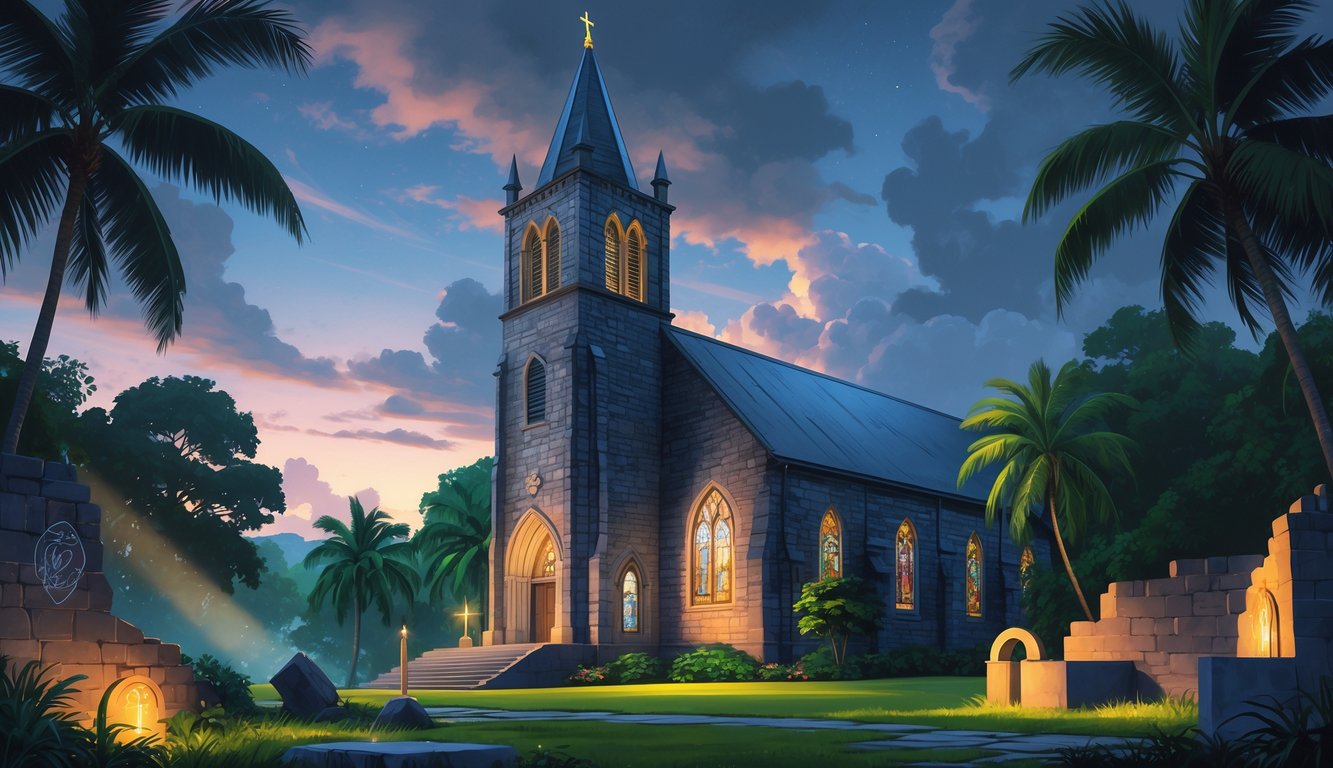
St. David Anglican Church is an important landmark in Tobago with a long history and cultural value. The church holds stories of worship, local heritage, and old graves.
The Royal Sanctuary’s Hidden Histories
St. David Anglican Church in Plymouth stands as a testament to Tobago’s spiritual heritage. Built during the colonial era, it features simple yet charming architecture that captures the island’s past.
Over the years, it has served as a central gathering place and a royal sanctuary for local religious communities. People are drawn to the church for its peaceful setting and strong sense of tradition.
The building has survived hurricanes, restoration efforts, and periods of decline, showing its resilience. Inside, the church still preserves some of its original features, including wooden pews and stained-glass windows.
Many believe the site holds secrets from the early days of British rule. The church has witnessed baptisms, weddings, and funerals, marking it as a deeply rooted part of local life.
To learn more about its place among sacred spaces, visit this guide to Trinidad’s religious sites.
Legends and the Churchyard
The churchyard at St. David Anglican Church is known for its old graves and local legends. Some of the headstones date back to the early 1800s, and many are faded or broken, adding to an air of mystery.
Local stories speak of unmarked graves and lost records from the island’s colonial period. Visitors often search for the oldest grave or try to read the weathered names and dates.
There are also tales about unusual symbols on the stones that hint at forgotten families or customs from long ago. The site is a favorite stop for those interested in heritage and historical significance.
St. David Anglican Church remains open to the public, inviting people to connect with local history and reflect in its quiet, shady grounds. Learn more about its background at St. David Anglican Church in Plymouth.
Heritage Parks, Landmarks, and Preservation
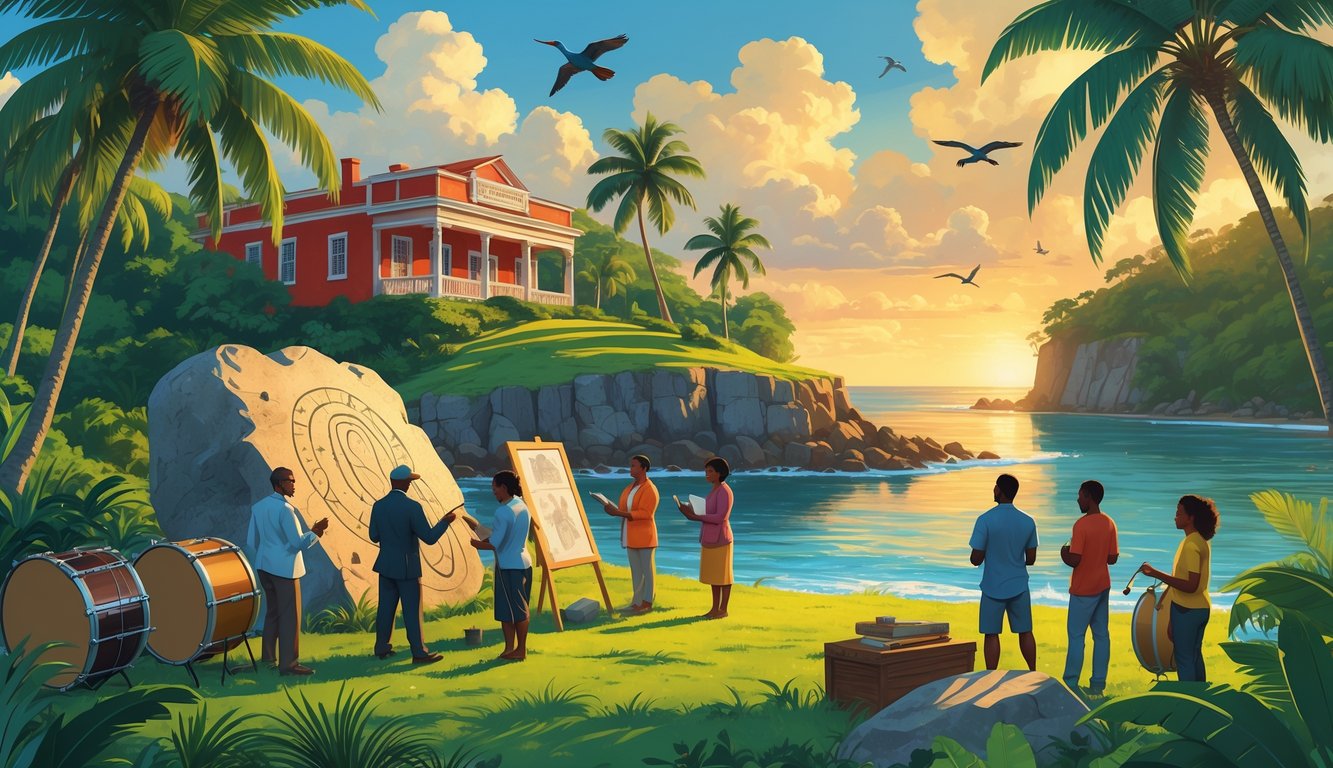
Heritage parks and landmarks in Trinidad and Tobago reflect the islands’ long history and unique culture. Many of these places serve as clues to the past.
Ongoing preservation efforts help protect them for future generations. Tobago has several sites that honor its old traditions and varied history.
Legacy of Tobago’s Heritage Park
One of the most famous is the heritage park near Plymouth, which displays historic buildings, tools, and artwork from the island’s past. Visitors can walk among restored sugar mills and cocoa houses to imagine life centuries ago.
The park often hosts community festivals and cultural events. These experiences help young people connect with traditions and stories that shaped Tobago.
The park is also near Fort King George, a historic fortress with beautiful views and museum displays about colonial history. Most areas are easy to reach by car or taxi, and signs offer directions.
Guided tours are offered for those who want deeper insight into the stories behind the landmarks.
Conservation Efforts and Local Tips
Conservation groups in Trinidad and Tobago work to save both famous and lesser-known landmarks. Organizations like the National Trust focus on repairing colonial buildings and preserving natural sites, such as forests and wetlands.
Visitors can support preservation by using public transportation when possible, which reduces traffic at crowded sites. The Magnificent Seven Historic District and Red House in Port of Spain are two well-known spots that offer access by bus and taxi.
Locals suggest arriving early in the morning to avoid crowds and heat. Respect posted rules, avoid touching old structures, and always ask before taking photos of people or private property.
These simple actions help protect landmarks for future generations.
Modern-Day Attractions Near Historical Sites
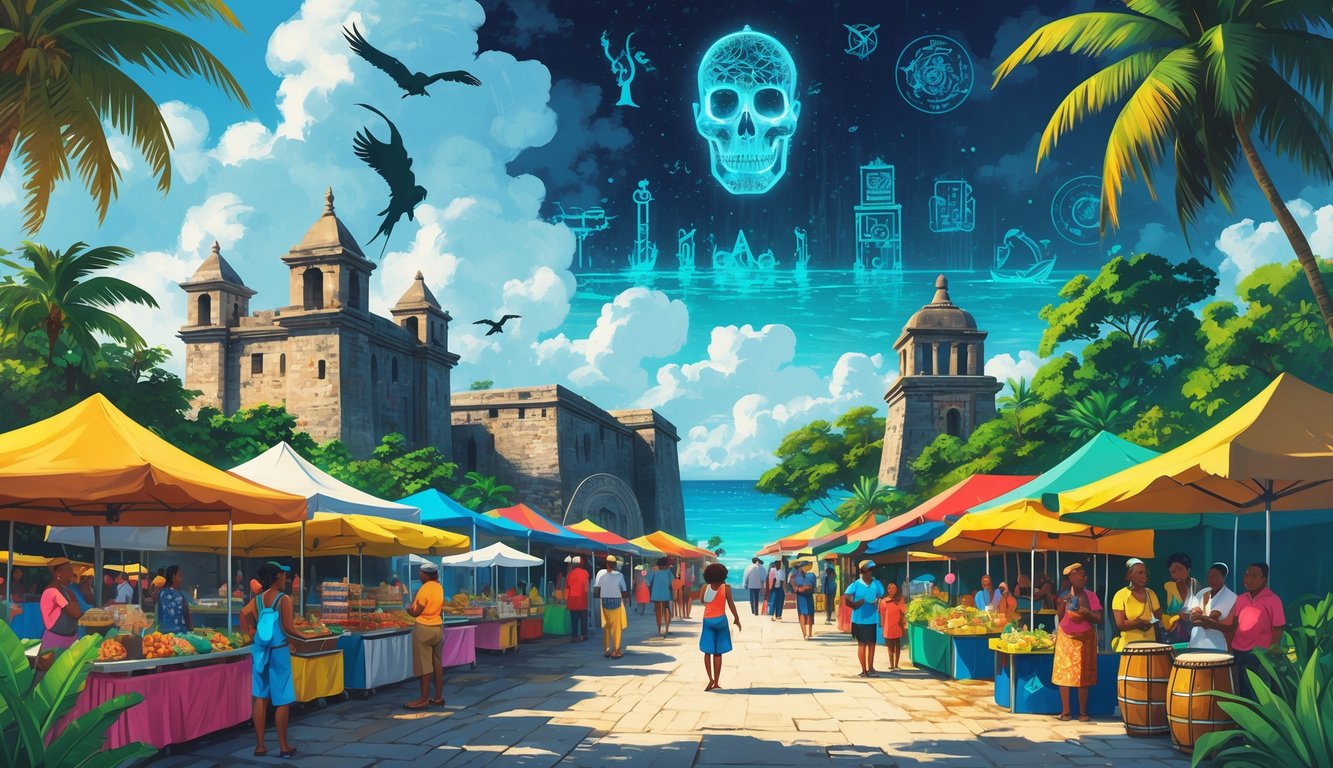
Visitors can find many things to do near Trinidad and Tobago’s historical landmarks. People enjoy exploring with local tours, taking photos, and spending time outdoors with friends and family.
Tours and Guided Adventures
Guided tours are a great way to discover Trinidad and Tobago’s history. Local guides explain the background of key sites, share stories, and answer questions.
Many walking tours go through old streets in Port of Spain, revealing hidden details visitors could miss on their own. Some popular offerings include Caroni Bird Sanctuary tours, which mix nature and history, and Fort George excursions, where guides describe colonial life and the uses of old cannons.
Adventure seekers may also enjoy hiking tours in the Northern Range, which often visit waterfalls and caves near old sugar plantations. Some tours focus on culinary history, letting guests try local food while learning about old markets and traditional cooking methods.
Most tours can be booked online or at visitor centers.
Photography, Picnics, and Popular Experiences
Historical sites make great spots for photography. Magnificent Seven Buildings offer beautiful architecture, while places like the Temple in the Sea and Fort King George provide wide views and unique backdrops for photos.
Many people like to bring a picnic and relax at the Queen’s Park Savannah or the botanical gardens, both near major landmarks. This is a simple way to enjoy the fresh air, chat with friends, or just watch city life.
Other popular experiences include birdwatching near historical estates and old cocoa plantations, and joining local festivals that often take place around these sites. These areas feel lively and are welcoming to both tourists and locals.
For more details, lists of popular historical sites and attractions are available online.
Where to Stay: Popular Hotels and Guesthouses
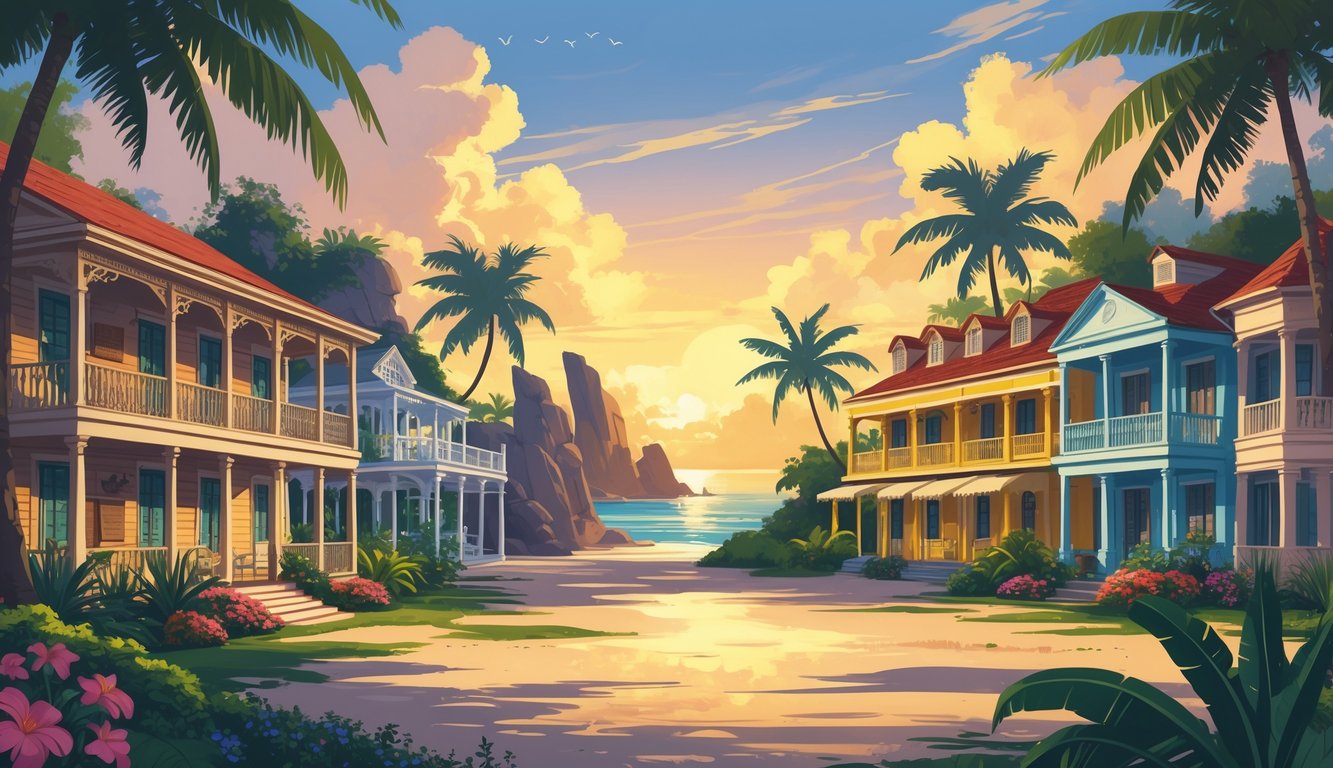
Trinidad and Tobago offer a range of places to stay, from large beachfront resorts to smaller family-run guesthouses. Many accommodations are close to major attractions, making it easy for visitors to explore the islands.
Starfish Tobago and Other Stays
Starfish Tobago Resort is a favorite among travelers who want easy access to beaches and a laid-back atmosphere. Located on the southwest coast of Tobago, the hotel is known for its large pool, ocean views, and family-friendly amenities.
All-inclusive packages are available, which include meals and drinks, making it a convenient choice for families. Nearby, travelers will also find resorts like Coco Reef and Magdalena Grand Beach & Golf Resort.
These hotels offer access to sandy beaches, golf courses, and water sports. For more options, visitors can explore a full list of the top hotels in Trinidad and Tobago, featuring luxury, eco-lodges, and comfortable city stays.
Guesthouse Recommendations and Attractions Nearby
Guesthouses are widely available on both islands for those seeking a local experience. Alicia’s Palace in Port of Spain and Miller’s Guesthouse in Buccoo, Tobago, offer budget-friendly rooms and a welcoming atmosphere.
Many guesthouses provide breakfast and Wi-Fi. Some also arrange guided tours.
Several guesthouses sit within walking distance of historic attractions like Fort King George in Tobago. Others are close to the Queen’s Park Savannah in Trinidad.
Use this guide to guest houses and hotels in Trinidad to find options near beaches, markets, and cultural sites. Staying near these spots makes it easy to explore Trinidad and Tobago’s unique history and natural beauty.