Tonga, a beautiful group of islands in the Pacific, holds secrets that still puzzle historians and travelers today. Some of the biggest historical mysteries in Tonga include the massive stone monuments at Lapaha, lost civilizations, and legends about ancient kings and sacred engineering.
These mysteries invite curious minds to explore how people long ago could build such incredible structures. Many wonder what secrets lie beneath the land.
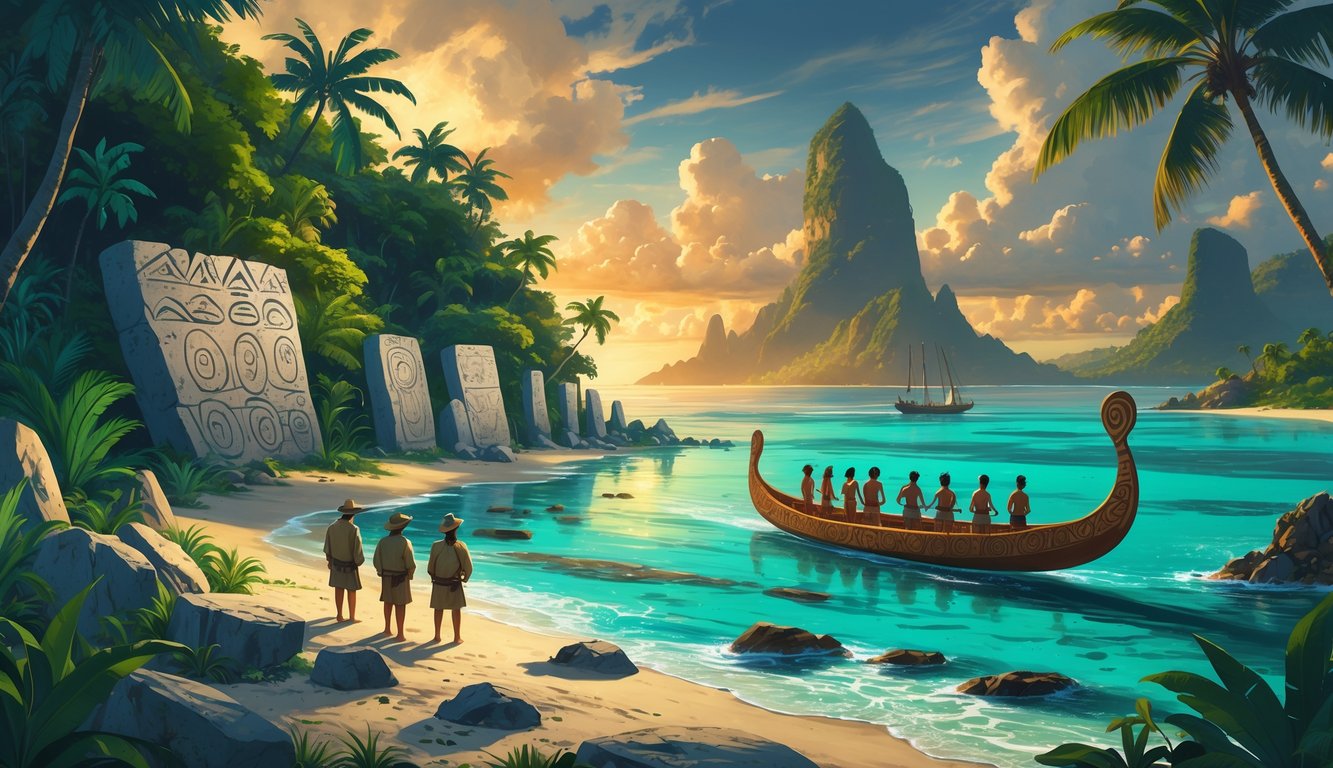
From the exciting tales of the Ha’amonga ‘a Maui trilithon and sacred tombs to stories of a seafaring empire, Tonga’s past is full of wonders waiting to be uncovered.
The history of Tonga is not just about its beautiful beaches. It is also about the legends and lost technology that make these Pacific Islands so interesting.
Old myths mix with new discoveries, making Tonga a place where history still feels alive.
Visitors and locals alike are drawn to these unsolved mysteries, hoping to learn more about how Tonga’s ancient people shaped their home and influenced the wider Pacific.
Ancient Origins of Tonga’s Civilization
Ancient travelers, unique archaeological finds, and the rise of complex social structures shaped Tonga’s early history. These events helped develop a small island group into a powerful force in the Pacific.
Lapita People and Early Settlement
The Lapita people were the first known settlers of Tonga. Archaeologists have found their distinct pottery on several islands, including Tongatapu.
This pottery style is known for its detailed geometric designs pressed into clay by sharp tools. Lapita people arrived in Tonga around 800 BC.
They brought new farming methods and skills in navigation. Their movement marks the beginning of human life in Polynesia.
Early sites show that Lapita groups lived close to the coast. They relied on fishing, gardening, and raising domesticated animals.
These settlers also made stone tools and jewelry. Some materials came from far away, showing early signs of trade and contact with other groups.
Today, their legacy is seen as the root of Tongan society and culture.
Polynesian Migration to Tongatapu
After the Lapita period, seafaring Polynesians continued to move across the Pacific. Tongatapu became a center for these new arrivals because of its fertile land and safe harbors.
Oral histories describe waves of settlers who brought new crops, language, and technologies. Tongatapu quickly grew in importance.
It became the largest and most populated island in Tonga. Settlers built villages, planted root crops like taro, and raised pigs and chickens.
The island’s central location helped people exchange goods and ideas with Fiji, Samoa, and other islands. Long-distance voyaging canoes connected the Tongan islands to wider Polynesia.
This movement shaped the region’s culture and helped form Tonga’s unique identity as a Polynesian center.
Development of the Mu’a Royal Compound
The rise of Mu’a marks a turning point in Tongan history. Located east of present-day Nuku’alofa, Mu’a became the heart of an emerging political system.
It served as the seat of the Tui Tonga, the highest-ranking royal leaders. Mu’a is famous for its monumental earth structures called langi.
These terraced tombs, made from large coral stone slabs, were built for chiefs and kings. The construction of these tombs showed the growing power and organization of Tongan society.
Administrators and royal families lived in or near the compound, creating a center for government and religion. The influence from Mu’a spread across the islands and forged strong connections with distant neighbors.
The Marvel of the Ha’amonga ‘a Maui Trilithon
The ha’amonga ‘a Maui stands as a memorable stone structure on Tongatapu, Tonga. This trilithon draws interest for its mysterious origins, links to ancient myths, and unique engineering features.
Construction and Purpose Theories
Three massive slabs of coral limestone make up the ha’amonga ‘a Maui trilithon. Each upright stone weighs about 20 tons, and the lintel weighs roughly 10 tons.
The method used to transport and raise these stones remains a subject of debate. Archaeologists suggest people built it in the early 13th century.
The layout and position of the stones raise questions about its function. Some historians propose that the structure served as a gateway into royal gardens or as a ceremonial entrance.
Others believe the trilithon had an astronomical role. King Taufa’ahau Tupou IV suggested in 1967 that it could mark the positions of the solstices and equinoxes, which were important for early Tongan society.
Its construction and possible uses make it one of the biggest unsolved mysteries in Tonga. More on the various theories can be read at the Ancient Origins article about Ha’amonga ‘a Maui.
The Legends of Demigod Maui
Several myths and legends are tied to the trilithon, especially involving the demigod Maui. Local stories claim Maui himself carried the giant stones from distant islands and placed them on Tongatapu.
This is why the structure’s name translates to “The Burden of Maui.” In some versions of the legend, Maui built the trilithon as a sign of his strength and power.
These tales connect the stone structure to traditional Polynesian beliefs and explain why it holds a special place in Tongan culture. Legends also mention that the area around the Maui trilithon served as a place for royal meetings and gatherings.
Today, these stories still add a sense of wonder to the monument. You can explore more about the demigod Maui and his connection to the trilithon here.
Architectural Significance of the Trilithon
The ha’amonga ‘a Maui is often called the “Stonehenge of the Pacific” because of its design and purpose. It features a simple trilithon layout: two upright stones holding up a horizontal stone across the top.
Unlike most other ancient Tongan structures, the trilithon uses huge single stones instead of stacked or layered materials. This makes it stand out among Pacific monuments.
Scholars still wonder how the builders managed such a feat without advanced tools. The stone structure continues to attract researchers and tourists.
It is not only a symbol of Tonga’s past but also an example of the impressive engineering in early Polynesian culture. For further information and rare photos, visit this page about the majestic Ha’amonga ‘a Maui Trilithon.
Megalithic Monuments and Stone Structures
Tonga is home to some of the Pacific’s most impressive ancient architecture. The stone monuments here show unique construction skills, deep cultural meaning, and a long history tied to the country’s royal families.
Langi: The Terraced Royal Tombs
The ancient Tongan kings were buried in huge stone tombs called langi. These tombs are terraced and sometimes made in several levels, creating an impressive step-like appearance.
The most well-known are found at Lapaha, which was an important royal center. Langi are a symbol of royal power, with each structure built to honor a specific king or high chief.
The stones used for these tombs were transported from other parts of the island, often over long distances. This shows that the people had strong leadership and organization.
The mala’ekula royal tombs are another example, still used today for royal burials. Visitors see the size and design of the tombs, which tell the story of Tonga’s long history and royal tradition.
These unique constructions set Tongan tombs apart from others in the Pacific.
Construction Techniques Using Coral Limestone
Tongan builders used coral limestone blocks to make their megalithic monuments, especially langi and other royal tombs. These stones can weigh several tons each.
Cutting and moving them without modern tools was an impressive achievement. The coral limestone was either quarried from local areas or collected along the coast.
Workers shaped the blocks so they would fit together well, often without using mortar or cement. This technique is similar to some other ancient cultures, but Tonga’s size and the detail in the stonework make its monuments stand out.
The construction of the Ha’amonga ‘a Maui trilithon shows just how skilled Tongan stoneworkers were. This trilithon uses two upright stones and a massive lintel, and it remains a mystery how they moved such heavy stone pieces.
Symbolic Meaning in Tongan Culture
For Tongans, these monuments are more than just old stones. The langi and megalithic markers are part of the royal family’s story and reflect the connection between leaders and the land.
The shape, layout, and placement of the tombs have deep meaning. Building the langi in levels may have shown how high-ranking families were expected to rise above others in society.
The impressive megalithic monuments give a sense of respect and honor for the people buried inside. Many Tongans believe these structures help keep the memory of their ancestors alive.
Ceremonies at the tombs are still important today. Ancient sites like the Ha’amonga ‘a Maui remain popular and attract visitors interested in Tonga’s history and the lives of its kings.
The Mysteries of Ancient Royal Sites
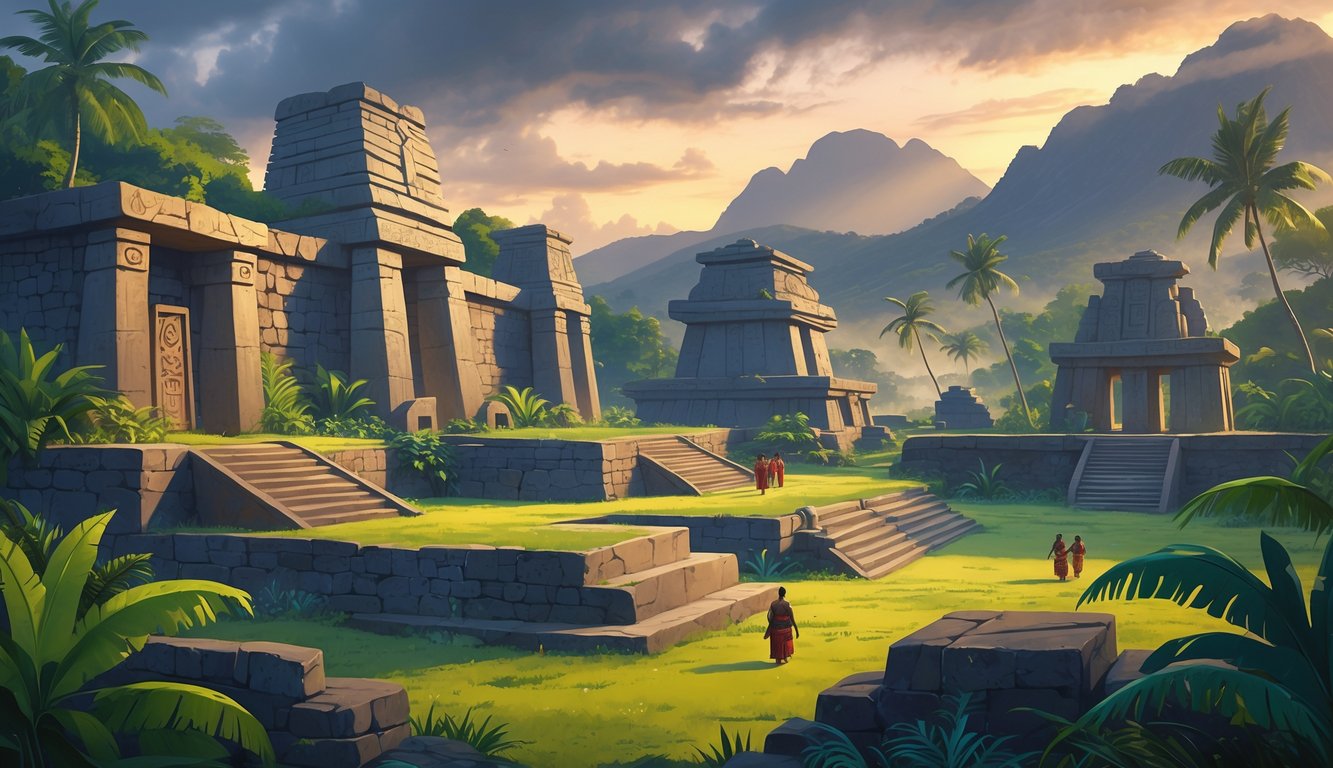
Tonga is home to unique royal sites with a long history full of unanswered questions. These places are known for their ancient architecture, sacred meaning, and the ways they shaped Tonga’s past.
The Royal Palace of Nuku’alofa
The Royal Palace stands next to the ocean in Nuku’alofa, the capital of Tonga. Built in the late 19th century, it remains the home of Tonga’s royal family.
The wooden palace has survived cyclones, political changes, and the effects of time. Many wonder how this large wooden structure has remained in such good condition, considering Tonga’s strong storms and humid weather.
The palace’s simple but elegant Victorian style also raises questions about which designs and materials were chosen for a royal home so far from Europe. Another mystery is the role of the royal compound surrounding the palace.
Few outsiders have entered these grounds, keeping royal traditions secret. Stories about ceremonies, the lives of kings and queens, and hidden treasures inside the palace still capture many people’s imagination.
Visitors can view the palace and its grounds from the outside, but much remains unknown about its inner workings.
Paepae ‘o Tele’a and Its Enigma
In Lapaha, the ancient site of Paepae ‘o Tele’a stands as one of Tonga’s oldest and most mysterious places. This large stone platform once held the tomb of King Tele’a, a famous ruler from the 18th century.
Early Tongan builders stacked smooth coral slabs to create the structure, showing their advanced engineering skills. No one knows exactly how they moved such heavy stones without modern machines.
Some believe the construction involved special rituals or lost ancient technology. The site’s unusual shape and its alignment with sunrise and sunset have led to theories about its connection to Tonga’s old belief systems.
Some researchers think Paepae ‘o Tele’a served as a site for royal ceremonies and possibly astronomical observations. Visitors notice the careful placement of each stone, but the true meaning behind the platform remains a secret.
The Sacred Mala’ekula Royal Tombs
The Mala’ekula Royal Tombs play a central role in Tonga’s royal traditions. Located in central Nuku’alofa, these tombs are where the country’s kings and queens rest.
The tombs stand at the heart of the capital, not far from the royal palace. Stone walls and earth mounds wrap around each royal tomb, holding the remains of past monarchs.
Some tombs date back over 100 years. Tongans consider the area tabu, or sacred, and only a few people can enter and care for these graves.
What happens during burial ceremonies at Mala’ekula is not public knowledge, adding to the mystery. Visitors see only the neat outer walls, decorated with flowers and cloth.
Inside, the details of ancient burial customs and the lives of Tonga’s royal family remain hidden.
Sacred Practices and the Concept of Tapu
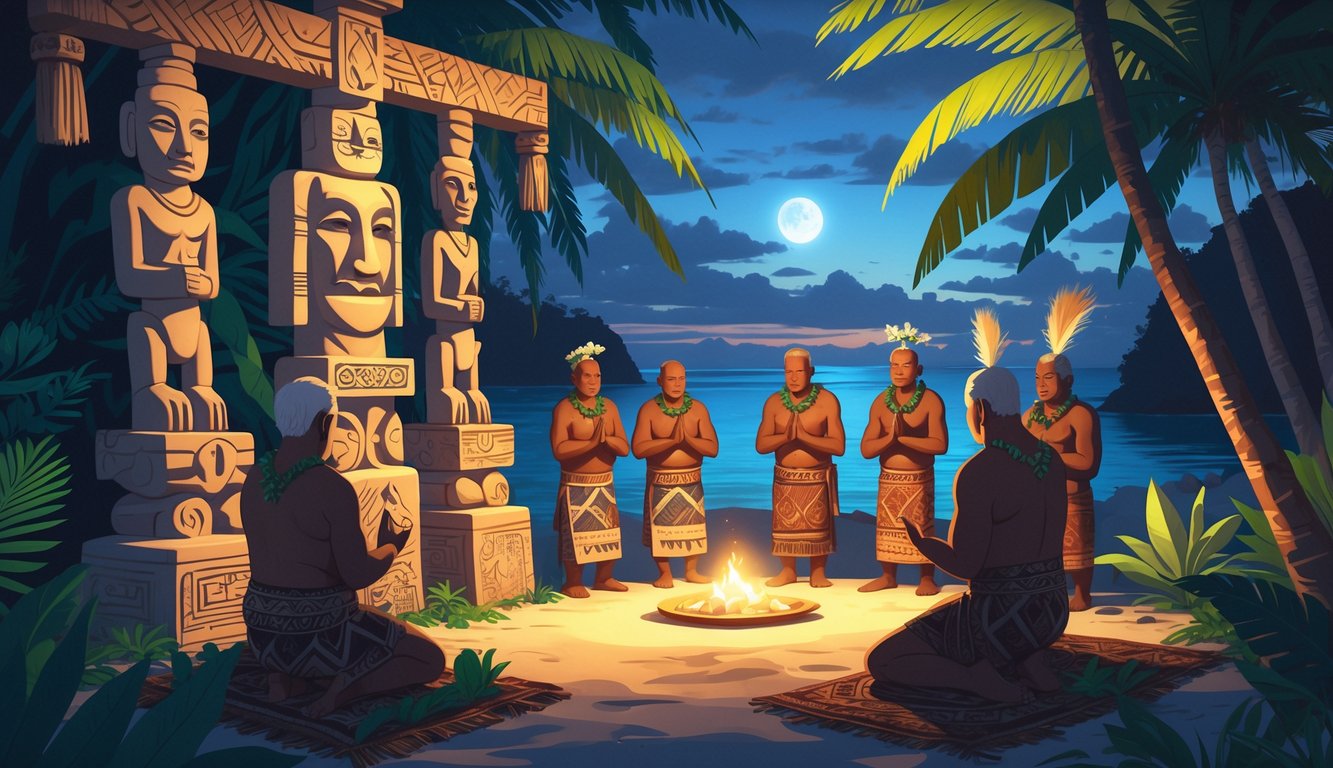
Tapu is a key idea in Tonga that shapes daily life and cultural rules. It describes what is sacred, protected, or forbidden, and helps preserve important traditions.
Origins of Tapu in Tongan Society
The concept of tapu comes from ancient Polynesian beliefs. In Tonga, tapu means something is holy, protected, or off-limits for spiritual reasons.
This idea goes back many centuries, even before Christianity arrived. Tapu is not just about religion.
It is also tied to respecting the land, sea, ancestors, and chiefs. These rules help keep order and show respect for special people, places, and objects.
For example, people might declare certain areas or items tapu during ceremonies or important events. Breaking these rules was believed to bring harm or misfortune.
Tapu still influences some local customs today. The tradition is shared across Polynesia and is the origin of the English word “taboo” (read more about Tapu in Polynesian culture).
Impact on Cultural Heritage
Tapu shapes and protects Tongan cultural heritage. It sets clear rules about what is allowed, helping to safeguard important landmarks, artifacts, and practices.
Many sacred sites and objects have remained untouched because of tapu, giving Tongans strong links to their past. Tapu helps the community remember stories, traditions, and rituals unique to their people.
It influences ceremonies, social behaviors, and daily tasks. These rules have helped Tonga keep many customs despite outside influences.
Today, people respect tapu not only in religious life but also in how they treat the environment and honor their ancestors. Its influence continues in modern cultural events, reinforcing the importance of protecting and respecting heritage (learn about tapu’s role in Tongan spiritual beliefs).
European Encounters and Unresolved Puzzles
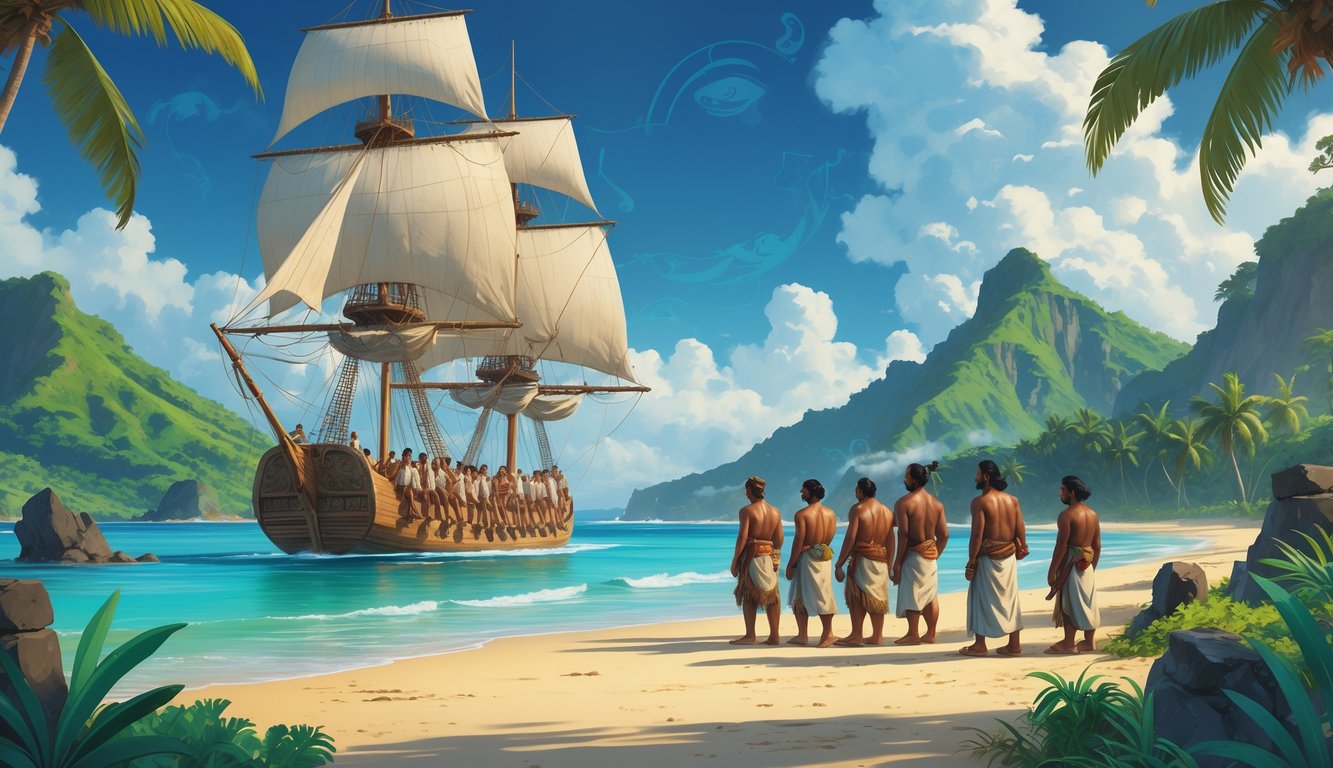
European explorers arrived in Tonga while searching for trade, new routes, and knowledge about the Pacific Ocean. Their encounters left a mix of questions that still interest historians and researchers.
Abel Tasman Landing Site Mystery
In 1643, Dutch explorer Abel Tasman was among the first Europeans to reach Tonga. Historians still debate the exact site where Tasman landed.
Some believe he set foot on Tongatapu, the main island, while others argue for islands like Nomuka. Old maps and Tasman’s journals describe the scene, but his vague notes make it hard to pinpoint the true landing site.
He recorded seeing friendly locals and tall coconut trees, which are common throughout Tonga. This did not help narrow down the location.
Knowing the real site could help people better understand early South Pacific navigation and first contact between Europeans and Tongans. The mystery of Tasman’s landing continues to draw researchers hoping for a breakthrough (historic unsolved mysteries).
Captain Cook’s Encounters with Tongans
British explorer Captain James Cook visited Tonga several times between 1773 and 1777. He called the islands the “Friendly Islands” because of the warm welcome he received from the local chiefs and people.
However, the true nature of these encounters is more complex. While Cook described generous feasts and cheerful gatherings, later research suggests that some Tongan chiefs might have plotted against him.
There was an alleged plan to attack Cook and his crew, but it was never carried out. Historians still debate the details of these plans.
Questions remain about exactly where Cook landed and how much the local population knew about the broader Pacific and other European voyages. These puzzles show the difficulties of reconstructing South Pacific history from journals, maps, and oral traditions.
Events during Cook’s stays have left a legacy of curiosity, blending legend with recorded events (unsolved historical mysteries).
Unexplained Archaeological Sites
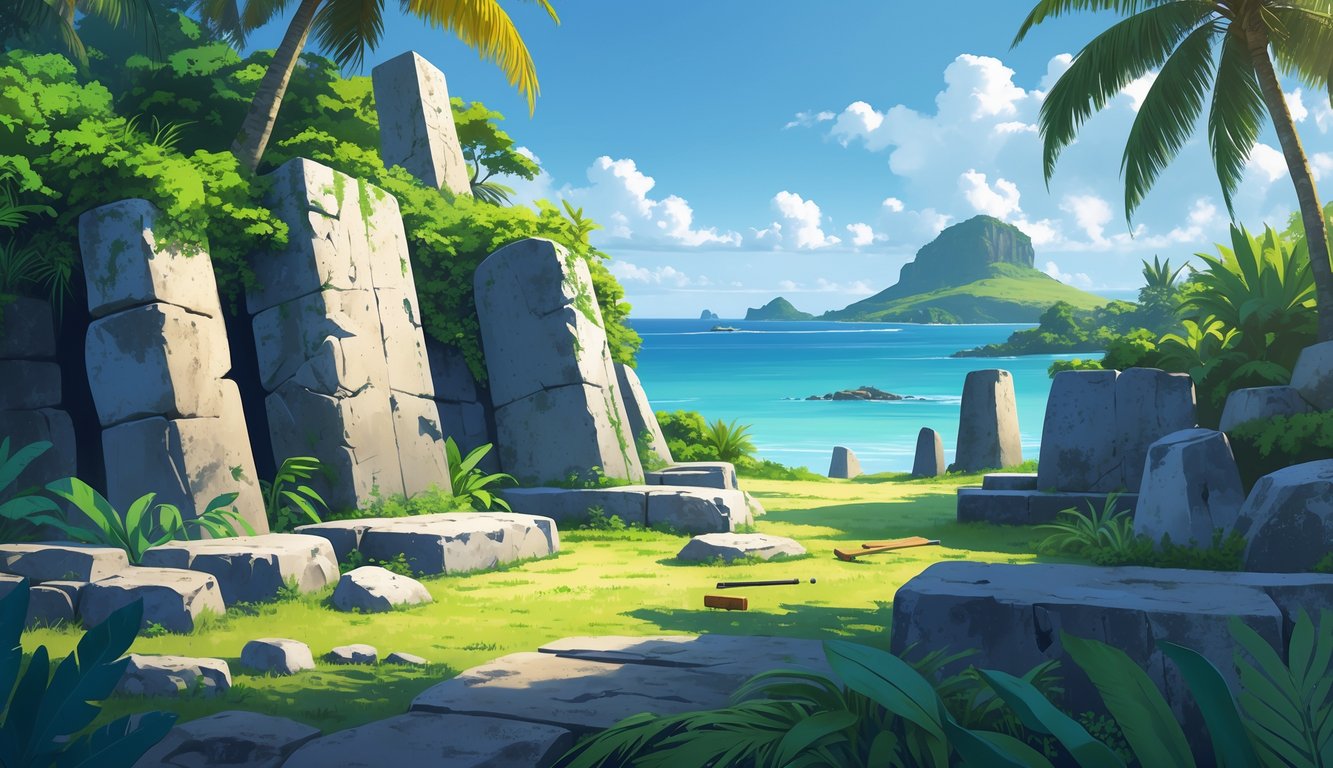
Tonga has some of the most interesting ancient remains in the Pacific. Many locations hold mysteries about how early people moved massive stones and left artefacts that still puzzle modern archaeologists.
Positions of Forgotten Stone Structures
Tongatapu, the main island of Tonga, is home to impressive stone monuments. The most famous is Haʻamonga ʻa Maui, made from three huge limestone blocks.
Two upright stones stand about 5 meters tall, each weighing around 30-40 tons. A heavy stone block lays across their tops, making a structure that looks similar to Stonehenge.
People wonder how early Tongans moved and placed these stones without metal tools or modern machines. Legends suggest the demigod Maui built it, but scientists believe it was created around the 11th century AD.
Other stone structures, like the ancient Langi royal tombs, show careful planning and stonework.
Hidden Artefacts in Tongatapu
Archaeologists have found artefacts buried under layers of earth on Tongatapu. These objects include tools made from shell and coral, pottery shards, and old carvings.
Some artefacts do not match the styles or materials usually found on the island, causing experts to debate their origins. Many items are discovered by accident during building or farming.
Rare relics often end up in local museums, but some remain hidden in private collections or lost among the fields. Researchers continue to search for clues about the island’s earliest people and why certain objects are found far from where they were likely made.
Tonga’s Myths and Legend Keepers
Tonga holds a rich tradition of storytelling that keeps its ancient beliefs and legends alive. Tales about clever tricksters and skilled storytellers help Tonga’s cultural identity thrive.
Trickster Figures in Tongan Lore
Tricksters play a memorable role in Tongan myths and legends. These clever characters, often spirits or demi-gods, use their intelligence and wit to outsmart stronger beings.
They bring both mischief and wisdom, reminding people about the value of cleverness over brute force. Trickster stories, passed down for generations, share lessons about fairness, humility, and respect.
Some tales show how a trickster might challenge the gods by bending the rules and finding creative ways to solve problems. Trickster figures often blur the line between good and bad, making the stories engaging and relatable.
These characters appear in many forms—sometimes animal, sometimes human, and always unpredictable. Their stories remain popular during family gatherings and festivals, connecting the past to the present (Tongan mythology).
Preserving Oral Histories
Oral history has protected Tongan culture for generations. Skilled storytellers, called punake and talatupu’a, have passed down legends, values, and historical events without writing them down.
They use song, poetry, and chanting to make each story memorable. Community elders serve as guardians of these tales.
Through their words, stories of Tongan gods, spirits, and creatures come alive for younger generations. This keeps important traditions strong even as Tonga changes in modern times.
Efforts to record and share these oral histories have grown in recent years. Some storytellers also blend traditional myths with current events to keep the culture fresh and relevant (Tongan narrative).
Contemporary Research and UNESCO Efforts
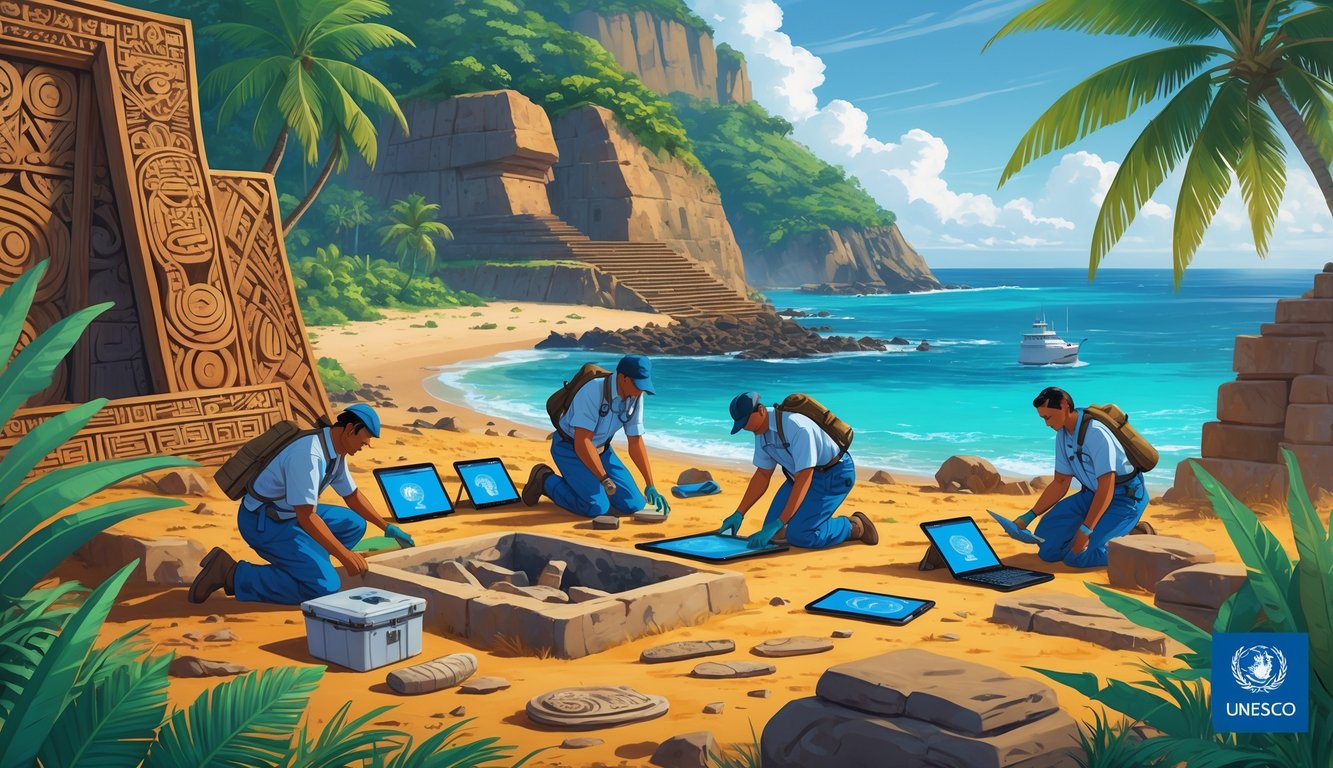
Researchers and global organizations are working to better understand Tonga’s past. New investigations help protect key sites and preserve cultural heritage for future generations.
Current Archaeological Investigations
Teams of archaeologists continue to explore Tonga’s ancient capitals and royal compounds. One important site is the Ha’amonga ‘a Maui Historic Park, known for its massive stone trilithon.
This area draws attention for its unusual stone structures and its links to early Tongan rulers. Archaeologists use tools like ground surveys, mapping, and radiocarbon dating.
Experts study artifacts found in royal compounds, burial mounds, and ancient villages. This research helps confirm dates and reveal how ancient Tongans lived.
Archaeologists often work with local communities to gather oral histories. By doing this, they gain a better sense of how cultural beliefs and practices have changed.
These discoveries are shared with the public, helping everyone appreciate Tonga’s unique history.
UNESCO World Heritage Initiatives
UNESCO has played a big part in protecting Tonga’s most important historic sites. The ancient capitals, especially the Ha’amonga ‘a Maui site, are on the UNESCO Tentative List for World Heritage status.
This means experts are studying them and considering them for official recognition. UNESCO also supports efforts to document Tongan traditions, dances, and language as part of its work with Intangible Cultural Heritage.
These projects help keep Tongan stories and customs alive. They also encourage respectful tourism and educational programs in local schools.
UNESCO, the Tongan government, and local groups work together to preserve archaeological sites. This partnership helps protect both landmarks and cultural identity.
Future Directions in Solving Tongan Mysteries
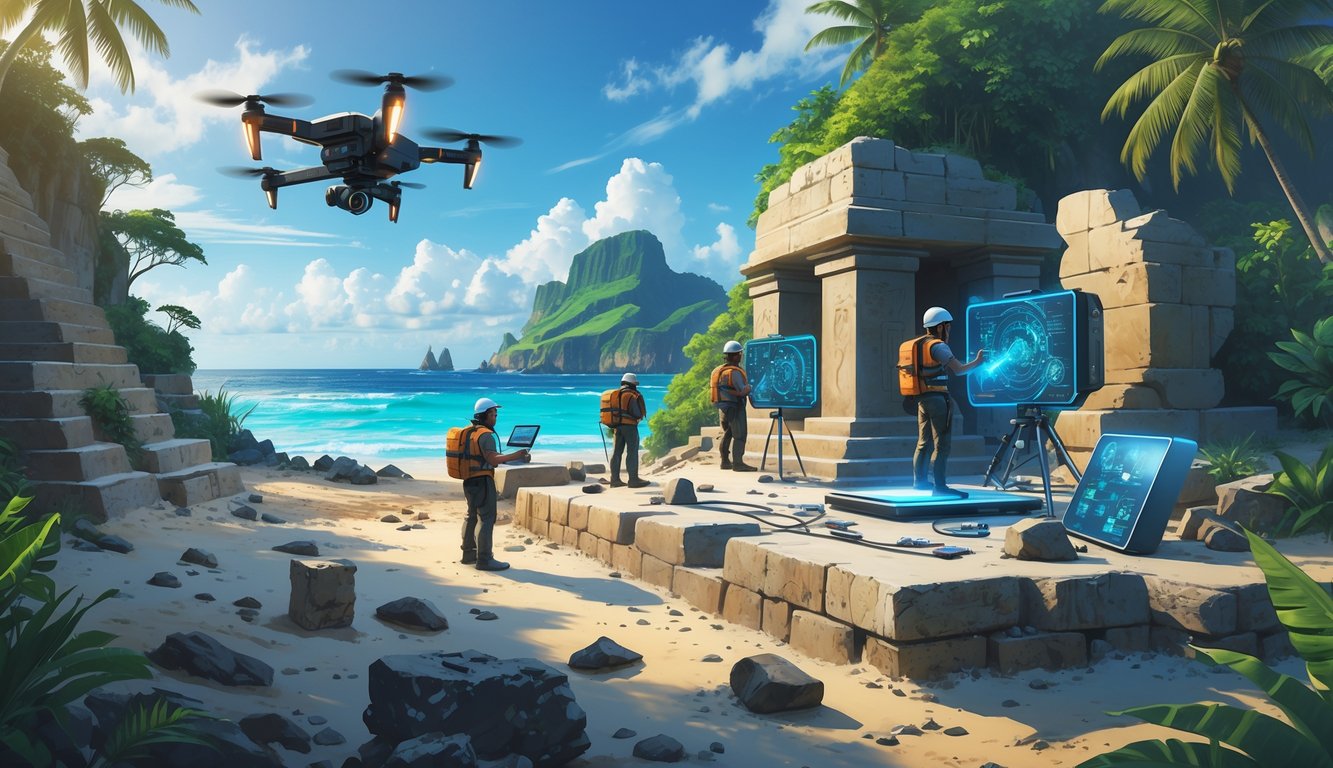
Tonga’s rich history and mysterious sites like the Haʻamonga ʻa Maui need careful study for deeper understanding. Involving local people and using modern tools can reveal new knowledge about these mysteries.
Community Engagement in Preservation
Local communities in Tonga protect historic places in important ways. By sharing stories from elders and organizing workshops, people pass down traditions that might otherwise be lost.
This keeps cultural knowledge alive. Villagers help clean and repair sites, such as ancient monuments and burial grounds.
Schools add activities about Tongan history to their lessons. This ensures kids learn about their roots from a young age.
Benefits of engagement:
- Protects heritage from damage and loss
- Connects youth to traditions
- Encourages pride in local history
When communities lead, their efforts support researchers as well.
Potential Technological Advances
Recent technology offers powerful tools to study Tonga’s mysteries.
Drones can map ruins that are hard to reach. They create detailed images from above.
Ground-penetrating radar spots hidden features below the earth. This gives clues about ancient structures without digging.
Scientists use digital 3D models to show what places like the Haʻamonga ʻa Maui may have looked like in the past.
DNA tests of ancient remains might reveal details about early settlers. These tests can show their journeys across the Pacific.
New technology can:
- Reveal locations of lost sites
- Document changes over time
- Share findings quickly with the world
Tech tools, when used with respect for tradition, support discovery in the history of Tonga.