The United Arab Emirates is home to fascinating mysteries that go far beyond its modern skyscrapers and vibrant cities. Ancient sites like Saruq Al Hadid still keep archaeologists and historians guessing about the lives and secrets of people who lived in the region thousands of years ago.
The UAE’s deserts and mountains reveal lost artifacts and puzzling ruins each year. These discoveries add new questions to the country’s story.
Many travelers and locals want to know how these historical wonders shape the country’s identity. From tombs and hidden settlements to unexplained objects found deep in the sand, there is much left to discover.
The UAE is full of dramatic stories waiting to be uncovered, like those connected to mysterious places such as Saruq Al Hadid.
Ancient Civilizations and Early Settlements
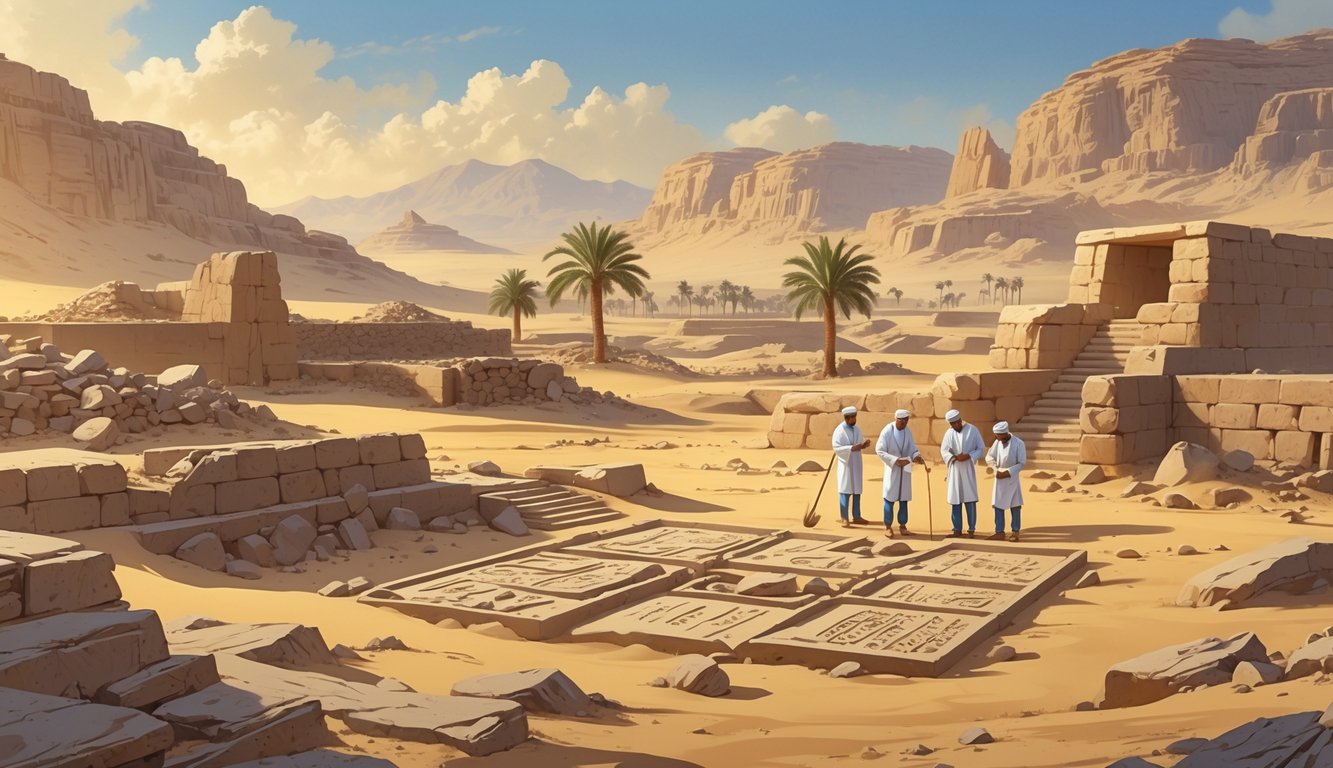
The United Arab Emirates sits at an important crossroads in the Arabian Peninsula. Over thousands of years, different communities lived here, trading, building, and leaving behind clues at ancient sites.
These clues help show how people survived and grew.
Stone Age Habitation
Some of the earliest proof of human occupation in the UAE comes from the Stone Age. Archaeologists have uncovered tools, spear points, and remains of campfires.
These finds show people lived in both the mountain valleys and coastal regions. Human remains found in several parts of the region date back as far as 125,000 years.
People might have moved through the UAE during different waves of migration. Key archaeological discoveries include stone tools made from flint and animal bones.
These finds give insight into hunting and daily life. Areas like Jebel Faya, Jebel Hafeet, and the Marawah Island caves all hold evidence of Stone Age habitation in the UAE.
Ancient people adapted to their environment and tracked animals for food. Simple shelters built from stones and animal skins probably gave protection from the sun and wind.
Ubaid Period Connections
During the Ubaid Period, around 6,500 to 3,800 BCE, contacts between what is now Iraq and the Arabian Peninsula shaped early settlements across the UAE. Pottery and other artifacts found at sites like Dalma Island and Marawah Island suggest a wider regional network.
Settlements from this period often show Ubaid-style pottery, painted with geometric designs. These pots were not made locally, so people likely traded for them or brought them from other places.
People probably used these pots to store water, grains, and food. This hints at more settled lifestyles than before.
There is also evidence of simple round houses with stone foundations. These structures hint at Ubaid period connections with other cultures.
The discoveries point to early seafaring and exchange along the coasts of the Arabian Gulf.
Neolithic Trade and Lifestyle
The Neolithic era, starting around 8,000 years ago, marked a time of change. People began new ways of farming, trading, and building.
Early residents of the UAE started to trade with nearby regions, especially across the Arabian Gulf and with southern Mesopotamia. Findings at archaeological sites, like Umm Al Nar and Ghagha Island, reveal the remains of circular tombs, homes, and early wells.
People kept animals and grew simple crops in the valleys. Fishing and pearl diving also became important in daily life.
Neolithic people used stone and shell beads, pottery, and tools. Some of these items came from faraway lands.
Explorers have found that early UAE settlements were part of a busy network of trade. Early villages grew around trade routes and water sources.
Mysterious Bronze Age Cultures of the Emirates
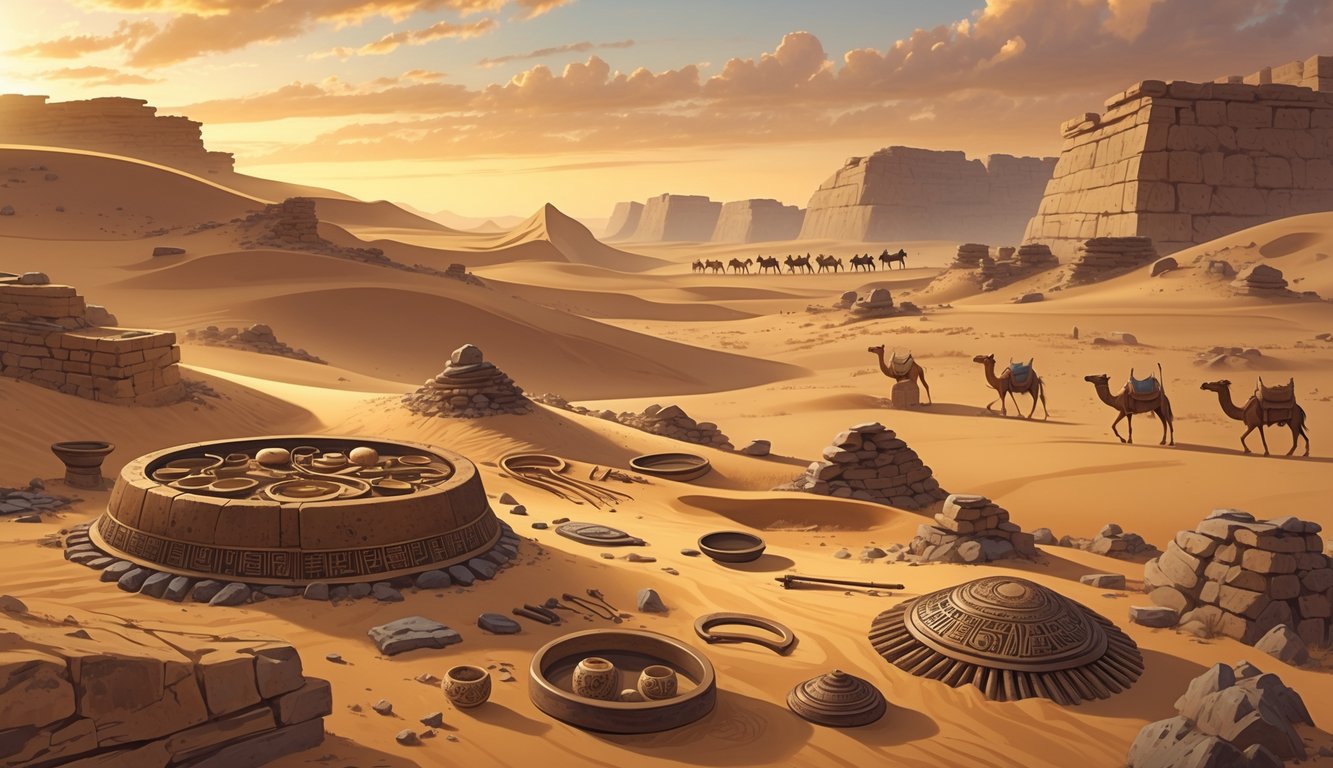
From the rich pottery of ancient settlements to the tombs that dot the desert, the Bronze Age in the Emirates left behind enduring mysteries. Important sites and artifacts reveal early civilizations, trade, and funerary practices.
Umm Al Nar Civilization
The Umm Al Nar civilization flourished between 2600 and 2000 BCE. It is most famous for its large circular tombs, many of which were found on the island of Umm Al Nar and in Abu Dhabi.
These tombs are built from neatly cut stones and sometimes contain the bones of dozens of people. Archaeologists discovered unique pottery, beads, and vessels inside the tombs.
Many objects show influences from Mesopotamia and the Indus Valley. Umm Al Nar people traded widely.
Archaeological excavations show that the society relied on fishing, herding, and trade. The Umm Al Nar culture remains one of the region’s most puzzling ancient societies.
Jebel Hafeet Tombs and Enigmas
Jebel Hafeet, a mountain near Al Ain, is surrounded by hundreds of ancient tombs dating back to around 3000 BCE. These beehive-shaped tombs are among the earliest burial sites in the Emirates.
Builders used rough stones stacked in a circular shape to make the tombs. Archaeological finds here include decorated pottery and personal items.
These artifacts give clues about the daily lives and beliefs of the people. Some graves appear to have been reused, which adds more questions about burial customs over generations.
Unlike the larger Umm Al Nar tombs, Jebel Hafeet tombs held only a few individuals. Why these graves were so small, and why the tradition changed later, is still debated.
The area remains important for understanding early Bronze Age settlements and archaeological discoveries in the UAE.
Wadi Suq Culture
The Wadi Suq culture occupied the Emirates from about 2000 to 1300 BCE. People of Wadi Suq lived in small, scattered communities near wadis (dry riverbeds).
Their pottery was plainer than the decorated Umm Al Nar styles. Wadi Suq ceramics show skill in design and function.
Archaeologists have found metalwork, like weapons and jewelry, from this era. These items hint at improved technology.
Wadi Suq burial sites were simple rectangular graves, often containing only a few personal items. The reasons for these cultural changes are not completely clear, making the Wadi Suq culture another mystery of the Bronze Age in the Emirates.
Iron Age Enigmas and Water Innovations
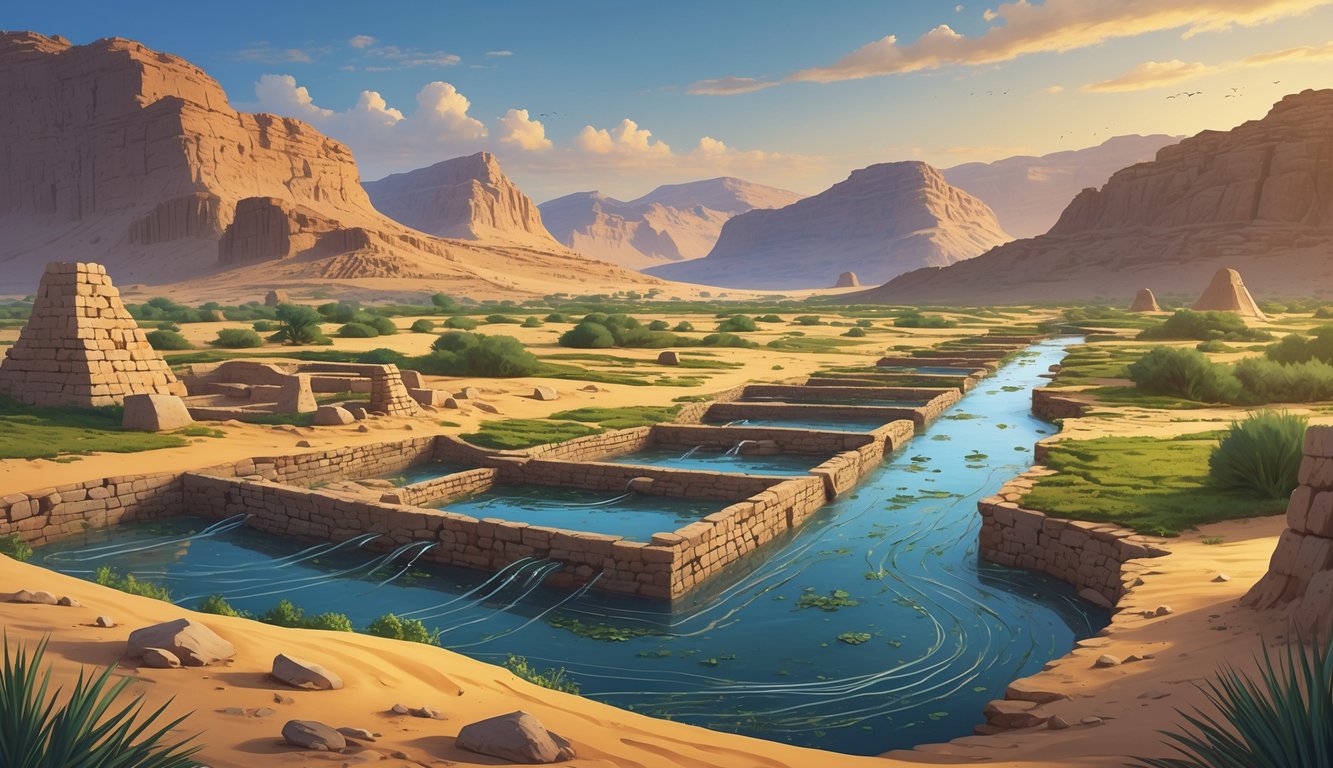
The United Arab Emirates saw major changes during the Iron Age. People developed new ways to live and manage water in a harsh desert climate.
Iron Age Settlements
The UAE’s Iron Age spanned from about 1200 to 300 BCE. There were three phases known as Iron Age I, II, and III.
Each phase brought new ideas for urban planning and community life. Key sites like Saruq Al Hadid in Dubai show how people worked with iron, copper, and other metals.
They produced tools, weapons, and jewelry, showing advanced technology for the time. The layout of houses and workshops often followed organized patterns.
These patterns highlight early urban planning ideas. Iron Age settlements reveal living areas, workshops, graves, and storage rooms.
These sites help researchers learn how people organized their cities and lived daily life. To learn more, check out information on the Iron Age in the UAE.
Falaj Irrigation Systems
One of the most impressive innovations from the Iron Age in the UAE is the falaj irrigation system. Falaj systems are underground channels that transported water from far-off sources to villages and farms.
They used gravity to carry water across long distances under the sand. This made farming possible even in dry regions.
Villages grew larger because of these water systems. The presence of falaj systems shows that people in the region valued innovation and understood complex engineering.
Archaeologists often find falaj remains at ancient sites. These systems improved crop production and helped build stronger communities.
Today, the falaj is a sign of ancient technical skill and smart urban planning. See more details about these water systems under Archaeology of the UAE.
Lost Coastal Communities and Maritime Trade
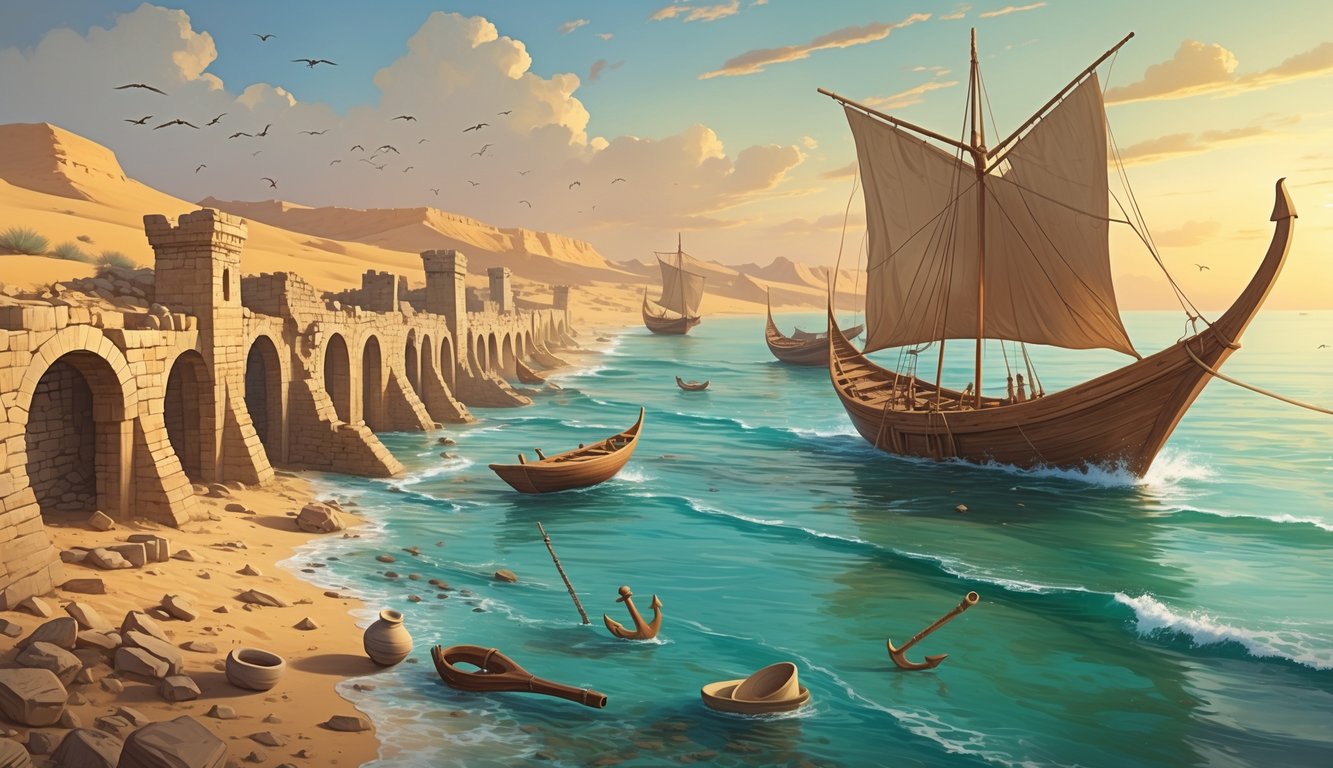
The United Arab Emirates has a long history linked to the sea. Ancient settlements along the Arabian Gulf relied on fishing, trading, and pearling to survive and grow.
Pearl Diving Traditions
For centuries, pearl diving shaped the culture and economy of UAE coastal communities. Men spent months at sea, diving for natural pearls, while families waited at home for their safe return.
Divers worked in teams, using simple gear like nose clips and weighted stones. Life on the boats was tough, marked by the dangers of deep dives and sudden storms.
Pearl diving required skill and bravery. Divers risked their lives for valuable treasures.
The best pearls were prized not only by local people but also by traders from India and Europe. Pearl diving also shaped local festivals, songs, and stories.
These traditions have faded but remain an important part of Emirati heritage.
Pearling Industry Mysteries
The mysteries around the pearling industry continue to puzzle historians today. Ancient records suggest that pearling villages once lined the shores of the Arabian Gulf.
Many sites have not been fully excavated or explained. Some settlements disappeared suddenly.
Changing sea levels, harsh weather, or disease could be reasons, but much is still unknown. Old maps and scattered ruins hint at a once extensive network of trade links.
The lost communities raise questions about their daily lives and why the industry declined so quickly in the early 1900s. Artifacts found in these areas point to regional and international trade.
These finds show connections across the Indian Ocean. More information can be found on the archaeology of the United Arab Emirates.
The Ancient Incense Route and Trade Networks
The Ancient Incense Route once linked the lands of today’s United Arab Emirates to faraway regions. This trade network carried luxury goods like frankincense and myrrh.
These trade routes shaped connections between distant cultures and powerful cities.
Links with Mesopotamia and India
Trade routes started in South Arabia and wound through the Arabian Peninsula to Mesopotamia, home to cities like Babylon and Ur. Caravans loaded with incense, spices, and precious items crossed long distances.
Merchants moved through desert paths, stopping at marketplaces in ancient settlements for water and supplies. The incense route stretched from Arabia all the way to India.
Spices, textiles, and exotic goods flowed both ways. For the UAE, this meant seeing products from India such as pepper, cotton, and jewels.
In return, merchants shipped incense and pearls northward. These ties brought new ideas and technology into the region.
The UAE became a crossroads between east and west. Trade with India and Mesopotamia also led to shared customs and languages.
Written records and ancient pottery found in the UAE show how strong these ties were. Details on the evolution of the incense trade route help explain how vital this link was.
Red Sea and Mediterranean Connections
The trade network stretched west across the Red Sea, reaching Egyptian ports and then the Mediterranean world. Ships carried incense, spices, and gold from Gaza to Alexandria.
These maritime routes gave traders a safer and faster option than land travel. Merchants and sailors played important roles by transporting goods by sea from southern Arabia to Roman and Greek cities.
They stopped at key ports to sell products or buy new ones. The incense route brought together a mix of cultures at each hub.
Unsolved Mysteries of Early Writing and Social Structures
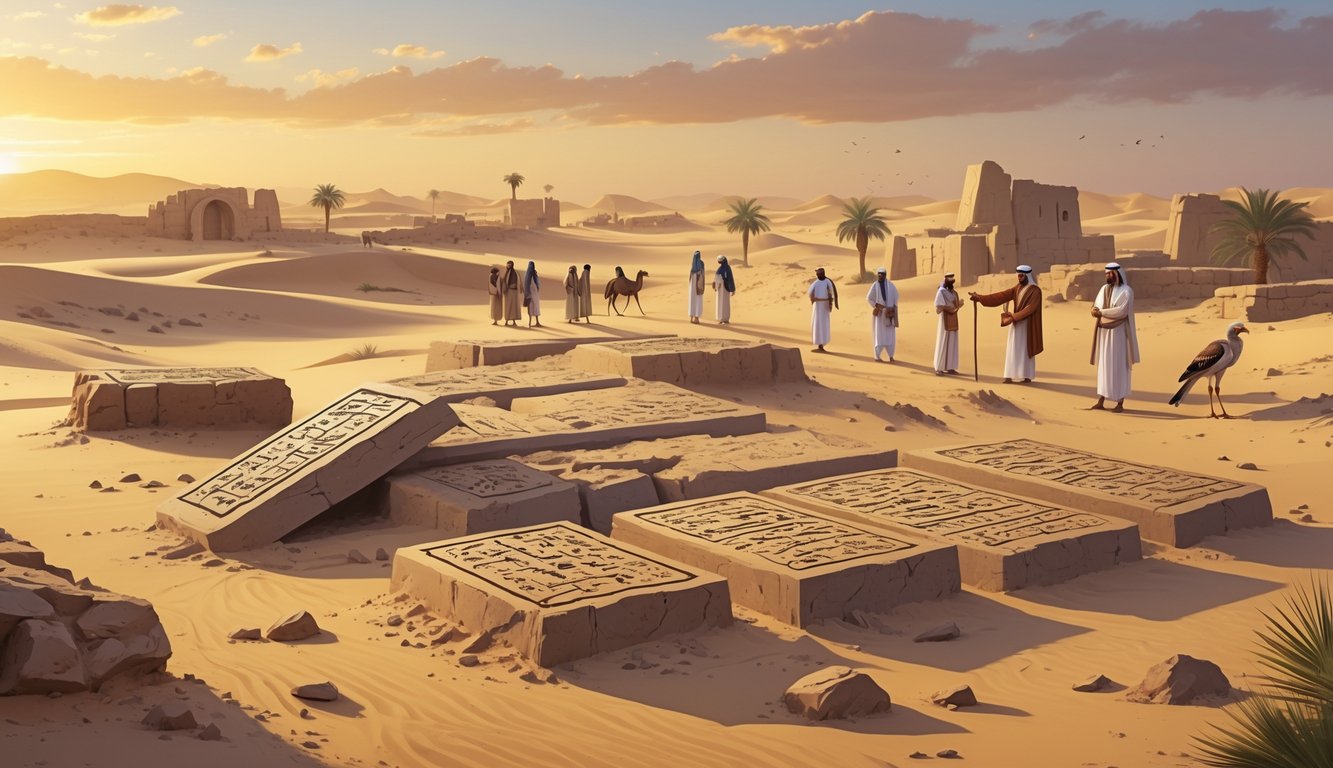
The United Arab Emirates holds secrets about the origins of ancient scripts and early ways of life. Researchers are uncovering clues about writing methods and how tribes organized their daily lives.
Origins of Writing in the Region
Archaeologists have found symbols and markings on pottery and stone in the UAE that date back thousands of years. It is unclear if these signs were part of a full writing system or just used for trade and counting.
Some items from places like Umm Al-Nar hint at shared writing influences with Mesopotamia and the Indus Valley. Unlike cuneiform or hieroglyphic scripts, the purpose of these local marks is still debated.
Were they just for recording goods, or did they carry stories? The lack of long texts leaves many questions about early writing and its spread.
Examining trade routes and settlements gives more clues, but many mysteries remain.
Tribal Systems and Social Hierarchy
Tribal connections and leadership shaped society in the Emirates. Different tribes developed ways to settle disputes, share resources, and choose leaders.
Sometimes, tribes formed alliances to manage water rights or defend land. Social structure included roles for chieftains, elders, and family members.
Women often managed tasks like inheritance or keeping social ties strong. Many customs passed down orally, making it difficult for historians to trace exact rules.
Old stories, burial sites, and rare written agreements provide clues about early social systems. Much about daily life and government in ancient UAE tribes remains unknown.
The Christian Monastery on Sir Bani Yas Island
The Christian monastery on Sir Bani Yas Island is a unique historical site in the United Arab Emirates. This site gives rare evidence of early Christian communities and shows how people lived centuries ago.
Discovery and Archaeological Investigations
In 1992, archaeologists uncovered a Christian monastery on Sir Bani Yas Island near Abu Dhabi. The site contains the remains of a church, monastery, and several courtyard houses.
Experts estimate these structures date back to the 7th and 8th centuries CE. Archaeologists found plaster crosses, dormitories, and other signs of Christian life.
This is the only known ancient Christian site in the UAE. The church layout is similar to others in the Arabian Gulf.
Visitors can now explore this ancient monastery complex, which was hidden under sand for centuries.
Islamic Era Transformations and Maritime Dominance
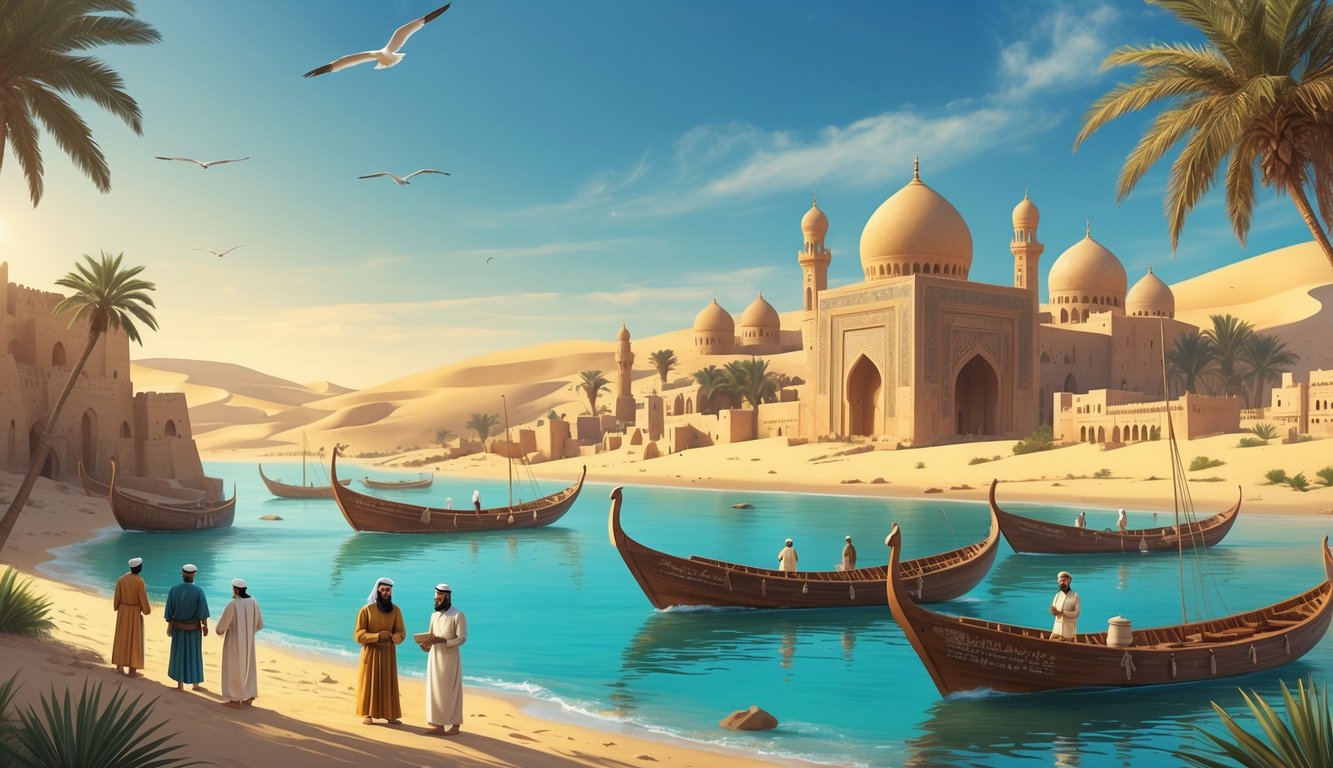
The arrival of Islam and later European involvement changed life along the UAE’s coasts. New settlements grew, trade shifted, and foreign powers fought for control over ports and shipping lanes.
Islamic Period Settlements
Islam reached the region in the early 7th century CE. Coastal communities like Julfar near modern Ras Al Khaimah became key trading centers.
These settlements linked the Arabian Peninsula to India, East Africa, and Persia. Islam brought religious changes, stronger trade links, and new administrative systems.
Archaeological digs show that UAE communities adapted to new customs and took part in wider trade across the Indian Ocean. Leaders like Amr bin al-As helped bring Islam to the area.
Their influence appears in ancient mosques and forts. This period set the stage for future coastal development.
Portuguese and Trucial States Influence
In the early 1500s, the Portuguese reached the Arabian Gulf and took over parts of the UAE’s coastline. They built forts and controlled key harbors for about 150 years.
This shifted local power and made maritime defense important for settlements. By the 1800s, British influence grew as they signed agreements with local rulers, creating the Trucial States.
These pacts focused on stopping piracy and keeping trade safe, especially for ships going to India. The Trucial States period began modern administration and led to the formation of the United Arab Emirates.
The Rise of Modern Emirates and Historic Turning Points
The transformation of the United Arab Emirates began with key events such as the discovery of oil and the creation of a new national identity. These changes shaped daily life and brought world recognition to Abu Dhabi and Dubai.
Discovery of Oil and Economic Diversification
The discovery of oil in Abu Dhabi in the late 1950s brought rapid change. Before oil, the region relied on fishing, pearling, and trade.
Oil exports began in the 1960s, and wealth increased quickly. Sheikh Zayed bin Sultan Al Nahyan used oil profits to build roads, schools, and hospitals.
Key cities like Dubai and Abu Dhabi became centers for progress. Oil income funded public services and infrastructure for citizens.
Leaders encouraged economic diversification to reduce reliance on oil. The UAE developed strengths in finance, tourism, technology, and trade.
Today, Dubai is a global business hub and the UAE economy is not limited to oil.
| Era | Main Activity | Key Leaders |
|---|---|---|
| Pre-1960s | Fishing, Pearling | Tribal leaders, Bani Yas |
| 1960s–1970s (Oil Era) | Oil Production | Sheikh Zayed bin Sultan Al Nahyan |
| Post-1970s | Diversification | Modern Prime Minister, Vice President |
Formation of the United Arab Emirates
On December 2, 1971, six emirates united to create the United Arab Emirates, with Ras Al Khaimah joining soon after. This ended the British protectorate period and started a new era.
Sheikh Zayed bin Sultan Al Nahyan, the first President, encouraged cooperation and a shared vision. Dubai, Abu Dhabi, and the other emirates agreed to work together under a single constitution while keeping their local rulers.
The new country quickly built systems for education, healthcare, and defense. This unity helped the UAE become a stable and resilient nation.
For more details, see this timeline of UAE history since its founding in 1971.
Enduring Mysteries and Ongoing Archaeological Finds
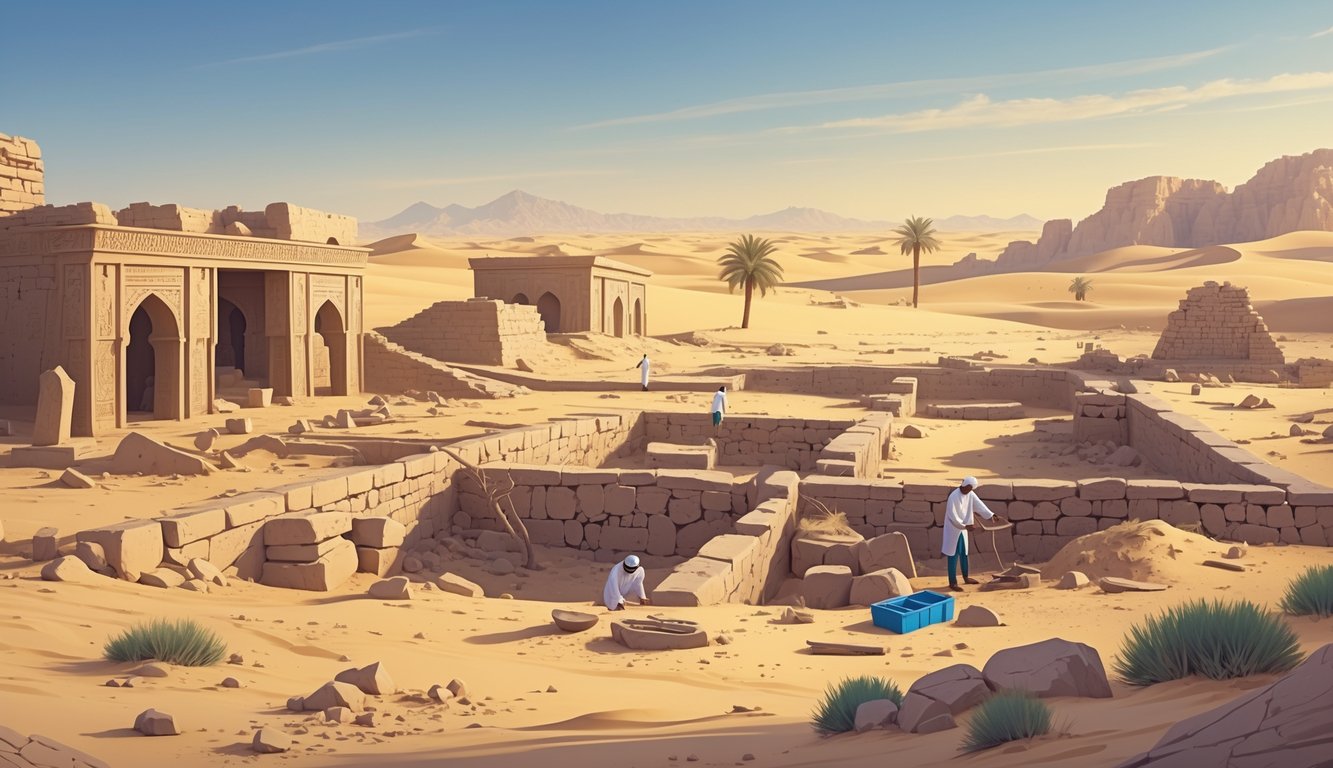
Archaeologists keep uncovering new sites and artifacts in the United Arab Emirates. These discoveries offer clues about ancient societies and how cities changed over time.
New Discoveries in Al Ain and Ras Al Khaimah
Recent digs in Al Ain have revealed ancient tombs, stone tools, and pottery. These finds point to some of the oldest settlements in the region.
The Hili Archaeological Park in Al Ain contains stone towers, round tombs, and irrigation systems thousands of years old. In Ras Al Khaimah, workers have found forts, petroglyphs, and evidence of pearl trading.
Copper artifacts suggest trade links went far beyond the UAE. Every year, more dwellings and tools are unearthed, showing the importance of these areas for early trade and daily life.
| Site | Main Finds |
|---|---|
| Hili, Al Ain | Tombs, towers, irrigation systems |
| Ras Al Khaimah | Forts, petroglyphs, trade artifacts |
These discoveries help researchers understand how people adapted to desert life and managed resources.
The Unsolved Questions of Urban Planning and Development
Urban planning in ancient UAE settlements still raises questions. Archaeologists wonder how people planned large villages, with some sites showing organized layouts and advanced water systems.
The burial mounds and towers in Al Ain suggest leaders may have directed community efforts. The falaj irrigation channels let crops grow in dry areas.
In Ras Al Khaimah, coastal settlements along trade routes show careful city building to support sea trade. Experts still debate how these systems were first designed and managed.
Many details about leadership, technology, and community life remain unknown.
Cultural Heritage Sites and Modern Symbols
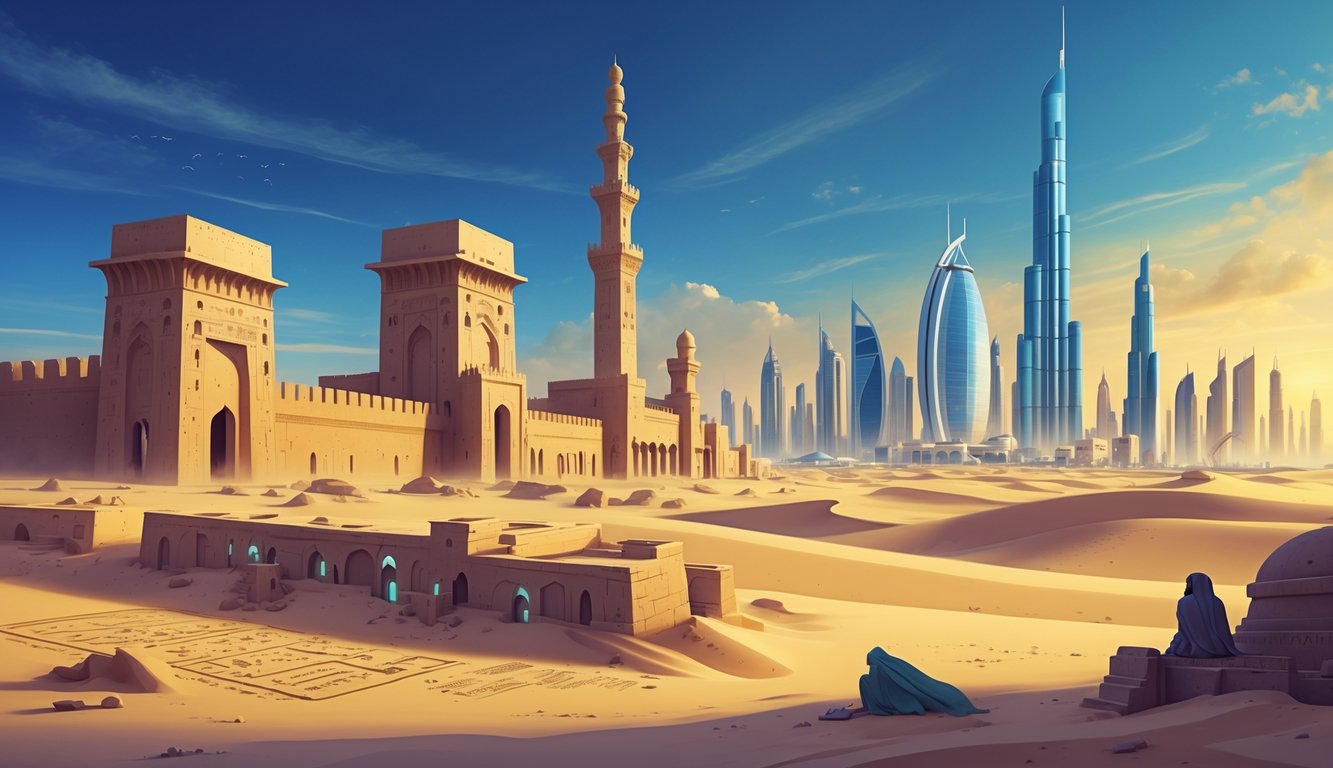
The United Arab Emirates combines a rich cultural past with new achievements. Its history includes outside influences, record-breaking buildings, and traditions that have adapted to modern times.
British Protectorate Legacy
From the early 1800s until the 1970s, the British Empire controlled the UAE’s land. This period shaped its borders, politics, and some laws.
The Trucial States signed contracts with Britain for protection from pirates and outside threats. Britain protected them in exchange for control over foreign affairs.
The region still shows remnants of this era in old forts, trading posts, and customs houses. Colonial-era agreements influenced the birth of the modern country in 1971.
Historic places like Al Fahidi Fort in Dubai and Qasr Al Hosn in Abu Dhabi remind visitors how those years shaped the Emirates’ path to unity and independence.
Iconic Landmarks Like the Burj Khalifa
The Burj Khalifa is the tallest building in the world at over 828 meters. Finished in 2010, it symbolizes Dubai’s fast growth and bold vision.
It stands as a modern landmark alongside the region’s older heritage sites. The UAE also has famous landmarks like Sheikh Zayed Grand Mosque and the historical sites of Al Ain.
These sites connect the country’s ancient history with its rapid development. Visitors experience a mix of traditional Islamic design and futuristic architecture throughout UAE cities.
Innovations: From Pearl Divers to Robot Jockeys
Before oil, the UAE’s economy depended on pearl diving and fishing. Communities along the coast gained a reputation for their skill and bravery at sea.
As technology advanced, industries changed too. For example, camel racing now uses robot jockeys instead of human jockeys.
This change protected children from dangerous work. At the same time, it helped keep the tradition of camel racing alive.