Thailand holds many secrets from its past. Some of the biggest historical mysteries in Thailand come from ancient kingdoms, legendary ruins, and captivating folklore that still spark curiosity today.
These mysteries shape Thai culture and often blend myths, real history, and unsolved puzzles. Many stories are tied to lost cities, old temples, and ghost legends whispered through generations.
Sites like the ancient ruins of Ayutthaya and Sukhothai, along with tales from Thai folklore, show how much the unknown is part of daily life. Each mystery invites visitors and locals to ask questions and wonder about the past.
Whether it’s the eerie legends surrounding mystical places or the faded stories of early royal kingdoms, the unknown continues to influence how Thailand is seen by the world. The blend of history and legend makes Thailand unique and fascinating.
The Mystery of Mae Nak: Fact or Fiction?
Mae Nak is one of the most famous ghost stories in Thailand. Her legend mixes love, loss, and the supernatural.
The Legend of Mae Nak
Mae Nak, also known as Mae Nak Phra Khanong, is a well-known figure in Thai folklore. According to the story, she lived in the Phra Khanong area of Bangkok during the early Rattanakosin period.
After her husband, Mak, left for war, Nak died during childbirth. Her love for Mak was so strong that her spirit stayed behind, waiting for his return.
People believed she haunted the village because she could not move on. Mae Nak was known for scaring people and showing supernatural power.
She could stretch her arm unnaturally long and frighten neighbors who tried to warn Mak. For many Thais, Mae Nak’s story is a haunting tale of both love and loss.
It highlights the fear of the unknown and the strong bonds between loved ones. The story shows how deeply the supernatural has influenced the cultural fabric of Thailand.
Historical Accounts and Interpretations
Historians and writers have tried to find out if there is any truth to Mae Nak’s story. Some say she may have been a real woman who lived in Phra Khanong, as old records mention a woman with a similar name.
Most information comes from oral traditions and stories passed down over centuries. There is no concrete evidence proving Mae Nak existed.
Many experts believe the legend became popular because it reflected people’s beliefs about ghosts and the supernatural in Thai society. Villagers may have used tales like Mae Nak to explain strange or tragic events.
Shrines dedicated to her, such as the one in Phra Khanong, still attract visitors who give offerings in hopes of good luck, especially in love and family matters. This lasting belief shows the connection between folklore, faith, and daily life in Thailand.
For more on historical interpretations, visit this guide to Thailand’s most famous ghost story.
Mae Nak in Thai Pop Culture
Mae Nak remains a major influence in Thai pop culture today. Her story has inspired many books, TV dramas, and movies.
The 1999 film “Nang Nak” is one of the most popular retellings and helped introduce her legend to a new generation. A shrine built in her honor in Bangkok draws people who leave items and make wishes.
Young couples often visit this shrine, believing Mae Nak can help them with matters of the heart. Some artists and writers remake her story to fit new times, showing her as both a tragic figure and a symbol of undying love.
The tale is a key part of Thai ghost stories and continues to be retold in many ways. For a look at Mae Nak’s presence in modern Thailand, see this overview on the haunting legend of Mae Nak.
Enigmatic Ancient Kingdoms
Thailand’s past is filled with stories of ancient cities, vanished empires, and mysterious ruins. These lost kingdoms leave behind clues to their cultures through temples, sculptures, and legends.
The Lost City of Ayutthaya
Ayutthaya was once one of the most powerful cities in Asia. Founded in 1350, this city became the capital of a vast kingdom and a major trading hub.
Its golden temples, like Wat Chaiwatthanaram, drew visitors from around the world. In 1767, Ayutthaya fell after a long siege.
The city was destroyed by fire, and many buildings turned to ruins. Historians still debate how such a wealthy, well-defended city fell so quickly.
The causes likely include political errors and military mistakes. Today, the ruins of Ayutthaya are a UNESCO World Heritage Site and attract many who want to uncover its secrets.
Key highlights of Ayutthaya:
- Wat Chaiwatthanaram: Famous temple complex
- Trade records: Links to Europe, China, and Japan
- Burned libraries: Lost historical records
Sukhothai Kingdom’s Hidden Secrets
The Sukhothai Kingdom was founded in the 13th century. Many call it the first “true” Thai kingdom.
Sukhothai is known for its art, sculpture, and early forms of Thai writing. But not all of its past is well understood.
Much of Sukhothai’s history comes from stone inscriptions. Some mention kings and their victories, but other details—like daily life or what caused the kingdom’s decline—are still debated.
The city’s ruins feature unique statues and temple styles. Exploring Sukhothai’s ancient sites, like those described on Whispers of the Past, gives a sense of the era’s mystery.
Famous elements of Sukhothai:
- Early Thai script and literature
- Distinctive Buddha statues
- Mysterious city layouts
Mysterious Ruins in Chiang Mai
Chiang Mai was the capital of the Lan Na Kingdom. This region is known for its old city walls, hidden temples, and ancient relics.
Many temples, both restored and ruined, can be found inside and around the city. Stories about Chiang Mai’s old rulers, wars, and spiritual beliefs are embedded in its architecture.
Historians study these ruins to learn about religious practices and local traditions. In the hills, small ruined temples and forgotten villages hint at lost communities.
Many ruins remain protected and unexplored, adding to Chiang Mai’s air of mystery.
Interesting facts about Chiang Mai’s ancient sites:
- Remains of the city walls and gates
- Old chedis (stupas) hidden in forests
- Art styles different from central Thailand
Hauntings by Thai Ghosts and Spirits
Thailand is home to many ghost stories and tales about spirits. These legends are tied to the culture and history, with each ghost having a unique story.
Phi Pop: The Flesh-Eating Spirit
Phi Pop is one of the most feared spirits in Thai folklore. People believe it is an evil ghost that can possess people and animals, often linked with sickness and sudden deaths.
Locals say that Phi Pop feeds on human organs, especially the intestines. Villagers hold rituals to chase away this spirit, which involve music, dancing, and special ceremonies.
These rituals, called “Phi Pop Chase,” are popular in the northern and northeastern regions of Thailand. People believe that if someone suffers from unexplained sickness, Phi Pop might be to blame.
This ghost story has been told for generations, causing fear and respect throughout the countryside.
Pret: The Tall Hungry Ghost
Pret is a giant ghost, described as thin, tall, and very hungry. In Buddhist beliefs, Pret is the spirit of a sinful person reborn as a ghost as punishment.
According to the legends, Pret wanders at night, searching for food or offerings. Its mouth is tiny—just a pinhole—so it cannot eat much, which makes its hunger even worse.
People often see Pret as a reminder to behave well in life and avoid greed or cruelty. In Thailand, Pret appears in religious art and temple murals.
Many temples have statues showing Pret’s thin body and long, thin arms. Stories about Pret continue to warn people about the results of bad actions.
Learn more about Pret in Thai culture at Culture Trip.
Phi Krasue: Floating Head Legend
Phi Krasue is one of Thailand’s most recognizable ghost stories. This ghost appears as a woman’s floating head with glowing organs trailing underneath.
At night, locals believe that Phi Krasue flies around looking for blood or raw flesh. The sight of the dangling entrails is what people fear most.
According to legend, Phi Krasue lives as an ordinary woman during the day but transforms after sunset. Villagers protect themselves by keeping their homes sealed tightly at night.
Some place thorny plants or sharp objects around their windows, hoping to keep the ghost away. The story of Phi Krasue appears in movies, books, and ghost festivals across Thailand.
For more about Phi Krasue and other haunted legends in Thailand, visit Thaiger’s guide to famous Thai ghost stories.
Mythical Creatures of Thai Folklore
Thailand’s folklore features enchanted beings, river spirits, and mysterious ghosts. Ancient religion and tradition have shaped these tales, filling them with creatures that people both fear and respect.
Naga Legends Along the Mekong
In Thai and Lao culture, the Naga is a giant serpent said to live in the deep waters of the Mekong River. People along the river believe the Naga control the rain and protect riverside communities.
Sightings of mysterious lights or waves are sometimes linked to this creature. Every year, locals report glowing orbs, known as “Naga fireballs,” rising from the Mekong.
Community festivals and rituals often celebrate the Naga’s presence. In art and temple murals, the Naga appears with a dragon-like body and multiple heads.
Besides the Mekong, legends place the Naga near the Chao Phraya River, where stories of river guardians continue. Many believe the Naga connects the human world with the divine, acting as a bridge between realms.
Learn more about these legends in this summary of Thai mythical creatures.
Krasue and Krahang: Creepy Night Stalkers
The Krasue is a ghostly figure in Thai folklore. People describe it as a woman’s floating head with glowing organs hanging below the neck.
At night, the Krasue leaves its body and roams villages. It searches for blood.
People hang thorny branches near their doors to keep the Krasue away.
Krahang is another well-known spirit. He is often pictured as a man flying through the night on rice baskets.
Unlike the Krasue, people do not fear Krahang as much. Still, his presence is a sign that strange things may happen after dark.
Both Krasue and Krahang appear in many horror stories and movies. They are famous topics in Thai storytelling, with tales passed through generations.
See more about these legendary Thai creatures.
Nang Tani and Nang Takian: Spirits of Trees
Nang Tani lives inside wild banana trees. She appears as a beautiful woman dressed in green.
She only shows herself on full moon nights. Locals warn against harming banana trees to avoid angering her spirit.
Nang Takian is the spirit of the Takian tree, a tall and sturdy tree found in Thailand. She is often described as a woman in traditional clothes.
People tie colorful cloths around Takian trees to honor her. They also ask for blessings.
Some even make offerings to these trees, hoping for good luck or safe travels. Their stories blend respect for nature with supernatural belief.
These spirits are key figures in Thai folklore.
Supernatural Sites and Eerie Locations
Thailand has many places known for ghost stories and supernatural mysteries. Some have ancient legends, while others have recent tales of hauntings.
Doi Nang Non: The Sleeping Woman Mystery
Doi Nang Non, also called the “Sleeping Lady Mountain,” lies in northern Thailand. The shape of the mountain looks like a woman lying down.
This site is famous for its tragic legend. The local story tells of a princess who died from heartbreak, and her sorrow formed the mountain’s shape.
Inside the mountain are many caves. Adventurous visitors often explore these caves.
The Tham Luang cave gained international attention in 2018 during a rescue mission. Locals have told ghost stories about the area for generations.
Visitors report feeling uneasy and sometimes hear strange noises inside the caves late at night. Guided cave tours and hiking trails follow the outline of the “sleeping woman.”
These experiences draw thrill-seekers and those curious about supernatural legends. Learn more about haunted places in Thailand.
Wat Chaiwatthanaram’s Ghostly Tales
Wat Chaiwatthanaram is a historic temple in Ayutthaya. Built in the 1600s, it stands out with its tall central prang and beautiful symmetry.
By night, the mood changes. Many locals avoid the area due to ghost stories.
People claim to have seen shadowy figures between the temple’s chedis and along the walkways. Some believe these spirits are from the time when Ayutthaya fell to Burmese invaders.
These stories add a mysterious feel to late-night temple visits. Exploring the grounds in the evening is popular among those interested in history and ghosts.
The temple’s eerie reputation makes it a unique place for supernatural stories linked to Thai heritage.
Haunted Temples Near Chao Phraya River
The temples near the Chao Phraya River have many tales of hauntings. Wat Arun and Wat Rakhang are places where visitors have reported ghostly sights and strange sounds at night.
The river itself has long been seen as a path for spirits in Thai culture. These temples are centuries old and play important roles in daily life.
Some monks and caretakers share stories of supernatural events. They talk about mysterious footsteps, sudden chills, or unexplainable lights on temple grounds after dark.
Many locals leave offerings to keep spirits peaceful. Visiting these riverside temples is a memorable activity for those fascinated by supernatural folklore and historic architecture.
See more on these eerie sites to explore in Thailand.
Historic Disappearances and Unsolved Vanishings
Thailand’s long history includes puzzling disappearances of people and treasures. Some mysteries are tied to power struggles of ancient kingdoms, while others involve lost relics from temples and palaces.
Vanished Royalty of the Sukhothai Kingdom
The Sukhothai Kingdom was one of Thailand’s earliest and most important realms. It was known for its rich culture and Buddhist heritage.
Stories tell of mysterious disappearances within its royal family, especially during times of succession and war. One of the most talked-about cases is the unexplained vanishing of King Ramkhamhaeng.
He ruled during the late 13th century and helped shape Thai writing. His sudden absence led to confusion and a shift in power, with little explanation found in official texts.
Scholars still debate if he died in battle, fell victim to a plot, or simply disappeared into legend.
Key details:
- Location: Sukhothai Kingdom, north central Thailand
- Time: Late 1200s
- Possible causes: War, politics, or unknown events
Researchers use clues from ancient stone inscriptions and chronicles to search for answers. Interest in these disappearances continues.
Read about history’s most baffling unsolved cases.
The Missing Artifacts of Ayutthaya
The Ayutthaya Kingdom was a center of wealth, art, and religion in Thailand. When Ayutthaya fell to the Burmese army in 1767, many priceless artifacts went missing.
Temple records and explorer journals from the period describe gold-covered relics and rare scriptures that vanished after the destruction. Some artifacts resurfaced in private collections or museums abroad.
Others remain unaccounted for, leading historians and Thai people to wonder about their fate.
Notable missing items include:
- Gold Buddha statues
- Royal regalia and jewels
- Ancient manuscripts
Each missing artifact represents a piece of Thai heritage and a link to the country’s ancient kingdoms. Efforts to locate and recover lost relics still make headlines and draw international attention.
Stories of unsolved historical vanishings continue to capture public curiosity. For more, see strange and unsolved disappearances from around the world.
Legendary Warriors and Fighters
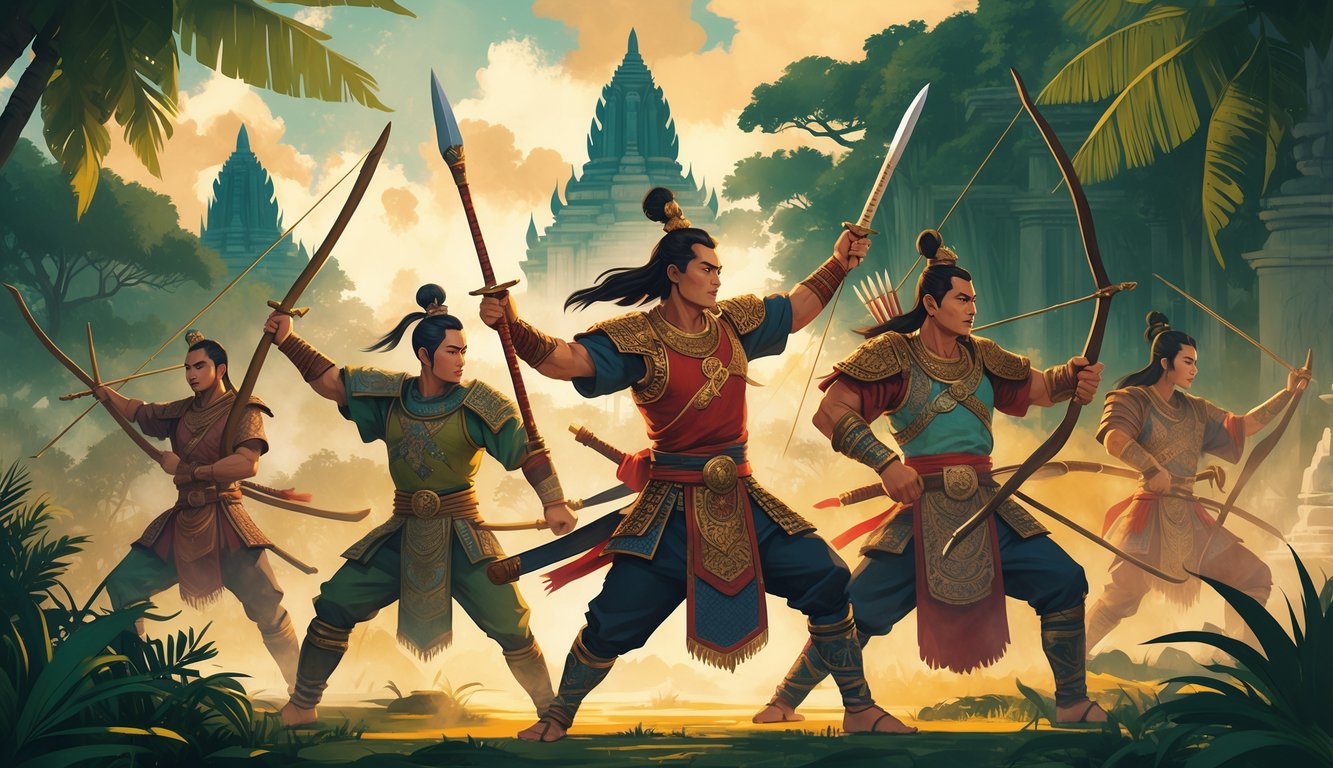
Thailand’s history is full of famous warriors whose actions shaped battles and national identity. These fighters showed their skill in Muay Thai and influenced Thai culture and stories.
Nai Khanom Tom and the Muay Thai Legacy
Nai Khanom Tom is a legendary figure in Thai history. People call him the “Father of Muay Thai.”
He became famous for his bravery when he was taken prisoner during the Burmese–Siamese wars. He earned his freedom by defeating several Burmese fighters in a row.
His use of Muay Thai techniques—elbows, knees, kicks, and punches—astonished the Burmese judges. His story is a source of great pride for Thailand.
Nai Khanom Tom’s achievements helped Muay Thai gain national respect. Today, people celebrate him every March 17th on Muay Thai Day.
His story shows how Muay Thai became a symbol of courage and unity for the Thai people. Learn more about these fighters at the Top 10 Most Famous Muay Thai Fighters in Thailand page.
Mysterious Feats in Ancient Arenas
Ancient Thai kingdoms often held fighting tournaments to find the most skilled warriors. The rules and details of these contests remain partly mysterious.
Historical accounts mention large crowds and royal audiences. Many specifics about the fighters’ techniques or battles have been lost or changed over time.
Legends tell of fighters who defeated much larger opponents or overcame severe injuries. Some stories mention secret fighting styles or last-minute surprises in the arena.
These tales helped turn everyday warriors into legendary figures. Royal tournaments and their legendary fighters remain a mystery that continues to inspire athletes and fans.
Unexplained Phenomena in Thai Rivers
Thailand’s rivers are filled with history, superstition, and stories of the unknown. From glowing orbs in the Mekong to strange tales from the Chao Phraya, these mysteries capture the imagination.
Naga Fireballs of the Mekong
Every year, locals and visitors gather by the Mekong River in northeast Thailand, especially in Nong Khai Province, to watch the Naga fireballs. These glowing orbs rise silently from the surface of the river and shoot into the night sky.
The event usually happens during the Buddhist Lent festival. People have reported seeing dozens or even hundreds of these lights in one night.
The phenomenon has no confirmed scientific explanation. It has occurred for centuries.
Many locals believe the fireballs come from the Naga, a legendary serpent in Thai and Lao folklore. The Naga is thought to live under the river and is seen as a supernatural protector.
Some researchers and skeptics suggest explanations like gases released from the river or manmade sources. None have been proven.
The event is a big draw for tourists and a major part of the region’s cultural identity. For more, check out the Naga fireballs of the Mekong.
| Fact | Details |
|---|---|
| Location | Mekong River, Nong Khai Province |
| When | Annually during Buddhist Lent |
| Main folklore figure | Naga (mythical serpent) |
| Scientific proof | None; many theories but no clear explanation |
Mysteries of the Chao Phraya
The Chao Phraya River, which flows through Bangkok and other major cities, is also surrounded by mysterious tales. Stories of river spirits and unexplained accidents have become part of local folklore.
Some fishermen talk about sudden whirlpools that appear without warning and pull boats underwater. Others speak of supernatural sightings, like shadowy figures moving across the water on foggy nights.
In Bangkok, legends say the river is home to guardian spirits. Thai people often leave small food and flower offerings to keep these spirits happy.
Strange events on the river, such as unexplained noises or missing boats, are sometimes blamed on angry or disturbed river ghosts. Reports of encounters with the Naga or other water creatures are less common here but still appear in old stories.
Many families living by the river teach children to respect the water and its unseen dangers. Tradition and caution mix with superstition.
Cultural Fabric Interwoven with Mystery
Thailand’s cultural fabric is deeply influenced by ancient folklore and traditions. Stories, customs, and lively celebrations help keep the country’s mysterious past alive for new generations.
Folklore’s Influence on Daily Life
Folklore shapes Thai culture in many ways. People often believe in spirits, legends, and mysterious beings that live in forests, rivers, or even certain trees.
Common figures include the phi (ghosts), such as Mae Nak, a famous spirit who watches over her village. Superstitions and rituals become part of daily routines.
Some families set up spirit houses, which are small shrines meant to protect homes from ghosts. Foods, colors, and numbers have special meanings based on old stories.
These beliefs appear in both rural villages and busy cities. Many Thais avoid certain actions out of respect for unseen forces.
People perform small rituals, like offering flowers or lighting candles, to bring good luck or prevent misfortune. These traditions influence behavior and choices throughout Thai society.
Festivals Celebrating the Unexplained
Many Thai festivals come from mysteries and legends. The famous “Phi Ta Khon” festival in Dan Sai features colorful masks and costumes.
Villagers dress as ghosts and spirits, celebrating old tales about the unknown. Another important event is the “Loi Krathong” festival.
During Loi Krathong, people float candle-lit baskets on rivers to ask spirits for forgiveness and good fortune. This tradition connects modern life with mystical beliefs from long ago.
Some celebrations honor powerful or mischievous spirits. These events bring communities together with fun activities and serious rituals.
Thai festivals often include vibrant parades, music, and dances filled with references to supernatural legends.
Enduring Impact of Historical Mysteries
Historical mysteries in Thailand draw from ancient kingdoms, old trade routes, and rich folklore. These mysteries help keep traditions alive and encourage respect for Thai culture.
How Legends Shape Modern Thailand
Stories from the past, such as myths about lost cities and ancient spirits, still matter in Thailand today. People learn about courage, loyalty, and kindness from these tales.
Many festivals, like Loy Krathong and Songkran, come from old stories. Sacred sites linked to legends, such as old ruins and temples, attract visitors and locals.
Children grow up hearing classic Thai legends about ghosts and heroes. Stories from Lanna, Ayutthaya, and Sukhothai get retold in schools and at family gatherings.
Some myths appear in movies and TV. Thai art often shows scenes from folklore, helping each generation remember their heritage.
These tales help people feel connected to Thailand’s ancient kingdoms and culture.
Preserving Mystery in Thai Heritage
Preserving Thailand’s mysteries is an important way to honor its past. Museums, storytellers, and community events share tales of the unknown, such as the unexplained fall of old capitals or stories about mystical creatures.
Traditional crafts, like Thai silk weaving and mural painting, often show scenes inspired by folklore. These crafts keep old stories alive in daily life.
In rural villages, elders act as historians and pass down accounts of strange events and powerful rulers. Tour guides share these mysteries at ancient ruins, making history interesting for visitors.
Lists and discussions about unsolved mysteries add to the sense of wonder in Thai heritage.
Locals and travelers become part of a tradition that values curiosity and protects the stories that shaped modern Thailand.