Rwanda has a long and complex history, filled with stories that remain unclear. Some of the biggest mysteries involve the early origins of its people, the rise of ancient kingdoms, and the events that shaped its identity.
Archaeologists and historians search for clues about the first groups who settled the land and how they lived.
There are deep questions about the causes of major events, such as the roots of ethnic divisions and the circumstances leading up to the tragic 1994 genocide. Experts still debate how much of Rwanda’s official history can be proven since many traditional stories lack clear evidence, as discussed in the history of Rwanda.
Origins of Ethnic Tension in Rwanda
Rwanda’s history is shaped by its mix of ethnic groups and events that turned differences into conflict. Shifts in power, foreign rule, and social changes influenced how communities saw each other.
Historical Roots of Hutu and Tutsi Identities
Rwanda is home to the Hutu, Tutsi, and Twa people. The Twa are a small group, while Hutus and Tutsis make up most of the population.
Traditionally, Hutus formed the majority, and Tutsis were the main minority group. Both groups spoke the same language and shared many customs.
The main difference was in occupation and social status. Hutus mostly farmed, while Tutsis raised cattle, a sign of wealth in Rwandan society.
There were times of peaceful coexistence, but differences grew more noticeable over time. In earlier periods, a Hutu could become a Tutsi by gaining wealth.
Over time, these lines hardened, especially as outside influences increased.
Colonial Influence on Rwandan Society
German and Belgian colonizers arrived in Rwanda in the late 19th and early 20th centuries. They brought new ways of ruling and deepened divisions in society.
The Belgians introduced identity cards marking each person as Hutu, Tutsi, or Twa. This made divisions permanent.
Colonial leaders favored the Tutsi minority, giving them more chances for education and leadership. The Hutu majority was mostly excluded.
Colonizers often claimed the Tutsis looked more “European” and viewed them as more fit to rule. This thinking strengthened old stereotypes and made the split between Hutu and Tutsi sharper.
Later, colonial policies fueled rivalry and distrust between the groups, as seen in ethnic tension in Rwanda.
Evolution of Power Structures
Before colonial times, Tutsi kings ruled Rwanda. The king and his court were Tutsi, but many Hutus held important roles, and power was more mixed than it appeared.
With colonial rule, Belgians focused power on the Tutsi elite. The Hutu majority felt excluded from government and schools, which caused anger and frustration.
After independence in 1962, Hutus took control, and many Tutsis lost their status or fled the country. Power shifted quickly, leading to cycles of violence and unrest.
| Time Period | Main Group in Power | Key Actions |
|---|---|---|
| Pre-Colonial | Tutsi Kings | Some power-sharing, mostly Tutsi |
| Colonial | Tutsi (favored) | Hutu left out, divisions grow |
| Post-Independence | Hutu | Tutsi lose status, tension rises |
The Enigma of Juvenal Habyarimana’s Assassination
The assassination of Rwanda’s President Juvénal Habyarimana shocked the country and triggered a wave of violence. This event remains one of the most discussed political mysteries in Rwanda’s history.
Events Leading Up to the Plane Crash
Juvénal Habyarimana became Rwanda’s president after a military coup in 1973. He led the country for over two decades through a repressive government that favored Hutus over Tutsis.
Tension grew during the early 1990s due to attacks from the Rwandan Patriotic Front (RPF), a rebel group made up mainly of Tutsi refugees. In 1993, Habyarimana agreed to the Arusha Accords, a peace deal that would have required sharing power with the RPF.
Many Hutu extremists, including members of the presidential guard, opposed these agreements. On April 6, 1994, the plane carrying Habyarimana and Burundian President Cyprien Ntaryamira was shot down as it prepared to land in Kigali.
This attack set off what became the Rwandan genocide, one of the deadliest events in modern African history according to multiple accounts.
| Date | Event |
|---|---|
| 1973 | Habyarimana takes power in a coup |
| 1993 | Signs Arusha Accords, tensions increase |
| April 6, 1994 | Plane crash and assassination |
Theories on Who Was Responsible
Two main theories exist about who shot down Habyarimana’s plane. One theory claims Hutu extremists planned the attack.
These groups, including some close to the president, may have wanted to stop the peace process and keep power. The presidential guard and some officials had the resources and motive for such an attack.
The second theory points to the RPF. Some claim the RPF might have acted to remove Habyarimana and speed up their return to power.
However, there is little direct evidence to fully support either side. Investigations have been inconclusive, and each side blames the other for the assassination, leaving it a lingering question for historians and political scientists.
Impact on Rwandan Politics
Habyarimana’s assassination led directly to mass killings of Tutsis and moderate Hutus. Hutu extremists used the event to justify violence.
Over about 100 days, hundreds of thousands of people were murdered in the Rwandan genocide. Rwanda’s political system fell into chaos, and the RPF eventually took control of the country.
The government that formed afterward focused on rebuilding and establishing justice. The trauma from the genocide continued to shape politics for years, as explained in this overview of the assassination’s impact.
Unsolved Mysteries of the 1994 Genocide
Key events behind the 1994 Rwandan genocide remain the subject of intense debate. Experts and witnesses still puzzle over critical questions about the first violence and the world’s response.
Initial Triggers and Early Warnings
On April 6, 1994, a plane carrying Rwanda’s president, Juvénal Habyarimana, and Burundi’s president, Cyprien Ntaryamira, was shot down near Kigali. Both leaders died.
This assassination immediately sparked mass violence and marked the start of the genocide. Who shot down the plane is still unknown.
Some reports link it to disputes between Hutu political elites, while others suggest the involvement of Tutsi rebels led by Paul Kagame. The truth remains unclear.
The downing of the plane was the catalyst for mass killing, but many early warning signs had been missed. Escalating hate media and political tensions were among those signs.
For more on the assassination and its mystery, see assassination of Juvénal Habyarimana and Cyprien Ntaryamira.
Role of UNAMIR and International Response
UNAMIR, the United Nations peacekeeping force in Rwanda, was tasked with helping maintain stability before and during the genocide. Canadian General Roméo Dallaire led this mission.
UNAMIR’s mandate was limited and poorly supported. The force could not stop the killings.
Countries like Belgium and France withdrew troops or avoided deeper involvement. The United States and other nations were slow to call the violence “genocide,” which delayed international action.
UNAMIR struggled to protect civilians, and the slow reaction by the wider world remains a major historic question. Efforts like the International Criminal Tribunal for Rwanda (ICTR) later aimed to bring justice but did not erase the failures seen during those months.
The Secret Networks Behind Hutu Power
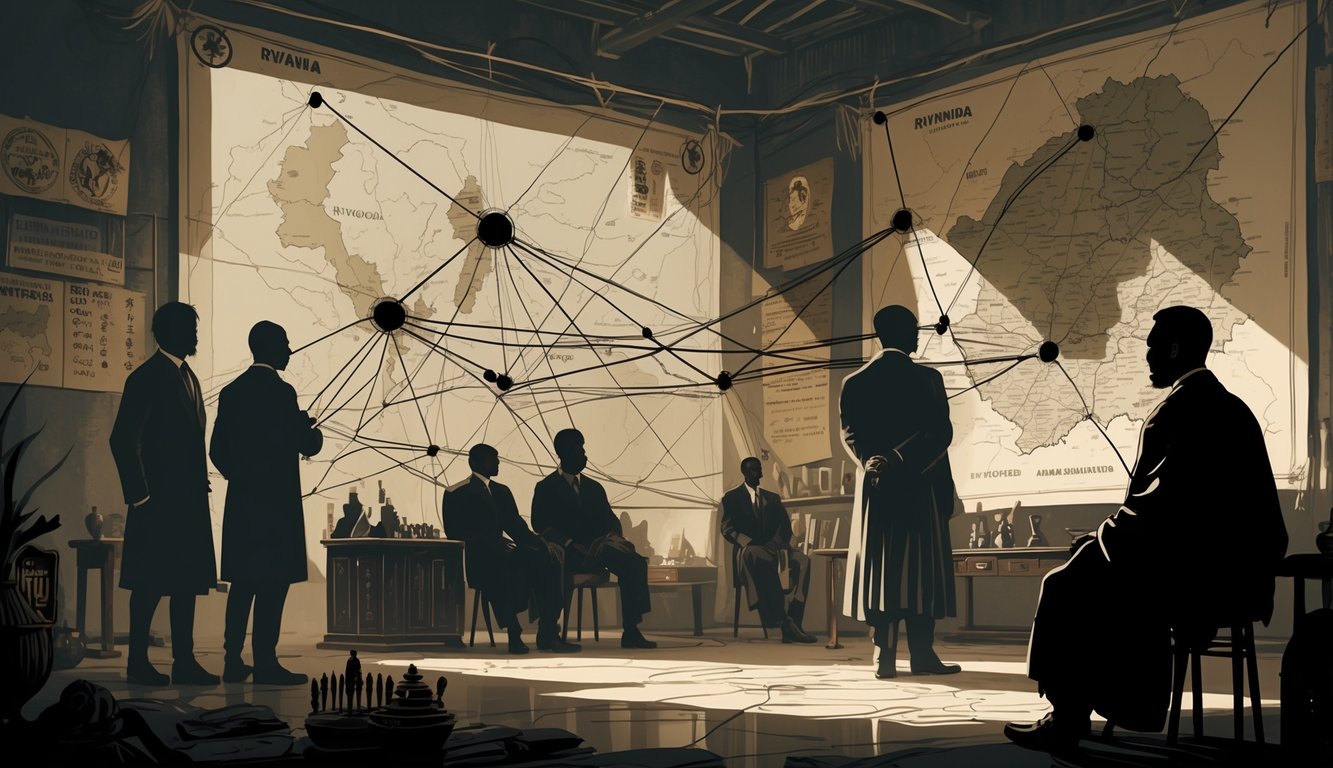
Secret groups played a huge role in the violence that broke out in Rwanda. Their formation, methods, and goals explain how these groups became so powerful and deadly.
Formation and Operations of Interahamwe
The Interahamwe was a Hutu militia group that became active in the early 1990s. It started as a youth wing of the ruling party, MRND, led by President Juvénal Habyarimana.
They recruited young Hutus across Rwanda and trained them in secret. Training included the use of weapons and mob tactics.
The group’s main task was to organize roadblocks and search for Tutsi and moderate Hutu. Interahamwe members often used lists to track who to target.
As tensions grew, the Interahamwe became larger and better organized. Survivors recall that local officials sometimes gave orders, showing the close ties between the group and the government.
The Hutu Militia and Presidential Guard
The Presidential Guard played a special part in the violence alongside the Interahamwe. This elite group protected the president, but also acted as a tool for Hutu extremists.
The Presidential Guard trained hard and had access to weapons and supplies. When the president’s plane was shot down in 1994, the Guard launched the first major attacks in Kigali, firing on Tutsi families and moderate Hutus.
The Hutu militia and Presidential Guard often worked together. The Guard gave orders, and the Interahamwe carried them out.
Their organized cooperation is confirmed by events described after the assassination of President Habyarimana.
Hidden Agendas Within Hutu Extremists
Some Hutu extremists had secret goals. Leaders created a strong anti-Tutsi message, using radio and newspapers to spread hate.
These secret plans encouraged fear and distrust. Laws and policies soon turned violent ideas into action.
Much of the planning happened behind closed doors, with tight inner circles making key decisions. Small groups within the movement, such as the Hutu Power elite, communicated mostly in private.
As a result, many actions by the extremists stayed hidden, making them hard to stop. Their tactics and secret plans are discussed in detail in articles on the Hutu Power movement.
Rwandan Patriotic Front’s Mysterious Rise
The Rwandan Patriotic Front (RPF) began as a secret group of exiles. It soon became the most powerful political force in Rwanda.
Their actions and decisions shaped the country’s future. Key players within the RPF made surprising changes to Rwanda’s direction.
Underground Beginnings to Prominent Leadership
The RPF started in December 1987. Tutsi refugees in Uganda, forced out of Rwanda by ethnic violence, formed the group.
Their first goal was to return home and gain rights for exiles left out of Rwanda’s politics. The RPF operated underground at first.
They held secret meetings and planned in hiding. The group worked quietly, gaining followers and allies.
Their message spread over time. By focusing on ending ethnic divisions and allowing refugees to return, the RPF won strong support from many exiled Rwandans.
In 1990, the RPF began the Rwandan Civil War. This move shocked many people in and outside Rwanda.
The RPF was smaller and less equipped than government forces. However, they used surprise attacks and smart strategies to get attention.
They survived early setbacks and kept fighting. This made them a powerful group quickly.
Paul Kagame and Strategic Moves
Paul Kagame took over the RPF’s military strategy after Fred Rwigyema died at the start of the civil war. Kagame’s leadership was key to the group’s success.
He was known for careful planning and discipline. Kagame made quick and smart decisions.
He built unity inside the RPF and created a clear chain of command. Kagame stressed discipline among fighters.
Under Kagame, the group worked to win respect from local Rwandans. They avoided harming civilians as much as possible.
Kagame also used political talks to help the RPF. He joined peace agreements when it gave the group an advantage.
These strategic moves helped the RPF become the driving force that stopped the genocide in 1994.
The Role and Fate of Tutsi Refugees
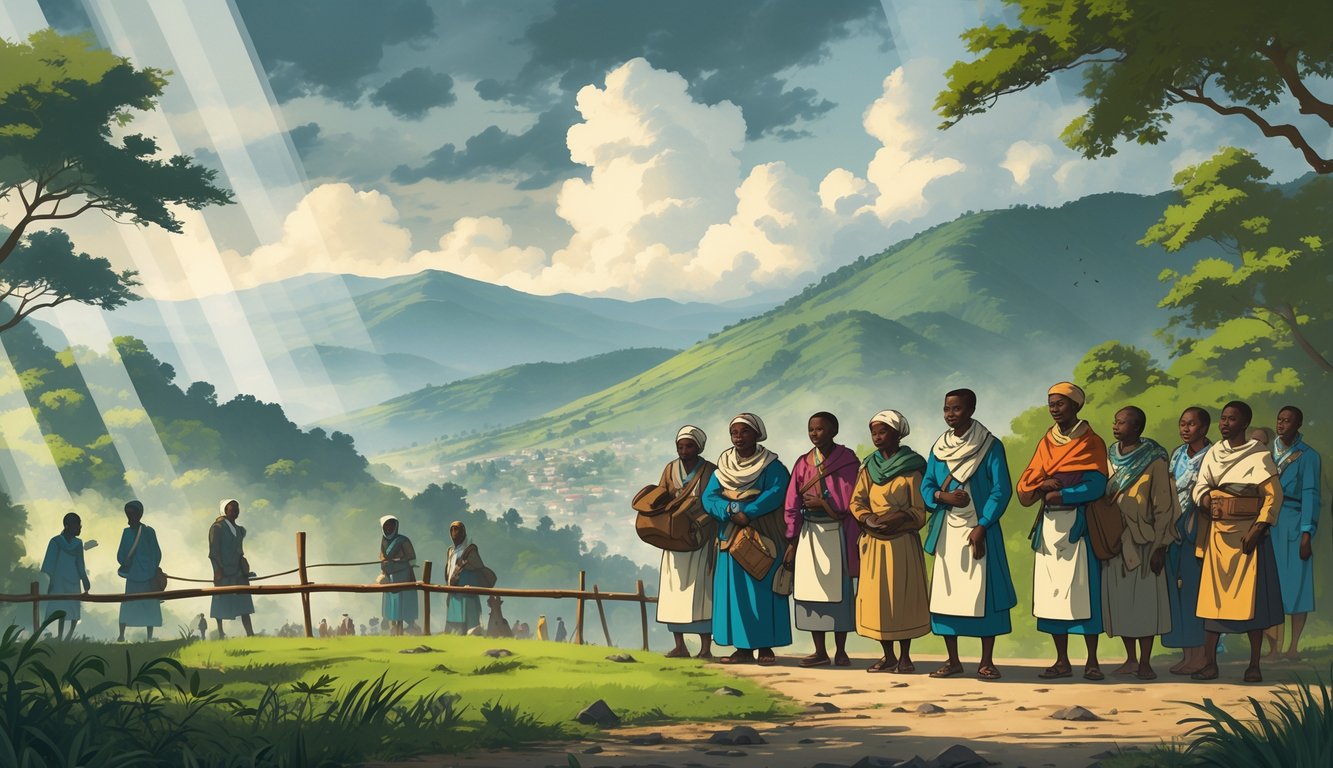
Tutsi refugees played a major part in Rwanda’s history. Their movement and return shaped life inside and outside Rwanda.
Exodus to Burundi and Beyond
During the 1959-63 crisis, violence forced thousands of Tutsis to flee Rwanda. Many went to Burundi, while others escaped to Uganda, Tanzania, and the Democratic Republic of Congo.
By Rwanda’s independence, about 200,000 Tutsi refugees lived in neighboring countries. In exile, Tutsi refugees in Uganda worked to keep their communities together.
They stayed close to relatives still in Rwanda. Some joined local armies, like Uganda’s National Resistance Army, hoping to return home.
Long-term exile changed family structures. Many could not return for decades.
For more details, see this history of Tutsi exile.
Return After the Conflict
The 1994 genocide forced even more people to flee. After the genocide, the new government encouraged Tutsi families to return.
This journey was difficult. Many faced destroyed homes and the trauma of lost family members.
Large numbers of Tutsis returned from Burundi and other countries to rebuild their lives. Aid groups and local leaders helped returning refugees find housing and jobs.
Their return shaped Rwanda’s recovery after years of conflict and loss. Read more in this overview of the refugee crises.
Unanswered Questions About Rwanda’s Ancient Kingdom
Many mysteries surround the Kingdom of Rwanda. The origins and fall of its royal rule remain unclear.
Origins and Structure of the Kingdom of Rwanda
Historians still debate the early days of the Kingdom of Rwanda. The Hutu are believed to have arrived between the 5th and 11th centuries.
The Tutsi settled in the area in the 14th century. How Tutsi rulers established dominance over the Hutu is still unclear.
They likely introduced new systems and formed a united kingdom. Written records are scarce.
The royal family, called the Nyiginya Dynasty, led a structured state for centuries. Oral stories and traditions give hints about rulers and society, but much is debated.
Researchers still wonder how the Tutsi organized society so quickly. The mix of farming Hutu, cattle-herding Tutsi, and other groups created a complex system.
The full story remains a mystery.
Disappearance of Royal Power
The fall of royal power in Rwanda has many unanswered questions. In the late 19th and early 20th centuries, European colonization began to reshape the kingdom.
German and then Belgian control challenged the king’s authority. Colonial powers sometimes supported the monarchy but also weakened it with new laws.
The reasons for the sudden collapse of royal rule remain unclear. Social tensions, outside interference, and changing beliefs all played a part.
In 1961, Rwanda officially ended the monarchy and became a republic. Many still wonder if colonization or problems inside the kingdom caused the loss of royal power.
Researchers continue to study this major change in Rwandan history.
Pasteur Bizimungu’s Mysterious Presidency
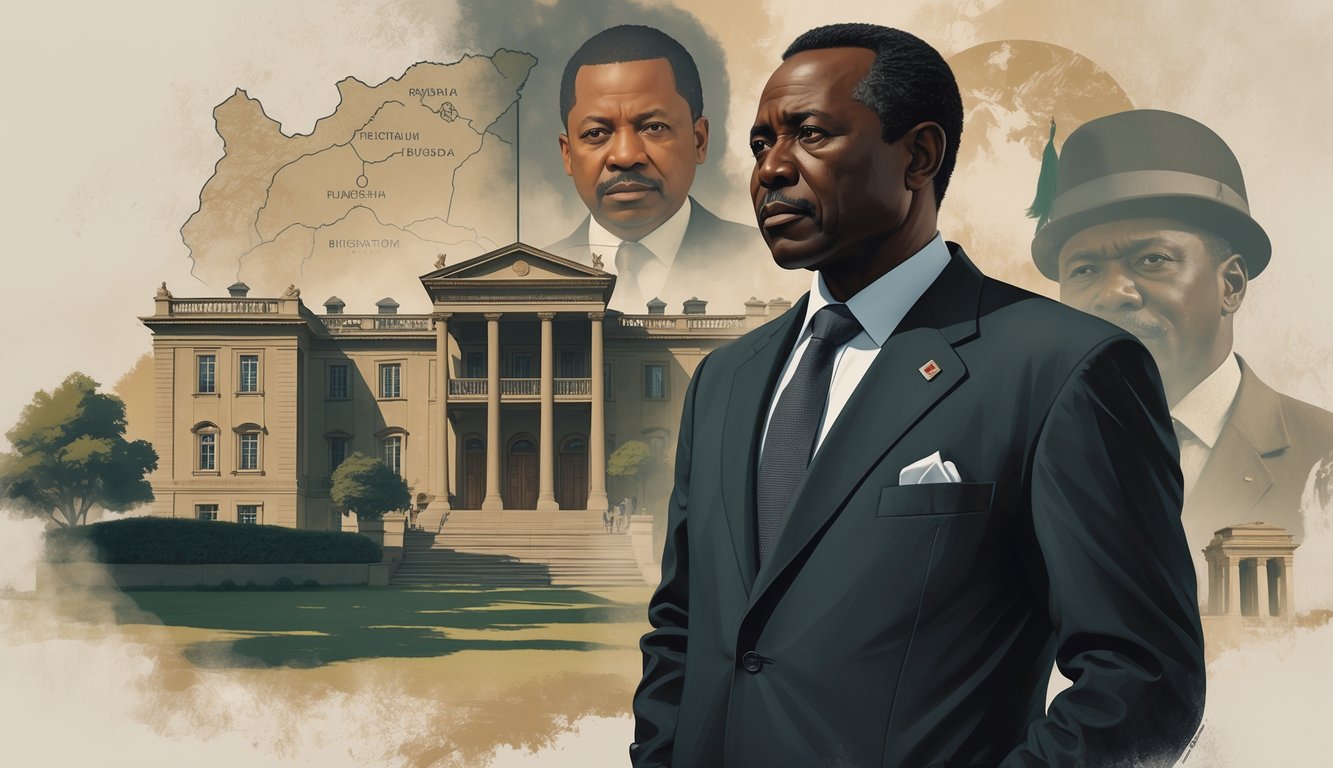
Pasteur Bizimungu played a major role in Rwanda’s history after the genocide. His time as president created questions that people in Kigali still discuss.
Unexpected Rise to Power
Pasteur Bizimungu took office on July 19, 1994, soon after the genocide. He was a Hutu, chosen to lead by the Tutsi-led Rwandan Patriotic Front (RPF).
This decision surprised many because of Rwanda’s deep ethnic tensions. In the 1980s, Bizimungu held several positions under President Juvenal Habyarimana.
Some believed his appointment could help unite Hutus and Tutsis. His background set him apart from other politicians.
However, his power was limited. The RPF and its defense chief, Paul Kagame, held real control.
Many in Kigali still wonder why Bizimungu was chosen as a figurehead. For more on his background, visit Bizimungu’s Wikipedia page.
Controversial Departure
Bizimungu’s presidency ended on March 23, 2000. He resigned, but many say the RPF and Paul Kagame pushed him out.
Kagame then became president. This sparked rumors and debates in Rwanda about the real reasons for Bizimungu’s exit.
After leaving the presidency, Bizimungu tried to form his own political party. Authorities quickly arrested him and sentenced him to prison on charges many saw as political.
Some called him a symbol of reconciliation, but his downfall and arrest remain surrounded by suspicion. People continue to discuss whether his departure was due to power struggles or personal ambition.
To learn more about his fall, see BBC’s article on his controversial time in prison.
International Involvement and Lost Opportunities
International actors played an important role in Rwanda’s history during the genocide and after. The world watched as violence spread.
Failures of the International Community
During the Rwandan Genocide in 1994, the United Nations Assistance Mission for Rwanda (UNAMIR) was present. Despite warnings and evidence of violence, UNAMIR had a limited mandate and not enough troops.
World leaders failed to call the events “genocide” at first. This meant legal commitments to intervene were not triggered.
Governments delayed help and pulled out peacekeepers. The United States, France, Belgium, and the United Nations received major criticism for their actions or silence.
An estimated 800,000 to 1,100,000 people were murdered in about 100 days by militias and local groups. See detailed reports on the international response to the Rwandan genocide.
Legacy of the ICTR
After the genocide, the United Nations created the International Criminal Tribunal for Rwanda (ICTR). The ICTR’s main goal was to try those responsible for organizing and leading the genocide.
The tribunal convicted some top government officials and military commanders. It set legal precedents for prosecuting genocide and rape as crimes against humanity.
However, the ICTR was slow and costly. It handled only high-profile suspects.
Many ordinary people faced justice only through Rwandan traditional courts, called Gacaca courts. The ICTR closed in 2015, but its impact on international law remains significant.
Enduring Impact and Remaining Historical Gaps
Rwanda’s history remains shaped by the tragic events of the 1994 genocide. Many questions still need answers.
Continuing Search for Truth and Justice
Families still seek information about missing loved ones and lost property. Thousands of victims from the Rwanda genocide remain unidentified.
Some perpetrators have not been brought to court. This search for answers continues to guide investigations and policy in Rwanda.
The government and international organizations work together. The Gacaca courts, set up after 1994, helped many find justice but could not answer every question.
Certain events, such as the role of different groups, are still debated by scholars.
Below is a quick look at some unresolved issues:
| Unresolved Issues | Why It Matters |
|---|---|
| Identification of all victims | Closure for families |
| Full responsibility assignment | Justice and accountability |
| Long-term causes of violence | Preventing future conflicts |
Influence on Central Africa Today
Rwanda’s historical mysteries continue to shape neighboring countries and Central Africa. The 1994 genocide triggered instability and forced millions of refugees into Congo and other nations.
Governments in Central Africa watch closely for signs of ethnic tension. Rwanda’s national reconciliation efforts have influenced other countries, though the lessons remain difficult to apply.
Some rebel groups and militias in the region started due to events around the genocide. Education and open discussion in Rwanda and nearby countries aim to build understanding and prevent hatred.
Regional leaders work together on security and humanitarian efforts to support peace.