Peru is home to some of the world’s biggest historical mysteries. Its ancient civilizations have left behind questions that still puzzle experts today.
From the Nazca Lines etched into the desert to the lost city of Machu Picchu, Peru offers a treasure trove of unexplained sites and strange artifacts. These places invite curiosity and wonder.
The country’s history goes back thousands of years. Each major culture—such as the Incas, the Moche, and even older groups—left mysterious traces that researchers still study.
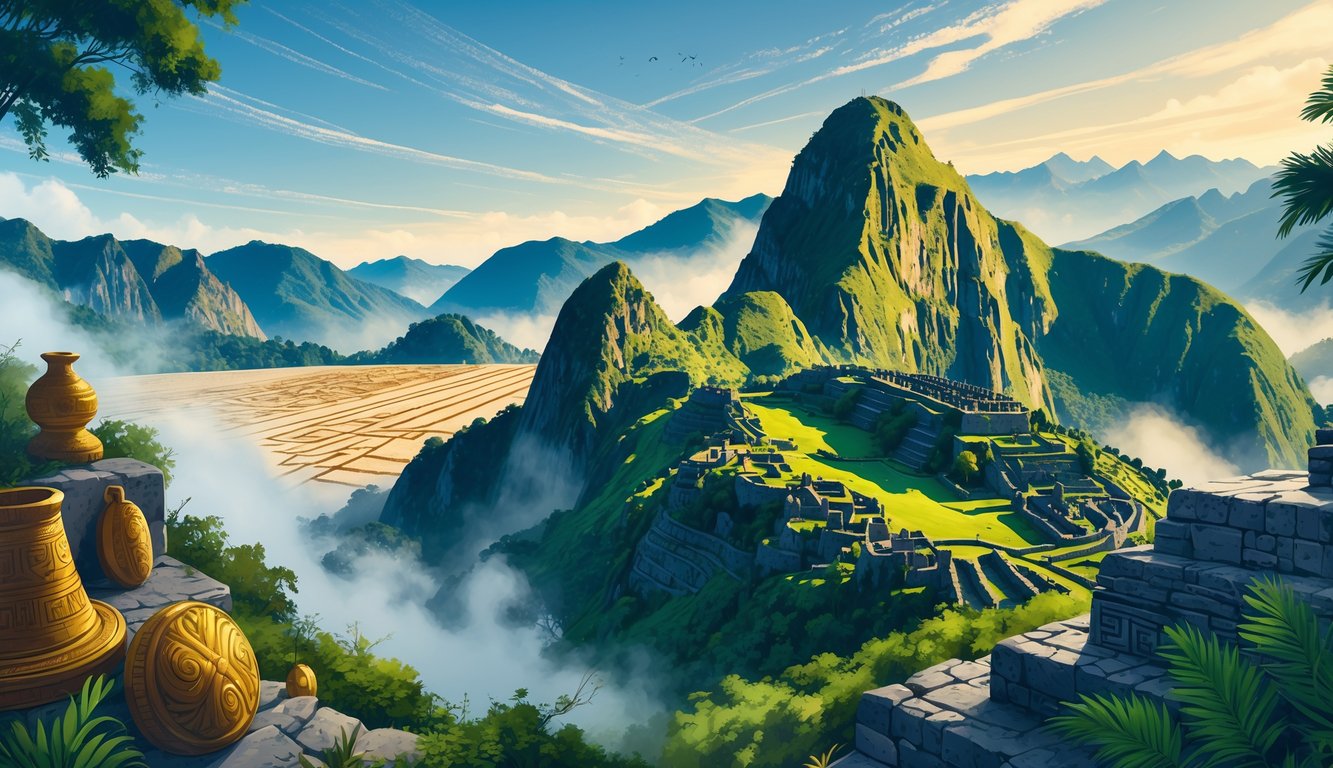
Many travelers visit Peru hoping to unlock the secrets of its past. They marvel at the intricate geoglyphs, massive stone ruins, and hidden temples spread across the land.
Sites like the Nazca Lines and newly discovered ancient settlements in the Andes continue to surprise archaeologists. New findings keep emerging.
These mysteries include unanswered questions about how ancient people built their cities. They also involve the beliefs that shaped their lives and why some sites remain unexplained today.
Machu Picchu: Enigma of the Lost City
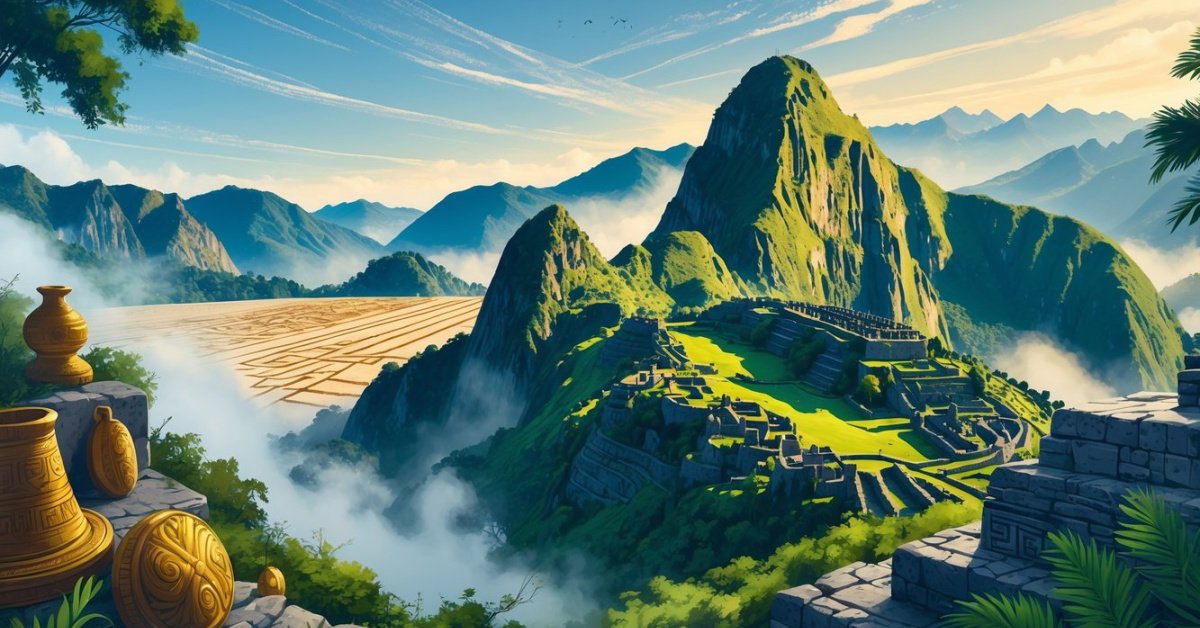
Machu Picchu stands high in the Andes Mountains as one of the most puzzling sites left by the Inca civilization. It attracts adventure travelers and history lovers from all over the world with its stunning views and many unanswered questions.
Purpose and Abandonment
The exact reason why the Inca Empire built Machu Picchu is still unknown. Some experts think it served as a royal estate for Emperor Pachacuti, while others believe it was a religious or ceremonial center.
The city’s remote location and brilliant Incan architecture—using stones fitted without mortar—add to its mystery. Over 500 stone buildings show skilled planning and knowledge of earthquakes, since Machu Picchu sits on a fault line.
Despite these strengths, the Inca suddenly abandoned the site in the 16th century, around the time the Spanish reached Peru. Some suggest a disease or conflict forced them out, but solid proof has not been found.
Read more about some of these unsolved mysteries of Machu Picchu and what makes this UNESCO World Heritage Site so unique.
Discovery by Hiram Bingham
Although local people always knew about Machu Picchu, outsiders did not learn about it for centuries after the Inca civilization left. In 1911, the American explorer Hiram Bingham traveled to Peru searching for the Lost City of the Incas.
Guided by locals through hidden trails and thick jungle, he found the ruins covered in plants. Bingham’s discovery sparked global interest.
Newspapers shared photos of the ancient site, and historians began studying Inca culture in more detail. Many of today’s tourism and research efforts started after this moment.
Since then, Machu Picchu has grown into a top destination for adventure travel and education. You can learn more about Hiram Bingham’s discovery and its impact on tourism.
Spiritual and Astronomical Significance
The Inca designed Machu Picchu to line up with natural features and celestial events. The spiritual meaning of many places around the city can be seen in the Intihuatana stone, a carved rock thought to act as a sundial.
This iconic stone likely helped priests track the sun’s path across the sky, marking important times for farming and ceremonies. Temples and windows in the city align with the solstices and other events, showing the deep connection the Inca had with astronomy and nature.
Many believe Machu Picchu was not only a royal retreat but a sacred place where the Inca culture celebrated their deities and the cosmos. For deeper exploration of its spiritual and astronomical mysteries, visit this article.
Unsolved Secrets of the Nazca Lines
The Nazca Lines are giant drawings made on Peru’s southern desert plains. These strange geoglyphs have puzzled archaeologists and travelers for decades.
Their size, designs, and possible purpose are still surrounded by questions. The Nazca Lines remain one of the main ancient mysteries of Peru.
Origins and Construction
The Nazca Lines were created by the Nazca culture between 500 BCE and 500 CE. This group lived in southern Peru, long before the rise of the Inca Empire.
The geoglyphs formed when people removed the reddish stones on the desert surface, revealing a lighter-colored ground underneath. Many geoglyphs stretch for hundreds of feet.
Some are as long as several football fields. The Nazca people used simple tools like wooden stakes and ropes to plan and build the lines.
Archaeologists have found wooden posts placed at some sites, which may have helped the Nazca keep their designs straight. The dry, windless climate of the Nazca Desert helped preserve the lines for centuries.
Most experts agree that teamwork and a strong understanding of space and measurement were needed to create the lines. Today, the origins and precise techniques still leave many questions for scientists and historians.
Geoglyph Designs and Purposes
The Nazca geoglyphs come in striking shapes. These include animals like monkeys, hummingbirds, spiders, and fish.
Some are simple straight lines or geometric shapes—triangles, trapezoids, and spirals. No written records from the Nazca culture explain why the lines were made.
Some experts think they might have served as pathways for walking during religious ceremonies. Others believe they were linked to water, which was rare and precious for the Nazca civilization.
Other theories suggest the lines acted as giant calendars or maps. The mysterious purposes of the Nazca geoglyphs have led to ongoing debates in archaeology.
Some locals still view the lines as sacred symbols or messages to the gods.
Astronomical Theories
Since their discovery, people have wondered if the Nazca Lines relate to astronomy. Some believe that lines point to places on the horizon where the sun or stars rise and set at certain times of year.
This might mean the geoglyphs acted as a type of ancient observatory. Researchers have argued about these ideas for decades.
Some lines match up with the position of the sun during solstices, but others do not. There is no strong proof that most geoglyphs match any exact astronomical events.
Despite the mysteries, the connection between the Nazca Lines and astronomy keeps scientists curious. Ongoing studies try to match new data with old clues, hoping to learn how much the Nazca people knew about the stars.
The Marvels of Sacsayhuamán
Sacsayhuamán stands on the outskirts of Cusco and amazes visitors with its massive stone walls and advanced Incan engineering. This ancient site reflects the skills and creativity of the Inca civilization during the height of the Inca Empire.
Engineering Feats
Sacsayhuamán is best known for its large stone blocks, some weighing over 100 tons. The Incas moved these stones without wheels or modern machines.
Workers used a combination of ramps, levers, and human strength to set the stones in place. The site features zigzagging walls that rise over 20 feet tall and stretch for hundreds of feet.
These walls were designed to stand strong against earthquakes. Many scientists believe their unique shapes and the way the stones fit together gave extra support.
Sacsayhuamán also served both as a fortress and a ceremonial center. Its strategic location on a hill allowed the Inca Empire to watch over Cusco and protect its people.
This mix of defense and culture shows how valuable the site was to ancient Peru. Learn more about the historical significance of Sacsayhuamán.
Stonework and Carvings
The stones at Sacsayhuamán fit perfectly, without the use of mortar. The craftsmanship is so precise that even a thin knife blade cannot slip between the stones.
This technique is called ashlar masonry. Many blocks have curved edges and unique shapes, making them interlock like pieces of a puzzle.
This not only made the structure stable, but also created a smooth exterior finish. Some stones show faint carvings, such as animal figures and geometric shapes, showing the Incas’ artistic side.
Visitors notice that some of these carvings may have held symbolic meaning for rituals. The beautiful stonework remains a major draw for tourists and scholars who want to understand more about the enigmatic architecture of Sacsayhuamán.
Mythical Origins of Lake Titicaca
Lake Titicaca, known as the highest navigable lake in the world, has captivated people with its ancient mysteries and spiritual significance. Its waters and islands have played an important role in Andean legends and the development of early civilizations.
Legends and Sacred Importance
Lake Titicaca is often called a sacred lake by the indigenous peoples of the Andes. Many legends describe the lake as the birthplace of the sun and the origins of their ancestors.
In one well-known story, the god Viracocha emerged from the waters to create the sun, moon, and the first people of the world. Local communities have believed for centuries that the lake holds deep spiritual power.
It is still used today for ceremonies and rituals. The lake’s islands, including the famous Isla del Sol, are considered sacred places where important rituals took place in ancient times.
For many, these legends continue to shape their respect and connection to the lake, making it a living symbol of their heritage. More about these stories can be explored through the legends and beliefs around Lake Titicaca.
Pre-Inca and Inca Influences
Before the Inca Empire, several ancient civilizations settled around Lake Titicaca. The Tiwanaku culture built impressive temples and monuments on its shores.
These early peoples viewed the lake as a bridge between the earthly world and the divine. The Incas later claimed that their first emperor, Manco Cápac, and his sister-wife, Mama Ocllo, were sent from the lake by the sun god Inti to found their civilization.
Temples, shrines, and ceremonial sites can still be found on the islands and around the lake. These remains show how Lake Titicaca was the spiritual heart for ancient Andean cultures and became part of the stories that defined their identity.
More information about the influence of ancient societies can be found in this look at the history and myths of Lake Titicaca.
The Ancient Fortress of Kuelap
Kuelap sits high in the northern Andes of Peru. It features huge stone walls and mysterious round buildings.
The Chachapoya, a pre-Inca people, built Kuelap. They are known for their unique culture and stunning architecture.
Chachapoya Culture Insights
The Chachapoya, often called the Cloud Warriors, lived in the cloud forests of northern Peru. They built their settlements on mountain slopes and used stone as their main building material.
Kuelap is their most famous stronghold. Archaeologists have found over 400 circular stone houses inside Kuelap’s massive walls.
Each house had a thatched roof and stood clustered closely together. The walls around the settlement rise up to 60 feet high in some places.
This shows advanced engineering for a pre-Inca society. Daily life in Kuelap included farming, weaving, and craftwork.
The Chachapoya people made sarcophagi, which held mummies and were placed on nearby cliffs. For more details about Kuelap and its builders, see this overview of the Chachapoyas culture and their mountain fortress.
Purpose and Legends
Kuelap’s main purpose remains a topic of debate. Some experts think it was a fortress because of its strong defensive walls.
Others say it served as a large ceremonial or residential center. Many legends surround Kuelap.
Local stories talk about great warriors and powerful leaders living there. The site’s high location, at about 10,000 feet above sea level, adds to its mysterious atmosphere.
Kuelap is sometimes compared to Machu Picchu, but it was built centuries before the Inca. Its thick walls, secret entrances, and hidden chambers have inspired theories about lost treasures and unknown rituals.
Archaeologists continue to study the citadel, discovering clues about the lives and beliefs of its builders. To learn more, visit the detailed history of Kuelap’s construction and purpose.
Caral: Cradle of Pre-Columbian Civilization
Caral is one of the most fascinating archaeological sites in ancient Peru. The city offers a window into the lives and achievements of a society that thrived thousands of years before the Inca Empire.
Construction and Urban Planning
Caral is located in the Supe Valley, about 200 kilometers north of Lima. The ruins date back around 5,000 years, making Caral the oldest known city in the Americas.
The city is famous for its large pyramids, circular plazas, and complex layouts. Caral has six major pyramids made from stone and earth.
The largest pyramid is about 18 meters tall and covers a wide area. There were also sunken plazas, residential spaces, and public buildings.
The houses were divided into areas for different social groups. Archaeologists found signs that Caral had organized labor and a central authority guiding its development.
The site includes remains of irrigation systems and drainage channels. These features helped early inhabitants adapt to harsh conditions in pre-Columbian America.
For more details, see the Sacred City of Caral-Supe.
Historical Importance
Caral is a cradle of civilization in the Western Hemisphere. Complex urban life in ancient Peru appeared almost 5,000 years ago, long before more famous societies like the Maya or Inca.
Caral’s people had unique achievements. They practiced agriculture using advanced techniques.
Their society had no signs of warfare or weapons, which sets them apart from other ancient civilizations. The site is also known for its early use of quipu, a system of knotted strings for recording information.
Discoveries at Caral have changed how archaeologists view the beginnings of civilization in the Americas. Find out more about its historical importance and place in world archaeology.
Ollantaytambo and the Sacred Valley Mysteries
Ollantaytambo sits in Peru’s Sacred Valley. It stands as one of the best-preserved sites of the Inca Empire.
This ancient town draws attention for its clever stonework and vast terraces. It played an important role during Incan rule.
Architecture and Engineering
The architecture of Ollantaytambo shows the impressive skill of Incan builders. They used huge stones, some weighing over 50 tons.
The stones fit together so tightly that not even a thin blade can slide between them. Terraced hills shape the landscape, turning steep slopes into farmland.
These terraces also protect the town from landslides. The site’s walls and temples are famous for their exact lines and right angles.
Ollantaytambo’s water system highlights advanced Incan engineering. Channels and fountains still direct water through the ruins today.
Some visitors wonder how the Incas moved the massive stones from quarries far away, as the tools they used remain a mystery. This leads some to call Ollantaytambo a marvel of ancient construction and one of Peru’s most mysterious archaeological gems.
Religious and Strategic Significance
Ollantaytambo served as a fortress and ceremonial site. The location allowed the Incas to watch over and defend the Sacred Valley.
The site contains places built for religious ceremonies, like the Sun Temple. Certain stones align with the sun on important dates, such as the winter solstice.
This connection shows the Incas’ respect for natural cycles and the cosmos. Ollantaytambo was also the site of a rare Inca victory against Spanish forces during the conquest.
Its position protected indigenous inhabitants and gave the Inca Empire a strategic advantage. For many, this site links together Incan culture, defense, and ancient beliefs in one of Peru’s most fascinating ruins.
The Mysteries of Vilcabamba and Choquequirao
Vilcabamba and Choquequirao are two significant sites from the time of the Inca Empire. Both have strong ties to Inca history and secrets hidden in ancient ruins.
Their remote locations attract adventure travelers seeking hidden trails in the Peruvian Andes.
Last Inca Refuge
Vilcabamba is often known as the last stronghold of the Incas. After the Spanish conquered Cusco, the Inca leaders fled deep into the mountains.
They set up a new center in Vilcabamba, where they resisted the Spanish for decades. Historians believe the city was both a sanctuary and a final base in the long fight against conquest.
The site’s remote location in dense jungle made it very hard to reach. Explorers today still have to navigate difficult, winding paths that hint at why it stayed hidden for so long.
This period is important because Vilcabamba became a symbol for Inca resistance. Many locals and travelers see it as a place of courage and hope.
The story of Vilcabamba gives a glimpse into the final days of the Inca. They tried to save their culture against impossible odds.
Archaeological Discoveries
Choquequirao, sometimes called the “sister city” of Machu Picchu, has attracted attention for its size and mystery. Archaeologists have found large terraces, ceremonial plazas, and rare artwork like llama-shaped stone decorations along its walls.
Much of Choquequirao remains unexcavated. This unfinished work adds to its appeal for adventure travel.
Tourists and researchers must hike hidden trails, often for days, to reach the site nestled in the rugged Vilcabamba mountain range. New studies in the 21st century show that the citadel was built in different stages, possibly by several Inca groups.
Each discovery helps experts learn more about Inca culture and their way of life. These ruins reveal both everyday details and great ceremonies at this lost city.
Ceremonial Wonders: Coricancha, Temple of the Sun, and Temple of the Moon
In the heart of Cusco, ancient temples reveal stories of spiritual power and mysterious rituals. These sites show advanced Incan architecture.
People from all over the world visit to understand their role in Andean religion and society.
Coricancha’s Gold and Legends
Coricancha, once the most important temple in the Inca Empire, stood out for its walls covered in gold sheets. The Spanish described it as shining so brightly it was hard to look at.
These gold plates were taken during the Spanish conquest, fueling tales about treasures still hidden beneath the site. The temple was the center of Incan spiritual life and served as the home of Inti, the sun god.
Coricancha also featured life-sized statues of llamas, corn, and people, all made of solid gold and silver. Spanish colonizers later built a church on its remains, creating a blend of Incan and colonial design that is still visible today.
You can read more about how the site mixes Inca and Spanish heritage at Coricancha: Temple of the Sun.
Sun and Moon Worship
Sun and moon worship shaped the daily life and ceremonies of the Andean people. The Temple of the Sun, known as Coricancha, was dedicated to Inti and acted as the main stage for solar celebrations.
Priests studied the movement of the sun using special stones, like the famous intihuatana, to track time and plan rituals. The Temple of the Moon, located near Cusco, also played a vital role.
Here, people honored Mama Killa, the moon goddess, who controlled time, fertility, and protection. Incan architecture at both temples used precise stonework and alignment with celestial events.
These features show deep spiritual significance and advanced building skills for the time. For details on how these beliefs shaped the sites, see Qorikancha in Cusco.
Inti Raymi and Other Enduring Inca Legends
Peru is known for stories and rituals that still shape its identity today. Visitors often find themselves drawn to Inca culture through powerful legends and vibrant traditions.
Origins and Traditions
Inti Raymi, also called the “Festival of the Sun,” was one of the most important religious ceremonies of the Inca Empire. It honored Inti, the sun god, who was the most respected deity among the Incas.
This ceremony began around 1412 and was held every June 24 in Cusco, the capital of the empire. The main events took place at historic sites along the Inca Trail and included rituals, feasts, and processions.
Priests, nobles, and the Inca ruler offered gifts and sacrifices to Inti, asking for blessings and good harvests. These stories became legends, passed down from generation to generation.
The Spanish conquest banned the ceremony for hundreds of years. Many of the details about Inti Raymi survived through oral tradition and local art.
Modern Celebrations
People in Peru revived Inti Raymi in 1944 with a historical reenactment in Cusco. Today, it is one of the biggest festivals in Peru.
Thousands of tourists gather in the city each June 24 to watch dancers, actors, and musicians recreate important parts of Inca culture. Parades wind through the streets, ending at the Sacsayhuamán fortress.
Traditional costumes and ancient rituals fill the celebration, bringing the legends of the Incas to life. Many visitors also join tours along the Inca Trail to explore sites connected to Peru’s rich past.
Local people use Inti Raymi to honor their ancestors and share their heritage with the world. The event keeps Inca stories and customs alive for new generations.