
Pennsylvania is a state packed with stories, secrets, and unsolved puzzles that have fascinated people for generations. Some of the biggest historical mysteries in Pennsylvania include lost treasures, ancient Native American petroglyphs, and haunting unsolved crimes that still leave people wondering what really happened.
From the rolling hills to small towns and busy cities, legends and questions can be found in every corner.

This state is famous for its rich history. It is also known for chilling cold cases and missing loot that capture the imagination.
Stories of lost treasures hidden in forests and enigmatic ancient carvings show that there are secrets buried just beneath the surface. For anyone curious about history’s unanswered questions, exploring these mysterious tales from Pennsylvania reveals a side of the state that’s full of curiosity and wonder.
The Boy in the Box: Philadelphia’s Enduring Mystery
The Boy in the Box case is one of Pennsylvania’s most baffling unsolved crimes. This case involves a young victim in Philadelphia and has puzzled investigators for decades.
Discovery and Investigation
In February 1957, someone found the body of a 4-year-old boy inside a cardboard box on Susquehanna Road in Philadelphia. He was naked, malnourished, and showed signs of being badly beaten.
The child appeared to have been recently groomed and cleaned. Police treated it as a homicide from the start.
A detailed search of the scene turned up few clues. Investigators found a flannel blanket and the box, which once held a bassinet from JC Penney.
Hundreds of leads poured in as the news spread across Pennsylvania. Despite the attention, his identity remained a mystery for decades.
Authorities struggled to find anyone who recognized the boy or reported him missing. He quickly became known as the “Boy in the Box”.
Theories and Possible Motives
People suggested various theories about the boy’s fate. Some believed his family abandoned him, while others pointed toward illegal adoption or trafficking.
There were rumors that he came from a foster home or orphanage nearby. Investigators explored links to other Pennsylvania murders and unsolved crimes but found no solid connections.
A few tips hinted at possible family involvement. However, evidence was never strong enough to make an arrest.
The lack of missing persons reports added to the mystery. Authorities questioned how a young victim could vanish without notice.
Motive has never been proven. Theories continue to circulate, especially among those interested in cold cases.
Modern Developments and DNA Evidence
In recent years, advances in DNA technology brought new life to the case. Investigators exhumed the boy’s body several times to collect fresh DNA samples.
Using modern forensic techniques, police built detailed genetic profiles and compared them to public genealogy databases. This effort finally revealed the boy’s name: Joseph Augustus Zarelli.
In 2022, officials identified him after matching his DNA to distant relatives. Though this answered the question of his identity, his killer remains unknown.
The use of DNA evidence in the Boy in the Box case highlighted breakthroughs in solving Pennsylvania cold cases. Details about Joseph’s past and possible family are still under investigation.
For more information, see recent updates on the case.
Chester County Doomsday: The Disappearance of Karen Denise Wells
Karen Denise Wells vanished while on a long road trip. Her disappearance in April 1993 continues to stand out as one of the state’s most baffling unsolved crimes.
Timeline of Events
Karen Denise Wells was 23 when she left Haskell, Oklahoma, driving east to visit a friend in Bergen, New Jersey. She had recently left her young son with family members and planned to reconnect with an old friend.
On April 12, 1993, Karen checked into the Pike Motel in Carlisle, Pennsylvania, after driving for over 20 hours. She called her friend Melissa at around 8 p.m. and said she would meet her later that night.
Karen then left to get food from McDonald’s but never returned to her motel room. Her car was later found abandoned in Pennsylvania, with personal belongings inside and no sign of struggle.
You can read more details at this detailed timeline.
Potential Suspects and Leads
Investigators looked into several possible persons of interest, including people Karen may have met along her route. Motel staff told police that Karen was seen speaking with individuals in the parking lot, though no one has ever been identified as a key suspect.
Other leads pointed to potential foul play, but with no strong physical evidence, nothing turned up to move the case forward. The abandoned car raised more questions, as her wallet and other vital items were left behind.
This suggested that she may not have left by choice and may have been trusting or unaware of the danger she faced. For more, see the case discussion.
The Ongoing Search for Answers
The Wells case is still unsolved. Authorities continue to ask for information from anyone who might know about Karen’s disappearance.
Public appeals from her family, especially her mother, have kept the case in the spotlight. Chester County residents and people following missing person cases in Pennsylvania remember Karen and hope for a breakthrough.
Some believe that social media and renewed news interest could eventually lead to new tips. Find further updates and appeal notices at this local report.
The Vanishing of Cindy Song: A College Student Lost
Cindy Song, a student at Pennsylvania State University, vanished after a night out in 2001. Her disappearance remains one of the state’s most puzzling cold cases.
Events Leading Up to the Disappearance
Cindy Song, whose birth name was Hyun Jong Song, moved from South Korea to the United States to pursue her education. She joined Penn State in 1998 to study integrative arts.
Cindy took part in campus clubs, including the Korean Undergraduate Student Association and the American Red Cross. She lived independently and had a circle of friends.
On Halloween night in 2001, Cindy celebrated with friends at a party near campus. She wore a bunny costume and returned home in the early morning hours of November 1.
Friends dropped her off at her State College apartment around 4 a.m. This was the last confirmed sighting of her.
Later, her personal belongings such as her phone and backpack were found inside her apartment. Cindy was missing.
Her sudden vanishing sparked immediate concern among friends and family.
Key details:
- Name: Cindy Song (Hyun Jong Song)
- Location: State College, Pennsylvania
- Date Missing: November 1, 2001
- Status: Missing person, unsolved crime
For more details on Cindy’s last known movements, see the account at True Crime Edition.
Investigative Challenges
Officials faced significant obstacles from the start. There was no sign of forced entry at Cindy’s apartment, and little physical evidence was left behind.
With so few concrete leads, detectives struggled to piece together what happened after Cindy was dropped off. Police interviewed friends, family, and neighbors.
The lack of credible witnesses and video footage limited the investigation. Several theories, including abduction and voluntary disappearance, were considered but could not be proven.
A handful of tips about Cindy surfaced over time, including possible sightings and connections to other crimes. However, none of these led to a breakthrough.
The case became one of Pennsylvania’s lingering unsolved crimes.
Community Impact and Awareness
The mystery of Cindy Song’s disappearance deeply affected the Penn State community and beyond. For fellow students, it was a stark reminder of the dangers that can exist close to home.
Regular memorials and social media posts have kept Cindy’s story alive. Local organizations and advocacy groups worked to raise awareness about missing persons and campus safety.
Her case has been featured on shows and news specials, reminding the public that Pennsylvania has a number of cold cases that remain unresolved.
The lingering mystery has encouraged students, residents, and law enforcement to stay alert. Cindy Song’s story stands as a call to remember those who are missing and to continue seeking the truth behind unsolved disappearances.
The Pittsburgh Drownings: Mysterious River Deaths

A string of unexplained drownings in Pittsburgh’s rivers has puzzled both police and the public. These incidents involve young men who disappeared under strange circumstances and were later found in the city’s waterways.
Case Summaries
Several cases stand out for their similarities. Notably, Paul Kochu and Dakota James were both young, promising men who vanished after nights out with friends.
Their bodies were discovered weeks later in the rivers near downtown Pittsburgh. Many details raise questions.
Some victims had no signs of struggle or trauma. Friends and family often describe the missing men as responsible and unlikely to disappear intentionally.
The victims were last seen near the rivers or entertainment districts. Investigators searched for patterns, looking at time of year, location, and the victims’ backgrounds.
Although some point to the possibility of accidents, families remain unconvinced. The strange circumstances of these deaths continue to perplex the community, as shown in coverage about these river mysteries.
River Legends and Local Theories
Pittsburghers have developed many beliefs to explain the drownings. Some talk about the “Smiley Face Killer” theory, which claims a group is targeting young men and dumping them in rivers across the country.
Others believe the city’s steep hills, confusing streets, and dark riverbanks make accidents more likely. Alcohol often plays a role, as victims were last seen leaving bars or parties.
Locals also speak about currents and undertows in the rivers, saying the water hides evidence. Urban legends feed the mystery.
Some residents think the city’s rivers are cursed or believe in unsolved crimes connected to the area’s history. Media attention often brings these stories to life, making them part of the city’s identity—a topic explored on sites covering local mysteries and legends.
Role of the Allegheny and Ohio Rivers
The Allegheny and Ohio rivers shape Pittsburgh’s landscape. These waterways are deep, fast-moving, and lined with nightlife areas and bridges.
Strong currents and low visibility make it hard to find missing people or evidence. Local police patrol the rivers, but even trained dive teams struggle to search these waters.
The entertainment spots near the riverbanks increase the risk of accidents. People can end up in the water, especially at night when it’s dark and slippery.
The rivers have a long history of accidents, missing persons, and unsolved crimes. The Monongahela and Ohio Rivers have also played roles in Pittsburgh’s unsolved mysteries, such as the sunken “ghost bomber” and other disappearances.
The Westmoreland County Teen Murders: Still Unsolved

Two Pennsylvania teens, Scott Baur and Shawn Fosnaught, were found murdered in Westmoreland County nearly thirty years ago. Despite years of effort, the case remains unsolved.
Scott Baur and Shawn Fosnaught: The Case Details
Scott Baur and Shawn Fosnaught were close friends from Westmoreland County. On a summer night in 1979, both boys disappeared after being seen at a local carnival.
Their bodies turned up days later in a wooded area near their homes. Both teens had suffered violent deaths.
The community was shocked by the discovery. Authorities collected evidence, but never named any suspects.
Rumors spread about whether the crime was random or if the teens knew their killer. Many leads surfaced over the years, but none led to an arrest.
The murders remain a painful mystery for the families and the community.
Community Response
The Westmoreland County community immediately supported the families of Scott Baur and Shawn Fosnaught. Candlelight vigils, fundraisers, and news coverage kept the story alive.
Schools and churches offered support to students and residents who felt unsafe. People often discussed the unsolved case, fearing for their own safety.
Some families moved away, but many stayed and kept pushing for answers. Billboards, flyers, and social media campaigns continue to bring attention to the case.
Generations have grown up hearing about the murders. The loss of the two teenagers remains a reminder of the dangers still unsolved in the area.
Cold Case Investigations
Law enforcement continues to seek answers in the deaths of Shawn Fosnaught and Scott Baur. Detectives have re-examined evidence using new forensic technology.
Cold case units from across Pennsylvania occasionally review the files. The murders are still listed among Westmoreland County’s cold cases.
The families stay in contact with police, regularly asking for updates and offering new information. Rewards for tips have also been offered over the years.
Police encourage anyone with information to come forward. News outlets run features on the case every few years, keeping it in the public eye.
Lancaster County’s Civil War Ghosts and Legends
Lancaster County is known for its Civil War history and the eerie legends that followed. Many locals and visitors believe that stories from the past still haunt the streets, buildings, and battlefields.
The Mysterious Case of Terrence Bowers
One of the most told tales is the case of Terrence Bowers. Bowers was a young man who lived near Lancaster and was rumored to have connections to Civil War soldiers.
According to local beliefs, Bowers often explored old battle sites. He once vanished under strange circumstances.
Neighbors reported odd lights and sounds in the woods where Bowers disappeared. Some say he vanished into thin air, fueling rumors that he uncovered a hidden secret or met a restless soldier spirit.
The story keeps growing, with some families saying they still see shadowy figures around the area.
A short table of key points about Terrence Bowers:
| Fact | Detail |
|---|---|
| Name | Terrence Bowers |
| Connection | Local with Civil War interests |
| Notable event | Disappearance during exploration |
| Mystery | Rumors of ghost sightings after he vanished |
Haunted Battlefields and Soldier Stories
Lancaster County sits close to historic locations tied to the Civil War. Residents say certain battlefields remain haunted by spirits of lost soldiers.
Some visitors have claimed to see apparitions in old uniforms walking late at night. Old City Hall in Lancaster is said to host the spirit of George Ross.
The home of Civil War General John Reynolds has its own share of eerie sightings. Local libraries often feature accounts of ghostly encounters and unexplained phenomena.
For anyone interested in these ghostly tales, Haunted Lancaster lists some sites with reported apparitions and stories. These legends connect deeply with the history of the county and offer a window into Lancaster’s Civil War past.
Riddles Along the Susquehanna River

The Susquehanna River is home to real mysteries that blend history, unsolved crimes, and local beliefs. Events along this river have inspired both cold case investigations and stories passed down for generations.
Historic Crimes and Cold Cases
During the American Revolutionary War, the regions around the Susquehanna River saw much unrest. One of the most mysterious stories is about the Susquehanna River Bandits.
These bandits roamed along the riverbanks, targeting travelers and new towns.
Key details about the Susquehanna River Bandits:
| Years Active | Main Activity | Notable Mystery |
|---|---|---|
| 1775–1783 | Robbery, Guerrilla | Disappearance of silver bars |
Many believe the bandits hid a large stash of stolen silver near the river. Despite many searches, no one has found the exact location.
Both professional treasure hunters and curious locals have tried to solve this mystery. The missing loot from the Susquehanna River Bandits remains one of Pennsylvania’s most interesting cold cases.
River Superstitions and Folklore
Folklore runs strong along the Susquehanna. Many residents share stories about the Kettle Creek Monster, also called the “West Branch Dugong.”
This strange creature is said to live in the West Branch of the river, with tales dating back hundreds of years. Some describe it as a large aquatic animal, while others think it is mysterious and shapeshifting.
There are also stories of unusual sights, like a Statue of Liberty replica standing on a piling in the river. This landmark appeared in the 1980s and quickly became a local talking point.
For many people living near the Susquehanna, these legends are part of their culture. Real events often mix with unexplained happenings, shaping how people view this historic waterway.
Cumberland County Mysteries: Missing People and Crimes
Cumberland County in Pennsylvania has many cold cases involving unsolved crimes and missing people. These cases have left families without answers and sparked interest from the community and law enforcement.
Notable Disappearances
Many missing person cases in Cumberland County have remained unsolved for years. Families and police have searched for clues, but some people vanished without leaving a trace.
Key cases draw attention on sites like SpotCrime’s Cumberland County cold case page. Each missing person story is unique, involving different cities and circumstances.
Some people disappeared on their way to school, while others were last seen leaving work or a local event. Investigators gather tips, conduct searches, and work with volunteers.
Old cases sometimes lose momentum. Advances in technology, like DNA testing and social media, provide new hope.
Posters, public appeals, and continued community involvement keep these mysteries in the public eye.
Unsolved Homicides
Cumberland County also has a number of unsolved murder cases. Law enforcement investigates these killings for years, hoping for a breakthrough.
Many of these homicides appear in lists of Pennsylvania cold cases. Victims come from different backgrounds and age groups.
Some cases involve quick and violent attacks, while others may link to other crimes. Despite public interest and large police efforts, answers remain out of reach.
Families remember victims through memorials and local media coverage. The Crime Stoppers program encourages people to share anonymous tips.
New evidence or witness reports sometimes lead to arrests, even many years later. Hope remains alive for loved ones.
World War I Secrets and Lost Stories in Pennsylvania
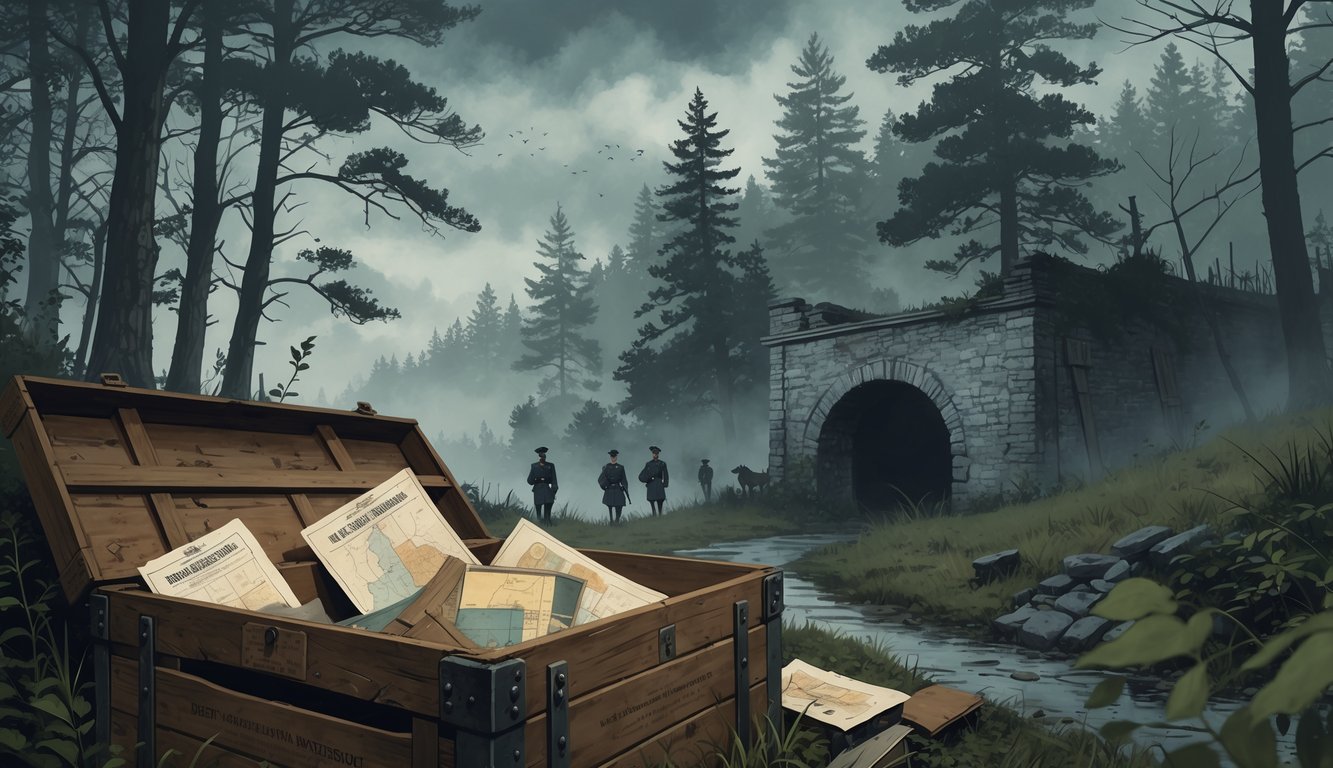
Pennsylvania played a major part in World War I, both on the home front and through the experiences of its returning soldiers. Many stories from this era remain mysterious, hidden, or forgotten.
Wartime Espionage in Pennsylvania
During World War I, Pennsylvania served as a hub for industry, shipping, and railroad lines. This made it a target for spies and saboteurs.
Rumors spread about secret German spy rings trying to stop war production or gather information about troop movements. Factories in cities like Pittsburgh and Philadelphia built weapons, ammunition, and supplies for the military.
Reports surfaced about suspicious fires, explosions, and acts of sabotage. Some believed enemy agents caused these incidents, but many were never fully explained.
The government increased security and urged citizens to report any strange behavior. Loyalty groups, such as the American Protective League, watched for people who spoke out against the war.
Many immigrants, especially those from Germany, faced suspicion and sometimes arrest. Further information about Pennsylvanians’ roles in the conflict can be found at Pennsylvanians in the Great War.
Mysteries of Returning Veterans
When the war ended, thousands of Pennsylvania soldiers came home changed by their experiences. Some struggled to share their stories, keeping secrets about what they saw in the trenches or on the battlefield.
Families noticed that many veterans acted differently but never knew the full reasons why. Some veterans simply disappeared, never contacting friends or relatives again.
In rare cases, items such as letters or medals showed up decades later, raising questions about what really happened to them. Community groups in Pennsylvania try to gather and share these hidden stories.
Local history projects encourage people to submit pictures, documents, and family memories related to the war. If you have a story to share, you can visit the Pennsylvania WW1 Centennial site for more details.
How DNA Evidence is Changing Pennsylvania’s Cold Cases
DNA evidence has become one of the most powerful tools for solving old crimes. New testing methods and technology now help solve many Pennsylvania cold cases after years of uncertainty.
Breakthroughs in Old Investigations
For decades, many Pennsylvania cold cases went unsolved. Fingerprints and eyewitness reports often did not provide enough evidence to find the person responsible.
Today, DNA testing can identify or rule out suspects with much greater accuracy. Investigators now retest items like old letters or clothing.
For example, DNA found on a letter recently helped police solve a murder case from 1988. DNA technology also helped police in Bethlehem use a new device to collect evidence in the Holly Branagan case, which dates back to 1979.
Challenges and Successes in Forensic Technology
DNA has helped many cold cases. There are still obstacles.
Funding and trained staff can be limited. This shortage sometimes causes delays.
Not every police department has access to advanced tools.
Police now use creative approaches like crowdsourcing and forensic genetic genealogy. These methods compare crime scene DNA to online family tree databases.
Police have found new leads in tough cases. They have solved crimes that seemed impossible years ago.
Some Pennsylvania cold cases still take time. New technology and teamwork are leading to more answers.