Pakistan is home to some of the most fascinating historical mysteries in the world. From the lost civilizations of the Indus Valley to the hidden relics left behind by ancient cultures, its history is full of unanswered questions and intriguing stories.
Many of these mysteries are connected to its rich cultural heritage. This makes them significant for people in Pakistan and around the globe.
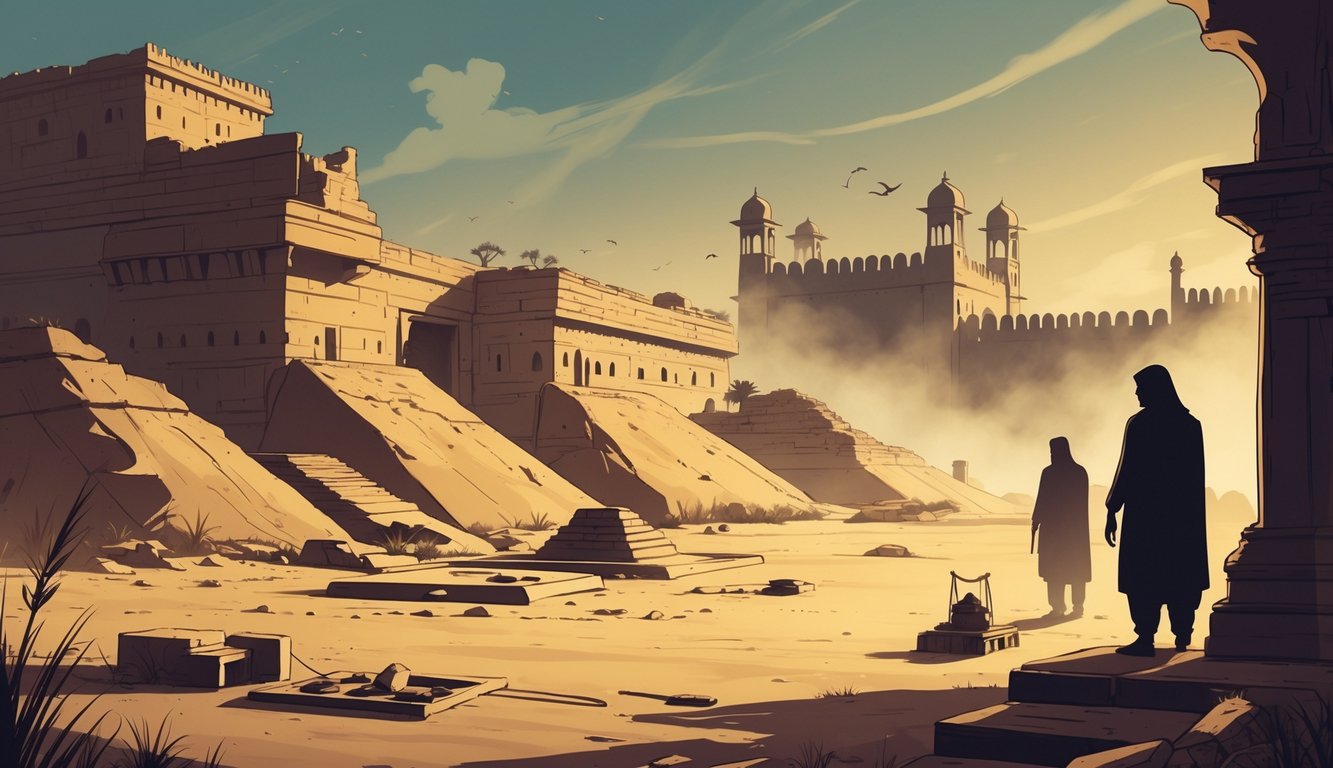
Archaeologists and historians keep uncovering secrets about places like Mohenjo-daro, known for its advanced city planning. The Gandhara region is famous for its unique art and Buddhist ruins.
Some legends speak of sacred sites, hidden treasures, or mysterious ancient scripts that remain unsolved. These stories reveal the complex past that shaped the country’s identity.
Exploring these mysteries gives a deeper look into the layers of Pakistan’s history. Readers will discover not only famous sites but also lost civilizations and hidden relics that make the story of this land unique.
The Lost Legacy of Mohenjo Daro
Mohenjo Daro, built around 2500 BCE in Sindh, was once one of the largest cities of the ancient Indus Valley Civilization. Its advanced city design, mysterious script, and sudden decline have sparked curiosity and research across South Asia and beyond.
Unsolved Mysteries of Urban Planning
The planning of Mohenjo Daro surprises historians even today. Its streets form a grid system, unlike many other early cities.
Homes had well-planned drainage and sometimes private wells. Large public structures like the Great Bath hint at organized social life.
The city used standardized brick sizes, showing centralized control. Historians still debate how leaders made decisions or governed such precise planning.
Experts discuss whether neighborhoods served different social classes or jobs. Some think religious rituals shaped the city’s layout, but proof is missing.
To learn more, visit this detailed look at Mohenjo Daro’s urban innovations.
Reasons for Decline and Abandonment
Mohenjo Daro was abandoned for reasons that archaeologists still debate. Many believe changes in the Indus River’s flow may have caused floods or droughts.
There is little evidence of major warfare or fire destroying the city. Some researchers suggest climate change or diseases could have played a part.
Clues hint at a slow decline rather than a sudden disaster. The lack of personal items left behind adds to its mystery.
Read about possible causes for the decline of Mohenjo Daro.
Enigmatic Script and Language
The Indus script remains one of the most fascinating aspects of Mohenjo Daro. Many seals and tablets show signs and symbols, but no one has fully read them yet.
This unknown language keeps details about daily life, beliefs, and government hidden. There is no bilingual text to help unlock the code.
Scholars use pictures and patterns for clues, but progress is slow. The mystery of the Indus script keeps Mohenjo Daro’s heritage a topic of global study.
Harappan Civilization: Riddles of the Past
Long ago, the Indus Valley Civilization thrived in what is now Punjab and other regions of Pakistan. They built well-planned cities like Harappa and left behind many mysteries.
Harappa’s Forgotten Inhabitants
The people of Harappa lived around 2600-1900 BCE. Their cities had paved streets, brick houses, and complex drainage systems.
These achievements show a high level of organization and skill. Experts are still unsure about many parts of daily life for these ancient people.
For example, their written script has never been fully decoded. Figures, pottery, and tools found at the sites only give a partial picture of how the Harappans lived.
Trade played a big part in Harappa’s history. Goods like beads and metalwork found far from the Indus show trade routes reached places such as Mesopotamia.
This wide trading network points to economic strength and close contacts with other ancient worlds. No one knows exactly why the civilization declined and was abandoned.
Theories include climate change or shifts in river patterns. You can learn more about these unsolved mysteries from this article.
Mysterious Burial Practices
Harappan burial sites raise important questions. People were mostly buried in simple pits or wooden coffins, often with personal items like pottery, tools, and beads.
This hints at some belief in an afterlife. Burials do not show signs of rich or poor differences.
Most graves look similar, with a few items placed beside the bodies. This suggests that the society was probably quite equal.
The way Harappans treated their dead stands out compared to nearby cultures, where rulers had huge tombs or monuments. Their remains have helped scientists study health, diets, and diseases of the time.
However, the meaning behind certain patterns, such as why some bodies face different directions or include specific objects, is still a mystery. These questions make their burial habits a fascinating part of ancient Punjab’s history.
Unanswered Questions Surrounding Ancient Sufi Saints
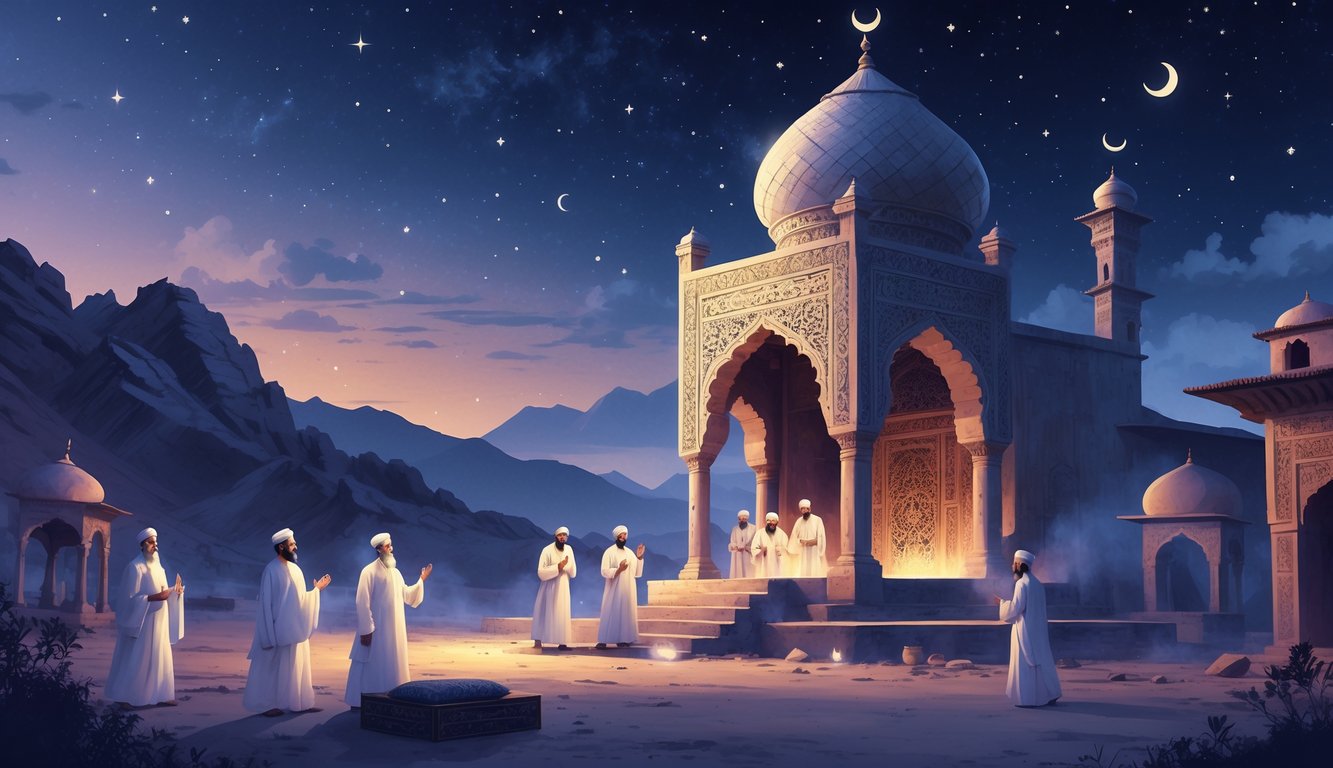
Stories about Sufi saints in Pakistan are filled with mystery and wonder. Many tales and facts about these figures remain debated or unsolved.
Legends and Miraculous Tales
Throughout Pakistan, the shrines of Sufi saints are surrounded by stories of miracles and strange events. For example, Shahbaz Qalandar is known for claims of superhuman powers and spiritual feats.
Some believe he tamed wild animals, while others say he could predict the future. At the shrine of Data Ganj Bakhsh in Lahore, locals share accounts of cures and visions said to come from the saint’s blessings.
These stories are passed down through generations, yet little historical evidence backs them up. The line between fact and folklore is often unclear.
The annual festivals at shrines draw huge crowds. These tales are woven into everyday life.
| Saint | Notable Miracle | Shrine Location |
|---|---|---|
| Lal Shahbaz Qalandar | Taming wild animals | Sehwan Sharif |
| Data Ganj Bakhsh | Healing powers | Lahore |
| Bulleh Shah | Spiritual insights | Kasur |
Disputed Lineages and Origins
The true origins and family backgrounds of several Sufi saints are still debated. For example, the ancestry of Bulleh Shah is uncertain.
Some sources link him to Persian nobility, while others say he comes from a farming family. Data Ganj Bakhsh’s exact birthplace is also a point of argument.
Some historians say he was born in present-day Afghanistan, while others claim Iran. These disputes affect both academic research and community claims to heritage.
The lack of documented records and the influence of oral traditions make it hard to separate myth from reality. This ongoing debate keeps the legacy of Sufi saints complex.
The Puzzle of the Hingol National Park Sphinx
In the hills of Balochistan, a huge rock looks like a sphinx—a lion with a human head. It is located inside Hingol National Park.
This strange stone figure has led to debates about its origin and history. Visitors and locals often wonder how it formed.
Natural Formation or Human Creation?
The so-called Balochistan Sphinx sits along the Makran Coastal Highway, near the Arabian Sea. Unlike Egypt’s famous sphinx, this one has not been proven to be carved by ancient people.
Many geologists say wind and rain shaped the rock over thousands of years. Some features, such as what looks like a headdress and paws, make people wonder if humans shaped the rock.
Experts are divided after closer study. There is no strong proof of tools or carvings on the rock itself.
Most scientists believe that the resemblance to a sphinx is a coincidence caused by nature. For more details and images, visit a page about the Balochistan Sphinx.
Theories on Ancient Civilizations in Balochistan
Ideas about the rock’s history are popular in Balochistan. Some writers think the sphinx might be a leftover from a lost or advanced ancient civilization.
There are claims that it could be more than 12,000 years old, but these claims are not proven by any digs or scientific dating. Others suggest the area may have had early settlements or religious sites.
There is no clear evidence linking the sphinx stone to a known ancient culture. So far, archaeologists have not found artifacts or ruins around the formation that would point to a human-built monument.
The story continues to attract those interested in both the natural and human history of Pakistan. Read more in this look at the history of the Balochistan Sphinx.
Mysterious Events in the History of Karachi
Karachi, the largest city in Sindh, has a long history that includes both crime and tales of the supernatural. Events in Karachi’s past often leave people searching for answers.
Unexplained Disappearances
Over the decades, Karachi has been the center of several disappearances that were never solved. Many missing persons cases from the 1980s and 1990s, especially those involving journalists, activists, and political figures, remain mysteries today.
Some people vanished from busy public places. Others seemed to disappear from their homes with no signs of struggle.
The reasons behind these disappearances are often unknown. Police investigations sometimes pointed toward political unrest or organized crime, but hard evidence was rare.
Families often waited years for news, but many never found closure. Lists of people who went missing in Karachi still appear today in the news or on social media.
These cases remind citizens that not every mystery in the city’s history gets a clear or happy ending.
Ghost Stories and Supernatural Incidents
Karachi is famous for its ghost stories and reports of supernatural happenings. Locations like Frere Hall, Clifton Beach, and the Old British Cemetery often appear in eerie legends.
People have seen strange shadows, heard unexplained noises, and spotted figures that vanished in front of their eyes. Guards at the Mohatta Palace say they see objects move by themselves late at night.
Others talk about hearing whispers or footsteps when no one else is around. These tales have passed down for generations, mixing the city’s real history with stories of the supernatural.
Many believe tragedies, wars, or old curses from Karachi’s colonial and Sindh heritage haunt these sites. These stories attract both skeptics and believers, adding to Karachi’s reputation as a city where the past never truly rests.
The Enigma of Kashmir’s Hidden Treasures
Kashmir’s history holds secrets about lost relics and places that puzzle experts in South Asia. Some stories talk about precious items stolen from temples.
Others describe ancient caves and tunnels still waiting to be explored.
Missing Artifacts From Temples and Shrines
The theft of religious relics in Kashmir stands as one of its most debated mysteries. In 1963, someone stole a holy relic from the Hazratbal Shrine.
This event led to protests and investigations that lasted for years. The relic was later returned, but the details of the theft remain unclear.
The disappearance of objects from temples troubles historians. Ancient idols, manuscripts, and copper plates—many from the Buddhist and Hindu eras—have gone missing over centuries.
These lost artifacts are not just valuable; they are key pieces of Kashmir’s cultural heritage. Historians still search for answers, while many locals believe these treasures are hidden away or lost forever.
To learn more about these mysteries, you can read about Kashmir’s stolen relic.
Mythical Caves and Secret Tunnels
Stories of underground passageways and secret caves have fascinated people in Kashmir for generations. Many legends talk about tunnels beneath old forts, palaces, and even rivers.
Some say kings and monks used these tunnels as escape routes during wars. Others believe people hid treasures from invaders in these hidden places.
Archaeologists have found hints of these mysterious sites while studying ruins. Most tunnels remain unproven, but tales continue about caves filled with ancient writings, statues, and lost gold.
Explorers in South Asia still search for these hidden wonders. They hope to uncover the truth behind these age-old legends.
Assassinations That Shaped Pakistan’s Destiny
Political assassinations have left a lasting mark on Pakistan’s history. These tragic events changed the country’s leadership and future.
The Death of Liaquat Ali Khan
Liaquat Ali Khan, Pakistan’s first prime minister, was assassinated on October 16, 1951, while addressing a crowd at Company Bagh in Rawalpindi. The park is now called “Liaquat Bagh” in his memory.
He was a central figure in the early years of Pakistan and a close associate of Muhammad Ali Jinnah. A lone gunman shot him twice in the chest.
The reason behind his murder remains a mystery. Police killed the assassin on the spot, and no clear motive or mastermind was ever found.
This sudden loss created a void in leadership. Many rumors spread—some blamed foreign involvement, while others suspected internal rivals.
Because the case was never solved, questions about justice and responsibility are still discussed today. The murder of Liaquat Ali Khan shook the foundations of the young country.
The Assassination of Benazir Bhutto
Benazir Bhutto, leader of the Pakistan Peoples Party (PPP) and the first woman to lead a Muslim-majority country, was assassinated on December 27, 2007, in Rawalpindi after giving a speech at Liaquat Bagh. She had survived previous attempts on her life and was campaigning for a return to power.
During the attack, a gunman fired shots and then a suicide bomb exploded. Benazir and many of her supporters died in the chaos.
The investigation was controversial, with many doubting its findings. Leaders and supporters of the PPP demanded justice, but no one was clearly convicted.
Many still feel the real masterminds have not faced punishment. Her death marked a turning point in Pakistan’s political history of assassinations and increased public demands for transparency and accountability.
Political Intrigues and Unsolved Plots
Pakistan’s history is full of political mysteries, including secret coups and sudden disappearances. These unsolved events still spark debate in classrooms and newsrooms.
Mysterious Coups and Conspiracies
Since independence, Pakistan has seen several sudden changes in leadership. The military coup of 1958, when General Ayub Khan took power, shocked the country.
The ouster of Prime Minister Zulfikar Ali Bhutto in 1977 and his later execution still cause arguments among historians and families. Some believe foreign governments or hidden groups were involved, while others point to local politics.
In 1999, General Pervez Musharraf removed Prime Minister Nawaz Sharif. Meetings with the United Nations after these incidents were tense as the world tried to understand what happened.
There are still unanswered questions about who plotted these actions and why key decisions were made behind closed doors.
A simple table sums up some controversial coups:
| Year | Key Figure | Outcome |
|---|---|---|
| 1958 | General Ayub Khan | Military rule |
| 1977 | General Zia-ul-Haq | Bhutto removed |
| 1999 | General Pervez Musharraf | Sharif ousted |
Unexplained Political Disappearances
Pakistan has faced many high-profile disappearances that remain unexplained. Former prime minister Zulfikar Ali Bhutto’s allies vanished in the late 1970s, and their families still search for answers.
In the early 2000s, activists and political figures began to disappear without warning. This led to protests and international concern.
The fate of many remains unknown. Human rights organizations have urged the government to investigate, but families often only receive vague replies.
Lists of missing persons are updated every year, but only a few cases are resolved. The reasons behind these losses and the silence around them trouble Pakistan’s people.
Haunted Landmarks and Supernatural Legends
Pakistan has many places with spooky stories and strange happenings. These spots are linked to deep-rooted folklore and tales of love.
Bhangarh Fort and Local Myths
Though Bhangarh Fort is in India, Pakistan’s northern side has ancient forts and haunted sites with similar stories. Frere Hall in Karachi is one example, where many claim to see shadows moving at night.
Locals tell of unexplained noises, sudden chills, and eerie lights. Some Karachi spots are so famous for ghost sightings that people avoid them after dark.
The Old British Cemetery and Clifton Beach are two such places. According to local legends, voices and figures have appeared near graves and water.
Most stories are passed down from generation to generation. These tales keep local heritage and traditions alive, while adding a sense of mystery to Pakistan’s history.
Folk Tales of Love and Ghostly Encounters
Many Pakistani folk tales blend themes of love and the supernatural. Stories such as Heer Ranjha and Sohni Mahiwal are not just about romance—they often include spirits and magical events.
People often hear about haunted places that became known because of tragic love stories. Some lakes and ancient ruins are said to be haunted by the souls of couples who faced impossible odds.
Locals believe that these ghosts or spirits watch over the land and sometimes appear to those who visit the sites alone at night. These tales help keep traditional beliefs alive and make these places more intriguing for tourists and locals.
Myths and Mysteries of Khyber Pakhtunkhwa
Khyber Pakhtunkhwa is a region filled with old ruins, lost stories, and local traditions. Its past holds secrets of ancient towns and powerful legends.
Vanished Cities and Civilizations
Hidden across Khyber Pakhtunkhwa are places where whole cities once stood. Many are now lost under earth and stone, and only their remains tell us about life thousands of years ago.
Swat Valley is located in this province and was home to ancient Buddhists. There are stone carvings, like the famous Jahanabad Buddha, and stupas that show a deep, rich history.
Some ruins date back to before written records, leaving people to guess who lived there and why these places were abandoned. Archaeologists still explore temples, stupas, and burial mounds across the land.
Many artifacts remain unstudied or buried, leading to more speculation and wonder about these vanished civilizations. Even though the government has worked to preserve historical sites, many stories remain hidden.
Ancestral Legends and Folk Stories
Families in Khyber Pakhtunkhwa have shared stories by firelight for generations. These tales include heroes, lost treasures, and mysterious events.
Some legends speak of battles fought in the deep valleys. Others remember poets, musicians, and wise women who shaped local customs.
Games like makha and musical instruments such as the rabab are tied into intangible treasures and tales passed down through the years. Local folklore often mixes real events with myth.
People still talk about hidden gold, ancient curses, and magical springs. These traditions help connect today’s residents with their ancestors and the mysteries of their homeland.
Enduring Unresolved Historical Events
Some historical mysteries in Pakistan still remain unsolved even after decades. These cases involve unanswered questions about national borders and missing people, leaving families waiting for justice and historians searching for the truth.
Disputed Borders and Forgotten Agreements
Pakistan’s boundaries were drawn during the 1947 Partition. However, several stretches along the borders with India and Afghanistan remain in dispute.
The Durand Line, for example, was drawn in 1893 by the British between Afghanistan and what is now Pakistan. Pakistan recognizes this line, but Afghanistan does not, which creates ongoing tension.
Another example is the Siachen Glacier in northern Pakistan. Its location led to conflict with India because both countries claim this remote and icy region.
Disputes over boundaries have shaped policies and military actions in these regions. These issues also affect daily life for people living along the borders.
The Mystery of the Missing 1971 War Prisoners
After the 1971 war between Pakistan and India, authorities took thousands of Pakistani soldiers and civilians as prisoners. Many families hoped their loved ones would return.
Hundreds are still missing today. Official lists and records often do not match.
Some families received no clear answer about what happened. This issue affects not just history but also personal lives.
Many efforts have tried to find information, but most families only have hopes and stories passed down through generations. Several hearings and investigations have taken place.
The fate of these missing prisoners remains one of Pakistan’s enduring mysteries.
For more on unsolved national mysteries, see the section in The Express Tribune covering the mystery of missing persons over 16 years.