North Dakota, known as the Peace Garden State, hides more than open plains and quiet small towns. Some of the biggest historical mysteries in North Dakota involve unsolved murders, missing persons, and long-lost treasures still hidden beneath the soil.
Over the past 50 years, these puzzles have caught the curiosity of both locals and visitors.
Strange disappearances and cold cases continue to stump investigators and families. The stories behind puzzling events, like the 1987 murder of Anna Korynta and several other unsolved crimes, remain open mysteries.
There are also legends of hidden treasures and lost gold that stir imaginations across the state.
Notorious Unsolved Murders in North Dakota
North Dakota’s history features some chilling mysteries. These cold cases remain unsolved, leaving families and investigators searching for answers.
True crime fans and law enforcement continue to revisit the evidence.
The Mystery of the Fairview Axe Murders
In 1931, near Fairview, someone attacked an entire family in their farmhouse with an axe. The brutal crime scene shocked the community.
People locked their doors for the first time, fearing for their safety. Police struggled to find motives or suspects.
They found no fingerprints or witnesses. Many thought the killer could have been a stranger passing through or even a neighbor.
Despite strong efforts, the case went cold. Locals still whisper about suspicious strangers seen in the area.
The Fairview Axe Murders remain one of the most gruesome unsolved homicides in North Dakota history.
The Wilkin County Homicide
The Wilkin County Homicide happened in the late 1980s near the North Dakota and Minnesota border. Someone found a young woman dead along a rural road.
Her murder shocked both states. Detectives from North Dakota and Minnesota worked together on the case.
They followed several leads but made no arrests. The killer’s identity remains unknown.
Family and community members hold annual vigils, hoping for justice. Modern methods like DNA analysis have not solved the case.
The Elusive Truck Stop Killer
Several unsolved homicides from the 1990s and early 2000s along North Dakota’s highways may be linked to a serial killer. People call this person the “Truck Stop Killer.”
Victims, often women, disappeared near busy highways and truck stops. Investigators think the killer could be a long-haul truck driver.
Law enforcement from North Dakota and neighboring states share details, hoping for a breakthrough. The identity of the Truck Stop Killer remains a mystery.
Public tips and advances in forensic science could help solve these cases.
Disappearances That Still Haunt the State
North Dakota has seen several high-profile disappearances that continue to puzzle families, law enforcement, and communities. Each missing person case brings unique questions and heartbreak.
The Vanishing of Barbara Cotton
Barbara Cotton disappeared from Williston, North Dakota, on April 11, 1981. She was 15 years old and left home one evening but never returned.
Friends and family grew concerned almost immediately. Despite searches and tips, no one saw her after that night.
Law enforcement searched around Williston but found no significant clues. The case remains open with no confirmed sightings or suspects.
Residents remember her as a friendly teen with a bright future. Decades later, her family still seeks answers.
The Anthony Wacht Case
Anthony Wacht, a 30-year-old Army veteran, went missing in Bismarck in December 2011. After a night out, someone found his car abandoned, but Anthony was gone.
Police and volunteers searched the area, including along the Missouri River, but found little evidence. His phone last pinged in the city, and personal belongings stayed in the car.
Authorities followed up on many tips and possible sightings, but none brought answers. Anthony’s family continues to urge anyone with information to come forward.
The Disappearance of Olivia Lone Bear
Olivia Lone Bear, a mother of five from the Fort Berthold Reservation, went missing in October 2017. People last saw her driving a blue Silverado in New Town, North Dakota.
Her disappearance quickly gained national attention, raising awareness of missing Indigenous women. Family and volunteers searched for months.
In July 2018, searchers found Olivia’s truck submerged in a local lake with her remains inside. Many questions remain, including how her truck ended up in the water and what happened to her.
Olivia’s case led to increased awareness of missing persons in Native communities across North Dakota. Law enforcement began reviewing how they handle missing person cases in rural and reservation areas.
Cold Cases: Investigations and Challenges
In North Dakota, cold cases remain a major challenge for law enforcement. Sparse populations and vast rural areas make investigations more difficult.
Role of the Cold Case Unit
The Cold Case Unit works with the North Dakota Bureau of Criminal Investigation and local law enforcement. This team reviews unsolved homicides and missing person cases that have stayed open for years.
Local agencies send cases to this unit when they run out of leads. The unit organizes case files, follows new tips, and uses new methods to review evidence.
Officers and investigators work closely with victims’ families. Their teamwork helps keep hope alive for solving these old mysteries.
Many cases handled by this team involve missing persons or murders, some going back more than fifty years. The unit focuses on finding justice for victims and closure for families.
Techniques for Solving Decades-Old Mysteries
Modern forensic science has become a powerful tool for solving old cases. DNA analysis, fingerprint matching, and digital databases help detectives compare old evidence with new information.
Investigators work with local police, state agencies, and the FBI. Public involvement is important too.
Sometimes family members, witnesses, or even online users provide new leads. Technology has changed how information gets shared.
Social media and online cold case listings let more people see details of missing persons or unsolved homicides in North Dakota.
Famous Breakthroughs
Some breakthroughs offer hope. In North Dakota, a few cases were solved thanks to new DNA testing or a witness finally speaking up.
Cooperation between the North Dakota Bureau of Criminal Investigation and local officers has made a difference. Sometimes, investigators re-examine old evidence or find matches with new technology.
The media helps bring attention to cases, encouraging people with information to come forward.
Famous Locations Linked to Enigmatic Crimes
Certain places in North Dakota have gained attention because of their links to unsolved crimes. These locations often draw interest due to their tragic stories.
Williston’s Unsolved Crimes
Williston, in northwest North Dakota, has witnessed several mysterious disappearances and unsolved murders over the decades. Among the most notable are cases that span back more than 50 years.
Law enforcement agencies, including local police and the Attorney General’s Cold Case Unit, have worked for years using both traditional methods and newer forensic techniques. Many cases still haunt the city’s residents.
A list of Williston’s most infamous unsolved cases can be found on North Dakota’s cold case list.
Mysteries of the Badlands
The Badlands region, with its rugged and remote landscapes, is not just a scenic part of North Dakota. Its rough terrain has made it both a beautiful wilderness and a place where people have vanished or crimes have gone unsolved.
Solving crimes in the Badlands is especially challenging because of the vast land and natural obstacles. Many unsolved mysteries are tied to missing persons and unexplained deaths.
DNA analysis and coordinated searches continue, but difficulties remain. The stories from the Badlands show how even the state’s most scenic places have hidden histories that still puzzle authorities and families.
Legends and Lore: Historic Mysteries Beyond Crime
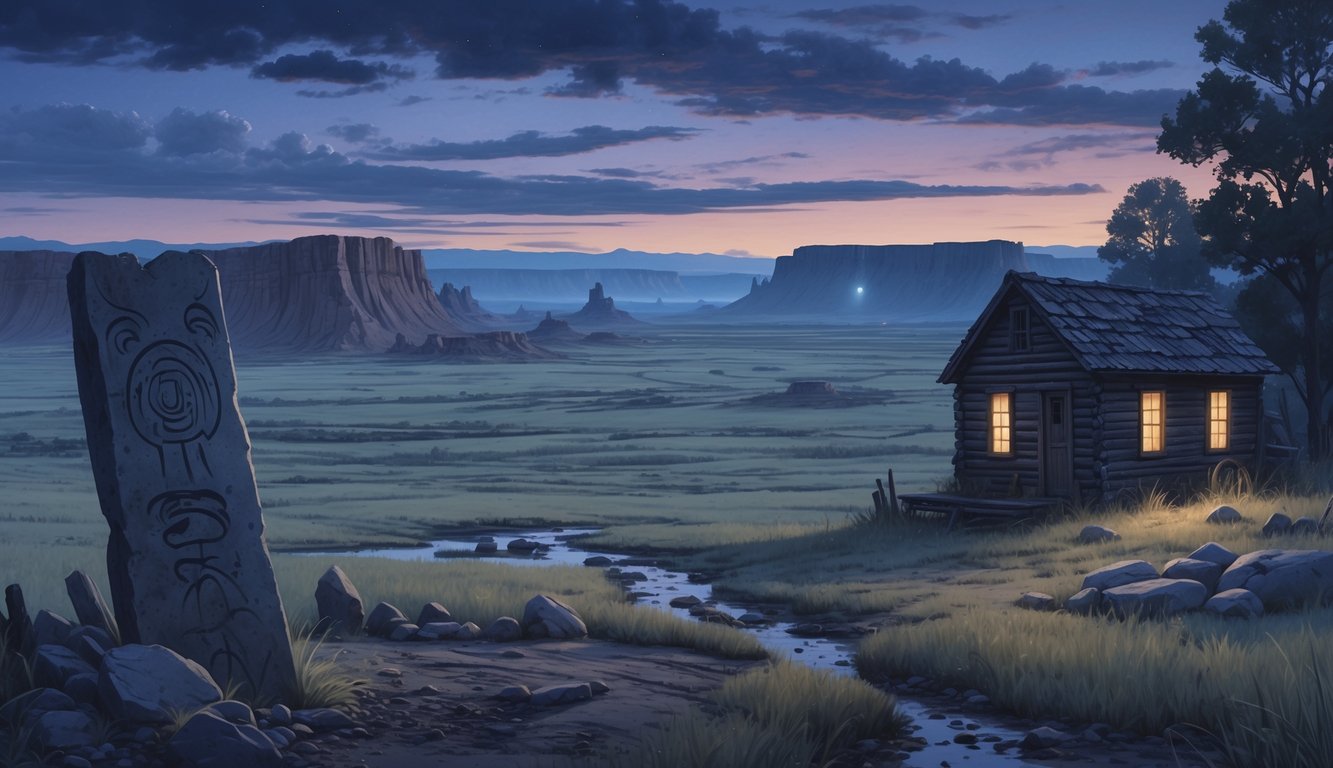
North Dakota is home to fascinating tales that go beyond crime stories. History buffs will find haunting accounts of missing people and entire communities lost to time.
The Vanishing Settlers
One of North Dakota’s biggest mysteries involves a group of settlers who disappeared without a trace in the late 1800s. Local reports tell of families who moved west to build new lives near the Missouri River and then vanished almost overnight.
Search parties found empty cabins, leftover meals, and tools scattered as if everyone simply walked away. Some believe disease forced the settlers to leave quickly, while others suggest harsh winters or conflicts with nearby groups.
No one ever recovered remains or personal effects. The case has inspired books and local legends, with questions that remain unanswered after more than a century. For some, this disappearance stands as one of the region’s greatest historical mysteries.
The Ghost Town of Sanish
The original town of Sanish once thrived near the Missouri River. Its fate changed forever when the Garrison Dam was built in the 1950s.
Residents had to leave their homes, shops, and schools behind. The rising waters of Lake Sakakawea soon covered much of the land.
Only memories and a few old foundations remain. People still talk about personal items lost to the flood and share stories through generations.
Lists of businesses, churches, and even a baseball team have survived. The town itself now lies under water.
Today, visitors sometimes find old bottles or broken dishes along the shore. These items serve as reminders of a community hidden by the lake.
Role of Media and Public Awareness

Media outlets and public engagement keep old mysteries alive in North Dakota. Reporting, podcasts, and documentaries help spread information and encourage new leads.
The Influence of Dakota Spotlight
Dakota Spotlight is a podcast that covers unsolved cases and overlooked stories from North Dakota. It uses interviews, public records, and personal stories to highlight cold cases and missing persons.
The podcast’s clear storytelling helps families and investigators reach wider audiences. Each episode explores details often missed in regular news reports.
Listeners can share tips, which helps law enforcement and families find new paths. By sharing these mysteries, Dakota Spotlight builds a community of listeners who care about real people and real cases.
Impact of True Crime Stories on Cold Cases
True crime stories attract attention and often renew interest in old cases. Documentaries and news coverage about North Dakota cold cases give cases new life long after police files have grown cold.
These stories make victims’ names and details known to a wider audience. New witnesses may come forward or new information might be discovered.
For example, reporting by organizations such as the Jamestown Sun helps keep awareness high about unsolved disappearances and murders. Media, especially true crime coverage, often works with law enforcement and the public.
Consistent sharing of case information encourages tips and involvement. Sometimes, this even leads to solutions for decades-old mysteries.
Law Enforcement Efforts in Unraveling Mysteries
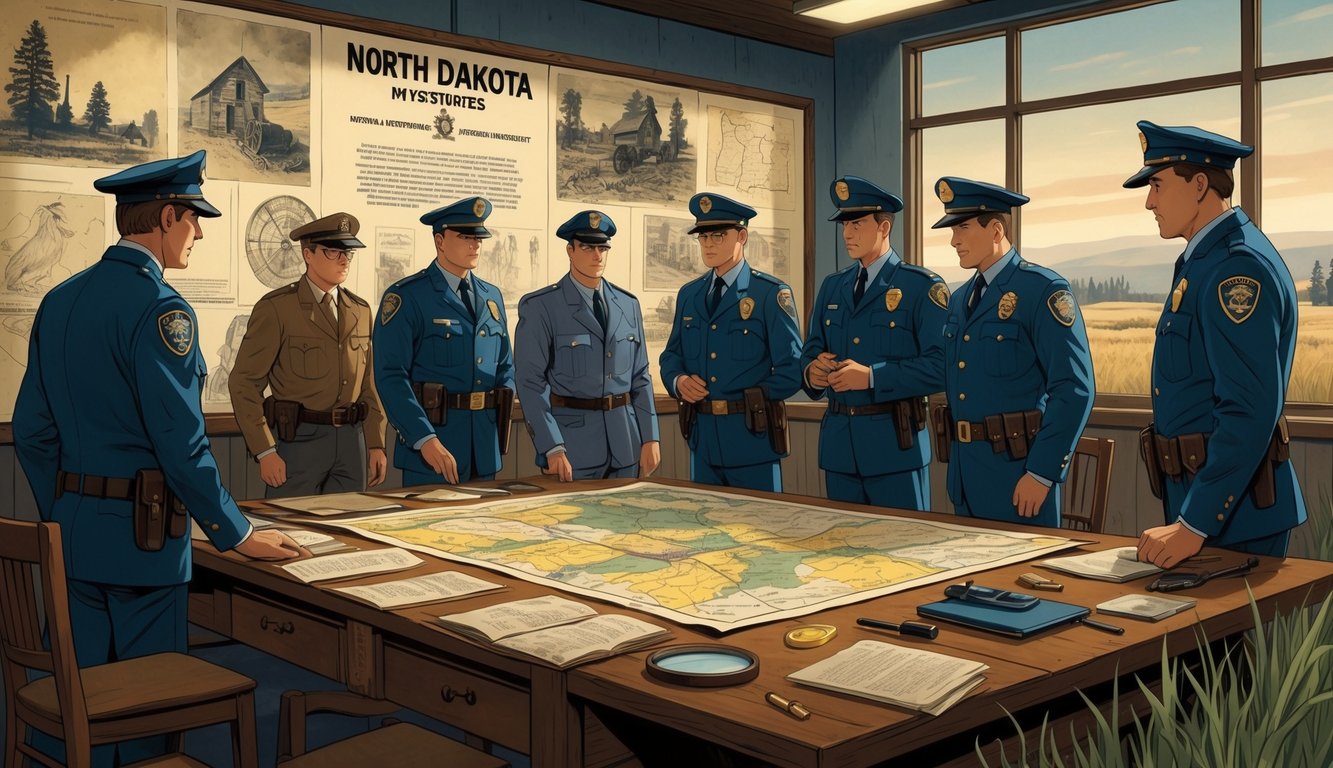
Cracking historical mysteries in North Dakota requires teamwork between specialized investigators and local police. Efforts focus on cold cases and use modern techniques and close cooperation.
North Dakota Bureau of Criminal Investigation Initiatives
The North Dakota Bureau of Criminal Investigation (BCI) leads many efforts to solve cold cases. Its Cold Case unit reviews unsolved homicides and missing person files.
Officers use modern forensic tools, digital databases, and crime labs to find new leads. The BCI works with original case evidence, follows up on tips, and sometimes interviews witnesses again.
Experienced detectives analyze case details and look for patterns and links to other crimes. The bureau also trains local law enforcement on cold case methods.
This support gives small police departments access to the latest resources and best practices. Information about their ongoing work appears on the North Dakota Attorney General’s Office website.
Cooperation Among Agencies
Unsolved mysteries often require different agencies to work together. City police, county sheriffs, tribal police, and the BCI regularly share information and resources.
Joint task forces form for certain cases. These partnerships matter when crimes cross jurisdictions or involve hard-to-reach areas like reservations.
When agencies share evidence, tips, and lab results, they increase the chances of solving cold cases. In difficult investigations, law enforcement may reach out to federal partners if needed.
Strong cooperation can make a big difference in solving North Dakota’s oldest cases. Multi-agency cases are covered on sites like Uncovered.
Eyewitness Accounts and Their Impact
Eyewitness accounts have played a major role in some of North Dakota’s most well-known unsolved mysteries. Firsthand statements can create new leads, but they can also cause debate or confusion.
Controversial Testimonies
Some testimonies have raised questions because witnesses remember things differently or their stories change over time. In several North Dakota cold cases, people gave statements that conflicted with each other or did not match physical evidence.
This makes it hard for law enforcement to decide which leads to follow. Sometimes, eyewitnesses give details under pressure or after talking with others, which can lead to mixed or false information.
People have even recanted testimony years later. When a case relies on these statements, its outcome can become very uncertain.
Investigators must sort through contrasting stories carefully, as wrong directions can slow or block progress. Lists and timelines often help track changes in witness statements for major unsolved cases.
Cases Transformed by Witness Input
In some cases, a strong eyewitness account has driven investigations forward, even years after a crime. For example, in some of North Dakota’s mysteries, a new witness statement led police to revisit evidence or search specific locations.
Community tips have sometimes prompted law enforcement to reopen files or use new forensic methods. This happens especially when evidence is scarce.
Some missing person cases from over 50 years ago changed course after someone came forward with new information. Eyewitness accounts have also appeared in media reports and documentaries to spark a bigger public response.
They keep hope alive for families and sometimes help uncover new facts. For a deeper look at specific cases, see this list of North Dakota cold cases.
Historic Cold Cases Revisited
North Dakota’s past is marked by unsolved crimes that still puzzle residents and challenge investigators. Some cases have become part of the state’s history, while others continue to see new leads and forensic breakthroughs.
Famous North Dakota Cold Cases of the 20th Century
During the 20th century, North Dakota experienced several shocking homicides and disappearances. Many became “cold cases” as years passed without answers.
Some of these cases involve missing persons whose families never gave up hope. A few date back over 50 years.
Early investigations were often slowed by fewer resources and the state’s vast, rural areas. This made searching difficult and preserving evidence a challenge.
For example, the cases of missing or murdered individuals listed among North Dakota’s most well-known cold cases show both heartbreak and resilience.
Interest from history buffs keeps these cases in the public eye. Community members sometimes gather to share information or support new investigative efforts.
Ongoing Investigations Today
Modern advances bring new hope to families and investigators. The North Dakota Attorney General’s Cold Case Unit uses DNA analysis, forensic technology, and public tips to reopen and re-examine old evidence.
This unit works especially hard on cases affecting Indigenous women, who have been disproportionately represented among victims. Active engagement from the public and new databases give investigators more tools than ever.
Today, several missing persons cases continue to receive attention. Dedicated detectives and family members continue pushing for answers.
Many cases are highlighted in lists and news articles, keeping the spotlight on ongoing efforts. These investigations show that even decades-old mysteries can sometimes be solved with persistence and new science.
The Enduring Fascination With North Dakota’s Mysteries
People from all over are drawn to stories of unsolved crimes and historic riddles in North Dakota. These cases often combine local history, small-town intrigue, and true crime stories.
Why History Buffs Love These Unsolved Cases
History buffs enjoy exploring North Dakota’s mysteries because many cases involve real events that shaped local communities. Stories like the 1987 murder of Anna Korynta or the 2002 case of Russell Douglas Turcotte highlight times when law enforcement and residents worked together to seek answers.
Details such as timelines and clues create a puzzle that captures the imagination. Many enjoy reviewing old newspaper articles, police records, and photographs.
They use these sources to connect the dots between people, places, and events. Sometimes, these cases reveal new facts about how people lived in North Dakota decades ago.
The mix of documented history and unanswered questions keeps history buffs searching for more information.
Famous Cold Cases in North Dakota:
| Year | Name | Case Type |
|---|---|---|
| 1987 | Anna Korynta | Unsolved Murder |
| 1996 | James Blilie | Unsolved Murder |
| 2002 | Russell Douglas Turcotte | Unsolved Murder |
Continued Interest in North Dakota Cold Cases
There is continued interest in cold cases because they remain open. People always hope that new information will come to light.
True crime stories about these unsolved cases appear on podcasts and in books. Social media also helps share these stories widely.
Many people follow updates from the North Dakota Cold Case Unit as a hobby. Families and local communities do not forget these cases.
Public support often leads to new tips. Websites like Uncovered list cold cases and provide details for those who want to learn or help.
Some people create online forums to discuss cases and possible suspects. These mysteries attract those who want to understand why some crimes remain unsolved.
Even with advances in technology, some cases stay open. The mix of unanswered questions and the hope of finding answers keeps people interested in these stories.