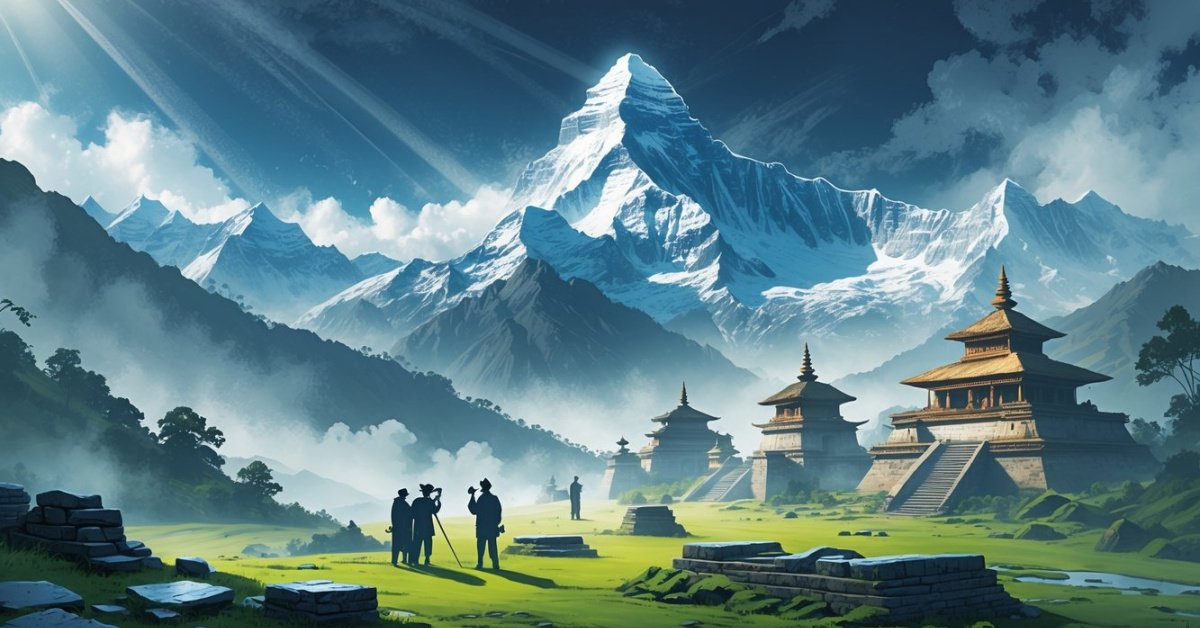
Nepal is home to some of the biggest historical mysteries that continue to puzzle both locals and visitors.
From ancient sky caves carved into the cliffs of Mustang, whose creators and purpose remain unknown, to strange events and unsolved cases that captured national attention, mystery is woven into Nepal’s history.
These secrets include archaeological sites filled with skeletons over 2,000 years old, legendary temples, and stories that have survived for generations.
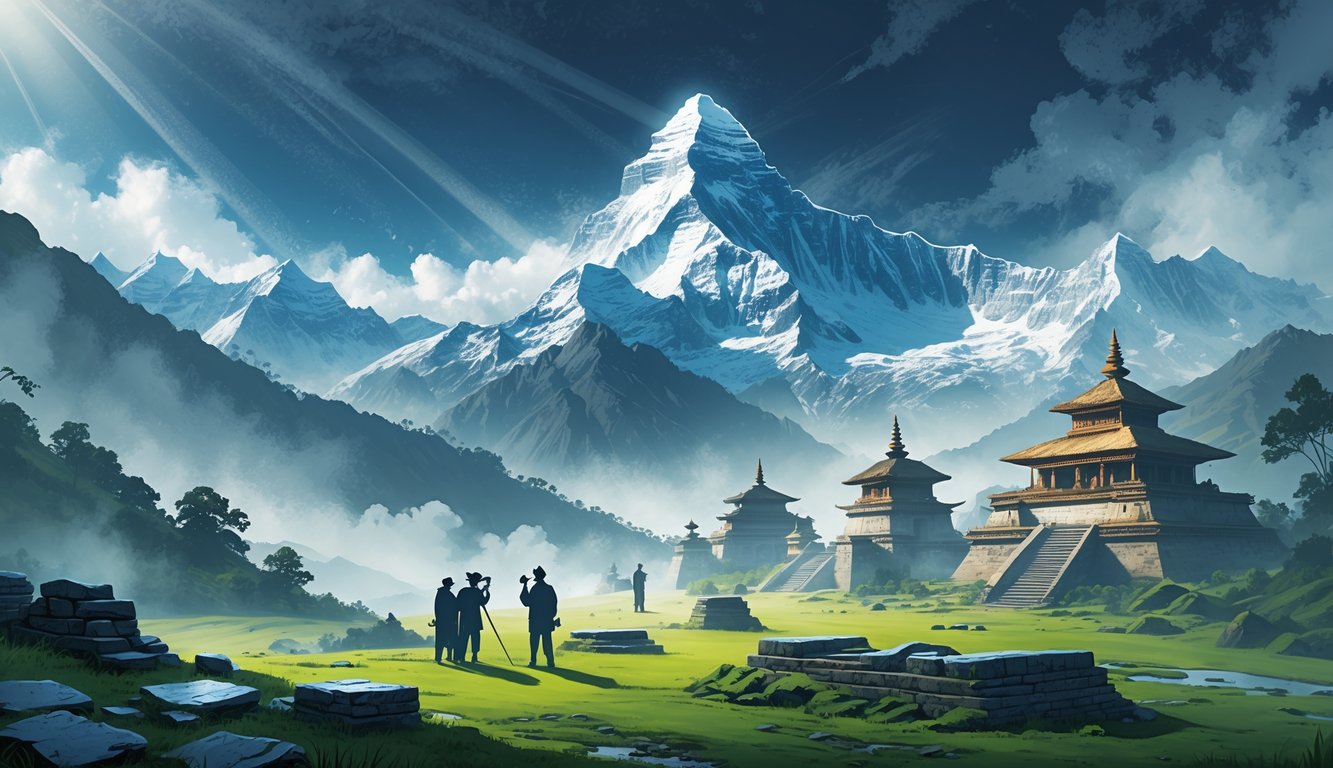
The remote caves in Mustang, sometimes called the Sky Caves, are one of the world’s greatest archaeological puzzles.
They show how Nepal is filled with unexplained sites and stories.
Other places, like Kathmandu and the ancient Pashupatinath Temple, add more layers with their myths and shocking historical mysteries that remain unexplained.
Nepal’s landscape isn’t just beautiful; it holds secrets yet to be uncovered.
If you’re interested in real-life mysteries and the adventure of discovery, Nepal has plenty of stories waiting for you to explore.
Ancient Mysteries of the Himalayas
The Himalayas in Nepal hide many unanswered questions and untold stories.
Legends, mysterious events, and reports of amazing abilities attract explorers and researchers from around the world.
Legend of the Yeti
The legend of the yeti is one of the oldest and most famous tales from the Himalayas.
Locals believe the yeti, also called the “Abominable Snowman,” lives in the high mountains, far from human settlements.
Many sherpa guides and climbers searching for Mount Everest and other peaks have said they found large footprints or spotted shapes moving in the snow.
Some have claimed to find hair, bones, or old shelters that could belong to the yeti.
Scientists have studied some of these samples, but they have found little strong proof of an unknown creature.
The story of the yeti adds excitement to trekking adventures and continues to bring mystery seekers to Nepal’s high places.
This legend remains a big part of local culture and is often tied to stories shared during Himalayan expeditions.
For more details, visit this list of unexplained phenomena from the Himalayas.
Unexplained Phenomena in the Himalayas
Many unusual events have been reported in the Himalayas.
Hikers and monks have seen strange glowing lights, sudden fierce storms, and rare cloud shapes.
Some visitors have gotten lost for days even with clear paths and good weather.
There are also many mysterious man-made caves dug into cliffs in places like Mustang.
Scholars are still unsure who carved the caves or why so many thousands were built high up in the mountains.
Locals sometimes say that supernatural forces or spirits protect these lands.
Whether these stories are natural or not, they add to the wonders people feel while exploring the Himalayas.
Mount Everest and the surrounding ranges remain places full of both natural beauty and unanswered questions.
The Mystery of Meditation and Supernatural Powers
Nepal is known for deep meditation traditions.
Monks and yogis living in the Himalayas have practiced for long periods, sometimes in caves or remote temples.
Many people believe that these spiritual seekers have gained supernatural abilities, called “siddhis.”
Stories tell of people who can live without food for weeks, survive freezing temperatures, or heal others using only their mind.
Scientists and visitors have investigated some cases, but no one has found a clear explanation for these reported powers.
Meditation and self-control are important parts of daily life in many Himalayan villages.
The idea that deep meditation can unlock hidden human abilities is a lasting part of the mystery of the Himalayas.
Those interested often travel to meditation centers in Nepal to experience this tradition.
Historical Enigmas of Kathmandu Valley
Kathmandu Valley is known for its historic secrets, royal tragedies, and haunted sites.
The city is filled with legends, unsolved mysteries, and stories of ghostly encounters.
Secrets of the Royal Palace of Nepal
The Royal Palace of Nepal, also called Hanuman Dhoka, stands at the heart of Kathmandu.
For centuries, it was home to the Nepalese monarchy.
Many rooms in the palace are off-limits and their contents are not fully known to the public.
Some stories say hidden tunnels connect secret chambers under the palace, sparking curiosity among visitors and locals.
Old inscriptions, mysterious statues, and ancient artifacts decorate the palace walls.
Each relic tells part of Nepal’s royal history, but not every symbol or carving has been decoded.
Some locals believe these secrets could reveal more about lost dynasties and power struggles that shaped the kingdom.
The palace also features ceremonies, some of which are private and have uncertain origins.
Tourists can visit certain areas, but some parts remain locked for reasons that are still unknown.
For more background on Kathmandu’s historical landmarks, see this article on the most famous sites in Kathmandu.
Unsolved Cases of the Royal Massacre
The Royal Massacre of Nepal happened on June 1, 2001, and shocked the nation.
Most members of the royal family died in a single night inside the palace.
Official reports said Crown Prince Dipendra was responsible, but many people question the details presented by authorities.
Conspiracy theories surround the event.
Some believe others may have been involved or that evidence was hidden.
Eye witness statements often differ, and there is little agreement on exactly what happened.
The massacre led to the end of the monarchy in Nepal.
To this day, families and researchers search for more answers.
Media reports and documentaries keep the story alive, as new generations want to know the truth behind one of Nepal’s biggest royal mysteries.
Kathmandu’s Haunted Heritage
Kathmandu is said to have several haunted and mysterious places.
The Ranipokhari pool at the city center is linked to tales of ghosts and lost souls.
Locals often tell stories of strange noises around the historic Dharahara Tower, especially during quiet nights.
The old city areas like Patan and Bhaktapur have narrow alleys where residents report odd sightings.
Many claim the forests around Pashupatinath Temple and ancient palaces hold spirits from Nepal’s deep past.
Guided night walks in Kathmandu often include stops at spots known for paranormal activity.
For those interested in more hidden or mysterious sites, see a guide to Kathmandu’s secret places.
These haunted stories are woven into daily life, mixing history with local tradition in the Kathmandu Valley.
Mysterious Places and Ancient Sites
Nepal has several places filled with stories of the unknown.
Some locations carry mysteries from ancient times, while others are tied to legends and local beliefs.
The Unfathomed Mustang Caves
The Mustang Caves, also known as the Sky Caves, are a network of over 10,000 man-made caves carved high into the cliffs above the Kali Gandaki River.
Many of these caves are nearly impossible to reach without modern climbing gear.
Archaeologists have found human remains, ancient scrolls, and Buddhist artwork inside the caves.
Some caves date back over 2,000 years.
The reason why people built these caves, and how they lived in them, remains unanswered.
Locals believe the caves protected refugees and valuable artifacts during times of war.
Many caves are still unexplored, and researchers wonder what more could be hidden within these mysterious places.
To learn more about the Mustang Caves and their secrets, visit this resource.
Quick Facts
| Location | Mustang District, Nepal |
|---|---|
| Number of Caves | Over 10,000 |
| Age | 2,000+ years old |
Raniban’s Untold Stories
Raniban, meaning “Queen’s Forest,” sits near Kathmandu and is covered with dense trees and thick fog.
The forest is known for its lush hills and scenic beauty, but some local people believe it to be haunted.
At dusk, stories appear about wandering spirits, strange sounds, and unusual lights.
The area has old ruins and hidden paths, adding to its mysterious feeling.
Hikers sometimes talk about hearing unexplained noises or seeing shadowy shapes.
Besides ghost stories, Raniban has historical value.
The forest once served as a royal retreat, and legends say that secret meetings and ceremonies happened here.
To learn more about Raniban’s legends and history, see this article.
Highlights of Raniban:
- Misty hills
- Old ruins
- Local ghost stories
Sundarijal’s Enigmatic Forests
Sundarijal, on the edge of Kathmandu Valley, is popular for waterfalls, streams, and green landscapes.
Yet, its forests have their own share of mysteries.
Villagers claim there are haunted places deep in the woods, and hikers sometimes report getting lost, even with maps.
The forests hide old temples and abandoned houses, some overgrown by moss and trees.
Late at night, rare animal sounds and whispers are said to come from the shadows.
Sundarijal also has tunnels and caves that date back to ancient times.
People wonder if there are hidden treasures or secrets buried within.
Its blend of natural beauty with tales of haunted places makes Sundarijal a destination full of stories and wonder.
Religious and Spiritual Mysteries
Nepal has a deep spiritual history that blends Hinduism and Buddhism.
Unique traditions and sacred sites can be found throughout the country, offering glimpses into ancient rituals and beliefs.
The Divine Kumari Devi
The Kumari Devi is a living goddess in Nepal.
She is chosen as a young girl from the Newar community in Kathmandu.
The selection process follows strict standards, including physical signs said to be symbols of divinity.
People visit the Kumari’s residence, called the Kumari Ghar, hoping to receive her blessing.
She seldom leaves her palace except for special religious events.
The Kumari is worshipped as an incarnation of Taleju, a goddess linked to both Hinduism and Buddhism.
Her divine status ends after she sheds blood or reaches puberty.
This tradition has lasted for centuries and remains a central part of Kathmandu’s spiritual identity.
Many wonder how the ancient rituals and beliefs behind the Kumari have survived times of change and modern pressures.
Pashupatinath Temple’s Commencing Secrets
Pashupatinath Temple is one of the most important Hindu temples dedicated to Lord Shiva.
It sits on the banks of the Bagmati River in Kathmandu and attracts pilgrims from around the world.
Even today, no one knows the exact date when it was built.
Legend claims the temple’s main lingam, a symbol of Shiva, appeared on its own, making the location sacred before any building stood there.
Ancient priests and monks have kept many of its spiritual rituals secret, and only certain people can enter the temple’s inner areas.
The site is also known for its mysterious ceremonies surrounding life, death, and reincarnation.
The area around Pashupatinath is filled with shrines and sculptures linking both Hindu and Buddhist traditions.
More details about Pashupatinath Temple’s mysteries can be found in guides that explore Nepal’s religious sites.
Unexplained Archaeological Discoveries
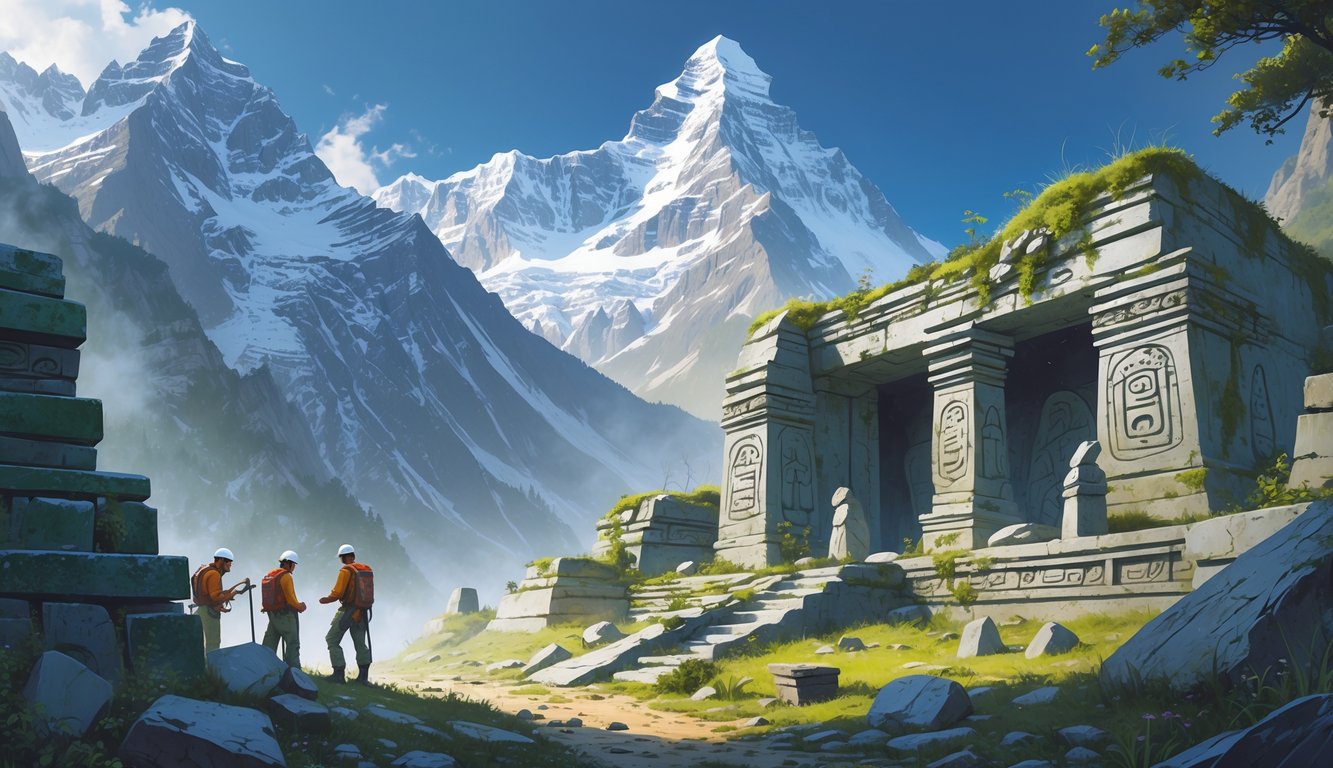
Nepal holds surprising secrets from the past. Some involve hidden writings, while others focus on unexplained discoveries beneath ancient sites.
Lost Manuscripts of Nepal
Many old manuscripts in Nepal have not been found or have disappeared over time. These texts were often written on palm leaves or birch bark, which made them easy to lose or damage.
Scholars believe these manuscripts could tell us more about religion, science, and daily life in ancient Nepal. Some writings held important Buddhist, Hindu, and local folk stories.
The Kathmandu Valley once held thousands of these ancient texts. Yet, only a small number have been recovered.
Sometimes, people find fragments during renovations of old temples or stupas. The language in some manuscripts is hard to translate and keeps their meaning a mystery.
Researchers continue searching for these texts. They hope to reveal their secrets in the future.
Hidden Treasures at Aryaghat
The area around Aryaghat at the Pashupatinath Temple is famous for its ancient rituals. Archaeologists have wondered about what might be hidden underneath.
According to legends, people buried valuable objects and offerings at Aryaghat during special ceremonies. Over the years, workers have found old coins, statues, and small relics during riverbank repairs and while building ghats.
Because Aryaghat sits by the Bagmati River, heavy rains sometimes reveal buried artifacts. Many finds are linked to religious practices and have historical value.
Experts believe more remains hidden under the stones and soil at Aryaghat. Investigations are difficult because the site is sacred and always in use for rituals.
This makes Aryaghat one of Nepal’s most mysterious archaeological sites.
Lumbini and the Birth of Buddhism
Lumbini’s story has drawn travelers, archaeologists, and spiritual seekers for generations. This sacred place and other sites like Devghat play a major role in how Buddhism emerged and spread from Nepal.
The Origins of Buddha
Lumbini is a small town in southern Nepal. It is celebrated as the birthplace of Siddhartha Gautama, who became the Buddha.
Historical records say Queen Maya Devi gave birth to Siddhartha in the gardens of Lumbini in the 6th century BCE. Today, pilgrims from around the world visit the Maya Devi Temple, where a marker stone shows the exact spot of his birth.
A key feature of Lumbini is the Ashoka Pillar. Emperor Ashoka installed this pillar in the 3rd century BCE to honor Buddha’s birthplace.
The site is recognized as a UNESCO World Heritage Site. Monasteries built by countries such as Thailand, Japan, and Germany surround the area.
Lumbini’s peaceful gardens and monuments attract those who want to understand the early origins of Buddhism. Learn more about the history of Lumbini and Buddha’s birthplace.
Notable Lumbini Sites:
- Maya Devi Temple
- Ashoka Pillar
- Sacred Pond
Devghat: Sacred Junction
While Lumbini is famous for the Buddha’s birth, Devghat is one of Nepal’s holiest river junctions. It sits where the Kali Gandaki and Trishuli rivers meet.
This site is popular for Hindu and Buddhist rituals. Devghat is especially busy during festivals, when worshippers bathe in the rivers and honor their ancestors.
Many people believe Devghat holds spiritual power because it’s connected to legends in Buddhism and Hinduism. Some traditions say sages once meditated here, adding to its importance.
Older people often come here to retire and spend their final years in peace. Devghat’s natural beauty, stone shrines, and historic temples draw visitors seeking serenity and spiritual history.
The area remains a living example of Nepal’s respect for both Buddhist and Hindu practices. Local communities carefully preserve its traditions.
Mystical Legends of Nepalese Temples
Nepal’s temples have inspired stories and legends for centuries. Unique myths and unusual events shape daily life around these places.
Boudhanath Stupa Mysteries
Boudhanath Stupa is one of the largest Buddhist stupas in Nepal. It is a major pilgrimage site.
Legend says a woman and her four sons built the stupa using a wish granted by the king. Many believe its massive dome holds secret relics and ancient treasures deep inside.
The stupa is recognized for its huge painted eyes, which seem to watch over the valley. Some visitors report feeling a strong spiritual presence when walking around the stupa, especially during evening prayers.
Monks and locals tell stories of strange lights or clouds appearing over the Boudhanath Stupa at night.
Key features:
- Large dome with painted eyes
- Spiritual rituals and offerings
- Hidden relics believed to be within
Swayambhunath and the Third Eye
Swayambhunath, also called the Monkey Temple, sits on a hill west of Kathmandu. Its history goes back over 2,000 years.
The stupa’s most noticeable detail is the “third eye” drawn on its spire. Followers believe this eye gives wisdom and allows the deity to witness everything in the universe.
Legends claim the hill itself rose from a sacred lotus that bloomed in a lake when the valley was underwater. Monkeys living at the temple are seen as guardians.
Locals think seeing certain sacred monkeys during a visit brings good luck. The Swayambhunath stupa is surrounded by prayer wheels, shrines, and ancient sculptures.
Notable points:
- The third eye for wisdom
- Monkeys as protectors
- Lotus origin myth
Haunted Places and Supernatural Encounters
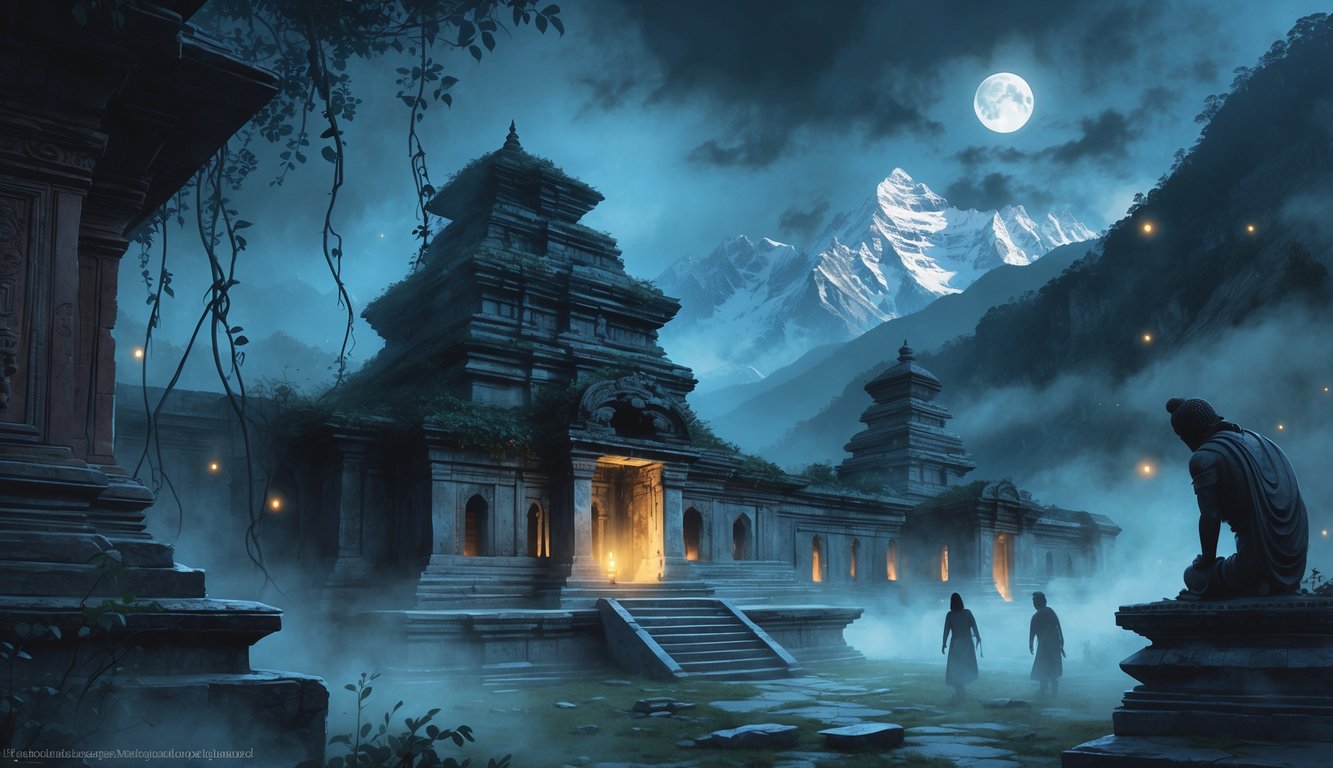
Nepal is home to mysterious tales that have become part of local legends. Some places, known for eerie stories, attract visitors eager to learn about reported supernatural events.
Chilling Tales from Chitwan
Chitwan is famous for its wildlife, but locals say it also hides secrets beyond the jungle. People have shared stories about strange sights and unexplainable sounds in remote villages and forest edges.
Travelers report sudden drops in temperature, unsettling whispers, and objects moving on their own. Witnesses often mention an uneasy feeling at night, especially near old trees and abandoned houses.
Some villagers believe these are spirits of people who met untimely deaths. There are stories of travelers seeing shadowy figures along forest trails and hearing footsteps follow them in the dark.
While many say these are just local legends, some visitors to Chitwan admit to feeling watched after sunset. Chitwan’s mix of natural beauty and ghost stories continues to spark curiosity among paranormal enthusiasts.
Ghost Stories of Mugling Narayanghat Road
The Mugling Narayanghat Road is well-known in Nepal, not just for its busy traffic. Many drivers and passengers claim to have seen ghosts or experienced unexplained events along this stretch, especially at night.
People often talk about a mysterious woman in white who appears suddenly and then disappears. Reports include hearing a child cry or seeing figures walking in the fog, only to vanish as vehicles get closer.
Some have experienced vehicles breaking down in the same spot, followed by cold chills or a feeling of dread. Many people avoid traveling this road after dark due to these chilling tales.
Stories from the Mugling Narayanghat Road have become well-known in Nepal. It is now one of the most talked-about haunted roads in the country.
Cultural Mysteries and Ancient Practices
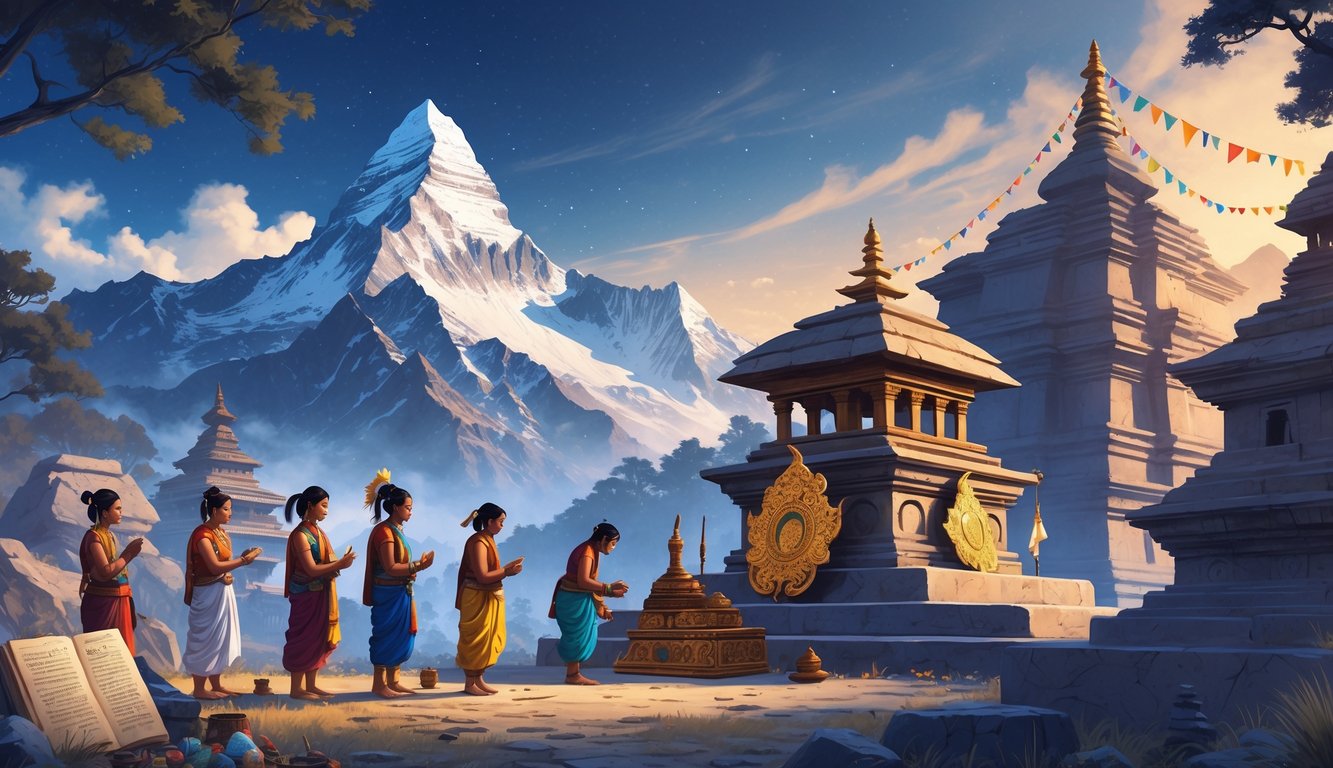
Nepal is home to ancient customs that mix spirituality, tradition, and local tales. Many of these practices remain little understood, drawing curiosity for their hidden meanings and unusual rituals.
Yoga and Hidden Traditions
Yoga has deep roots in the Himalayas. In Nepal, people practice both well-known yoga forms and rare traditions passed down through families.
Some claim that secret yoga techniques can influence the mind and body in unique ways. Monks and yogis in remote regions keep these traditions alive, sometimes meditating for days in caves.
Their methods often include chanting, breathing, and strict diets believed to connect them to ancient devas, or divine beings. Certain practices remain undisclosed to outsiders, keeping much of Nepal’s yogic past shrouded in mystery.
Yoga in Nepal is not only about exercise. The spiritual side is strong, and rituals may tie back to famous figures like Krishna, who is honored in local stories.
These hidden forms of yoga show how spirituality and secrecy are often intertwined in Nepali culture. More on this can be found under Nepal’s history, culture, and nature.
Ruru Kshetra’s Spiritual Rites
Ruru Kshetra is an important pilgrimage site on the banks of the Kali Gandaki River. Every year, people travel here to take part in religious ceremonies that honor ancient gods and cultural heroes.
A main event at Ruru Kshetra is the Maghe Sankranti fair. Devotees bathe in the sacred river, believing that the ritual cleanses their souls and brings blessings.
Offerings are made to Krishna and other revered figures, linking the tradition to epic tales from Hindu texts. Some rites remain private, performed by priests whose roles are handed down through generations.
These secret traditions combine prayers, offerings, and chants, creating a blend of public celebration and hidden ceremony. Details about these mysterious ceremonies have been kept within families, making Ruru Kshetra’s rituals some of Nepal’s most puzzling spiritual mysteries.
The site reflects how local beliefs and practices hold layers of tradition not easily uncovered by outsiders.
Unsolved Mysteries of Nepal’s Roads and Trails
Nepal’s highways and trekking routes are important for daily life. They also hold some of the nation’s most puzzling mysteries.
Accidents, strange disappearances, and unexplained events have kept people guessing for years.
The Secrets of East-West Highway
The East-West Highway is Nepal’s longest road. It runs from the eastern border all the way to the west.
Many believe this highway has secrets hidden beneath its busy lanes. Locals talk about unexplained accidents that happen even in clear weather.
Some spots are known for sudden fog and odd noises at night. Police have reported vehicles going off the road for no clear reason.
Families sometimes report loved ones going missing while traveling along the highway. Help can be far away in remote stretches, making rescues difficult.
The mix of difficult terrain and limited surveillance adds to the mystery. Some researchers think stories of the supernatural are tied to history when wars and conflicts left many unmarked graves nearby.
The East-West Highway has a reputation for strange and unsolved events. Drivers and locals remain cautious as they travel.
You can read more about mysterious cases in Nepal, including incidents along its highways, at 12 most mysterious cases in Nepal’s recent history.
Enigmatic Disappearances Along Trekking Routes
Nepal is famous for its trekking routes. Not all who set out return.
Each year, both foreign tourists and locals vanish without a trace while hiking popular trails. The Annapurna and Everest regions see the most disappearances.
Landslides and sudden snowstorms catch some hikers. Others simply disappear in clear weather.
Rescue teams search for clues but often find nothing. Locals sometimes talk about hidden valleys and lost paths only a few people know.
Travel warnings don’t always stop trekkers from exploring dangerous or unmarked routes. Reports describe how experienced hikers go missing from well-marked trails.
Strange footprints or abandoned backpacks sometimes remain as the only signs. Half-buried campsites may also be found.
Many cases remain open. This adds to the mountain’s mystery.