Nauru is a tiny island nation with a big and mysterious past. Visitors are often surprised by how many secrets are hidden behind its peaceful appearance and beautiful beaches.
Some of the biggest historical mysteries in Nauru include lost ancient cities, puzzling artifacts, and legends that have lasted for generations.
Many of these secrets come from stories passed down by locals or from unusual relics found across the island. During World War II, foreign powers fought over Nauru, and today, the remains from that time are still scattered around.
People continue to wonder about the old myths and the purpose of ruins and caves that few outsiders ever see. Exploring these mysteries can help everyone understand what life was really like on Nauru long ago.
Enduring Mysteries of Nauru’s Early Inhabitants
Nauru’s past is shaped by questions about where its ancestors came from, how they first lived on the island, and how they formed unique communities. These mysteries help people understand the roots of Nauru’s cultural heritage and how its community has changed over time.
Origins and Migration Patterns
The story of Nauru begins with the arrival of settlers from the Pacific region. Historians debate whether the island’s earliest people came mainly from Micronesian or Polynesian groups.
Both cultural links are seen in language, traditions, and stories passed down for generations. Evidence shows that settlers reached Nauru about 3,000 years ago.
Their journey likely involved long sea voyages across the Pacific. Navigators used knowledge of stars, ocean swells, and bird movements to find new lands.
Many agree on a mix of Micronesian and Polynesian influences. The exact origins remain unclear.
Some artifacts and oral traditions point to connections with other Pacific islands. There is no written record from this early time, so the migration routes and reasons for settling on Nauru are still not fully understood.
Evidence of Early Settlements
Archaeologists have found signs of long-term settlements on Nauru. Simple tools made from shells and stones show early inhabitants used available resources.
Shell middens, or old garbage heaps, mark places where people prepared food and lived in small family groups. Early settlers built huts using palm leaves and native wood.
They made fishing gear, cooked local fish, and collected coconuts and other plants. Pets, such as dogs and pigs, were raised for food and company.
Because there are no large rivers or lakes, people had to dig wells for fresh water. This shaped where they built their homes.
Despite harsh conditions, the community found ways to thrive. Their way of life lasted for centuries.
Clans and Social Structure
Society on Nauru was organized into twelve main clans, each with its own responsibilities, customs, and leadership. These clans, or extended families, formed the base of everyday life and decision-making.
Each clan had a chief who held authority and helped solve problems within the group. Important events like marriages or feasts were managed by the clans.
They worked together during fishing, land management, and important rituals. Traditional beliefs and clan legends helped pass down knowledge and rules.
The twelve clan system was vital to Nauru’s peace, social order, and survival. This community structure allowed the island’s early inhabitants to adapt and preserve their cultural heritage for future generations.
Legends, Myths, and Ancient Oral Traditions
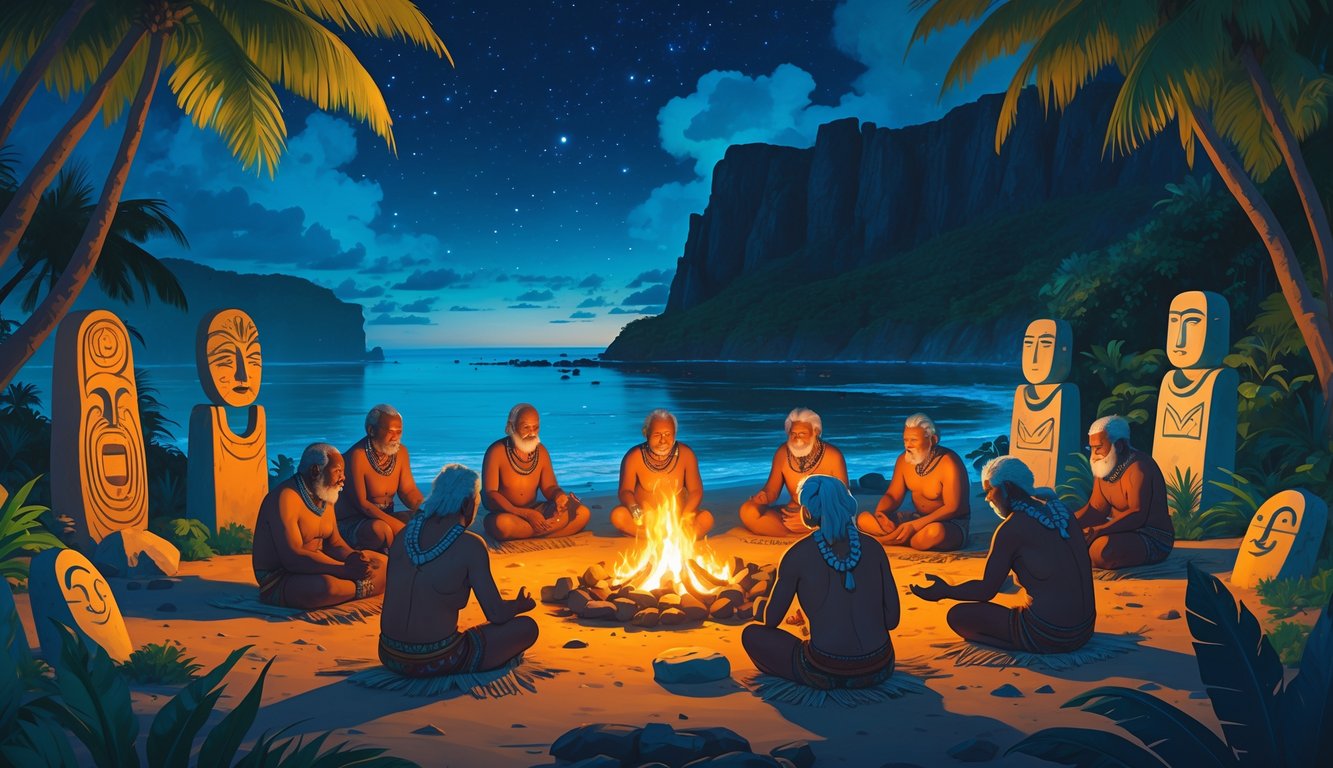
Nauru’s history has been shaped by rich legends, myths, and stories told for centuries. These tales, passed down in the Nauruan language, provide insight into cultural practices and values.
Notable Nauruan Legends
Nauru is home to many unique legends that reflect its environment and traditions. One well-known tale is that of Gaomodugudug, a powerful spirit believed to protect certain land areas.
Stories of Gaomodugudug remind listeners to respect the land and natural resources. Other local legends feature heroes and tricksters, such as Areop-Enap, the spider who is said to have created the world out of a giant clam.
The story of Areop-Enap describes how life began from the sea and sky. These legends help explain natural features and why certain customs exist in Nauruan culture.
Traditional myths are often shared through song and dance. Families teach children how to pronounce and remember each story.
This keeps the tales alive even as times change.
Storytelling and Oral History
Storytelling is a key part of daily life for many on Nauru. Long before writing was common, elders shared cultural knowledge through spoken word.
They passed stories from one generation to the next. This oral tradition helped preserve myths, language, and history when there were no books or written records.
Nauruan oral history includes songs, chants, and riddles. Families often tell these stories during gatherings or community events.
Everyone gets a chance to participate. This practice fosters a sense of belonging and connects young people to their ancestors.
By listening to elders, young Nauruans gain wisdom about fishing, farming, and the land. The sharing of these stories continues to be a core part of the island’s identity.
For examples of how oral traditions shape national memory, see the discussion about oral tradition and legends in historical records.
Interpretations of Mythology
Nauruan mythology is often open to interpretation. Each storyteller might add small details or change the ending.
The same legend can have many versions. This flexibility helps the stories stay meaningful as society evolves.
Some myths serve as moral lessons, while others explain the island’s landscape. For example, stories about ancient islands rising or sinking connect to local beliefs about creation and loss.
The values in these tales guide behavior and help solve disputes. These stories shape life on the island today.
Scholars and visitors often find it hard to separate fact from fiction in Nauruan legends. Still, these stories offer clues to ancient ways of life and what matters most to the Nauruan people.
They reveal the special role of language, creativity, and shared memory in keeping culture alive.
Unsolved Historical Sites and Artifacts
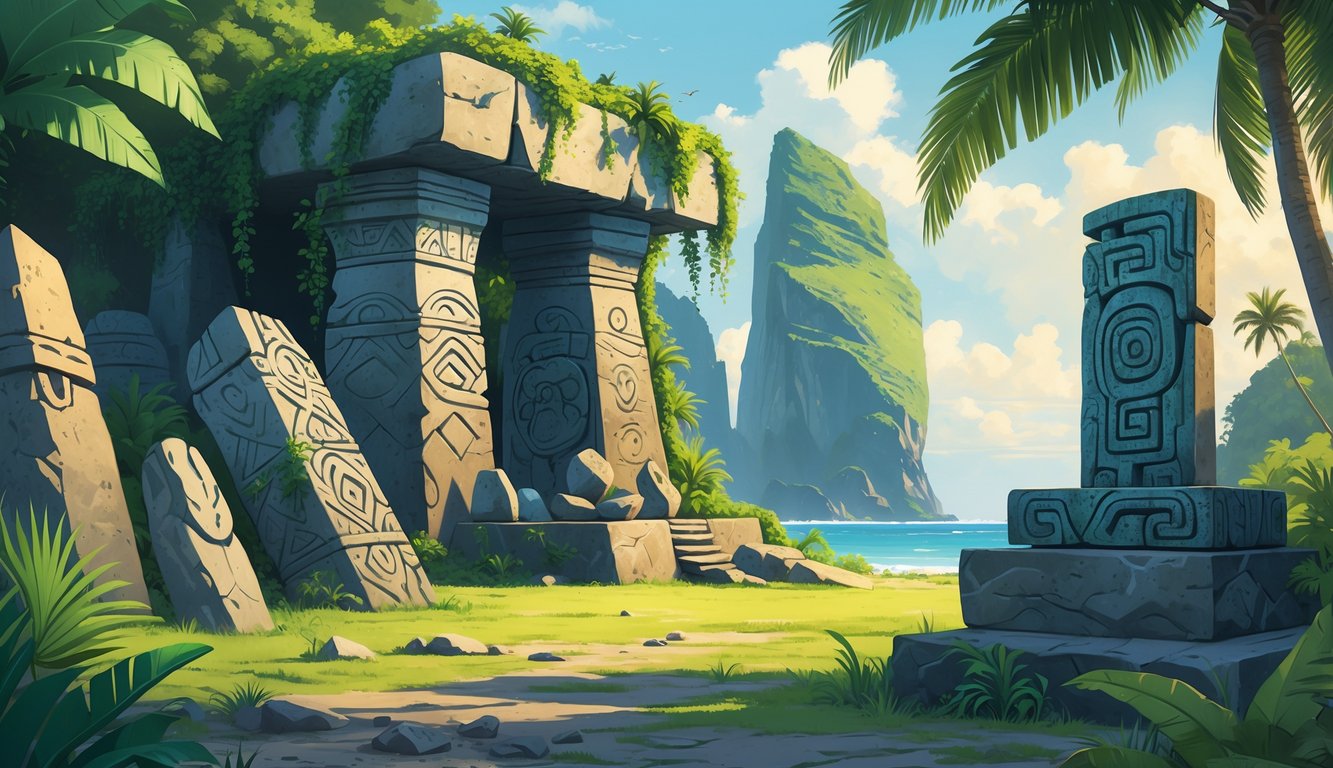
Nauru holds a number of historical sites with unexplained details. Some local landmarks reveal secrets through clues left behind in relics, ancient carvings, or mysterious sites.
Command Ridge Mysteries
Command Ridge is the highest point in Nauru, rising nearly 70 meters above sea level. The Japanese used this site during World War II as a lookout and command center.
Visitors notice strange concrete bunkers, tunnels, and structures spread around the ridge. Some of the equipment and machinery left here is still unexplained.
For example, remnants of rusted communication equipment and heavy metal doors have no clear labels. Locals have found carvings on some walls, possibly made by soldiers, but no one fully understands their meanings.
Command Ridge is also known for:
| Feature | Description |
|---|---|
| Abandoned Japanese guns | Heavy, hard to move, left after war |
| Underground tunnels | Still partially sealed or collapsed |
| Mystery radio parts | Wires and dials whose functions are unclear |
Several artifacts remain a puzzle even after many visitors and historians have examined the site.
Hidden Meanings of Buada Lagoon
Buada Lagoon is an inland freshwater lake surrounded by dense vegetation. The area is important in Nauruan culture, with stories about spirits and legends tied to the water.
Locals have discovered piles of stones and tools around the lagoon, but their original use is still debated. Some believe that the lagoon area was once used for secret rituals.
Others think the stone piles mark old burial or food preparation spots. People sometimes find pottery shards or stone tools buried near the edge of the water.
Researchers continue to study the lagoon, but no one can agree on the original meaning behind these findings. The uncertainty adds to Buada Lagoon’s quiet, mysterious reputation.
Secrets of Moqua Well
Moqua Well is an underground lake in southern Nauru, hidden beneath a network of limestone caves. It was a vital water source, especially during times of drought or war.
Access to the well is difficult, with winding passages and dim light. Some artifacts found near the well’s entrance include stone hammers, carved wood, and shells.
There are no written records to explain who made these items or why they were left here. Local stories suggest early settlers may have considered the well a sacred place or hiding spot.
Parts of the cave system remain unmapped. Moqua Well keeps its secrets, making it one of Nauru’s most intriguing places.
The Puzzle of Phosphate Mining and Its Origins
Phosphate mining shaped much of Nauru’s economic and environmental story during the twentieth century. The way these phosphate deposits were first discovered still raises questions.
Discovery of Phosphate Deposits
Workers first discovered phosphate on Nauru in the early 1900s. British geologist Albert Ellis later identified the strange, hard rock as phosphate in 1900.
Phosphate is valuable because it is used in making fertilizer. Colonial powers and mining companies soon arrived, eager to extract phosphate.
Mining quickly began, and foreign companies controlled the process. Records now show how little local people were included in these early decisions.
The sheer amount of high-quality phosphate on such a small island was unusual. Scientists believe the phosphate deposits developed over thousands of years from bird droppings, known as guano.
Scientific studies still examine the full details. The arrival of foreign companies changed Nauru’s future, setting up a cycle of resource extraction that deeply affected the local population.
Learn more at Exploring the Phosphate Mines of Nauru.
Economic History and Global Interest
Phosphate mining brought great wealth to Nauru at first. Control of the industry shifted from colonial companies to the Nauruan government after independence.
For a time, Nauru was among the richest countries per person in the world. The island’s limited resources meant heavy mining led to environmental damage.
As phosphate ran out, Nauru faced severe economic challenges. The country tried new strategies like becoming a tax haven and hosting offshore detention centers for Australia.
Mining left over 80% of Nauru’s land unfit for farming or housing. Today, the country works on rebuilding and tries to find sustainable development options.
The loss of phosphate wealth and environmental damage continues to shape Nauru’s story. Read more at The Rise and Fall of Phosphate Mining in Nauru and Paradise lost: How phosphate mining devastated island Nauru.
Colonial Era and Foreign Rule
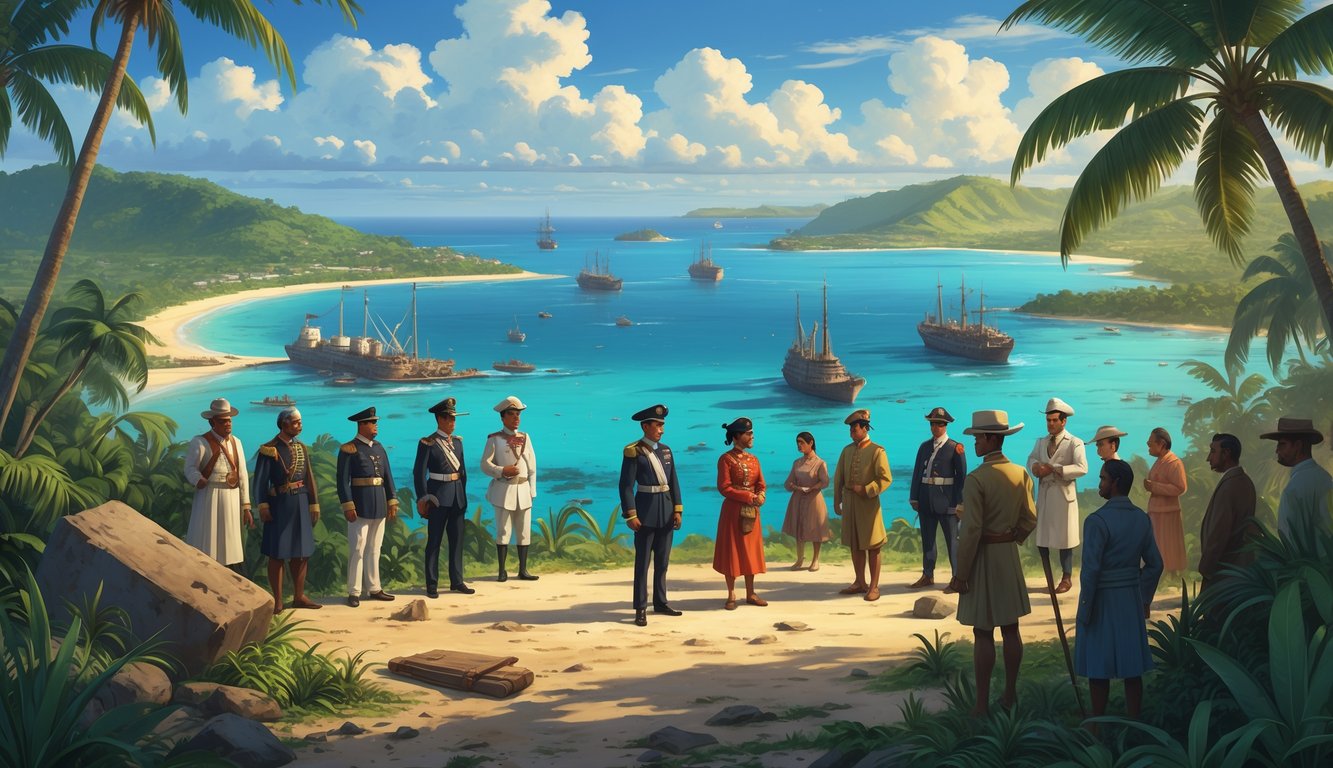
Nauru’s history changed quickly when outside powers became involved. Key organizations and foreign governments shaped its politics, economy, and society for many years.
The Role of the League of Nations
After World War I, the League of Nations gave control of Nauru to Australia, the United Kingdom, and New Zealand. These countries managed the island under a joint mandate and took charge of government and the protection of Nauru’s people.
Foreign interest focused on phosphate, which was used worldwide as fertilizer. The League set rules for how Nauru should be managed, but foreign governments kept most of the control.
They made decisions about mining, exports, and where Nauruans could live. These actions changed daily life on the island and shaped Nauru’s political landscape.
More background on this arrangement can be found at Nauru History – History.
Mysterious Impact of the Colonial Period
The colonial period left many questions about how outside powers affected Nauru’s environment and culture. Heavy phosphate mining removed much of the island’s topsoil and made farming difficult.
Written records by local people are rare, so it is unclear how Nauruans felt about these changes. Foreign rule blended Nauruan traditions with European systems, leaving a legacy that shapes local politics and identity today.
Some wonder if colonial governments protected Nauru’s resources or focused mainly on profits. Historians still debate these points, as described at Nauru and Its Colonial Legacy.
Untold Stories of Japanese Occupation

During World War II, Japanese forces took control of Nauru. This occupation lasted about three years and left behind physical relics and lasting marks on Nauruan society.
Wartime Events in World War II
Japan occupied Nauru from August 1942 to September 1945 as part of the Pacific battles of World War II. The Japanese military built tunnels, gun emplacements, and prison facilities around the island.
Some relics, including three large guns, remain today as reminders of that era. The Japanese turned Nauru into a stronghold by placing soldiers and building warfare infrastructure at key points.
Life for Nauruans changed sharply. Many resources were taken, and the occupying forces set strict rules.
Phosphate mining, Nauru’s main industry, was disrupted. Much equipment was damaged or abandoned.
Some residents were deported to other islands for labor or caught in the crossfire. For more details on Nauru’s war relics, visit Nauru’s World War II history.
Long-Term Effects on Nauruan Society
The Japanese occupation affected how Nauruans saw themselves and their culture. Families were separated, lives were lost, and traditional ways of life were disrupted.
The island’s social structure was shaken as people struggled to rebuild after the war. Old Japanese tunnels, guns, and war debris still remind people of past challenges.
Stories from elders and war survivors help keep the memory alive. These stories shape how Nauruans discuss their cultural identity.
The occupation changed how young Nauruans learn about their history. They now learn about both the hardships and strengths that shaped their community.
Paths to Independence and National Identity
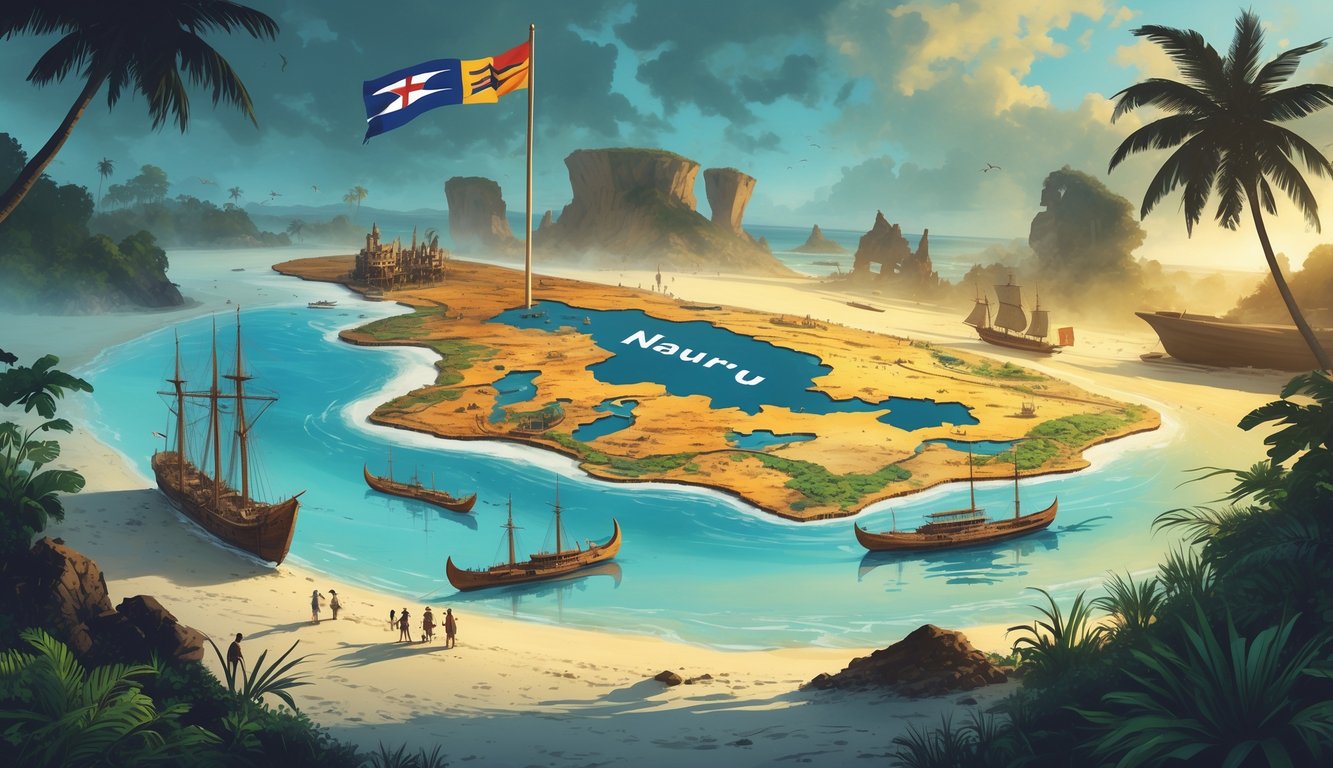
Nauru’s struggle for freedom set the stage for its modern identity. The country’s journey included several turning points that shaped what it means to be Nauruan.
The Struggle for Independence
European powers first colonized Nauru in the late 1800s. Germany ruled the island before World War I, when Australian forces took control.
Foreign powers managed Nauru’s phosphate resources for years, leaving locals with little say. After World War II, the island was placed under Australian administration as part of a United Nations trusteeship.
Nauruans worked to gain control. In 1966, they achieved self-governance and gained more authority over their land and economy.
A constitutional convention followed. On January 31, 1968, Nauru became an independent nation with Hammer DeRoburt as its first president.
This date is still remembered every year as Nauru’s Independence Day.
Important milestones:
- 1966: Self-governance
- 1968: Full independence
Shaping Modern Nauruan Identity
Independence gave Nauruans the power to decide their future. Nauruan identity grew closer to the land and its resources, especially phosphate.
Phosphate brought wealth but also environmental problems. Balancing modern life with traditions remains a big part of Nauruan culture.
Language, family ties, and cultural heritage are important. Elders keep oral traditions alive, and celebrations reflect both local and outside influences.
Even after independence, Nauru faces challenges to its identity as outside pressures and economic changes continue. People in Nauru work to protect and grow their unique culture and heritage as part of building a strong, united nation.
Vanishing Traditions and Forgotten Customs
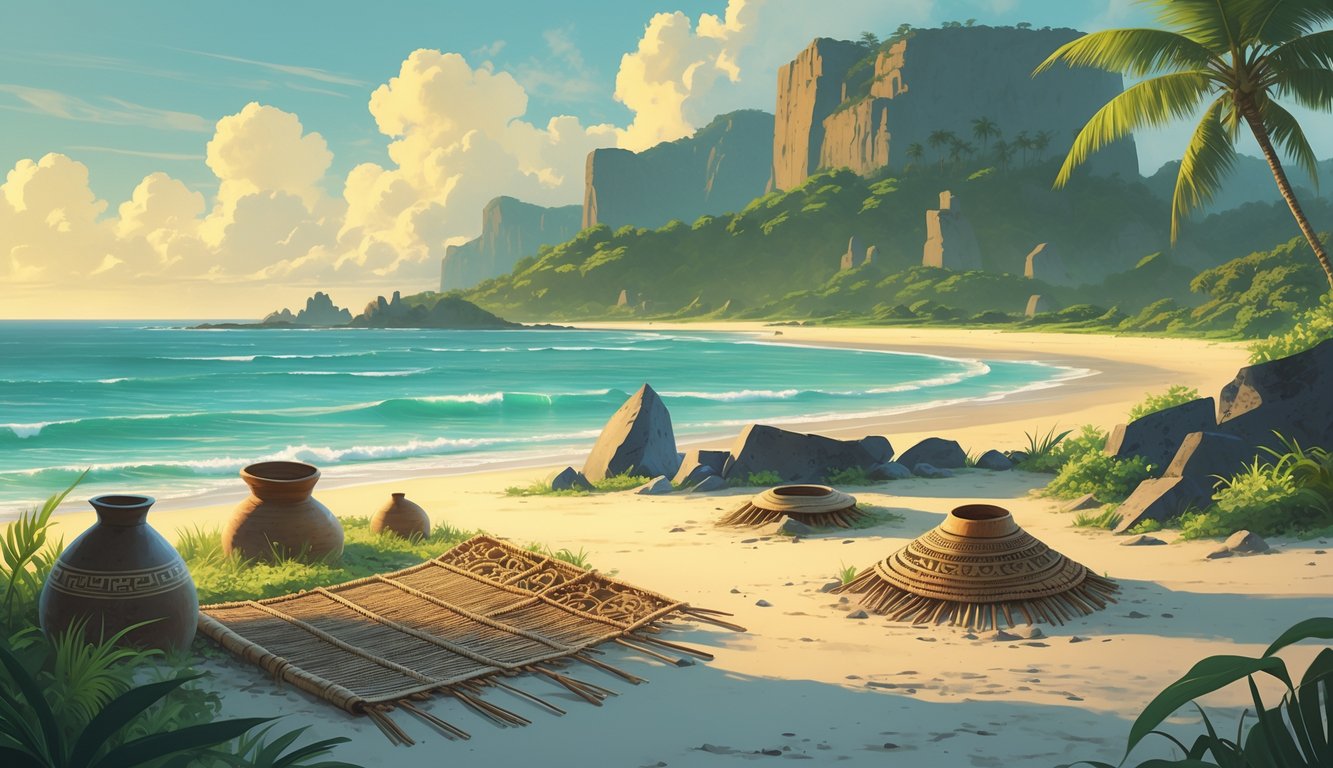
Nauru’s cultural life once featured lively dances, detailed weaving, and sacred customs passed down through generations. Today, many of these traditions are at risk due to changes in society and outside influences.
Traditional Dances and Music
Nauruans have long used music and dance to celebrate, mourn, and share stories. Traditional dances, known as ada and eiraro, were performed during festivals and community gatherings.
Dancers wore costumes made from coconut leaves and shells. Dance movements told stories of daily life, nature, or important myths.
Music was made with hand drums and wooden clappers. Songs often used a call-and-response pattern with a lead singer and group.
These performances united the community and kept legends alive. Recently, fewer young people learn these dances or songs.
Technology, changing lifestyles, and fewer festivals make it harder to keep these art forms alive. Elders worry that losing these traditions may mean losing parts of their cultural identity.
Handicrafts and Weaving
Handicrafts were once a daily part of life in Nauru. Women braided mats, baskets, and hats from pandanus and coconut leaves.
These items were useful and showed skill and pride within families. Designs often used local symbols, like waves or birds.
Weaving sessions were times to bond and share news. Patterns made by hand showed patience and practice.
Handmade items were exchanged as gifts during special events and used in rituals. Now, plastic goods and imports are easier to buy, so traditional weaving is less common.
Fewer children watch or join older women in weaving. Some people worry this craft may vanish if not actively taught or valued.
Obscure Rituals and Ceremonies
Nauru once practiced rituals to honor ancestors, mark seasons, or bring luck. Special ceremonies included chanting, songs, and sharing food.
Bwiema, or spirit-callers, led prayers to ask for rain or safe travel. Festivals often mixed old beliefs with newer faiths as outside religions spread.
Some rituals were performed in secret or with only close family. Elders passed down details quietly through stories.
Many ceremonies are now barely remembered as globalization and modern life shift Nauru’s focus. As many cultures face disappearing traditions, Nauru’s customs risk fading without efforts to preserve and record them.
Mysterious Environmental Changes

Nauru has seen big changes in its landscape, much of it happening quickly. Unusual weather and harsh mining changed both the island’s land and the lives of its people.
Impact of Climate Change
Nauru’s small size and low elevation make it very sensitive to changes in weather and the ocean. Rising sea levels often flood coastal areas and damage homes.
Increased storms and irregular rainfall lead to droughts and flooding. These conditions threaten freshwater resources and crops, risking food and water shortages.
The island’s fragile ecosystem struggles to recover from repeated damage. More frequent climate shocks have made daily life harder for families and created new challenges for local leaders.
Nauru’s central plateau, once lush, became almost barren due to mining and harsh weather. The harsh landscape makes it hard to grow food or find safe drinking water.
Loss of plant life increases erosion and damage from storms. For a closer look at these issues, see this detailed exploration of Nauru’s fragile ecosystem.
Sustainable and Adaptive Practices
Facing these problems, Nauru has turned to sustainable practices and adaptations. Locals collect rainwater when fresh water is scarce.
Families reuse materials and find creative ways to farm on poor soils. Community projects help prevent soil erosion by planting trees and groundcover.
Some groups train young people to care for the environment and use resources wisely. Government teams look for support from global organizations to improve water supply, waste management, and reforest damaged land.
Eco-friendly solutions are now part of life for many, including using solar energy and planting native plants in old phosphate pits. These steps add up over time and help restore Nauru’s environment.
Learn more about these efforts from this overview of environmental issues and practices in Nauru.
Modern Mysteries: Asylum Seekers and Globalization
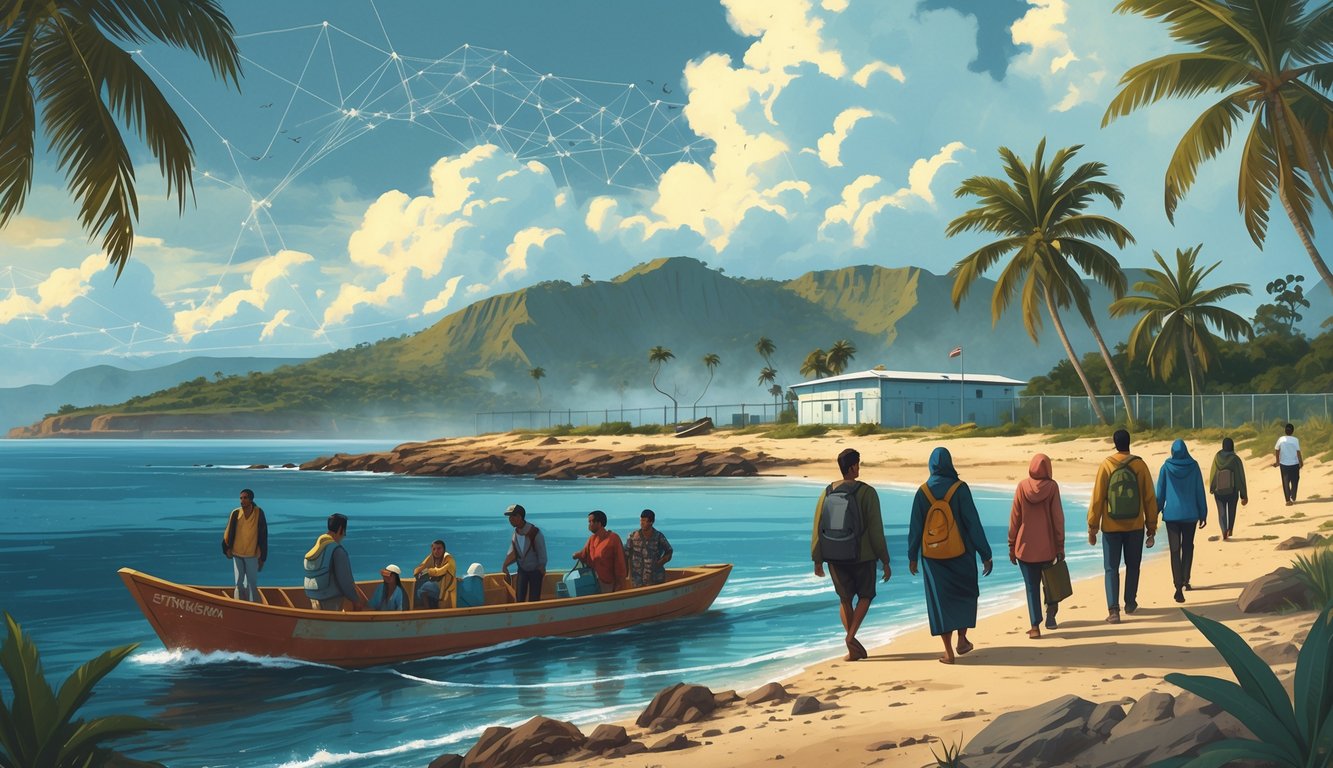
Nauru, a small island nation, faces unique challenges linked to asylum seekers and the effects of globalization. These events have changed the community and started ongoing discussions.
The Arrival of Asylum Seekers
In the early 2000s, Nauru hosted an offshore detention center for asylum seekers trying to reach Australia. The Nauru Regional Processing Centre was built as part of an agreement with Australia.
Many asylum seekers, mainly from the Middle East and Asia, were sent here while officials processed their refugee claims. The center became a big part of daily life on the island.
It brought jobs but also new pressures. Nauruans saw changes in their community and sometimes faced tension from cultural differences.
The presence of people seeking refuge and long waits for resettlement created uncertainty. Local and international groups raised concerns about human rights.
Some asylum seekers struggled with mental health due to waiting and limited freedom. The situation remains one of Nauru’s biggest modern mysteries, as the country still feels the effects of these events.
Cultural Adaptation in a Globalized World
Globalization has linked Nauru closely with many other countries and cultures. This influence appears in areas like food, language, and technology.
The community has adopted new habits. People still work to maintain Nauruan traditions.
Daily life shows a mix of local and international influences. Many younger Nauruans use social media and enjoy foods and music from around the world.
At the same time, people try to preserve traditional dances, language, and family bonds. This balance is sometimes challenging.
Some community members worry about losing their identity as they face pressures from global trends. Others see these changes as opportunities.
Tourism and the Allure of the Unknown
Nauru draws visitors with its unique mix of mystery and untouched landscapes. Its historical mysteries and natural beauty give tourists a chance to explore and experience something different.
Guided Tours and Historical Exploration
Travelers visit Nauru and often look for guided tours that cover the island’s unusual history and unexplained sites. Local guides take visitors to the old phosphate mines, which once brought great wealth but now stand as reminders of a lost era.
These mines show how the island’s past shaped its present. Visitors can also explore relics from World War II, such as bunkers and rusted cannons left behind by occupying forces.
Some people hope these explorations will help them learn more about Nauru’s untold stories, including mysterious disappearances of certain landmarks or documents. Tour companies create themed tours focused on lesser-known historical sites.
These tours attract those who enjoy solving mysteries and uncovering secrets from the past, much like the appeal described in worldwide historical explorations.
Natural Beauty and Eco-Tourism
Nauru attracts eco-tourists who want to enjoy the island’s natural beauty and support local conservation. White sandy beaches ring the coastline.
The Buada Lagoon sits in the middle of the island. It offers a peaceful retreat with lush greenery and tropical plants.
Birdwatching is a favorite activity because the island is home to unique species. Small groups can join guided walks to see rare birds and learn about the local ecosystem.
Some tours highlight efforts to restore native vegetation after years of phosphate mining. Fishing is a traditional part of Nauruan life.
Visitors can join locals for shoreline or deep-sea fishing trips. These outings often include stories about the mysteries and local folklore of the sea.
Some eco-tour packages let tourists meet local farmers. Travelers can see how people manage crops and gardens, despite challenges from poor soil.