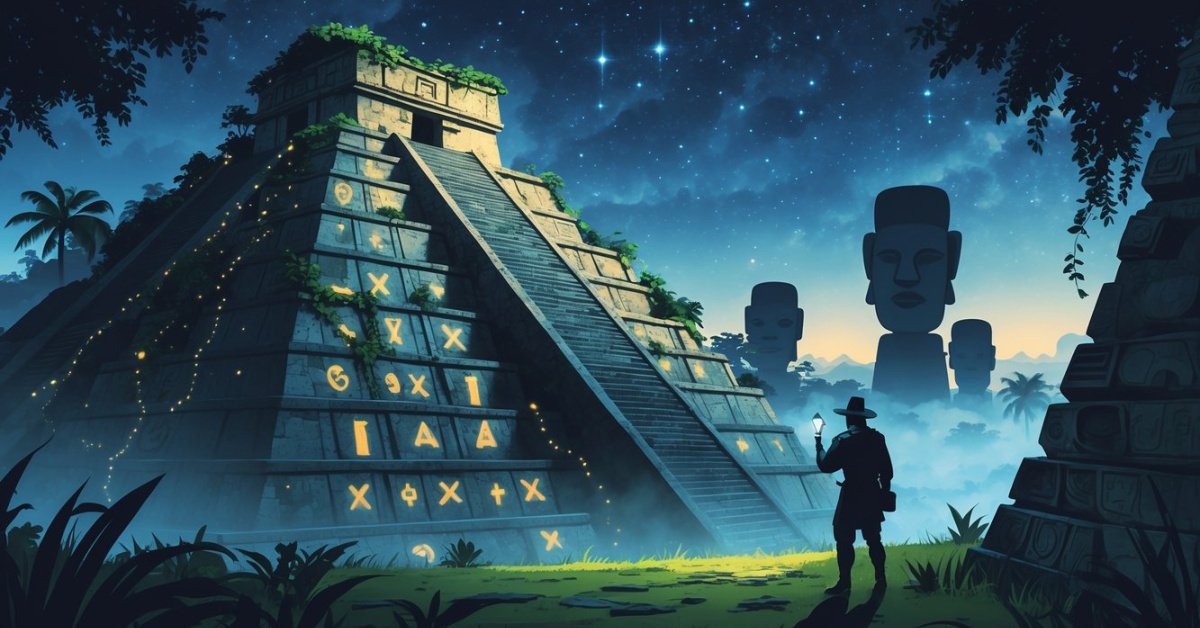
Mexico is full of historical mysteries, from hidden tunnels beneath ancient cities to lost civilizations that still puzzle archaeologists today. These secrets attract curious travelers and history lovers from around the world.
Unsolved questions about ancient ruins, mysterious artifacts, and unexplained events continue to spark new research and theories.
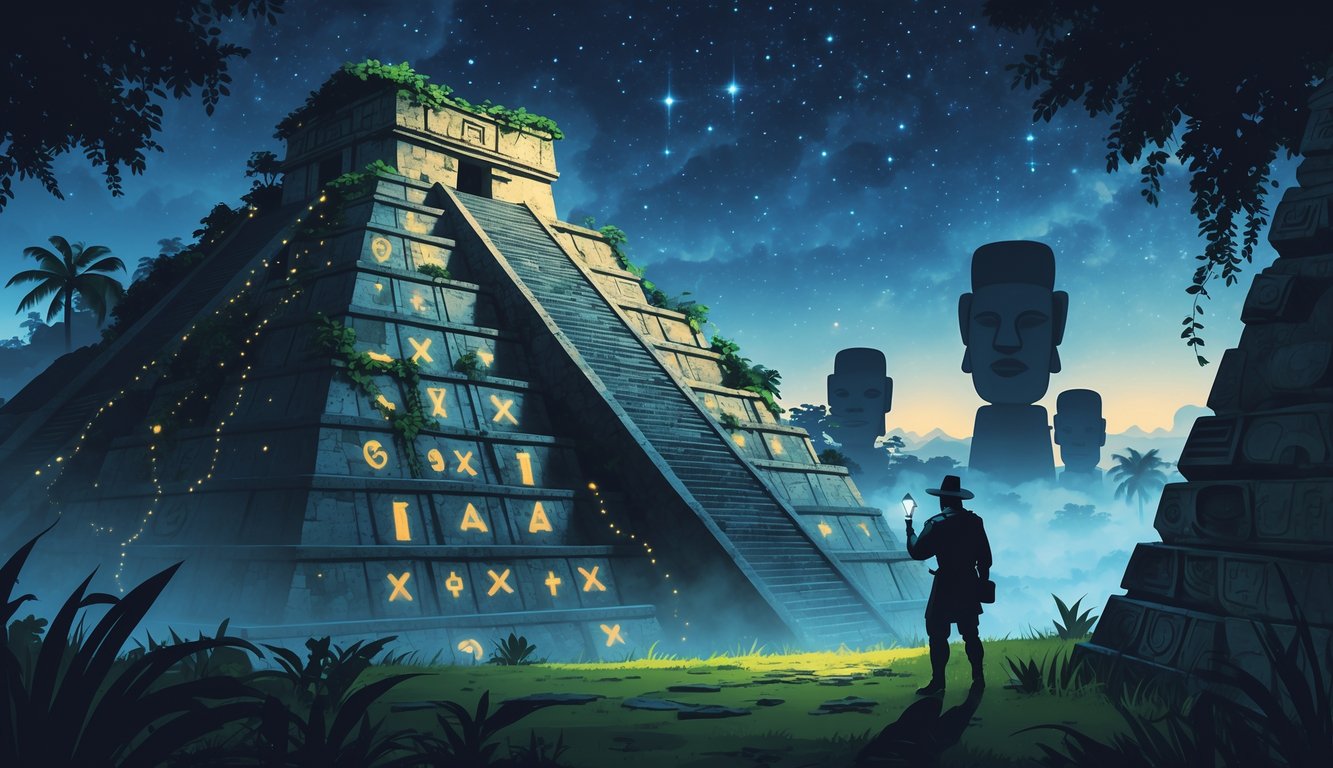
Some places, like the city of Teotihuacán, are famous not just for their massive pyramids, but also for the mysterious tunnels found beneath them.
Other sites remain shrouded in legend, with lost cities and unexplained discoveries that invite visitors to imagine the stories behind their stones.
Whether it’s the unsolved mysteries of the Maya, the secrets locked inside ancient temples, or the unexplained sinkholes that reveal underground secrets, these stories make Mexico a fascinating place to explore for anyone interested in the past.
Unraveling the Mystery of Teotihuacan
Teotihuacan stands as one of Mexico’s largest ancient sites. Its immense pyramids, mysterious ruins, and unknown builders make it one of the world’s most puzzling archaeological zones.
Origins of the City of the Gods
Teotihuacan, often called the “City of the Gods,” rose around 100 BCE in the Valley of Mexico. Almost nothing is known about its original name or the people who first built it.
No surviving written records exist from its earliest inhabitants. Researchers have learned most of what they know by studying the city’s ruins, skeletons, and ancient artwork.
The Aztecs named the city centuries after it was abandoned, believing it was the place “where men become gods.” Archaeologists continue to debate the city’s true founders.
Some theories suggest that migrants fleeing a volcanic eruption, local farming communities, or a blend of different groups started the settlement. Its multicultural art and neighborhoods show strong connections with other Mesoamerican cultures, such as the Zapotecs and Maya.
Who Built the Pyramids of the Sun and Moon
Two massive pyramids tower over Teotihuacan: the Pyramid of the Sun and the Pyramid of the Moon. They are among the largest in the Americas.
No one knows the exact identities of the engineers and laborers who built these structures. Some scholars believe thousands of workers, organized by elite leaders, spent decades building them using volcanic stone and clay.
Recent findings show the builders were skilled at both construction and astronomy. The pyramids line up with astronomical events, like solstices and lunar phases.
The societies that lived here may have used them for rituals or to honor their gods, but their precise religious or civic purposes are still being studied. Artifacts found inside the pyramids, including masks, pottery, and human remains, give clues about these ceremonies and the city’s culture.
Purpose of the Avenue of the Dead
The Avenue of the Dead is a broad, straight road that cuts through the heart of Teotihuacan for almost two miles. It connects major structures like the Pyramid of the Sun, Pyramid of the Moon, and the Temple of the Feathered Serpent.
Its name comes from the Aztecs, who thought the mounds along the sides were tombs. Excavations have shown that many of these are former temples or palaces, not burial sites.
The avenue may have served as a grand processional walkway or a main street during ceremonies and festivals. Important buildings, murals, and plazas were found along the road, hinting at gatherings and public rituals.
Scholars are still trying to learn whether the avenue had a spiritual meaning, a political one, or simply a practical use.
Secrets of the Temple of the Feathered Serpent
The Temple of the Feathered Serpent, or Temple of Quetzalcoatl, is the third largest pyramid at Teotihuacan. It is famous for its rows of stone serpent heads and elaborate carvings.
In the early 2000s, archaeologists discovered a hidden tunnel beneath the temple. Inside, they found thousands of artifacts, such as beads, shells, jaguar bones, and carved stone masks.
Some tunnels even had pools of liquid mercury, which may have symbolized a path to the underworld. The temple itself was likely used for important religious ceremonies.
It also houses mass burials of people who may have been sacrificed there. These discoveries have helped researchers learn more about the city’s rulers and belief systems.
The Disappearance of the Maya Civilization
The ancient Maya built huge cities and left behind incredible pyramids. Many of their biggest cities fell apart and were left empty.
Their writing still puzzles experts. New discoveries continue to change what people know about these people of Mesoamerica.
Collapse of Maya Cities
The Maya civilization reached its peak between 250 and 900 CE. During this period, major cities like Tikal, Palenque, and Copán grew into large centers of trade, politics, and religion.
By the late 800s, many of these urban hubs were abandoned. Multiple theories suggest what went wrong.
Prolonged droughts, overuse of natural resources, and internal conflicts may have made life hard for city residents. In places, wars broke out between city-states.
These factors likely led to food shortages and population drops. Some research points to a combination of environmental changes and human pressures causing the collapse of Maya cities.
Archaeologists still debate which factor mattered most. Almost all agree that the decline was not caused by a single event.
Instead, a series of crises occurred over decades. The cities were not completely destroyed, but many important centers became empty and silent.
Mysterious Abandonment of Ancient Sites
Maya cities were carefully planned and built with advanced knowledge of architecture and astronomy. Many of these ancient cities, like Chichén Itzá and Uxmal, were left behind even though their impressive buildings still stood.
It is still a mystery why people left so quickly. Evidence from the archaeological record suggests that in some places palaces and temples were simply deserted, not destroyed.
Burial sites, untouched treasures, and abandoned homes all point to a sudden change. Some researchers think migrations began as living conditions got worse, with families moving to safer areas.
Others believe outside pressures, such as conflict with neighbors or new invaders, played a role. Maya culture did not disappear, and descendants still live in Mesoamerica today, keeping parts of their traditions alive.
Unsolved Maya Writing System
The Maya developed a complex written language known as hieroglyphs. This script recorded everything from rulers’ names to astronomy calculations and historical events.
Carvings and painted texts have been found at cities all over what is now Mexico, Guatemala, and Belize. Many of the glyphs have been decoded, but some texts remain a mystery.
Archaeologists and linguists work together to piece these messages together. There are still hundreds of symbols whose meanings are unknown or debated.
The incomplete understanding of the ancient Maya writing system makes it hard to know exactly why cities collapsed or how people responded to their troubles.
Every new discovery helps give clues about daily life, beliefs, and the fall of these once-powerful ancient civilizations.
Aztec Enigmas and the Lost Templo Mayor
The Templo Mayor was once the main temple at the heart of Aztec Tenochtitlan, now Mexico City. This ancient site has sparked many questions because of its complex purpose, mysterious rituals, and the possibility of lost treasures hidden beneath its ruins.
The Purpose of the Templo Mayor
The Templo Mayor served as the Aztecs’ most important religious center. Built in the center of Tenochtitlan, this temple honored two main gods: Huitzilopochtli, the god of war, and Tlaloc, the god of rain.
Each god had a separate shrine at the top of the temple’s twin staircases. Ceremonies and offerings took place here, making the Templo Mayor the spiritual and political core of the Aztec empire.
The design of the temple reflected Aztec views about the universe and had cultural significance for their society. Archaeologists uncovered layers of construction, showing that the temple was rebuilt and expanded by different Aztec rulers.
Today, visitors can learn about the structure’s history and see the remains in downtown Mexico City. For a deeper look, read about the uncovering and importance of the Templo Mayor.
Unexplained Aztec Rituals
Many rituals at the Templo Mayor still puzzle historians. The Aztecs practiced complex ceremonies, including human sacrifices, which they believed kept the gods happy and the world in balance.
Offerings ranged from flowers and food to animals and captives. Some rituals involved large festivals timed with the agricultural calendar or special celestial events.
Masks, jewelry, and painted murals found at the site provide hints about these activities, but not every practice is fully understood. Lists of offering objects sometimes surprise experts, showing the variety of materials used.
The reasons for specific rituals and the exact meaning behind them often remain unclear. More details can be found through studies of ritual discoveries.
Hidden Treasures of Tenochtitlan
Legends claim that treasures may still be buried under the remains of Tenochtitlan and its Templo Mayor. Archaeologists have discovered thousands of objects, like gold ornaments, jade, pottery, and carved stones, in the area.
One famous find was a massive stone disk of the goddess Coyolxauhqui. Many believe that royal tombs or even richer treasure caches are yet to be found beneath the ancient site.
The search is difficult because much of modern Mexico City surrounds the ruins, and important layers lie underground. These discoveries provide important clues about Aztec daily life and beliefs.
Learn more about the hidden riches and cultural legacy of Templo Mayor.
Mysterious Lost Cities and Forgotten Civilizations
Mexico is filled with ancient cities left behind by vanished peoples. Archaeologists still discover new ruins in jungles and caves, revealing mysteries about how these lost civilizations lived, worshipped, and traded.
Massive sites, stone carvings, and temples hint at cultures that held great power but disappeared for reasons we are still trying to understand.
Legends of El Dorado and Other Mythical Destinations
Stories about a lost city of gold have fascinated explorers for centuries. El Dorado, often linked to South America, became mixed with legends across Mexico as Spanish conquistadors searched for riches.
These myths drove expeditions deep into untamed lands. Explorers hoped to find ancient sites filled with treasure.
Some believe tales of El Dorado were inspired by real golden artifacts and advanced cities in Mesoamerica. The search for these places led to the discovery of remarkable ruins such as cities in the Yucatán Peninsula.
Even today, rumors of massive ancient cities hidden beneath forests continue to stir the imagination. Researchers and tourists are still drawn to these mysteries.
Lost Zapotec Cities
The Zapotecs built powerful city-states in southern Mexico, with Monte Albán as their most famous achievement. Beyond this mountaintop capital, ruins of forgotten towns and ceremonial centers are scattered across the Oaxaca Valley.
Many of these ancient sites remain covered by vegetation. Archaeologists are waiting to explore them.
Researchers have only studied a small part of Zapotec civilization. Recent mapping using LIDAR and other technology has revealed foundations of unknown urban centers and temples.
These lost Zapotec cities give clues to the rise and fall of this culture. The Zapotecs traded with neighbors and built unique stonework that still stands today.
The Enigma of Ancient Olmec Settlements
The Olmec influenced later groups such as the Maya and Aztecs. Their giant stone heads found in the Gulf Coast jungles are their most famous remnants.
Much about their society, religion, and reasons for collapse remains unknown. Archaeologists have discovered mysterious Olmec settlements, with platforms, ball courts, and carved monuments scattered across ancient sites.
Artifacts found in hidden caves suggest the Olmec held complex spiritual beliefs. Their rituals shaped later civilizations.
The remnants of these lost cities shed light on Mexico’s earliest advanced people. Many questions remain.
Xochicalco’s Enigmatic Observatory
Xochicalco is an archaeological zone in Morelos known for its unusual observatory, unique ball court, and location on ancient trade routes. Its blend of design and mystery invites curiosity.
Astronomical Knowledge and Eclipses
The observatory at Xochicalco is carved into the side of a hill. A circular stone chamber covers it.
Light enters through an opening in the ceiling. Sunlight reaches the cave floor at specific times of the year.
Ancient astronomers used this setup to track the sun’s position. They may have observed solar and lunar eclipses.
Priests used the observatory to make calendars, plan agriculture, and hold ceremonies based on the stars. This shows advanced knowledge for its time.
You can learn more about these features in this overview of Xochicalco’s Observatory and Caves.
Mystery of the Ball Court
Xochicalco’s ball court sits between important plazas. It was a central place for rituals.
Archaeologists have found stone rings and markers, showing classic signs of the Mesoamerican ball game. Each team tried to pass a rubber ball through a hoop, but other details remain unclear.
Carvings and decorations suggest the games had religious and political meaning. Winners and losers both played important parts in ceremonies that involved the whole city.
Scholars still debate the specific rules and the role of sacrifice in these events. Further insights are explored in the history of Xochicalco.
Role in Trade Networks
Xochicalco’s location on a hilltop gave it views of the surrounding valleys. It controlled important trade routes.
People from different cultures met here to exchange goods such as ceramics, jade, and obsidian. Artifacts from regions as far as Oaxaca and the Gulf Coast have been found at the site.
This mix points to Xochicalco as a center for commerce and cultural exchange. The city’s architecture mirrors styles from other popular sites.
The archaeological zone of Xochicalco shows how trade was vital to its growth and power. You can read more at Xochicalco: Pre-Columbian Archaeological Site.
The Puzzling Purposes of Mesoamerican Pyramids
Mesoamerican pyramids like the Pyramid of the Sun and the Pyramid of the Moon still raise many questions for historians and archaeologists. Ancient civilizations in Mexico built these striking structures with advanced engineering and deep cultural meaning.
Sacred Rituals and Symbolism
Many Mesoamerican pyramids, including those at Teotihuacan and other famous archaeological sites, were created for religious purposes. Large plazas and grand stairways led to altars at the tops of these monuments.
Priests and rulers climbed the steep steps to perform sacrifices, burn incense, and leave gifts. The Pyramid of the Sun was likely used for rituals linked to the sun god.
The Pyramid of the Moon may have honored the moon or female deities. Symbols were built into the temples and pyramids.
Patterns, carvings, and statues tell stories about the spiritual beliefs of ancient Mexico. The design of these pyramids often followed strict rules based on astronomy or the calendar.
Hidden Chambers and Unknown Functions
Researchers still debate whether all rooms inside these pyramids have been discovered. Some hidden chambers have been found through tunnels and advanced scanning tools.
At Teotihuacan, mysterious tunnels under the Pyramid of the Sun suggest there may have been secret ceremonies or burials.
Possible unknown functions include:
- Storage for precious items
- Tombs of elite rulers or priests
- Spaces for rituals out of the public eye
Unexpected finds inside pyramids, like mercury pools or sealed doorways, hint at meanings and uses that are still unclear. Each discovery at these sites adds more questions about the true purpose and complexity of Mesoamerican pyramids.
For more details, visit the pyramids of Mexico and their mysteries.
Unexplained Artifacts and Discoveries
Mexico’s past holds many mysteries. Strange artifacts found in ancient sites continue to puzzle archaeologists.
Experts often discover objects whose purpose or origins remain uncertain. This is especially true with obsidian tools, odd offerings, and unusual technologies.
Obsidian Tools and Their Origins
Obsidian was very important in ancient Mexico. People used it to make sharp tools, weapons, and jewelry.
Archaeologists have found obsidian blades and arrowheads at many sites. Some date back thousands of years.
Obsidian from distant places, such as what is now Guatemala, ended up in central Mexican cities like Teotihuacan and Tenochtitlan. This shows there were long trade networks or travel routes.
Scientists study the chemical makeup of obsidian to trace it back to its source. Sometimes, tools at one site come from quarries over 800 kilometers away.
These discoveries raise questions about ancient trade and how people moved valuable materials across such big distances.
| Feature | Details |
|---|---|
| Material | Obsidian |
| Found At | Teotihuacan, Tenochtitlan, Monte Albán, and other archaeological sites |
| Main Questions | How was it transported? Who controlled the trade? |
Unusual Offerings in Sacred Sites
Excavations often reveal strange offerings buried deep under temples and pyramids. These include animal bones, sea shells, jade beads, and pottery shaped like unknown creatures.
Some finds, like mysterious stone boxes filled with odd items at the Templo Mayor, still leave experts guessing about their meaning.
These offerings do not always match known religious practices. Archaeologists sometimes find foreign items or objects that do not seem to belong with the local culture.
Lists of unusual offerings:
- Carved bones and decorated skulls
- Exotic feathers from distant lands
- Figurines of unknown gods or animals
The reasons for placing these objects in sacred sites remain a topic of debate. Some think they were gifts for the gods, while others believe they were meant to protect the building or the people.
Unknown Technologies
Some ancient Mexican civilizations built structures and objects that seem advanced for their time. Construction methods at sites like Teotihuacan and Monte Albán show knowledge of mathematics, astronomy, and engineering.
Examples include stone-cutting techniques that left perfectly fit blocks. Builders created drainage systems hidden beneath plazas and used pigments that have lasted for centuries.
In certain cases, metal objects and unique ceramics have been found. The exact way people made them is still a mystery.
Researchers use modern technology to study these ancient achievements. Some details remain hidden.
These mysteries keep experts searching for answers about the true abilities of Mexico’s earliest builders. Learn more from archaeological records and lists like the most mysterious archaeological finds on Earth.
Riddles of Ancient Trade and Communication
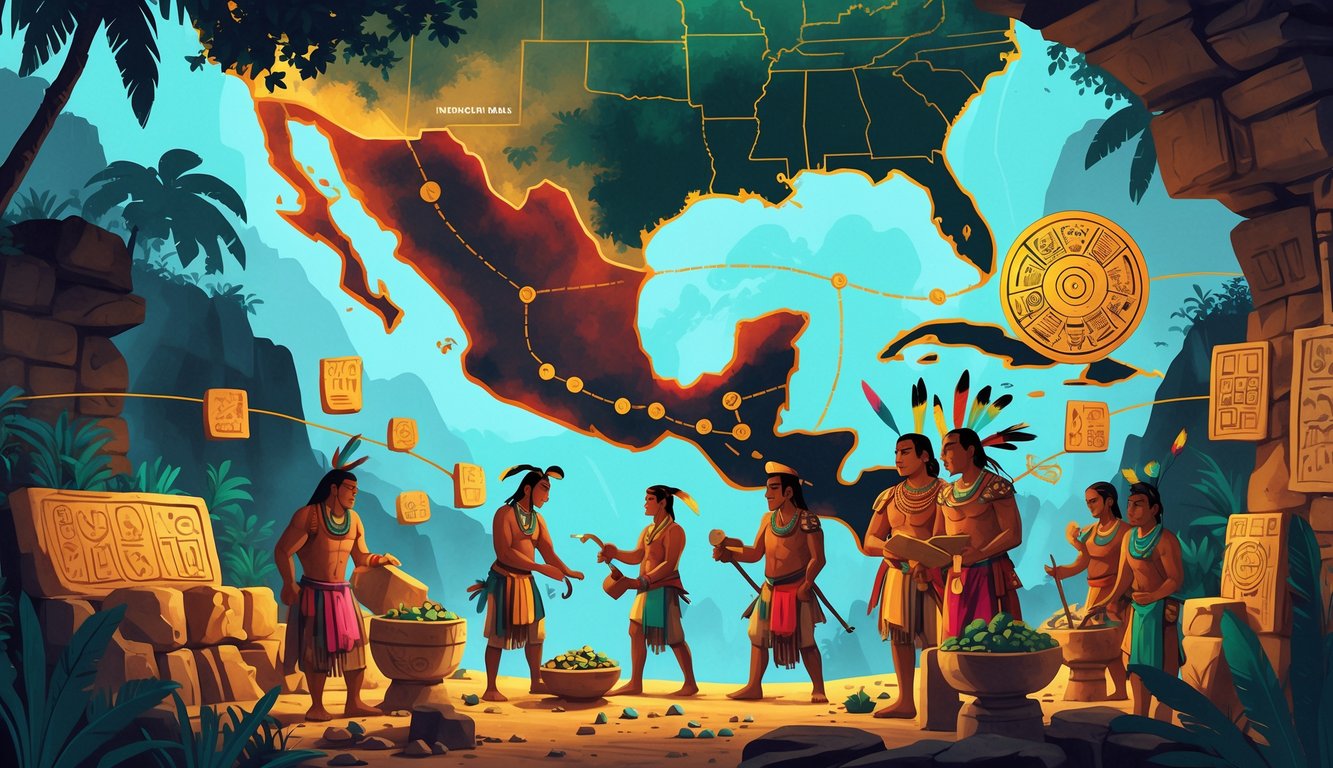
Trade and communication shaped the development of ancient Mexico. From the Olmec to the Zapotecs, many civilizations built networks that connected distant territories.
Mesoamerican Trade Networks
The Olmec lived along the Gulf Coast and started the earliest complex trade networks in Mexico. They are famous for colossal stone heads and for trading jade, obsidian, and rubber with other groups.
Over time, routes across Mesoamerica allowed goods like shells, feathers, and cacao to move between regions. Markets became common meeting spots, and traders sometimes traveled hundreds of miles.
Items were often exchanged using simple bartering instead of money.
Key traded items:
- Jade and obsidian tools
- Cacao beans
- Salt and cotton
- Decorative shells and feathers
Cities such as Teotihuacan acted as major trading centers. The wide variety of artifacts found there shows connections with distant groups.
Influence on Regional Civilizations
Trade networks helped ancient civilizations grow and share new ideas. The Olmec were early leaders, but later societies added their own contributions.
The Zapotecs of Oaxaca built cities like Monte Albán. They were known for pottery, art, and writing.
As goods traveled, so did knowledge, art styles, and religious beliefs. Different regions influenced each other, creating a blended culture.
New farming techniques, architectural designs, and languages spread because of these trading connections. Civilizations adapted and grew stronger, making Mesoamerica a center of ancient innovation.
For more on this topic, explore collections of Mesoamerican riddles and history.
Unknown Aspects of Mesoamerican Daily Life
Much about daily living in ancient Mesoamerica remains puzzling. Artifacts and written records provide some answers, but many details about work, food, and community life are still unclear.
Farming and Fishing Mysteries
Farmers in Mesoamerica shaped the land in creative ways. Some built chinampas, or floating gardens, on lakes.
Others practiced slash-and-burn farming in the forests. Archaeologists still do not fully understand how people kept these systems going for long periods.
Yields likely changed with the weather. Food stability was uncertain.
Fishing played a vital role, especially near the coast and lakes. Evidence suggests people used nets, hooks, and traps.
The exact tools and techniques are not fully documented. The archaeological record for fishing gear and fish bones is limited.
Experts still debate how much fish or aquatic food people ate. The lack of evidence makes it hard to know.
Key unknowns:
- How did farmers adapt during droughts or floods?
- What fishing methods worked best in each region?
- How did trade networks move farmed and fished products between civilizations?
Community Structures and Governance
Daily life included more than eating and working. People lived in large cities, small villages, and everything in between.
The way households were organized is still mysterious. How leaders made decisions is also unclear.
Some cities had planned layouts with streets, plazas, and temples. Important buildings lined central squares for trade and ceremonies.
Written records and archaeological clues show councils of elders or leaders made choices for the community. The decision process was different in each place.
What remains unclear:
- How did societies select and replace leaders?
- What rights did women and children have in political life?
- How did ordinary people take part in local decisions?
Cultural Significance and Legacy of Historical Mysteries
Historical mysteries in Mexico shape how people see their country and connect with the past. These sites inspire efforts to protect history for future generations.
Modern Impact on Mexican Identity
Mysteries from ancient places like the Aztec pyramids and Mayan ruins play a big role in Mexican identity. These landmarks are more than tourist spots; they remind people of their connection to ancient Mexico.
The artwork, architecture, and religious symbols show the creativity and beliefs of past cultures. Learning about the Aztec pyramids and other sites creates a deeper sense of pride.
School lessons, festivals, and media include stories and images of these wonders. This helps people feel rooted in their country’s history.
Modern Mexican culture celebrates these mysteries through art, music, and holidays. The mysteries also draw visitors from around the world and boost local pride and the economy.
Preservation and Conservation Efforts
Protecting historical sites is an important task for Mexico today. The country faces natural threats like weather, earthquakes, and erosion.
Tourism and modern growth also cause damage to these sites. For example, the ancient Maya and Aztec ruins need constant care to stay safe for the future.
Government agencies and local communities restore and repair damaged structures together. Strict rules prevent digging or building near important places.
Experts use new technology to study the archaeological record with as little harm as possible. Museums and educational programs teach visitors about the need for conservation.
These efforts help future generations visit and learn from Mexico’s oldest mysteries. People can take pride in this shared heritage.