Gambia sits on the west coast of Africa. It is known for its warm communities and beautiful river, but it also hides secrets that puzzle historians.
Some of the biggest historical mysteries in The Gambia include the ancient Senegambia stone circles, whose true purpose and builders still remain unknown after centuries. These circles, found across the country, even date back to a time before famous sites like Stonehenge.
This sparks curiosity about the area’s early civilizations and their beliefs.
The Gambia’s rich history goes beyond stone monuments. Archaeologists have found clues of advanced societies along the River Gambia.
There is still much we don’t understand about daily life in those times. Questions about who built these sites, the reasons behind them, and their true age continue to puzzle researchers.
The Enigma of the Wassu Stone Circles
The Wassu Stone Circles in The Gambia stand out as one of Africa’s biggest ancient mysteries. These monuments feature large circles of stone pillars, ancient burial mounds, and skilled construction techniques.
Origins of the Stone Circles
The Wassu Stone Circles are part of the wider Senegambian stone circles region, which also includes sites in Senegal. These circles cover about 30,000 square kilometers and have over 17,000 different monuments.
Archaeologists believe people built the circles between the 3rd century BC and the 16th century AD, though the exact date is debated. Local communities often link the circles to legendary ancient civilizations, but no records explain who created them or why.
The site’s presence on the UNESCO World Heritage list highlights its importance as a piece of global heritage.
Ancient Burials and Grave Goods
Many of the stone circles, especially those at Wassu, stand on or around ancient burial mounds. Excavations have found human remains beneath some of the circles.
Archaeologists also discovered pottery shards and metal objects, known as grave goods. These finds suggest that some people buried here held special status.
The purpose of these mounds still puzzles researchers. The grave goods show respect for the dead and possibly a form of ancestor worship.
Some circles contain more than one grave, hinting at complex burial customs in ancient times. The items found here are usually simple and practical.
Architectural Techniques
Builders of the Wassu Stone Circles used large, laterite stones found nearby for construction. The largest monolith at Wassu rises about 2.6 meters tall and stands among groups of 10 or more stones arranged in circles.
Their shapes range from round to rectangular. Builders often smoothed the stones before setting them upright.
We still do not know exactly how people moved and placed these heavy stones. The precise arrangements and scale of the work show that the builders had advanced knowledge of engineering and planning.
The durability of the monuments shows the lasting skill of the people who built them.
Mysterious Ancient Civilizations of The Gambia
Long ago, The Gambia was a crossroads where cultures, trade, and empires left clear marks on its land and people. Its place along the Gambia River made it a center for commerce, travel, and civilization.
Legacy of the Mali Empire
The Mali Empire once stretched across a large part of West Africa, including the land that is now The Gambia. This powerful empire was famous for its wealth, especially in gold, and for skilled rulers like Mansa Musa.
People in The Gambia built villages and towns along the river. They used the nearby area for farming and trade.
The empire’s influence helped spread Islam and new building methods. Legends say that the Mali Empire’s advanced civilization left clues in ancient stones and the ruins of old towns.
The Wassu Stone Circles are one example. These mysterious stone structures, built between the 3rd century BC and 16th century AD, show the engineering skill and creativity of early people in The Gambia.
Learn more about the Wassu Stone Circles.
Mali Empire’s Contributions to The Gambia:
- Growth of towns and trading posts
- Spread of new farming and building styles
- Introduction of Islam and new beliefs
Trade Routes Across Senegambia
The land between the Senegal and Gambia rivers, called Senegambia, was filled with trade routes. These paths helped people move valuable goods like gold, ivory, salt, and cloth.
Traders used riverboats to carry goods up and down the Gambia River. The river acted as a natural highway, connecting villages to the Atlantic Ocean.
Some trading centers grew into busy markets. People exchanged ideas, foods, and skills.
These trade routes helped Senegambia become a meeting place for many cultures. The stone circles of Senegambia hint at how connected this region was to early trade and travel.
Key goods traded along Senegambia routes:
- Gold
- Ivory
- Salt
- Cloth
Connections with Arab Traders
Arab traders reached The Gambia by sea and over land, starting more than a thousand years ago. They came to buy gold and ivory and brought new goods like glass, salt, and fine fabrics.
The arrival of Arab traders changed daily life in The Gambia. People started using new tools, coins, and words from Arabic.
The spread of Islam grew stronger with these visits. New building styles started to appear.
Sometimes, Arab traders settled along the Gambia River, making homes and shops. Their influence can still be seen today in local crafts, language, and religion.
The deep links between The Gambia and North Africa show that this small river nation has always been part of bigger world histories.
James Island and the Shadows of the Slave Trade

James Island, now known as Kunta Kinteh Island, stands as a powerful reminder of The Gambia’s past. Its ruins and history reveal stories of the Atlantic slave trade and colonial struggles that shaped the region.
Role in the Transatlantic Slave Trade
James Island was a central point in the transatlantic slave trade. From the 17th to the 19th centuries, people held enslaved Africans here before shipping them across the Atlantic.
The island’s location in the Gambia River made it easy for ships to dock and transport people far from their homes. Fort James, built on the island, featured dungeons, holding cells, and guard posts still visible today.
Many enslaved men, women, and children passed through James Island. Stories such as those found in Alex Haley’s Roots are tied to this area.
Today, the site is a UNESCO World Heritage Site, drawing people who want to understand the lasting effects of slavery on families and cultures (learn more about James Island and the slave trade).
Portuguese and Colonial Influences
The Portuguese were the first European traders to set up bases in the area. By the late 1400s, they started trading up and down the Gambia River.
Later, several colonial powers controlled the island, including the British, Dutch, and French. Each group built or rebuilt parts of the fort, leaving behind a mix of European architecture.
Colonization brought new economic systems and harsh rule for the local population. The island’s crumbling stone buildings and fortifications still show the impact of centuries of colonialism (explore the colonial history of Kunta Kinteh Island).
Today, James Island is a key site for learning about slavery and the wider history of European influence in West Africa.
The Riddle of Gambia’s Colonial Heritage
Gambia’s story is shaped by deep colonial roots and the quest for self-rule. The influence of British rule and the push for independence left marks that are still seen today in cities like Banjul and in national identity.
British Colonial Rule and Legacy
The British established control over The Gambia in the early 19th century. They governed mainly from Banjul, which was called Bathurst during colonial times.
The British focused heavily on trade, especially in peanuts. This left agriculture and commerce as lasting features of the local economy.
Under British rule, Gambians had limited rights and little political power. Officials sent by Britain made most decisions.
Local chiefs sometimes had roles, but the colonial government kept most control. The colonial period also brought new laws, education systems, and connections with the wider world.
One of the biggest mysteries about this era is why Gambia, a small strip of land, remained separate from French Senegal. Old treaties and the British desire to control the river explain this.
The legacy of colonialism can still be seen today, with English as the official language and The Gambia’s membership in the Commonwealth.
Struggle for Independence
By the mid-20th century, Gambians grew restless under foreign rule. The push for independence gathered support from students, workers, and traditional leaders.
Political parties formed. Dawda Kairaba Jawara, also known as Sir Dawda Jawara, became the most famous leader during this time.
Marches and meetings filled Banjul as Gambians demanded a voice in their own country. After years of pressure, the British government finally agreed to give up control.
In 1965, The Gambia became independent. Dawda Jawara became its first prime minister, then later president.
The struggle for independence changed the government and encouraged a sense of pride among Gambians. Today, national events still honor the people and leaders who made independence possible, connecting modern Gambia to its colonial past and journey to self-rule.
Political Turmoil and Unsolved Events
The history of The Gambia includes episodes of political unrest and key events that remain open to interpretation. Leadership changes and struggles over good governance have left lasting questions about the nation’s past and future.
Military Coups and Political Instability
Military coups have shaped the modern history of The Gambia. In 1994, a group of soldiers led by Lieutenant Yahya Jammeh staged a coup and removed President Dawda Jawara from power.
This event ended Jawara’s long rule since independence. Many Gambians felt uncertain about the future.
The coup led to bans on key political parties and limited freedoms for many years. Political instability lingered as rival groups competed for influence.
Unanswered questions remain about the true forces behind the coup and the fate of those who opposed it.
A brief attempt at unity occurred when The Gambia and Senegal formed a confederation called Senegambia in 1982. The confederation collapsed in 1989, and political tension remained.
For more on important moments like these, see the timeline of Gambian history.
Legacy of Yahya Jammeh
Yahya Jammeh’s leadership became one of the most talked-about periods in Gambian history. He went from a young army lieutenant to a president ruling for over two decades.
His rule included promises of stability. However, reports of human rights abuses and strong controls over the media and political opponents continued throughout his time in office.
Many Gambians and international observers questioned how Jammeh stayed in power for so long. They also wondered how much freedom citizens truly had during his rule.
When Jammeh lost an election in 2016 to Adama Barrow, he refused to step down at first. This caused tension and uncertainty in the country.
Allegations of corruption, threats to activists, and claims about missing people remain unresolved from his administration. These issues still influence discussions about democracy and justice in The Gambia.
Unexplained Monuments and Attractions
Gambia’s historic sites draw thousands of visitors each year. These places blend mystery and history, sparking curiosity for travelers exploring the “Smiling Coast” and its busy capital, Banjul.
Enigmatic Fort Bullen
Fort Bullen is a unique monument found at the mouth of the River Gambia near Banjul. The British built it in the early 1800s to help end the transatlantic slave trade.
Despite this clear reason for construction, many details of its past remain unknown. People ask questions about how the fort was used over time.
Some stories suggest it was a prison or watchtower later on. Today, parts of the structure feel abandoned, and shifting sands have partly covered old paths.
The site attracts tourists and locals interested in Gambia’s colonial history and the role Banjul played. Visitors often notice unusual graffiti and objects found on the site, triggering more questions about who came here in later years.
Because of its age and mystery, Fort Bullen ranks as one of Gambia’s most memorable attractions for those interested in stories of the past.
| Feature | Details |
|---|---|
| Built | Early 1800s |
| Original Use | End the slave trade |
| Current Use | Historical site/tourism |
Symbolic Meaning of Arch 22
Arch 22 rises over the entrance to Banjul, marking the spot where a 1994 coup changed Gambia’s government. The massive white arch was finished in 1996 and quickly became iconic for the city and the country.
Though it was meant to celebrate a new era, people still wonder about its deeper meaning. Some see it as a lasting reminder of political change, while others associate it with complicated times in Gambian history.
The inside features a small museum with displays about the country’s recent events. Many tourists visit Arch 22 to take photos and learn about Banjul’s past.
For locals, the monument raises questions about how Gambia’s history should be remembered. This blend of art, politics, and memory turns Arch 22 into a landmark filled with both symbolism and mystery.
Key facts about Arch 22:
- Height: 35 meters (about 115 feet)
- Opened: 1996
- Functions as a viewing platform, museum, and city symbol
Secrets of Gambia’s Ethnic Heritage
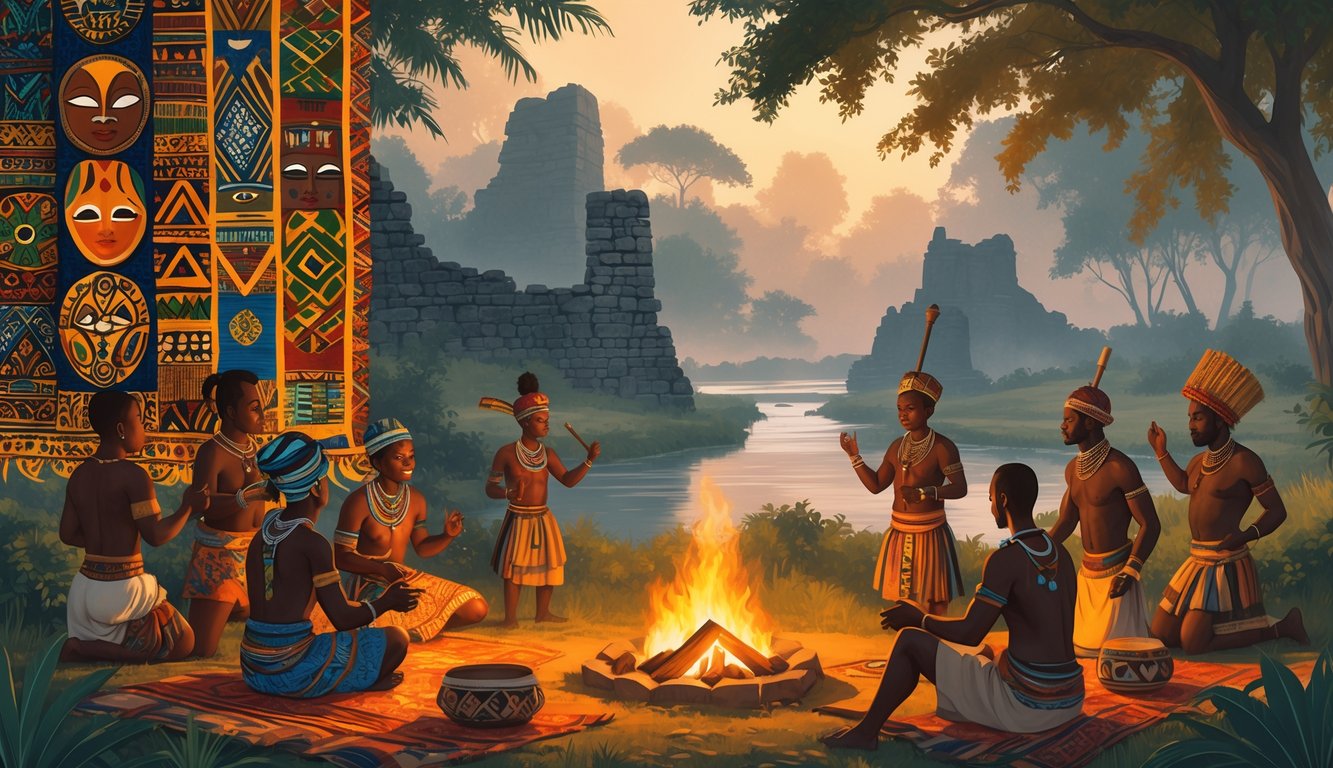
Gambia’s cultural roots run deep, shaped by migration, religion, and local customs. Its heritage lives on in the traditions and history of the Mandinka and Jola people.
Mandinka and Early Islam
The Mandinka are one of Gambia’s largest and oldest ethnic groups. They played a big part in shaping the area’s early history.
Islam began to spread among the Mandinka between the 11th and 13th centuries. Trade and contact with Muslim scholars helped many Mandinka adopt Islam, which soon became a key part of their culture.
Oral history, music, and storytelling are essential to Mandinka tradition. Griots, who serve as musicians and historians, help preserve important stories, poems, and details about ancestral leaders.
The Mandinka’s influence reaches across Gambia, shaping language, local customs, and the region’s religious landscape. Their role in the spread of Islam still shapes Gambian society today.
Jola People and Ancient Traditions
The Jola people are known for their unique ancient traditions that set them apart from other groups in Gambia. They live mostly in the country’s western regions and along the lower Gambia River.
Unlike groups like the Mandinka, the Jola were slow to adopt Islam and often held to animist beliefs for much longer. Many of their customs focus on music, dance, and farming.
Traditional festivals and ceremonies are a key part of Jola cultural life. Jola communities are known for their complex initiation rites and close-knit village structures.
Their heritage is also linked to secret societies, folklore, and dramatic masked dances. Some burial sites and ancient farming methods still show signs of their original way of life.
The Jola have helped keep Gambia’s cultural tapestry rich and diverse. Learn more about the indigenous tribes of The Gambia.
Trade, Economy, and Lost Industries
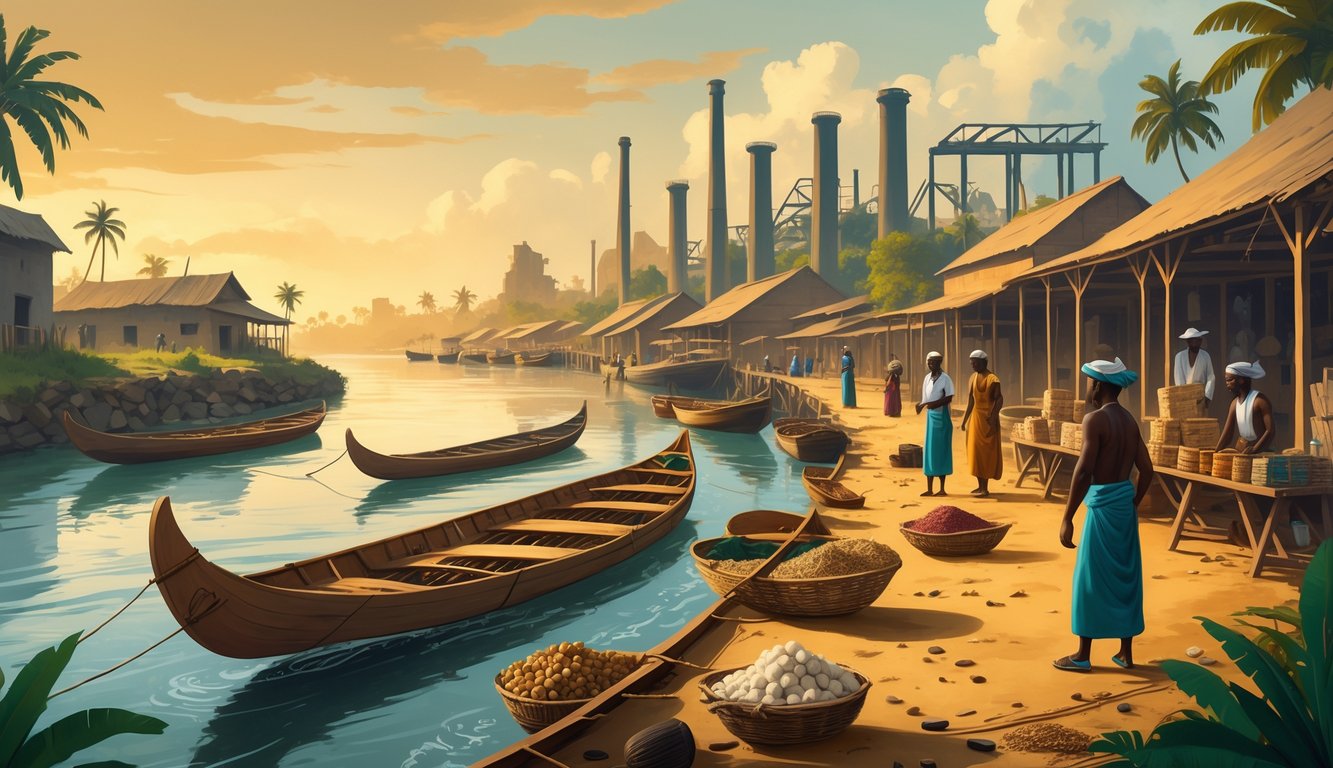
The Gambia’s history shows how trade along the Gambia River shaped its economy. Agriculture and commerce changed over time, creating industries that once stood at the heart of daily life but have since faded or transformed.
Rise and Fall of the Peanuts Trade
For decades, peanuts (also known as groundnuts) were the backbone of The Gambia’s export economy. Local farmers grew large quantities, and the trade brought jobs and money to many families.
The river’s easy access to the Atlantic Ocean allowed traders to ship peanuts to other regions quickly. As demand grew, The Gambia set up trading posts and processing plants near the coast.
This era was marked by busy market days, vibrant river ports, and boats carrying peanuts downstream. Eventually, world prices for peanuts dropped, and over-farming hurt the soil.
Competition from other crops and regions led to lost profits, and factories closed their doors. Many people had to search for new work, and the country had to rethink its economic strategies.
More about the economic impact of peanuts can be found on the Economy of the Gambia.
Agriculture and Economic Development
Agriculture has always been central to The Gambia’s landscape. Besides peanuts, farmers grow millet, rice, and maize.
Fields stretch along the river, which provides water and helps crops grow even in drier regions. Farming is a way of life for many Gambians, with several families depending on their land for food and income.
Although agriculture helps feed the nation, there are still big challenges. Issues like soil erosion, unreliable rainfall, and limited tools make it hard to grow enough for everyone or earn enough money.
The government and local groups have tried to improve farming methods and boost rural incomes. Tourism, re-export trade, and other industries have started to fill some gaps, but agriculture remains both a challenge and an opportunity for development.
You can learn more about these changes and current economic opportunities in The Gambia.
Banjul: From Colonial Port to Modern Mystery
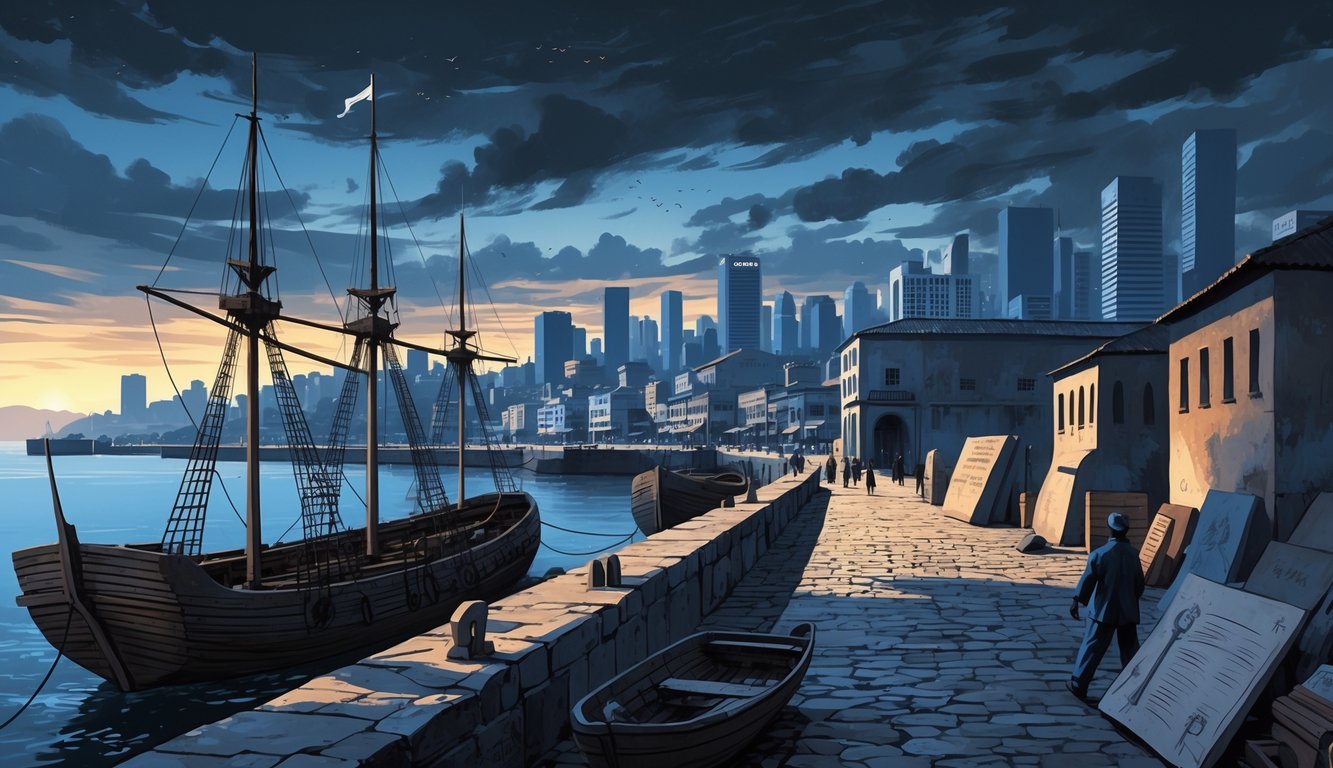
Banjul sits where the River Gambia meets the Atlantic Ocean. Founded through colonial interests, its layers reveal a blend of trade, migration, and changing rule.
Evolution as a River Settlement
Banjul began in 1816 when the British established it as a trading outpost at the river’s mouth. Captain Alexander Grant picked St. Mary’s Island for its strategic value.
The town, first called Bathurst, was meant to control river access and stop the slave trade. Traders, freed slaves, and local peoples came together, turning Banjul into a busy port.
Warehouses and small markets quickly sprung up. Goods like groundnuts, palm oil, and fish left by ship for Europe.
Key facts:
- Banjul was chosen for its island location.
- It connected The Gambia’s interior to wider Atlantic trade routes.
- British colonial roads and grid patterns still shape the city’s layout.
For more details on Banjul’s origins, see History of Banjul.
Historical Layers in the City
Banjul’s buildings and street names trace its colonial past and African heritage. Fort Bullen, colonial homes, and Arch 22 stand out as reminders of different eras.
The city grew alongside the shifting politics and culture of The Gambia. Today’s city shows influences from African, European, and Islamic traditions.
Each wave of settlers and rulers left their mark, making Banjul a real-life timeline.
Notable landmarks:
- Arch 22 marks Gambia’s 1994 coup.
- The National Museum holds artifacts from every era.
- Fort Bullen guarded against slave traders.
To explore the landmarks that define Banjul’s past and present, visit Explore Banjul’s Historic Landmarks.
Cultural Remnants and Burial Mysteries
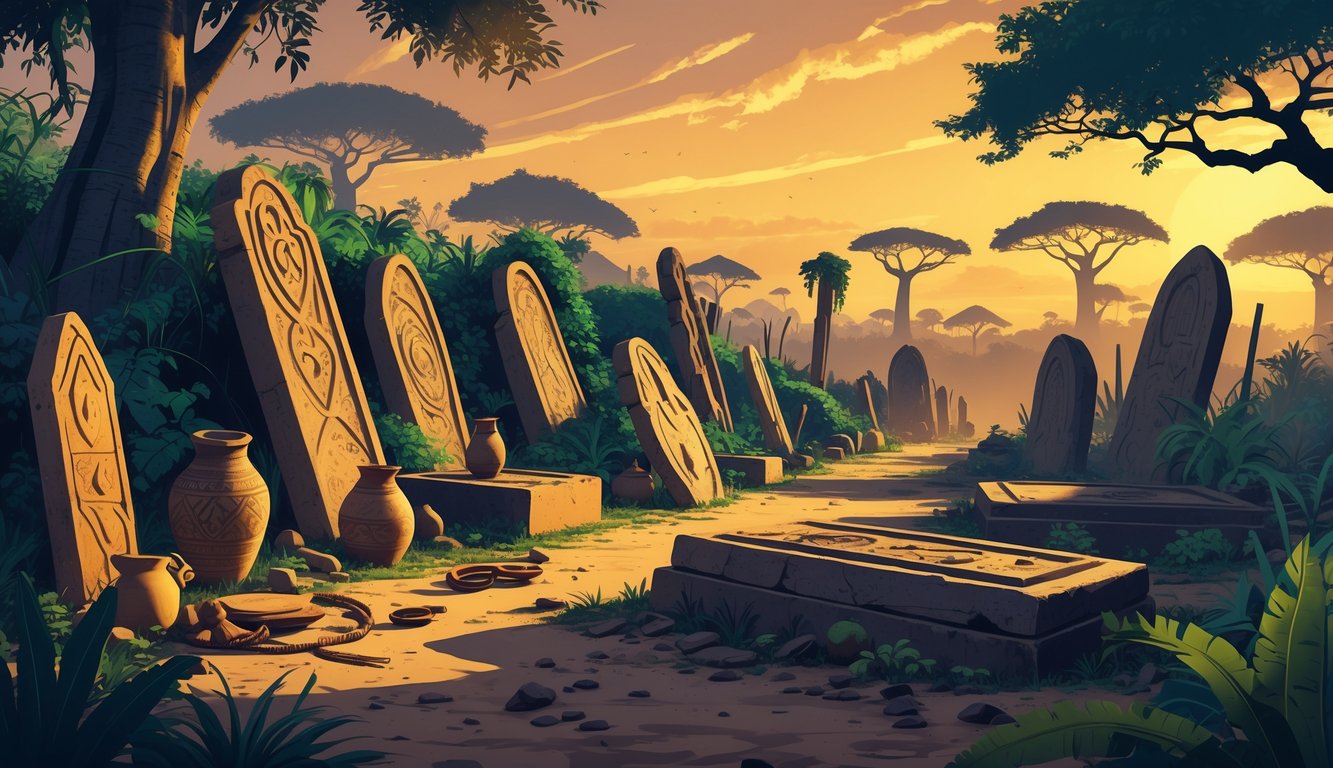
Hundreds of stone circles and burial grounds offer insight into Gambia’s early societies. Archaeologists have found pottery, human remains, and other objects that help piece together the culture and beliefs of these ancient people.
Discovery of Ancient Burial Sites
Archaeologists uncovered many burial sites within the stone circles of Gambia. These sites often show circular arrangements of large stones, each marking a grave or group of graves.
Researchers found human remains that suggest people were buried with care and respect, often in communal graves. Careful study of the graves shows specific burial customs.
For example, bodies are sometimes placed with their heads facing a certain direction or alongside items thought to be valuable. Researchers have discovered grave goods such as pottery, beads, and iron tools.
These finds show that the buried people may have held special positions in their communities or that these items had ritual importance.
Interpretations of Pottery and Artefacts
Fragments of pottery shards and other artefacts are often recovered from these ancient burial grounds. The types of pottery found include decorated bowls, jars, and sometimes even drinking vessels.
These objects help researchers learn about daily life and traditions in the past. Archaeologists believe that pottery placed in graves could have been used in rituals or ceremonies.
Sometimes, pottery is found next to human remains, which suggests it may have held food, water, or symbolic items for the deceased. Artefacts like beads and iron tools further highlight the craftsmanship and trade links of these early societies.
Tourism and the Allure of Gambia’s Mysteries
Ancient ruins and stories attract tourists who want more than just beaches and sun. Many travelers come to see the real history behind famous landmarks, including mysteries that have not been solved for hundreds of years.
UNESCO Sites as Tourist Attractions
The Stone Circles of Senegambia are one of Gambia’s most popular attractions. These circles have large, upright stones placed in the ground in unique patterns.
This site appears on the UNESCO World Heritage site list because of its cultural and historical value. Visitors travel far to see the circles and to imagine what life was like when people built these monuments.
Local guides offer tours that explain their possible uses and the legends around them. This mysterious site sits in quiet, scenic surroundings.
People can explore and learn in peace. Besides the stone circles, Gambia is known as the “smiling coast.”
Tourists often combine visits to the UNESCO sites with trips to the beaches and rivers. This makes their stay both relaxing and educational.
Impact of Historical Mysteries on Tourism
Gambia’s ancient mysteries make it stand out from other travel spots in West Africa. Sites like the Stone Circles attract history fans, school groups, and curious travelers.
Many visitors plan their trips to see these famous ruins and local museums. Tourism supports the economy by helping hotels, shops, and guides.
Travelers leave with stories about the history they discover. They often share what they have learned and seen, which attracts more people to visit Gambia.
Guided tours to mysterious places let locals share their history. These tours also teach visitors about the need to protect important sites.
Many people remember Gambia for its beaches, friendly locals, and unsolved mysteries.