Ecuador is a country full of secrets from the past. Each region holds its own unsolved mysteries.
Legends speak of lost cities in the Amazon. Recent laser imaging uncovered hidden settlements and ancient roads beneath the rainforest.
There are also the famous Ingapirca ruins. People still search for answers about the Inca and Cañari cultures that once lived there.
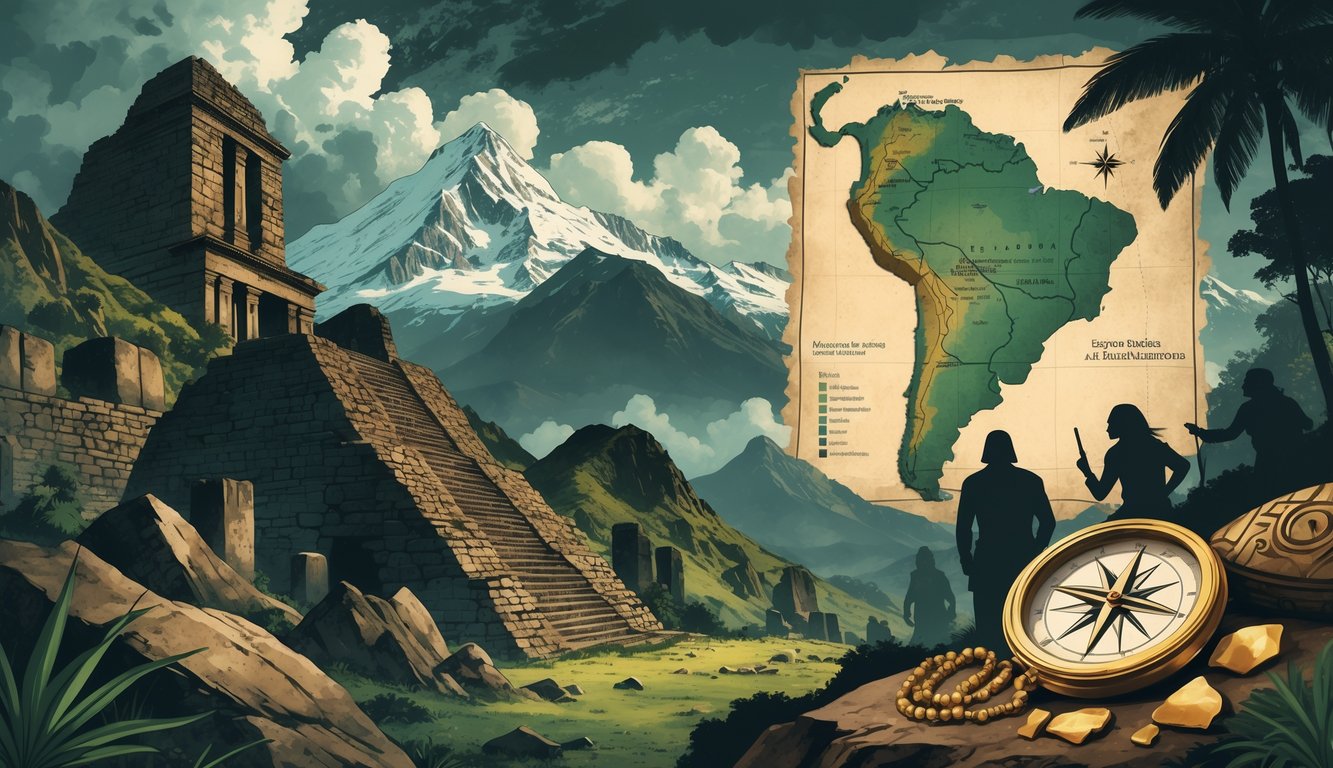
The biggest historical mysteries in Ecuador include ancient cities lost to the jungle, massive pyramids with unknown purposes, and myths that have shaped local beliefs for generations. Sites like the Cochasquí pyramids and unique legends from the Incas, Cañaris, and Quitus continue to puzzle archaeologists and local communities.
These mysteries offer a glimpse into Ecuador’s rich past. There is still much left to uncover.
The Riddle of Ingapirca
Ingapirca is Ecuador’s largest and best-preserved archaeological site. This ancient complex shows the meeting of two great cultures: the Cañari and the Inca.
The site displays mysterious feats of engineering and design.
Mysterious Origins of the Temple of the Sun
The Temple of the Sun is the most famous part of Ingapirca. Its elliptical shape and careful alignment with the sun’s path make it unique.
Archaeologists believe the temple played a key role in rituals for the sun god, Inti. Inti was one of the chief deities of the Inca empire.
What makes the temple’s origin mysterious is the mix of Cañari and Inca construction styles. The Incas conquered the Cañari and then used their knowledge to help build the site.
Some experts think the temple stands on top of an earlier Cañari structure. No one knows exactly when the original foundation was laid.
The temple sits at a high point overlooking the land. This spot allowed for both ceremonial use and defense.
For more on its blend of cultures and history, see Ingapirca’s history and archaeology.
Unsolved Secrets of Inca Wall Construction
The Inca wall at Ingapirca continues to puzzle experts. These walls fit together without mortar, using perfectly cut stones.
The blocks are smooth and even, showing rare craftsmanship. Only a few sites in South America, like Machu Picchu, compare.
Some researchers think the Incas used simple stone tools. No one knows how they achieved such precise cuts.
The walls have survived centuries of earthquakes and harsh weather. Their construction methods remain a mystery.
Modern builders cannot fully explain the ancient techniques. This engineering puzzle is a main reason why Ingapirca is called Ecuador’s Inca legacy in stone.
Functions of Agricultural Terraces
Rows of agricultural terraces line the slopes near Ingapirca. These terraces were vital for the people living there.
Terraces allowed crops to grow on steep and rocky land. They stopped soil erosion and kept water in the ground.
Archaeologists believe each terrace level supported different crops, such as maize or potatoes. This system helped feed the population, even high in the Andes.
The terraces may have also controlled floods and protected religious buildings from rain. Their design shows skill and planning.
Recent research suggests terraces also showed the power and skill of both the Inca and the Cañari. Their partnership in farming remains a fascinating story at this ancient archaeological site.
Lost Civilizations of Ecuador
Ecuador’s past holds many secrets about ancient civilizations. Archaeologists have found evidence of lost cities, advanced societies, and traditions that shape the country today.
The Disappearance of Ancient Peoples
Ancient Ecuadorian peoples built settlements that went unnoticed for centuries. Recent discoveries in the Upano Valley found a network of cities dating back 2,500 years.
These cities point to a large and organized population. They used roads, farmland, and planned urban layouts.
Dense rainforest hid these cities until new laser mapping technology revealed them. The reason the ancient residents abandoned their cities is still unclear.
Archaeologists suggest climate changes, conflict, or shifts in agriculture may have caused people to leave. The mystery behind their disappearance remains.
Rise and Fall of Pre-Inca Societies
Before the Inca expanded into Ecuador, many complex societies flourished. Groups like the Cañari and the Quitu built large settlements and traded widely.
Archaeological sites show their complex social structures. Their communities used terraces to grow crops in the mountains and built ceremonial centers.
Over time, many of these societies collapsed. Warfare, disease, or conquest by stronger neighbors like the Inca may have played a role.
These changes reshaped Ecuador’s ancient civilization landscape.
| Ancient Society | Location | Achievements |
|---|---|---|
| Cañari | Southern Andes | Terracing, pottery, resistance against Incas |
| Quitu | Quito region | Ceremonial sites, agriculture |
| Upano Valley Civilization | Amazon foothills | Road systems, city planning, farming |
Legacy of Indigenous Communities
Today, Ecuador is home to many indigenous communities. Groups like the Shuar, Otavalo, and Quechua trace their roots to early civilizations.
They keep many traditions alive through language, crafts, music, and festivals. These communities help preserve archaeological sites and traditional customs.
They also help researchers learn more about ancient civilizations in their regions. Their deep connection to the land and ancestors gives clues about how people adapted and survived.
Ecuador’s indigenous peoples share rich history and keep ancient practices part of modern life.
Enigmatic Architecture and Archaeological Marvels
Ecuador’s past features unique structures and ancient sites. The reasons behind some designs and the importance of certain alignments remain unsolved.
Purpose of Rumicucho
Rumicucho is an archaeological site built by the Inca north of Quito. Its name means “stone corner” in the Kichwa language.
The site has several terraces and walls, giving it a step-like look. Some experts think Rumicucho was a military outpost because it overlooks trade routes and valleys.
Others suggest it had ceremonial uses, such as hosting rituals or gatherings. Pottery, tools, and fire pits found at the site add to its mystery.
Rumicucho’s location makes it even more interesting. It sits almost directly on the equator.
Researchers are still debating the main purpose of Rumicucho. They continue to study how it fit into the Inca empire’s network of sites.
Inti and Solar Alignment Mysteries
Many ancient Andean cultures, including the Inca, worshipped Inti, the sun god. Solar events played a major role in their religious life.
Architecture often tracked the movement of the sun. At sites like Rumicucho, some features line up with the sunrise or sunset during solstices.
Stones and walls form straight lines that may have marked special dates in the Inca calendar. This alignment helped priests and leaders predict important times for planting, harvesting, or ceremonies.
Modern studies are still uncovering the true meanings behind these alignments. The design and placement of these ancient structures leave many questions about the Inca’s knowledge and intentions.
For a look at other ancient architectural marvels around the world, see this list.
Unexplained Legends and Myths
Ecuador is full of stories that mix history with mystery. Many tales speak of lost cities, secret treasures, and strange happenings in the jungle.
Tales of Hidden Cities
Stories about lost or hidden cities appear in Ecuador’s history. One of the most famous is the legend of El Dorado, a city of gold said to be hidden in the jungle.
Explorers searched for years but never found proof. Inca legends also claim that ancient cities remain hidden in mountains or forests.
Some believe these places held gold or were once thriving centers before being lost to time. Modern adventurers sometimes use old maps to search for vanished settlements.
Locals still talk about these cities, mixing real details with fantasy. These legends attract travelers who hope to find traces of forgotten civilizations.
Hidden cities often appear in books and documentaries about unsolved historical mysteries. Read more about such tales in this list of biggest historical mysteries.
Mysterious Gold of Atahualpa
The legend of Atahualpa’s gold is one of Ecuador’s most enduring stories. Atahualpa was the last Inca emperor.
The Spanish captured him, and his followers tried to save him by offering a huge ransom in gold and silver. They gathered tons of treasure and sent it toward Cajamarca.
According to stories, the treasure disappeared along the way and never arrived. Some believe it was hidden in secret places across the Andes or lost in rivers or caves.
Treasure hunters have searched for Atahualpa’s lost gold for centuries. No one has ever found real evidence, but people still hope to discover it.
This legend keeps inspiring new searches. It appears in books, movies, and lists of baffling ancient mysteries.
Local Myths of the Amazon Rainforest
The Amazon region of Ecuador is full of myths told by Indigenous communities. These stories often describe spirits protecting the land, mysterious creatures, or hidden worlds under the jungle.
One common belief is in the “duende,” a small, mischievous spirit that leads people astray. Others tell stories of enchanted lakes that appear and disappear, or plants with magical healing powers.
Some legends warn people to avoid certain parts of the jungle at night because spirits or dangerous beings may appear. Myths like these shape how people see the rainforest.
Villages still share these stories, keeping local culture and tradition alive. For more about these themes, see this summary of unsolved ancient mysteries.
The Puzzle of Cuenca’s Ancient Roots
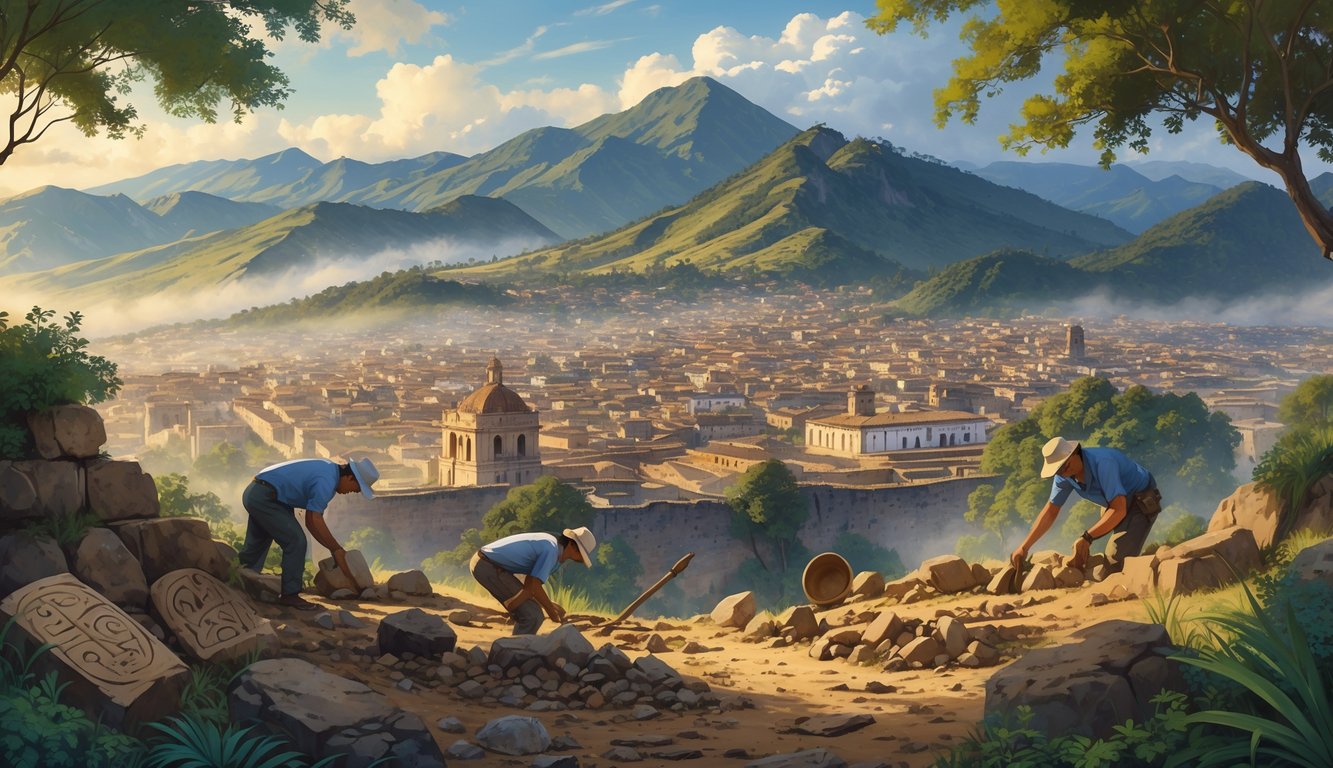
Cuenca has drawn interest from archaeologists and history lovers for many years. Its mysterious past includes evidence of old ruins and cultures that lived in this region long before the city existed.
Underwater Ruins of La Loma
One of the most intriguing discoveries near Cuenca is the submerged site known as La Loma. Large stone structures lie hidden beneath the surface of the Tomebamba River.
Researchers think the stones may be the remains of an ancient settlement. Divers describe stone walls and platforms, which suggest early human activity in this area.
Some local legends link these ruins to lost civilizations that once lived in the Andes. Others believe the Spanish may have built them during colonial times.
The origins and purpose of La Loma remain a mystery. Archaeologists continue to study the site and compare it with findings from other Andean locations.
Early Inhabitants and Their Culture
Cuenca sits on what was once an important crossroads for ancient civilizations. Before the Spanish arrived, indigenous groups such as the Cañari lived in the region.
The Cañari had their own customs, language, and religious beliefs. Many of these traditions still influence the local culture today.
Archaeological evidence shows that these people built ceremonial centers and left behind stone artifacts. Pottery pieces with unique designs and burial mounds indicate a complex society with skilled craftspeople.
Some legends, as explained in Unveiling the Mysteries of Cuenca, tell of unresolved secrets and historical events that shaped the city’s growth. The Cañari later met the Inca Empire, merging some traditions while resisting others.
Cuenca became a blend of cultures. This mix is visible in both local festivals and the city’s architecture.
Quito’s Historical Mysteries
Quito, the capital of Ecuador, is famous for its preserved colonial buildings and mysterious legends. Some places hold secrets tied to ancient cultures and hidden events that still puzzle historians.
The Origins of Plaza de la Independencia
Plaza de la Independencia, also called Independence Square, stands at the heart of Quito’s old city. This plaza is more than a public meeting spot.
The site was important even before Spanish colonization. Many historians think the Spanish built over a former indigenous settlement.
This includes temples and gathering places used by local peoples before the Inca and Spanish arrived. When the Spanish empire took control, Plaza de la Independencia became the political and religious heart of the city.
The plaza is now surrounded by key buildings, such as the Presidential Palace, the Metropolitan Cathedral, and the Archbishop’s Palace. These buildings mark the location as the power center during colonial rule and after Ecuador’s independence.
People still debate what lies beneath the plaza. Excavations sometimes uncover ancient pottery and stonework.
These finds give clues about the indigenous peoples and their customs before European arrival.
Hidden Tunnels Beneath the City
A network of tunnels runs under Quito’s historic streets, adding to the city’s sense of mystery. Builders created many of these tunnels during colonial times for secret movement, water management, and escape routes.
Some of the most famous tunnels are said to connect religious buildings, like La Compañía and San Francisco. These passages allowed clergy and officials to move unseen.
Stories tell of hidden treasures and escape plans during times of conflict. Archaeologists have found walled corridors and underground passages, but much of the tunnel system remains closed and unexplored.
Rumors suggest that even the Plaza de la Independencia may have entrances to these hidden pathways. Local legends say that some tunnels are older than the Spanish buildings and may have been used by indigenous communities before colonial times.
The true extent and purpose of these tunnels remain one of Quito’s most intriguing secrets.
The Inca Empire’s Shadow in Ecuador
Traces of the vast Inca Empire still shape Ecuador today. Ancient ruins and baffling mysteries reveal how far the Incas traveled and what they left behind.
Inca Expansion Strategies
The Inca Empire spread north from Peru into modern-day Ecuador during the 15th century. They used both military strength and smart alliances to grow their territory.
Inca leaders, like Huayna Capac, built roads and bridges to connect distant regions. These roads allowed armies, messengers, and traders to travel quickly.
Most of the expansion was not peaceful. The Incas fought the Cañari people, who were skilled warriors.
Eventually, the Incas controlled key lands but sometimes let local leaders keep their jobs. Ecuador’s highlands still have evidence of Inca settlements and forts.
These places show how the Inca Empire brought new ways of life and technology into Ecuador, as seen in historical accounts.
Relics Connected to Machu Picchu
Ecuador’s Ingapirca site is the most important Inca ruin in the country. It stands high in the Andes and is called the “Machu Picchu of Ecuador” because it is the largest and best-preserved Inca site there.
Ingapirca is unique because it blends Inca and Cañari cultures. The Temple of the Sun, built with finely carved stones, is a main attraction.
Its construction methods are similar to Machu Picchu’s stonework. Visitors often look for links between Ingapirca and Machu Picchu.
Some think sacred paths once connected them, but there is no clear proof. Ingapirca’s design, craftsmanship, and location remind us of the Inca’s reach and creative skill.
Connections to Other Ancient Cultures
Ecuador’s ancient civilizations often spark questions about how they relate to other cultures in the Americas. Archaeological findings such as shared artifacts and similar architecture styles raise the possibility of contact or influence between distant peoples.
Comparisons with Chichen Itza
Researchers notice intriguing similarities between Ecuador’s ancient sites and Chichen Itza in Mexico. Both cultures built stepped pyramids and ceremonial platforms, though the styles differ.
Some Ecuadorian ruins feature large stone constructions and sun-related symbolic carvings, echoing practices seen in the ancient Maya city. Archaeological digs in Ecuador have uncovered pottery, jewelry, and tools made from materials not native to the region.
This hints at possible trade or cultural exchange. The use of astronomical alignments in temple design is another shared element, with temples pointing to solstices or equinoxes—just like at Chichen Itza.
Key Similarities:
| Feature | Chichen Itza | Ecuadorian Sites |
|---|---|---|
| Stepped Pyramid Structures | Yes | Yes (different styles) |
| Astronomical Alignments | Strong | Present in some temples |
| Stone Carvings with Deities | Yes | Yes |
Potential Links to the Maya World
Some historians believe there might have been ancient contact between Ecuador and the Maya world. Pottery from the Valdivia culture in Ecuador, which dates back over 4,000 years, shares shapes and decoration patterns seen in parts of ancient Mesoamerica.
Seashells and other sea resources found in Maya regions came from the coasts of South America, including Ecuador. This suggests long trade networks stretching across thousands of miles.
Legends and myths from both areas sometimes mention distant travelers or traders arriving by water. While there is no hard proof of a direct link, these clues let archaeologists imagine what connections may have existed.
Ongoing digs continue to reveal new objects and hints, connecting Ecuador’s ancient civilizations to the larger history of the Americas.
The Untold Mysteries of the Amazon Region
Ecuador’s Amazon rainforest is full of forgotten stories. Archaeologists and scientists still uncover ancient cities, lost tribes, and strange marks in the jungle.
Lost Tribes and Hidden Settlements
Researchers using laser technology have recently found ancient cities and networks hidden beneath thick forest. These communities could be up to 2,500 years old.
Roads, ditches, and mounds reveal that thousands of people once lived here, even though these places are far from modern towns. Some of these settlements are now lost, and local legends speak of hidden tribes still living deep in the forest.
Indigenous communities today are important keepers of knowledge about the jungle’s history. They sometimes tell stories about ancestors who vanished or entire villages swallowed up by the trees.
Key highlights about these settlements:
- Built with earthworks and straight paths
- Connected by causeways and canals
- Supported large populations despite remote locations
Unmapped Geoglyphs and Symbols
The Amazon’s floor sometimes reveals strange shapes and geoglyphs carved into the land. These patterns are big and can be seen with drones or special cameras from above.
No one knows for sure who built them or what all of them mean. These shapes show that past people shaped the earth in ways that are still being discovered today.
Some geoglyphs match symbols seen in ancient rock carvings, while others form mazes or large circles. A few local groups believe these signs mark old meeting places or have spiritual meanings.
Scientists continue to debate their purposes as new geoglyphs keep turning up. Each discovery deepens the mystery of the Amazon rainforest’s past.
Modern Discoveries and Ongoing Research
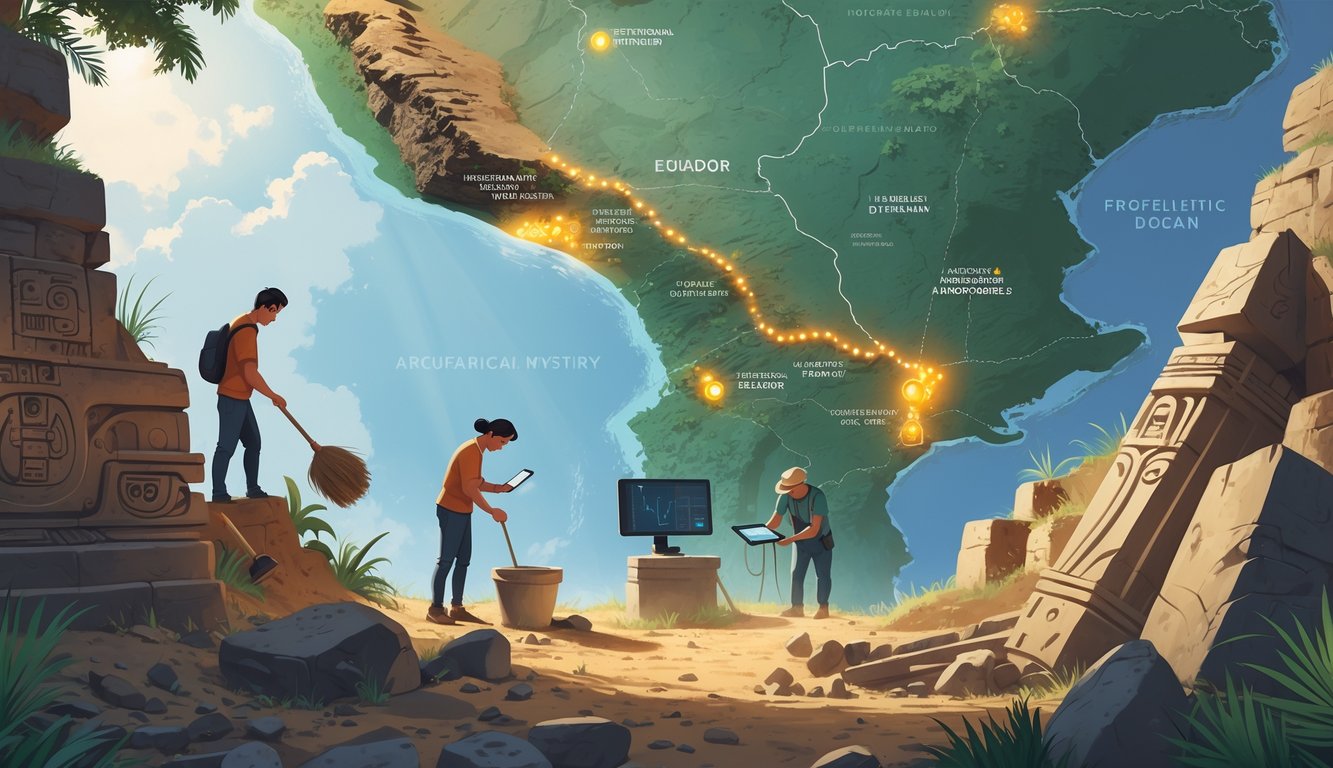
Researchers in Ecuador are making important progress by using new scientific tools and working with local people. This teamwork is leading to exciting discoveries about ancient cultures and helping to protect valuable archaeological sites.
New Archaeological Techniques
Scientists now use powerful technology like LiDAR, a special kind of laser scanning. LiDAR can map the land from above and find hidden structures under thick rainforest.
In Ecuador’s Upano Valley, this has revealed lost cities with wide roads and large platforms previously covered by jungle. These new LiDAR scans show that ancient Amazonian cultures were more advanced than many people thought.
The sites stretch across 300 square kilometers, connecting settlements and showing planned construction. These discoveries challenge old ideas about simple forest communities and show a rich history of civilization in the Amazon.
LiDAR is also helping protect these sites by letting archaeologists see what’s below the surface without digging. This means less damage to rare artifacts or the land.
Scientists can better plan where to dig and learn more about the area’s history.
Community Involvement in Conservation
Local communities, especially indigenous groups, play a key role in protecting archaeological sites. Many of them work with archaeologists to share traditional knowledge and help document ancient objects and sites.
Researchers invite residents to help, which allows them to better understand the history and culture of the Amazon. Community members often recognize remains or artifacts that outsiders might miss.
They also help make decisions about caring for sites. Indigenous groups sometimes lead guided tours or teach visitors about their culture and the importance of these discoveries.
This involvement brings jobs and encourages respect for traditional ways. It helps protect Ecuador’s archaeological treasures for the future.