Costa Rica is famous for its beautiful beaches and rainforests. Its history also hides mysteries that few people know about.
Ancient stone spheres carved with surprising precision and fabled ruins hidden in the jungle fill the country with unanswered questions. Historians and archaeologists still puzzle over these secrets today.
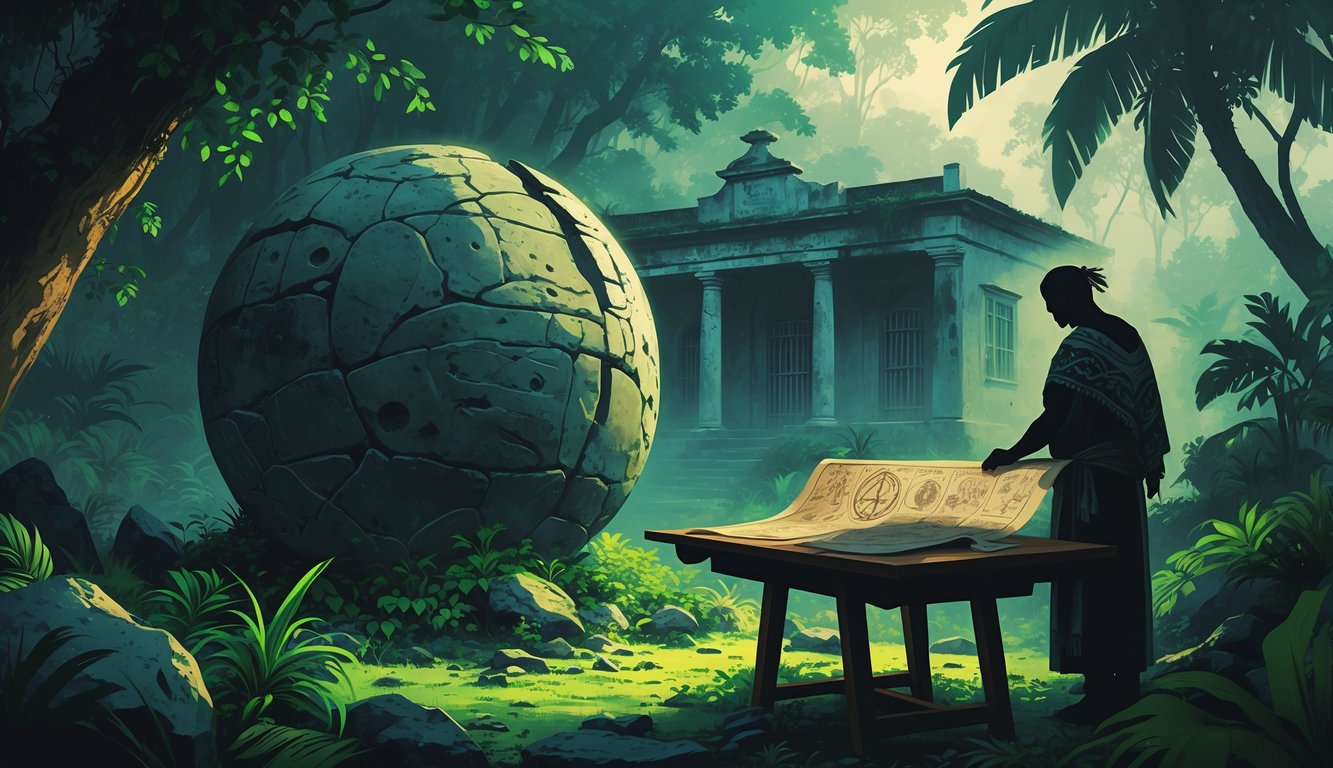
Some of the biggest historical mysteries in Costa Rica include the origin and purpose of the giant stone spheres, lost indigenous legends, and ruins whose stories have faded into myth. People can explore fascinating sites that reveal the secrets of ancient civilizations, precious artifacts, and archaeological wonders.
Each site and story adds another layer to Costa Rica’s rich past. These mysteries invite everyone to look closer and imagine what life was like for the people who shaped this unique country.
Unraveling the Origins of Costa Rica’s Ancient Civilizations
Ancient Costa Rica was home to unique pre-Columbian societies. They left behind clues about their lives through archaeological sites, artifacts, and the landscape.
Researchers use these clues to learn how these civilizations lived and developed over time.
Migration Patterns and Cultural Influences
The earliest settlers in Costa Rica arrived thousands of years ago. Most likely, they traveled from both the north and the south of the continent.
These people did not arrive all at once. Instead, waves of migrants moved in over many centuries, bringing new ideas and skills.
Archaeologists say that ancient Costa Rica acted as a crossroads. Mesoamerican cultures from the north, such as those from present-day Mexico and Central America, interacted with the region’s people.
Groups from northern South America, including areas now called Colombia and Panama, also played a role. Evidence of these connections appears in pottery, statues, and tools found at important archaeological sites.
These artifacts show a blend of traditions, including new farming methods, art styles, and trading systems. This mix helped Costa Rica’s ancient civilization develop its own cultural identity.
Distinctive Features of Pre-Columbian Societies
Pre-Columbian societies in Costa Rica are known for their skillful stonework and elaborate gold jewelry. They built large settlements.
One of the most famous discoveries is the stone spheres of Diquís. These mysterious stones are nearly perfect spheres and show advanced craftsmanship.
Villages included organized plazas, burial grounds, and public spaces. Leaders were sometimes buried with gold or ornaments to show their rank.
Artifacts from archaeological sites display animal figures, geometric designs, and objects used for ceremonies or daily life. Farming played a key role.
People grew crops like maize, beans, and cocoa. They traded with nearby civilizations, exchanging goods and ideas.
Mystery of the Diquís Stone Spheres
The Diquís stone spheres are large, mysterious stone balls found mainly in Costa Rica. Their size and craftsmanship have sparked curiosity for decades.
Discovery and Location of the Stone Spheres
Workers first found hundreds of stone spheres, sometimes called Las Bolas, in the 1930s while clearing land for banana farms. Most stones were discovered in the Diquís Delta, a region in southern Costa Rica.
Some spheres have also been found on Isla del Caño. The spheres vary in size.
A few are as small as a tennis ball, while the biggest reach up to 2.66 meters (about 8.7 feet) in diameter and can weigh as much as 15 tons. Finca 6 is one of the most important sites where these spheres can be seen today.
Several locations with spheres are now World Heritage sites recognized by UNESCO. These sites are important for their archaeological value and their connection to the ancient Diquís culture.
Purpose and Cultural Significance
The now extinct Diquís culture likely carved the stone spheres. The purpose of the spheres remains uncertain.
Some researchers suggest they were used as status symbols, marking the homes or graves of important people in the community. Others think the spheres had a spiritual or ceremonial meaning.
Some spheres were found near burial sites, which hints at a connection to rituals or beliefs about death. The careful placement of spheres might also show their use in marking boundaries or areas of political importance.
Today, the spheres are a proud part of Costa Rica’s cultural heritage. Locals and visitors can see some of these spheres at the Museo Nacional de Costa Rica.
Theories About Craftsmanship and Function
Archaeologists admire the craftsmanship of the Diquís stone spheres. Most are made from gabbro, a hard volcanic rock, and shaped with remarkable precision.
Experts still do not know exactly how ancient people made such perfect shapes. Some theories say they created the spheres by slowly chipping away at the rock with stone tools, then polishing with sand and water.
The process may have taken weeks or even months for each sphere. Their function continues to be debated.
Some people think the spheres served practical roles, while others believe they had social or religious meanings. Researchers hope to learn more as studies continue on these impressive stones across the Diquís Delta.
Secrets of Guayabo: Costa Rica’s Lost City
Guayabo National Monument is the country’s largest and most mysterious archaeological site. It sits near the slopes of Turrialba Volcano.
Its ancient builders left behind grand stone structures and advanced engineering. The ruins hint at a complex society.
Architectural Marvels and Hidden Aqueducts
The heart of Guayabo features broad stone causeways, plazas, and platforms. Builders designed these with careful planning.
The city covered about 540 acres. It may have supported up to 10,000 people at its peak.
One of Guayabo’s most impressive features is its network of aqueducts. These stone-lined channels still carry water today.
Their builders showed great skill with hydraulics and city design. The aqueduct system, which remains a highlight for visitors, made sure clean water reached homes and public areas.
Key structures include:
- Circular stone foundations of houses
- Large ceremonial mounds
- Petroglyphs carved into boulders
Some ruins stayed hidden for hundreds of years beneath thick jungle. Guided tours help visitors explore these remains and understand their purpose in ancient Costa Rican life.
Many travelers look to detailed Guayabo National Monument guides for more information.
Guayabo’s Rituals and Social Hierarchies
Archaeologists believe Guayabo was not only a place to live but also a major center for rituals and ceremonies. Evidence like ceremonial altars and large public spaces suggests these activities were central to the city’s culture.
Social status at Guayabo likely depended on where people lived and the size of their homes. Larger platforms and more elaborate stonework point to higher-ranking families or leaders.
Artifacts found at the site—such as jade, ceramics, and carved stones—may have belonged to those of greater social standing. Many of the petroglyphs and arrangements of stones are thought to be tied to spiritual practices.
These designs are still not fully understood. Researchers continue to study Guayabo’s traditions.
Information on these discoveries is available from archaeology-focused sites like LAC Geo.
Current Excavations and Preservation Efforts
Guayabo was abandoned about 1400 years ago. Excavation work continues today.
Researchers and students dig carefully to uncover new artifacts and learn about daily life in the ancient city. Much of the site remains covered by dense forest, which helps protect it from weather and human impact.
Conservation teams work to keep the ruins stable and prevent overgrowth damage. They also educate visitors about the importance of preservation.
Guayabo is open to the public year-round as a protected national monument. The site offers guided tours, information displays, and marked trails.
Visitors can experience the mysteries of this lost city firsthand. Learn more about current efforts at Guayabo National Monument’s preservation projects.
Enigmatic Petroglyphs and Ancient Art in Costa Rica
Costa Rica’s ancient petroglyphs and art reveal much about the beliefs, rituals, and daily life of its early people. Mysterious symbols carved into stone and the skilled methods used to create them capture centuries of cultural history.
Interpreting Petroglyph Motifs
Petroglyphs, or rock carvings, are scattered across Costa Rica, especially in regions like Guanacaste and the Central Valley. Many of these carvings are over 2,500 years old and offer a rare view into the past.
Some carvings show spirals, animals, and human figures. Researchers believe these might represent water sources, fertility, or clan identity.
One of the most famous sites is the Eco Canyon in Ciudad Nya. Ancient carvings there have been linked to rituals or social gatherings.
Other petroglyphs found near rivers, such as those left by the Catapa people, may mark sacred or important locations.
Common Motifs:
- Spirals: Often linked to cycles of nature
- Animals: May represent spiritual beings or clan symbols
- Geometric shapes: Possibly tied to mapping land or ceremonial spaces
Each design shows the creativity and deep meaning valued by indigenous artists.
Artistic Techniques and Tools
Ancient Costa Rican artists used basic but effective tools to carve into volcanic rocks and boulders. Sharp stones, bones, and sometimes metal objects helped them make fine lines and patterns.
The process could take hours or days, depending on the size and detail of the image. This craftsmanship shows their knowledge of materials and patience.
Some carvings appear polished or painted, which suggests extra care for artwork meant for ceremonies or public spaces. The Guayabo National Monument is a well-known archaeological site that includes both petroglyphs and traces of structures built by skilled hands.
Tools Used:
- Stone chisels
- Bones or antlers
- Sand for smoothing surfaces
These simple tools produced art that has lasted thousands of years.
Spiritual and Astronomical Connections
Many experts believe Costa Rica’s petroglyphs played an important part in the spiritual and astronomical life of its early people. Some carvings align with the sun’s movement during solstices or equinoxes and may have worked as ancient astronomical tools.
Indigenous groups may have held rituals at these sites, using carvings to guide ceremonies or mark sacred times of year. Symbols and animal shapes possibly linked to myth or spirit guides hint at the deep connection between art and belief.
Archaeologists continue to study these artworks to learn how early Costa Ricans understood the stars, seasons, and their spiritual world. Some petroglyphs remain unexplained, adding to their mystery.
The Diquís Delta: A Puzzle of Burial Sites and Lost Cultures
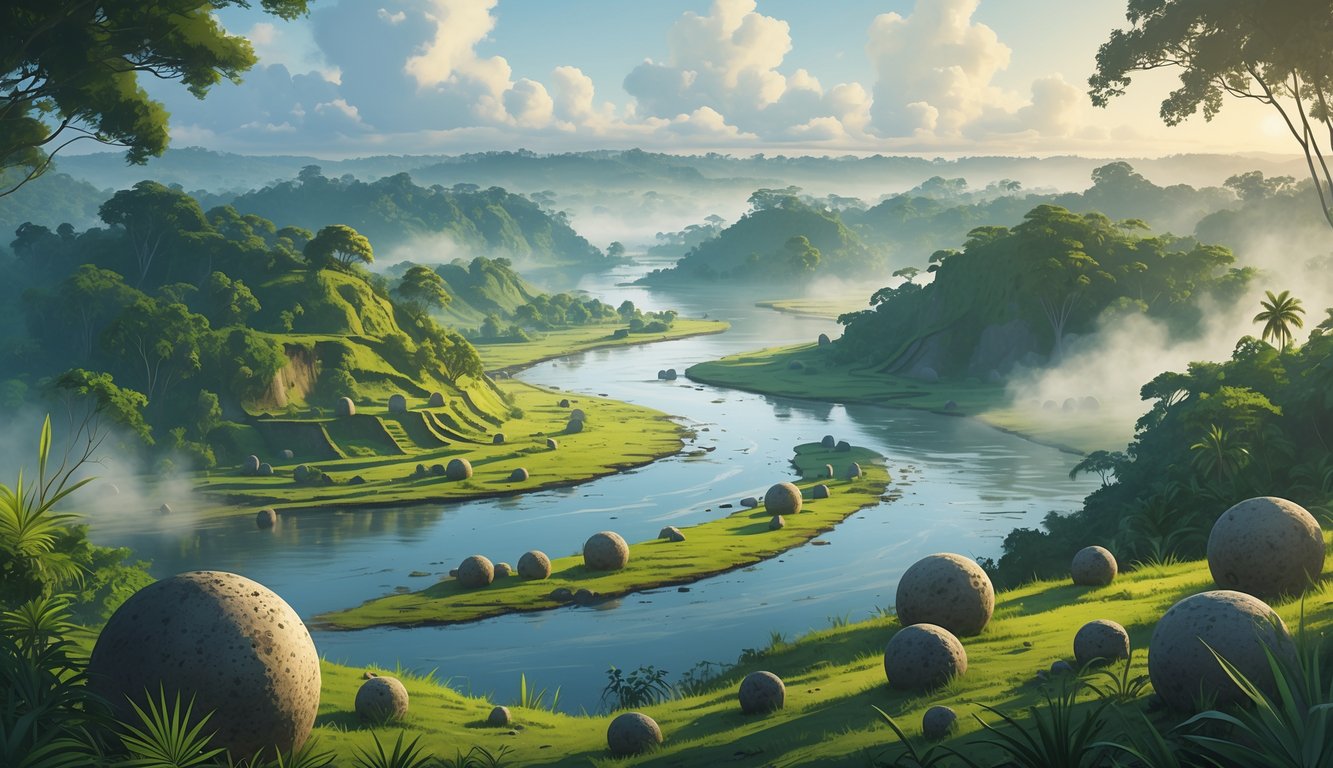
The Diquís Delta in Costa Rica is known for its intriguing archaeological sites. It is especially famous for its nearly perfect stone spheres and complex burial grounds created by the Diquís culture.
Burial Site Distribution and Discoveries
Archaeologists have found over 300 stone spheres scattered in the Diquís Delta region. These spheres are often linked to ancient burial sites and settlements.
The burial sites are spread across alluvial plains, especially near Palmar Sur and Isla del Caño. These places show signs of careful planning.
Some spheres were arranged in lines or circles, which may have marked important locations. Researchers believe these patterns were not random.
They think the sites belonged to socially complex communities with strong leaders. Excavations in the delta have revealed multiple layers in burial mounds, which suggests long use over time.
The layout of these sites shows an advanced understanding of the landscape. This hints at the power dynamics of the Diquís culture.
Funerary Objects and What They Reveal
Many graves in the Diquís Delta burials contained status symbols such as gold items, jade, and beautifully carved stones. These artifacts were often placed with the dead as grave goods.
Archaeologists also found tools, decorative ceramics, and ornaments. The objects suggest that some people held higher status than others.
This points to a society with strong social ranking. Jewelry and stone carvings may have shown family ties or achievements.
These discoveries give important clues about daily life, religion, and the lost traditions of this ancient culture.
Las Mercedes and Lesser-Known Archaeological Sites
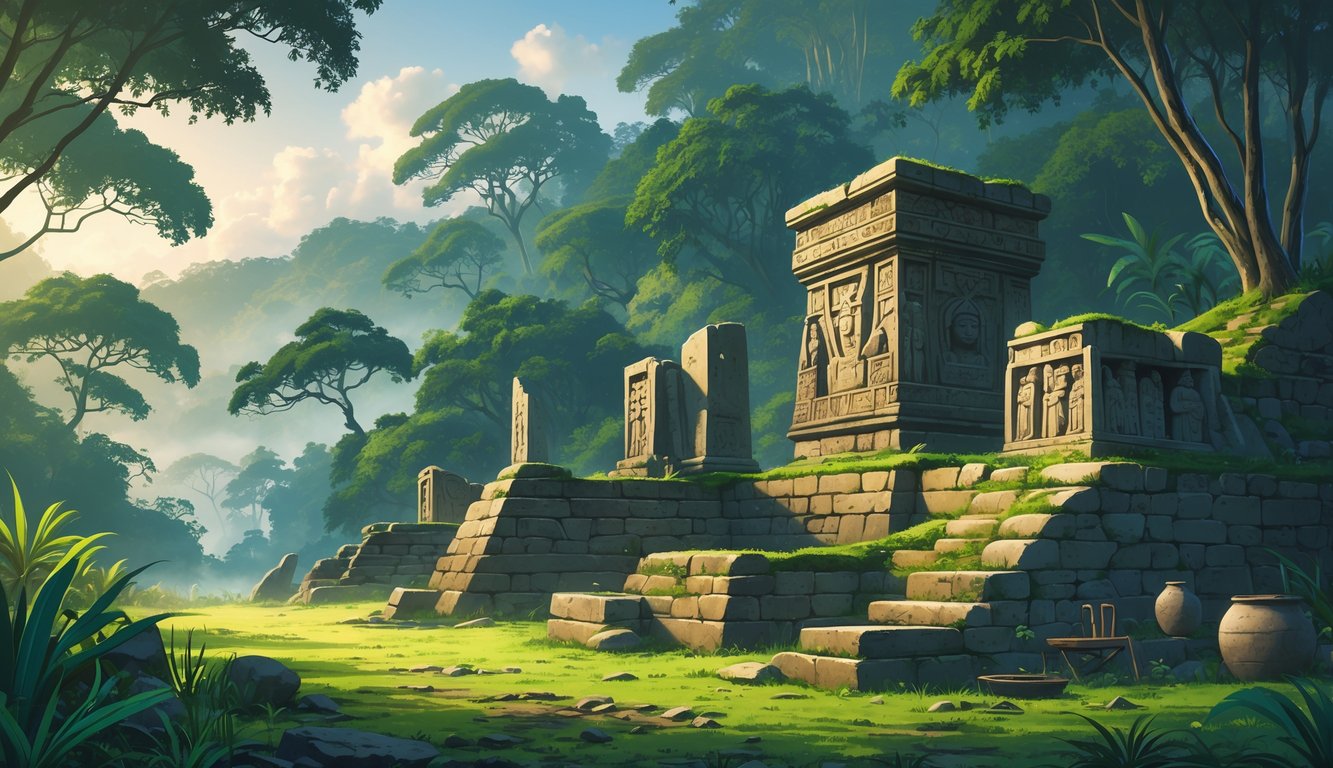
Costa Rica’s history includes ancient stone roads, mysterious plazas, and lost settlements that still puzzle researchers. While some sites are famous, others like Las Mercedes and Batambal remain hidden gems full of unanswered questions.
Las Mercedes: History and Unsolved Questions
Las Mercedes is a large archaeological site on the Caribbean slope of Costa Rica. Located near the foothills of Turrialba Volcano, the site features platforms, plazas, stone terraces, and long paved roads.
Its careful planning and use of stone show impressive architectural skills for its time. Archaeologists have also found funerary areas, which suggest organized social and spiritual practices.
Nobody knows which people built Las Mercedes, what language they spoke, or why the site was abandoned. Many of the stone sculptures discovered there have unknown roles and meanings.
The site’s layout, with its paved causeways, may point to important ceremonial uses, but the exact purpose is still mysterious. You can read more about Las Mercedes and its features.
Other Mysterious Locations Across Costa Rica
Las Mercedes is just one of many archaeological marvels in Costa Rica. The country is also home to the Batambal site, famous for its ancient petroglyphs, which may offer clues about spiritual beliefs and rituals.
Other lesser-known sites include settlements with platforms, plazas, and stone roads, similar in design to Las Mercedes. Many of these unexplored locations are not as visited as Diquís or Guayabo, but they are important pieces of Costa Rica’s puzzle.
Sites like Batambal, for example, remain little studied but are open for those who wish to explore and wonder about the country’s ancient past. For more on these unique sites, see this summary of Costa Rica’s archaeological sites.
Historical Conundrums of Colonial Sites and Ruins
Costa Rica holds several colonial historical sites that reveal both valuable artifacts and enduring mysteries. These places, found mostly in the Cartago region, invite questions about their origins, forgotten events, and lasting cultural heritage.
Orosi Church and Its Mysteries
Orosi Church is one of Costa Rica’s oldest functioning Catholic churches, built in 1743. Located in the Orosi Valley near Cartago, it mixes Spanish colonial architecture with native influences.
Visitors notice several unusual features inside. The thick adobe walls hide old drawings and symbols whose meanings are still debated.
Some say the markings show secret rituals or local stories unknown to historians. The beautifully carved altar, made from cedar wood, has also led to speculation about hidden symbols put there by early builders.
The small Religious Art Museum next to the church displays objects found on the grounds. Items include old prayer books, silver chalices, and religious images, but no one knows where some of these came from.
This lack of historic records continues to stir curiosity among both scholars and travelers. Many visit to learn more about the church’s mysterious past.
The Ujarrás Ruins: Legend and Legacy
Located in a quiet valley close to Cartago, the Ujarrás Ruins mark the site of one of Costa Rica’s first colonial churches, built in the 1500s. The stones and partial walls remain, surrounded by thick green hills.
A legend says that fishermen found a statue of the Virgin Mary floating in a nearby river, leading villagers to build the church in her honor. Some say the statue showed “miraculous powers,” protecting the area from disasters.
While the church itself was abandoned after repeated floods and disease, the site remains a symbol of cultural heritage. People visit the ruins each year to honor old traditions and to seek answers about the true events that made Ujarrás significant.
Many questions remain about the lost records of the early community, the real origin of the statue, and how these legends have shaped local beliefs. The Ujarrás ruins continue to invite curiosity from historians and visitors alike.
Isla del Caño: Island of Legends and Archaeological Riches
Isla del Caño is known for its rich archaeological history and its surrounding ocean full of marine life. The island holds clues about ancient burial practices and trade among early peoples.
Stone Figures and Burial Practices
Archaeologists have found ancient stone spheres and figures both on Isla del Caño and throughout Costa Rica’s Diquís region. These round stones, known as Las Bolas, are carved with surprising precision.
Some are small enough to hold in your hand, while others can be over two meters wide. Many of these spheres mark old burial sites, showing their importance in local cultures.
The burial grounds hint that the island’s early inhabitants practiced special rituals when honoring their dead. Indigenous people may have used the spheres as symbols of status or as grave markers.
The way the spheres are arranged at some sites reveals patterns, which might connect to beliefs about family, community, or even astronomy. These discoveries make Isla del Caño one of the country’s most important archaeological sites.
Marine Mysteries and Trade Connections
The waters around Isla del Caño are rich in coral reefs and sea creatures. This made the island not just important for rituals, but also as a center for fishing and sea travel.
Modern divers consider it a paradise, but ancient peoples may have depended on the ocean for food and contact with other groups. Artifacts found on the island, such as pottery and tools, show similarities to those from distant regions.
This suggests the islanders were part of a larger network and traded with people from other parts of Central America. The location in Corcovado Bay also made it easy for travelers to stop at the island by boat.
Some believe that Isla del Caño served as a waypoint for travelers or traders moving along the Pacific coast. Its archaeological significance rests on this mix of burial sites and evidence of long-distance contact.
This makes the island important in the study of Costa Rica’s indigenous people.
San José’s National Museum and Costa Rica’s Hidden Histories
San José’s National Museum serves as the heart of Costa Rica’s historical preservation. With archaeological marvels and carefully maintained collections, this museum allows visitors to step into the country’s layered past.
Key Artifacts Preserved at the National Museum
The National Museum in San José, known as Museo Nacional de Costa Rica, displays a wide range of unique artifacts. Some of the most valuable pieces include pre-Columbian gold, jade carvings, and pottery.
These objects help tell the story of ancient civilizations that once lived in Costa Rica. Visitors can find a collection of stone spheres, mysterious round carvings whose true purpose remains unknown.
These spheres have become one of Costa Rica’s biggest historical mysteries. Bronze-era tools and detailed jewelry offer a glimpse into the everyday life and beliefs of earlier cultures.
The museum is also home to displays about the country’s colonial history, including military artifacts, clothing, and documents. Guided tours often highlight the transformation of the museum’s building, which once served as a fortress.
To learn more about what to expect on a museum visit in San José, check out this guide to San José museums.
Efforts to Uncover and Conserve the Past
Curators and archaeologists at the National Museum work to protect Costa Rica’s cultural heritage. They conduct field excavations to discover new artifacts and document their findings.
Conservation projects focus on slowing the effects of aging and protecting delicate items from damage. Local collaborations with universities and international experts help improve conservation methods.
Special climate-controlled rooms keep items like ancient textiles and fragile pottery safe. Museum staff also use modern technology, like 3D scanning, to create digital copies of priceless items.
Educational programs and public exhibits encourage visitors to connect with Costa Rica’s past. The museum not only preserves history but also helps the public appreciate the depth of the country’s cultural roots.
For a deeper look at these conservation efforts, you can visit the National Museum’s overview page.
Modern History: The Enigma of the United Fruit Company
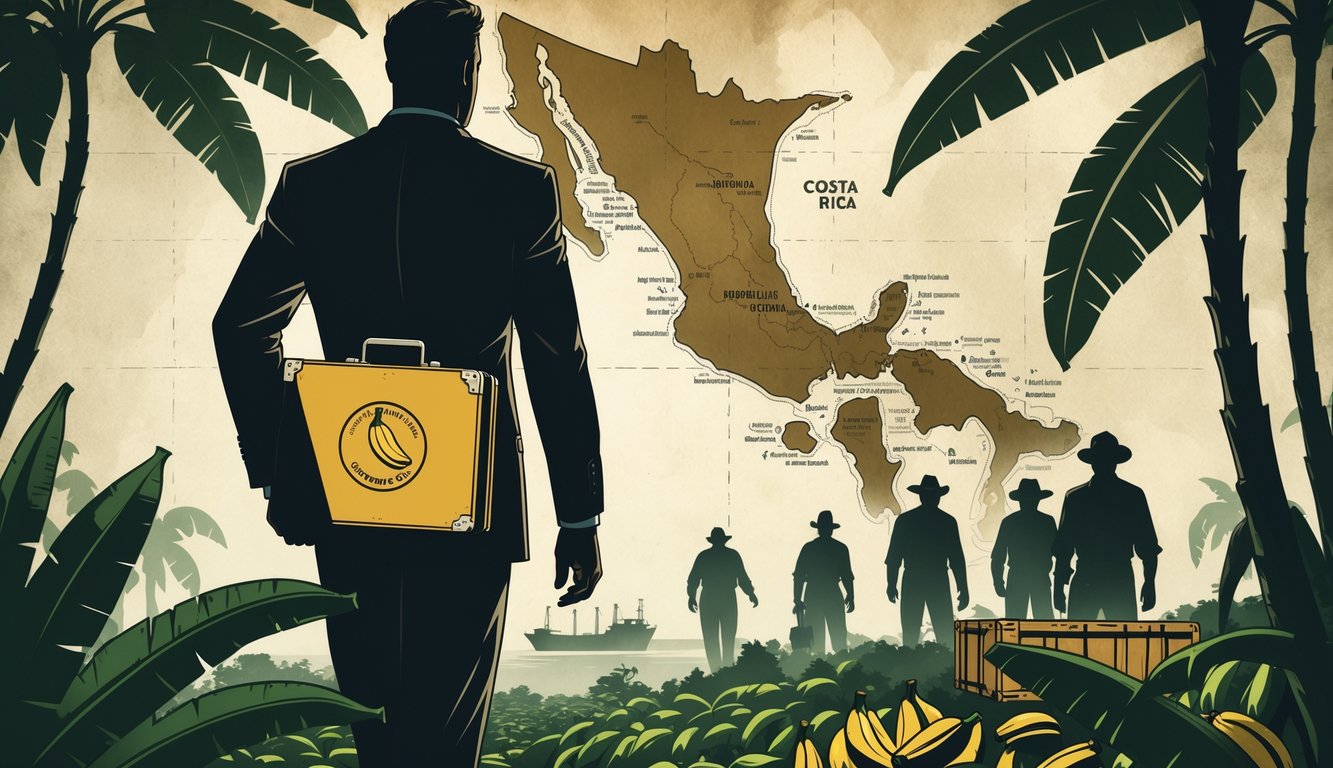
The story of the United Fruit Company is tied to Costa Rica’s growth, but questions about its power and actions still surround its legacy. From changing the landscape to shaping culture, its history remains both important and mysterious.
Economic Influence and Mysterious Events
The United Fruit Company began operations in Costa Rica in 1899 and quickly became a huge economic force. At its height, it controlled almost 60% of Costa Rica’s exports and provided jobs for a large part of the population.
Bananas became the country’s main export, with the company building railways, ports, and entire towns to support its business. According to some historians, 14% of agricultural jobs and 7% of total employment came from United Fruit’s operations.
The company’s rise did not come without strange and troubling events. Sudden strikes, violent labor disputes, and the creation of “company towns” led to secretive deals and hidden stories.
In some cases, workers and local leaders faced threats and disappearances that no one ever explained. The company’s decisions about land use also changed the country’s geography, clearing forests and moving communities with little warning or oversight.
Key facts:
- United Fruit ran from 1899–1984
- Bananas took over as top export
- Labor unrest was common and sometimes violent
Social Impact and Cultural Changes
United Fruit shaped daily life in Costa Rica for generations. Its influence reached into schools, housing, and even food.
Families depended on company jobs. People from many countries came to work, creating new traditions and mixing different cultures.
Some towns in the banana zones still reflect these changes today. You can see this in music styles and local slang.
The company’s control often kept workers in poor conditions. United Fruit owned homes and stores, making life outside its rules difficult.
Locals sometimes protested these controls, sparking major strikes. In rare cases, the government stepped in.
People still remember United Fruit’s presence through stories, abandoned buildings, and folk songs. The company’s impact continues to shape how Costa Ricans see their past and identity.
For more about their complex history, see this detailed look at the legacy of United Fruit Company in Costa Rica.