Colombia is a country full of old secrets and fascinating stories that still puzzle people today. From lost cities deep in the jungle to ancient tombs and mysterious rock paintings, Colombia’s past holds many riddles that spark the curiosity of visitors and locals alike.
Some of the biggest historical mysteries in Colombia include the hidden ruins of Ciudad Perdida, puzzling underground tombs, and legends that blend fact with myth.
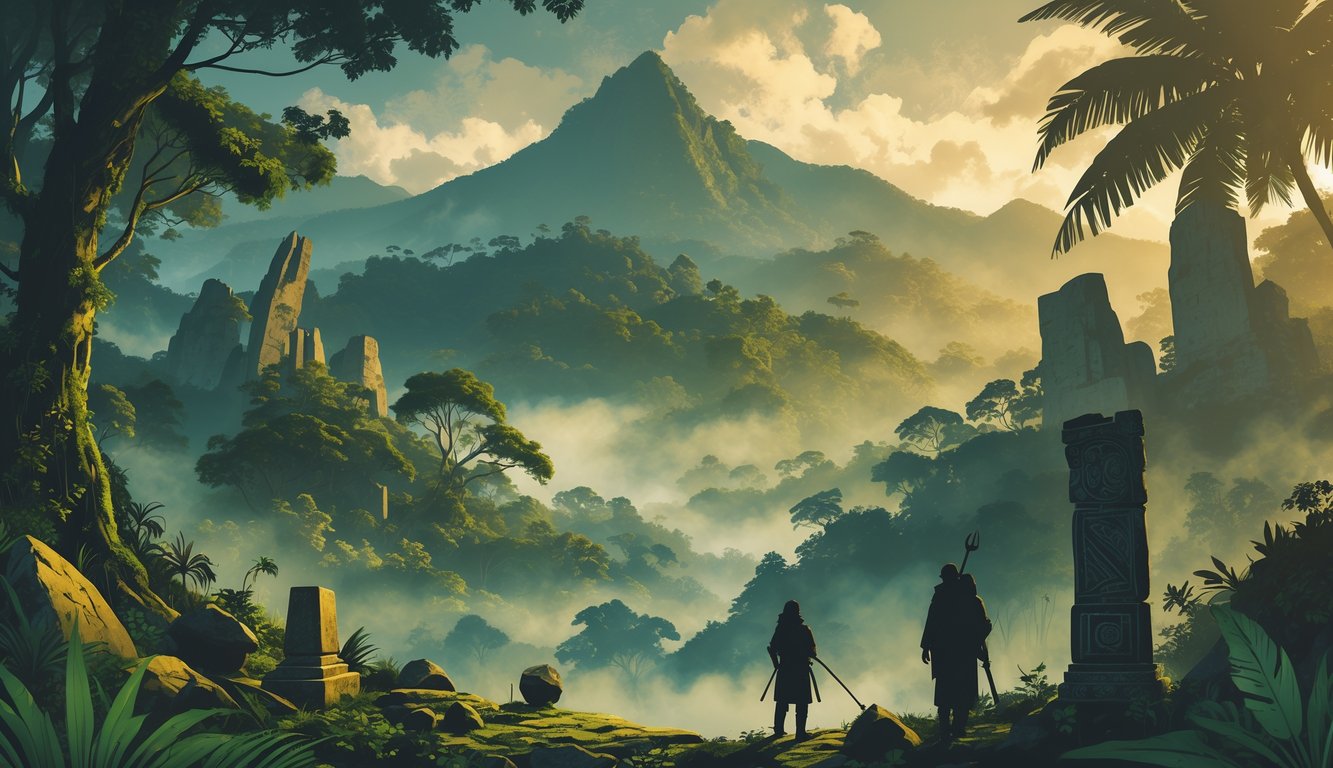
Explorers and archaeologists have found ancient wonders that reveal hints about people who lived in Colombia long before the Spanish arrived. Sites like the Ciudad Perdida offer a look into these lost civilizations.
Legends and tales passed down through generations add another layer of mystery to Colombia’s story. Strange figures, vanished treasures, and unexplained landmarks make Colombia a place where history and legend often meet.
Unsolved Mysteries of the Lost City (Ciudad Perdida)
Ciudad Perdida sits hidden in Colombia’s Sierra Nevada mountains. This ancient stone city still puzzles archaeologists.
The Tairona people built this pre-Columbian site. The city reveals clues to a civilization that vanished, leaving behind unique ruins, secret building methods, and hints of deep spiritual importance.
Tairona People and Their Disappearance
The Tairona were skilled builders who flourished in this region over 1,000 years ago. They made the lost city, also called Teyuna, with stone terraces, winding steps, and water systems.
By the 16th century, the Tairona had left Ciudad Perdida. Some researchers think war or disease brought by Spanish conquest forced them to abandon their city.
Others point to environmental changes or conflict with neighboring villages. The Kogi and Arhuaco, descendants of the Tairona, keep many parts of the story secret.
Teyuna’s Secret Construction Techniques
Ciudad Perdida’s stone plazas, paths, and stairs show advanced engineering for their time. The builders used no metal tools or mortar, yet the structures have lasted for centuries in a harsh jungle climate.
Archaeologists still try to figure out how the Tairona, with simple tools, moved tons of stone and placed them so carefully.
Key features include:
- Terraced platforms built to avoid landslides
- Hidden staircases winding through dense forest
- Sophisticated water channel systems for drainage
The city’s hidden location and the jungle’s rapid growth kept it a secret until the 1970s. Even now, thick vegetation and steep slopes make research slow and difficult.
More details and theories can be found through detailed studies on Ciudad Perdida’s engineering and layout.
Cultural Significance of Ciudad Perdida
For the Tairona, Ciudad Perdida was more than just a place to live. It served as a major spiritual and trade center.
Ceremonies and rituals took place on the stone terraces, with priests and leaders gathering from nearby villages. The city’s design shows careful planning for both practical and sacred needs.
Its terraces and sites line up with rivers, mountains, and the sun’s path. Modern-day Kogi and Arhuaco people still visit and perform ancestral rituals, keeping its cultural role alive.
Colombian authorities and descendants of the Tairona protect the ruins as an important part of national identity. Ciudad Perdida has been considered for UNESCO World Heritage status due to its unmatched role in pre-Columbian history.
The Legend and Enigma of El Dorado
El Dorado is one of Colombia’s most famous legends. Its story mixes pre-Columbian gold, native rituals, and European imagination.
Origins of the Golden City Myth
The El Dorado legend began when Spanish explorers in the 16th century heard stories about a wealthy ruler covered in gold dust. According to these tales, this ruler would wash off the gold in a sacred lake, leading people to believe there was a city filled with riches in the heart of Colombia.
The Muisca people played a key role in shaping this legend. Their culture valued gold for religious and social reasons, not as money.
When the Spanish saw the Muisca’s gold offerings, they misunderstood, thinking there was a whole golden city to be found. This misunderstanding and the explorers’ search for wealth led to many failed, dangerous expeditions through Colombia’s jungles and mountains.
Many died looking for something that never existed as the stories described. As the myth spread, El Dorado became a symbol of impossible riches and adventure across South America.
Over time, the legend shifted from a gold-clad chief to a lost empire, keeping the imagination of treasure hunters alive for hundreds of years. Archaeologists and historians still search for new evidence, but the city itself remains hidden in stories and myths.
Muisca Rituals and the Lake Guatavita Mystery
Central to the El Dorado legend are the rituals of the Muisca people at Lake Guatavita. During special ceremonies, their leader—the zipa—was covered with gold dust.
He would sail to the lake’s center and wash off the gold, while followers tossed gold and jewels into the water as offerings to their gods. Spanish conquerors saw the shimmering gold on the water’s surface.
This sight fueled their hopes that Lake Guatavita’s depths hid vast amounts of treasure. They tried to drain the lake several times throughout history.
In the 16th and 19th centuries, explorers dug channels and tunnels to lower the water, hoping to find gold at the bottom. While they recovered some artifacts, no huge golden hoard was ever found.
Modern archaeologists agree that the gold offerings were meaningful gifts, not a clue to a massive city of treasure. Lake Guatavita and the Muisca ceremonies remain key examples of how pre-Columbian beliefs and customs fed the imagination of those searching for El Dorado.
For more details, read about the history and legend of El Dorado and Lake Guatavita.
The Intrigue Surrounding San Agustín Archaeological Park
San Agustín Archaeological Park in southern Colombia is one of the world’s most fascinating historical sites. Visitors encounter ancient tombs and towering stone statues, yet much about the park—and the people who built it—remains a secret.
Mysterious Megalithic Sculptures
San Agustín is famous for its large collection of megalithic stone sculptures found across the park’s hills and valleys. These statues, some over four meters tall, often show faces with bold features, animals, and mythical beings.
No two statues are exactly alike. Many appear to guard burial mounds, with some holding objects or showing sharp fangs and grim looks.
The meaning behind these designs is still unknown. Experts think the statues had spiritual or religious importance.
The park holds the largest group of these sculptures in Latin America. Recognized as a UNESCO World Heritage Site, San Agustín offers a unique look at pre-Columbian art and beliefs.
Unknown Civilizations of San Agustín
Little is known about the ancient people who built the statues and tombs. Their civilization left no written records, making it hard for researchers to piece together their story.
The builders lived in the region thousands of years ago and created huge burial sites and religious monuments. Experts do not know why these settlements disappeared.
The mysteries deepen because no clear links to other known South American cultures, like the Inca or Maya, have been found. Today, San Agustín’s ruins are seen as a testament to a complex society that valued ritual and the afterlife.
Excavations continue, but key questions remain. For more details, see the San Agustín Archaeological Park.
Hidden Stories of the Tierradentro Tombs
Tierradentro is an archaeological park in Colombia’s Andes mountains. Deep underground, hundreds of large tombs built by pre-Columbian civilizations hold secrets about the beliefs and daily life of ancient people.
Unique Burial Chambers
At Tierradentro, archaeologists have found networks of underground burial chambers called hypogea. These tombs are carved out of volcanic rock, with some chambers reaching depths of up to 9 meters.
Wide spiral staircases lead visitors from the surface down into dark, cool rooms. Many of these chambers have round or square layouts.
Along the stone walls, low benches are built out for the bodies to rest on. Some tombs hold just one person, but others may contain families or social leaders.
The careful construction shows a strong respect for the dead. Tierradentro’s tombs make up the largest group of their kind in the Americas.
The size and number of burials suggest a complex ancient society that valued ceremony and community. The site has earned distinction as a UNESCO World Heritage Site.
Symbolism of the Underground Art
Inside these tombs, walls are decorated with geometric designs, zigzag patterns, and faces painted in red, black, and white. These designs likely hold religious meaning, possibly representing spirits, ancestors, or life after death.
The art gives a rare look at the beliefs of the region’s pre-Columbian people. Some shapes may have stood for protection, while others could mark family groups.
Carved sculptures—like large stone figures placed near the tombs—add even more character to the site. This art shows how the ancient builders celebrated those who had died and hoped to guide them into the next world.
For more, see Tierradentro’s mysterious underground necropolis.
Secrets of the Zipaquirá Salt Cathedral
The Zipaquirá Salt Cathedral draws attention for its underground beauty and history. Inside, visitors find art, faith, and architecture carved from ancient salt deposits.
Origins and Architecture
The Catedral de Sal de Zipaquirá sits about 190 meters underground, inside a former salt mine in the town of Zipaquirá. This area has been important since pre-Colombian times, when the Muisca people mined salt to trade across the region.
Key features of the cathedral include:
- Gigantic hand-carved tunnels and chapels
- Salt rock sculptures and religious icons
- Vast underground vaults
Workers began building the modern cathedral in the 1990s, using 250,000 tons of salt. They shaped every chamber to welcome visitors and host large religious events.
The walls and ceilings combine ancient mining skills with modern engineering. This makes the site a unique example of underground architecture in Latin America.
For more details and pictures of the salt cathedral’s construction and layout, visit this page about the subterranean wonder of Zipaquirá.
Religious Mysteries and Modern Legends
The Zipaquirá Salt Cathedral is not only an architectural marvel—it is also surrounded by religious traditions and local stories. People come on pilgrimages from across Colombia, hoping to find peace or witness something miraculous.
Some visitors say they have seen apariciones (apparitions) or felt a spiritual presence deep underground. The site contains a series of cross-shaped altars and stations, leading many to reflect on their faith.
Sights like the main nave and the underground dome add to the feeling of mystery in the cathedral. Modern legends blend with older Muisca beliefs, making the cathedral a place of spiritual significance.
To learn more about these mysteries and the spiritual importance, see how some describe the cathedral’s unique atmosphere and hidden secrets.
Pre-Columbian Civilizations and Their Mysteries
Long before Europeans arrived, Colombia was home to complex societies with unique cultures, beliefs, and achievements. Two of the most fascinating were the Muisca and the Tairona, who left behind ruins, legends, and artifacts that still puzzle historians.
Muisca: Keepers of Hidden Knowledge
The Muisca people, known for their skill in goldworking, lived in the highlands near present-day Bogotá. They inspired the legend of El Dorado, where a chief covered in gold dust would dive into the sacred Lake Guatavita as part of an important ritual.
Much about their beliefs and social structure is still unclear. The Muisca built towns, traded salt and emeralds, and practiced advanced farming.
Their calendar system was complex for its time, but parts of how it worked remain a mystery. Archaeologists continue to explore their burial grounds, finding gold artifacts and pottery that suggest religious and ceremonial importance.
Many leyendas, or local legends, speak of lost Muisca treasures hidden from Spanish conquerors. Their language, Chibcha, partly survives in place names but is not fully understood, making it hard to decode ancient records.
Tairona: Life and Legacy
The Tairona lived in the Sierra Nevada de Santa Marta mountains. They are best known for building Ciudad Perdida, the Lost City, which was hidden by jungle for centuries.
This city of stone terraces and roads shows a highly organized civilization. The Tairona left behind intricate gold jewelry and pottery decorated with animal and human figures.
Their advanced engineering appears in stone steps, drainage ditches, and bridges. The layout of their settlements suggests a focus on both defense and ceremony, but the full meaning of their urban design is still debated.
Oral history and leyendas say the Tairona fled from Spanish invaders, hiding their cities and knowledge deep in the forest. Modern descendants, like the Kogi, still protect this heritage and keep traditions alive, but many practices and beliefs remain a mystery to outsiders.
The history of the Tairona is still being pieced together through archaeology and local stories.
Fascinating Artefacts in Colombian Archaeology
Across Colombia, archaeologists have uncovered unique artefacts that help tell the story of ancient cultures. Some artefacts are lavish, while others remain a mystery, leaving experts puzzled about their true function.
Goldwork and Sacred Objects
Gold has a special place in Colombia’s past. The Muisca people created intricate gold pieces for ceremonies and rituals.
Their goldwork often copied animals, humans, and natural shapes. These objects are closely linked to the legend of El Dorado, where a leader would cover himself in gold dust and dive into Lake Guatavita as an offering to the gods.
Some of these treasures are now kept in museums, like the Bogotá Gold Museum. At sites like San Agustín and Tierradentro archaeological parks, experts have discovered statues and ceremonial items.
These items help people learn how ancient societies viewed the spiritual world and honored their deities. Many artefacts are made from gold, stone, and pottery.
Key artefacts include:
- Muisca tunjos (golden offering figures)
- Ceremonial masks and jewelry
- Stone statues at San Agustín
- Pottery urns from Tierradentro
Unidentified Finds and Their Purpose
Not all artefacts found in Colombia are easy to explain. In several archaeological parks, researchers have uncovered sculptures, underground tombs, and carved objects whose uses are still debated.
For instance, the mysterious statues at San Agustín often show mixed human-animal forms, but experts are unsure if they were used for ceremonies, warnings, or as guardians. Some ancient tools or objects have no clear historical records, so their original uses remain uncertain.
At Tierradentro, underground tombs called hypogea are decorated with geometric designs, but the exact meaning of these patterns is unclear to modern researchers.
Unexplained artefacts often include:
- Abstract stone carvings
- Geometric pottery with unknown symbols
- Tomb decorations with unclear meanings
These mysterious finds continue to attract visitors and inspire new research at sites across the country. More on Colombia’s many archaeological sites can be found in online guides and museum exhibits.
Colombian Folklore and Supernatural Manifestations
Colombia is a country where stories of ghosts, spirits, and magical beings fill villages and cities. Local leyendas and apparitions have shaped beliefs, blended with tradition, and sparked imaginations for generations.
Persistent Apariciones Across the Regions
Apariciones, or supernatural appearances, remain part of daily life in many Colombian regions. Each area has unique stories that blend native, African, and Spanish roots.
In some towns, stories of La Llorona—a weeping spirit wandering rivers—warn children not to stray at night. In the Amazon, legends describe the Mohán, a mysterious creature said to haunt waterways and protect natural treasures.
Indigenous communities often share tales of magical guardians who defend the land. People say these apparitions act as protectors or bringers of misfortune.
Sightings usually come at night or during uncertain times. These manifestations draw respect and sometimes fear from local villagers.
The persistence of these stories helps maintain a sense of wonder and caution in Colombia. They reflect cultural identity, enforce moral lessons, and sometimes shape daily decisions.
To explore more about Colombia’s unforgettable supernatural tales, see this guide to Colombian myths and legends.
Imaginación and Oral Traditions
Imaginación plays a major role in keeping Colombian leyendas alive. Oral tradition is the main way stories move from one generation to the next.
Grandparents and community elders often share stories around fires or dinner tables. Children learn about characters like El Sombrerón—a wandering man with a big hat—or La Patasola, a one-legged spirit who appears in the forest.
Details can change depending on who tells the story. These tales give more than just a thrill.
They teach values such as respect, honesty, and bravery. Listeners also gain insight into history and cultural wisdom through these stories.
Each retelling reflects local fears, hopes, and dreams, keeping the comunidad’s imagination active. For more information, explore this list of Colombian legends full of folklore.
UNESCO World Heritage Sites and Their Remaining Puzzles
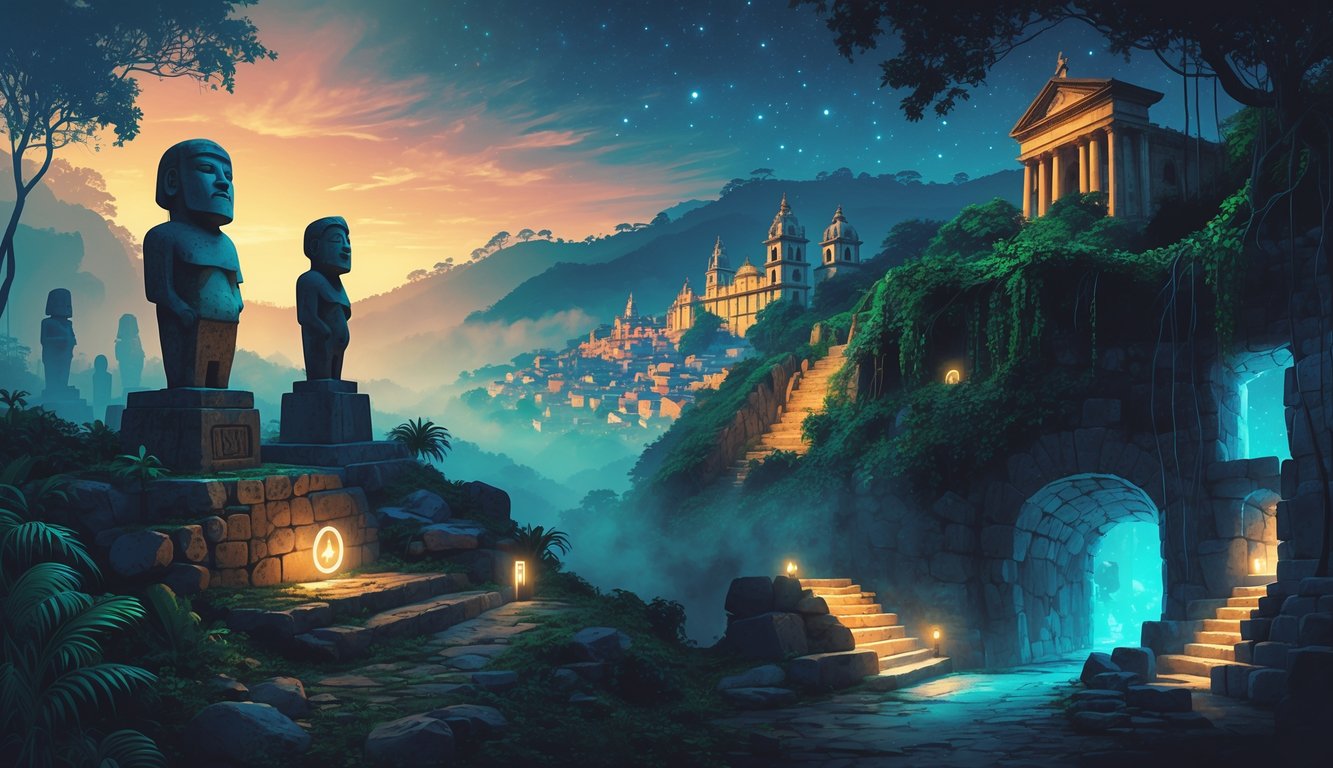
Colombia is home to several unique UNESCO World Heritage sites that spark curiosity and wonder. Many of these protected areas hide questions about their ancient builders, their purpose, and the secrets still buried underground.
Documented Mysteries at Protected Locations
San Agustín Archaeological Park stands out for its large stone statues and tombs. Over 600 carved figures are spread across this site, showing mysterious human forms and animals.
Archaeologists are still debating who made them and what they really meant. Burial chambers found here also add to the mystery, since the culture that built them left no written records.
This area remains the largest necropolis in the world and contains the most religious monuments and megalithic sculptures in Latin America. It earned a place as a UNESCO World Heritage site.
Tierradentro, another archaeological park, draws attention with its ancient underground tombs. People carved these chambers into the hills more than a thousand years ago.
The exact reason for the tombs’ unique shapes and vivid paintings is still unknown. Scientists believe these spaces once served an important ritual role, but details about the society that made them remain unclear.
The Lost City, or Ciudad Perdida, is hidden deep in the mountains. Built long before the arrival of Europeans, it was abandoned and left covered by jungle for centuries.
Researchers still do not know why its builders suddenly left, or the full extent of the city buried beneath the forest.
Preservation Versus Exploration
Preserving these UNESCO World Heritage sites means strong rules against digging, building, or changing the land. Protection helps save fragile paintings, sculptures, and burial sites from destruction or theft.
These protections also slow or stop new archaeological digs. Researchers must balance the need to keep ancient places safe with the hope of uncovering more clues.
Sometimes, only small areas can be explored each year, even though much of the site remains unstudied. New technologies like ground-penetrating radar and 3D scanning now help study what’s hidden below the surface without causing damage.
While this allows for some discoveries, many mysteries at sites like San Agustín, Tierradentro, and the Lost City may stay unsolved for years as experts search for a safe way to learn more.
Lesser-Known Historical Mysteries Across Colombia
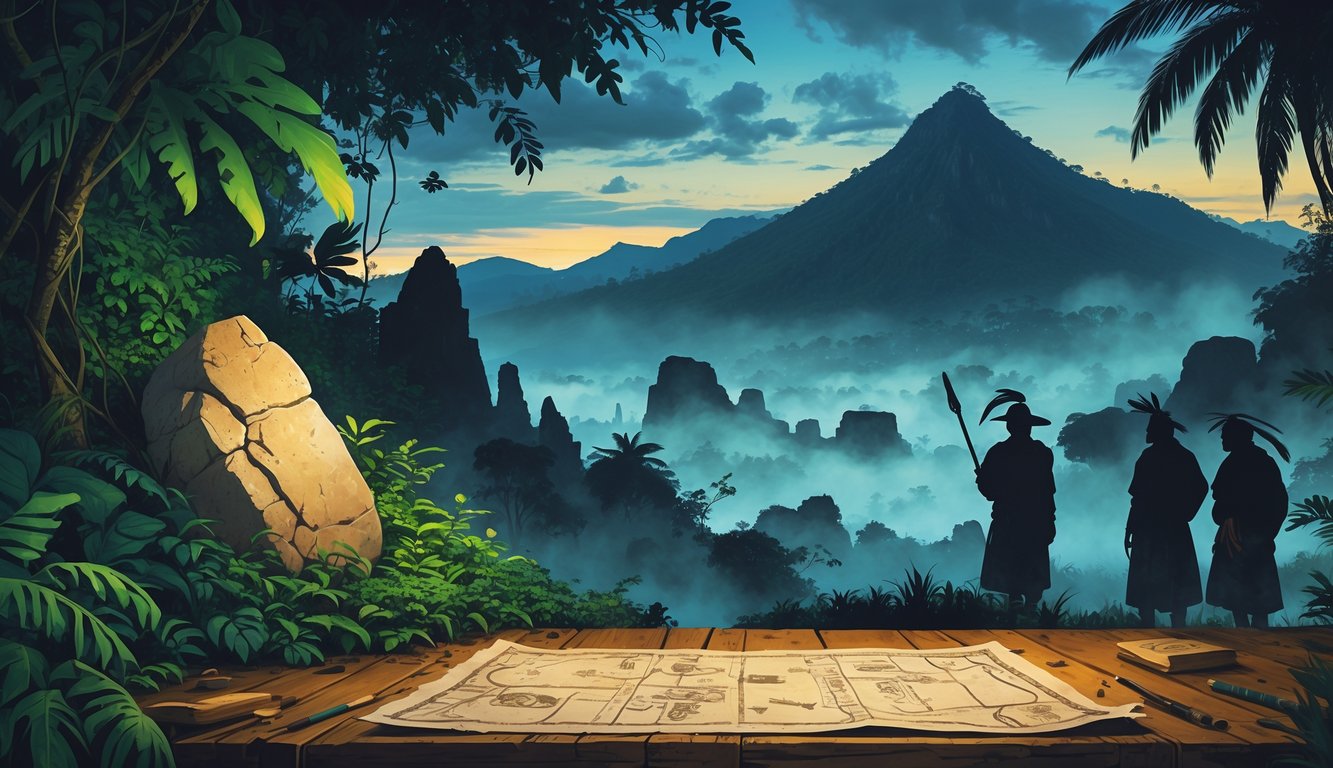
Colombia is full of old ruins and local legends that many people outside the country have never heard about. Strange buildings and mysterious stories from different regions help shape its unique cultural history.
Unexplained Ancient Structures
Deep in southwestern Colombia, there is a place called Tierradentro that stands out for its unusual underground tombs. These ancient burial chambers, decorated with geometric paintings, were built by pre-Columbian civilizations centuries before the Spanish arrived.
No one really knows why the people made these tombs so deep underground. The meaning of all the patterns also remains a mystery.
The Tierradentro Archaeological Park continues to puzzle archaeologists. They believe the area may have played a special role in important rituals.
Another mysterious site is the El Infiernito monument in Boyacá. This location has carved stone columns from the Muisca people.
Some people think these pillars helped observe the stars. Others guess they served religious purposes.
The design and use of these ancient places continue to spark debate. They add to Colombia’s air of mystery.
Regional Legends Beyond the Mainstream
Beyond Colombia’s famous myths, small villages and rural areas hold many lesser-known leyendas, or legends.
The story of “La Llorona” tells of a ghostly woman who searches for her lost children along rivers. This tale continues to frighten and fascinate local people.
In mountain towns, some people talk about El Mohán. He is a hairy river spirit who plays tricks on fishers and travelers late at night.
These local legends help connect communities to their past. They also teach important lessons and sometimes explain things about the land or weather.
Many parents use these stories to warn children or share family history. These tales keep a sense of mystery alive in daily life.