Burundi, a small East African nation, is surrounded by mystery, legend, and untold stories. Many know it for its beautiful landscapes and vibrant culture, but the country’s history holds unanswered questions and fascinating secrets.
Some of the greatest mysteries in Burundi include the origins of its ancient kingdoms, mysterious events in its royal line, and long-standing questions about its early peoples and traditions.
These mysteries invite curiosity from around the world. Readers who want to explore the rich historical tapestry of Burundi will find stories of powerful monarchs, lost kingdoms, and unresolved debates about the country’s past.
Origins of the Kingdom of Burundi
The Kingdom of Burundi formed over several centuries through the efforts of influential leaders and shifts in society. The beginnings of the kingdom were deeply connected to the land, its people, and the rise of a centralized monarchy.
The Role of Ntare Rushatsi
Ntare Rushatsi is recognized as the founder of the Kingdom of Burundi. Most traditions and oral histories agree he united smaller groups into a larger state between the 16th and 17th centuries.
His leadership marked the birth of the Burundian monarchy. Under Ntare Rushatsi, power became more centralized, and borders were defined.
He used alliances and sometimes conflict to bring together rival communities. This period saw the identity of Burundi begin to take shape.
Legends sometimes call him “Cambarantama.” His name remains important in modern Burundi because he symbolizes national unity and leadership.
Many still refer to him as the first mwami, or king, who set up royal traditions that shaped the nation’s future. To learn more about Ntare Rushatsi and early leadership, visit this history of Burundi overview.
Precolonial Burundi Society
Burundi’s early society included Tutsi, Hutu, and Twa people. The Tutsi monarchy ruled, but all groups played an important role.
Most people were subsistence farmers and herders who lived in close-knit communities. Village life centered on agriculture, family, and local customs.
People mainly grew crops such as sorghum, millet, and beans. Cattle were important for status, especially among the Tutsi elite.
Pre-colonial Burundi had a mix of clan and ethnic-based organization. Local chiefs or family elders usually handled disputes.
Social classes existed, but daily life often depended more on local loyalties than royal rule. More insights on precolonial Burundi society are here.
Mwami and Monarchical Traditions
The title mwami means king and passed down through a royal lineage. The mwami served as both a political and spiritual leader.
He settled disputes, performed rituals, and controlled land. The Ganwa royal clan provided the mwamis, who acted as mediators between the people and the land’s spirits.
Ceremonies like the umuganuro, or royal grain festival, showed the king’s link to harvests and prosperity. The monarchy survived German and Belgian colonial rule and was respected by both colonial governments and local people.
The influence of the mwami shaped Burundian culture for centuries. The legacy of this institution can still be seen in important national ceremonies today.
Read more on the evolution of the Burundian monarchy.
Unsolved Mysteries of Burundi’s Royal Lineage
Burundi’s monarchy has a deep and sometimes puzzling history. Stories of royal succession, disappearances, and the role of kings have left many questions that still fascinate people today.
Secrets of Dynastic Succession
The succession of kings, known as mwami, in the Burundian monarchy was often not straightforward. Competition among royal family members sparked intrigue and power struggles for centuries.
Burundi’s process for choosing the next king could be secretive and even violent. Sometimes, several candidates claimed the throne at the same time.
This caused division, leading to rivalries and conflict between princely families. Royal advisors and powerful families sometimes influenced who became king.
Oral storytelling was the main way of passing down these accounts, so much of what happened was never written down. The true reasons behind some successions remain unsolved.
Disappearance of Mwami Mwambutsa
Mwami Mwambutsa IV was one of the last kings of Burundi. In 1966, after years of political instability, he suddenly left the country under mysterious circumstances.
His sudden departure created confusion among supporters of the monarchy and the public. People speculated about why he left and whether he meant to return, but the full reasons are still debated.
Today, no official records explain everything that led to his disappearance. Was he forced out by threats, or did he leave by choice? The answers remain unclear, and this mystery still interests historians.
Tales of the Burundian Monarchy
Burundi’s monarchy has a rich history filled with legends and oral stories. These tales are important because they are part of the country’s cultural identity and reveal how people see their past.
Storytelling in Burundi taught lessons and remembered the great deeds of past kings. Some stories speak of heroic mwami who defended the land or brought peace.
Others mention hidden royal treasures or political plots that changed the country. Many of these tales have not been written down, leaving gaps in the historical record.
As older generations pass away, the details of these legends risk being lost. This adds to the mystery surrounding the Burundian monarchy.
Colonial Rule and Lost Histories
Colonial rule brought huge changes to Burundi. Influence from both Germany and Belgium changed how society operated and still affects the country today.
German and Belgian Influence
Burundi became part of the German East Africa colony in the late 1800s. German administrators often worked through local kings but still set new rules and demanded taxes.
After Germany lost World War I, Belgium took control as part of its larger colonization in Africa. The Belgian rulers changed some local laws and introduced Western-style schools and Christianity.
Some Burundians benefited from new roads and clinics. Much of the local culture and oral history became less valued as colonial systems replaced traditional leaders.
Maps, old court records, and government reports from this era often left out the voices and stories of ordinary Burundians. Today, these lost stories make it hard for people to fully understand how life changed under colonial rule.
More information can be found on the period of German and Belgian influence.
Impacts of Colonial Rule on Societal Divisions
German and Belgian rule changed the way people thought about ethnicity and identity in Burundi. Colonial governments used identity cards and social policies to separate groups such as Hutu, Tutsi, and Twa more strictly.
Colonial records show that Belgians gave different jobs and privileges to some groups. Official rules deepened mistrust among neighbors.
Practices once decided by local chiefs or kings were now overseen by foreign-appointed officials. The roots of many later conflicts go back to how colonial rule changed personal and community identities.
These changes are discussed in more detail in the historical background of Burundi’s colonial period.
Forgotten Legacies of Independence
Burundi gained its independence from Belgium in 1962. Many details of the struggle for independence are not fully remembered.
Some of the main leaders and regular citizens who helped bring about freedom have not been widely recognized. There are lost photos, letters, and personal stories from the independence era.
Few schools teach about the different groups who joined together to fight for a free Burundi. Oral historians and researchers keep searching for more information about these early years.
Finding these forgotten pieces may help build a better understanding of how Burundi became an independent country. For more details on Burundi’s independence and its lost legacies, see this historical account.
The Enigma of Ethnic Divisions
Burundi’s society is shaped by complex interactions between its three main ethnic groups: Hutu, Tutsi, and Twa. Deep questions remain about their true origins, the roots of historic tensions, and how farming and land have influenced their relationships.
Hutu, Tutsi, and Twa Origins
The Hutu, Tutsi, and Twa are the major ethnic groups in Burundi. The Hutu make up the majority and are traditionally seen as farmers.
The Tutsi, a minority, were long associated with cattle herding and political leadership. The Twa, who are much smaller in number, often worked as hunters and potters.
Researchers and historians still debate how these groups became distinct. Some believe differences emerged from economic roles over hundreds of years.
Others argue that colonial rulers such as Germany and Belgium made these divisions stronger by labeling people and favoring the Tutsi for government jobs. Burundi’s national identity is closely tied to these groups.
The lines between them, however, are not simple, and many families share history or culture across these groups. Early Burundi did not have easily defined ethnic boundaries, making the origins and definition of Hutu, Tutsi, and Twa an ongoing mystery.
More on their origins can be found on Ethnic groups in Burundi.
Myths Surrounding Ethnic Tensions
The relationships among the Hutu, Tutsi, and Twa have been shaped by many stories and myths. Some myths describe the Tutsi as ancient rulers, while others say Hutu were always subjects.
Oral traditions and colonial writings sometimes made these ideas stronger, exaggerating differences. Tales of betrayal or favoritism have been used to explain past conflicts.
There are legends about unfair rulers and unlikely heroes from each group. These stories were often promoted during times of crisis or political struggle, raising fear and suspicion between groups.
Modern research shows that many old stories do not match real events. Political leaders have sometimes repeated these myths on purpose to gain power.
This helps explain why ethnic divisions remain difficult to overcome. More about these tensions can be read in The history of Burundi.
Debates on Agricultural Heritage
Agriculture shapes Burundi’s history and the identity of the Hutu, Tutsi, and Twa. Traditionally, the Hutu worked as farmers, growing bananas, beans, and sweet potatoes.
Tutsi families often raised cattle and managed land. Some historians argue that the line between farmers and cattle herders was blurry.
Intermarriage and changing jobs happened often. Many studies question the strong link between Hutu and farming, and Tutsi and herding.
Farming and land ownership remain major sources of disagreement today. Fights over land and food have shaped much of Burundi’s past, fueling ethnic tensions and sometimes leading to violence.
More information about agriculture and conflict is available from Britannica’s coverage on Burundi.
Coup Plots and Unexplained Power Struggles
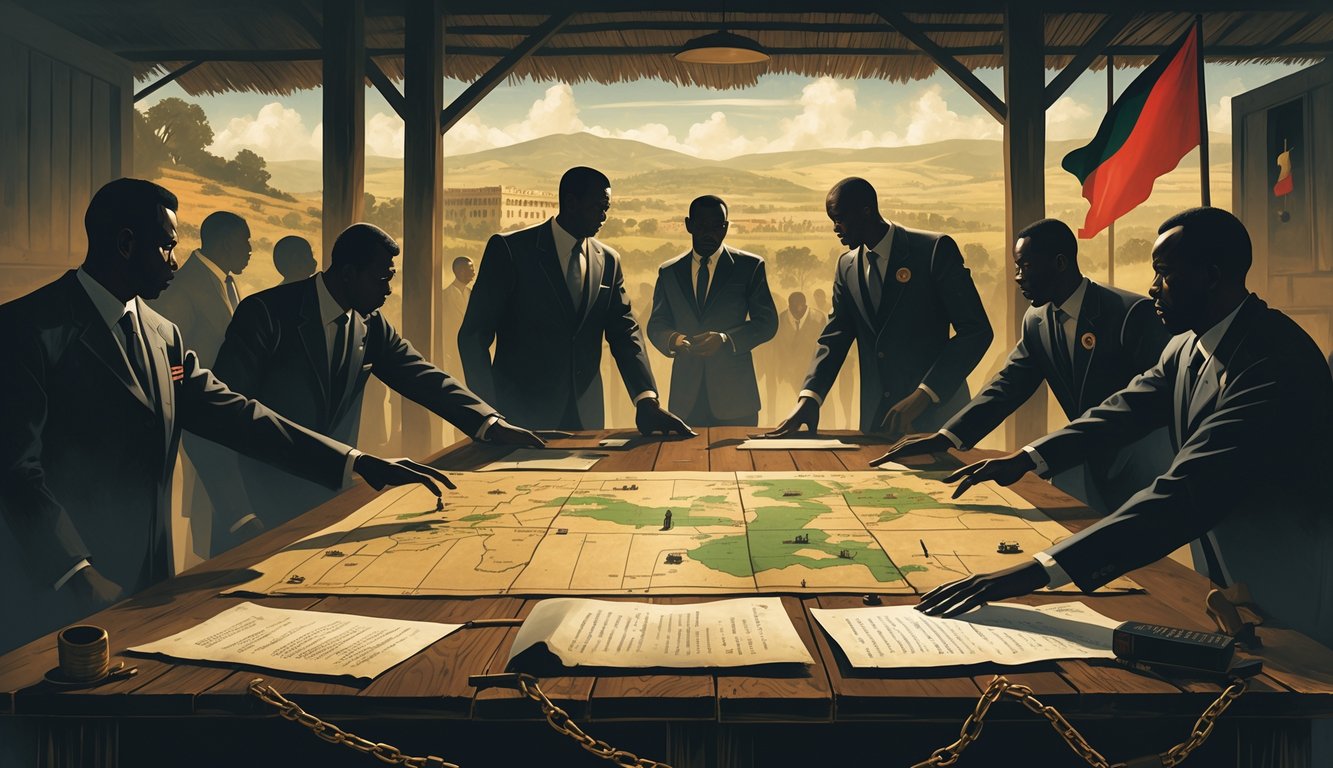
Burundi has experienced many dramatic military coups and shifting alliances. These events have changed the nation’s governance and political landscape.
The 1966 Military Coup
In 1966, a military coup overthrew the monarchy in Burundi. Captain Michel Micombero led the coup and took control after King Ntare V was deposed.
This event ended the traditional monarchy and began the First Republic. The military said they acted to stop instability and solve political gridlock.
A military government then set the tone for future governance. The coup exposed deep tensions among UPRONA party members and set up further power struggles.
Rise and Fall of Michel Micombero
Michel Micombero became the leader after the 1966 coup. He ruled as Burundi’s first president under the new republic and strengthened military influence.
Micombero centralized power and reshaped government. He dissolved traditional systems, promoted loyal officials, and responded harshly to opposition.
His leadership style increased political instability and ethnic tensions. In 1976, Jean-Baptiste Bagaza overthrew Micombero during another military coup.
Micombero’s fall showed ongoing power struggles within the armed forces and growing dissatisfaction with his rule.
Shadowy Forces in Burundi’s Political Landscape
Many power shifts in Burundi have involved mysterious alliances and unsolved events. Factions within the army, rival groups in UPRONA, and foreign influences have all shaped the country’s direction.
Unexplained deaths, disappearances of political leaders, and rumors of secret meetings were common during both the First and Second Republics. The true motives and actors behind certain decisions often remained hidden.
These shadowy forces fueled ongoing political intrigue and struggles for power. The pattern of coups, purges, and silent plots continues to shape Burundi’s political story.
Mysterious Assassinations and Political Upheaval
Burundi’s history includes shocking political assassinations that changed its path and fueled unrest. These events often led to major conflicts and left deep scars on the nation’s memory.
The Death of Pierre Ngendandumwe
Pierre Ngendandumwe was the first Hutu prime minister of Burundi. He played a key role in the country’s politics after independence.
In January 1965, someone assassinated Ngendandumwe in Bujumbura. His murder happened just days after he took office for a second time.
The killing sparked a crisis because he tried to bring both Hutu and Tutsi groups together. The investigation never found those responsible, leading to many rumors.
Some believe political rivals and ethnic divisions played a role. His assassination marked the start of a long period of violence and hurt chances for unity.
Unanswered Questions in Melchior Ndadaye’s Murder
Melchior Ndadaye became Burundi’s first democratically elected president in 1993. He was a Hutu leader who wanted to heal the country’s ethnic divide.
Ndadaye was killed during a military coup after just three months in office. His death led to major political upheaval and genocidal killings between Hutu and Tutsi groups.
Many ordinary people lost their lives in the violence that followed. To this day, people still do not know who was responsible or how the coup was organized.
The murder of Ndadaye is one of the biggest mysteries in Burundi’s past and a turning point for the country.
The Tragic Fate of Joseph Bamina
Joseph Bamina was another important leader in Burundi’s early history. He became prime minister in 1965 during a time of deep division and political tension.
Violence after failed coup attempts by Hutu officers in 1965 swept up Bamina. Authorities arrested and later executed him along with other Hutu leaders.
No one has fully explained the reasons behind his execution. His death showed the danger leaders faced when they tried to bridge ethnic divides.
It also pushed Burundi further into cycles of conflict and set the stage for years of unrest.
Burundi’s Genocides and Ethnic Conflict
Burundi has faced decades of ethnic conflict between Hutus and Tutsis. These struggles have led to tragedy, loss, and displacement.
Key events include the hidden massacre of 1972, repeated cycles of violence, and a major refugee crisis.
Hidden Accounts of the 1972 Genocide
In 1972, Burundi saw a large-scale massacre mainly targeting the Hutu population. Historians and witnesses report that government-led crackdowns killed or disappeared many Hutus.
The violence wiped out entire communities, with estimates of deaths ranging from 100,000 to 300,000. Many stories of this genocide remain hidden due to fear and silence.
Survivors rarely speak openly because of the risk of discrimination or reprisal. Investigations into these events are limited, as official histories often downplay what happened.
In many villages, mass graves have never been fully found or documented. The lack of clear records and silence from authorities makes the 1972 events one of Burundi’s most persistent historical mysteries.
For more detail, books like René Lemarchand’s “Burundi: Ethnic Conflict and Genocide” examine the attacks and their deep impact, as explained in this Burundi ethnic conflict overview.
Cycles of Violence in Civil War
Violence did not end in 1972. After decades of tension, Burundi’s first democratically elected president, Melchior Ndadaye, was assassinated in 1993.
His death triggered a wave of bloody violence between Hutus and Tutsis. Both sides carried out attacks, and the country spiraled into civil war.
During this period, villagers faced deadly riots and revenge killings. Most provinces witnessed mass killings, with many Tutsi and Hutu victims.
The conflict continued throughout the 1990s and into the early 2000s. Fear, mistrust, and violence became a part of daily life.
You can read more about this period in the detailed 1993 ethnic violence in Burundi account.
Humanitarian Crisis and Refugees
Repeated violence forced thousands of people to flee their homes for safety. The biggest waves of refugees came after the 1972 genocide and during the civil war in the 1990s.
Families left behind their homes, farms, and belongings. Neighboring countries like Tanzania and Rwanda received large numbers of Burundian refugees.
Camps were often overcrowded and resources stretched thin. Some refugees spent years, even decades, living in exile with little hope of return.
The movement of so many people put stress on communities in both Burundi and neighboring countries. Health care, education, and shelter were difficult to access for displaced families.
The legacy of forced migration still affects Burundi today. Many people struggle to rebuild their lives and find justice for what they experienced.
For a closer look at these humanitarian issues, see the summary by Western Washington University.
Political Transitions and Reconciliation Efforts
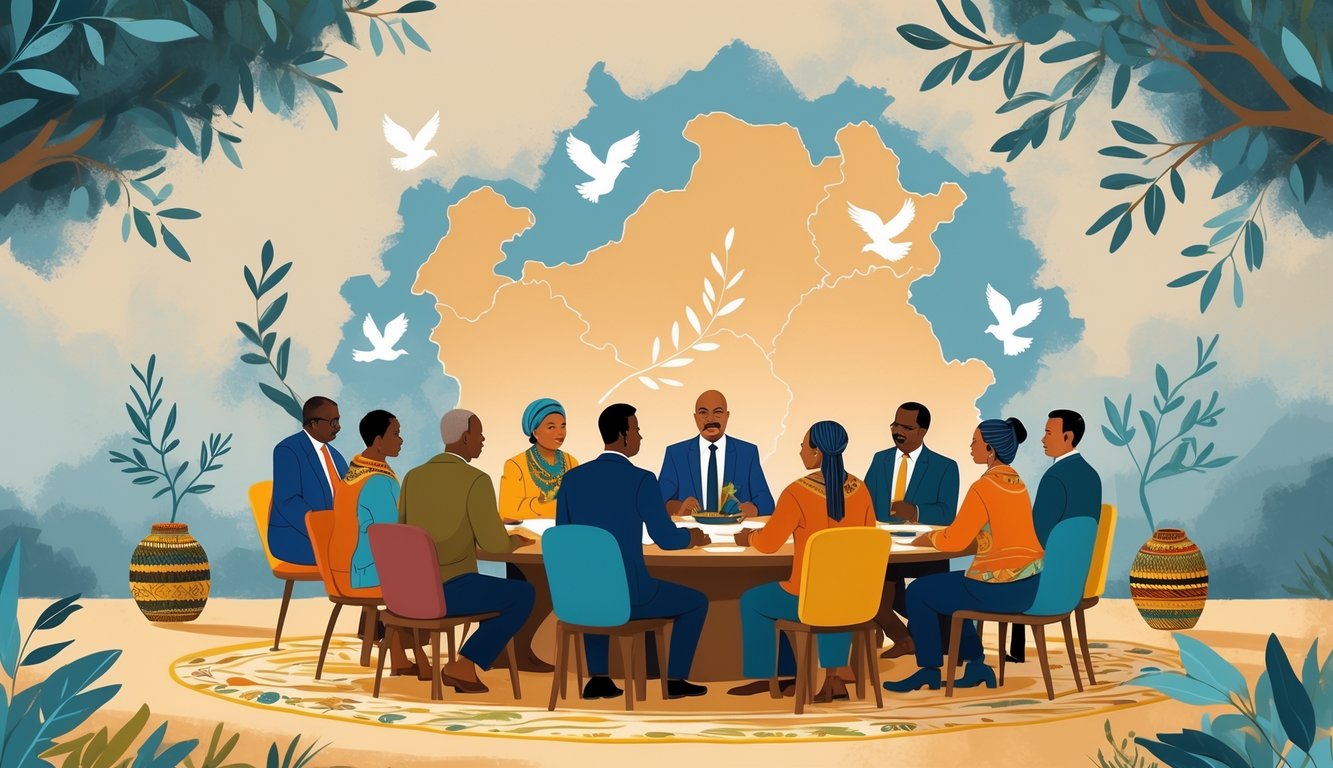
Burundi has gone through many changes in leadership, political systems, and power struggles since independence. Key leaders and peace processes have shaped efforts toward democracy, reconciliation, and stability.
Jean-Baptiste Bagaza and the Path to Democracy
Jean-Baptiste Bagaza took control of Burundi in 1976 as a military leader. He focused on reforming the government and introduced new policies.
Bagaza tried to modernize Burundi, building schools and roads, and promoted religious freedom. His regime was also known for strict control and crackdowns on opposition groups.
Bagaza made small steps toward opening up political space. However, his government held tight to power, suppressed dissent, and avoided true multi-party elections.
Tensions remained high between the Hutu and Tutsi ethnic groups. Bagaza was removed in a coup in 1987.
Pierre Buyoya’s Peace Initiatives
Pierre Buyoya led Burundi twice, first as a military leader and later as a civilian president. He worked to end ethnic violence and build national unity.
Buyoya worked with local politicians, the United Nations, and the African Union to find peaceful solutions. One of his main achievements was signing the Arusha Peace and Reconciliation Agreement in 2000.
The agreement aimed to stop civil war and create a power-sharing government. It called for sharing power between the Hutu and Tutsi and included protections for minority rights.
Buyoya’s actions helped Burundi take steps toward stability. Many problems and divisions continued after his leadership.
Read more about the Arusha Peace and Reconciliation Agreement.
Modern Reconciliation Processes
In recent years, Burundi has focused on healing deep ethnic wounds. The Truth and Reconciliation Commission (TRC) began its work in 2014.
The TRC investigates and documents crimes from colonial times up to 2008 and supports victims. The TRC’s work has been difficult.
Some groups, especially Tutsi politicians, have criticized the commission for bias and not listening to all voices. Despite these problems, the TRC remains active and tries to promote dialogue about Burundi’s violent history.
International support from the United Nations and the African Union has been important for funding and advice. For more on Burundi’s reconciliation efforts, see Burundi’s Truth and Reconciliation Commission.
Economic Mysteries and Lost Resources
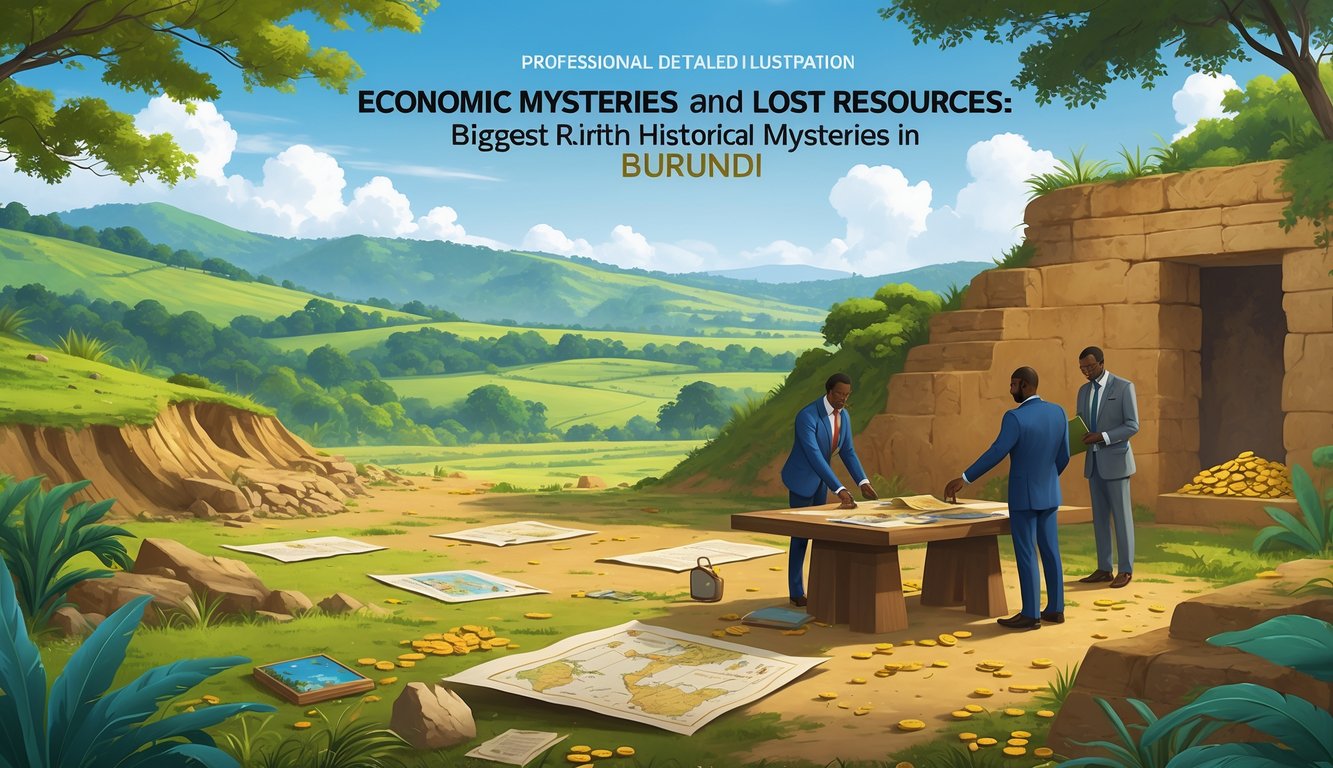
Burundi’s economic past holds deep questions about lost fortunes and underused assets. Uncertainty about gold reserves, widespread corruption, and troubles in its main crops have kept people wondering how the country could achieve more growth.
The Case of Burundi’s Hidden Gold
Gold has long been one of Burundi’s most valuable yet mysterious resources. Stories suggest that large gold deposits exist underground.
Accurate maps and details about these reserves are hard to find. Many small miners extract gold by hand.
Poor record-keeping and illegal exports make it nearly impossible to track how much gold actually leaves the country each year. The government collects very little money from this trade, missing out on funds that could improve lives.
Foreign companies have sometimes shown interest in Burundi’s gold. They hope for larger discoveries.
There is little transparency in mining contracts and production figures. This secrecy makes gold both a potential treasure and an economic puzzle in Burundi’s history.
Corruption and Economic Instability
Corruption affects almost every part of the Burundian economy. Bribery, unfair deals, and misuse of funds have led to a lack of trust in both local and national leaders.
This problem makes it harder for foreign investment to help the country grow. Burundi’s economy has suffered from fragile institutions and political conflicts.
The World Bank describes this as a “fragility trap.” It has locked the country into cycles of poverty, low diversity in industry, and poor public services.
Environmental degradation and rapid population growth make the situation worse. These issues put more stress on resources and lead to rising malnutrition.
When money meant for agriculture programs or infrastructure is lost through corruption, it damages basic services. It also means less funding for nutrition and food stability.
For more on Burundi’s major challenges, see this summary on current economic problems and corruption issues.
Agriculture, Tea, and Coffee Export Dilemmas
Most Burundians work in agriculture. Tea and coffee are the top exports, bringing in much-needed foreign money.
These crops face major challenges, including outdated farming techniques and poor infrastructure. Frequent price changes on the world market also create problems.
Small farmers often struggle to produce enough quality crops. In years when tea or coffee prices fall, entire families can lose their main income.
Agriculture is also affected by environmental issues, such as deforestation and soil loss. These problems make long-term crop production even harder.
Details about these farming challenges can be found in this Burundi development case study.
Weak transportation networks slow down and increase the cost of getting goods to market. Without strong foreign investment, upgrading these systems remains difficult.
Many people live with food insecurity. They struggle against malnutrition caused by these economic limitations.
Cultural Heritage and Enduring Legacies
Burundi’s rich traditions reveal its deep roots in storytelling, dance, and faith. These aspects shape everyday life in places like Bujumbura and beyond.
They leave marks on culture, art, and community that last through generations.
Burundi’s Storytelling Traditions
Storytelling continues to play a big part in Burundi’s cultural heritage. People often gather in the evening, sometimes around a fire, to listen to folk tales and fables.
These stories do not just entertain—they also teach important lessons about respect, trust, and unity. Elders share memories of past events, heroes, and historical mysteries that have shaped the nation.
For example, tales might include moments from ancient Burundi kings or legends about Lake Tanganyika. Storytelling helps younger people feel connected to older generations.
It passes down language, wisdom, and values. In schools and community gatherings in both cities and villages, young people retell these stories.
They sometimes use riddles, proverbs, and songs to keep listeners engaged. This tradition keeps Burundi’s identity strong even as times change.
Dance and Artistic Expression
Dance is a key part of Burundi’s heritage. The famous Royal Drummers of Burundi perform dances that combine rhythm, strength, and teamwork.
Their performances are popular in Bujumbura and have gained recognition worldwide. These dances are performed during festivals, weddings, and historical events.
Traditional Burundian dances often tell a story through movement. Costumes, drums, and songs are all important.
Some dances are slow and graceful; others are fast and energetic. Each one highlights a unique part of Burundian culture.
Artistic expression goes beyond dance. Local crafts like basket weaving and wood carving carry designs that include historical symbols.
These artworks are displayed in museums and markets. Visitors and locals alike can see the lasting impact of Burundi’s heritage.
Legacy of the Roman Catholic Church
The Roman Catholic Church has played a key role in Burundi’s history. It built some of the country’s earliest schools and hospitals.
Many families remember how priests and nuns traveled to small villages as educators and healers. Catholic influence still appears in Bujumbura’s large churches and religious festivals.
The Church introduced new traditions but also adopted some local customs. This blend shapes many community activities and family events even today.
Lists of major holidays in Burundi often include Catholic celebrations. The Church’s impact is found in education, health care, and the arts.
Its role in peacemaking during times of conflict has also left a strong legacy in Burundi’s cultural heritage.
Contemporary Mysteries and Unresolved Issues
Burundi’s recent history is marked by major political and social challenges. Unanswered questions about leaders, allegations of abuse, and worries about lasting peace shape daily life and the country’s future.
Recent Political Leaders and Unanswered Questions
Burundi has seen big changes in leadership in recent years. Former President Pierre Nkurunziza led the country for 15 years until his sudden death in 2020.
Many people still wonder about the cause and details around his passing because official explanations were limited. Rumors quickly spread.
His successor, Évariste Ndayishimiye, came into power promising reform and improved governance. Some citizens and observers want to know more about his ties to the ruling CNDD-FDD party and how much things have actually changed.
Reports of government secrecy and lack of transparency remain common. People keep asking whether true change is possible when top leaders and their actions seem hidden from public view.
Access to honest, reliable information is tough. Important questions remain without clear answers.
Security Forces and Human Rights Abuses
State forces and groups like the Imbonerakure, the youth wing of the CNDD-FDD, provide security in Burundi. International organizations and locals have pointed out serious accusations.
These include claims of torture, missing persons, and attacks against political opponents. Sometimes, people find bodies in rivers or remote areas.
People worry about impunity for those in charge. Victims’ families usually do not get justice, and many cases remain unsolved.
Basic rights like freedom of speech are sometimes limited. Investigations into abuse rarely end with real accountability or answers.
These ongoing mysteries leave citizens uneasy about their safety and the power held by security forces.
Key facts:
| Alleged Abuse | Common Reports |
|---|---|
| Torture | By state forces |
| Disappearances | Political opponents, others |
| Intimidation | Media, activists, citizens |
Future of Governance and Peace
The stability of governance in Burundi is a main concern. Many people continue to face poverty despite promises of new infrastructure projects and economic growth.
Projects sometimes stall or face corruption. Citizens question where resources are going and who benefits.
Peace is fragile. Some groups fear violence could return if disagreements between political parties or within security forces grow worse.
People wonder how much Évariste Ndayishimiye can do to control these risks. Building trust between groups remains a challenge.