The Bahamas is known for its clear blue waters and sandy beaches. It is also home to some of the world’s biggest historical mysteries.
From vanished ships and planes in the Bermuda Triangle to ancient underwater structures like the Bimini Road, the islands are filled with puzzles that fascinate locals and visitors alike. These mysteries have inspired legends, curious researchers, and treasure hunters for generations.
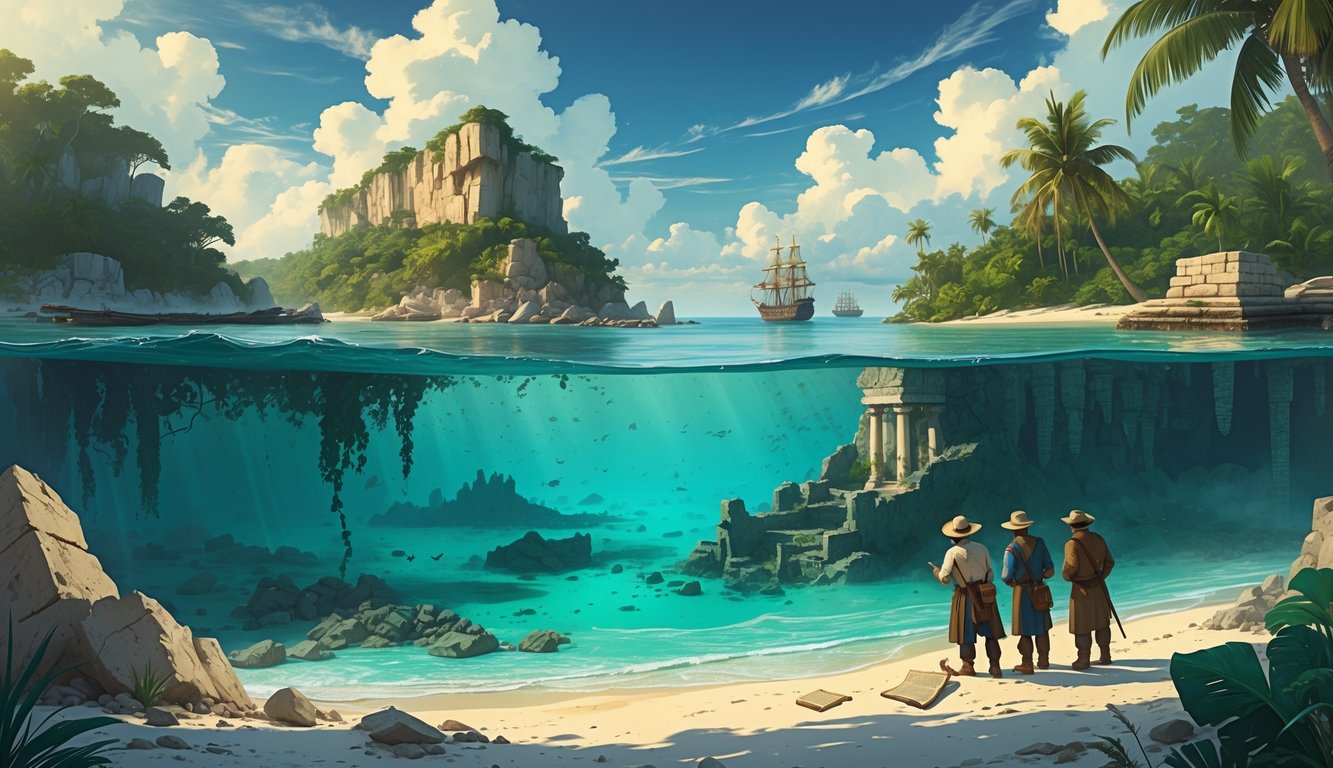
Many explorers have tried to uncover the secrets behind shipwrecks scattered along the Bahama coast. Projects mapping out these long-lost shipwrecks show how much of the area’s history is still buried beneath the waves.
Some believe clues to lost civilizations, like Atlantis, may be hidden in places such as the Bimini Road. This underwater formation continues to attract debate and wonder.
Whether it’s the mystery storms of the Bermuda Triangle or legends of sunken treasure, the Bahamas offers a unique mix of history and unanswered questions. Each story adds to the islands’ rich culture and keeps the spirit of adventure alive.
The Mystery of Sunken Treasure and Shipwrecks
Sunken ships with lost treasure have fascinated people in the Bahamas for centuries. The region’s waters hold hundreds of shipwrecks, some famous for gold, silver, and rare artifacts.
Legendary Shipwreck Discoveries
The Bahamas is home to over 170 known shipwrecks. Many date back to the age of Spanish galleons when ships carried gold and valuable cargo from the Americas to Europe.
One of the most famous discoveries is the Nuestra Señora de las Maravillas, which sank in 1656. This shipwreck was found with a large amount of treasure after almost 350 years underwater.
Silver coins, gold chains, and priceless jewels were recovered. Explorers use modern technology to search the clear waters for lost ships, uncovering new details every year.
Historic records, weather patterns, and underwater maps help guide new expeditions. Each discovered shipwreck adds more knowledge about early European exploration and trade in the West Indies.
Some shipwreck sites are protected to save their precious cargo from damage and theft.
Lost Cargo and Unrecovered Artifacts
Not all treasure from Bahamas shipwrecks has been found. Many of the sunken ships carried valuable cargo, including silver bars, gold coins, and rare gems, that still remain underwater.
Harsh currents and changing sands often bury remains deep below the sea floor. Hundreds of artifacts are still missing or rumored to exist in wrecks that have not yet been found.
Historic documents show that some cargo holds filled with precious metals and everyday objects went down with their ships. This includes items used by sailors, like tools, weapons, and ceramics.
Efforts to recover these lost treasures continue, but some sites are too dangerous or deep for divers. Some artifacts belong to protected cultural sites and are left undisturbed.
Bahamas Maritime Museum Insights
The Bahamas Maritime Museum is a key place to learn about sunken treasures. Visitors can see rare objects like gold chains, jewels, and coins from shipwrecks such as the Maravillas.
The museum displays recovered treasures and shares stories about the people who sailed these ships. Interactive exhibits help explain how shipwrecks are found and what tools researchers use.
The museum preserves artifacts to keep them safe for future generations. Items on display include cargo, ship parts, and personal belongings found at the bottom of the sea.
Maps at the museum show the locations of historic wrecks around the islands. Through photographs and real objects, guests can see the hard work behind every discovery and the mystery that still remains.
Pirates and Notorious Figures of the Bahamas
During the late 1600s and early 1700s, pirates made the Bahamas their main base in the region. The islands, especially Nassau, became famous for hidden coves, pirate laws, and legends that still impact Bahamian culture today.
Golden Age of Piracy
The Bahamas saw the height of piracy between the 1690s and 1720s. Pirates like Blackbeard, Charles Vane, and Anne Bonny used the islands for shelter and supplies.
Nassau became the center of pirate activity. The island’s location let pirates attack trade ships coming from the Americas and Europe.
At times, the government struggled to keep control, and pirates even formed their own rules known as the “Pirate Republic.” They shared what they stole and ran things as a group.
The British tried several times to regain order. In 1718, Woodes Rogers arrived to stop the pirates and restore law.
Over time, his efforts ended the pirate era, but the pirates left a strong mark on the islands’ history. To learn more about this period, visit the History of Pirates in the Bahamas.
Infamous Pirate Hideouts
Many pirates chose to hide out in the Bahamas because the islands had many secret channels and bays. Nassau’s harbor, protected by reefs, was nearly perfect for pirate ships to anchor without being spotted.
Some key hideouts included:
- Nassau Harbour: The main base for the Pirate Republic.
- Harbour Island: Known for safe anchorages and supplies.
- Exuma Cays: Small islands provided secret spots to repair ships or store treasure.
These places let pirates hide from British ships and plan their attacks in safety. The remains of old forts and lookouts can still be explored today.
Some of these sites even have guided tours that explain their importance in pirate history. More details about Nassau’s pirate history are available online.
Pirates’ Influence on Bahamian Culture
The impact of piracy can still be seen in the Bahamas today. Many Bahamian traditions, food, and festivals have roots in pirate lore.
Stories about hidden treasures, secret tunnels, and daring escapes are passed down through families and told at local museums. Nassau celebrates its past with events like the Pirate Festival and showcases pirate artifacts in the Pirates of Nassau Museum.
These attractions help teach locals and visitors about the island’s colorful history. Pirate language, customs, and even old shipwrecks continue to influence art, music, and storytelling in the Bahamas.
Parts of Nassau retain their colonial feel, reminding people of the city’s days as a pirate stronghold. You can read about Nassau’s pirate legacy for more cultural stories and facts.
Enigmas of the Lucayans and Indigenous Civilizations
Ancient Bahamian islands were once home to the Lucayans, who left behind few traces of their lives. Their sudden disappearance, mysterious artifacts, and cultural heritage remain important topics for archaeologists and historians.
Disappearance of the Lucayan People
The Lucayan people were the first known residents of The Bahamas and the Turks and Caicos. They lived in the islands for hundreds of years before European explorers arrived.
Their culture included fishing, farming, and trading with other Caribbean peoples. When Christopher Columbus landed in 1492, he encountered the Lucayans.
Within just a few decades, the Lucayan population vanished from the islands. Historians believe most of them were forced into slavery and taken to other islands, especially by the Spanish.
Disease, mistreatment, and harsh conditions also caused their decline. The Lucayans left very little physical evidence behind.
Besides some tools, pottery, and shell remains, their villages are hard to find. Most of what is known comes from Spanish records and archaeological digs.
Their legacy is large in spirit but small in material remains, leading to one of the region’s biggest historical mysteries. More details are found at the Bahamas Museum of History and Smithsonian Magazine.
Archaeological Investigations
Archaeologists work to understand Lucayan life from the clues left behind. Digs have uncovered tools, pottery fragments, shell mounds, and ancient food scraps.
Each item is carefully studied to learn how the Lucayans lived, what they ate, and how they shaped their environment. These discoveries show that the Lucayans had a deep connection with both land and sea.
Their fishing and farming techniques were well adapted to island life. Archaeologists also look for evidence of religious sites, trade networks, and family life to build a better picture of their society.
Despite these efforts, many questions remain. Scientists still debate where the Lucayans came from, how they organized their communities, and what happened to their cultural heritage.
Museums in Nassau and other places hold rare artifacts, helping keep the memory of these vanished people alive. For more on their material culture and ongoing research, see this comprehensive study and insights from Island Hopper Guides.
The Columbus Conundrum: First Encounters
Christopher Columbus’s arrival in the Bahamas in 1492 is one of the most discussed moments in world history. Much debate still exists about where exactly Columbus first landed and what those first meetings with the island’s people were truly like.
Debates Over Columbus’s Landing Site
Columbus claimed he landed on an island he called San Salvador. Today, most experts agree this island is in the Bahamas, but the exact spot remains a mystery.
Historians, geographers, and archaeologists have debated for years whether modern-day San Salvador, Samana Cay, or another island was the famous site. Key points debated include:
- The shape and size of the island described in Columbus’s journal.
- Navigational routes from Spain to the Bahamas.
- Descriptions of water currents and reefs.
Through careful study of his writings and new computer models, some suggest Samana Cay is the actual site. Others point to the island now called San Salvador.
The search continues, making the question of Columbus’s first steps in the New World an ongoing historical puzzle. More details on these debates can be found in articles discussing Columbus’s reports from his first voyage.
The Impact of Early Encounters
When Columbus met the native Lucayan people, the first contact was peaceful but tense. Columbus described the Lucayans as friendly and open, but he quickly saw them as potential workers for Spain.
This first encounter started major changes for the Bahamas.
Major impacts included:
- Spread of new diseases that the local people had never faced.
- The beginning of European settlement and control of the islands.
- Loss of freedom and traditional ways of life for the Lucayan people.
Within a few decades, illness, forced labor, and relocation wiped out most of the native Lucayan population.
More about these early meetings can be found in the Journal of Christopher Columbus.
Hidden Wealth: Stories of Emeralds and Sunken Cargo
Shipwrecks scattered across the Bahamas often carried valuable cargo, including rare gems and Spanish coins. Today, explorers and treasure hunters still search for these lost treasures beneath the clear blue waters.
Tales of Shipwrecked Emeralds
Emeralds have long captured the imagination of treasure seekers in the Bahamas. Many stories focus on Spanish galleons that sank while loaded with priceless cargo.
The Nuestra Señora de las Maravillas, a 350-year-old shipwreck, is one of the most famous examples. This ship carried jewels, silver, and gold.
Many emeralds from its cargo scattered on the ocean floor when it sank off the Bahamas in 1656. Recent discoveries have uncovered impressive finds, such as gold chains, gemstones, and rare Spanish coins.
Divers have mapped a two-mile trail of relics and treasure from this legendary shipwreck. This shows how widespread the lost cargo is along the reef—read more from CBS News about the Maravillas treasure.
Other lesser-known wrecks still hide emeralds and precious stones. Historical records show that at least 176 shipwrecks have been mapped in the region.
This makes the Bahamas a hot spot for stories of hidden wealth.
Modern Search Efforts and Carl Allen’s Quest
Modern treasure hunting in the Bahamas uses scientific methods and careful planning. Carl Allen, a businessman and explorer, led one of the most notable recent efforts.
Using advanced technology and a specialized team, he searched for treasures from old shipwrecks, including the Maravillas. Allen and his crew used underwater drones and magnetometers to find artifacts and cargo.
Their work recovered emeralds, silver coins, and priceless jewels lost for hundreds of years. Allen’s quest stands out because he focuses on preserving history, not just finding valuables.
Some of these treasures are now in museums. Visitors can learn about the daring voyages and shipwrecks that shaped Bahamian history.
You can discover more about the priceless recoveries from the sunken Spanish galleon in this article from CNN.
Grand Bahama and Eleuthera: Islands Shrouded in Mystery
Grand Bahama and Eleuthera are not just famous for their beaches. These islands have fascinating stories and old secrets that continue to spark curiosity.
Unsolved Mysteries of Grand Bahama
Grand Bahama has a long history of shipwrecks and lost treasures. Sailors crossing these waters faced strong currents and hidden reefs.
Many ships sank, leaving behind clues that still wash up on the shore. Local legends talk about mysterious lights seen out at sea.
Some believe these could be signals from long-lost ships or something else unknown. Graveyards of ships have been mapped and studied, but not every story has an explanation.
Common mysteries on Grand Bahama include:
- Sunken ships waiting to be discovered
- Unexplained lights and sounds at night
- Lost settlements that appear in old maps but seem to have vanished
Hidden caves and tunnels on the island add to the mystery. Explorers keep searching for new answers, but some secrets of Grand Bahama remain unsolved.
Secrets of Eleuthera’s Past
Eleuthera’s history started as a coral reef. Over time, it took shape into a long, thin island with many beaches.
Its name comes from a Greek word for freedom. The island is home to ancient ruins and sites believed to be left by early settlers and shipwreck survivors.
Eleuthera is connected to places like Harbour Island, known for its pink sand beaches and stories of pirates. Some historians believe Eleuthera’s narrow shape made it easy for pirates to hide and escape.
Notable secrets of Eleuthera:
- Unique shoreline created by coral
- Reports of hidden pirate treasures
- Mysterious structures with unknown origins
Much of its past appears in old stories and records. Detailed mapping has revealed more about shipwrecks and settlements in the area.
To learn more about its history, see this overview about the history of Eleuthera and facts on its geography at Eleuthera Wikipedia.
Colonialism and the Shadow of Independence
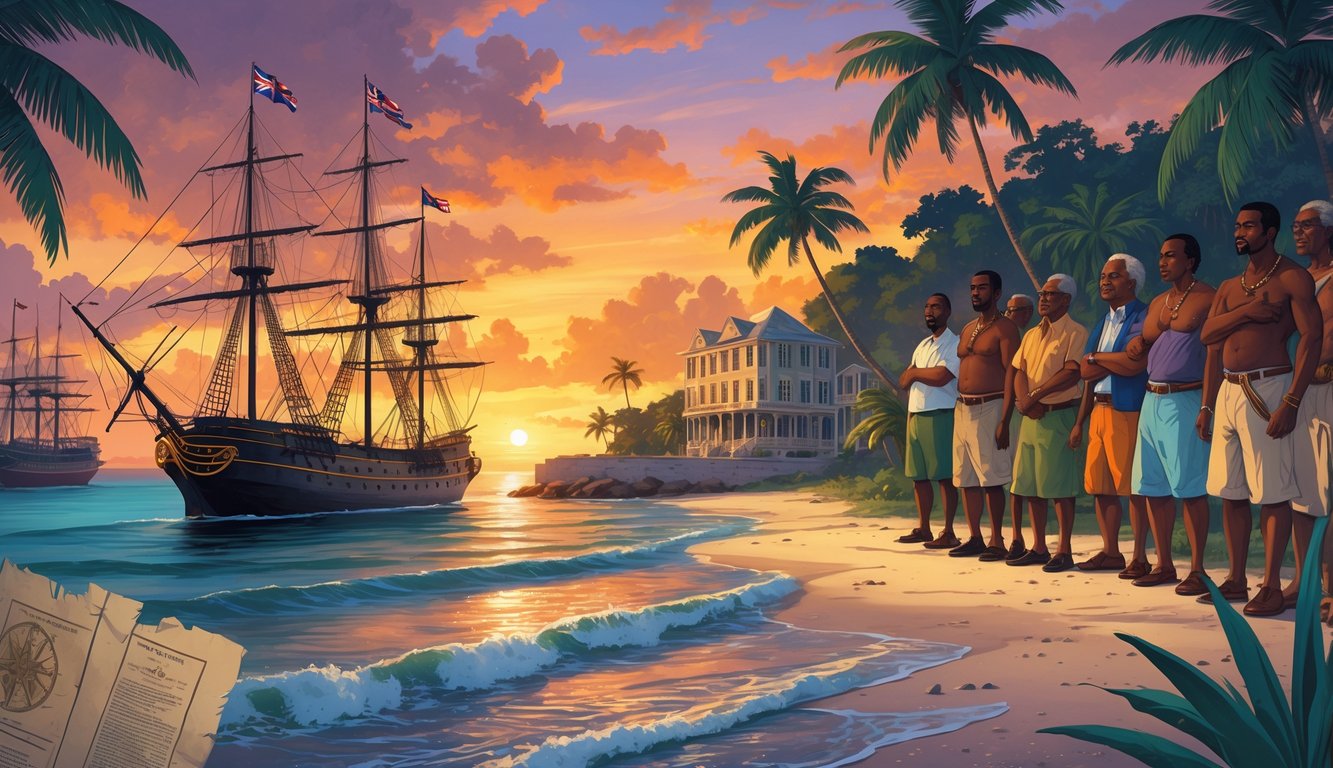
The Bahamas has a long and complex relationship with colonial powers. Events from the 19th century and earlier still shape the nation’s culture, society, and path to self-government.
Colonial Era Uncertainties
During British rule, questions about land ownership, treatment of the enslaved, and the daily lives of early settlers created many mysteries. Sometimes, records from this time are missing or incomplete.
Historians piece together facts from letters, ruins, and old government documents. Colonial powers often changed laws and leaders, making it hard for people to keep traditions or personal property.
The arrival of Loyalists from America in the late 1700s brought big changes. New plantations were built, and new groups of enslaved people arrived.
Colonial buildings like Fort Fincastle and Fort Charlotte still stand in Nassau. They reveal some insight into the impact of colonialism on The Bahamas.
The true stories of those who lived, worked, and fought during this time are still being uncovered.
Road to Emancipation and Independence
The end of slavery in the Bahamas in the 19th century was a turning point. Emancipation came in 1834, but many struggled for fair wages and land.
Over decades, Bahamians pushed for more rights. Local leaders demanded self-rule and control over resources.
Events leading up to independence in 1973 were shaped by years of activism, protests, and the growth of a national identity. The journey toward freedom was not simple.
The influence of colonialism still appears today in laws, place names, and foods. Each year, Bahamians reflect on how their past shapes their future.
The Bahamas in Trade and Maritime Mysteries
For hundreds of years, the Bahamas played a central role in ocean trading and ship travel. Its location meant many ships passed through its waters, making it a place full of both opportunity and danger.
Historic Trade Networks
The Bahamas’ position between the Americas, Europe, and the Caribbean made it a key stop for early shipping routes. Spanish treasure fleets, British merchants, and pirates all sailed through these waters.
Valuable goods like gold, spices, and sugar moved through Bahamian ports. The islands’ shallow waters and reefs trapped many ships, making the Bahamas famous for wrecks.
The need to avoid hidden dangers drove advances in navigation and shipbuilding. Local boat builders became skilled at creating strong, shallow vessels.
This allowed traders to carry goods safely across tricky channels and reefs. Many communities grew up around trade, fishing, and repair yards.
The islands’ trade history is now mapped by researchers. They use records of shipwrecks to understand the region’s past.
The Bahamas Lost Ships Project works to create a database of known ship losses.
Unsolved Mysteries from the Age of Sail
The Bahamas is famous for mysterious ship disappearances and lost treasures. The region sits on the edge of the “Devil’s Triangle”, also known as the Bermuda Triangle.
For centuries, sailors have reported sudden storms and strange navigation problems. Hundreds of ships vanished beneath the waves, often without explanation.
In some cases, whole crews were never found. Myths grew around lost Spanish galleons believed to be hidden somewhere under the sea or buried on a remote island.
Researchers have mapped at least 176 shipwrecks across the Bahamas. Many still have not been explored.
Those wrecks hold secrets, from the fate of merchant ships to puzzles about unknown vessels and the tools they used for navigation. These unsolved mysteries attract divers, historians, and adventurers searching for answers or hidden treasures lost in the deep waters of the Bahamas.
Rare Artifacts and Their Untold Stories
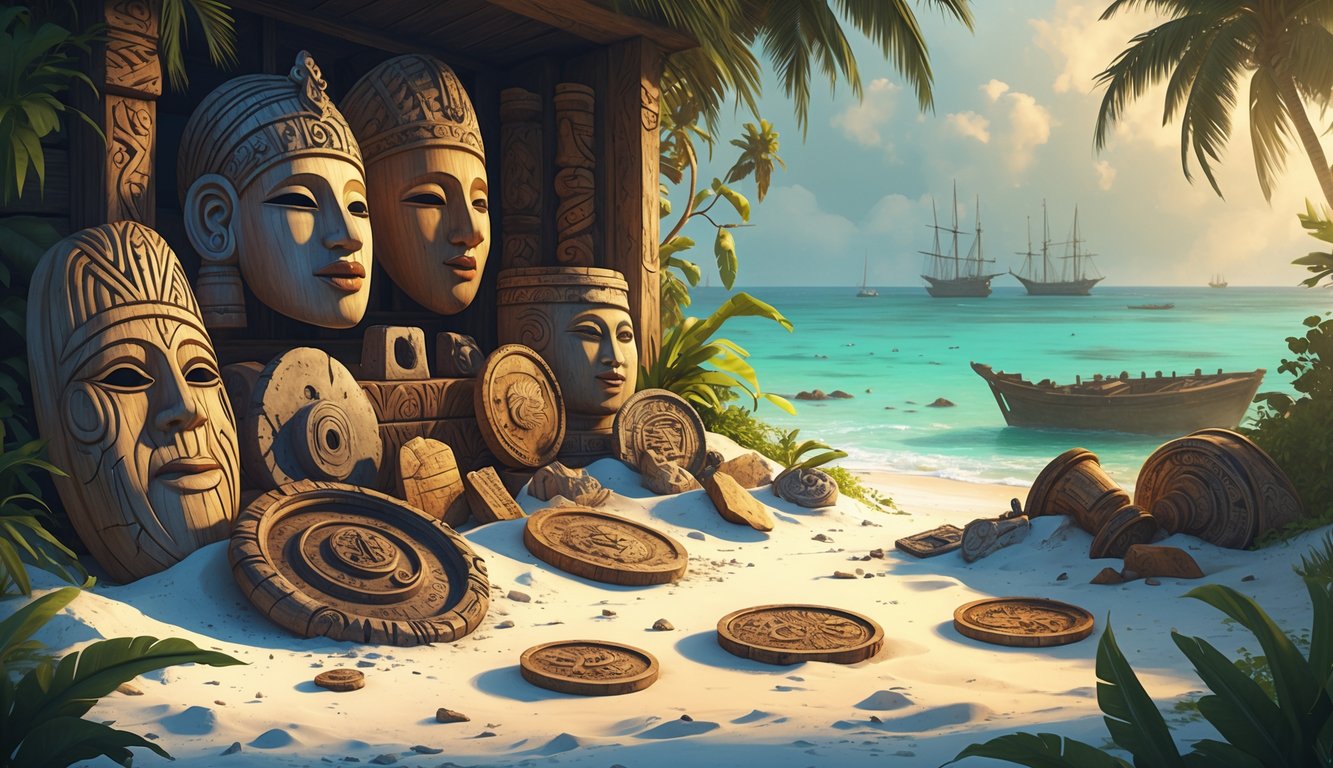
Artifacts in the Bahamas offer a window into the lives of Lucayan people, shipwrecked sailors, and colonial settlers. These items help uncover hidden events, lost cultures, and ongoing mysteries.
Unexpected Archaeological Finds
Archaeologists have uncovered rare artifacts on islands like San Salvador and Cat Island. Pottery shards, old tools, and ceremonial items point to the Lucayan people, the earliest known inhabitants.
These discoveries show how they fished, hunted, and traded long before Europeans arrived. Some of the most striking finds are shipwreck treasures.
Spanish galleon remains around Bahamian reefs have revealed coins, weapons, and cargo. These tell stories of trade and danger at sea.
The Bahamas Maritime Museum displays several of these artifacts, including gold jewelry and navigational instruments. These show both wealth and risk from the age of exploration.
For more about lost treasures from history, see a list of legendary missing treasures.
Challenges of Artifact Preservation
Preserving artifacts in the Bahamas is not easy. High humidity, salt in the air, and hurricanes put these treasures at constant risk.
Items made from wood or cloth can rot quickly. Metal objects often corrode.
The Bahamas Maritime Museum uses modern technology to slow decay. Techniques like climate-controlled cases, careful cleaning, and regular monitoring help.
Not every artifact can be saved. In many cases, items must be left in place until experts can inspect or move them safely.
Local archaeologists and historians work hard to protect and document discoveries before storms or rising seas destroy them. These efforts aim to keep the stories of the islands’ past alive for future generations.
World War I and the Bahamas: Forgotten Events
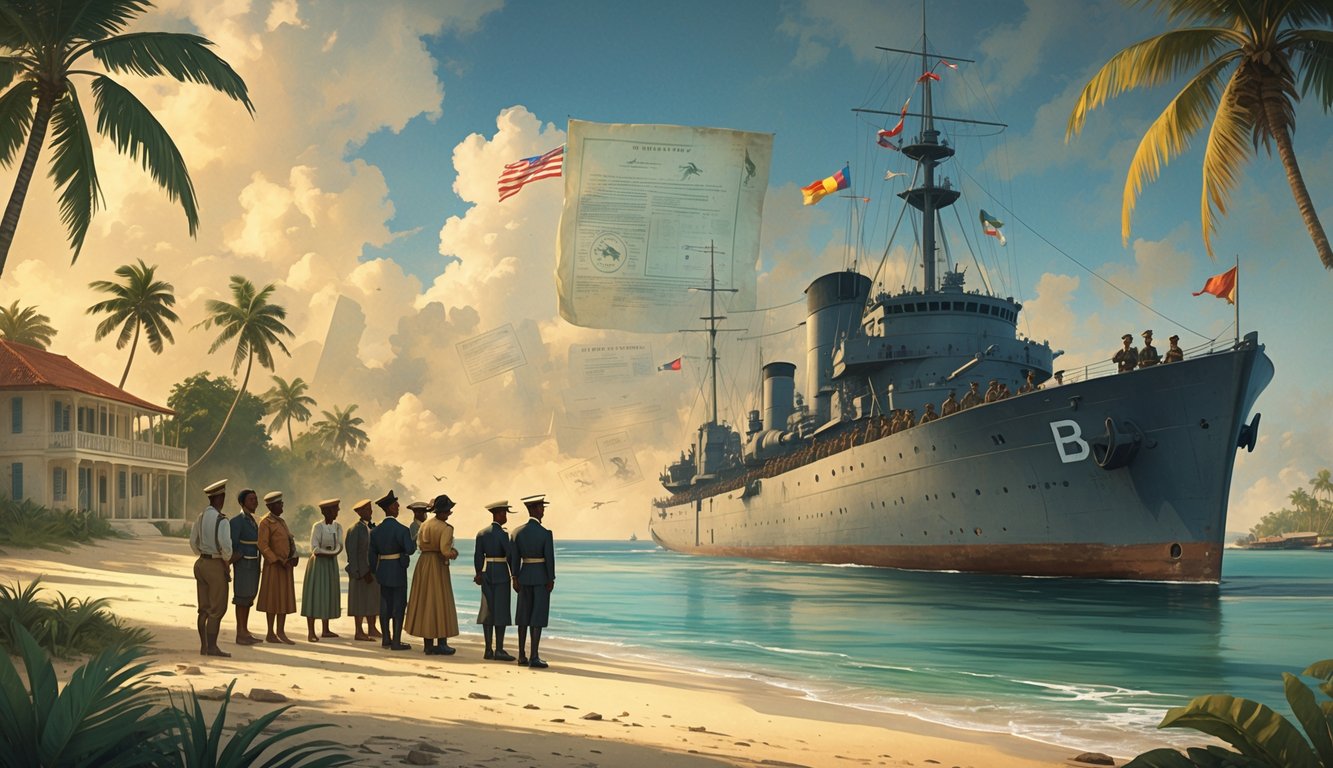
World War I reached even the remote shores of the Bahamas in unexpected ways. The islands, while far from major battles, saw real impacts from the global conflict, especially at sea and in everyday life.
WWI Shipwrecks and Maritime Mishaps
During World War I, the waters around the Bahamas became risky for ships. German submarines, called U-boats, patrolled the Atlantic and sometimes targeted ships near the islands.
Several wrecks lie on the sea floor. Their stories remain unclear.
Local fishermen sometimes found debris from these vessels washed up along the shore. Many of these shipwrecks are hard to trace.
Some wrecks remain unrecorded. This adds to the mystery surrounding the Bahamas during this time.
Small communities often felt the effects of lost ships. Families waited for goods and news that never arrived.
Old records mention ships missing on their way to or from Nassau. These ships disappeared without proper explanation.
Today, divers explore the remains and look for clues about the final hours of these ships. Researchers are still trying to determine the true number and identities of World War I shipwrecks in Bahamian waters.
Legacy of the War in the Islands
The war touched the Bahamas in other ways. Bahamians and organizations such as the Imperial Order of the Daughters of Empire and the Bahamas Red Cross Guild collected supplies for soldiers and civilians in Europe.
Some Bahamians served in the British military. Others helped in support roles at home.
News from the front often arrived late. Islanders relied on newspapers to learn about the progress of the war.
A small note in The Nassau Tribune in June 1914 first mentioned the events that started World War I. No one knew how big the impact would become.
Families had to adjust to shortages. The war changed what people could easily find on store shelves.
Those who left to fight and those who stayed experienced quiet but lasting changes.
Today, there are few local monuments. People try to remember Bahamian contributions to the war through stories or community history projects.