Azerbaijan is a country full of ancient stories, legends, and hidden secrets that stretch back thousands of years. Its location between East and West has shaped the mysteries and traditions that make its history so fascinating.
There are tales of ghostly sites, strange natural wonders, and monuments that are still debated by experts and visitors alike.
Some of the biggest historical mysteries in Azerbaijan include the secrets behind Baku’s Maiden Tower, the legends linked to its haunted places, and unexplained natural phenomena found across the land. From centuries-old towers with unknown purposes to stories of ancient civilizations lost to time, Azerbaijan’s past leaves many questions unanswered.
People who explore the history of Azerbaijan may find themselves drawn into a world where facts and myths often blend. These mysteries spark curiosity and add to the unique charm that makes Azerbaijan’s history so intriguing.
If you want to know more about haunted places, ancient ruins, or natural oddities, Azerbaijan is full of stories waiting to be discovered.
Enigmatic Prehistoric Sites in Azerbaijan
Azerbaijan is home to remarkable prehistoric sites. These places reveal how ancient people lived, created art, and survived.
Archaeologists continue to discover and study these locations. They find clues about human history and culture.
Gobustan Rock Art and Its Unsolved Origins
Gobustan National Park is famous for its massive collection of rock carvings called petroglyphs. Some carvings are more than 12,000 years old and show hunting scenes, animals, and people dancing.
These pictures appear on caves and rocks, showing life from the Upper Paleolithic period to the Middle Ages. UNESCO has recognized Gobustan as a World Heritage Site because of its importance.
Scholars can identify animals and activities in the carvings. However, they still debate why people created so many of these images.
Some think the carvings marked sacred spots. Others believe they shared stories or tracked calendar events.
The origins of specific symbols and the connection between different art styles remain a mystery. Questions remain about the people who made these carvings and what inspired their artwork.
Researchers and visitors continue to uncover and study many panels. The Gobustan rock art remains a puzzle for those interested in ancient history.
Azykh Cave and the Mystery of Early Human Habitation
Azykh Cave is one of the oldest known human settlements in the region. The cave is located in the Fuzuli area and contains layers of tools and fossils left by humans during the Paleolithic period.
A jawbone found in the cave may belong to one of the first inhabitants in Eurasia. Archaeologists have found tools from the Mousterian and Acheulean cultures.
Different groups lived or visited this site over thousands of years. The cave’s deep chambers served as shelters, and animal bones show how people hunted and survived.
Some items found inside do not match local materials. This raises questions about early trade or movement.
Azykh Cave continues to raise new questions about early human habitation and the lives of our distant ancestors.
Ancient Petroglyphs: Symbols and Hidden Meanings
Petroglyphs are carved images found on rocks across Azerbaijan, especially in places like Gobustan. These ancient symbols include boats, bulls, dancers, and mysterious marks.
Some petroglyphs may show religious or ceremonial scenes. Others might tell stories or mark territory.
Experts have tried to decode what these images mean, but many symbols remain unexplained. Common motifs include:
- Animals (deer, goats, bulls)
- Humans (dancing, hunting, performing rituals)
- Geometric shapes and lines
Some patterns suggest early attempts at writing or recording events from the Mesolithic to the Neolithic period. Scholars debate whether these marks had magical, practical, or social purposes.
The exact meanings are still hidden. The study of petroglyphs in Azerbaijan remains both challenging and exciting for archaeologists.
The Land of Fire: Legends and Secrets
Azerbaijan’s nickname, the Land of Fire, comes from its burning hillsides, ancient fire temples, and spiritual past. Unique sites and lost rituals still interest historians and travelers.
Ateshgah Fire Temple and Zoroastrian Mysteries
The Ateshgah, or Fire Temple, is a stone complex near Baku where natural gas once created eternal flames. Builders completed the temple in the 17th and 18th centuries on a spot where people have worshipped fire for millennia.
The structure has a central altar surrounded by cells for monks and pilgrims. Many believe followers of Zoroastrianism used this temple.
Pilgrims came from India, Iran, and Central Asia, drawn by the mysterious flames. Legends say the temple hosted secret ceremonies or ancient healing rituals.
Today, the Ateshgah is a museum. It has been considered for UNESCO World Heritage Site status.
Learn more about why Azerbaijan is called the Land of Fire.
The Avesta and Forgotten Rituals
The Avesta is the holy book of Zoroastrianism. Much of it was likely composed in and around what is now Azerbaijan.
Historians believe some of its oldest verses describe rituals once held in this region’s fire temples. Ancient texts mention sacred fires, prayers, and offerings to fire as a living symbol.
Many details about these rituals are lost or hidden. Some traditions may survive in local folklore or customs.
Researchers still study local sites and stories for clues about what took place. These old rituals show how fire shaped the daily life and beliefs of people in ancient Azerbaijan.
For more on the country’s heritage, visit this page on Azerbaijan’s cultural history.
Ancient Cities and Lost Civilizations
In Azerbaijan, ancient kingdoms and cultures have left behind ruins, myths, and unsolved mysteries. Some cities and artifacts survive, while details about entire civilizations remain unclear.
The Puzzling History of Caucasian Albania
Caucasian Albania was an ancient kingdom located in what is now Azerbaijan. Historians know that it existed for centuries, but the exact origins and culture of its people are still debated.
This kingdom had its own language and ruled over the region before later empires absorbed it. Archaeologists have found ruins, old churches, and burial sites that show advanced skills in construction and art.
Some ancient cities that belonged to the Albanians remain unidentified, hidden or lost with time. Little is understood about their daily life, religious practices, or how they disappeared.
Key facts:
- Center of regional power from about the 4th century BCE
- Influenced by both Persian and Roman empires
- Important religious and trade routes passed through
You can visit ancient sites in Azerbaijan to learn more about archaeological discoveries.
The Rise and Fall of Atropatena
Atropatena was another ancient kingdom, named after Atropates, a Persian noble. It emerged after the fall of Alexander the Great and included parts of current Azerbaijan and Iran.
Its exact borders changed over time. Atropatena acted as a bridge between the Persian and Hellenistic worlds.
Persian traditions blended with Greek influences here. Very little remains of its cities, and the reasons for its decline are not clear.
Notable details:
- Founded in the late 4th century BCE
- Capital city was called Ganzak, but little survives today
- Was absorbed by larger empires like the Parthian and Sasanian
Remarkable lost cities like Atropatena show how much history still waits to be discovered.
Architectural Marvels with Untold Stories
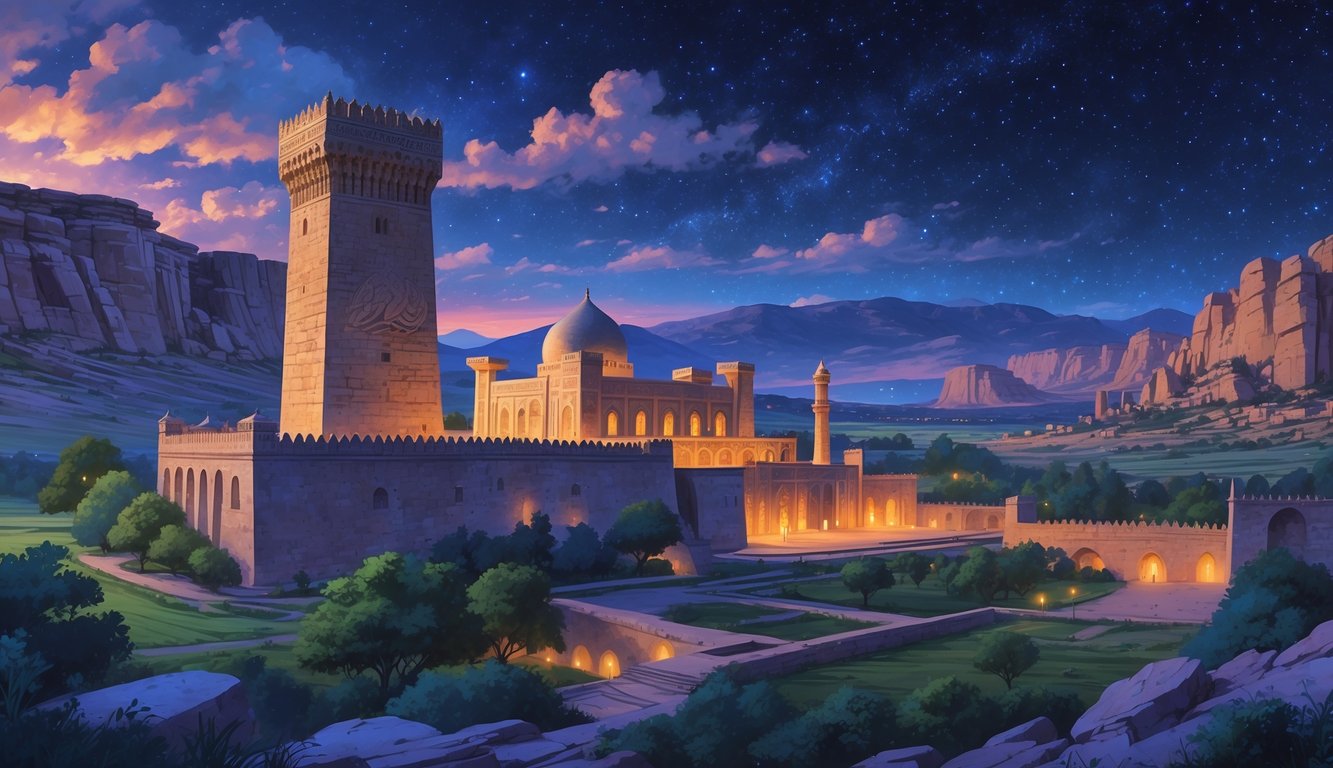
Azerbaijan’s most famous monuments hold mysteries that continue to puzzle experts and visitors. Some of these sites are not just beautiful buildings—they are filled with questions about their origins and the secrets within their walls.
The Mystique of the Maiden Tower
The Maiden Tower stands in the heart of Baku’s Inner City. It is one of Azerbaijan’s most recognized landmarks.
Historians are unsure exactly when it was built, with estimates ranging from the 7th to the 12th century. No one knows for certain what its original purpose was.
Some believe it was a Zoroastrian temple. Others think it was mainly used as a watchtower or fortress.
Legends surround the tower. One famous story claims that a king’s daughter jumped from the top to escape an unwanted marriage, which may have given the tower its name.
The Maiden Tower’s unique design, with thick stone walls and spiral stairs, raises questions about the skills of its ancient builders. Inside, there are hidden niches and mysterious chambers that remain unexplored.
Archaeologists have found old wells and passages, making people wonder what else is yet to be discovered. The tower remains a symbol of Baku’s national heritage and sparks curiosity among visitors.
Secrets of Shirvanshahs’ Palace
Shirvanshahs’ Palace, located inside Baku’s Inner City, is a masterpiece of medieval architecture. Builders completed it in the 15th century as the royal residence for the Shirvanshah dynasty.
The palace complex includes a main building, a mosque, a bathhouse, and mysterious underground chambers. Some rooms and stairways seem to lead nowhere.
Historians cannot fully translate some symbols and carvings. The layout of certain courtyards remains confusing.
Legends suggest that the palace was built in stages, with hidden treasures buried beneath its floors. Researchers sometimes find items from different centuries, making it hard to tell where the true story starts and ends.
Its lasting beauty continues to attract visitors who hope to learn more about its secrets.
Darband Fortress and Its Defenders
Darband Fortress, also known as Derbent Fortress, sits on the border between Azerbaijan and Russia. It has guarded the narrow pass between the Caspian Sea and the Caucasus Mountains for over 1,500 years.
The fortress served as a key entry point to the region. Many empires fought to control it.
Parts of the fortress walls remain standing today. Massive gates and lookout towers built from huge stone blocks still impress visitors.
These walls once protected the ancient city known as Darband. The fortress holds secret tunnels, old storage rooms, and sections that archaeologists still study.
Historians wonder about the lives of the fortress defenders. Archaeological finds show that people lived inside the walls for long periods, facing attacks and harsh weather.
Some believe the fortress hid messages carved into stones that guided soldiers and residents. Darband Fortress is a true piece of Azerbaijan’s national heritage recognized both locally and internationally.
For more on architecture shrouded in mystery, see this list of architecture mysteries that baffled historians.
Unexplained Natural Wonders
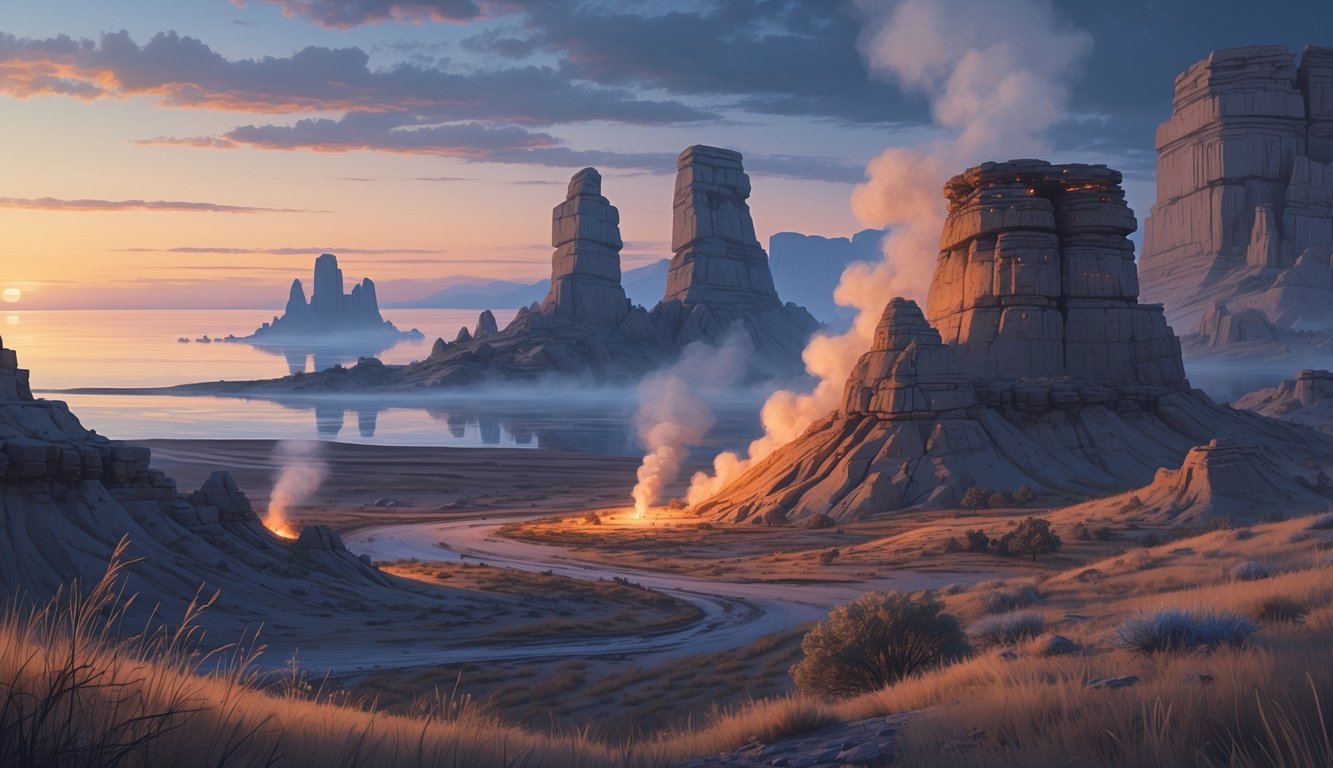
Azerbaijan features rare landscapes full of surprises. Some natural sites here leave experts and travelers with more questions than answers.
The Puzzle of Azerbaijan’s Mud Volcanoes
Azerbaijan is famous for its mud volcanoes. More mud volcanoes are found in Azerbaijan than in any other country.
Over half of the world’s mud volcanoes are located in the Caucasus region near the Caspian Sea. These volcanoes do not erupt with lava.
Instead, they shoot out cold mud and gas. Some eruptions can blow large amounts of mud into the air, covering nearby fields and villages.
Scientists do not fully understand why these volcanic features are so common here. Locals and tourists travel to see them, drawn by their mysterious bubbling, wide craters, and unusual shapes.
Mysterious Eras in Azerbaijan’s Timeline
Azerbaijan’s long history includes periods filled with unanswered questions and secrets. Strange artifacts, lost cities, and the impact of powerful empires have left historians with puzzles that remain today.
Bronze and Iron Age Enigmas
The Bronze Age in Azerbaijan dates back thousands of years. Archaeologists have found tools, pottery, and burial mounds, but many details about the people who made them remain unknown.
Petroglyphs at sites like Gobustan show scenes of hunting and dancing. The meaning behind some symbols is still unclear.
During the Iron Age, new types of weapons and jewelry appeared. Historians still debate who was buried in some unmarked tombs.
Some graves contain unusual items, hinting at lost beliefs or rituals. Certain metals used for tools do not match local sources, raising questions about their origins.
Key discoveries:
- Stone carvings that do not match later writing systems
- Burial mounds with mysterious grave goods
- Artifacts made from metals not found nearby
For a broad timeline and context, see a historical chronology of Azerbaijan.
Unsolved Mysteries of the Safavid and Sasanian Empires
The Safavid and Sasanian periods were powerful eras in the region. The Sasanians built fortresses and left behind coins, but gaps in records about daily life and certain rulers remain.
Some locations important in early Sasanian rule are still undiscovered. With the rise of the Safavids, cities like Tabriz gained importance.
Ancient manuscripts mention lost treasures and hidden libraries that have never been recovered. Encrypted writings and symbols found in old mosques and palaces continue to puzzle experts.
Important points:
- Unknown details about vanished castles
- Missing records from royal archives
- Rumors of forgotten Safavid libraries
Find more on this subject in a timeline of Azerbaijan.
The Khanates and Shifting Borders
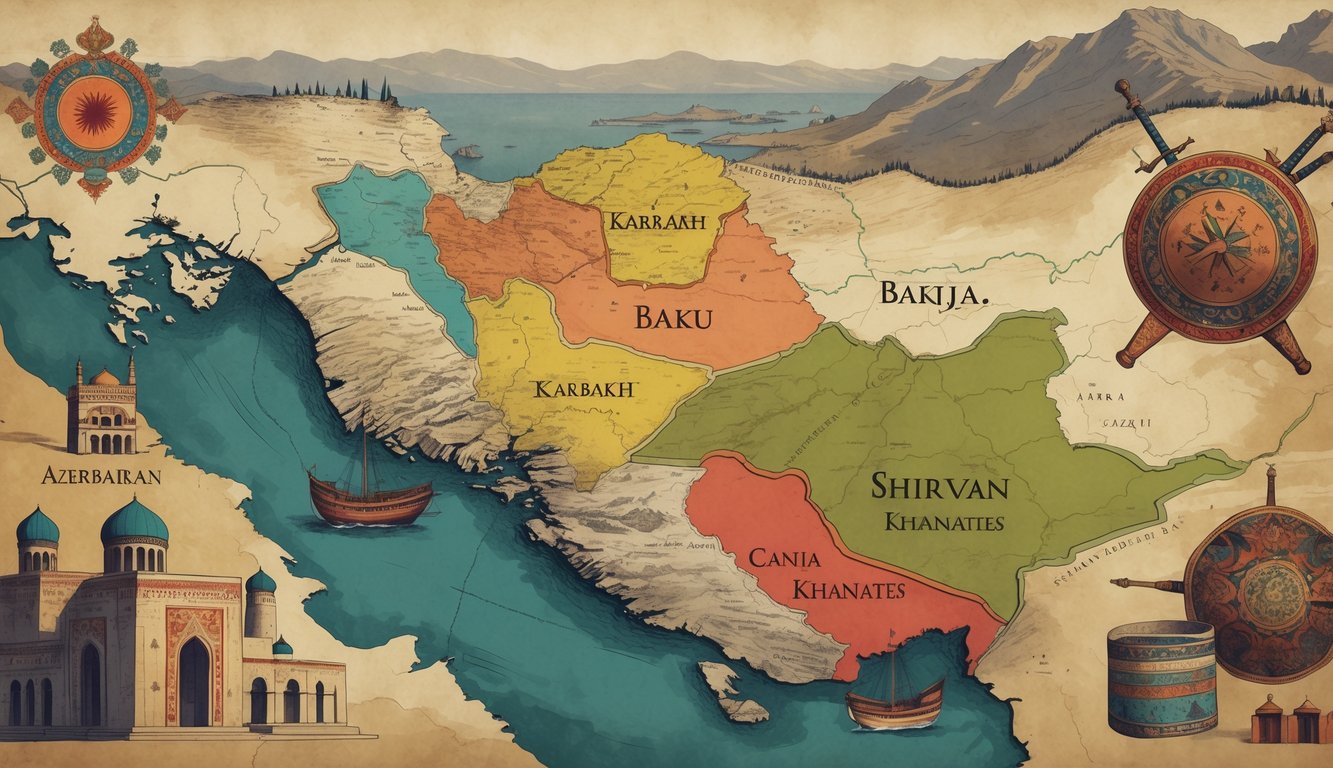
In the 18th and 19th centuries, Azerbaijan’s history was marked by the rise of khanates and frequent changes in borders. Amid legends and power struggles, local leaders and their states shaped the region for generations.
Legends of the Caucasus and the Rise of Khanates
After Nader Shah’s death in 1747, Azerbaijan saw the emergence of several independent and semi-independent khanates such as Karabakh, Ganja, Sheki, and Quba. Each khanate was ruled by its own khan, and they often competed with each other for power and land.
Azerbaijan became known for its complicated borders and shifting rules of control. Tales from this time tell of brave rulers and constant conflict.
Many stories became legends, blending fact and fiction. Trade routes, wars, and political alliances played strong roles in how the khanates survived.
The khanates of Azerbaijan acted as both rivals and occasional allies, shaping the region’s culture and borders through their struggles. Many famous tales from this era are still remembered today.
These events are covered in more detail on the history of Azerbaijan’s khanates.
Javanshir and the Struggle for Power
Javanshir was a prominent leader of the Karabakh khanate. As khan, he worked to keep his territory safe while facing threats from other leaders and larger powers like Iran and Russia.
Javanshir faced many challenges during his rule. He used both war and diplomacy to protect Karabakh.
At times, he formed alliances with neighboring khanates or outside empires to survive. Local tales remember his tough choices, showing Javanshir as a warrior and a wise ruler.
The struggle for power in the Caucasus meant that borders between the khanates could change quickly. Javanshir’s legacy is part of why the Karabakh khanate is often seen as a symbol of strength in Azerbaijan’s history.
For more on these events and figures, visit the entry about Khanates of Azerbaijan.
Mysteries Shaping Azerbaijan’s Modern Identity
Key moments in Azerbaijan’s history have shaped how its people see themselves today. Early efforts to build a nation and later struggles for freedom still inspire debate.
The Azerbaijan Democratic Republic: Lost Chapters
The Azerbaijan Democratic Republic (ADR) was declared in 1918. This marked the first time a secular and democratic state formed in the Muslim world.
The republic lasted only until 1920 when Soviet forces took control. Many details about the ADR’s leadership, policies, and collapse remain unclear.
Letters, official records, and personal stories from this period are missing or incomplete. Historians debate how the ADR balanced its Turkic heritage and European ideas while building a new national identity.
Some believe foreign influence played a key role in the ADR’s collapse, while others focus on internal divisions or a lack of support from neighboring countries. It is difficult to separate facts from myths about this short-lived government.
The significance of the ADR’s legacy in shaping modern Azerbaijan’s self-image can be explored further in academic reviews on Azerbaijani national identity and statehood.
Struggles for Independence and the Liberation Movement
Azerbaijan’s path to independence was full of challenges, especially in the late 1980s and early 1990s. Mass protests, clashes, and political unrest reflected a society determined to break away from Soviet rule.
The liberation movement brought together students, intellectuals, and workers in demonstrations and strikes. These efforts often faced violent crackdowns.
Despite the risks, the demand for sovereignty grew so strong that in 1991 Azerbaijan declared its independence. Unanswered questions remain about the strategies used and who led key actions.
More insights into these political and social changes can be found in research on the struggles for independence in Azerbaijan.
Crossroads of Cultures and Religions
Azerbaijan is home to many ancient mysteries rooted in its cultural heritage and religious diversity. Its location at the edge of the Islamic world and near neighbors like Armenia and Georgia helped shape its unique past.
Islamic Mysteries in the Land of Azerbaijan
Islam has played an important role in Azerbaijani identity. Many mosques and ancient tombs can be found across the country, some with mysterious origins.
The Friday Mosque in Shamakhi, built in the 8th century, is one of the oldest in the Caucasus. Archaeologists still debate the true age of some Islamic sites.
Some believe underground passages beneath Baku’s old city connect ancient shrines, but evidence is unclear. Legends speak of fire-worshippers in Azerbaijan before Islam, and some Islamic sites may be built over sacred fire temples.
Azerbaijan sits at the historic border between the Persian and Ottoman empires, adding layers of mystery to its religious history. Ancient scripts found near mosques raise questions about lost Islamic sects.
This blend of old beliefs and new faiths shapes Azerbaijan’s cultural heritage even today.
Interactions with Armenia and Georgia
Azerbaijan, Armenia, and Georgia share a long and complicated history. Borders changed often, and people from different religions lived side by side.
The region has seen a mix of Christian and Islamic influences. Churches, monasteries, and mosques often appear close to each other.
Some historic Christian churches in Azerbaijan show both Armenian and Georgian styles, reflecting a shared architectural heritage. Disputed territories like Nagorno-Karabakh hold many mysteries.
Old inscriptions in Armenian and Georgian script have been found alongside Islamic symbols. Ancient myths and stories from all three cultures speak of hidden treasures and sacred places.
Border villages sometimes celebrate the same folk festivals with different names. This blend of customs makes the area a true crossroads of civilizations, with unique legends and historical puzzles still unsolved.
The Baku Oil Boom and Its Mysterious Impact
The Baku oil boom in the late 1800s changed not only Azerbaijan but also the global oil industry. Its rapid success attracted powerful international investors and sparked many unanswered questions about its long-term effects.
Economic Transformation and World Influence
Baku’s oil fields became the world’s largest source of oil by the early 1900s. The city’s growth was rapid.
Oil turned Baku into a busy industrial hub. Entrepreneurs and workers arrived from across the globe.
Important families, like the Nobel brothers, helped develop technology and infrastructure. They built the first oil pipelines.
Key international players, such as the Rothschilds and Rockefellers, invested heavily. Their competition made Baku’s oil fields a focus of global business and politics.
This influx of wealth changed the city’s skyline and daily life. Old parts of Baku still show signs from this era, making it an important part of world heritage.