Afghanistan has a long and rich history, filled with secrets and unanswered questions. Over thousands of years, the region saw ancient empires, busy trade along the Silk Road, and many cultural changes.
Some of the biggest historical mysteries in Afghanistan involve lost treasures, ancient manuscripts, and hidden archaeological sites.
Researchers have found 1000-year-old Jewish manuscripts in Afghan caves and prehistoric relics that survived years of war and destruction. These discoveries reveal new details about life in Afghanistan long ago.
Stories about hidden artifacts, ruins under the desert, and powerful civilizations attract historians, archaeologists, and curious minds. Each clue found brings us closer to uncovering Afghanistan’s true past and understanding its many mysteries.
Enigmatic Origins of the Bamiyan Buddhas
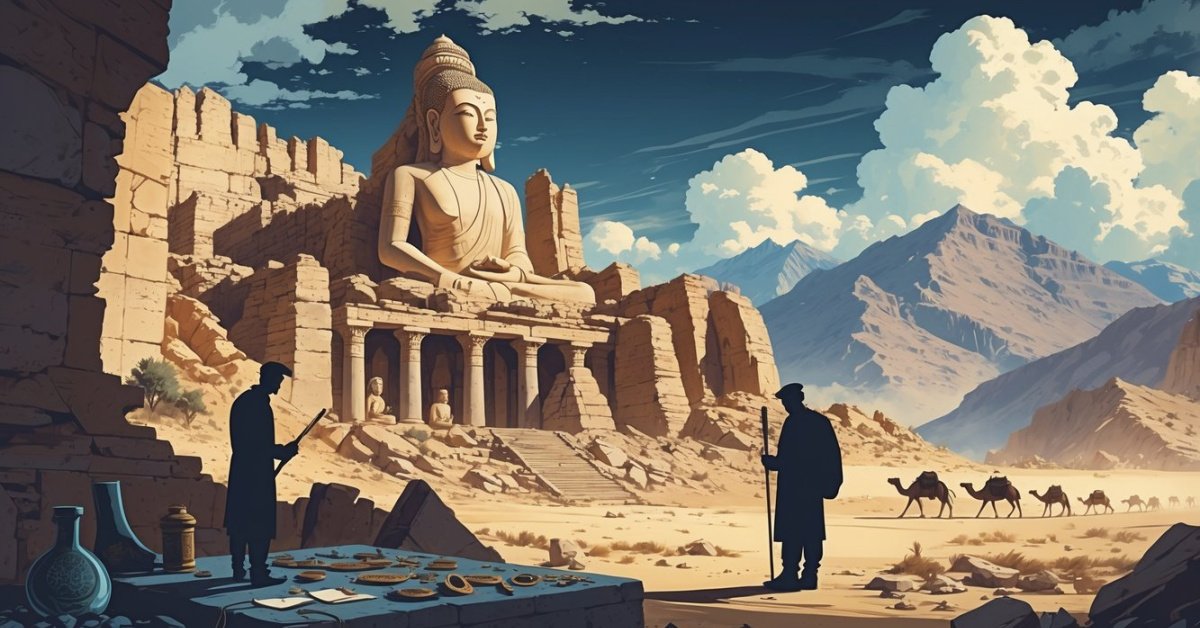
The Bamiyan Buddhas once stood as giant stone statues in the Bamiyan Valley. They served as powerful symbols of Buddhism along the Silk Road.
Their purpose, creators, and mysterious destruction highlight Afghanistan’s deep and sometimes troubled cultural heritage.
Construction and Purpose
Carvers created the Bamiyan Buddhas in sandstone cliffs between the 6th and 7th centuries CE. The statues stood about 55 meters and 38 meters tall, making them the tallest Buddha statues in the world.
These monuments faced the Bamiyan Valley, an important part of the Silk Road. Their construction made Bamiyan a center for pilgrims, travelers, and scholars.
Historians believe the statues helped spread Buddhist teachings and offered protection to the valley. The figures stood surrounded by caves and small shrines, showing Bamiyan’s importance as a spiritual and cultural hub.
UNESCO declared the area a World Heritage Site because of its religious and artistic value. The statues attracted visitors for centuries and shared the valley’s legacy with the world.
Unknown Artists and Techniques
No one knows the true identity of the artists who created the Bamiyan Buddhas. There is no clear record of who led their construction.
Some experts think artists from different regions along the Silk Road worked together on the project. The statues were carved, painted, and decorated with elaborate details.
Researchers found layers of colored pigments and what looks like gold leaves on the remains. The carvers used local rock and mud-coating for shape and stability.
These techniques show a mix of artistic influences, including Greco-Buddhist styles from ancient Tokharistan. The blend reflects the diverse cultures that traded and interacted in the Bamiyan Valley.
Mystery of Their Destruction
The fate of the Bamiyan Buddhas shocked the world. In March 2001, the Taliban destroyed the statues using explosives.
They claimed the statues were idols and went against their interpretation of Islam. The destruction happened quickly and deliberately.
In just a few days, monuments that had stood for over 1,400 years became rubble. The loss sparked an outcry from the international community, which saw the attack as a blow to global cultural heritage.
The remains still stand as a silent reminder of what was lost. The ruined site is still listed by UNESCO as a reminder of Bamiyan’s importance.
For more information, see this feature on the Bamiyan Buddhas’ destruction and memory.
Lost Empires and Forgotten Cities
Afghanistan contains many layers of buried heritage shaped by trade, empire, and centuries of migration. Archaeologists are still uncovering cities once filled with traders, rulers, and artists.
Ruins Along the Silk Road
Many important trade routes crossed Afghanistan, especially the Silk Road. Ancient cities grew up along these routes to serve travelers and merchants.
Ai-Khanoum, founded in the late fourth century BC, shows strong Greek influence from when Alexander the Great’s armies moved through the region. The remains include temples, palaces, and markets.
Massive columns and Greek-style theaters still stand. Ai-Khanoum became a center where Greek and local Bactrian cultures blended, leading to unique art and architecture.
Satellite images and archaeological fieldwork continue to reveal new sites hidden in Afghanistan’s deserts and mountains. Some sites face danger from looting and conflict, which threaten priceless artifacts and buildings.
New discoveries help fill in the story of how Afghanistan connected East and West. More about Ai-Khanoum’s lost Greek city can be found through recent research.
The Missing City of Kandahar
Kandahar, one of Afghanistan’s oldest cities, has played a key role in many empires over thousands of years. Alexander the Great reportedly founded a city here called Alexandria Arachosia around 330 BC.
Layers of newer settlement cover much of the original ruins. Archaeologists still search for signs of the original Greek structures, which may lie deep beneath modern buildings.
Over time, Kandahar became a crossroads for traders, armies, and religions moving through Central Asia. The city saw influences from Greek, Persian, Buddhist, and Islamic cultures.
Remnants like old city walls, lost gates, and ancient coins keep the history of Kandahar alive. Very few complete maps of the ancient city exist, so its true layout and early secrets remain a mystery.
Secrets of Kabul’s Ancient Past
Kabul, today’s capital, has a history that goes back at least 3,500 years. The area once served as a stop for traders along routes linking India, China, and Persia.
Much of old Kabul is hidden or destroyed by later construction. Some archaeological finds hint at its rich past.
Pottery, coins, and broken statues from Greek, Buddhist, and Hindu periods have been discovered beneath the city. These items show that ancient Kabul welcomed different religions, ideas, and artistic styles.
In recent decades, war and development have made digging and preservation difficult in Kabul. Projects using advanced technology, like satellite scans, are now helping to locate buried sites and protect what remains.
These finds give us insight into the city’s role in the changing world of early Central Asia. Learn more from spy satellites and archaeologists.
The Puzzles of Afghanistan’s Prehistoric Monuments
Afghanistan’s ancient past is full of questions that scientists are still trying to answer. Many early discoveries show that people built mysterious stone monuments thousands of years ago, but their full story remains unknown.
Unexplained Stone Structures
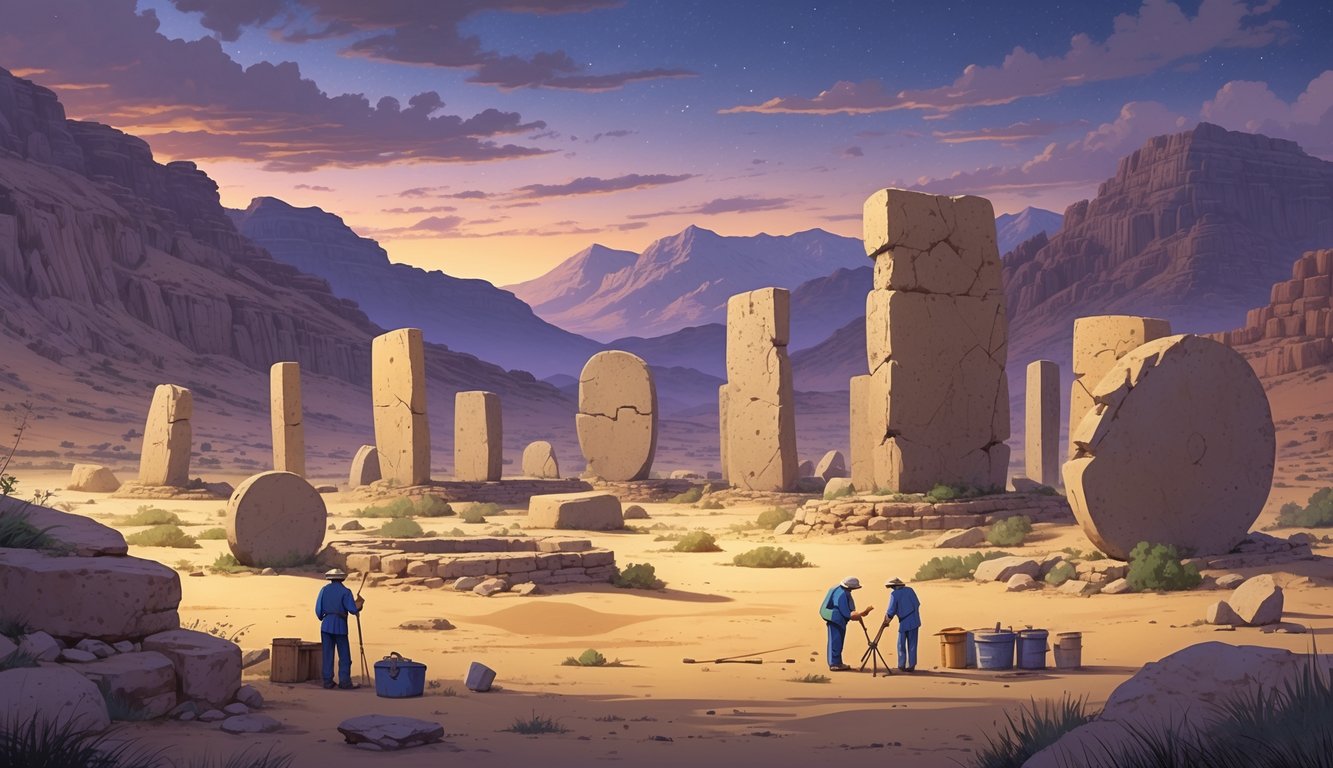
Archaeologists have found several prehistoric monuments made from large stones across Afghanistan. These structures are often placed in circles or long rows, some stretching for several meters.
Many are found in remote areas and are hard to reach. Some of the most famous sites include the huge stone circles in Badakhshan and stone alignments in the Hindu Kush mountains.
These ancient relics often sit near trade routes, suggesting they had some importance. Tools and pottery fragments discovered with the monuments point to activity as far back as the Bronze Age.
Experts cannot confirm who built them or why certain places were chosen. The lack of written records adds to the puzzle, making these sites important for Afghanistan’s archaeology.
Theories About Their Purpose
Researchers have suggested several theories to explain these stone monuments. Some believe people used them for religious ceremonies or as burial sites.
Others think they may have served as markers for ancient travel routes or as gathering spaces for local communities. Another idea is that some monuments had an astronomical purpose, helping people track the movement of the sun or stars.
Some stones line up with the sunrise or sunset at special times of the year. There is no single answer.
Each site may have had a different purpose, or the meaning could have changed over time. Ongoing digs and new technology may help unlock more secrets about these unique prehistoric relics of Afghanistan’s history in the future.
Genghis Khan and His Elusive Legacy
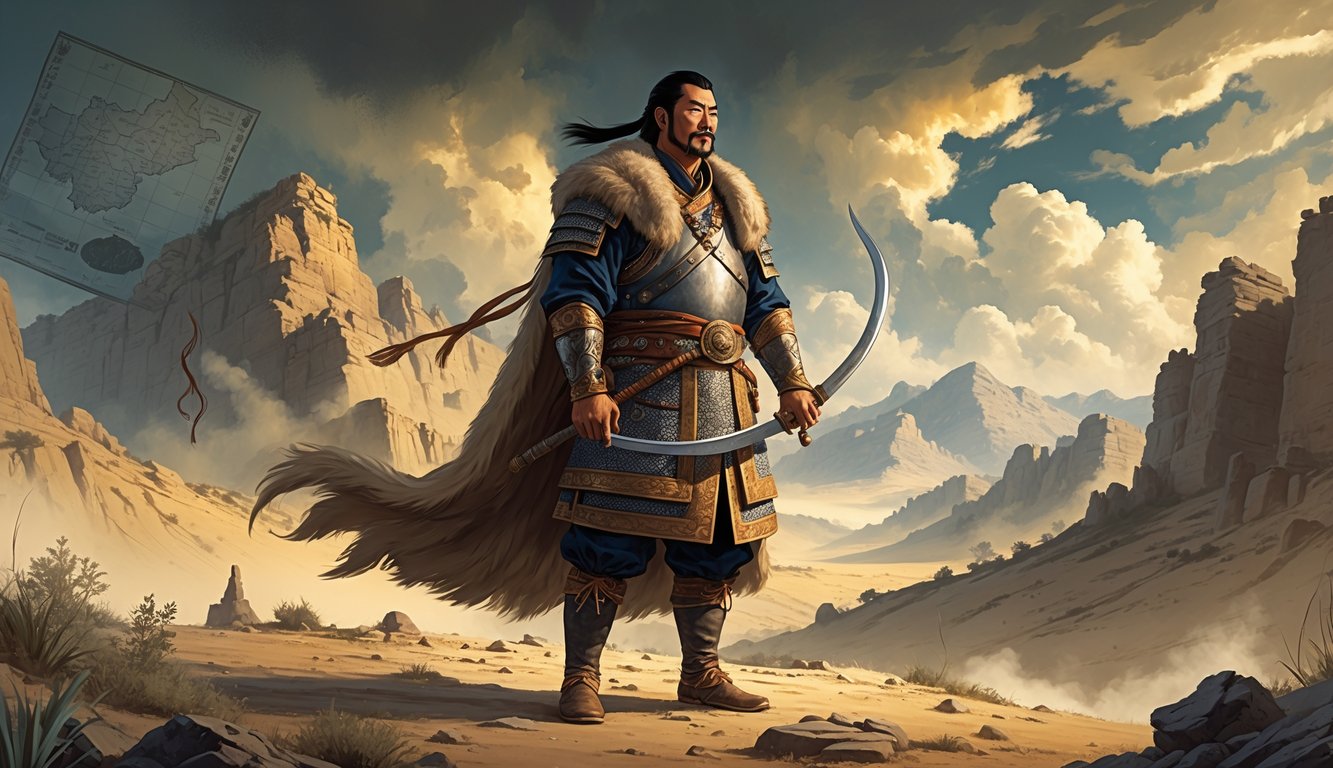
Genghis Khan’s campaigns shaped Afghanistan’s history and left deep marks on its culture, people, and heritage. Today, his lost treasures and mysterious tomb continue to puzzle historians and explorers.
The Mongol Invasion’s Lasting Impact
In the 13th century, Genghis Khan led the Mongol armies through Afghanistan. Cities like Balkh, Herat, and Bamiyan faced intense battles and widespread destruction.
Many ancient artifacts and cultural sites suffered damage. Some structures were lost forever, while others became ruins.
A few cities managed to rebuild, preserving parts of their old heritage. Genghis Khan’s campaign changed Afghanistan’s population and culture.
People had to move, mixing Mongol influences with local traditions. This mix of cultures is still seen in language, art, and place names across Afghanistan.
Researchers continue to study how Mongol rule affected local tribes and ethnic groups. The Mongol invasion left behind legends, stories of hidden sites, and hints of lost artifacts buried somewhere in the Afghan landscape.
Genghis Khan’s Missing Tomb
After his death, Genghis Khan was reportedly buried in a secret location. The exact place remains unknown.
For centuries, people have wondered if his tomb and treasures might lie somewhere in Central Asia, including Afghanistan. Stories claim his burial site is hidden so well that no one has ever found it, despite many searches.
Ancient texts and modern explorers both point to areas once controlled by the Mongols, but clear evidence is still missing. The mystery of Genghis Khan’s tomb continues to attract attention, with new guesses and theories shared every year.
Some believe the Khan’s riches—possibly worth immense amounts—are buried with him, including weapons, gold, and priceless artifacts. If found, these objects could add great value to Afghanistan’s cultural heritage and help answer questions about the great conqueror’s final days.
Archaeological Dilemmas and Lost Artifacts
Afghanistan’s rich history brings many challenges for archaeologists. Wars, theft, and lack of security have made it hard to protect precious objects like ancient coins, relics, and museum collections.
These issues have left many questions about where crucial pieces of the region’s legacy have ended up.
Mysterious Disappearances From Museums
Many museums in Afghanistan have struggled with stolen or lost pieces, especially during years of conflict. The National Museum of Afghanistan once held thousands of artifacts, including statues, ancient coins, and intricate jewelry.
After periods of violence and instability, a large portion of the collection vanished. The looting and destruction were so severe that some priceless relics have never been found again.
Many of these items may now be in private collections far from Afghanistan. Efforts to recover the lost items continue, but progress is slow.
Key facts:
- In the 1990s, an estimated 70% of the National Museum’s collection was looted.
- Missing items include ancient Buddhist sculptures and Greek-influenced coins.
- Many other regional museums experienced similar losses, with little documentation or hope for retrieval.
Untraced Artifacts and Relics
Afghanistan is home to world-famous archaeological sites like Mes Aynak, Ai Khanoum, and Bamiyan. Over the years, archaeologists have uncovered a wide range of historic items, including manuscripts, pottery, and metal relics.
Many discoveries have gone missing before anyone could properly study or preserve them. Smuggling is a huge problem.
Many valuable artifacts, such as ancient coins and rare Buddhist relics, have ended up on the black market. Collectors abroad sometimes buy these items without knowing they were illegally taken.
Afghan officials and archaeologists search for these lost treasures, but limited resources and ongoing threats make this a huge challenge. The search for untraced relics continues, making archaeology in this region both fascinating and frustrating.
Visit lists of unsolved historical mysteries to learn how missing artifacts have shaped what we know about Afghanistan’s past.
The Ghaznavid Dynasty’s Disappearing Treasures
Stories about the lost riches and burial sites of the Ghaznavid dynasty still interest historians and treasure hunters today. Many believe rare artifacts and valuables from this empire remain hidden in Afghanistan, waiting to be found.
Myths About Hidden Wealth
People have long told stories about secret stores of gold, silver, and jewels hidden by the Ghaznavid rulers. Some tales say that as the Ghaznavid dynasty lost power, fleeing nobles buried their treasures across Afghanistan.
Maps and clues were said to be passed down in families, though none have been proven real. The Ghaznavids were known for their raids into India, bringing back valuable objects and art pieces.
Many believe they hid loot beneath forts, inside mountain caves, or under ancient palaces. The ruins near Ghazni are rumored to hold chests of precious artifacts.
Treasure seekers often explore these sites, but no large stash has ever been uncovered. Legends sometimes mention mysterious guards or elaborate traps protecting these riches.
While such details sound exciting, archaeologists have found no hard proof of treasure vaults or riches protected in this way.
Unfound Royal Tombs
The actual burial sites of some royal Ghaznavid rulers remain a mystery. Tombs of famous figures like Sultan Mahmud of Ghazni have been identified, but others are still missing.
Some believe undiscovered tombs could hold rare relics, unique swords, or even dusty crowns. Archaeologists have searched ruins in places like Ghazni City, looking for clues.
Old writings hint that some tombs were intentionally hidden to protect the remains and their treasures from grave robbers. This makes finding the exact locations especially hard.
There are lists of possible locations where these royal tombs might be, including old mosques, palace grounds, and underground chambers. Despite several digs and modern technology, no untouched tombs full of Ghaznavid-era artifacts have come to light.
The lost royal graves and their contents remain one of Afghanistan’s great historical puzzles.
Religious Transformations and Historical Gaps
Religious change in Afghanistan has left gaps in the historical record. Important sites and stories have been lost due to shifting faiths and the passage of time.
Transition From Buddhism to Islam
Afghanistan was once home to many Buddhist communities and monasteries. Buddhism spread across the region from around the 3rd century BCE and became a major part of daily and spiritual life.
Monks and travelers passed through the Bamiyan Valley, teaching and building artwork. By the 7th century CE, Islam began to take root after Arab armies entered the area.
Over the next few centuries, many locals converted to Islam, sometimes blending old traditions with new beliefs. The full shift to Islam was gradual, and records of how local people adapted are limited.
Few written records survived, making it hard to know exactly how the transition happened or what happened to the Buddhist communities. More details on this complex history may be seen at Religion in Afghanistan’s religious history.
Vanished Buddhist Monasteries
Buddhist monasteries once dotted the landscape, especially in places like Bamiyan. These large, well-decorated sites served as centers of learning and worship for monks and visitors.
The most famous examples are the giant Buddhas of Bamiyan, which were carved directly into cliffs. These and other sites suffered from natural decay and deliberate destruction as Islam became dominant.
Many monasteries were abandoned, looted, or destroyed, erasing much of Afghanistan’s Buddhist history. Today, archaeologists still uncover remains of lost monasteries, but much knowledge is missing.
Local legends and incomplete ruins are some of the only clues that remain about Afghanistan’s vanished Buddhist cultural heritage. Learn more about these ancient sites at Afghanistan’s ancient spiritual roots.
Coins and Inscriptions That Defy Explanation
Coins and ancient scripts found in Afghanistan have raised questions about the region’s long history of trade and conquest. These artifacts suggest rich cultural exchanges and influence from faraway places.
Foreign Coins in Afghan Soil
Archaeologists have uncovered foreign coins deep in Afghan soil, such as Greek, Roman, Persian, and Indian currency. Some finds date back to the time of Alexander the Great, hinting that his armies or traders may have left traces as they passed through.
These discoveries help show how Afghanistan was a busy crossroads along the Silk Road. Merchants traveling between East and West often used coins from distant lands.
It is not unusual for a single site to contain coins from several countries, showing the blend of cultures present in ancient Afghanistan. Some coins found in remote mountain regions do not match any known settlement patterns nearby.
This has led to debates about how these coins traveled so far. A table below summarizes some key finds:
| Coin Origin | Date Range | Notable Sites |
|---|---|---|
| Greek (Bactrian) | 3rd-2nd Century BCE | Ai Khanoum, Balkh |
| Roman | 1st-3rd Century CE | Begram, Bamyan |
| Indian (Kushan) | 1st-4th Century CE | Surkh Kotal, Kabul |
Mysterious Inscriptions and Scripts
Afghanistan is home to ancient inscriptions written in several scripts, including Greek, Bactrian, Brahmi, and local unknown scripts. Some texts are easily translated, but others remain a mystery.
Certain stone inscriptions discovered along old trade routes do not match any documented languages. A famous example is the Bactrian language, which uses Greek letters but records a completely different tongue.
Scholars have translated some of these, but many short inscriptions on coins and broken monuments still puzzle researchers. In some cases, tablets or carved stones list rulers or gods that do not appear in other sources.
This makes it hard to connect the inscriptions to specific people or dates. For a closer look at strange relics and their secrets, see the overview of forgotten historical monuments.
Stone Circles and Prehistoric Connections

Ancient stone circles in Afghanistan raise interesting questions about prehistoric monuments and their roles in early societies. These circles have sparked comparisons with European sites, like Stonehenge, and are important for those interested in archaeology.
Potential Links to Stonehenge
Researchers studying prehistoric monuments sometimes compare Afghan stone circles to Stonehenge in the United Kingdom. Both feature large stones arranged in patterns, often in circles or ovals.
The size and careful placement of these stones suggest that they were important for the people who built them. Some experts wonder if there could have been connections between cultures who built these monuments.
Stonehenge is famous for its link to astronomy, especially the summer solstice. Similarly, certain Afghan stone circles seem to have been used for marking seasons and tracking the movement of the sun.
Key similarities include:
- Monumental stone arrangements
- Possible astronomical uses
- Cultural or ritual importance
Despite these parallels, current evidence shows no direct contact between the cultures. The similarities reveal how different societies solved similar problems during prehistory.
Distinct Features of Afghan Stone Circles
While they share some qualities with other prehistoric monuments, Afghan stone circles have unique traits. Many are located in remote or desert areas and can be much older than some European examples.
Archaeologists believe some date back at least 7,000 years, making them among the earliest known stone arrangements. These sites often feature smaller, unmarked stones in rough circles, instead of the tall monoliths seen at Stonehenge.
Afghan circles might have been used for burials, rituals, or as calendars aligned to the solstice, similar to the ancient stone circles in the Sahara.
A table comparing key features:
| Feature | Afghan Circles | Stonehenge |
|---|---|---|
| Location | Afghanistan (deserts) | England |
| Estimated Age | 7,000+ years | about 4,500 years |
| Stone Shape/Size | Small and rough | Large monoliths |
| Purpose (theories) | Rituals, calendars | Rituals, calendars |
The Search for Undiscovered Cultural Heritage
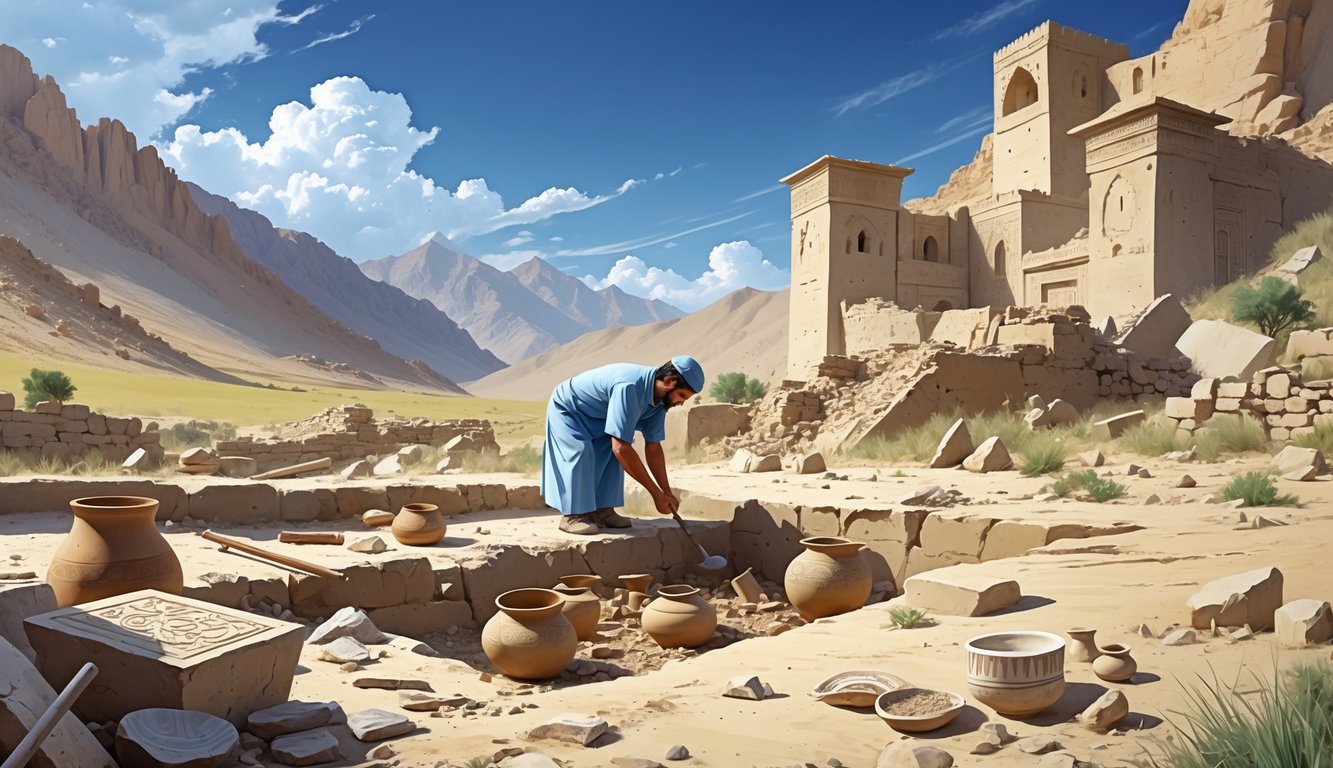
Afghanistan is home to a vast array of cultural treasures, many of which remain hidden or unexplored due to its challenging history. Discoveries can change what people know about ancient civilizations, but not all archaeological sites have been safely uncovered.
Modern Archaeological Efforts
Teams of archaeologists have worked across Afghanistan, hoping to reveal the secrets left behind by ancient kingdoms and trade routes. They use satellite images, ground surveys, and local reports to spot possible sites.
Modern technologies like ground-penetrating radar have made new discoveries possible, even under layers of earth. Some of the most famous finds include the Bamiyan Buddhas and the ancient city of Mes Aynak, which holds artifacts from Buddhist to Bronze Age periods.
Efforts also focus on preserving such places as UNESCO World Heritage Sites. Many museums across the world, as well as in Kabul, store pieces found during these digs.
Many sites remain unexplored due to safety issues or a lack of resources. Much of Afghanistan’s cultural heritage still waits beneath the surface, promising to reveal new stories.
Challenges of Preservation in Afghanistan
Archaeological preservation in Afghanistan faces unique challenges. Ongoing conflict and instability put ancient sites at risk of destruction and looting.
In some areas, people lose artifacts before experts can study them. Natural weathering and lack of funding also threaten fragile ruins and statues.
Museums in Afghanistan sometimes struggle to protect collections because they do not have enough staff or security. The removal of sculptures and manuscripts during conflict has caused important pieces to disappear.
Organizations like UNESCO and local authorities try to safeguard what remains. Public education and international support can help keep these valuable sites and museum collections safe for future generations.