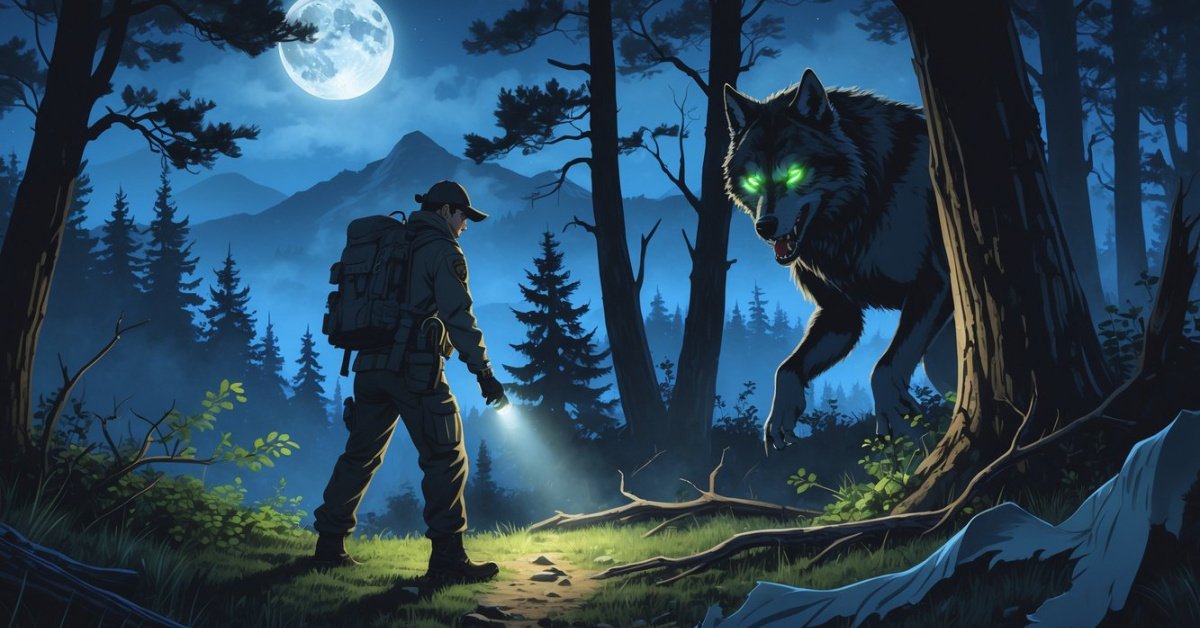
For centuries, people across the United States have shared stories of strange, wolf-like creatures. Early colonial reports and modern sightings often describe an animal that walks upright, has a human build, and the head of a wolf.
The American werewolf blends folklore, eyewitness testimony, and unexplained encounters. This mix continues to spark curiosity today.
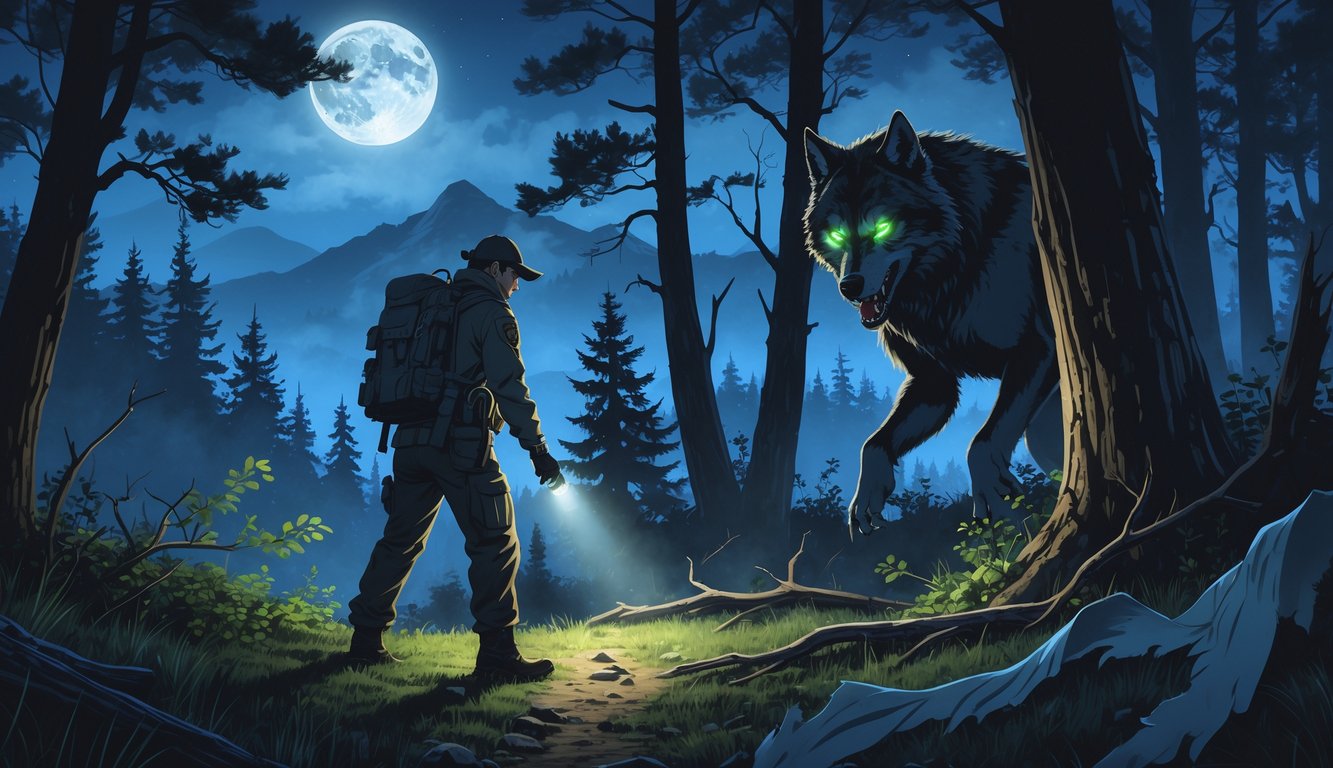
Some sightings date back to the 1600s. French explorer Samuel de Champlain wrote about Native Americans who spoke of people transforming into wolves, as found in historical accounts.
In small towns, locals share stories of mysterious howls, glowing eyes, and quick-moving shapes in the dark.
Regional legends like the Beast of Bray Road and unusual events such as the Defiance Werewolf case raise questions about what people are actually seeing. Are people encountering a real, undiscovered creature, a misidentified animal, or just the result of fear and imagination?
Defining the American Werewolf
Eyewitness accounts, folklore, and pop culture shape descriptions of the American werewolf. Reports focus on its physical features, behavior, and how it differs from other mysterious creatures in North America.
Characteristics of the American Werewolf
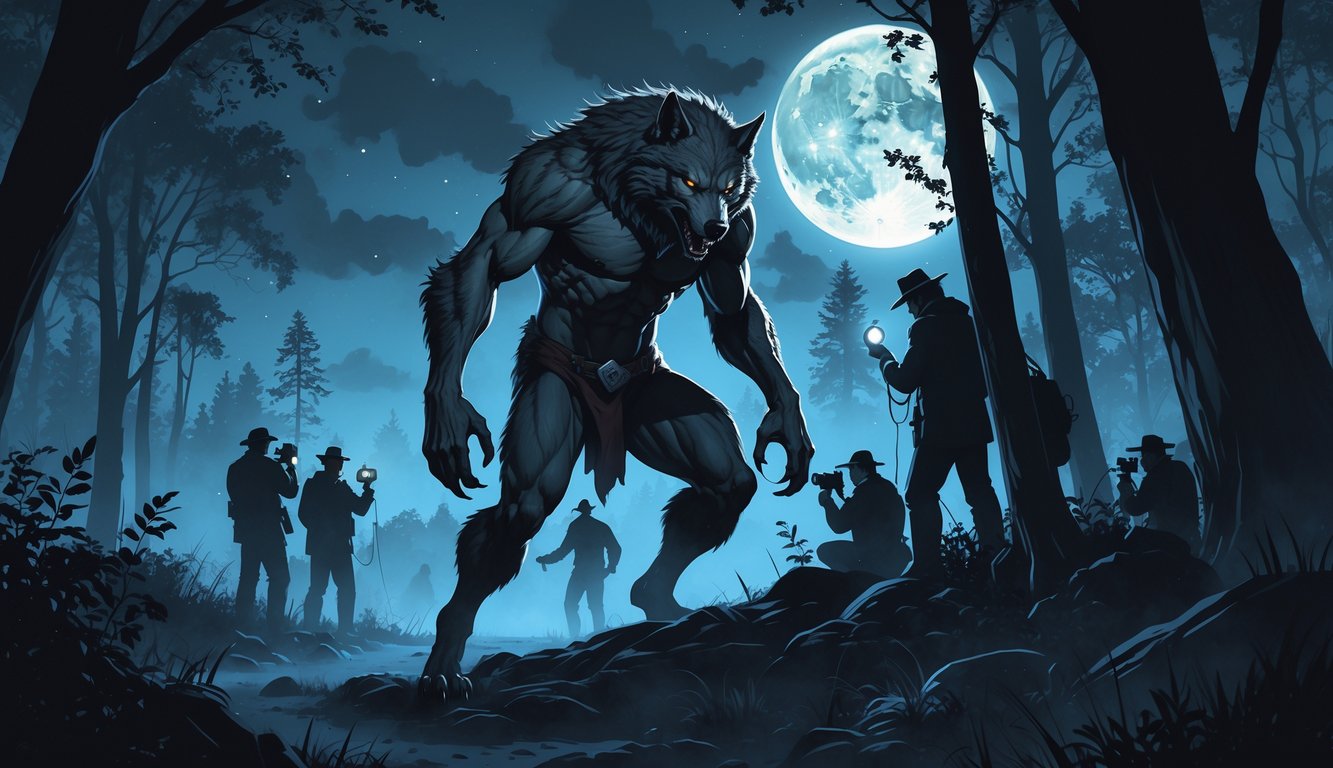
Witnesses often say the American werewolf is tall and muscular, standing between 6 and 8 feet. It usually has a wolf-like head, pointed ears, a long snout, and glowing eyes.
Thick, dark fur covers its body. Its limbs are longer than a normal wolf’s, and its hands or forepaws may look like human hands with claws.
Some reports mention a hunched posture when it walks on two legs, but it can also run on all fours. People in rural areas sometimes hear deep growls or howls before a sighting.
Unlike normal wolves, the American werewolf tends to appear and disappear suddenly. Many believe it avoids human contact whenever possible.
How Werewolves Differ from Other Cryptids
Werewolves stand out from cryptids like Bigfoot or the Chupacabra. The shapeshifting element is common in werewolf lore, though not all American sightings mention transformation.
Bigfoot is usually described as ape-like with no canine features. The American werewolf always shows wolf traits.
The Chupacabra is smaller and often linked to livestock attacks with puncture wounds, not mauling.
Cultural context also sets werewolves apart. European folklore influences the werewolf legend, but American stories blend these traditions with modern rural legends.
The American werewolf appears in areas where other cryptids are rarely seen, such as Midwestern farmlands or suburban woods.
Popular Myths and Misconceptions
Many people think American werewolves only transform during a full moon. Movies like An American Werewolf in London popularized this idea, but most reports do not mention moon phases.
Another myth is that werewolves are always aggressive. Some stories involve attacks, but many eyewitnesses say the creature simply watched them before leaving.
The belief that only silver bullets can harm a werewolf comes from European tales and Hollywood, not from real encounters in the U.S.
Some assume all sightings are hoaxes or misidentified animals. Although misidentification happens, consistent patterns in reports keep researchers interested.
Historical Accounts of Werewolf Sightings in the U.S.
Local folklore, unexplained animal attacks, and personal testimonies often connect to reports of the American werewolf. These stories span centuries, showing how beliefs have changed but never disappeared.
Early Settler and Native American Legends
The earliest werewolf-like stories in North America came from interactions between European settlers and Native American tribes. Samuel de Champlain recorded claims from Native Americans about people who could turn into wolves.
Many tribal traditions linked these beings to spiritual or shapeshifting figures, not “werewolves.” Some legends described warriors taking on wolf traits for hunting or protection.
Colonists interpreted these stories through their own European beliefs. This blend created a unique American werewolf myth.
Notable 19th and 20th Century Reports
In the 1800s, rural communities sometimes reported large, wolf-like creatures attacking livestock. Some witnesses said the animals walked upright, which fueled shapeshifter rumors.
The Roanoke Werewolf is one enduring tale—a bipedal wolf-like creature said to have stalked the region for generations. Its legend became tied to the Lost Colony mystery, though no evidence links them.
By the mid-20th century, most sightings came from isolated farms or woods. People reported glowing eyes, unusual tracks, and strange howls. Skeptics blamed misidentified animals, while others believed these were signs of the American werewolf.
Evolution of Sightings Over Time
Descriptions of the American werewolf have changed over the years. Early stories focused on human-to-wolf transformation, but modern reports often describe wolf-like creatures that may not be human at all.
In recent decades, sightings link to regional cryptids like the Beast of Bray Road in Wisconsin or the Texas Dogman. Documentaries such as The Dogman Triangle investigate clusters of reports and interview witnesses who describe similar physical traits.
Today, many accounts appear online. Photos, videos, and personal stories spread quickly, keeping the legend alive.
Modern-Day Werewolf Sightings
People continue to report sightings of large, upright canines with glowing eyes and muscular builds. These encounters usually happen in rural or wooded areas at night, sometimes alongside strange animal tracks or livestock attacks.
Recent Encounters Across the United States
In Wisconsin, the Beast of Bray Road is a well-known case. Since the late 1980s, witnesses have described a wolf-like creature walking on two legs near farm roads.
Michigan’s Dogman legend features similar sightings. Hunters or drivers often report seeing it crossing roads at night.
Texas and Pennsylvania have also recorded unusual encounters. Some reports involve creatures chasing vehicles, while others describe them watching from the trees.
Sightings cluster in the Midwest and South. While many can be explained by misidentified animals, some remain unexplained after investigation.
Patterns and Trends in Sightings
Most sightings happen at night, especially between 10 p.m. and 4 a.m. This matches the habits of many nocturnal animals, which can cause confusion.
Encounters often occur near wooded roads, farmland, or water. Wildlife uses these areas for cover and food, which may explain why people see strange shapes there.
A common detail is upright walking. Witnesses say the creature moves like a human but has a wolf’s head and fur. This appears in reports from several states, as shown in werewolf sightings in the USA.
Sightings often spike in late summer and early fall. More people go outdoors during hunting season, which may lead to more encounters.
Eyewitness Testimonies
Eyewitnesses often describe yellow or red eyes reflecting light, deep growls, and a musky odor. In some cases, multiple people report the same event.
For example, several residents in Elkhorn, Wisconsin, claimed to see a tall, wolf-headed figure on the same night.
Documentaries like American Werewolves collect these stories and highlight patterns in behavior and appearance.
Some witnesses also find physical evidence, such as large canine footprints that do not match known species.
Regional Hotspots for Werewolf Activity
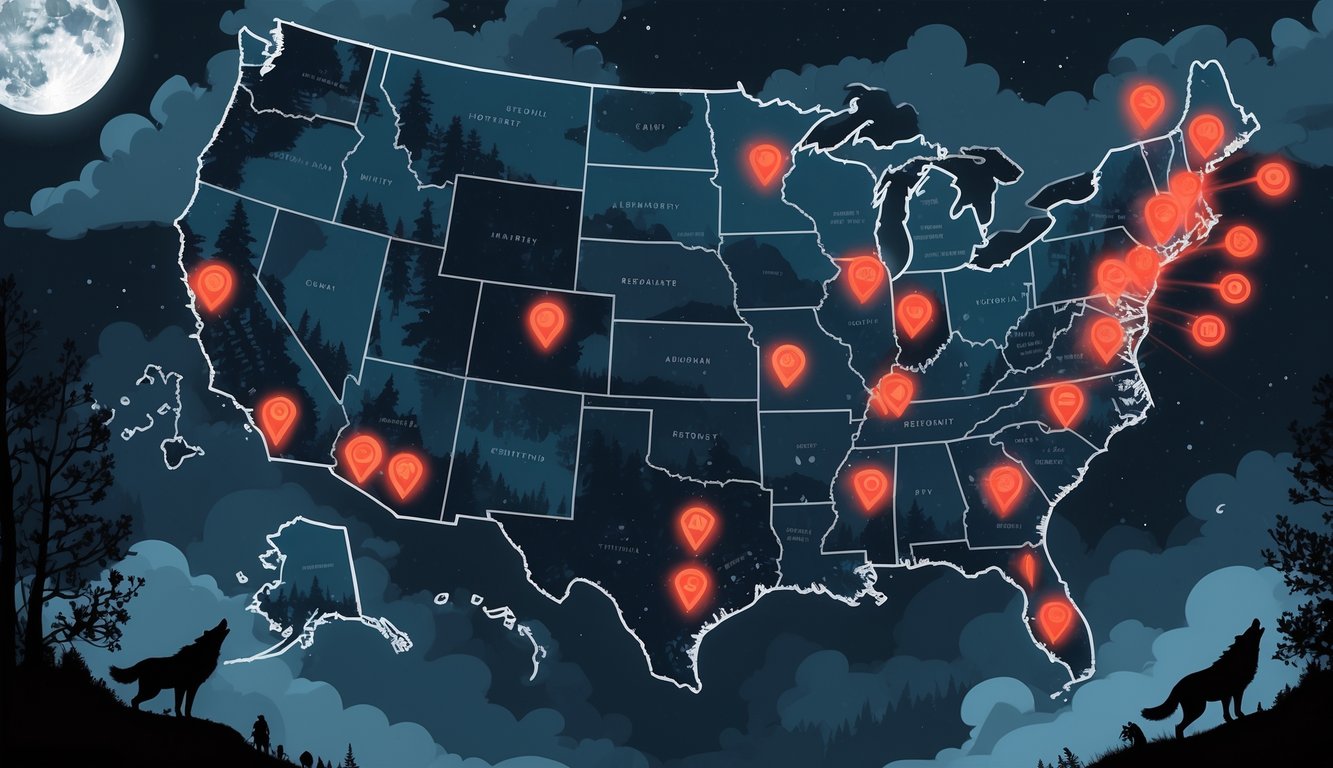
Certain areas in the United States have a long history of unusual creature reports. These places often have repeated eyewitness accounts and local investigations.
Wisconsin and the Beast of Bray Road
In Elkhorn, Wisconsin, reports of a large, wolf-like creature walking on two legs began in the late 1980s. Local journalist Linda Godfrey documented many of these encounters.
Witnesses described the animal as muscular, covered in fur, and standing over six feet tall. People saw the creature near rural roads, fields, and woods, especially along Bray Road.
Some reports involved the animal chasing vehicles or crossing the road at night. The sightings inspired books, documentaries, and a film about the Beast of Bray Road.
Key details:
- First major reports: Late 1980s
- Common setting: Rural roads and farmland
- Notable investigator: Linda Godfrey
Ohio Valley and the Dogman
The Ohio Valley has its own history of upright, wolf-like creature sightings called the “Dogman.” Reports describe an animal with a canine head, pointed ears, and a human-like torso.
Encounters often happen near forests, rivers, and isolated roads. Some residents claim to see the Dogman watching from tree lines or moving quickly on two legs before dropping to all fours.
The phenomenon appears in documentaries like American Werewolves, which explores eyewitness accounts of the Dogman.
Reported traits:
- Height: 6–7 feet
- Behavior: Observing, following, or avoiding people
- Locations: Forest edges, rural roads, riverbanks
Pennsylvania’s Ongoing Reports
Pennsylvania has steady reports of wolf-like creatures. Sightings cluster in wooded counties and rural townships, especially in central and northern regions.
Witnesses describe animals with long snouts, glowing eyes, and the ability to move on two legs or all fours. Some say the creatures appear during deer season, possibly attracted by hunting.
Local researchers track these incidents and compare them to similar cases nearby. Online maps of werewolf sightings show Pennsylvania as a frequent hotspot.
Notable patterns:
- Seasonal spikes in fall and winter
- Proximity to hunting areas
- Mix of rural and small-town settings
Famous Cases and Investigators
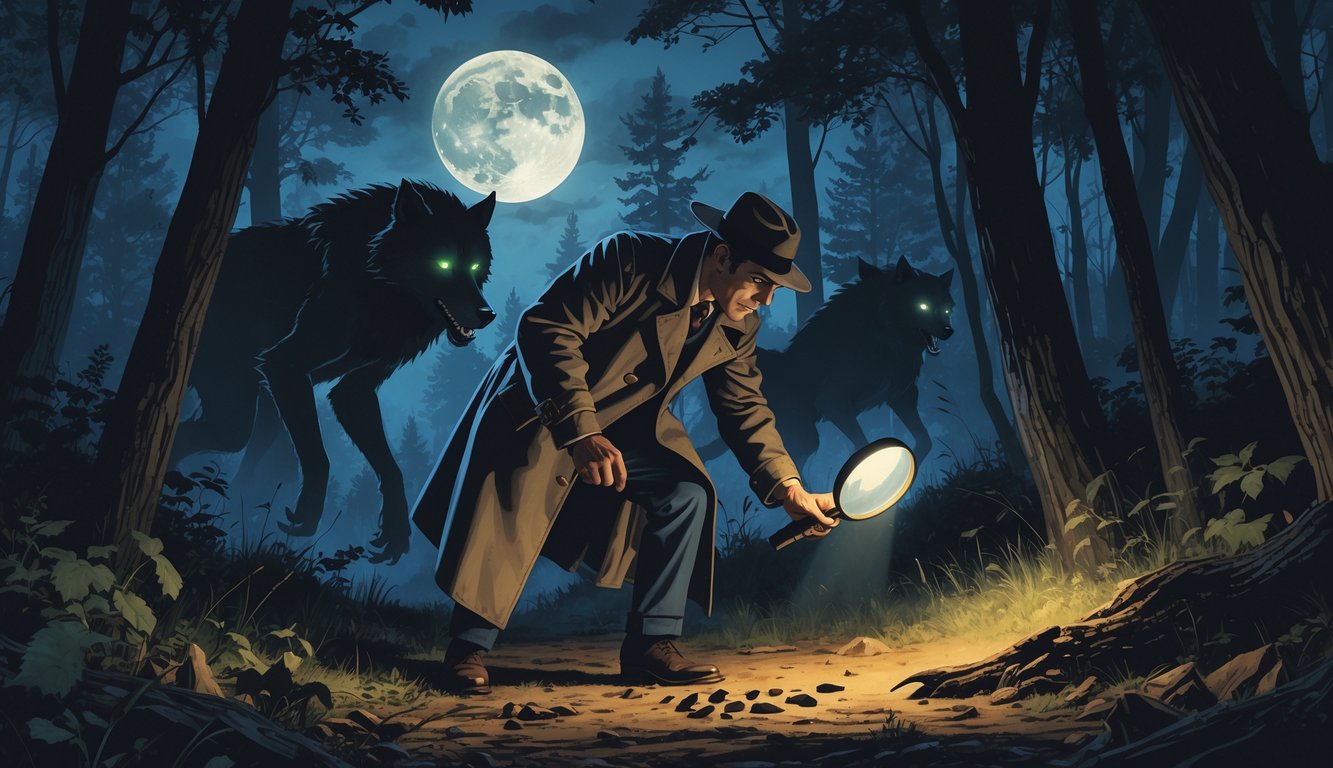
Journalists, authors, and local investigators have reported several alleged werewolf encounters in the U.S. These cases often include detailed witness statements and repeated sightings in certain areas.
Dedicated individuals have spent years researching these sightings. Their efforts help keep interest in these mysteries alive.
Linda Godfrey and Her Research
Linda Godfrey, a journalist from Wisconsin, became famous for her work on the Beast of Bray Road. She started investigating in the early 1990s after local residents saw a tall, wolf-like creature walking on two legs near Elkhorn.
Godfrey collected dozens of accounts describing the animal with glowing eyes, pointed ears, and a muscular build. She published these reports in books and articles, which brought national attention to the case.
She also interviewed witnesses across the Midwest about similar creatures known as “dogmen.” Godfrey’s work remains a key reference for modern American werewolf legends.
The Wolf Woman of Mobile
In 1971, people in Mobile, Alabama, reported seeing a strange creature called the Wolf Woman. Witnesses described a female figure with a wolf’s head and glowing eyes, moving through neighborhoods at night.
The local newspaper received many calls and letters about the sightings. Some said it ran on two legs, while others saw it move on all fours.
Police looked into the reports but found no physical evidence. The story soon became a local legend.
Adam Davis and Midwest Sightings
Researcher Adam Davis investigates reports of upright canid creatures in the Midwest. He focuses on rural areas where sightings happen repeatedly over the years.
Davis conducts field interviews, collects footprint casts, and sets up trail cameras in these locations. His research sometimes overlaps with Linda Godfrey’s earlier work, especially in Wisconsin and Michigan.
He also examines cases related to Dogman sightings of the American Midwest. Davis points out the consistency of witness descriptions and similarities between cases.
Comparing Werewolves to Other Cryptids
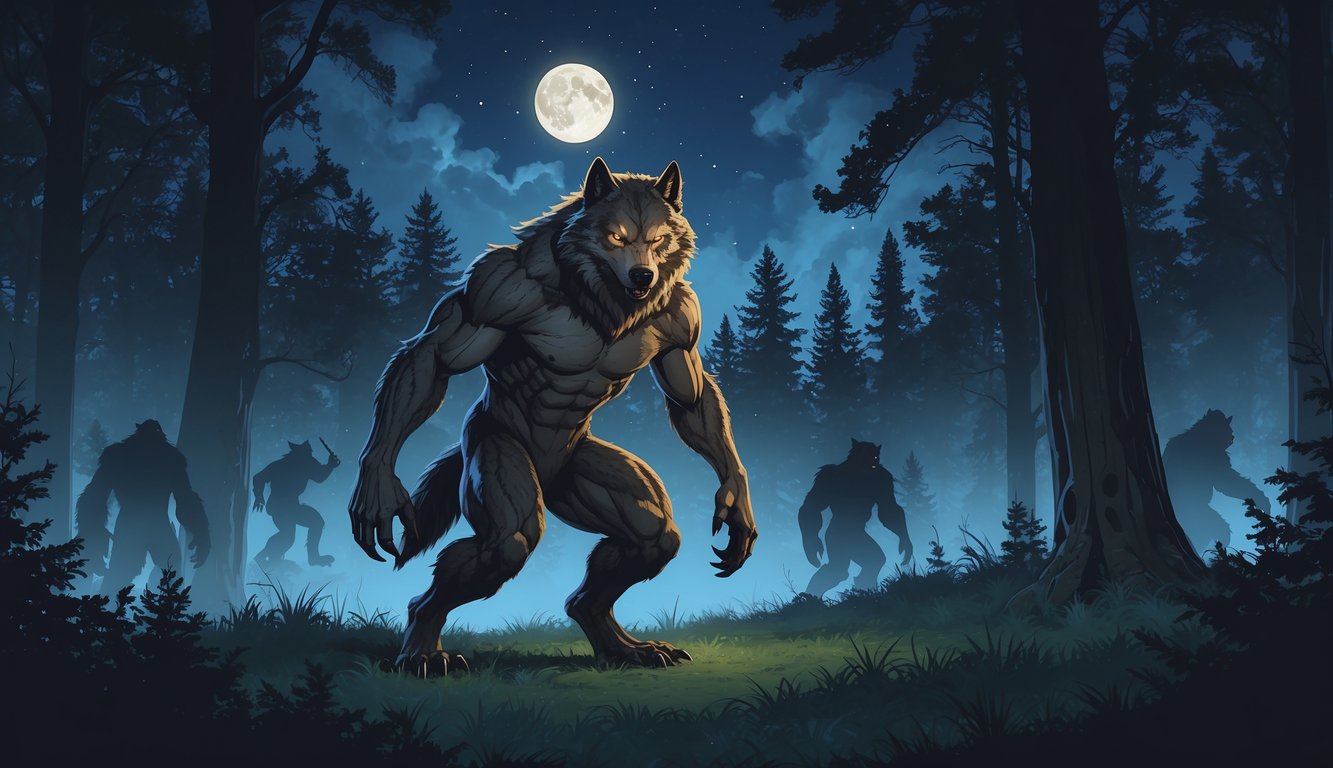
Some cryptid reports mention upright, human-sized creatures with animal traits. Others describe large, ape-like figures covered in hair.
These creatures may share some features, but their behaviors, habitats, and appearances can differ widely.
Bigfoot Versus the American Werewolf
Bigfoot sightings usually come from forested regions in the Pacific Northwest. American werewolf reports are more common in rural areas of the Midwest and South.
Bigfoot is often described as a tall, ape-like creature walking on two legs. Witnesses rarely see it act aggressively.
Werewolf accounts often include glowing eyes, sharp teeth, and wolf-like heads. These differences set the two creatures apart.
| Feature | Bigfoot | American Werewolf |
|---|---|---|
| Height | 7–9 ft | 6–7 ft |
| Build | Ape-like | Muscular, human-wolf |
| Behavior | Elusive | Sometimes threatening |
| Tracks | Large, human-like | Paw-like, clawed prints |
Some researchers think Bigfoot could be an undiscovered primate. The werewolf is usually linked to folklore and supernatural beliefs.
Dogman and Other Wolf-Like Creatures
The Dogman is another upright, wolf-like cryptid reported in North America. Most sightings come from Michigan, Wisconsin, and Minnesota.
Witnesses describe Dogman as 6–8 feet tall, with a canine head, pointed ears, and digitigrade legs. Unlike werewolves, Dogman reports do not involve transformation from human to animal.
Dogman is described as a consistent physical being, not a shapeshifter. Other wolf-like cryptids, such as the werewolf of Defiance, Ohio, share traits with Dogman but differ in color, size, and behavior.
Many reports place Dogman in wooded areas near farmland. Witnesses often mention deep growls, fast movement, and glowing eyes at night.
These traits can make it hard to tell Dogman apart from traditional werewolf sightings without detailed witness accounts.
Scientific and Psychological Perspectives
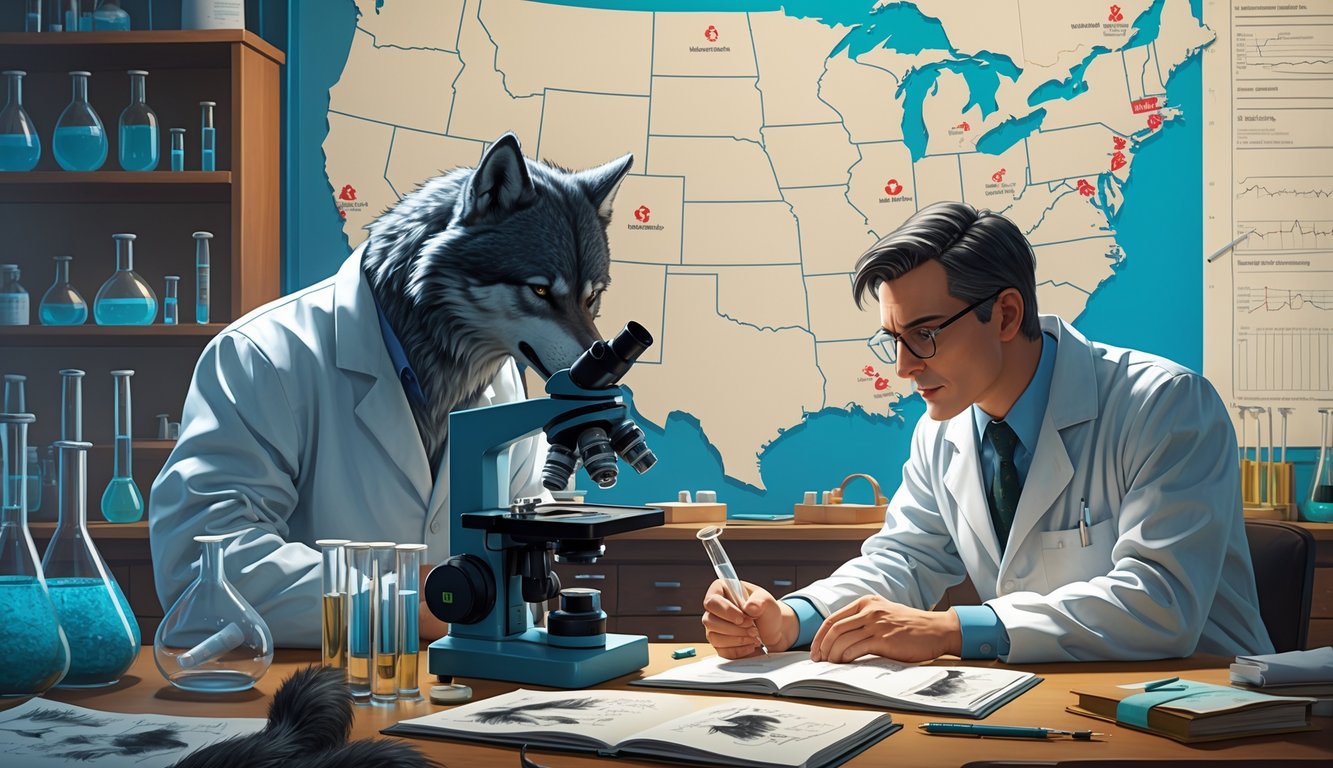
Many reported werewolf encounters have natural explanations. Researchers look at physical evidence, eyewitness reliability, and historical patterns to understand why these stories continue.
Possible Explanations for Sightings
People may mistake large dogs, wolves, or coyotes for something more threatening, especially in poor lighting or from a distance. In rural areas, unusual animal behavior can lead to supernatural interpretations.
Fear and social unrest can influence how communities share and repeat frightening stories. This pattern appears in werewolf folklore studies.
Environmental factors like shadows, fog, and moonlight can distort shapes. A quick glimpse of a moving animal may cause the brain to fill in details that fit werewolf myths.
Eyewitness memory is not always accurate. Stress, darkness, and distance can cause people to misremember ordinary events as something extraordinary.
Psychiatric Conditions and Lycanthropy
Some alleged werewolf transformations may relate to mental health conditions. Clinical lycanthropy is a rare psychiatric syndrome where a person believes they can turn into a wolf or another animal.
This belief can appear in mood disorders, schizophrenia, and some neurological conditions. People may report sensations of fur, claws, or changes in body shape, even without physical evidence.
In the past, people saw these symptoms as proof of supernatural change. Today, psychiatry recognizes them as part of a delusional episode.
Historical cases of “possessed” individuals often match clinical lycanthropy descriptions. Early doctors debated whether these cases were medical or spiritual, as shown in studies of werewolf beliefs and medical responses.
Modern treatment focuses on the underlying mental illness, not the transformation belief.
Werewolves in American Pop Culture
Werewolves have appeared in U.S. entertainment for decades. These stories shape how audiences imagine these creatures.
Portrayals range from tragic humans cursed to transform, to brutal predators threatening communities. These depictions reflect changing cultural fears and advances in filmmaking.
Film and Television Depictions
Classic Hollywood shaped the werewolf’s image in America. The 1941 film The Wolf Man introduced Lon Chaney Jr.’s famous look.
Makeup effects and transformation scenes became a big draw for viewers. By the 1980s, practical effects improved further.
An American Werewolf in London (1981) and The Howling (1981) featured groundbreaking transformation scenes. These films mixed horror with humor or suspense.
Modern TV shows like Teen Wolf and The Originals keep werewolves in the spotlight. Some series show them as sympathetic, while others keep them as threats.
Literature and Folklore Influence
American werewolf tales often start with European legends but adapt to U.S. settings. Folklore from rural areas sometimes blends with Native American shapeshifter myths.
Writers use werewolves to explore themes like identity and change. In novels, the curse often represents personal struggle or hidden danger.
Paranormal romance and urban fantasy genres also use werewolves. These stories often include witches, ghosts, and vampires, creating a shared supernatural world.
Vampires Versus Werewolves in Media
Vampires and werewolves often appear together in fiction. They are usually rivals, with vampires as calculated predators and werewolves as physical hunters.
Franchises like Underworld and Twilight highlight this rivalry. The conflict often shows control versus chaos, or elegance versus brutality.
Some stories show the two species joining forces against a shared enemy. This setup lets writers explore different supernatural traits and gives audiences varied action and drama.
Skeptical Views and Debunking
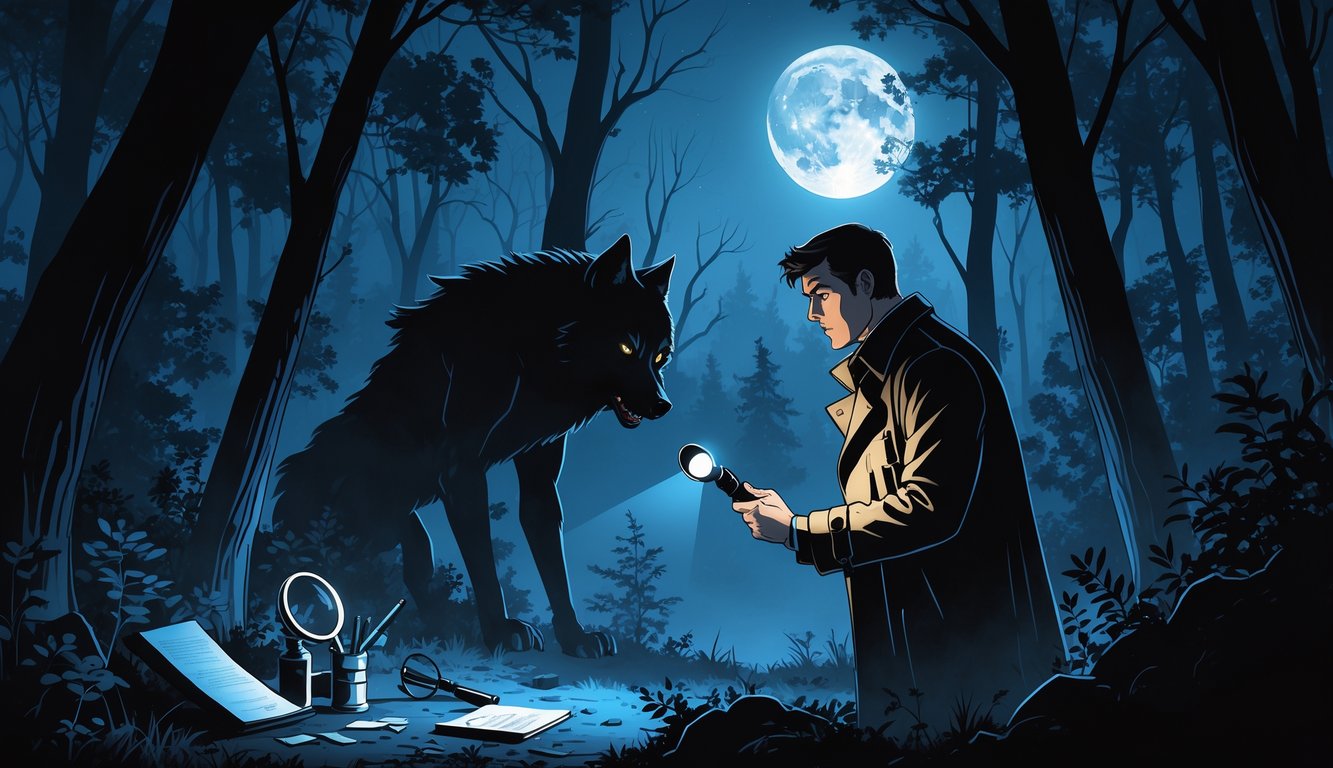
Many reported werewolf encounters in the U.S. have natural explanations. Eyewitnesses often describe unusual creatures, but evidence rarely supports actual human-to-wolf transformation.
Skeptics gather facts, test claims, and compare reports to known animals or human behavior.
Hoaxes and Misidentifications
Many alleged werewolf sightings turn out to be misidentified wildlife. Large dogs, coyotes, and wolves can look threatening in low light or from a distance.
Some experts believe the Beast of Bray Road in Wisconsin is a mix of wolf sightings and tall tales. Hoaxes also contribute to the legend.
Some people create fake tracks, stage photos, or tell made-up stories to get attention or promote local myths. These actions can mislead researchers.
Environmental factors like fog, shadows, and moonlight can distort what people see. At night, a crouching animal may look like a standing figure.
Skeptics’ Investigations
Skeptical researchers use systematic methods. They interview witnesses, visit sighting locations, and compare descriptions to known species.
Investigators like Linda Godfrey started with doubt but noticed patterns in the reports. Some investigations reveal inconsistencies or find ordinary causes, such as escaped pets or misheard noises.
Tracks or fur samples sometimes turn out to belong to common animals. Publications like Skeptical Inquirer show how culture and fear shape these stories.
By breaking down claims into facts, skeptics try to separate legend from reality.
The Ongoing Mystery of the American Werewolf
People often report seeing a tall, wolf-like creature walking on two legs, known as the American werewolf. Many sightings share similar details, but no one has found confirmed physical evidence. This mix of repeated stories and uncertainty keeps the mystery alive.
What Keeps the Legend Alive?
Eyewitness accounts drive the legend. In places like Elkhorn, Wisconsin, journalist Linda Godfrey documented multiple sightings of a creature near Bray Road.
These reports sparked national attention.
Pop culture also helps spread the story. Films, books, and documentaries such as American Werewolves introduce these tales to wider audiences.
This exposure makes the idea more familiar and memorable.
Local folklore adds another layer. Some rural communities treat the American werewolf as part of their regional identity.
They pass down stories that blend history with personal experience.
The lack of proof keeps the mystery alive. Without clear evidence, people continue to speculate and investigate.
Future Research and Exploration
Researchers and filmmakers collect testimonies and investigate reported encounters. Projects like The Dogman Triangle focus on specific regions.
They map sightings and compare witness descriptions. Field investigators often conduct night-time stakeouts.
They use motion-triggered cameras and audio recorders. These methods aim to capture verifiable data.
Some investigators study historical records and look for patterns in sightings over time. This approach can reveal whether reports cluster in certain seasons or areas.
As technology improves, tools like thermal imaging and drone surveillance may offer new ways to search for evidence. These methods help avoid disturbing potential habitats.